The second most important space in the home.
For a closer look at the many art works on display click here.
I wrote about kaizen in the context of the most important room in the home – the home theater – a while back.
It’s common for members of the Toyota C-suite to spend formative years in the kaizen function where failed parts are analyzed and improvements conjured up. This inculcates the belief that nothing surpasses reliability in importance when it comes to daily conveyances and explains why Toyota makes the best cars in the world. Contrast this with GM. One example of many is their Northstar V8 engine. It took Detroit 6 years to determine the cause of the serial head gasket failures and leaks before they realized that the studs were pulling out of the block. A mere few millimeters of additional thread did the trick by which time the motor’s reputation was irreversibly damaged. Considering American occupational psycholigist W. Edwards Deming had taught the Japanese how to make reliable cars you would think GM would know better. But no. Hang reputation, aim for short run profits, the American Way.
And talk of cars brings us to the second most important space in the home, the garage. My goal is to make this a warm and welcoming place, with shadowless task lighting the first consideration. Art works on the walls enhance the sense of occasion when entering this working space, but it’s the placement and display of tools and parts which is the key to making this a proactive and efficient workplace. And there are rules guiding this goal.
First a tool hidden in the drawer of one of those awful rolling carts is a lost tool. The cart will sooner or later crash into one of your machines and you will spend endless hours searching for that one special tool buried in its innards. No, tools must be displayed in logical groupings which means pegboards on the wall. And not those awful, depressing brown ones. Yecch! They must be white to contrast the tool with its background and to reflect ambient light into the workspace. For safety – the weight of tools adds up quickly – wooden battens are fastened to the studs behind the drywall and the pegboards are fastened to these battens, using drywall screws with finishing washers to spread the load. This makes for both a robust attachment method while providing clearance for the pegboard hooks as they poke through to the rear.
Further, tools must not be stacked for the same reason that they must not be hidden in drawers. Anything below the top of the stack will be lost or forgotten, sooner or later. Here’s my tool wall and yes, kaizen is easily eroded as the images show, for I have started stacking tools over the years, denying my own rules. In addition to the growing stacking issue with the pegboards, the area with fasteners is an absolute disaster, and the shelving needs work too.
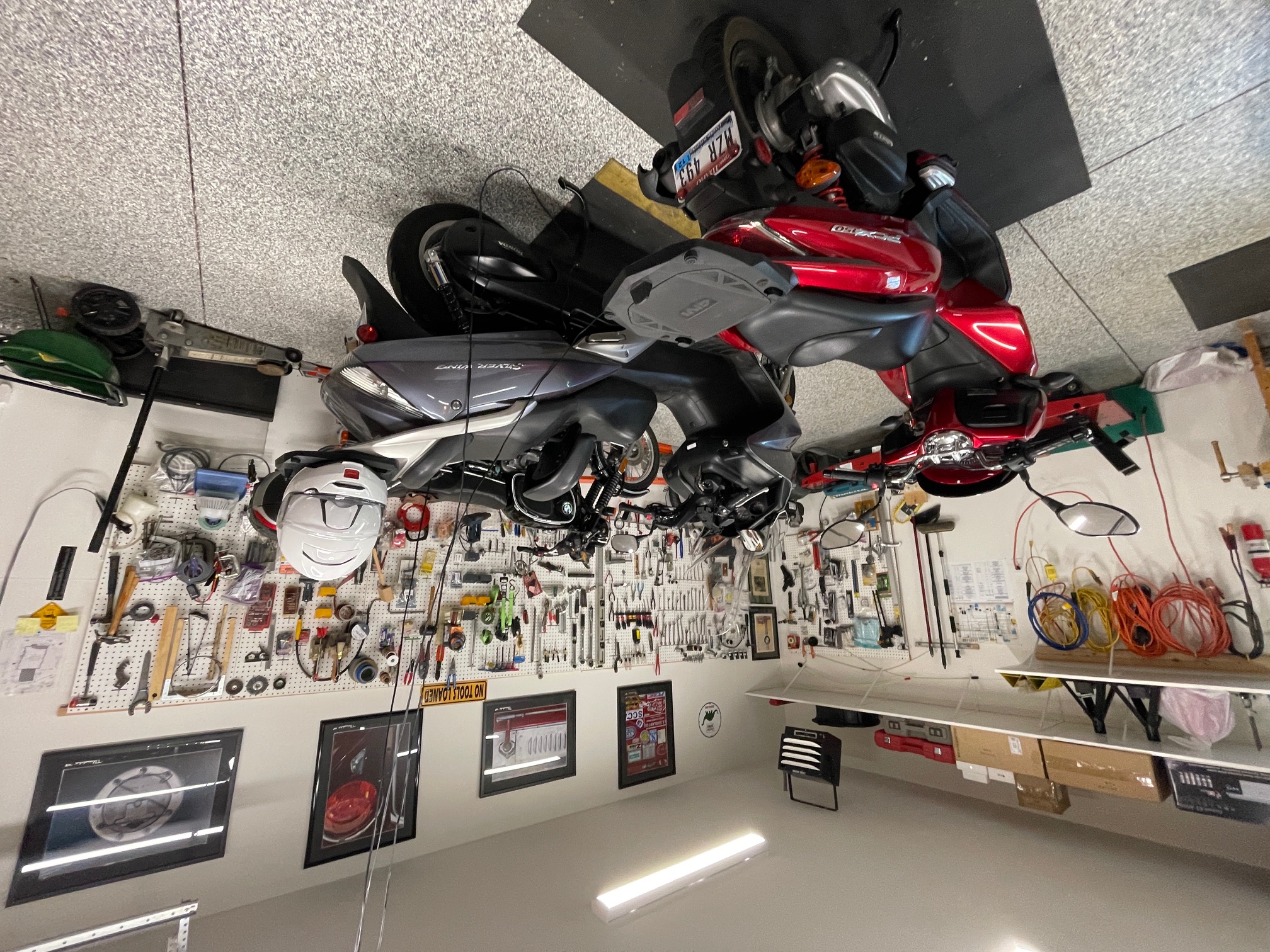
The tool wall
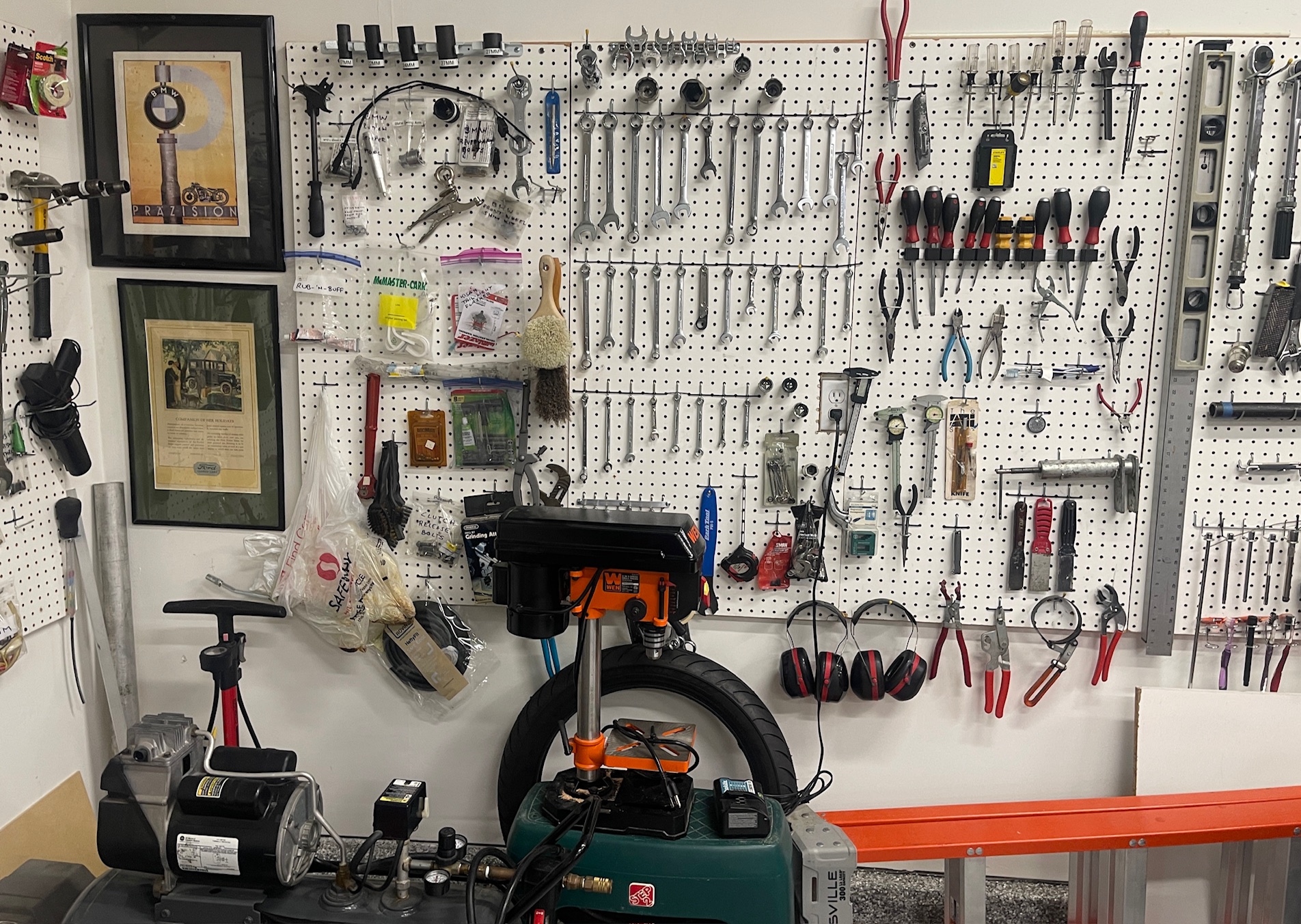
The tool wall – a closer view.
Classic BMW and Ford posters at left.
Note the magnificent red Handy motorcycle air lift, the finest tool in the garage, at lower left. It’s one of the few things, along with the attendant compressor, I will allow to take up floor space. As a general rule the fewer things on the floor the better:
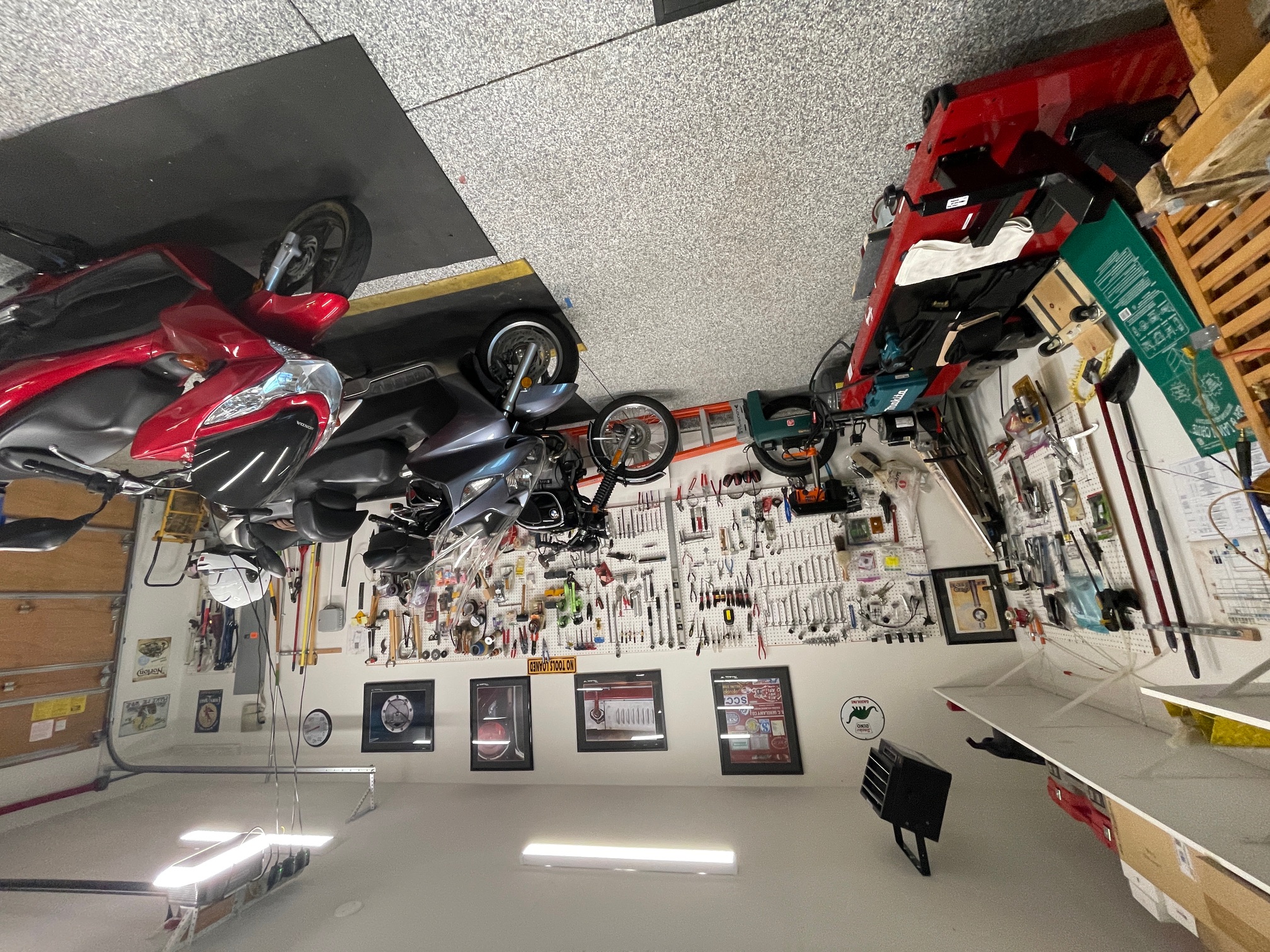
1975 BMW R90/6, 2007 Honda Silverwing and 2013 Honda PCX 150.
The artwork is from the Laguna Seca Historics
This fastener assembly is a disaster. To remove any one bin all above must be removed, the bins spill fasteners faster than a politician accepts a bribe and those lost nails on the floor lead to flat tires. Hard to imagine anything worse. Well, there’s always the Titanic:
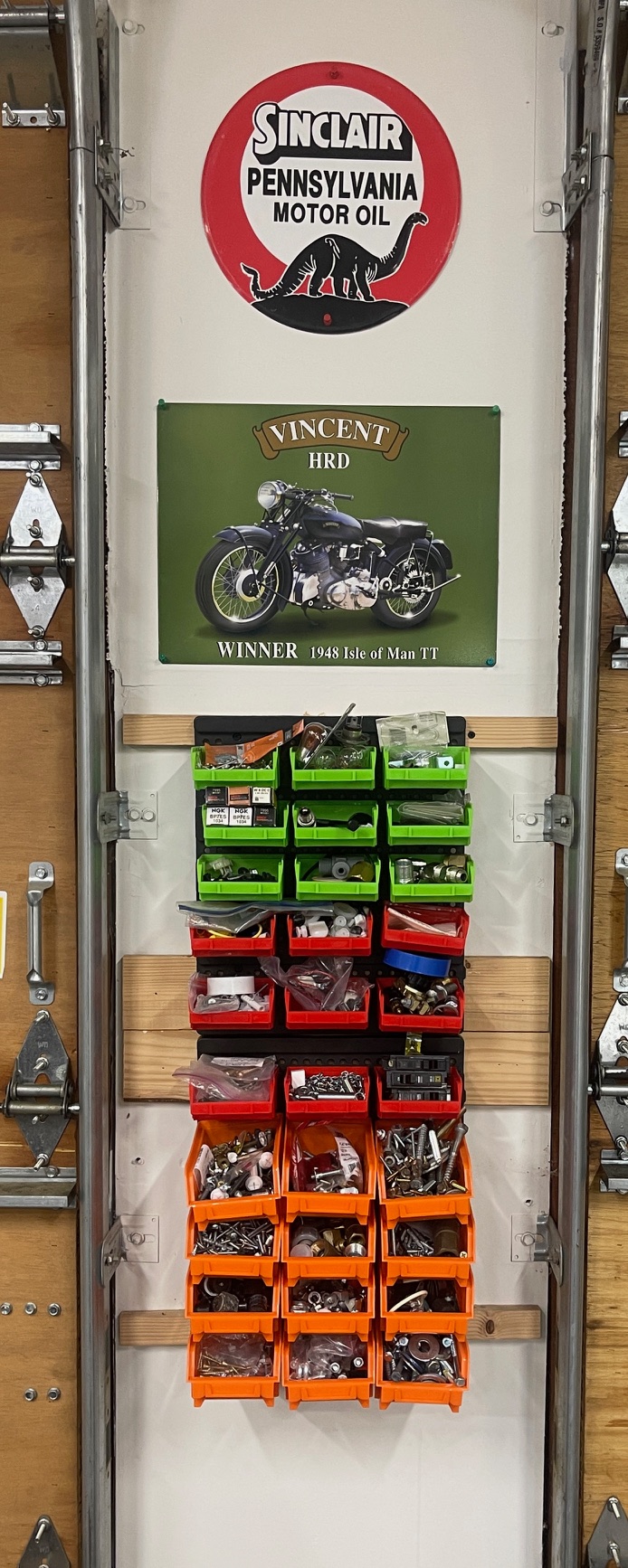
Disaster area – fasteners. Inaccessible and
waiting to fall out.
Mercifully Amazon lists an alternative for very little money with several configurations.
This took a bit of time with the need to properly sort mis-filed pieces, but boy is it worth it:
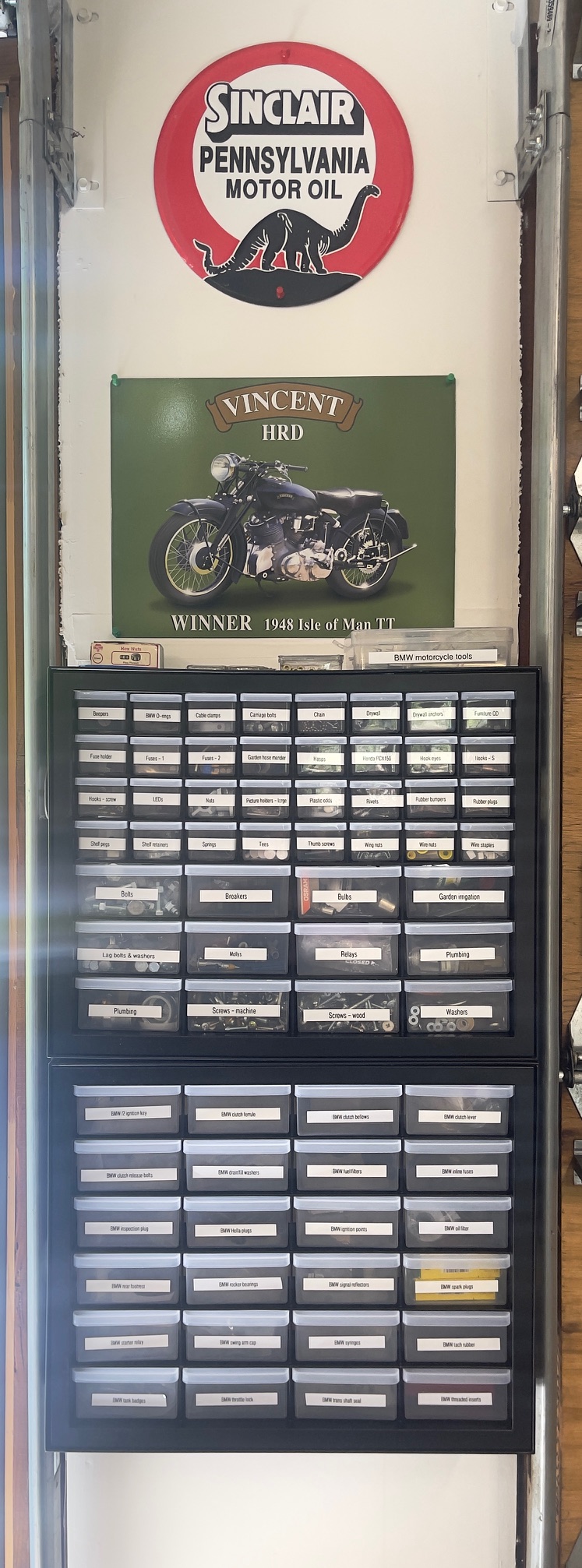
Neatly labeled in alphabetical order
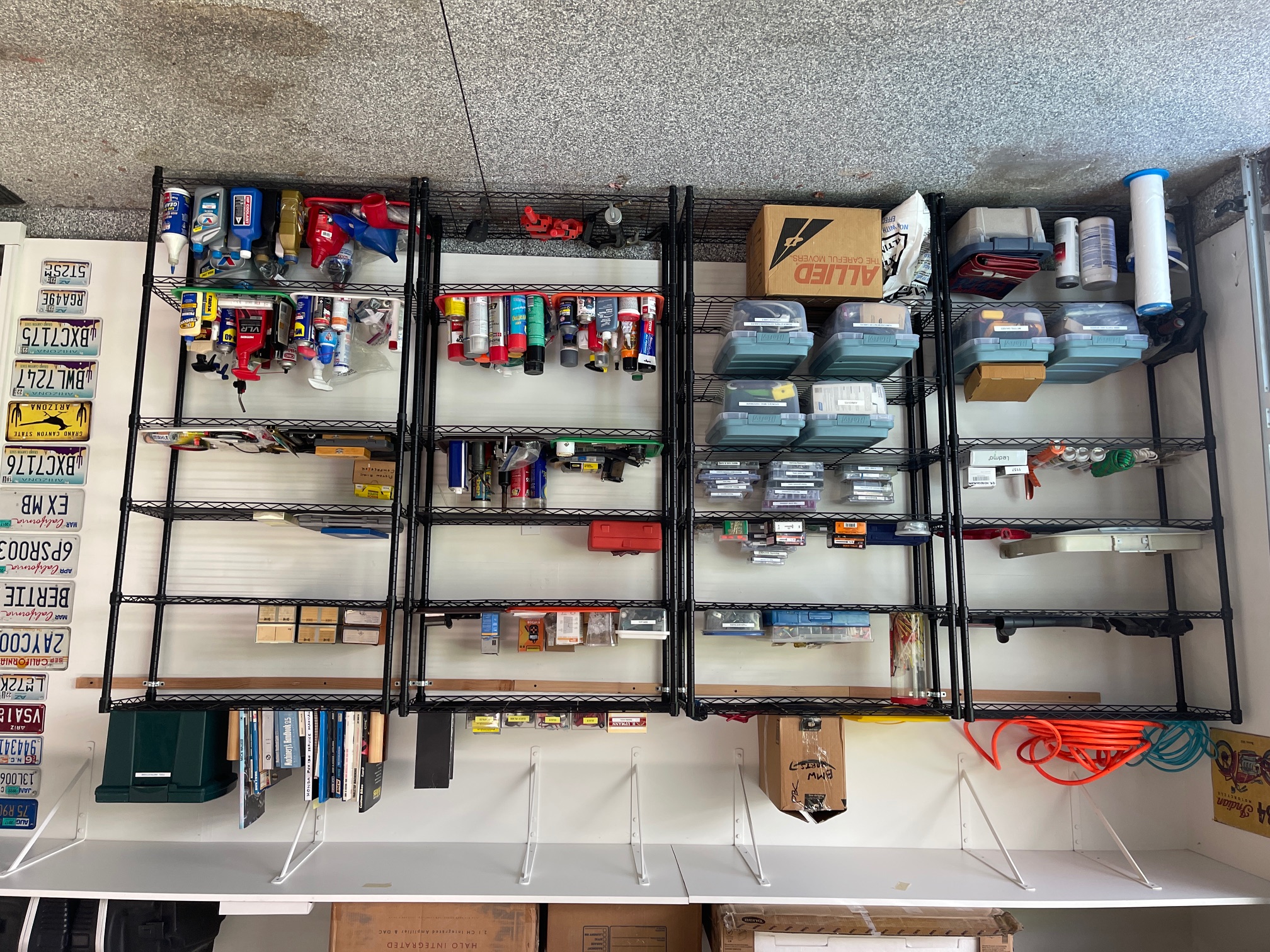
Amazon lists very robust 5 shelf units and I had installed four of these a few years ago when they cost $100. The price has now dropped to $55 and they are recommended. Easy to assemble, robust with a 350 pound capacity per shelf, I fastened them with metal straps to the batten you can see in the image, the latter attached to the studs behind the drywall. This both protects against earthquakes and takes out the tippiness of the heavy structure waiting to fall on a car or motorcycle:
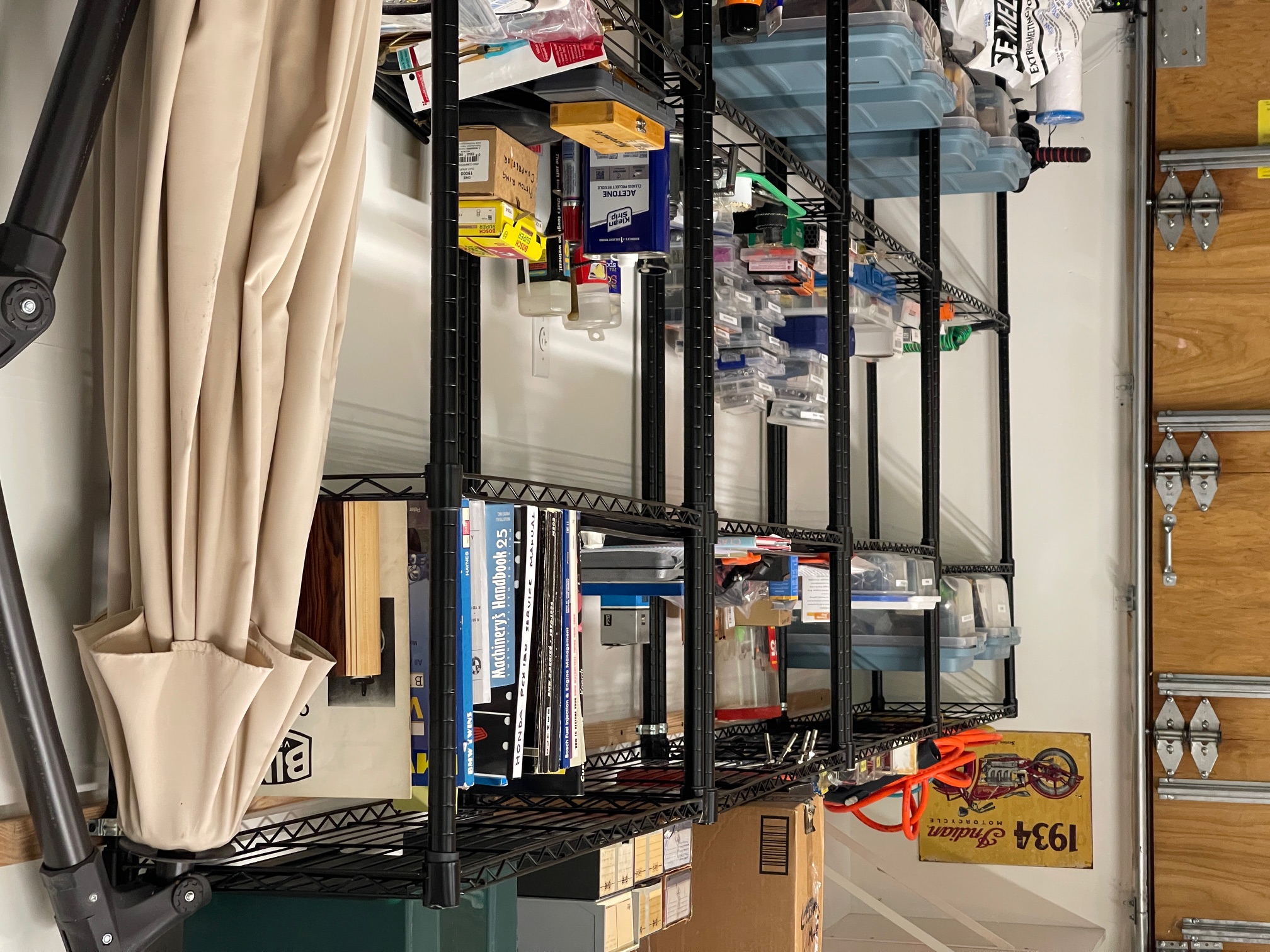
Shelving from Amazon – lots of wasted space, too much stacking
Like the stacking which bedeviled the pegboards the shelves have suffered similar migration over the years and there is much wasted space. More shelves are called for:
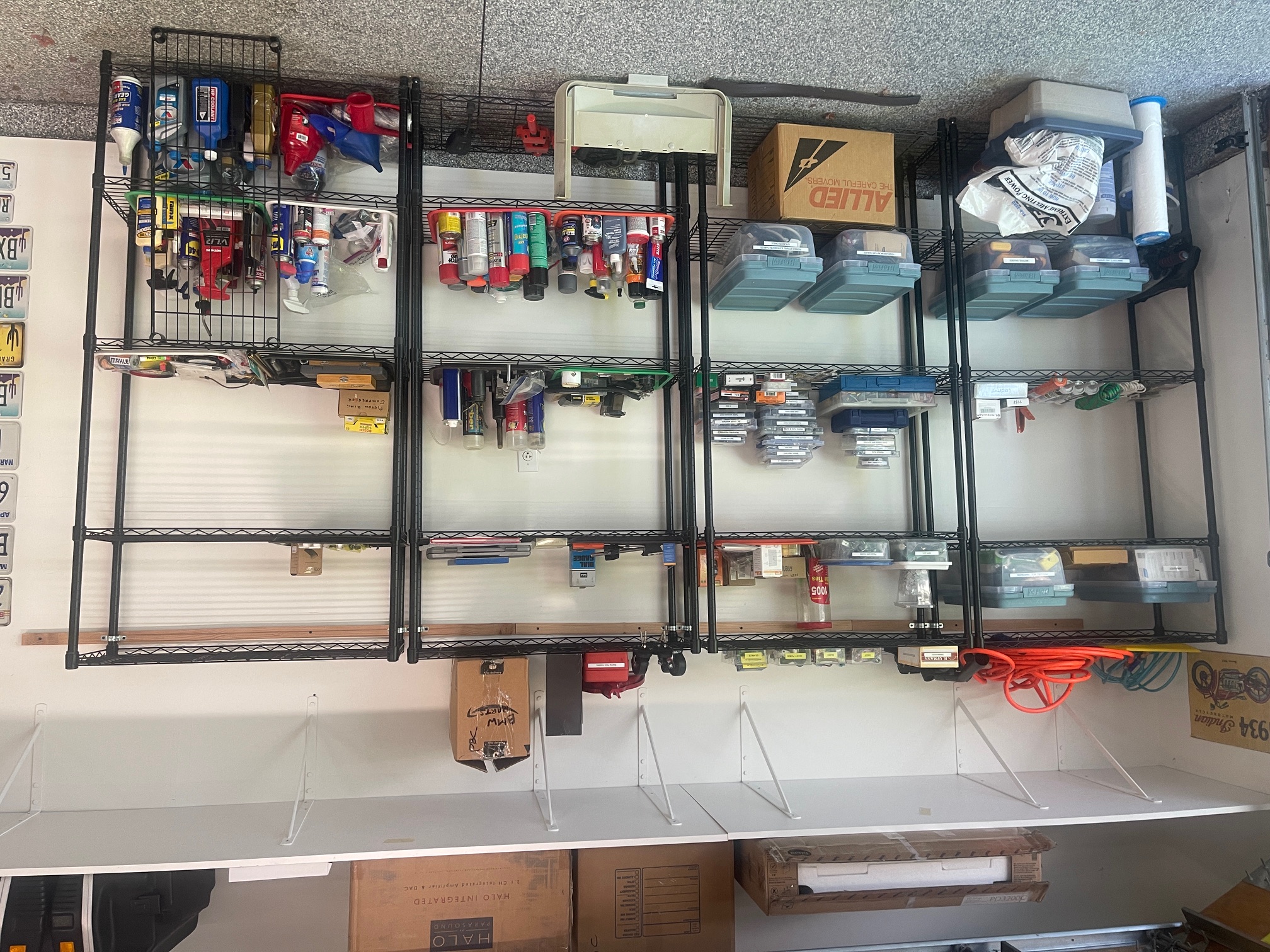
Four shelving bays, 5 shelves apiece
So I procured an additional five shelf unit, discarded the uprights and installed the five additional shelves where the gaping spaces were. The metal semicircular straps securing the uprights to the batten have been removed in this illustration:
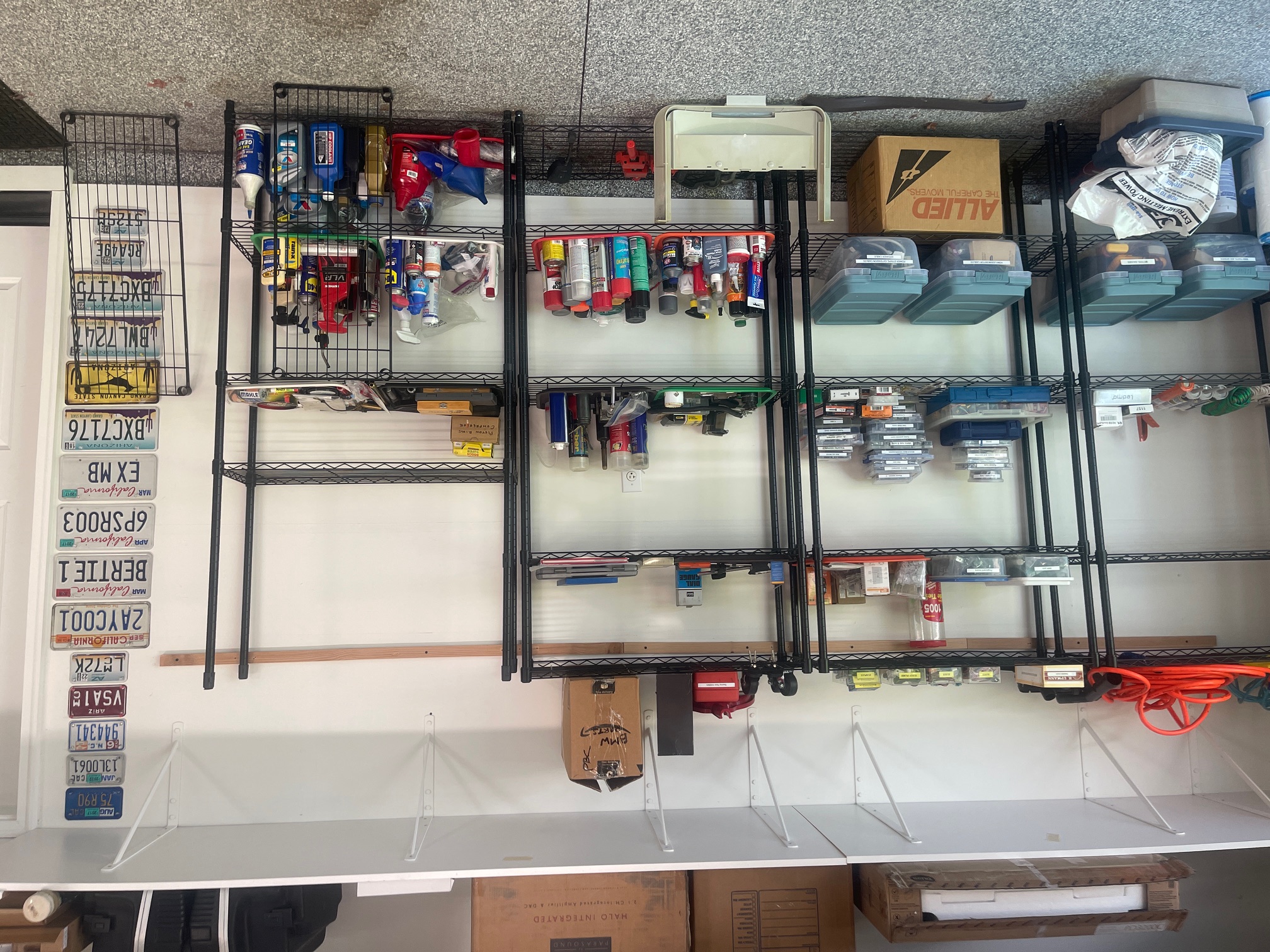
Adding shelves.
While that’s just a 25% increase in shelf area the difference is night and day. A related rule in any garage is to have as few items on the floor as possible and these added shelves really help:
Five added shelves in place
So after a few days of banging away at this kaizen project the garage is once more that special place which invites quality wrenching …. until the next time things need remediation. Constant improvement is the ticket.