Greed as Art

A number-blind nation’s output.

One of the most obvious ways to economic success is to do the difficult thing, meaning you study math, or chemistry, or engineering at school. Not English or Poetry. While the latter are doubtless noble aspirations their result is that all you are qualified for is to turn out …. more English and Poetry scholars. Neither avocation creates wealth for you or the nation.

And capitalist society is expert at avoiding doing the ‘difficult’ thing, given its desire for instant and easy gratification. Be it passive activities like TV or watching sports, vicariously living the experiences of a highly paid athlete, we are simply being passive consumers, creating no wealth in the process. And the alternatives to creating wealth are easily seen in Africa or North Korea, like it or not.

In Western societies the passivity of populations and their general unwillingness to study difficult subjects is seen daily in macro economics. (In Asia, by contrast, the pure and applied sciences are revered). Had consumers learned one iota of math or finance, the housing bust would never have happened. Predatory lenders would have been short of suckers to buy their criminal products. Liar loans would have not seen the light of day and borrowers would have looked at prospective cash flows in the light of rational expectations for income and expense and made objective, informed decisions as to whether a home and loan were affordable.

So continuing yesterday’s aerial theme, here’s a truly exceptional image from Google (presumably taken by US taxpayer-owned satellites, which makes it especially poignant) of the greed that results from number blindness. It’s of a halted residential real estate development off the I75 freeway in Florida on that state’s central western coast – you know the once pristine one now covered with BP’s crude oil. No great photographer was involved, just a passive drone designed and launched by the same people we denigrate as nerds and mad scientists, which we so sorely lack. They make them in copious numbers in India and China but, being the smart people we are, we refuse them entry. It wouldn’t do to actually enhance the gene pool now, would it?

Take a careful look. This development just stopped – the plots at the upper right have pads but no homes. The others, I would bet, are empty or in foreclosure.
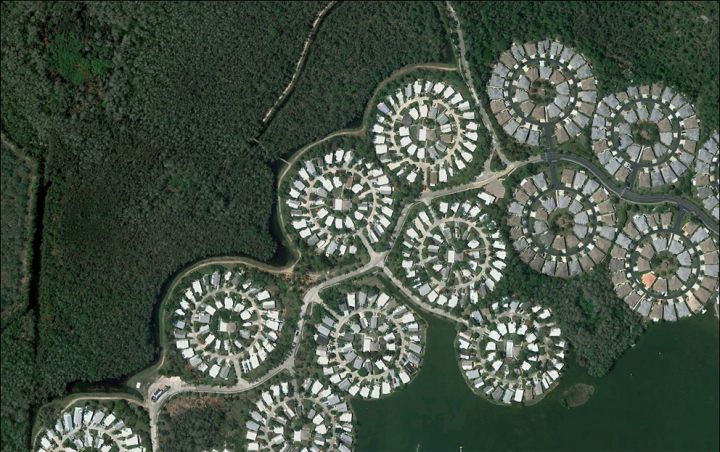
Greed as Art. Stalled real estate development in Florida from Google.

Jason Hawkes

An aerial photographer.

Consulting my rational side, I can only conclude that nearly all air flight is a waste of time and resources. One third involves visiting Aunt Minnie in Florida when she could be simply dialed up on a webcam. Another third involves boondoggles passing as conferences where we try to create team spririt or some such nonsense when we should be focusing on teaching individuality. And the remainder is spent on business meetings which would be better conducted at the local video center, saving vast amounts of time and money. But for a world which largely values motion over action, flying is just the ticket.

But there is a very special niche which I exempt from criticism, and that’s aerial photography. Which of us has not pointed his camera at the window when coming in to land for the occasional snap? Though, as with most things, to do this well you have to devote yourself to it and that’s Jason Hawkes’s avocation.


The Empire State Building at night.

While much of this Englishman’s work is done in Europe, he has a new book named New York at Night which amply illustrates the difference between the amateur snapper and the dedicated specialist.

For more, check out his web site. Hawkes uses just two lenses on his full frame Nikons, 14-24mm and 70-200mm zooms, with a gyroscopic stabilizer. While the Kenyon range of stabilizers is expensive, they can also be rented for a reasonable sum.

And while you are perusing his superb images, think also how much better a world without flight would be. No Holiday Inns or Hiltons, no Las Vegas, no 9/11, cheaper gas, less noise, less pollution, fewer traffic jams, more productivity, more time spent with the family instead of being busy being busy, more trains, and on and on.

Brand no longer matters

Buy what works and forget the name.

I recall an elderly American relative once remarking “Grandpa Francis, he was always a Dodge man.”

Seems that old Frank only ever bought cars from Chrysler’s Dodge division, but quite why this was remains a mystery. I always suspected he got lucky in the back of one. There was no question, it seems, of comparison shopping or of buying the best vehicle for the money. It was Dodge or nothing, which meant it was Dodge every two years given the 1950s middle class belief in changing cars ever so frequently. And while every Dodge bore fealty in its nameplate to the Dodge brothers who gave it life, it always seemed to me that ‘Dodge’ was an especially peculiar name for a car. Still, I suppose there are people who revel in the last name of Schmuck or Fink or Twit. Why, there’s even an English Member of Parliament named ‘Balls’, which has to be the first honest description I have heard of a politician. OK, second. ‘Member’ is pretty accurate also.

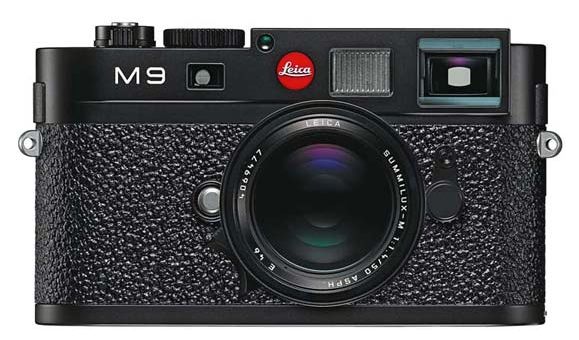
And I must confess that you could fairly accuse me of like shortsightedness. For some three decades, flirtations on the side (the English have a ‘Bit on the side’; I had a Rollei) coming and going, I was pretty much a Leica man. It’s not that there really were any alternatives. The Contax was long gone, and Nikon and Canon no longer made their excellent rangefinder bodies. So while I would argue that I was a rangefinder man, rather than an SLR type, the reality is that Leica was the only game in town, though I have a suspicion that had there been others I would still have been a Leica man as it’s hard to think of anyone surpassing the quality of the body and optics.

And while the M body’s screw mount predecessors were true ergonomic nightmares, some of the worst designed (if best made) machines of the past century, the M got it dead right and was far ahead of anything else in the rangefinder world, remaining so until digital came along. Now, to all intents and purposes, the Leica interchangeable lens M body is a rich collector’s toy with very limited functionality. And any day now it will be completely obsoleted by exciting designs like the Fuji FX100 and maybe a viewfinder equipped GF2 body from Panasonic. Who on earth saw the Fuji coming? Which means there may be something even more exciting on the drawing boards of Foxconn in China (no, not the US TV network, though that would be an accurate description).


Rich man’s toy. Or, if you prefer, a ‘Bit on the side’.

Nor is it any longer an issue of affordability for me. Sure, a keyboard click or two and the M9 will be on my doorstep tomorrow with a bunch of lenses but simply being able to afford one is no reason to actually buy it. On that basis I would never fly commercial either. Any issue of affordability, for all but the profligate, cannot be divorced from considerations of value, and it’s the value part of the equation which likely means that I will never own another Leica, having abandoned the marque some 4 years ago. The thought of carrying around $10-15,000 of gear for the occasional snap is one which causes deep revulsion in my soul and will continue to do so even when I surpass Gates and Rockefeller in net worth ….

No, brands are meaningless and brand loyalty is impossible to understand, though doubtless much loved by the manufacturer. I would like nothing more, for example, than a computer tablet from someone other than Apple to put some competitive heat under Steve Jobs & Co. and allow me to watch Flash animation, much used in the business world for charts and diagrams. Should it come along and if it offers decent application support, I’m there and the iPad is on Craigslist.


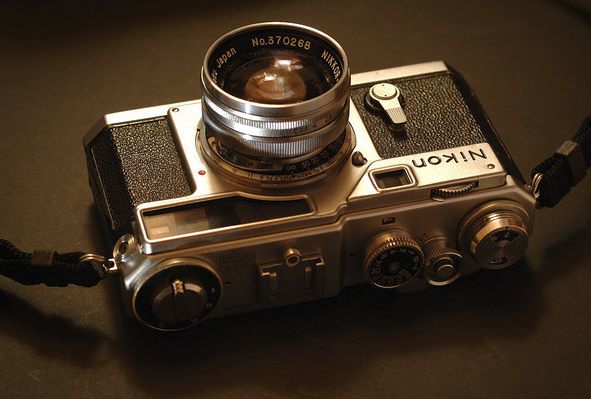
The Nikon SP – the closest to real competition for the Leica M,
but not close enough.

One final thought. With technological change accelerating it’s foolish to regard any camera as a keeper. It’s just a piece of characterless gear, soon to become recyclable junk when something better inevitably comes along. And that’s a good thing as it makes the modern camera a tool rather than a collectible object.

One hundred millionth of a second

A very short exposure.

Harold Edgerton’s high speed (more correctly ‘short exposure’) photography is well known. Who is not familiar with his pictures of bullets piercing apples and inflated balloons?

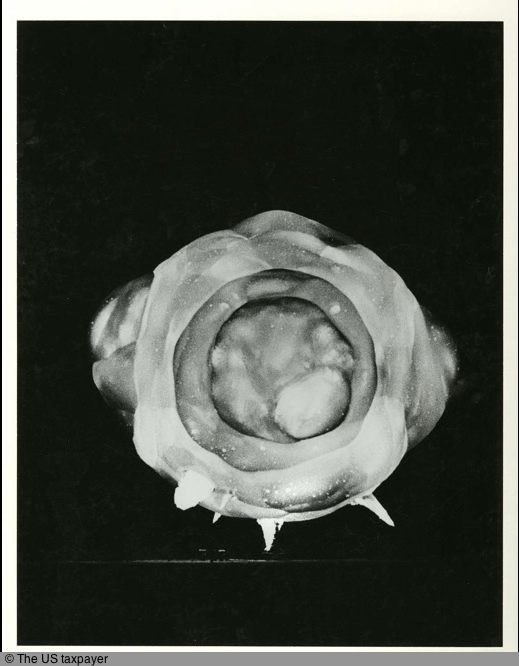
The picture below is different. It’s the simultaneously cruelly ugly and strangely alluring image of the early stages of an atomic bomb explosion.


Atomic blast.

The exposure was on a special camera using an optical shutter tuned to one hundred millionth of a second. You can read the complete story here – the Flash images will not display on an iPad.

The Panasonic 14mm lens

GF2 to follow?

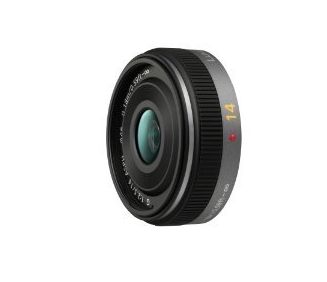
The newly announced 14mm f/2.5 fixed focal length Panasonic lens (28mm full frame equivalent) looks like another little miracle from Japan.

The Panasonic 14mm f/2.5 lens.

It’s even smaller than the 20mm (40mm) f/1.7 and but one thought comes to mind. Can a GF2 compact body with a proper viewfinder along the lines of the Fuji FX100, be far behind?

Let’s hope so, as Panny can bring its manufacturing power to this niche – what I call the Street Snapper Set – and make the whole thing for well under $1,000. The lens itself will be available in November for just $400 in the US.

Here are the size comparison with the 17mm on the GF1 and a 35mm on the Leica:

Panasonic GF1 – 119 x 71 x 57mm – MFT sensor
Fuji FX100 – 127 x 75 x 54mm – APS-C sensor
Leica M9 – 139 x 80 x 73mm – full frame sensor plus your first born

So the Panny body+lens is much the same size as the Fuji, and likely much cheaper, though you trade the smaller MFT sensor in the GF1 for the APS-C sized one in the Fuji. MFT is fine for all but wall sized enlargements, as I can testify from personal experience, so what’s not to like if Panny finally makes a GF2 with a proper integrated viewfinder?