Category Archives: Book reviews

Photography books

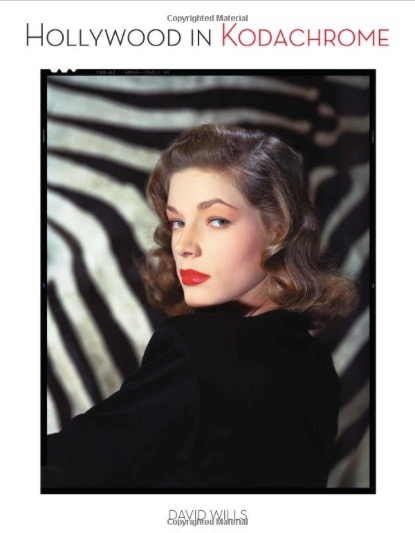
Hollywood in Kodachrome

Superb.


Click the image for Amazon.

An outstanding book with some 300 gorgeously reproduced images of the stars of the golden age of Hollywood. The care and attention to detail evident in the making of these images are really special.

Personal favorites? Why Lauren Bacall of course (on the cover, aged just 21) and Loretta Young, two of the most sohisticated beauties of the era. Today only one actress remotely has comparable presence – Angelina Jolie. Be sure to catch her in Maleficent, a retelling of the Sleeping Beauty tale by none other than Disney, of all studios. She deserves to be in this splendid book.

Kodachrome of the time came in roll and sheet film, the latter as large as 11″ x 14″ and in ISO speeds of just 8 (daylight) and 10 (tungsten), meaning lots of very bright and very hot lights to make the stars look just so. We have it easier today, but with fewer truly glamorous stars.

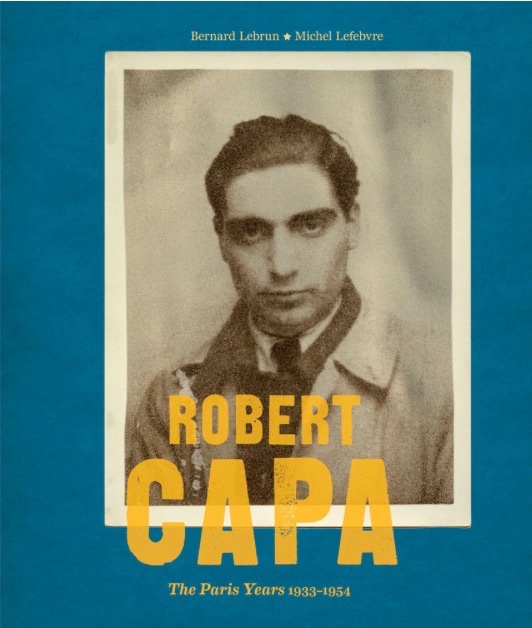
Robert Capa: The Paris Years 1933-54

Fine photojournalism.

When the effects of America’s Great Depression swept across Europe, the revolutionary fervor of the French manifested itself in strongly held opinions. As the author of this book, Robert Lebrun, puts it “You were either ‘for’ or ‘against’. There was no ‘neutral’ “. Many of the street demonstrations of the time were captured by three of the greatest photojournalists the world has seen – David Seymour, Henri Cartier-Bresson and Robert Capa. You could not hope for better documentarians and this tome includes many of Capa’s images which ran in the vibrant French press of the time. Later sections deal with the far better known images from the Spanish Civil War, WWII and Viet Nam, but it’s these early Parisian images which really resonate.

Click the image for Amazon.

If you love great photojournalism – for goodness knows it no longer exists – this book is for you.

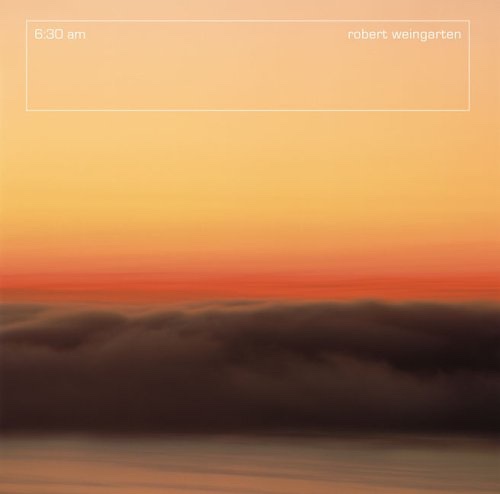
6:30 am

53 images.

In 2003 Malibu photographer Robert Weingarten took a picture daily from his oceanside home toward Santa Monica Bay using a long lens and the same composition. The result is magical and if you thought Rothko could paint this is far better. Available very inexpensively – click the image – and exquisitely printed. 53 of his images are reproduced and you will not believe the variety.


Click the image.

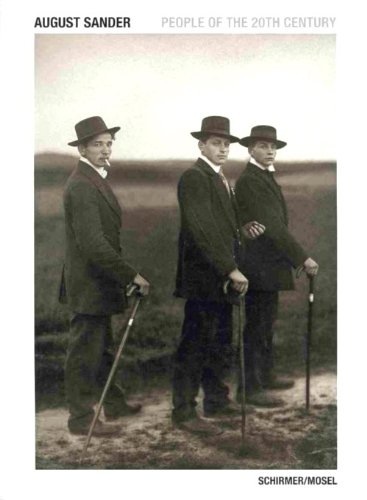
August Sander

A master portraitist.

For an index of all my book reviews click here.
Click the image for Amazon – I get no payment if you do that.

August Sander’s ‘People of the Twentieth Century’ is the concise version of a like-titled seven volume set in which the photographer set out to document all the personality types of his native Germany. My copy dates from 1993 when I was living in La Jolla, near San Diego, a stone’s throw from the wonderful John Cole’s Bookshop, now long gone. The book remains in print at a startling $85 or so, but it’s worth it. Even back in 1993 it ran me $55 + tax. A lot and yes, Amazon was not yet in existence.

There’s a temptation to ‘recognize’ the clichéd Germanic personalities portrayed here – the arrogant aristocrats with their vast estates, the butchers with their no less vast waistlines and so on, but the reality is that these archetypes would not have been that much more different had the images been of Englishmen, the French, Italians or you name it. What is brought sharply into focus is that the ‘trades’ were a much more esteemed place to be back then, most requiring lengthy apprenticeships before the student could proclaim himself a master. Be it woodworker, plumber, cook, tailor or butler, all required long periods of training before expertise could be proclaimed.

That was in the between war years before mass production and standardization obsoleted hard-to-acquire skills, rendering creation and repair anachronistic concepts in a world where rapid obsolescence and high labor costs make it cheaper to recycle and replace than to repair and renovate. That was largely America’s doing – the production line and people replaced by machines. As the old saw (sorry) has it, if two carpenters turn up at your door, one with hand tools, the other with electrical machines, only a fool hires the former for the latter will do a far better job in less time and with greater precision than the once esteemed craftsman.

Sander’s book speaks to the latter and it is a fascinating thing to behold. Just don’t expect to find any humor here for in typical German fashion it’s totally absent, replaced by a ruthless efficiency, one devoid of emotion or caring.
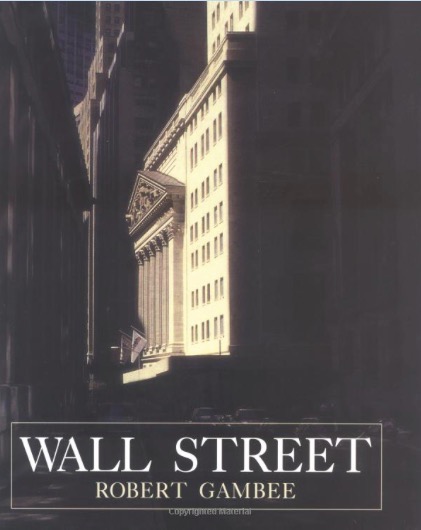
HC-B – Here and Now

Much unpublished work included.


Click the image for Amazon US.

The best reason to buy this 400+ page book is that there are simply dozens upon dozens of images I have not seen before – which probably means you have not either – and many are worth seeing.

The cover image of HC-B with the Leica II and the flat nosed black nickel (later ‘Vidom’) finder (barely better than the awful one built into the body) is by George Hoyningen-Heune. The lens is the 35mm f/3.5 Elmar (a really tiny optic, and no great shakes optically, in addition to being uncoated) and likely the reason that HC-B is using an external finder, as the one in the body was for the 50mm lens only. Incidentally, this body had no rangefinder – focusing was by guesstimation. Leitz finally got the optics down in this focal legth with the post-war six element f/3.5 (later f/2.8) Summaron, and I happily used both for decades on my M2 and M3. The 8-element Summicron was every bit as good but a stop faster at f/2 and gestated into newer versions with fewer elements and aspherical glasses later on, all very compact. But the Summaron is really all you needed for street snaps.

The book is highly recommended.