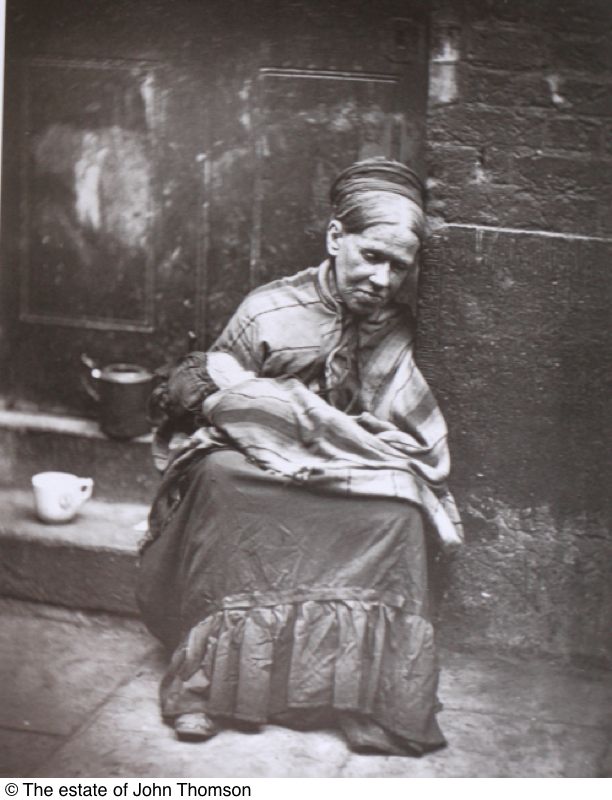
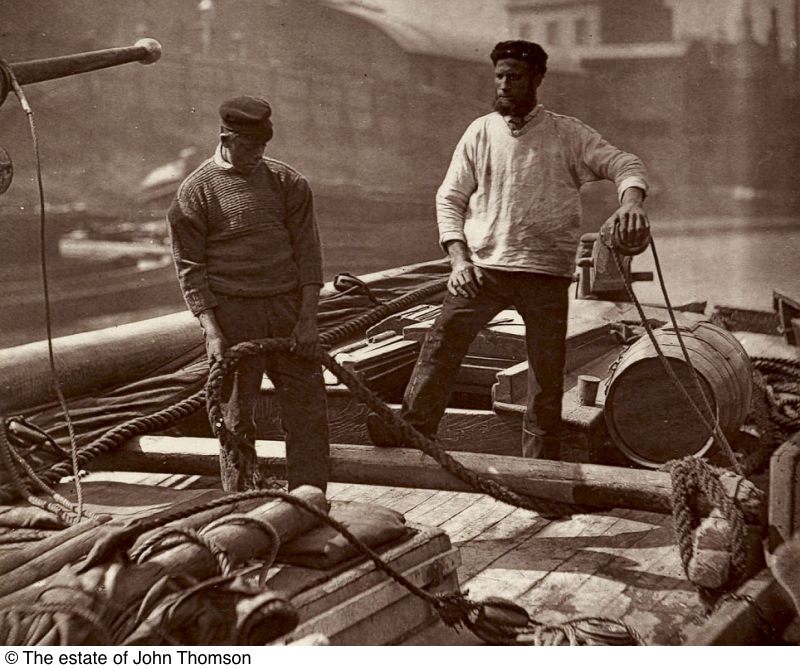
A Christmas Carol.
These pieces generally run annually in time for Hanukkah and Christmas.
As a kid growing up in London all I remember is that I wanted to do but one thing. Take pictures. OK, that and the awful climate.
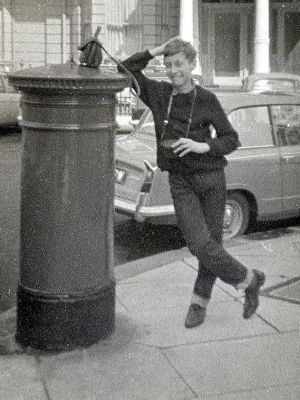
In 1965, aged 13, London. The camera is my Olympus Pen F.
There were two obstacles to this noble desire of course and both involved money. Or, in my case, a distinct lack of it. One was the cost of hardware. Cameras and lenses. The other was the cost of software. Film, paper and chemicals.
You see, I had done a miserable job of choosing my parents. My father had decided to die when I was fourteen, though it made little difference to our economics. He was a dreamer who had not one iota of business sense, even though he had single handedly almost conquered the invading German hordes back in September, 1939. ‘Almost’ seemed to be the story of his life. Indeed, had you made the opposite of his choices, you would likely be very affluent indeed by now. Still, I’m glad he chose my mother.
My mother, who never ceased to tell me of her noble ancestry in far away Poland, never mentioned the fact that nobility doesn’t exactly set you up for a lifetime of steady income, especially when an invading enemy has made off with your lands and coin. Her nobility got her a job as a doctor’s secretary where, for some nineteen years, she managed to make ends meet, thereafter delegating the responsibility to me. Anyway, you can address me as Count Pindelski henceforth.
Thus I found myself oldveau pauvre where what I really needed was a spot of nouveau riche.
So I had to find some way of feeding my habit of photography and retail sales were about the only thing available in a nation of shopkeepers.
In its earliest gestation that role was at Harrods, the posh Knightsbridge department store, then still renowned as part of the House of Fraser years before one Mohamed al Fayed bought it. This is the same fellow who cannot seem to get English citizenship no matter his billions, and whose son famously went for a fatal car drive with the queen of the gossip columns. Middle Eastern trash meets White trash. His father proved that poor judgment ran in the family, convincing himself – but no one else – that Prince Philip had fixed the brakes on the car …. and he wonders he can’t get a British passport.
My first job at Harrods was in the Tube Room (Rube Room), an instrument of modern torture comparable only to the worst the Spanish Inquisition had to offer. In the cavernous underground city that is Harrods’ storage and supply repository, complete with streets and electric cars that purr away quietly under the main thoroughfare of Knightsbridge, the Tube Room was where a small fortune in copper tubing terminated. Each tube originated at a sales location in the giant store so when you entered the room it was like entering some Victorian hell, which of course it was, out of sight of the wealthy who under no circumstances should see change being made. Their cash proffered to the sales clerk, it would be stuffed in a small, tubular container with a sales receipt, and sped on its way by compressed air to Yours Truly in the Tube Room, where it would pop out with a gigantic whoosh of pressurized air, deafening all within a hundred yard radius. I had to make change, bank the cash and return the tube to the system so that the customer could walk away happy. And God help you if you confused the Food Hall tube with Ladies’ Furs. Servants shopped in the former, their mistresses in the latter.

Harrods
After a faultless week, for which I thank an educational system which used to teach arithmetic, I applied for a mercy transfer, having already set a new duration record for any Tube Room operator. The loony bins of England are full of chaps who served in the Tube Room. Once my hearing and nerves recovered, my battlefield promotion and shell shock saw me transferred to the Chief Cashier’s office, headed by one Mr. Shinn, a character straight out of Dickens. History fails to disclose whether there was an under Chief Cashier and given that Mr. Shinn was a raving pansy, I hate to think what the job involved. Mercifully, unlike the monks at my school, he did not like little boys.
My rôle in the Chief Cashier’s Office of this august institution, Hatmakers to HM Queen Elizabeth II (she bought her undies at Marks & Sparks), was to accompany a doddering eighty year old ‘security guard’ with a briefcase chained to his wrist. Twice daily we would empty all the cash registers in the store, the envelopes overflowing with HM’s likeness, signed and sealed at each location and stuffed through the slot in grandpa’s bag who, every now and then, would take a swig from his hip flask. I don’t think water was involved. Now counting other people’s money is hardly my idea of fun but I did get to hang out in the ladies’ Personal Accoutrements section a lot and established a fine friendship with the lovely young women serving the nobs (nobesses?) with the latest in personal garments. That was always my favorite stop where I loved to linger(ie).
After a couple of school holidays counting all that money – this was before credit cards ruled – I got tired of the commute to Knightsbridge and found another retail job at Kensington Cameras on Earl’s Court Road, right around the corner from our miserable fourth floor walk up flat (˜our” being mum and me). There you would find me selling film and taking D&P orders from the locals, most of whom seemed to be itinerant Aussies complete with the obligatory backpacks covered with patches from various hell holes they had visited on their travels. “D&P” was not some perverse practice, standing rather for ˜Develop and Print”, which got your roll back to you in strips with 36 black and white prints generally ill exposed and blurred to boot. The scratches on the film were no extra charge. Aussies couldn’t afford color and they certainly couldn’t take pictures, probably because they were mostly drunk. The only thing I recall of this miserable position is that we always had to check the job returned from the lab to make sure everything was suitably awful before handing it back to the customer. Whenever something saucy crossed the tape you could bet that one of the two proprietors – Bruce Waterman and David Geller – would make off to the back room to double check that all was well with the printing.
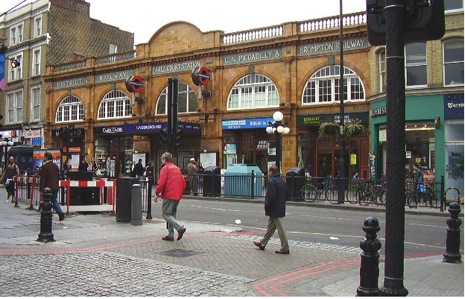
Earl’s Court Road
Actually, that’s not quite fair. The funniest thing that happened at Kensington Cameras was when a distraught customer came in complaining his camera was jammed. “No problem”, quoth I, “I’ll just get the changing bag out and fix it”, the ‘changing bag’ being a black cotton bag with two light proof sleeves which allowed you to manipulate things in broad daylight. “No, no” the customer protested. “I’ll do it”, whereupon he proceeded to open the camera in bright light on KC’s counter, his eyes resolutely closed as tight as can be ….
On to the big time. This is about 1966. I applied for a job at Dixons at 159-161 Kensington High Street (amazingly still there today – right next to the wonderfully named Adam and Eve Mews, beloved of straying husbands and their dolly birds) and because the manager was a Canadian who liked the English, was given the position and a nice raise. They only found out I was a dumb Polack later, when I completed the application form. Dixons was then a small chain of retail stores which consciously focused down market and pushed D&P and movie cameras, which is where the money was. They had a line of the most awful movie cameras, made of pure pot metal which gave plastic a bad name, sold under the name Prinz. Now and then a contest would be held for the best catchy one liner, the one I recall with fondness being ‘Zoom Day my Prinz will come’. The lady writing that one declined to disclose any other thoughts on manhood but was rewarded, nevertheless, with a roll of Kodak’s finest 8mm cine film, running time four minutes. I don’t think Dixons ever quite got the double entendre.
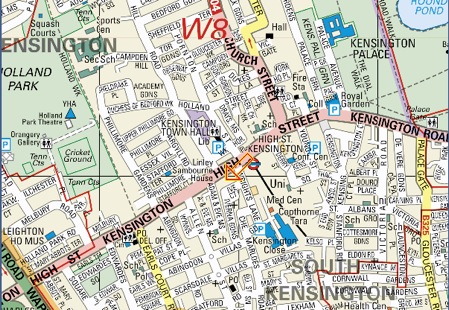
Dixon’s location in Kensington, London, W8.
Sadly, the charming Canadian who had hired me was promoted to Dixons Central soon after I started, to be replaced by a genuine boor named Des O’Connell. Des didn’t so much have a chip on his shoulder as a sequoia, and no matter how often I told him that I was born in Dublin of escaped Polish refugees, Des never got over the fact that I spoke the Queen’s English whereas he had majored in Bog Irish. Worst of all, he had skipped history lessons and insisted on wearing a Hitler-style mustache which was, on reflection, just what the doctor ordered. What I thought of as ingratiating myself with the boss, a shared land of birth and all, seemed only to increase his hatred for me. Ireland, which ranks first amongst England’s failed attempts at foreign rule, seems to engender especially strong feelings from its denizens toward its former oppressors. Mercifully, Des hated just about everyone so I didn’t feel especially singled out. Truth be told, it would have been pretty worrying had he liked me.
I have but two memories of Des. His awful mangling of the mother tongue and his blast furnace breath, a delightful mixture of cheese and (Irish) beer, which seemed to radiate in all directions in a five foot radius about his person. This, of course, ensured everyone kept their distance, which he put down to English standoffishness. However he did teach me a valuable lesson. I have been vigorously denying that Dublin was my birthplace ever since.
I did however make some great friend at Dixons, where I worked every Saturday and during my school holidays. Stores were still closed on Sundays in honor of some ridiculous Puritan concept of not dirtying your hands with commerce on the Sabbath – this from a secular nation – unless that commerce involved handing over loot at the local palace of perversion, also known as the church. Empire building had been strictly a Monday through Friday affair in England for a few centuries and old habits die hard.
Gary Smith was the Assistant Manager for whom Des kept an especially malicious place in his heart. Des, having risen well above his level of competence, rewarded with suspicion and dread any who threatened his exalted position. A gentle giant of a man, Gary one day came into the store limping badly and somewhat the worse for wear, nursing a bruised set of knuckles. It transpired that a car had knocked him down at a local pedestrian crossing and Gary, full of the sense of fair play his ancestors had displayed on numerous battlefields for a millennium or so, had remonstrated with the driver only to be met with a hail of abuse. So he did the only rational thing a big bear with no enemies would do and smashed the driver’s side window. With his fist.
Irfan Haq became a close friend. A diminutive Pakistani with a wonderful wit, he was not only an ace salesman but a warm, friendly human being. Now you need to understand that the Pakistani and Indian populations in England were, at the time, a growing cause of concern amongst rabble rousing politicians. Having been roundly thrashed by a little guy in a loincloth and spinning wheel, the English were naturally not a bit miffed at the prospect of being overrun by the hordes from their former colonies and many hewed to the neo-Fascist rhetoric of one Enoch Powell, a barking-mad politician who pronounced that the free immigration of all these unwashed masses would result in a “River of Blood” in the streets of London. Not much changes – they are called ‘conservatives’ in today’s America.
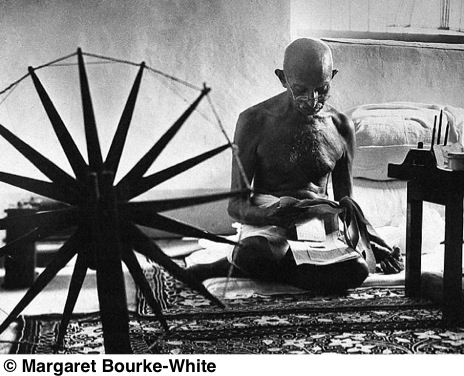
A little guy in a loincloth.
The United Kingdom, in its infinite wisdom, had made the boo-boo of granting citizenship to all in its colonies so, when the colonies refused to be colonial, those leaving them did so with English passports in hand. And their first port of call was, of course, England. Powell (another twit with a Hitler mustache – what is it with these guys?) could not have been more wrong, for all these poor immigrants wanted was a job and hot running water. They make the trains run to this day and do the jobs their former oppressors refuse. The colonists have been colonized.
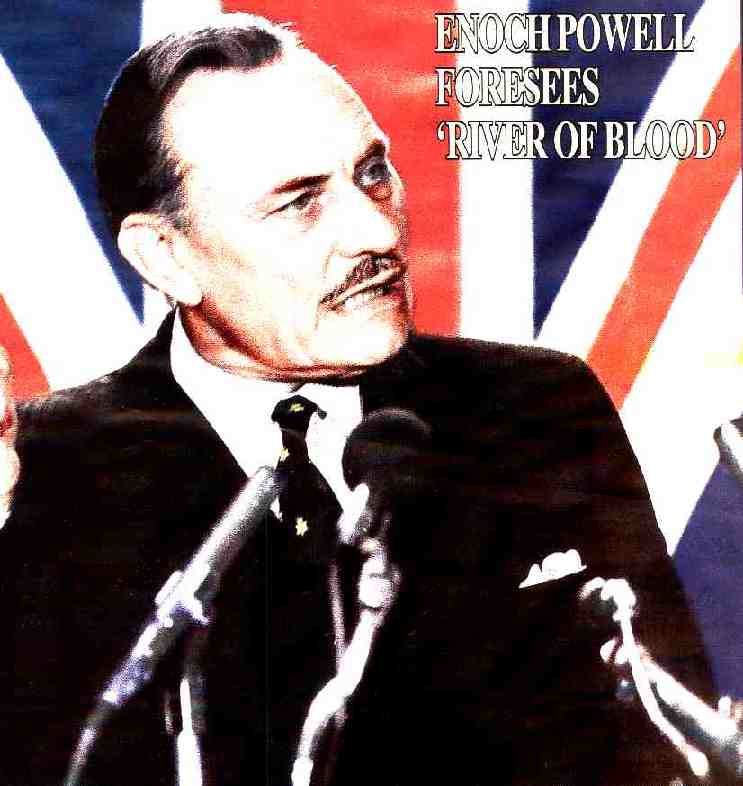
Enoch Powell. A brilliant scholar and
genuine English loony.
Powell’s grandfather had been a coal miner, suggesting an unprecedented degree of social mobility by his descendants in a nation which frowns on the concept. From black lung to black heart in two generations.
But Irfan sloughed off all of this hatred and reveled in being British. Plus, like me, he loved that most cerebral of games, cricket. (To this day the single worst thing I can say about America, my adopted country, is that it doesn’t ‘get’ cricket.) India and Pakistan have returned the favor of colonialism by roundly thrashing England at their own noble game ever since. Never mess with a man’s googly.
One of the perks of working at Dixons was that we could borrow any piece of equipment of our choice over a weekend, so Irfan and I would generally get the best they had – meaning a Nikon or Pentax (we weren’t allowed to touch the Leicas!) – and would go off photographing London with free gear over our shoulders on Sundays, our day off.
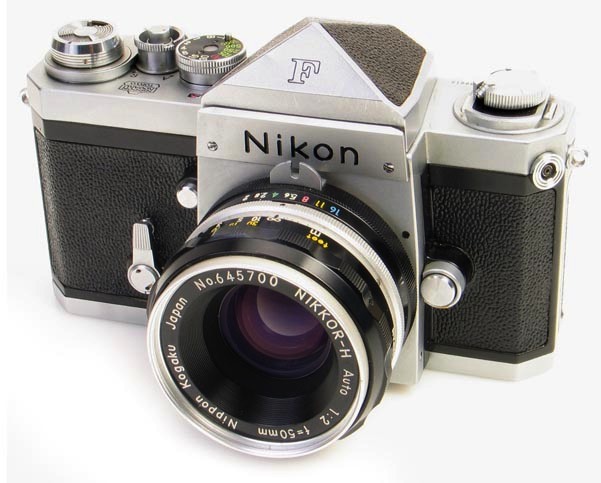
My favorite Sunday ‘loaner’ from Dixons – the superb Nikon F
The friendship which was the most fun was with Anthony Harvey. Like me Tony was a victim of the best English schooling had to offer (unlike mine his parents had to pay whereas I got the guilt scholarship they awarded to those of ‘foreign extraction’ as it was charmingly put), which meant that our English diction was calculated to drive Des crazy, something we enjoyed doing at every possible occasion. Like Irfan, Tony was an ace salesman and, being somewhat older than I, was always assigned the gentry business. He was, after all, not only white but genuinely British and an old Harrovian to boot. As often as not a customer would announce that they were Lady this or Sir that, which played right into Tony’s sales talk, not least because he sounded like one of them and they felt that they were speaking to one of their own. Which they were, Tony being a drop out from a well-to-do aristocratic family. Never mind the fact that their checks, generally from the private bank of Coutts & Co., invariably bounced once or twice before clearing. An English gentleman had every right to bounce a check when, that is, he wasn’t bouncing his mistress.
When Tony learned that I was going on to study mechanical engineering at University College, London he decided we should try some of the principles of destructive testing on what Dixons claimed was the world’s best tripod, a German Linhof. This thing was massive – more steel than in a Krupp weapon of war. We never sold a single one though I have always suspected it was Lord Lucan’s weapon of choice when bludgeoning the household help. I explained to Tony that nothing was indestructible and that machines were routinely tested to failure to see what they could handle. Well, the wager was made, Tony on the side of the the master race, I on the British side, the one of imminent failure. We made a fine test rig. It was off to the stock room under the store where he grabbed two of the tripod’s legs and I the third, pulling in the opposite direction. The crack of brittle metal failure had the rest of the sales staff running down to the stock room to see who had been shot, only to find Tony and I lying on the ground hopelessly convulsed with laughter holding what was now a two piece tripod. “No problem”, quoth Tony cooly, “I’ll just return it and say it arrived broken” which he did and we never heard any more about the matter. Mercifully Des, he of the flamethrower halitosis, was out that day.
Tony later got the wrong girl pregnant (“She is so below me” he would lament, forgetting how much he had enjoyed her being below him a few months earlier, though it needs to be added that the girl was, indeed, a genuine scrubber) and moved to Oxford where he administered matters for the Oxford Farmers’ Union. Neither of us had any idea what this institution actually did, but he got free board and lodging in exchange for menial duties which gave him lots of time to pursue his new vocation of oil painting. I would take the train from London during my university days to spend time with him at weekends and have my picture painted. I recall his style was a sort of mixture of Soutine and Modigliani, but have sadly lost track of both the painter and of the painting which was actually half good.
As the kid on the block I was rarely allowed to deal with big sales, having yet to learn the meaning of the word ‘commission’, but did luck out once. Appropriately it was an American customer who saw me hit the sales leader board. Within seconds of coming in I was ˜Tom”, a familiarity I managed to survive while selling him a Nikkormat FTn with 24, 50 and 135mm Nikkor lenses. That was a nice camera with a somewhat fragile shutter speed-setting ring concentric with the lens mount. The Nikkors, still set in the scalloped metal mounts of old, were as good as they got and a lot better than this customer would ever be a photographer. He would come in from time to time, ask for ˜Tom” and buy more gear which had absolutely no impact on the quality of his work. It remained awful.
Des, however, he of the gas mask breath, was eventually to get his revenge. One day in 1970 a nice looking, well spoken chap came in asking to look at a Pentax Spotmatic. This was the camera you bought if you were serious but couldn’t quite afford the Nikon F. Sensing a big sale I gladly acceded to his request to try it out on the street and, next thing I knew, Des and I were chasing him down Kensington High Street. I should have known better than to trust a chap in red trousers. I let Des take a strong lead, which was not easy given that I had been a competent runner at school and Des’s girth exceeded his height, but why tempt providence, I thought. The only thing I remember were my grandfather’s words ‘When in doubt, run away, so that you can come back to run away another day’ coursing through my head. Given that Grandfather was a successful economist and banker I paid heed, and loped merrily along watching the Spotmatic recede even faster than Des, who was, I confess, giving spirited chase to one who was clearly an Olympic athlete. Des managed the first 100 yards in something approaching four times world record pace though even a casual observer would have to admit that his speed dropped off sharply thereafter. Well, this was the excuse he needed and I was summarily fired a week later when he had regained his bad breath and the cops had concluded that I was not in on the scam. All I recall during the firing are the crumbs of cheese on Des’s Hitler mustache and wondering how long it took him to trim the wretched thing every morning.
This was another important lesson in life. Quit before you are fired. I did a lot of quitting thereafter before I started working for a real ass years ago. At least he can’t fire me as I have been self-employed all those years.
During all these years in retail I had been squirreling away the pittance I was paid until, in 1971 I finally had enough to buy my dream camera – the one Dixons never let me borrow for the weekend.
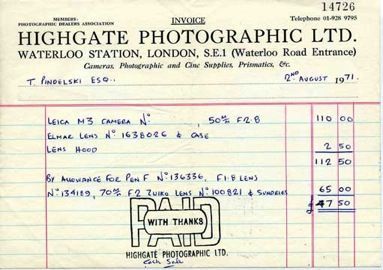
The sales receipt for my Leica M3, bought used.
Every spare moment, typically after a day’s work at Dixons, was spent in the local Kensington Public Library poring over the works of the great photographers of the world. Now I could be one of them! And, in truth, it was like a duck taking to water for after being published (and paid!) many times in the photo press, three years later Photography Magazine named me its Photographer of the Year and gave me a bunch of gear to commemorate the occasion. This, of course, I immediately sold to fund film, paper and chemical needs.
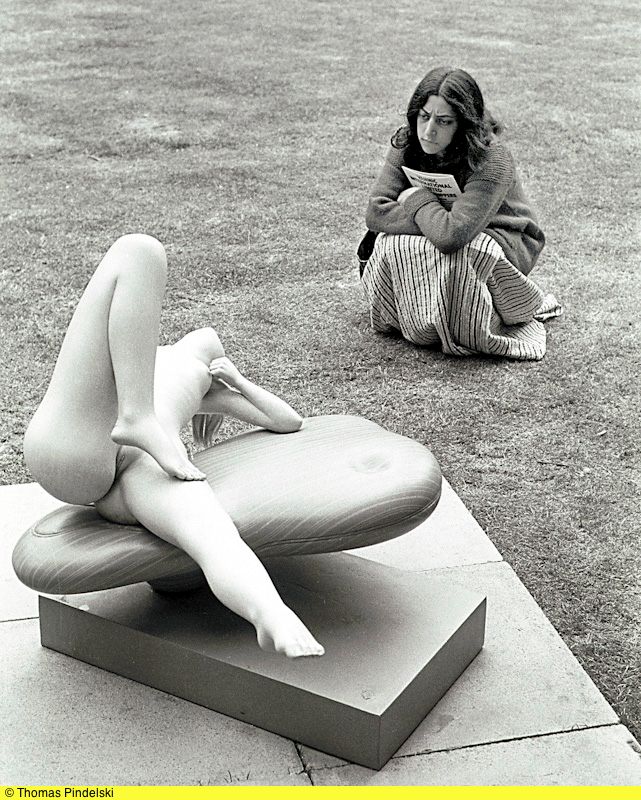
Photographer of the Year, 1974. Sculpture by Reg Butler.
My life in retail had, however, come to an end and just three years later I was clutching a one way ticket to America, wearing the same C&A suit from my retail years and headed for a new life. My accent went with me and I was now genuinely English, having had to emigrate to acquire that status. My fondest memory on leaving is of my boss, a fellow named W. G. Carter, whose parting words were “But Thomas, why would you want to go there? It’s full of Americans”. Three years later he was posted to Manchester which was full of the former colonials his ancestors had so abused.
Postscript: Having exploited my Englishness for many years after immigrating to the States in 1977, I was, inevitably, sent on business to London some ten years later. (“Gee, Tom, you can speak those guys’ language” was the analytical thinking). American corporations have always confused motion with action and without their obsessive belief in the value of movement for its own sake both Boeing and Airbus doubtless would not exist. Anyway, after the obligatory pressing of the flesh with my English mates in the office, I decided to put on my best tweed cap and jacket and furled my umbrella just so before visiting the local pub. An English gentleman’s umbrella, you should understand, is for ever to be furled in a land where it rains at least daily. Bellying up to the bar, I ordered a pint of Courage Director’s from the publican. As he handed the brew over he casually glanced at me, asking “Oh! yeah, mate, ‘ow long you over ‘ere for then?”. My accent had migrated west with Horace Greeley and I had been well and truly exposed.
Click here for an index of all the Biographical pieces.