Category Archives: Photographers

Barry Lyndon

A must see

Like the great English film maker David Lean, the American Stanley Kubrick made but a handful of movies. As with Lean’s oeuvre, there’s not a dud to be found. Indeed, I recall many years ago buying my first DVD player and the first movie I bought to see on it was, of course, 2001: A Space Odyssey.

But if it’s visual richness you crave, then the Kubrick movie you will like most is the little played Barry Lyndon. In addition to a superb performance by Ryan O’Neal (when did you last use those words about O’Neal?) there is the sublime beauty of Marisa Berenson. Kubrick was nothing if not technically competent, having started life as a stills journalist photographer, and I recall at the time of its release stories circulating of Kubrick’s use of special Zeiss still camera lenses on his Mitchell movie camera.

Well, here’s the scoop from Ed DiGiulio, the expert who adapted the Zeiss f/0.7 (f/0.7!) 50mm lens for Kubrick’s camera, which Kubrick proceeded to use for the candlelight scenes in the movie. The effect is magic. The lens – like the fabulous Leitz 180mm f/3.4 Apo-Telyt-R which I used for many years on my Leicaflex SL – was commissioned by NASA.

This is a very long, slow paced film and one which is essential viewing for those with non-American attention spans – meaning you can sit still without popcorn and colored, sugared water for 3 hours – and a love of visual beauty. It’s the sort of movie that makes you go out and buy a 100″ screen for your home theater. I did.

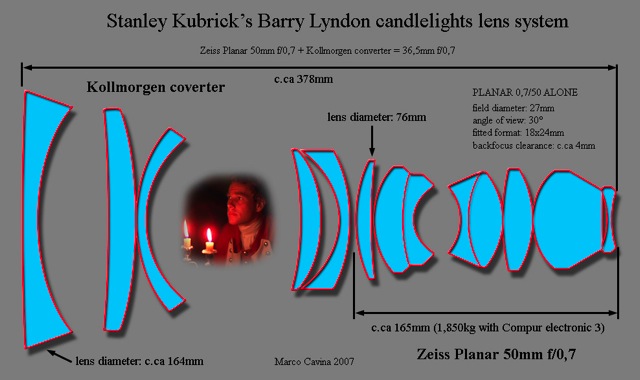
Here’s a schematic of the Zeiss Planar lens together with the enormous (over 5″ diameter) Kollmorgen wide angle adapter which DiGiulio refers to:

Marisa Berenson? None other than the great-grand-niece of that art plunderer and self-appointed Renaissance expert, Bernard Berenson, but a whole lot nicer to look at.


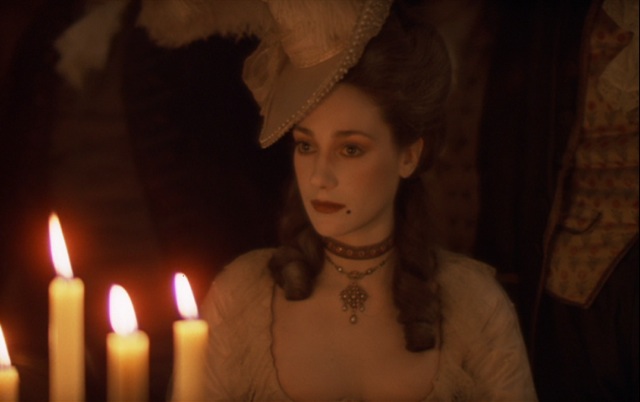
Marisa Berenson by candlelight in Barry Lyndon. Staney Kubrick, Zeiss Planar 50mm f/0.7 lens

Kubrick’s last movie was Eyes Wide Shut, released in 1999, the year he died. Another visual masterpiece, it is also distinguished by another actor who couldn’t act before he crossed Kubrick’s path, Tom Cruise. Watch it for a radiant Nicole Kidman.

Update June 2013:

Watching Barry Lyndon in the newly remastered Blu-Ray version is a revelation. Maybe the best art film ever, with luscious cinematography by Joe Alcott whose credits include three other Kubrick masterpieces – ‘A Clockwork Orange’, ‘The Shining’ and the unsurpassed ‘2001: A Space Odyssey’.

Update July 2015:

There’s a fine 6 minute documentary on the Mitchell cameras, the Zeiss f/0.7 lens and the costumes here.

The March 1976 issue of American Cinematographer with details about the cinematography can be downloaded here.

Cartier-Bresson: The Impassioned Eye

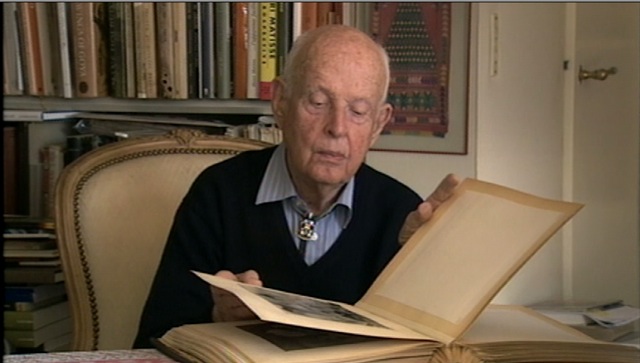
A Cartier-Bresson documentary.

To wile away a couple of hours being shown his pictures by the great man himself is one of the better things to do with your time.

The documentary is called Henri Cartier-Bresson – The Impassioned Eye and is an orgy of HCB’s pictures, with many interesting tidbits on what was happening at the moment he pressed the button. I am struck again by how special his early (1930s) surrealist vision really was. It’s something which faded over time making his newer pictures mundane by comparison.

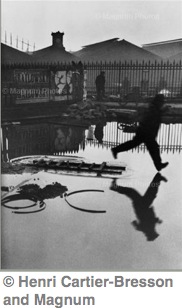
If there’s an error it’s the credit for his greatest picture – the man jumping over the puddle. It’s not a 1950s effort – it dates from 1932 and was taken during a time when his vision would forever make Henri Cartier-Bresson the most renowned photographer this world will ever know. And when you listen to the stories behind the pictures of Chanel or Bonnard or the Curies, all will be forgiven.

Highly recommended.

Steichen and fashion

A true modernist.

A reader dropped me a note about a fine slide show profiling the fashion photography of the great American photographer Edward Steichen. Click the picture to view.


Martha Graham by Edward Steichen, 1931

These pictures are from the Conde Nast library and are just as striking today as they must have been 80 years ago.

Cheer up!

It will get better, despite the government.

It seems more than appropriate to share a depression era photograph of Norma Shearer, by the great Cecil Beaton, at a time when America is leading the world into a massive depression, one likely to compete with the Big One for the worst ever.

The coming depression is a good thing, contrary to what our ‘business as usual’ leaders tell us. America is over-levered, over-retailed, over-car’d, over-banked, over-housed, over-medicated, over-lawyered and over-fed. We need a large percentage of the related businesses to fail, bringing down inflation and encouraging savings and capital formation. Because, sure as hell, if you don’t provide for yourself you know the government will not. And I can assure you that no conceivable form of government stimulus will fix what ails us until a broad swath of bankruptcies cleans the Augean stables known as American Retail and Residential Housing. Face it – most people are designed to rent, not own. And no one needs a new iPod.

So enjoy the picture, look forward to going to the movies for $1.50 (it’s called Netflix and you don’t have to drive your foul SUV to see one), forget the vacations (you have had too many as it is) and save your money. You are going to need it.

Vionnet

Greek classicism.


Vionnet dress with ruffle skirt, 1934

Take the Greek classicism of the great French dressmaker Madeleine Vionnet (1876-1975) and marry it to the no less classical photography of George Hoyningen-Huene and you have a timeless combination of life and art. So it hardly needs adding that the best gift this Christmas brought along was Betty Kirke’s definitive book Vionnet which my grandparent’s gave me this past December 25th.

Not only an orgy of photography by Hoyningen-Huene, Penn, Steichen, Beaton, Horst and other greats, this very large format book includes detailed patterns for many of the seemingly simple, yet highly skilled, creations of this greatest of clothes designers.