Category Archives: Photographers

Early Penn

A special technique makes for special pictures

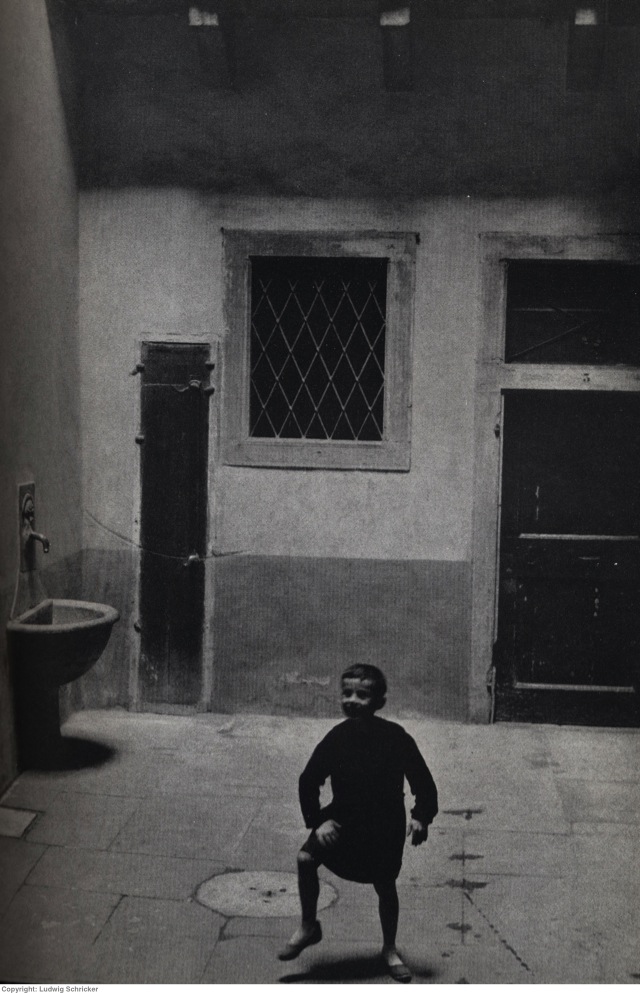
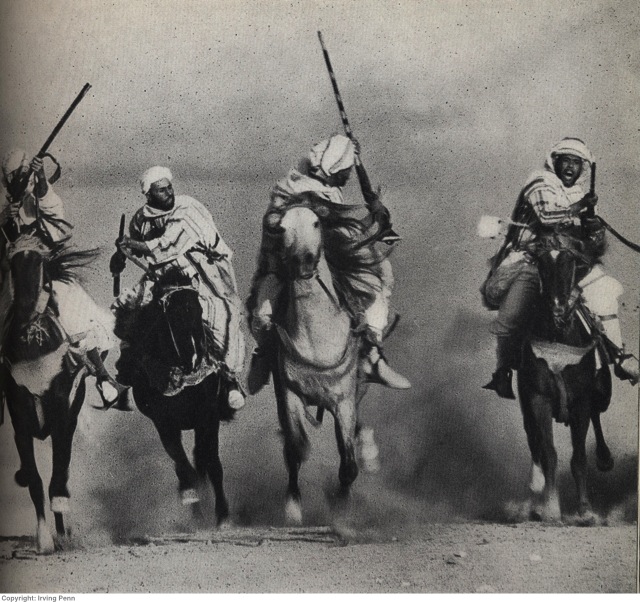
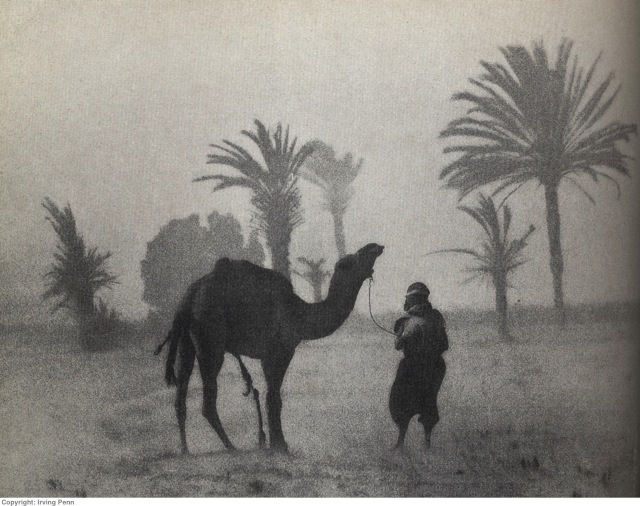
I may have grumbled about Irving Penn’s love of darkroom technique before, but there’s no denying the originality of the results. So it’s no surprise that some early pictures of his, taken with a Leica, and published in Leica Fotografie 2/1955, have stuck in my mind. Penn was mostly using large format and 6×6 film in those days, but he was not past messing about with 35mm film on his vacation.

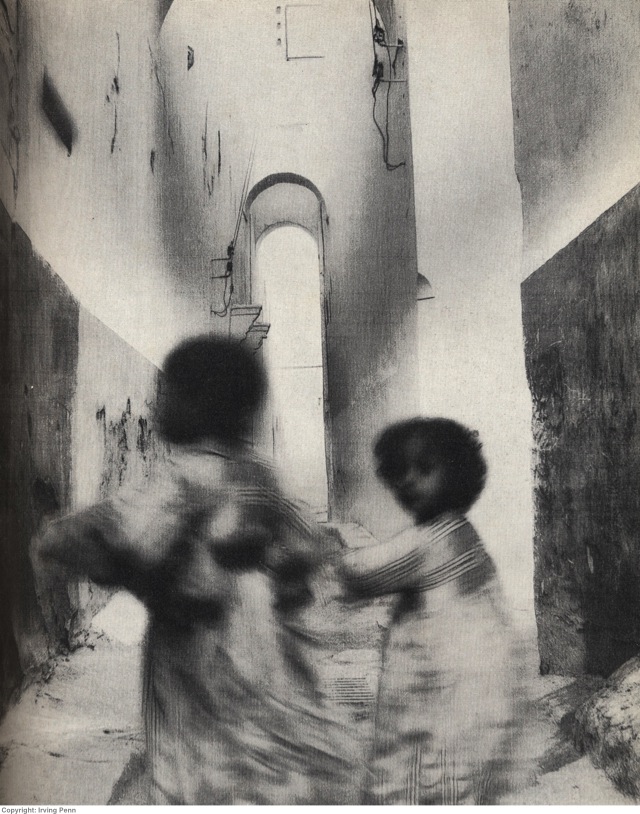
But he did not stop at just taking snaps. These were made on color film with the originals cropped and rephotographed in monochrome and printed with a point light source condenser enlarger. It’s worth adding that most 35mm and 6×6 film users enlarged their negatives using diffuser enlargers, meaning that the light source was a coated neon bulb which naturally softened the image, obviating the worst of the grain. They were also inexpensive, thanks to the simple optical design. By contrast, the high intensity, uncoated, focused, point light source Penn used in his costly professional enlarger (complete with an exhaust fan to stop things melting) magnified every detail and line in the print, an effect Penn used to startlingly good effect in these pictures from the Arabian desert.

Note the etched appearance and the startling effect of the stripes on the running boys’ clothing. No less striking is the composition here, with everything but the main subject sharp – shades of Parkinson’s red hat picture. Or was it the other way around? Yes, I rather think Penn got there first.

I have never seen these reproduced elsewhere and hope you share my excitement on seeing these images. The original magazine is now over fifty years old, so please pardon the yellowing and fading.

Edward Quinn: Photographer

A man of grace and beauty

Mention Edward Quinn’s name today in photography circles and you will get puzzled looks. Partly that’s because he was a quintessentially European photographer, meaning that maybe the US saw less of his work. Part is that his work is just too refined to appeal to modern tastes.


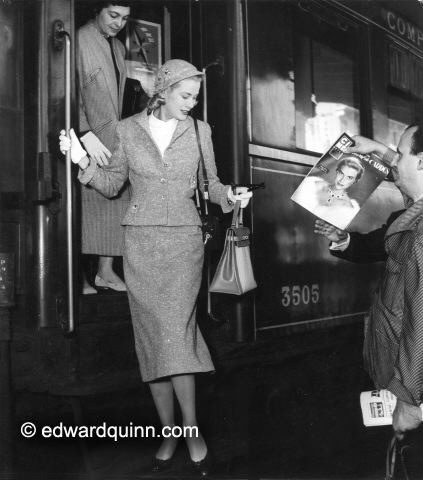
Grace Kelly by Edward Quinn

Yet Quinn (1920 – 1997) was the first among those who plied their trade on the Côte d’Azur, where his subjects were the rich and famous, much of his work gracing the pages of Paris Match or Life magazines.

I first came across his work in the English Edition of Leica Fotografie issue 4/1966 (I was published there in 1974, by the way, back when I cared about such things). His picture shows a rather formal, slightly over-dressed tweedy individual, holding an M3 with the 35mm Summaron I knew and loved so well. He looks to have come from central casting for a movie on the British Raj. While his subjects are invariably famous they are clearly at ease with this ‘Master of the Leica’ as LF styled him.

Take a look at his web site which, while a bit of a mess organizationally, shows his work well.

His book Riviera Cocktail is available from Amazon. Sadly the text seems to be in German, but the pictures are timeless.

Margaret Bourke-White: History repeats

Nothing new under the sun

America 1932 or 2008? These folks lied on their mortgage application, the lenders colluded in the fraud, and now the four remaining taxpayers in the United States are expected to bail these felons out – the crooks in the car, that is. The people in the line are working folk.

Thank you, Margaret Bourke-White. The only difference today is that the undischarged bankrupts will be driving to the soup kitchen this time, not walking. You can sleep in a car but you cannot drive a house.

Wall Street – Paul Strand

A great photograph.

The collapse of the latest bubble on Wall Street prompts mention of what may be the finest picture ever taken of that great locale.

Now brace yourself, it’s by Paul Strand, a photographer who is vastly overrated.

This was taken shortly after Alfred Stieglitz had taken Strand aside and talked him out of his genuinely frightful soft focus phase, and I think you will agree that Strand’s newly found religion of objectivism is a standout image in the age of modernity.


Paul Strand, Wall Street, 1915