Category Archives: Photographers

Tony Snowdon

A great photographer

If nothing else, the British Royal Family has been adept at two things – choosing its parents well and being fortunate in having a select group of society photographers over the years preserve their likenesses.

They include Cecil Beaton, Norman Parkinson, Patrick Lichfield and Tony Snowdon.

Whatever one might think of his choice in mates, Anthony Armstrong-Jones, who became Lord Snowdon upon his marriage to Princess Margaret, rates not just as a fine Royal Photographer but also as one of the great photographers of our time. This vastly talented individual skipped easily between the worlds of industrial design (his work changed the making of wheelchairs for the disabled), architecture (the aviary at London Zoo is his) and photography. While many credit him with the first use of coarse grain in fashion pictures, his real forte lies in gritty social documentary, such as the series on mental institutions, and in portraiture.

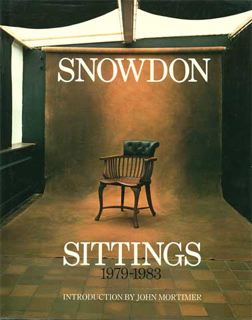
‘Sittings’ is a fine book, though long out of print. It is rare that the warmth and gentility of a photographer is so clearly reflected in his subjects’ faces, yet those attributes shine clearly here time and again. The portrait of Meryl Streep in the gnarled tree is a masterpiece, plain and simple. The darkness of Brideshead Revisited perfectly reflected in Jeremy Irons’s melancholic stare. And where many would have made cruel fun of him, Snowdon’s portrait of Prince Charles in his racing colors is a simple and subtle image of rank and privilege. Indeed, were it not for the trust that Snowdon clearly engenders in his subjects, pictures such as this would never have been taken. Just ask yourself if you were a member of that much maligned family, would you trust anyone to take your picture?

If there is one picture above all others that deserves singling out here it is the portrait of Lady Thatcher. As is common with most of the photographs in this slim book, the set is simple to the point of being barren, the better to emphasize that great leader’s resolve and determination. You don’t have to agree with her politics to admire Snowdon’s portrait which is apolitical in the best sense of the word.

Most of these images are to be found in a current book of Tony Snowdon’s work entitled ˜Photographs by Snowdon ‘A Retrospective’ “. Any photo portraitist seeking to learn from the very best should search out that volume.

Paul Strand

Book review

Sorry, I just don’t get it.

For some forty years I have been trying to like Strand’s work without success. Frankly, based on the evidence of this Aperture book, his output reeks of stunning mediocrity and, if the prints in this volume are a guide, he was a wretched printer to boot. Ansel Adams, at least, knew how to print.

The sheer pretentiousness of the narrative here, where it is expected that the reader will nod in breathless agreement at the genius of the photographs, is best typified by the way Strand’s street portraits are extolled for his use of a right angle lens to avoid detection. His well known ‘Blind Woman’ is singled out as a prime example of this approach. For heaven’s sake, the woman is BLIND. Why the subterfuge? He could have stuck his plate camera in her face and the result would have been no better, nor the photographer any more detected by the subject.

As for the argument that has it that technical limitations of the time explain the poor quality of the prints (or is it because of one of those hallowed rare metal printing processes where the resulting grime is meant to be admired?) that also fails to pass muster. Julia Margaret Cameron, a technically challenged photographer if ever there was one, was turning out superior work some 50 years earlier.

Pseudo intellectualism at its worst. If you an uncritical admirer of the New York Times, buy this book. Otherwise save your $50.

Elliott Erwitt

Snaps – book review. Simply the funniest photographer ever.

Elliott Erwitt takes funny pictures. You could just write that and know all you need to about this compilation of a lifetime’s worth of humor.

For life without Erwitt would be a sadder place indeed – like going to New York and finding that Zabars is no more. Or passing through Los Angeles and discovering that the Atlas Sausage Shop is out of Kielbasa. Or visiting any Young’s pub in England only to find the beer is now served cold.

No matter that most of Erwitt’s pictures are posed. Unlike frauds like Capa’s dying Spanish soldier (the contact sheet has him managing to die six times in quick succession) or Smith’s Minamata child in her mother’s arms (carefully posed with artificial light under the guise of street reportage), or Thomas Hoepker’s execrable 9/11 money making fraud, Erwitt makes no pretense about his light hearted work and just lets you enjoy it.

And it is much harder to be a great comedian than a great dramatist, whether your chosen outlet is acting or photogaphy.

The only thing wrong with this book is that it has too many pictures in it. You really must savor a few at a time to avoid overload. And, mercifully, the narrative is a scant four of the five hundred and forty three pages.

Buy the hard back version. You will wear out the paperback in no time.

This is the work of a great photographer.

Bill Brandt

Photographs – book review.

If your library of photography books is to contain only a handful of tomes, then someting showcasing Bill Brandt’s work has to be on the short list.

Brandt may be one of the very few exceptions who proves that monochrome can be more powerful than color, for his is strictly a black and white vision of the world.

And what a vision it is. None of the work is derivative in any way, Frequently, the images are breathtakingly original. Whether it’s his landscapes, or gritty scenes of coal miners or fabulous distorted nudes (sadly there are too few of these here), the viewer looks on in wonder at how one man could have done so much that was new. New and, let it be quickly added, horribly good.

Who can forget his portrait of a troubled Peter Sellers, taken between scenes for one of the Pink Panther comedies? Or his haunting image of Francis Bacon on Primrose Hill. His picture of Sir Kenneth and Lady Clarke, the spouse looking up at her esteemed husband with awe and respect (both well deserved in Sir Kenneth’s case), is charming for its lack of nastiness, which would have been an easy and cheap shot in the lovely home occupied by the couple.

His landscapes are no less moving. See the shot of Skye with the gull’s nest in the foreground. An image that hints at the best the surrealists did. Then turn to ‘The Man Who Found Himself Alone in London’ taken in a 1947 smog, an affliction which London continued to suffer until the mid-1960s, when clear air laws finally allowed one to breathe easily. Timeless.

We are taught to adulate the landscapes of Ansel Adams which, by comparison, are little more than picture postcards, albeit ones snapped by a supremely competent darkroom technician.

Buy this, or any, book about Brandt and you will have one of the shining exemplars of the greatest photography of our time.

Joe’s NYC

A Photoblog to satisfy your need for a daily fix

When I left Manhattan’s West Side in 1987 for Los Angeles, the two closest friends I had in the world were the limo driver who would take me home from the southern tip of the island at ridiculous hours and my doorman. The driver was a whole lot more fun than the methadone case who held the door open, palm expertly proferred, once a year at Christmas. You see, Dimitri was a Russian emigre and we used to argue about Tchaikovsky and Chopin and Mussorgsky during the 30 minute trip home. Music and dance, whether in the streets or in more formal settings, were the artistic highlights of my many years in New York, but it was time to go.

Fulfilling the American business belief that motion beats action any day, I found myself revisiting the city on many needless cross country trips over the next few years and gradually fell out of love with it. Too dirty, too crooked, too everything.

However, every now and then I need a quick fix. Whether to confirm the wisdom of my decision or to see how wrong I was, I’m not exactly sure. And the best way to do this is to visit Joe Holmes’s photoblog Joe’s NYC where, without fail, you will find a new picture every day taken, as often as not, in Brooklyn or Manhattan. The work is fresh and vital, clearly done by one who loves his environment and captures the best and worst of the city I recall so well. Some of Holmes’s best work was done in early 2005 when he and some friends set about documenting Fulton Fish Market on the lower East Side before some developer converted it to high rises.

Click the picture to see Joe’s fabulous documentary photography. Ten months after he took these, the market was relocated to the Bronx, a victim of rising real estate values in lower Manhattan.

Click the picture for the slideshow.

Take a peek. It beats flying to New York and getting ripped off on the cab fare into town any day.