Category Archives: Photographs

Steve and Airheads

4 years on.

Steve died four years ago today and we will soon be enjoying the Aaron Sorkin biopic. starring the splendid Michael Fassbender, who happens to be a devoted biker himself. In fact, he does not even own a car.

Some six years ago I wrote of the visceral appeal of old motorcycles and my BMW R90/6, a 1975 model, remains in service today and I still enjoy the heck out of riding it. These older BMWs, air cooled with the horizontally opposed cylinders poking either side into the airstream are, appropriately enough, referred to as ‘Airheads’. BMW continues to stock almost every part for machines made since 1972, which is remarkable, as are the prices!

Few know that Steve was a BMW bike rider before migrating to Mercedes cars later on:

He’s riding a late ’60s R60/2 with the lovely Earles front forks named after the British inventor, Earnie Earles. The design, way ahead of its time, ensured that there was no dive under heavy braking while also providing the solidity needed for hauling a sidecar, a not uncommon form of transportation in a still poor, war torn Europe back then.

My R90/6 had been in storage for four years while I enjoyed a 1989 R100RT touring machine; that has now moved to a good home and I am returning to my first love. I have owned the R90/6, for over 25 years. I am the second, and likely last, owner.

Totally devoid of electronics, my beast nonetheless refused to start owing to an electrical problem. Electricity, as we all know, is the work of the devil. After locating the correct wiring diagram (there are several for 1975 – don’t ask) I printed it on no fewer than eight sheets of paper using Split Print so I could actually trace the wiring. Finally diagnosis pointed to a blown diode in the headlamp shell, a veritable linguine of wiring, and after replacement the God of Tesla spoke once more to the electrical systems.


Linguine – or is that spaghetti – wiring inside the headshell.

As befits Real Men, the machine has a kick starter which you can see me use in the video taken by my son, in addition to a more modern electric one. Refresh the page if it does not come up. This is the first time the bike has run in four years. Note especially my ancient Airheads T shirt. You can hear the massive clunks from the gearbox as I shift – early airheads were always thus, and at 60,000 miles the ‘box is as good as new:


The pause at the end of the driveway is to turn off the choke using the relatively inaccessible lever on the airbox.

Laying up any machine for so long a period of time is never good. Drain all the fluids and your seals dry out, only to leak once the fluids are replaced. Don’t drain them and water vapor enters and starts to rust parts out. I had taken the precaution of draining everything and was rewarded with two leaky petcocks supplying gasoline to the carburetors.

Then the clutch cable was disclosed to be on its last legs, frayed beyond belief. You can’t win.


It’s always something with old machines.

The new cable in place. Aaah!

Setting the points gap on this 19th century device is never fun and was always the cause of much Garage Language, until I chanced upon an elegant tool designed and machined by Paul Tavenier (Amazon carries the tool. But of course):


Paul’s supremely elegant points tool.

The tool is placed over the spigot once the advance mechanism is removed. There’s no need to set TDC – the tool emulates it, the collar separating the points to maximum opening. Push it on, adjust the points gap until the included 0.40mm feeler gauge is a sliding fit, and you are done. Bliss.

Airheads came with exceptionally complete tool kits and were sadly discontinued in 1995 in favor of modern marvels which need a PhD and a computer to fix. That and lots of money.


The Airhead toolkit, supplemented by Paul’s tool and spare points. The spare coiled spring in the center is one of two keeping the center stand up when raised.

There are few tasks you cannot complete with the above, aided in no small part by the exceptionally elegant and modular design of the machine.

Now one thing led to another and as is the wont of Airheads we chatted a bit about our machines. Paul happens to have been riding his R90/6 for 35 years now, making me a relative novice. Well, wouldn’t you know it, he is the same Paul Tavenier who was on the original Macintosh design team! Paul writes that Steve’s earlier R75/5 sat in the inner lobby of the Bandley 3 building at Apple for many years, on display as an example of what great design is all about.

Thank you, Paul. Airheads Rule.  And  Steve, you are much missed.

Photographic tributes? You will not find a finer one than mine.
Universal Studios

A fun time.

Universal Studios, near unlovely Anaheim, Los Angeles, combines two kinds of entertainment. There are rides and there is the back lot tour.

I took my son there for the rides and myself for the tour. Having tried a couple of the rides and finding I had left my organs plastered to the tunnel of one, courtesy of 4G forces, I passed on the remainder, letting Winston have at it.

We had booked the guided tour and our guide – incongruously yet accurately named ‘Happy’ – proved to be a fount of information and a real movie enthusiast. In his spare time he acts in repertory theater so showmanship is very much in his makeup. While the guided tour is not cheap it comes with three benefits – valet parking, no lines and a fine catered lunch. You can live without the latter but the first two are lifesavers, quite literally. With seemingly some 20 million people visiting daily valet parking is a non-trivial benefit and as for no lines …. well, it comes down to what your time is worth, I suppose.

In touring the back lot during the afternoon you begin to realize just how large the lot is. Over 50 acres with some six dozen lots, this is a real working movie studio and while one or two lots were out of bounds – movies were being made – the whole thing was an absolute blast. During the tour you are treated to (subjected to?) some special effects, but there are no G forces in sight. This is a good thing after a decent lunch.

In the event, for he is as big a movie buff as his dad, Winnie enjoyed the afternoon tour immensely and by the time it ended, well past 6pm, we were on our last legs. It’s a very full day.

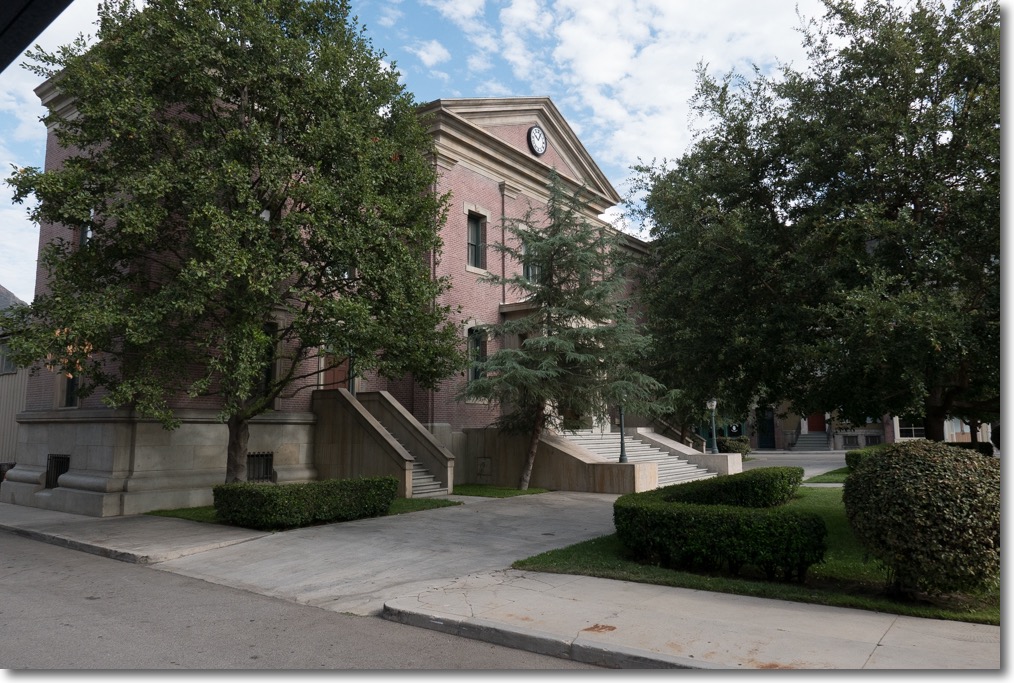
Town Hall, familiar to ‘Back to the Future’ fans. It’s used so often that Universal has to change the façade to disguise it.

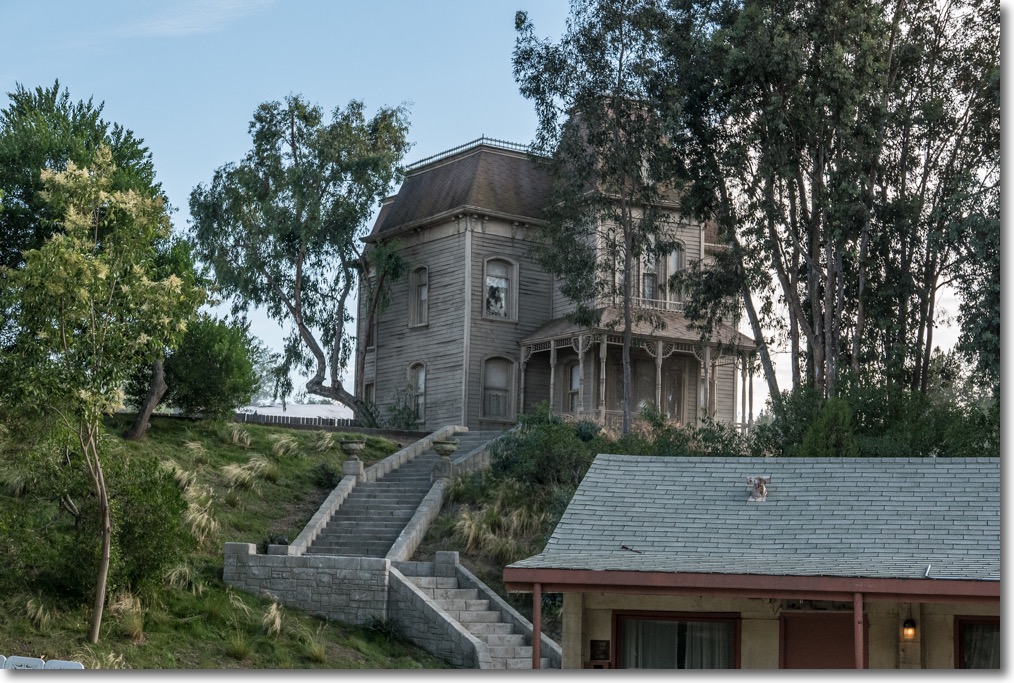
The Bates Motel, beloved of Hitchcock’s ‘Psycho’ fans. Built undersize to emphasize the claustrophobic aspect. Some fool actually made a remake of the movie, which has to be the dumbest idea yet in Hollywood history.

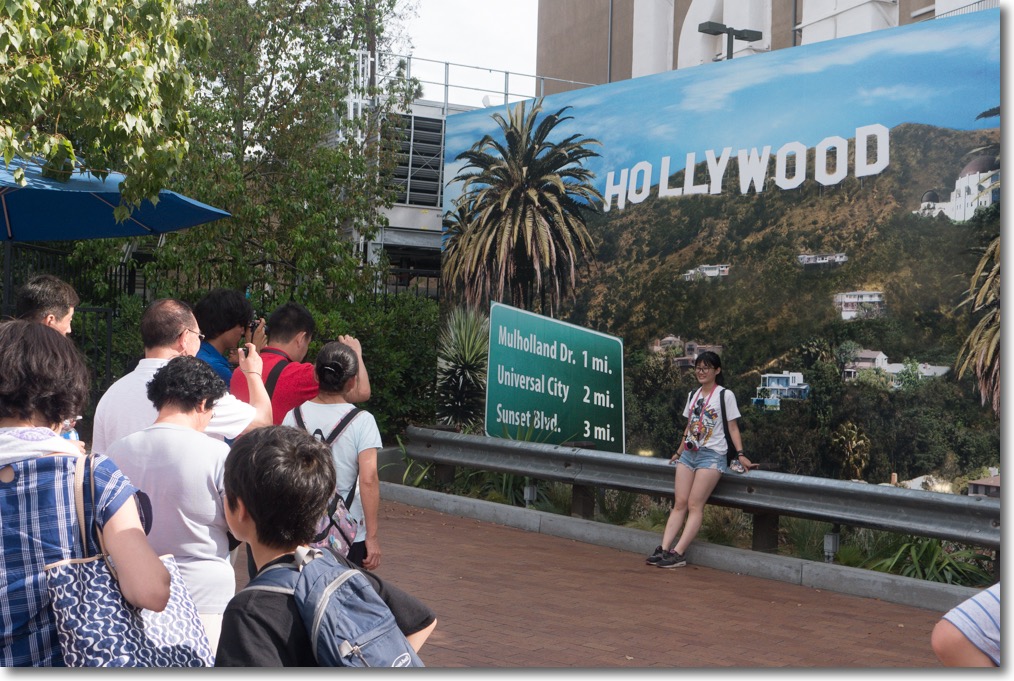
While we waited for our tour bus, a group of thirty Chinese disembarked, spotted this mural, and proceeded to dutifully pose identically, one by one, as each of the twenty-nine others snapped his picture. A nation of true individualists, those orientals.

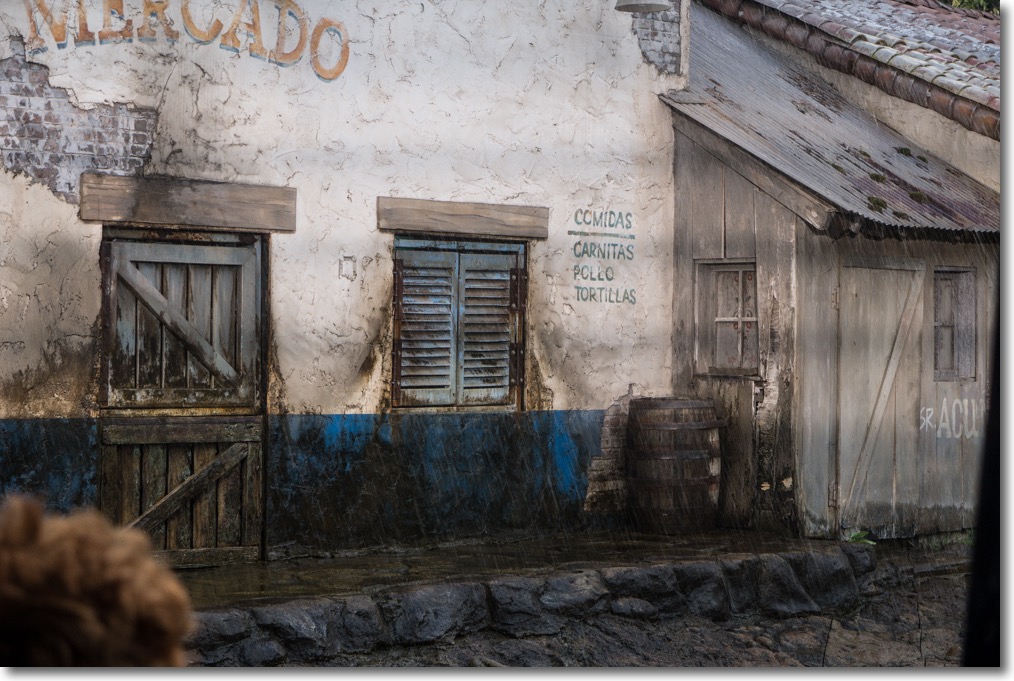
Downtown Latin America. Nearly all the buildings are comprised solely of false fronts.

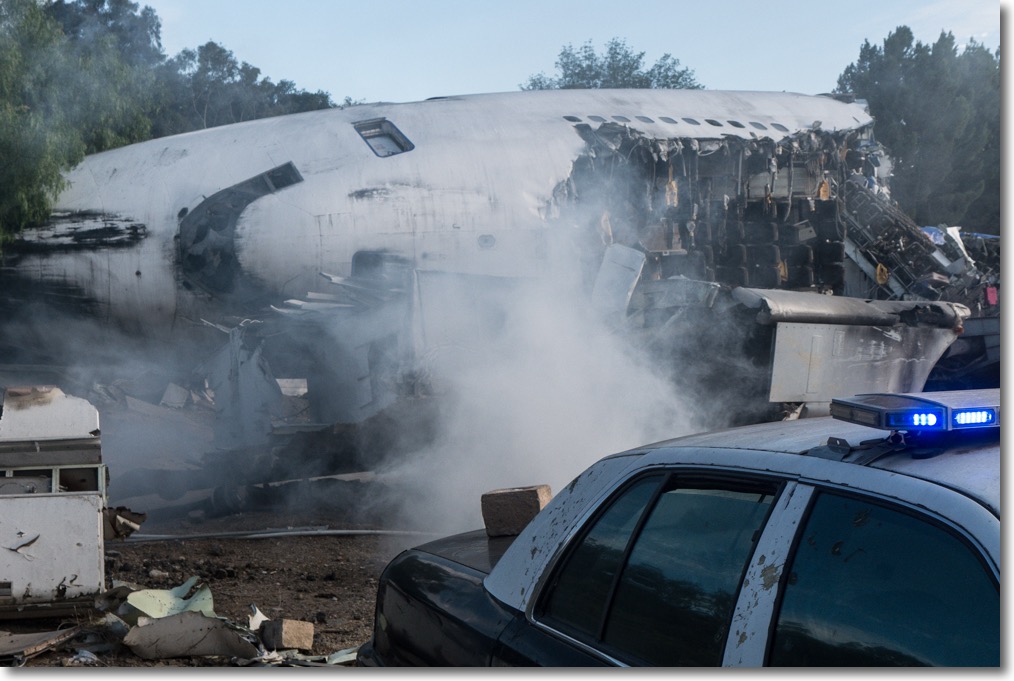
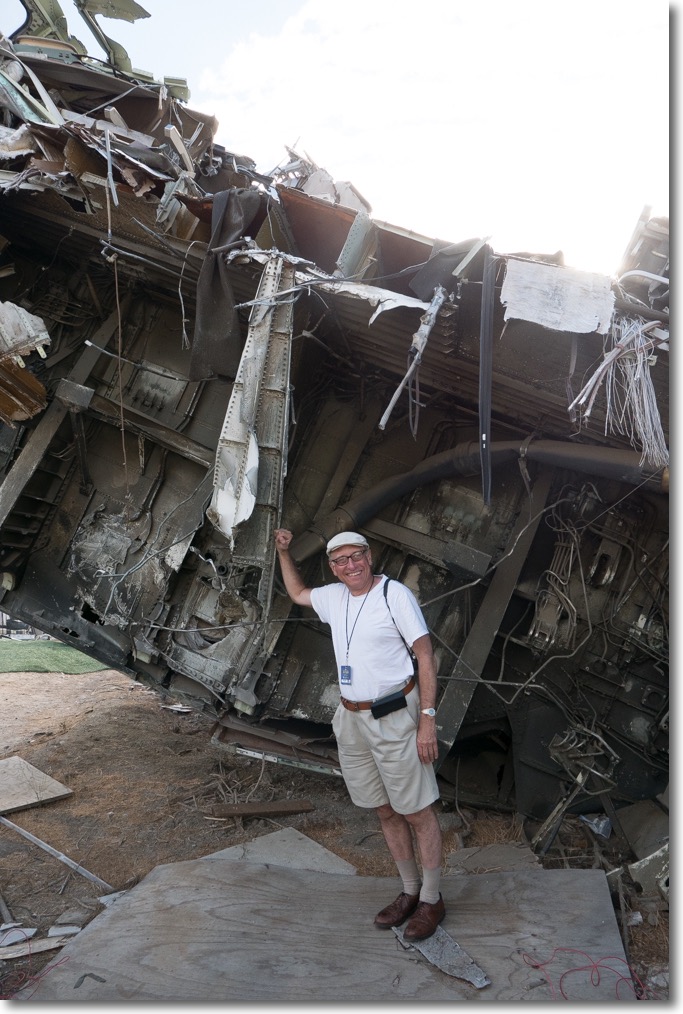
‘The War of the Worlds’ set. Even Steven Spielberg makes the occasional clunker, for the movie is awful, but the set was tremendous. Having paid $60,000 for this first generation Boeing 747, he proceeded to incur another $175,000 to transport it to the lot then have it cut up and generally destroyed. It’s in the movie all of 60 seconds ….

On the ‘WoTW’ set. Our guide told us to look out for the ashtrays in the arm rests of the seats, identifying this as a very early jumbo jet.

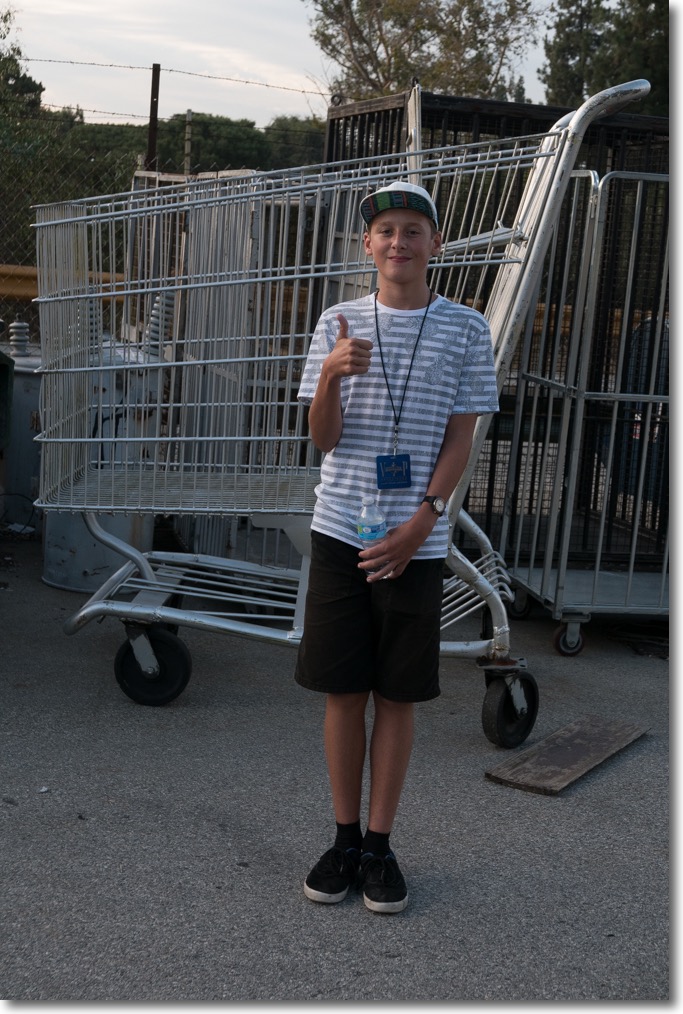
The prop warehouse and area were terrific. Here’s Winnie getting ready to do some ‘Supersize Me’ shopping.

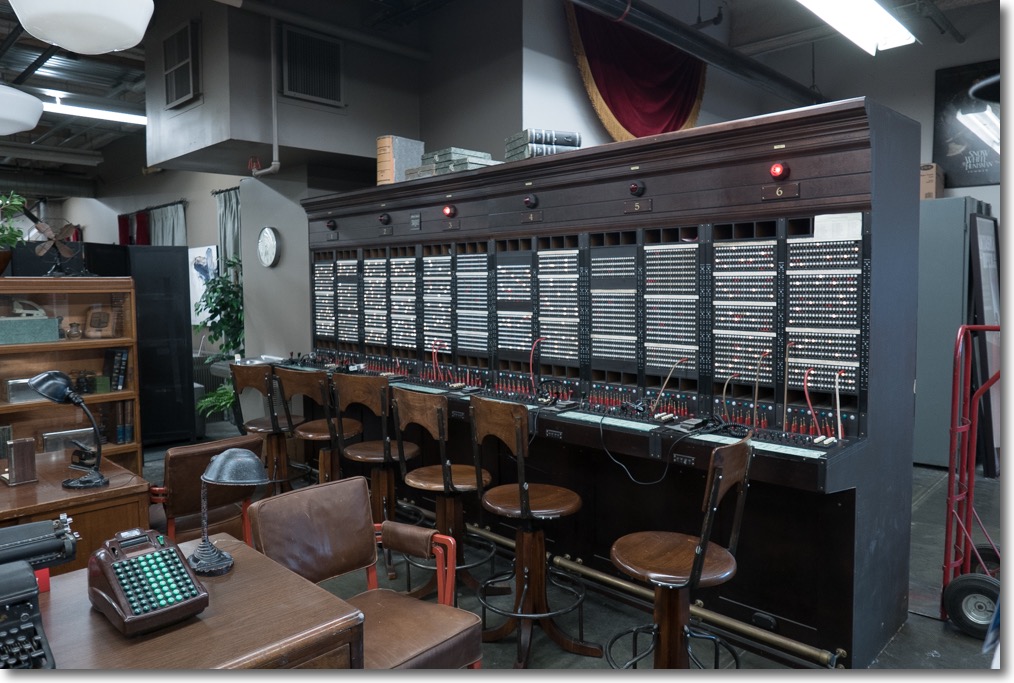
The prop building has tens of thousands of props, including hundreds of furniture sets from all eras, statuary, gadgets, you name it. All pieces are bar coded for ease of retrieval. This is a 1930’s era switchboard which Universal had to build as no originals remained. First seen in the Paul Newman/Robert Redford vehicle ‘The Sting’ it has been used in many movies since, and is so popular that Universal often rents it to other studios.

All snaps by Winston on his Panny LX100 except for the penultimate one which dad took.

The Monterey Historics – 2015

Exotics galore.

As is usual, the second Thursday of August finds me taking the 2 hour jaunt south to the Laguna Seca race track to enjoy the 500 or so exotic race cars in the paddock with none of the crazy crowds encountered during the weekend. Admission was up to $25 this year but at 5 cents per car viewed that remains a bargain as does the free parking and the absence of crowds.

There were old friends and some new entrants, all with the common belief that these old cars are meant to be driven hard, not parked and polished in some nouveau riche‘s Silicon Valley garage bought with the proceeds of the latest tedious social app.

My interest is mostly in the pre-electronic period racers as they come from a purely mechanical era – no wind tunnels, no electronics, no anti-lock brakes, skinny tires and great skill required to drive. That’s what racing should be about.


Redefining patina. An old 911.


Pininfarina’s Ferrari 288 – a styling peak.


Demure split window ‘Vette.


Pre-war Maserati. Italian, so why not make it beautiful?


1934 Alfa with famous provenance. The team was managed by Enzo Ferrari back then.
The owner/driver is John Shirley, former president of Microsoft.


Here’s the story of that famous Alfa. It made a wonderful noise, starting right up.


1937 Delahaye 145 – French engineering at its best.


Vive La France!


The Delahaye was perfect in every way and, mercifully, was also driven in anger.


Cobra. Driver wanted.


A trio of 356s – Porsche was well represented, as always.


American butt. Muscle cars get the drivers they deserve.


Big business. Pit boss instructs mechanics in this turnkey ‘rent-a-car-and-crew’ operation.


1950s factory transporter – a simpler world.


Consumables.


Uh huh!


More patina. 1935 Bugatti, well worn, $1mm.


Mustangs were featured this year – last moment adjustments here.


Well used Gullwing.


The Porsche factory brought one of its three 919 Le Mans winners – why do the Germans
make such ugly cars? Check those comical headlights.


The original 917 behind the 919. The body must have been designed by an Italian.
Le Mans winner in 1970.


The last Ferrari to win at Le Mans – 1965. One just sold this weekend for $17.6mm.


Another French confection – the Talbot Lago of the 1930s.


Mmmm. Ending on a high note. The GTO.

All snapped on two Panny GX7 bodies with Oly 17mm and 45mm lenses.

Bel Air – 2015

The best of the best.

These pieces generally run annually in time for Hanukkah and Christmas.

The only way to live and work in Los Angeles is to avoid the freeways, for they are a living hell. No matter the time of day or night, you can be sure of wasting horrible amounts of your dwindling life span in your car, parked on a way that is anything but free.

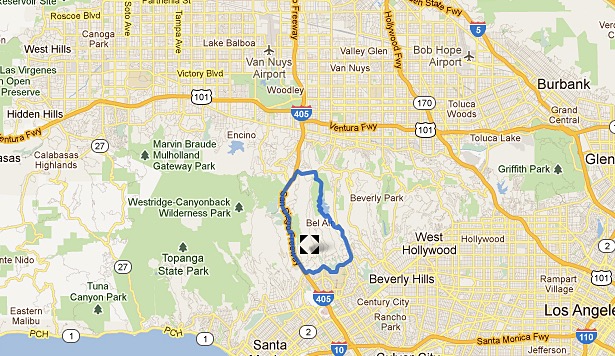
When I lived in Los Angeles (1987-93) I was lucky to have a home high in the hills of the San Fernando Valley in Encino and a job in Century City, the other side of the transverse spine that is Mulholland Drive. Mulholland, named after the DWP engineer who literally made Los Angeles possible (it’s called water) just happens to be one of the most dramatic of roads in that thrilling city. The beauty of this location was that I could zip up to Mulholland from home, turn down Roscomare into Bel Air then wind my way though the labyrinthine paths of this haven which is a very small part of Los Angeles, exiting at Sunset Boulevard with but one city block to my office on Century Park East. Traffic? Nowhere in sight.

The small firm I called home made for great friendships and as often as not we would gather monthly after work for camaraderie at the haven which is the Hotel Bel Air. I had stayed there on business from New York back in 1985 in one of the bungalows in the lush grounds and it was a memorable experience.

When a resident of LA, on one occasion while conducting arcane tests on my Mercedes diesel to determine the exact fuel consumption (don’t ask – it’s the Engineer’s Curse) I crossed Sunset into Bel Air on the way home only to feel that superb five cylinder turbodiesel motor stumble. Barely making it across I stopped on Carcassonne in Bel Air, out of fuel. I had miscomputed the size of the tank, smaller in the diesels than in the gas models …. bloody Germans. No sense of humor.

Flashers lit and making my way on Shanks’s Pony to the Bel Air I headed for the tea room whence I called AAA, alerting the valet that he was to direct my driver there upon arrival. Sure enough, the mechanic was unquestioningly ushered into the rarefied confines of the watering hole a while later and we exited magnificently – I in suit, he in overalls – to get the beast fueled and started. (Diesels need bleeding. Pumping is involved. Again, don’t ask). My love affair with the Hotel Bel Air and with Bel Air itself has proceeded apace since.

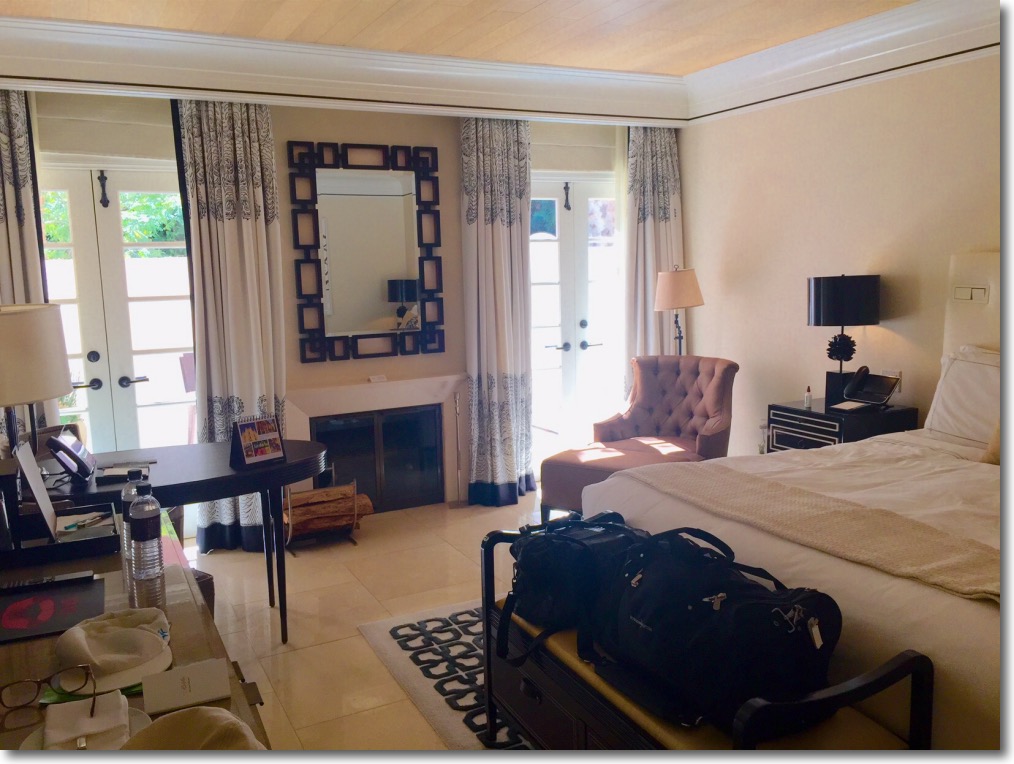
You see, unlike most places which boast wealth, the Hotel Bel Air specializes in those costliest attributes – discretion and silence. Not only is it hellishly hard to find, it’s buried deep within Bel Air on 12 acres of heaven remote from busy streets, and if there is a more perfect place on earth to relax I do not know of it. Thus on this, my son’s first visit to Los Angeles at age 13, I determined only the best would do and one night last week found us at the Bel Air in – yes, you guessed it – one of the bungalows in the grounds.


Our room. The bed was magically split into two as we dined.


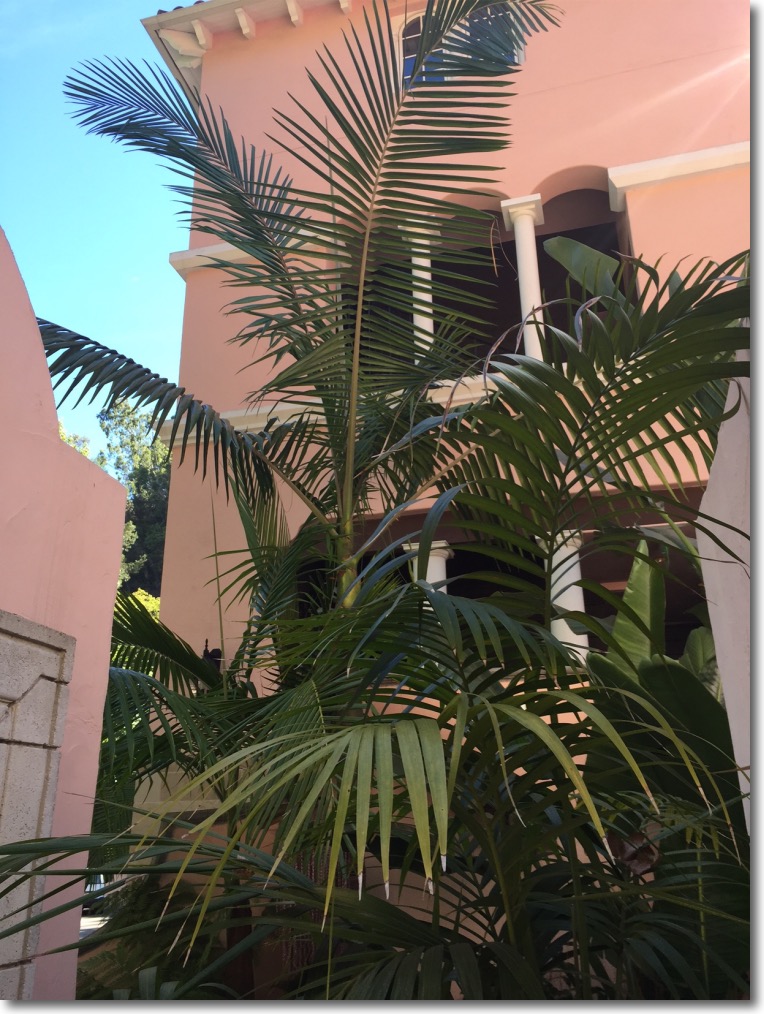
Exquisite landscaping against Southern California pink.


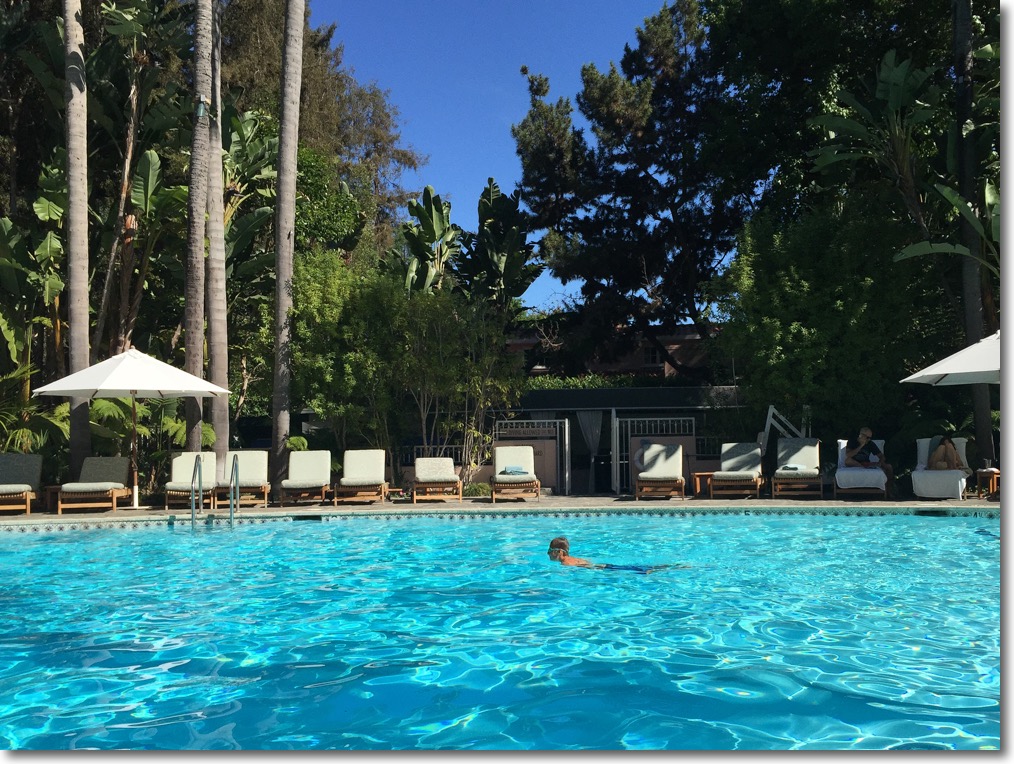
Winnie checks out the pool. Notice the large crowds in attendance.

While my obligatory tea arrived poolside (you can take the boy out of England, but you cannot take England out of the boy) I obeyed Winston’s dictate to think not about work but to merely gaze into the distance and think peaceful thoughts. Much harder than it sounds for one who considers vacations a leading cause of stress, but the boy was clearly onto something. He is wise beyond his years.

These thoughts were interrupted by two young girls to my left discussing education, the one a UCLA junior trying to convince the other, a USC sophomore, to transfer, the better to enjoy their friendship. Half way though this dissertation the one decided they needed a late lunch served to them on the chaise longues surrounding the pool, but things proceeded to get sticky when it came to payment. The young woman dashed back to her room in search of a credit card, returning breathlessly to admit to the pool waiter that she could find neither hide nor hair of it. After some embarrassing back and forth she called her mum only to be reminded that she has an account at the place – this at the age of 17 – and a quick “Charge it!” resolved the issue. High class problems.

I contented myself with mindless thoughts (sort of like ‘military intelligence’ or ‘stock market predictions’ when it comes to grammatical logic, I suppose) and gazing at Winnie doing his thing was a subtle and sublime joy. My boy’s first visit to the City of Angels really had started at the top, and my joy was but sublimation of my hopes for him. He rejoiced in the heated pool and I rejoiced that he was there.


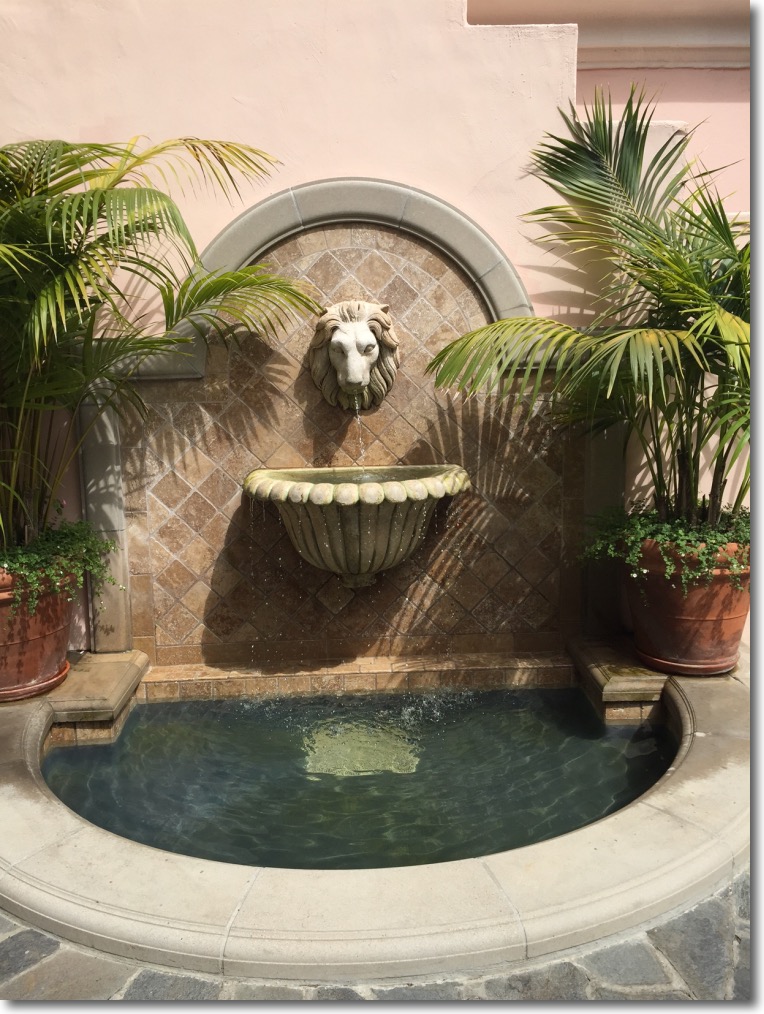
A lovely fountain in the large yet discreet grounds.


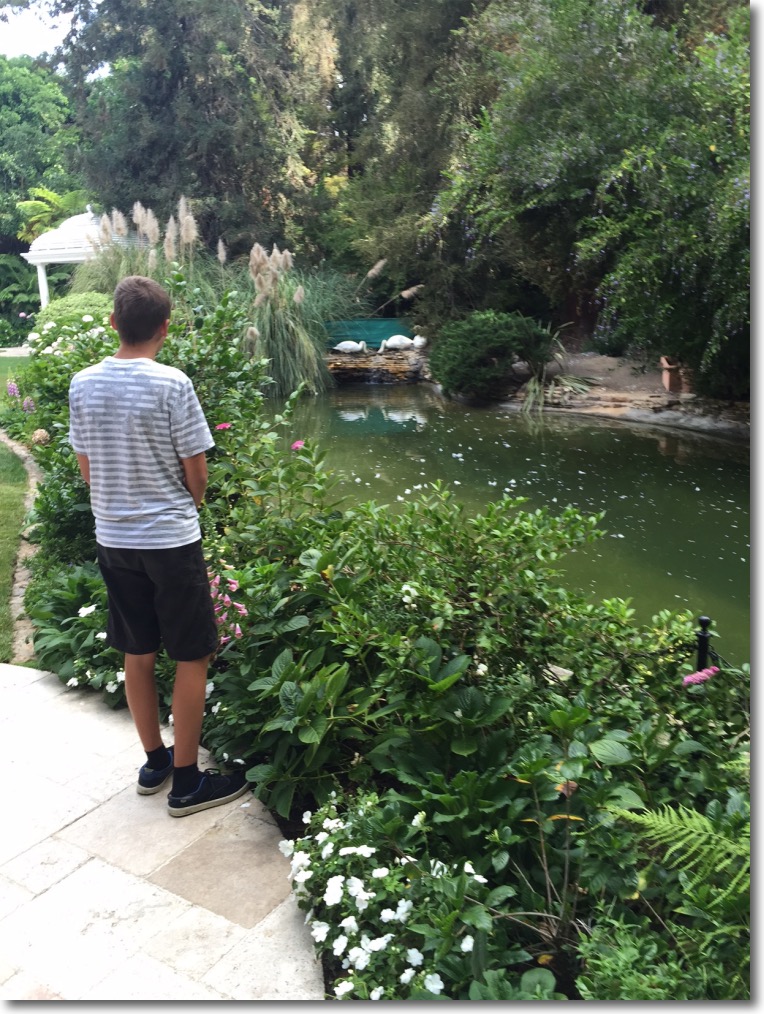
Winston at Swan Lake in the grounds. Back in the 1990 the swans used to be black.
Maybe this is more PC at work?

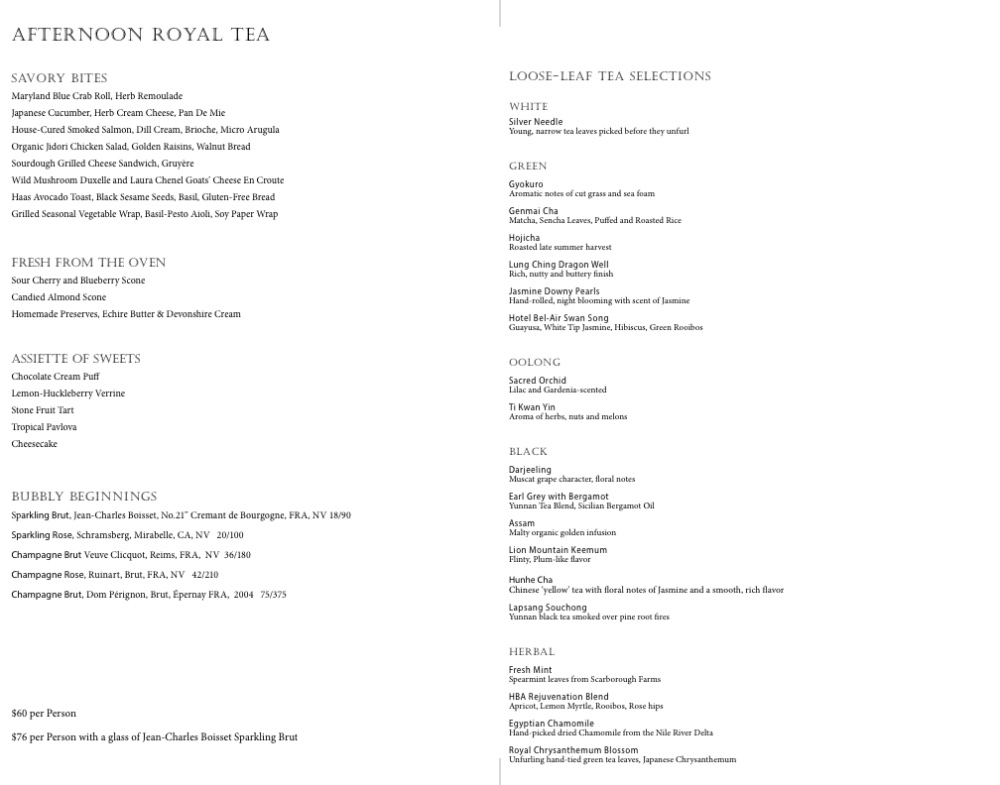
The Hotel Bel Air takes its tea very seriously.


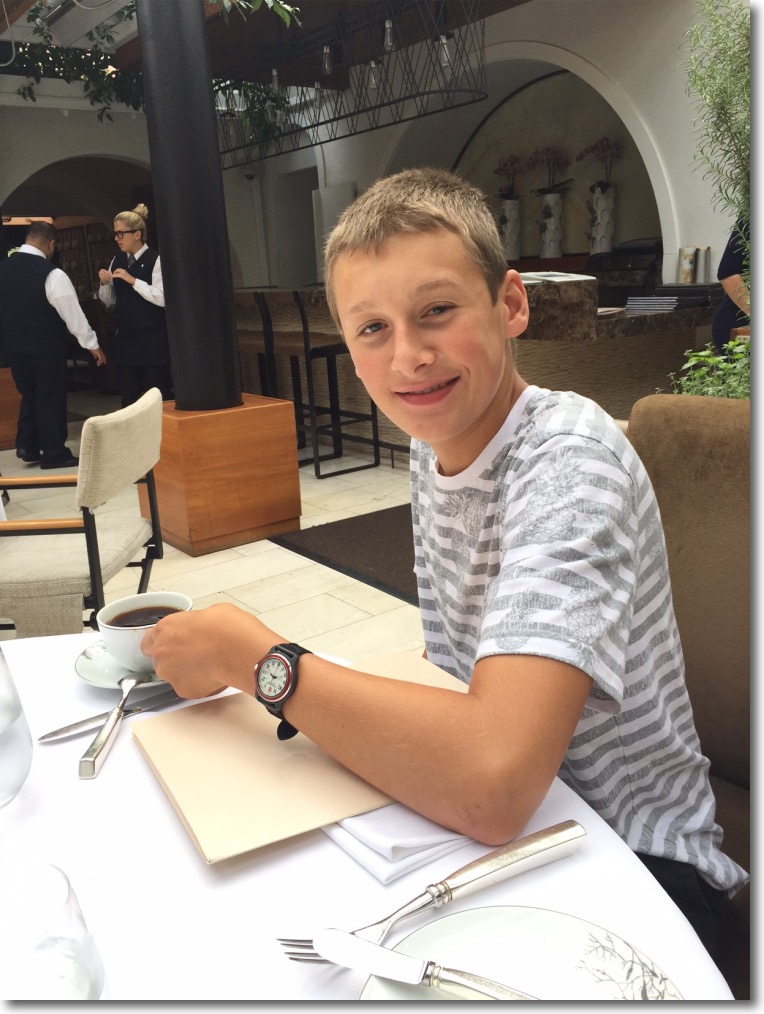
Winston’s first ever cup of coffee at the Wolfgang Puck over breakfast.
You can read all about his Unfair Advantage here in a piece that remains 100% correct.

There’s no need to drive anywhere for dinner for the Wolfgang Puck Restaurant in the hotel would be hard to improve on. Dress code dictates a jacket and long trousers for dinner and tattoos are nowhere to be seen. White trash need not apply and the prices see to it that they do not – this is a feature, not an issue. The women’s dresses over dinner have to be seen be believed. And they are wonderful to behold – the women and the frocks. Breakfast dress code is relaxed as the above shows, and the staff is so professional you leave regarding them as friends. Jeans are notable by their absence and let’s all be grateful for that.

Money is quiet here and waistlines are slim. The bungalows are the preferred places to stay and many have been the location of choice for discreet assignations among the Hollywood set, from Frank Sinatra to Elizabeth Taylor who enjoyed most of her numerous honeymoons in one. Or was that in seven? They came here to not be seen. Ask nicely and the hostess who walks you to your room will point out the bungalow in which Howard Hughes lived, right around the time he crashed his experimental single wing plane at the LA Country Club next door, barely surviving. It’s an episode which is perfectly recreated in Martin Scorsese’s The Aviator, a favorite with both Winnie and I. Hughes was an American with a capital ‘A’, and Hollywood history is writ large at the Bel Air.
This is a haven for the visitor. If you crave isolation, hate crowds and desire peace and quiet with the most charming friends to look after you, a stay here is de riguer.

All snaps on the iPhone 6.

* * * * *

Click here for an index of all the Biographical pieces.