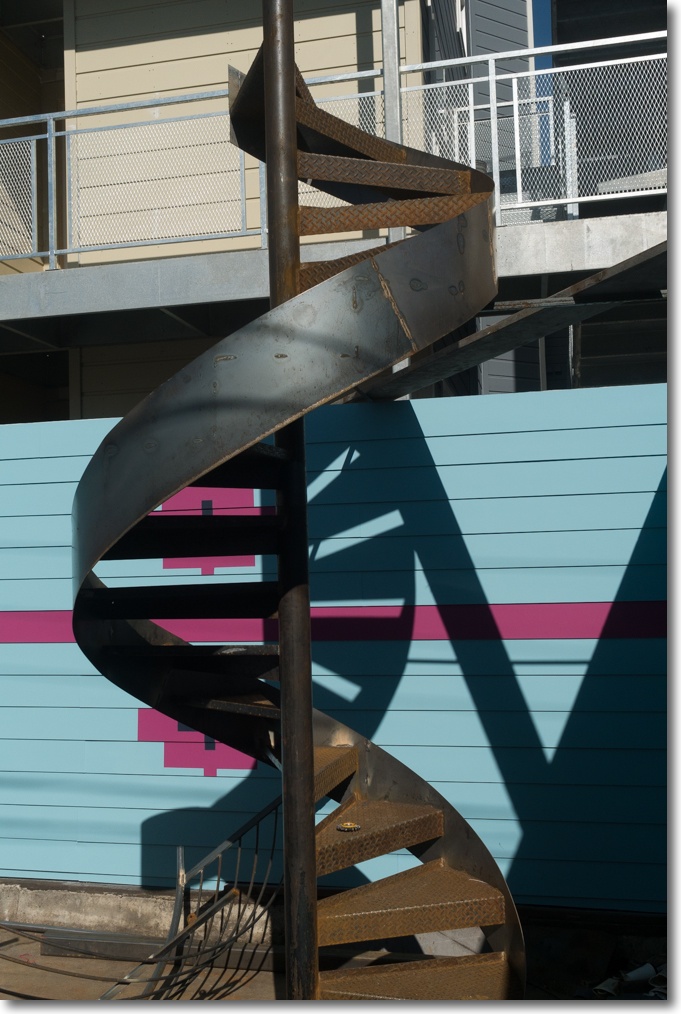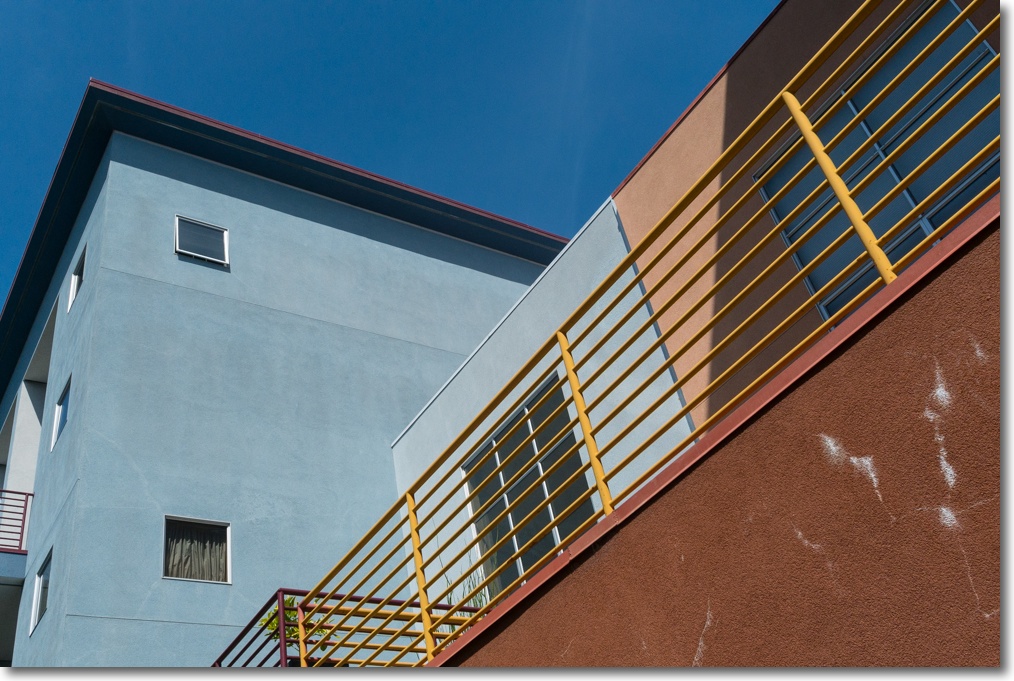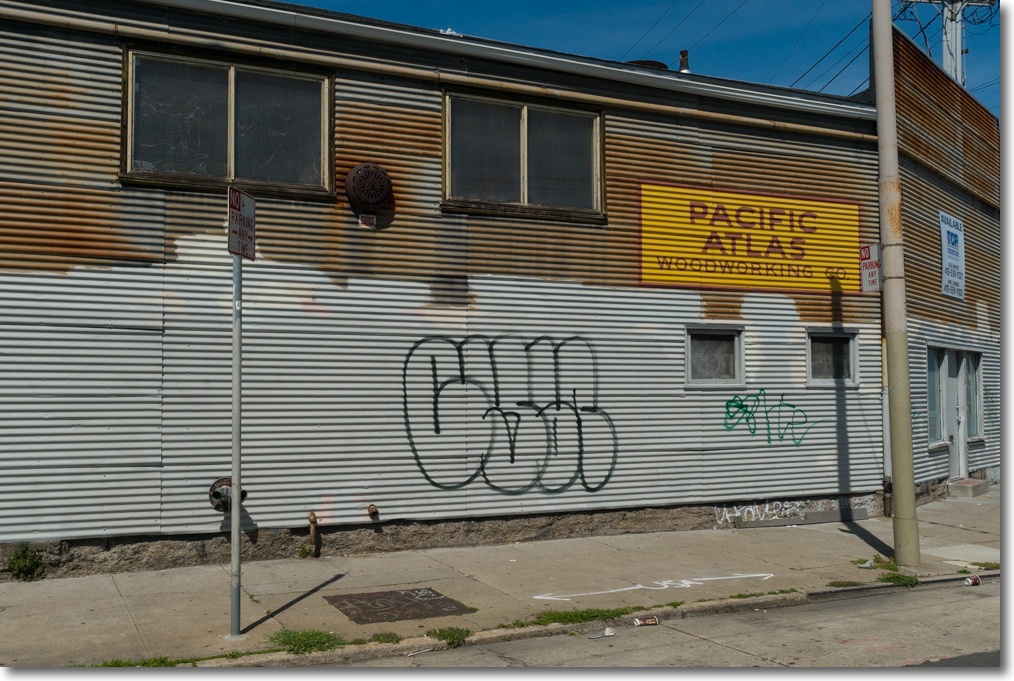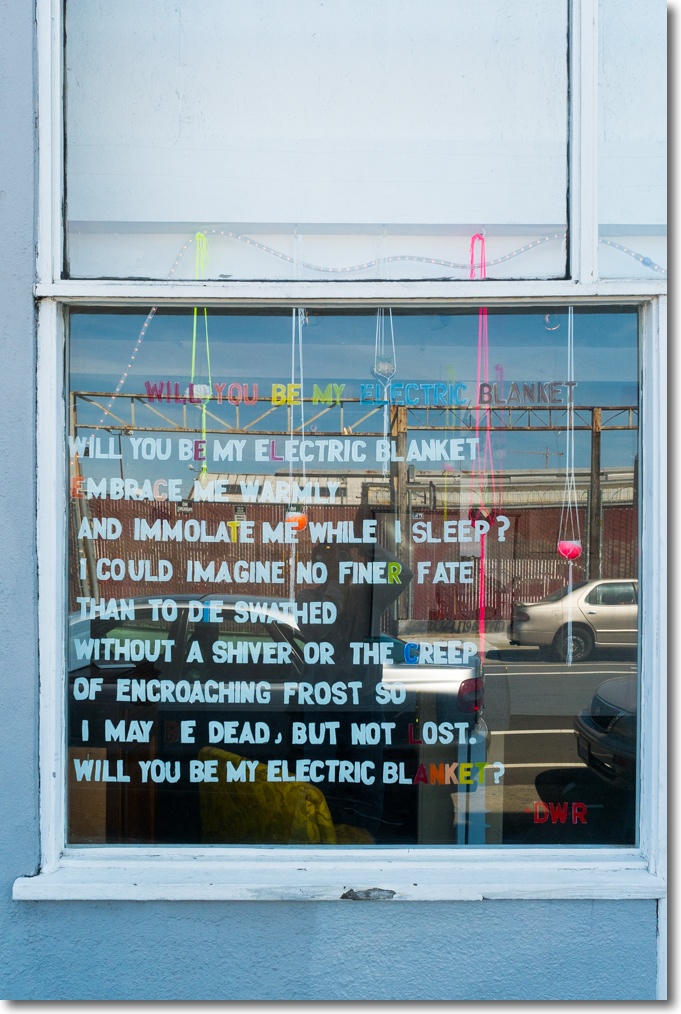
At the ‘Flesh and Metal’ show, Stanford University.

Panny GX7, 17mm Zuiko.
At the ‘Flesh and Metal’ show, Stanford University.

Panny GX7, 17mm Zuiko.
A good year.
You can see my best snaps from 2013 in my static web site by clicking the image below. There are 96 images in all.

Here’s the metadata:

The lenses with no prefix are Nikkors or the Sigma 35/1.4. Except for the 16-35 and the 35/1.4, all are classics from the MF era, mostly around 40 years old.
The modern era.
Part I is here.

Many of the rooms in the Museum address the modern era, which I think of as being anchored by the introduction of the two landmark home computers, the Apple ][ and the IBM Personal Computer. The Apple was more than I could afford so I bought the IBM PC in 1983 and it was modern in the sense that it used disk drives, albeit low capacity floppies, had a modem and could accept expansion cards.
But before that, in 1981 I splashed out $1,795 for the best computer I ever owned, the Osborne 1. Purportedly portable, it weighed 23 lbs.

The small CRT screen was supplemented with a $100 plug-in 10″ green on black one, the stock display being pretty much unreadable. Two things made this machine special. First, it was cheap by the standards of the day – the software alone came to the price of the machine if bought separately. Second, it came with a ton of said software. In addition to the lean and mean CP/M operating system, it included the Supercalc spreadsheet application (a clone of Visicalc, the first spreadsheet), Word Perfect for word processing, Basic and most importantly, Ashton Tate’s dBase II.
The Ozzy had 64KB (yes, 64KB) of memory, CP/M taking maybe 28KB of that, and as the applications were tightly written with much assembler code, things just zipped along. It never locked up – something Windows would fix for the ensuing decade of misery. If your spreadsheet or magnum opus was too large disk swapping would kick in, using the second of the two 360KB, one sided floppies. The other floppy drive was used to load the OS and app of choice, one at a time. This was before the days of graphics, so despite these limitations speed was not an issue. After a few months I added a 300 baud dial-up modem for the early days of the Internet. You can see one below the left hand floppy drive, above. It was slower than molasses.
Suffice it to say that after a few months use I was expert in word processing and spreadsheets, decent in Basic and a wiz in dBaseII. Disk swapping meant you could store pretty large databases on the floppies and the application was very competent indeed. It’s fair to say that I learned 75% of what I needed about computer use on the Ozzy, as things only got simpler down the road. The remaining 25% was Photoshop and related, a few years later. The practical knowledge gleaned from using the Ozzy was worth orders of magnitude what I paid for the machine.

While the Ozzy was still pretty much a hobbyist machine, the IBM PC was polished and finished when first sold. Where the Ozzy had the feel of a garage build, the IBM PC was made to very high mechanical standards – over-engineered really and a bargain at $1,565. That’s $6-7,000 in today’s money. There was a costlier XT version with a 10MB hard drive, but that was more than I could afford. I added an orange on black 12″ display and a 9×9 pin Okidata dot matrix printer which jammed faster than a Catholic priest chasing an altar boy.
Working at Salomon Brothers on Wall Street at the time, a like machine arrived and sat gathering dust for several months before I pulled my finger out and wrote some handy Basic routines addressing security positions and valuations. The Ozzy had taught me well. Within a year there was one on every desk, all running Lotus 1-2-3.
It’s amazing to recall how slow the clock speed of the Intel 8088 CPU in the IBM PC was. Just 4.77 MHz, single core. I’m writing this on an upgraded 2009 Mac Pro whose twin CPUs run 24 virtual cores at 3.33GHz – some 700 times faster per core. But the modern machine, though it processes any sort of graphics and audio you can throw at it with aplomb, really is not much faster in real use. Back then, tight code was a requirement given the limited memory available. Now it’s an irrelevancy.
Moving on we came on the Game Room where Winston got absorbed in the many early consoles and game machines on display, not least the very capable Atari. There’s an early Pong machine on display and all it does is present two bats, one to each player, and a bouncing ball, which goes ‘pong’ when you hit it – not as easy as it seems. Many bars installed this at the time and many quarters were wasted by patrons playing this inane game.

Finally, Google has a couple of fine displays, one for Google Earth on five large LEDs:

Another lets you sit in one of the Google StreetView cars, atop which is mounted a nine lens camera – eight around and one to the sky:

The remaining displays, replete with PDAs (PalmPilot, anyone?), cellphones and modern PCs, leave me cold. How excited can you get about cell phones, the original iPhone apart?
What is missing?
A room devoted to the sheer hilarity of the many predictions made about technology would do well to discourage speculating about anything further than a week out. Here are some of my special favorites – obviously Doofus must take pride of place here:
Compared to those the daily pap you see in the MSM about the stock market is supremely credible and accurate.

Dining:
After visiting the Googleplex down the road we drove back across the freeway on Shoreline Boulevard into the town center on Castro Street in Mountain View, a city which was virtually unknown until Google came along just 15 years ago, somewhat defying the Luddites’ conviction that technology destroys jobs. Now Castro Street is lined with chic restaurants and stores, including three (!) bookstores. You know, hard covers, paper, numbered pages and so on.
We had lunch at CrepeVine, which offers a bewildering array of crepes. It’s directly opposite Books, Inc.:

I went for the Tuscany with chicken on a savory crepe, whereas Winnie opted for a truly disgusting looking toasted cheese kids’ sandwich with fries. Pure glop. $20 for the lot and we sat on the sidewalk under heat lamps. My son was the youngest person there, amidst an algorithm of Googlers, and I the oldest. The distinction we brought to the assembly is that neither of us has a boss, nor ever will.

Sated, we chatted about our Museum visit and Winnie gave it a “Totally awesome” rating, a modern adaptation and corruption of the language of Shakespeare which translates to ‘Bloody Good’ in the mother tongue.

The Computer History Museum is unreservedly recommended, even for Luddites.
All snapped on the Panny GX7 with the 17mm Zuiko and typed on my Universal Turing Machine.
Outstanding in every way.

The Computer History Museum is a stone’s throw from the Googleplex, the center of the world as we know it. The Museum is open Wednesday through Sunday. Kids 12 or under enter free, so my son Winston just scraped in.
We had an absolute blast. The quality of everything here – the building, the displays, the docents, the art work – is top notch and could not be improved on.

As an engineer of the mechanical persuasion, my eye is naturally drawn to objects of mechanical beauty and none could be more alluring than Babbage’s Difference Engine, built by London’s Science Museum (a favorite childhood haunt) over 150 years after Charles Babbage made the technical drawings. That one is in the Science Museum and the one here is the second they built, commissioned by Nathan Myhrvold of Microsoft fame. Words cannot do this magnificent machine justice, the very peak of British mechanical engineering design and execution. You simply have to see it for yourself.


There’s a daily live demonstration and for those who do not time it right there’s a fascinating video. And yes, when no one is looking, you can touch it and it is a sensuous delight.

More brass and steel in this lovely Morse Ericsson pen register of 1890:

And there’s little wrong with this Western Union ticker tape machine from 1895:

Punched cards hold a warm place in my heart for, when a mechanical engineering student at University College, London (1970-1973) I would walk my deck (in a plastic bag as often as not, given the usually foul weather) down the road from Torrington Place to the computer room housing the gigantic IBM 360 computer, returning the next day for the results!

The clatter of the Hollerith card reader (after the, ahem, American inventor Herman Hollerith – 1860-1929) and the smell of machine oil in the large room housing the hardware was nothing less than Proust’s Madeleine dipped in tea for this visitor. Instant flashback to London, 1970. Well before Thomas Watson and IBM hit the scene, Hollerith’s punched card machines were used to tabulate the 1890 US census, in record time needless to add.

It’s hard to appreciate how dominant punched card input was before tape and disk superseded it. The Museum rightly devotes a whole room to the technology.

Tomorrow I’ll take a look at some of the newer displays.
All snaps on the Panny GX7 with the 17mm Zuiko.
At the art show.

The repetition of the art in the ceiling’s structure was irresistible here.
Panny GX7, 17mm Zuiko.