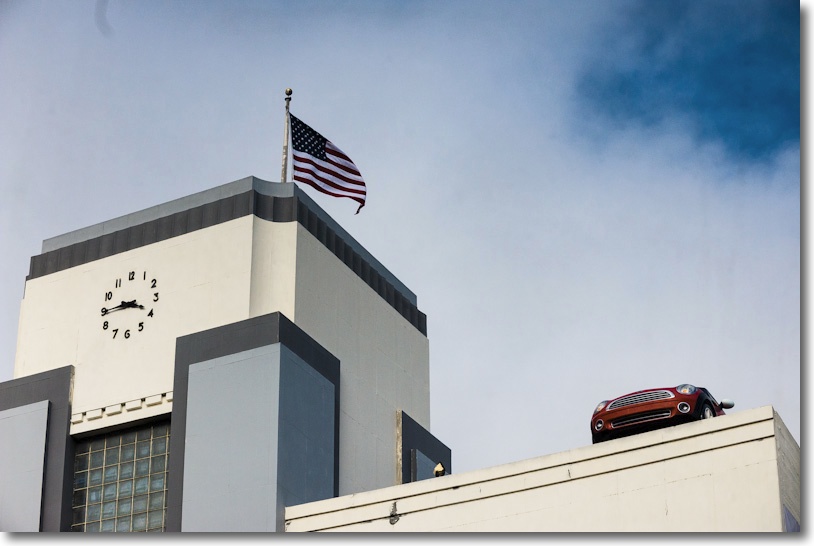
Ouch!
On the Embarcadero, SF. D700, 24mm. Click the picture for the map.
Those who debate whether Rothko was a fake (see yesterday’s snap) often consider Claes Oldenburg in the same breath.
Ouch!
On the Embarcadero, SF. D700, 24mm. Click the picture for the map.
Those who debate whether Rothko was a fake (see yesterday’s snap) often consider Claes Oldenburg in the same breath.
Color wash.
D700, 24mm. Click the picture for the location.
More about Mark Rothko here. Depending on your point of view he was either the real thing or a complete fake.
…. we snapped in monochrome.
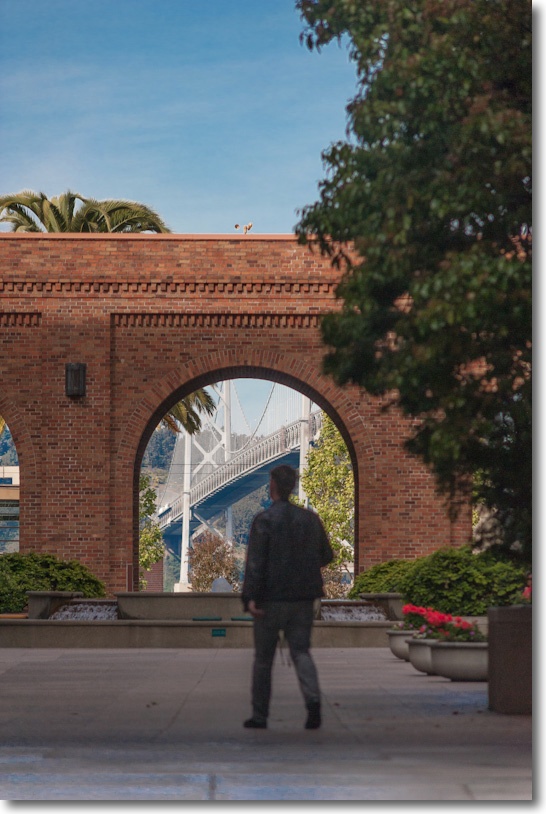
Oakland Bay Bridge, D700, 24mm.
Gold Street, Jackson Square. Click the picture for the map. Same hardware as above.
Hotaling Street, Jackson Square. Same gear.
The 24mm Nikkor is special. It was special when I sold them, as a clerk at Dixons in London in 1969, to rich American tourists, and it remains special today, at a fraction of the cost. At that time I was quite convinced that Americans were so affluent that they never had a shirt laundered. They merely threw it away and donned a new one. And that 24mm seemed every bit as remote from that world as I was back then.
Back then the only people who could afford color prints were those self same Americans. Of course, despite all their costly gear, they opted for 3 1/2″ x 5 1/2″ machine made Kodak prints, just like their successors today who think nothing of using a $10,000 camera to publish their work exclusively in 600 pixel sizes on the web. Many of these are the same people lining up to upgrade to a 36mp D800 ….
In 1974, when mine was made, the 24mm f/2.8 Nikkor-N.C ran $316.51, which is $1,472.72 in today’s money. I think I got a bargain at $165 for a mint one.
A fine street snapper.
The 24mm Nikkor was the first Nikkor lens with floating elements. Disparate glasses – there are nine elements – move in a non-linear manner as the lens is focused, enhancing aberration correction. I have added a CPU to mine and the related ACR lens correction profile which is automatically recognized in LR and PS with any lens equipped with a CPU can be downloaded here. The profile is also manually selectable for non-CPU lenses.
Contrast is very high at all apertures, with central definition identical to my 16-35mm f/4 AF-S optic, but the old lens is simply in a different class when it comes to quality of manufacture. Edge definition in the modern optic is better through f/5.6 with the old 24mm N.C catching up at f/8.
The lens vignettes noticeably (but see the note at the end of this piece), and there is very slight barrel distortion, with the sweet spot at f/8, but that does not stop me from publishing a few snaps from its first outing in San Francisco yesterday. The extreme corners are degraded through f/5.6 but that’s only noticeable if your subject is right at the edge of the frame. Small, exquisitely made like all early all metal Nikkors, my model is the later multi-coated version denoted by the ‘C’ in the description. Mine is Ai factory converted, allowing use on the D700 or other Nikon bodies with the aperture follower on the lens escutcheon without modification.
24mm Nikkor-N.C.
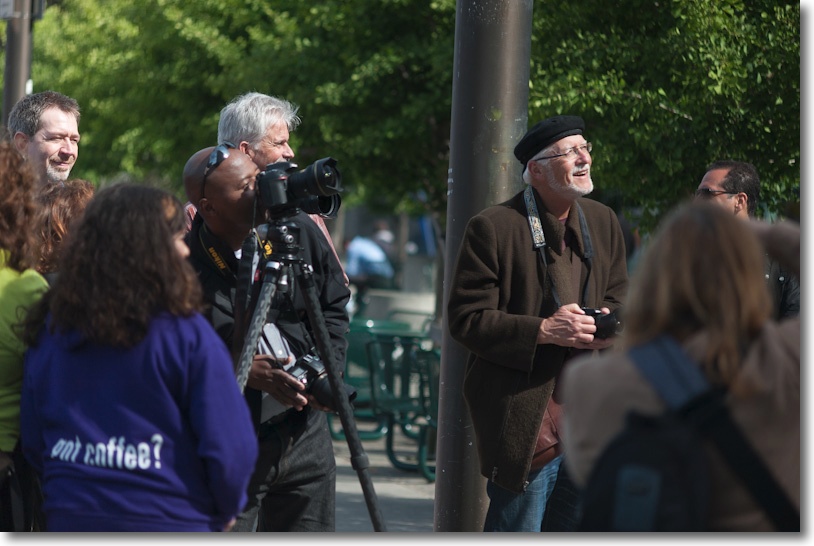
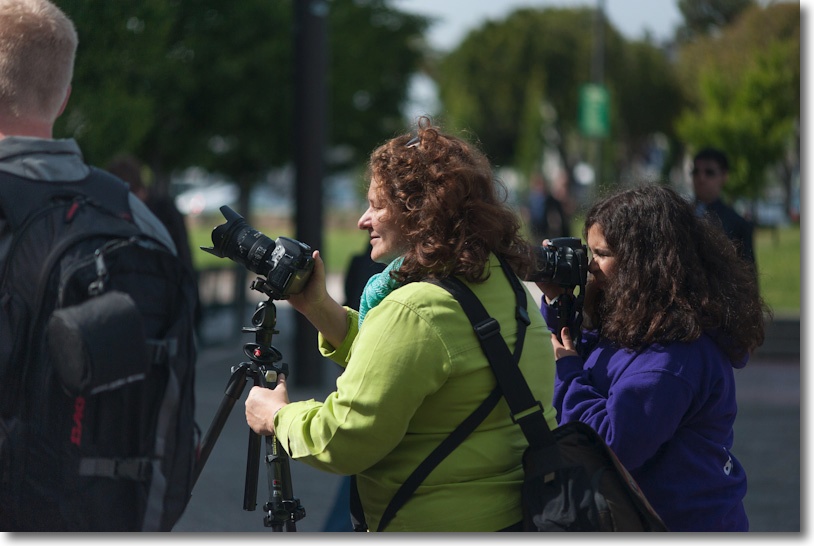
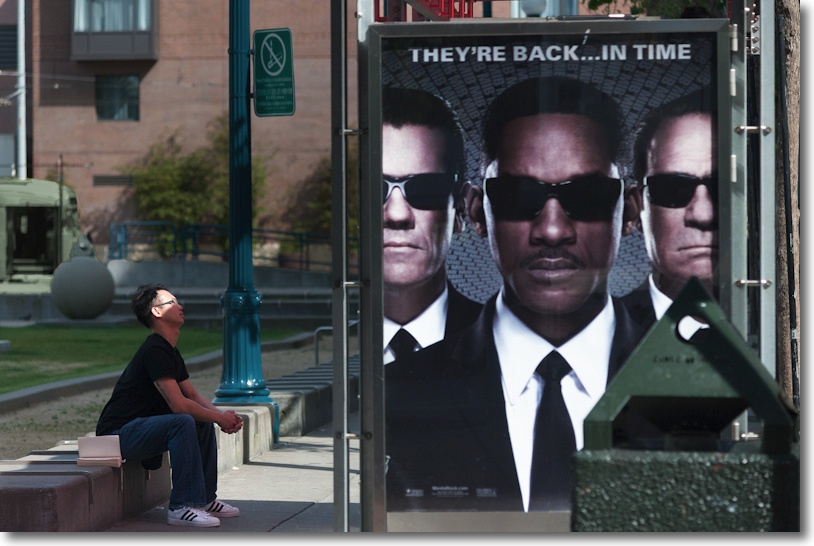
Here are a few snaps. all but the last from the vicinity of the magnificent Oakland Bay Bridge in San Francisco. Constructed at the height of the Great Depression by Real Men, it took a scant 39 months to build, opening in November 1936. Today it would take a decade.
The power and majesty of riveted steel.
It’s almost impossible to convey the power of the construction.
With bird. Flare is commendably low, using the HN-1 lens hood.
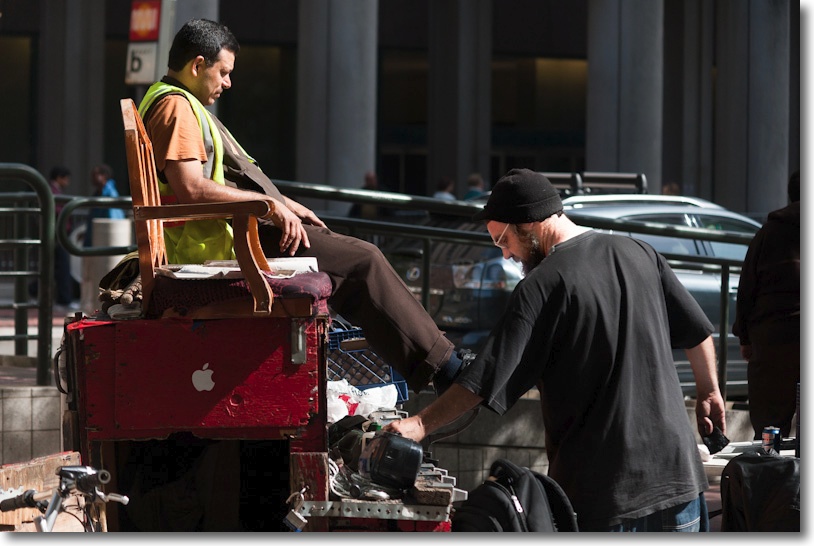
Steve Jobs is alive!
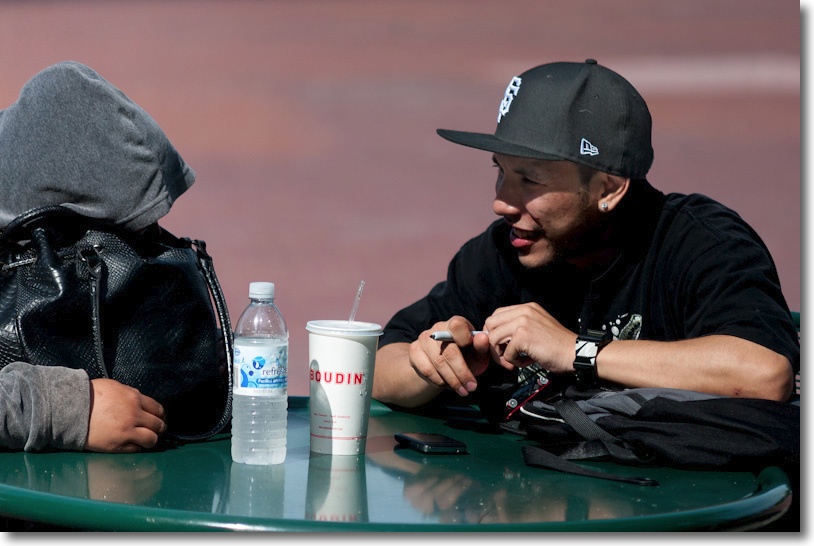
Lunch by the Oakland Bay Bridge. Click the picture to see the map location.
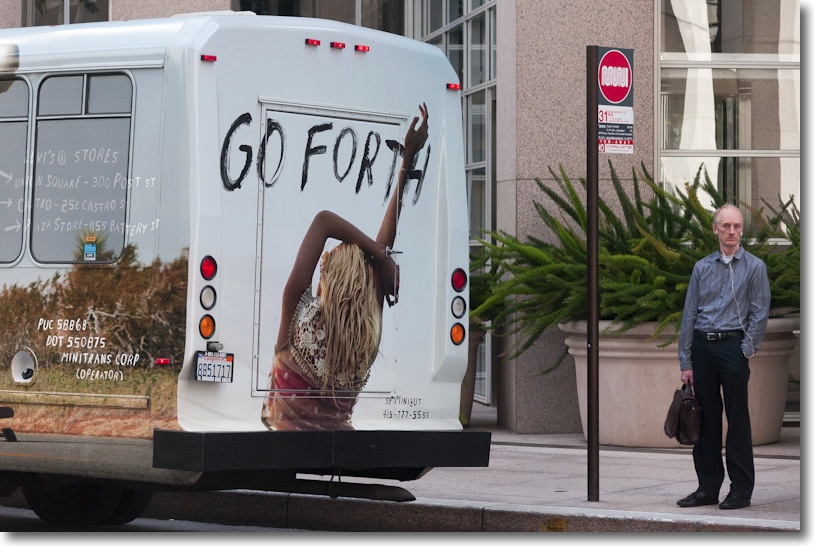
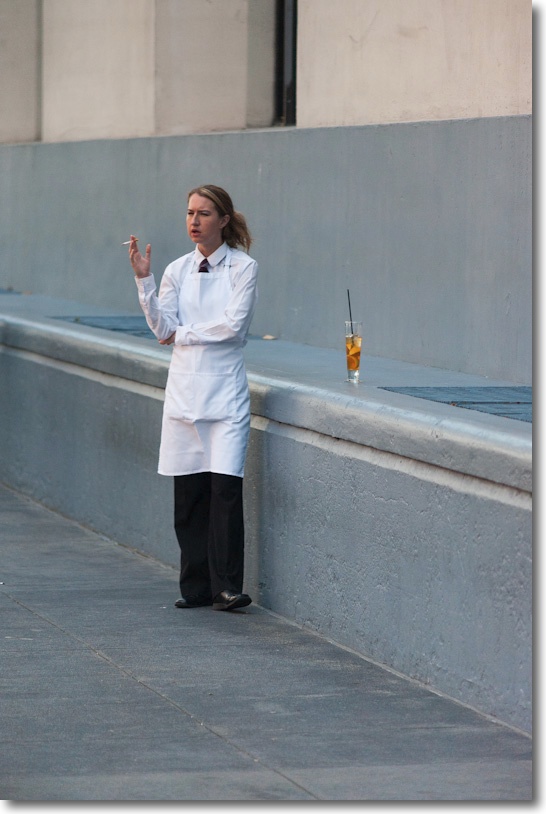
Gold Street, Jackson Square.
A note on filter use:
I rather suspected the corner vignetting at f/8 as being a mechanical not an optical problem, for example in the third picture above, and so it proved. I was using an inexpensive aftermarket filter which protrudes 0.21″ from the front of the lens. The stock Nikon HN-1 screw-in lens hood then mounts on the filter. Replacing the filter with a slimmer Nikon branded one, which protrudes only 0.15″, took away almost all of the vignetting compared to the un-filtered lens though, surprisingly, the merest trace of corner shading remains, which my lens correction profile will remove. So use a slimline filter not a stock one with this lens. A filter is recommended owing to the rather exposed nature of the front glass.
Lens correction profile:
Click here for the lens correction profile. This file includes two profiles, at f/2.8 and at f/5.6. LR and PS will use the closest match. The 24mm f/2.8 shows moderate vignetting at f/2.8 with minimal distortion at all apertures. By f/5.6 vignetting is negligible. An extraordinary piece of optical design.