Honest, officer.
Spotted on west Mission Street, San Francisco.
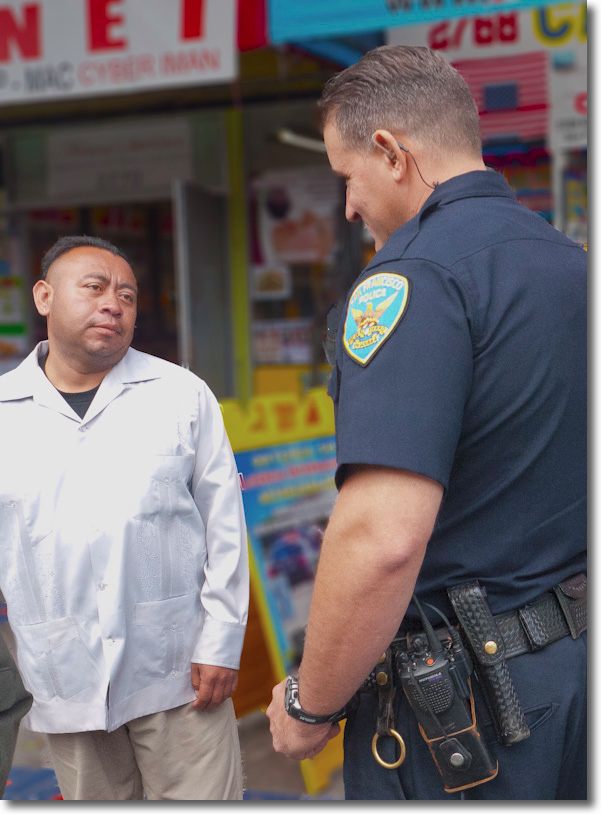
G1, kit lens @18mm, 1/400, f/7.1, ISO 640
Honest, officer.
Spotted on west Mission Street, San Francisco.
G1, kit lens @18mm, 1/400, f/7.1, ISO 640
In SF’s Mission District.
People shopping on west Mission Street in San Francisco are not wealthy. The area is full of cut price stores and interesting groceries selling exotic foods. Many languages are spoken, Spanish being the most common. The people are warm and extroverted, neighbors frequently meet on the street and if the area has more than its share of drunks, addicts and derelicts, none of that takes away from its character.
When you next find yourself on west Mission Street, be sure to check out The Rosamunde Sausage Grill. The menu offers a choice of sausages on a French roll ….
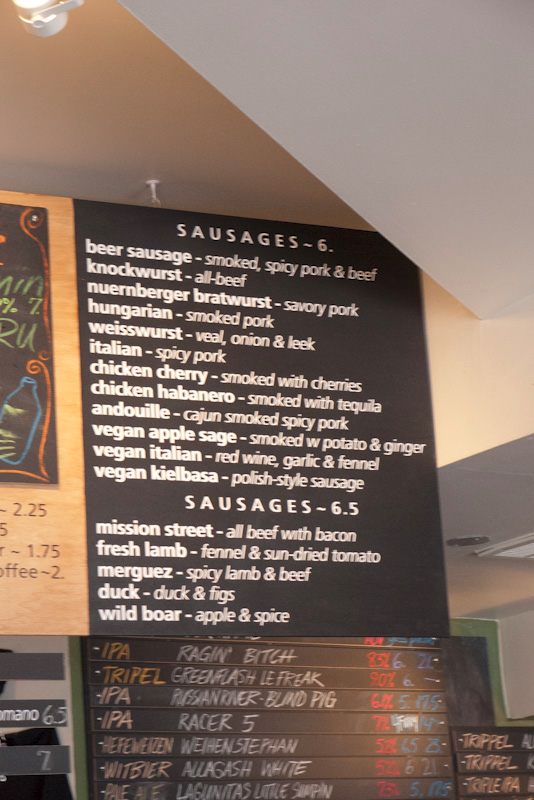
…. and a varied beer selection. Wine drinkers need not apply. Check out the great names. I can recommend the ‘Russian River Damnation’ lager:
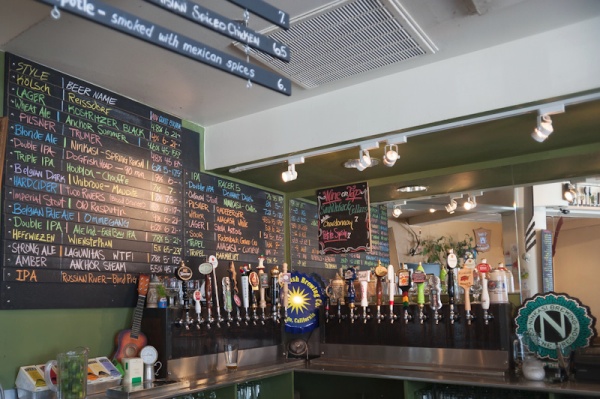
The interior is nothing to write home about, basic beer cellar, but the food and beer are excellent.
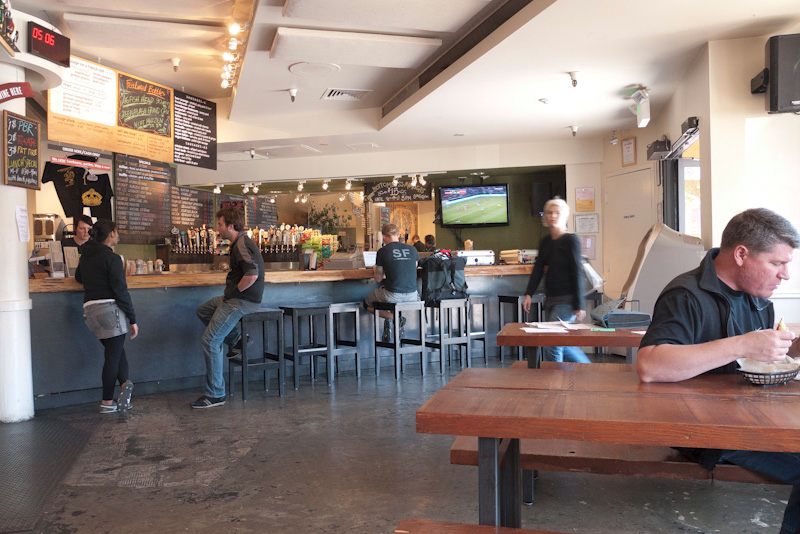
Best of all, sit outside and watch the street scene as drama unfolds before your eyes.

Son of Klingon. G1, kit lens @ 18mm, 1/400, f/4.5, ISO 320.
Jeune tristesse.
Spotted on the Embarcadero, San Francisco.
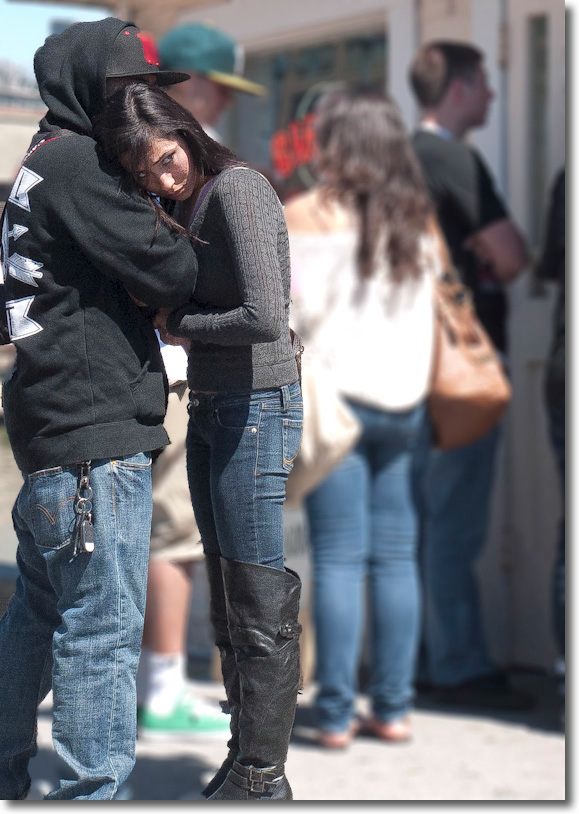
G1, kit lens @ 22mm, 1/1000, f/6.3. ISO 320.
Sometimes it helps to stick out from the crowd.
In San Francisco’s business district, on Montgomery Street.
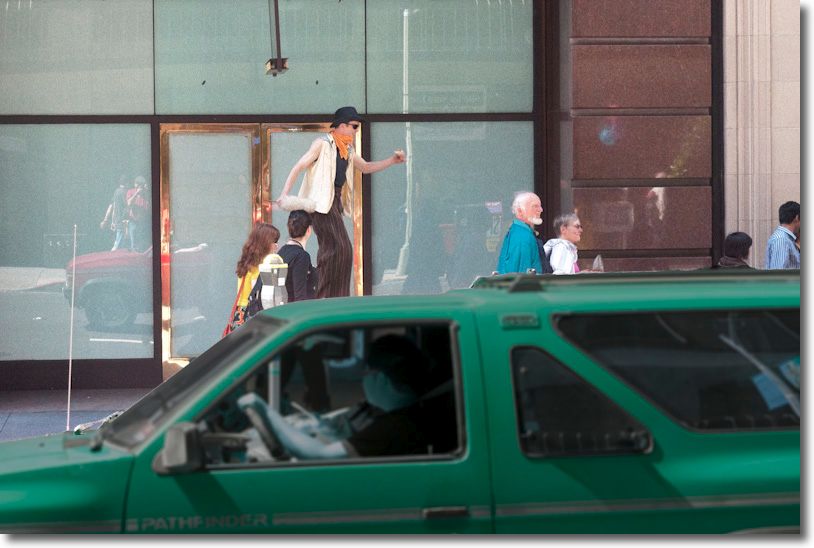
G1, kit lens @ 45mm, 1/400, f/5.6.
Front Street, San Francisco.
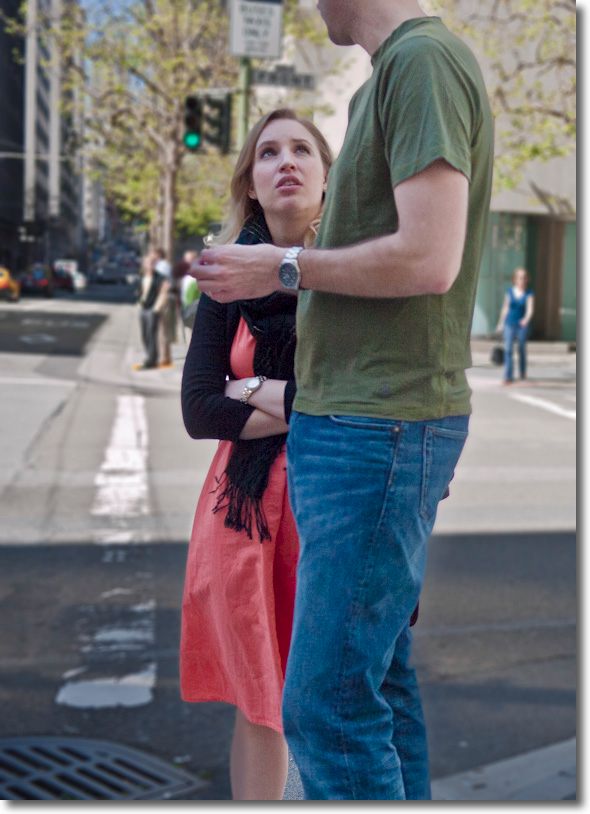
G1, 20mm f/1.7 Panasonic pancake lens, 1/2000, f2.2.
A street snapper amongst painters.
If you are of the persuasion that Renoir’s confections are nausea-inducing, but one step removed from the modern horrors of Thomas Kinkade, then like me you may find yourself hewing to the astringent vision of Gustave Caillebotte (1848-1894).
As Paris became the city we know, magnificently laid out with wide boulevards and mansard roofs, Caillebotte was there to record the most perfect city in the world. He had no need to paint for a living, having inherited a fortune, but as history has shown time and again, poverty is not a qualification for great painting – or photography. For every impoverished Monet I can show you a wealthy Degas. For every Doisneau struggling to make the grocery bill, there’s a Cartier-Bresson enjoying his balcony view of the Tuileries.
And both Degas and Caillebotte were very much infused with a photographic vision, the street paintings of both replete with photographic framing and decisive moments all over the place, long before HC-B saw the light of day. Caillebotte’s best known canvas is his ‘photograph’ of a rainy day in Paris in 1877:
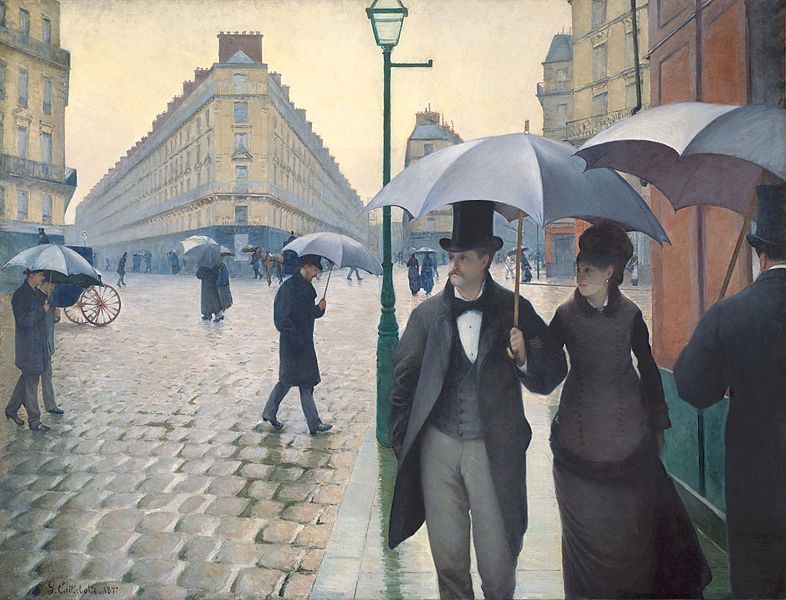
The passerby on the right is cut off by the frame and the horse drawn carriage largely obscured at the left. Caillebotte loved the vision photography made possible but lacked access to gear with the technological prowess required for snapshots. The perspective in the painting is very much at the wide angle end of the spectrum – he was seeing through a 21mm lens.
Nor was Caillebotte’s technique less than the finest. Look at this magnificent use of backlighting and the rendition of glass worthy of the finest from the Dutch school:
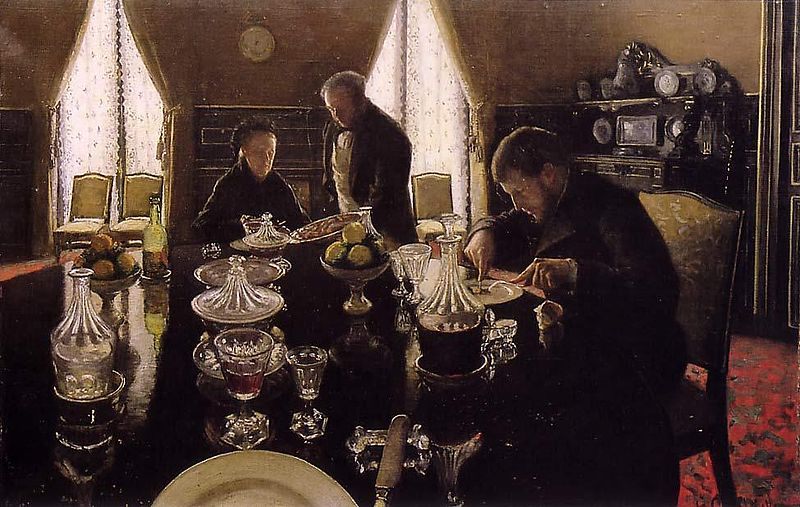
Modern photographic vision thinks nothing of compositional techniques which seemed so shocking back then. The reality is that we have all learned from the French street painting masters.
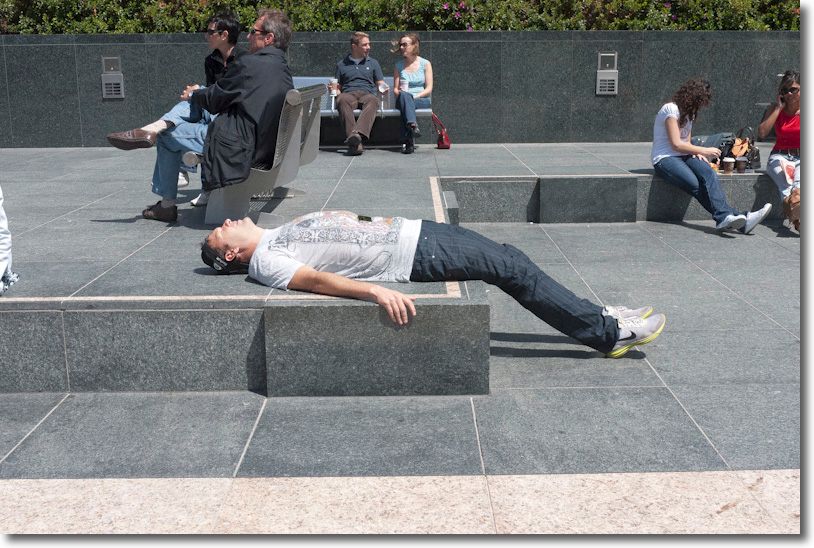
In San Francisco. G1, kit lens at 18mm, 1/2500, f/5, ISO 320.
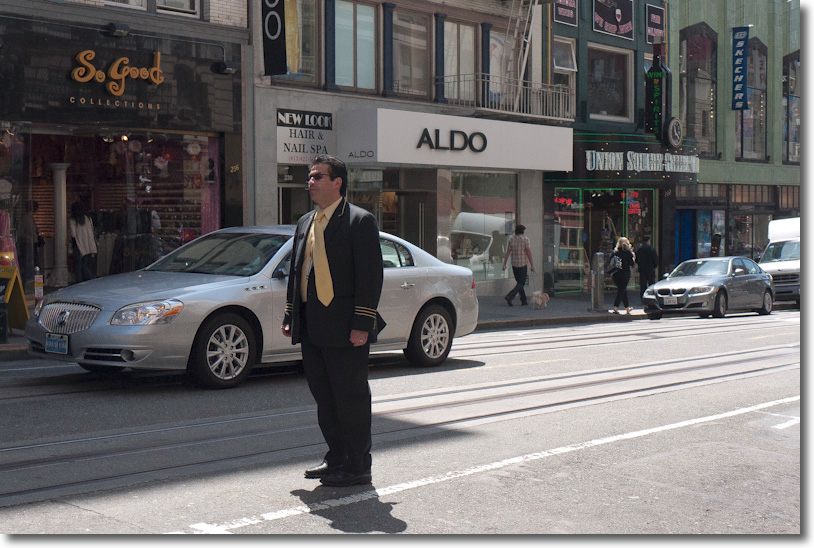
In San Francisco. G1, kit lens @ 18mm, 1/1600, f/5, ISO 320.