Category Archives: Nikon bodies

About Nikon DSLRs

Desperation at Nikon

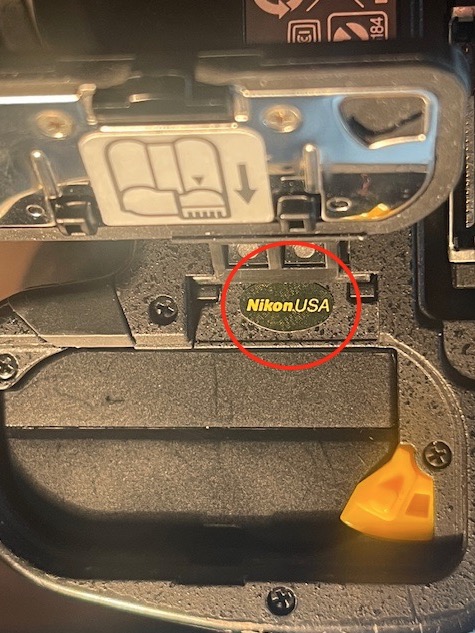
Shameless revenue grab.

Time to hire the investment bankers at Nikon and sell the parts while they have some value left:


Gimme the money. Click the image for the story.

There is no comparison with like action by Apple. An iPhone with its intricate weather sealing and complex internals is not something for the local butcher to fix and, last I checked, Apple was not going out of business. Also, unlike Nikon, their 80 million iPhones sold annually do not arrive faulty or with serious design flaws. Quick, how many iPhone recalls do you remember?

Nikon is failing owing to Apple’s superb iPhone cameras, made by Sony, with Cupertino brains. That’s why they are making this pathetic revenue grab. Amusingly, the picture in the linked article testifies to Nikon’s incompetence – the stripped camera is being handled with bare, greasy fingers.

It has long been Nikon’s policy to refuse repair at the factory places for ‘grey’ market imports – the sort of thing companies like B&H was offloading in boatloads when they were not allegedly cheating on sales taxes. Now you will not be able to get your Nikon fixed anywhere but at Nikon. So when your $5,000 D6 ‘professional’ behemoth fails, get in line or do as Jaguar owners of yore did. Buy two. One for use, the other in the repair shop.

Camera prices unchanged in 50 years

More capability, same price.

I happen to still have my copies of the Wallace Heaton ‘Blue Book’ gear catalogs from the 1960s. These were published annually by the bespoke supplier of gear to HM QE2, the firm going bankrupt a few years later when they failed to see discounted high street retail coming. They remain an interesting historical artifact, or artefact if you speak the Queen’s English.

Here is the listing for the best 35mm film SLR of the time – I would argue it was the best film SLR of all time – the Nikon F. This is from the 1969 Blue Book, 50 years ago:


Nikon F in 1969

With the clunky Photomic FTN metering head the Nikon F retailed for £270.73 (converted to decimal from pounds, shilling and pence – long live the Empire).

Going to the US Bureau of Labor Statistics web site for the history of the Consumer Price Index and to the Bank of England site for the exchange rate of the pound sterling against the US dollar (yes, it’s been downhill those 50 years) the multiplier for the 1969 price converted to 2019 US dollars comes to 15.4. So that £270.73 of 1969 is $4,170 today.

Looking at the current price for the top of the line Nikon DSLR today, the D5, discloses a retail price of $6,500 for the body and $200 for the 50mm f/1.8G standard lens, a total of $6,700. For the like-equipped D850 the total comes to $3,200 and the Z7 comes to $3,150.

Now capabilities of the 1969 and 2019 gear are not easily compared other than to say that the modern digital body and lens are superior in every way – speed, reliability, ISO range, storage capacity and so on. The 1969 Nikon F falls in the middle of the price range of the (arguably overpriced) D5 and the extremely capable D850. Indeed, common sense probably dictates the choice of two D850s over one D5 at the same price. The overall price change, inflation adjusted, has not changed at all. But the capabilities of the modern hardware are two orders of magnitude removed from that of the 50 year old predecessor.

Nikon – a magnificent legacy

The Nikon Museum in Tokyo.


Click the image to go to the interactive Google view.

Nikon honors its legacy in the extensive displays in the Nikon Museum. When Nikon abandoned the Zeiss Contax lens mount replacing it with the F mount in its first – and best – SLR, the peerless Nikon F, it was as much a statement of intent as it was an act of courage. The wisdom of that decision persists to this day when even the earliest F mount lenses can be mounted on the latest Nikon D850 DSLR.

Now with a new, wider mount in the Z6/Z7 mirrorless offerings, Nikon has finally begun to abandon the flapping mirror in favor of what is already acknowledged as the best EVF in the business, the one found in the new Z bodies.


A display of rangefinder bodies which preceded the Nikon F. The related lenses put Nikon on the map.

Leitz, Wetzlar used to be the owner of the legacy crown, snatched from it by Nikon with the Nikon F which saw the rangefinder Leica M bodies migrate from being workhorses to becoming silly Veblen goods. The working pro gives these not even a passing thought, no more than an enthusiastic driver thinks about Rolls Royces.


The Nikon F. The camera which changed everything. This camera did to the German
camera industry what Honda did to British motorcycles.

Nikkor 28-105mm f/3.5-4.5D AF lens

A decent walkabout optic.

The heart warming facts about Nikon’s AFD zoom optics is not only that many choices exist but also that many are insanely inexpensive in mint, used condition.

My mint copy of the 28-105mm f/3.5-4.5 ran me but $78 plus $7 to Amazon for a 62mm UV protective filter. I did not bother getting a lens hood as the one for this lens is huge and mostly useless.

The rational ‘walkabout’ comparison is the 24-120mm f/3.5-5.6 IF lens which adds internal focusing for a smoother feel and extends more at both ends. I have been using the 24-120mm on my Nikon F100 with Ektar film with considerable success. If there’s a complaint it’s the generous dollops of distortion, barrel at the wide end and pincushion at the long. This needs correcting in LR with architectural subjects, a pain but not hard to do.


At their widest settings. Note that the zoom rings work in opposite directions.


At the longest focal lengths.


So how does the 28-105mm differ? Bulk and weight are much the same, the zoom rings displays a tad more stiction owing to the traditional design, the optic is faster at the long end by one stop and adds a handy macro feature.

Here are test images – you can compare with those from the 24-120mm f/3.5-5.6 by clicking here.


At 28mm, f/3.5, center and edge.


At 28mm, f/8, center and edge.


At 50mm, f/4, center and edge.


At 50mm, f/8, center and edge.


At 105mm, f/4.5, center and edge.


At 105mm, f/8, center and edge.


In summary edge performance at the wide end is ghastly at full aperture; you need to stop down to f/8 to make it useable. The 24-120mm optic is far better in this regard. The edges from the 28-105mm get progressively better as the focal length increases. Whereas the 24-120mm lens shows chromatic aberration (easily fixed in LR) the 28-105mm has none. Not published here, distortion characteristics disclose that the 28-105 shows mild barrel distortion at 28mm, disappearing at 50mm or longer. That is much better than the 24-120 which barrels greatly at 24mm and pincushions north of 50mm. Neither optic does a particularly good job of rendering out-of-focus areas, both yielding results that are too ‘busy’ for my taste. The 28-105mm lens shows no light fall off at the edges at any aperture or focal length. I have found that the later lens correction profile in LR for the 28-105mm f/3.5-4.5 G VR optic (the one with no aperture ring) works well with this earlier AF D lens.

Handling of both optics on the D700 DSLR and F100 film SLR is excellent. They balance well, zoom rings lack any gritty feel, AF is as fast as you need for all but sports subjects and as I always use aperture priority with aperture control transferred to the lens, the aperture ring on the 28-105mm is easier to access as the lens is less steeply pyramided at that location, making the ring more accessible. Not a big deal in practice.

The macro range on the 28-105mm is accessed by setting the focal length between 50 and 105mm and focus between infinity and 0.5 feet. The switch on the barrel is flipped and you get a very handy macro lens with a focal length range of 50-105mm. The long focal length setting is especially handy as it allows better clearance between the front of the lens and the subject. This is the closest I could get at 105mm:


The magnification ratio computes to 1/4 life size.

Sharpness, even at f/4.5 in the macro range, is excellent – fully useable.

Conclusion: If you need 24mm (which is much wider than 28mm) and useable edge performance near full aperture at the wide end, the 24-120mm is the better choice. If you prefer a minimum of post-processing to remove distortion the 28-105mm is to be preferred. The construction quality and material choices (more plastic) of the 28-105mm are lower but hardly a deal breaker and the macro feature is both useable and the optics excellent. Weights of the two lenses with filters are 16oz for the 28-105mm and 20 oz for the 24-120mm.

It’s a nice choice to have to make with each lens selling for well under $100. I have both!

AF and AFD Nikkors

A curious bunch.

Before Nikon migrated to AF lenses with built in linear focus motors – the AFS series – they marketed the AF and AFD ranges which used a screwdriver linkage in the lens for focusing, the actual focus motor being in the body of better film and digital Nikon SLRs.


The Nikon screw drive motor coupling on the body and in the lens mount.
The film era F100 works well with these and just as well with the latest AFS optics.

While a seemingly Rube Goldberg solution it has proved to be solid and reliable with millions of lenses made. The line started around 1986 and one or two are made to this day.

What is odd about the AF and AFD lenses (the later AFD versions added an enhanced metering chip for better results with flash; otherwise all else was identical) is just how much construction quality varied across the line. I have a half-dozen:


My small AF/AFD collection – 20/2.8, 50/1.8, 85/1.8 and 80-200/2.8 ED IF rear row;
35-70/2.8 and 24-120 f/3.5-5.6 front row.

The mechanical stand-outs here are the 80-200 and 35-70. The former is a two ring zoom, the latter a push-pull design which wears less well, the action becoming sloppy with age. Both are fabulously made and optically as good as it gets. The 80-200 is still sold new at over $1,000, my mint sample running me just $476. The limited range 35-70 is long discontinued (1987-2005) and is often found for under $200. Both are wonderful bargains.

The mechanical quality story with the others is quite a bit different. All these optics have proper aperture rings, a feature sadly deleted from the latest AFS line where apertures are set using one of the command dials on the body of the camera. The 50/1.8 is a piece of garbage. Cheap materials, rattling internals, awful controls. And dirt cheap at $70 used, mint. The 20mm ($230) and 85mm ($270) are mechanically so-so, but focus fast with the 85mm especially pleasant to use in the portrait studio where acquiring focus on the subject’s eyes is a piece of cake with AF especially fast.

And the 24-120mm is a jack-of-all-trades and master of none. It comes with fairly pronounced barrel distortion, rather wobbly construction, an unspectacular f/5.6 at the long end yet it’s invariably found on my D700 or F100 when I want to lug only one optic along. The 24mm comes in especially handy for architectural images and the barrel distortion is easily removed in LR. At well under $100 for a mint one, it’s hard to pass by.

Where Nikon did not compromise is in the optical quality of these lenses. All are at least as good as their MF predecessors with the 80-200 considerably better (and bulkier) than what came before. It’s a weapon, not a lens. The 85mm, with its chintzy external plastic, can almost match the classic 85/1.8 MF at full aperture, equalling it at f/4 and below. And even that piece of garbage, the 50/1.8 is almost as good as the classic 50/2 MF – it’s 1.5 stops less sharp at f/2 compared to the old MF optic, but usable wide open even in the extreme corners. Finally the 20/2.8, which scarcely needs AF owing to large depth of field, is almost as good as the classic 20/3.5 UD MF …. made 21 years earlier.

If MF is not for you, or you are just feeling lazy, none of these economically priced AF/AFD Nikkors will let you down. Just make sure your body comes with the screwdriver coupling or AF will be lost. Sadly, none of these will AF on the new FF Z6/Z7 mirrorless bodies, which lack the screwdrive motor in either the body or the related adapter.

For an index of my Nikkor pieces click here.