Category Archives: Hardware

Stuff

The last Hackintosh – the HP100 – Part II

Money data.

Part I is here.

As the parts start arriving for the HP100 upgrade of HP1, I thought it might be instructive to compare costs for that super fast three display machine with the inexpensive HP10 dual display Hackintosh, my HP10, used mostly for stock quotes. Just for laughs I also include a MacPro in as close a configuration as I could come up with.

But first, here’s a snap of the gorgeous (!) new Gigabyte motherboard which will host Intel’s latest Core i5 CPU, replacing the older one with its Intel Core2Quad:
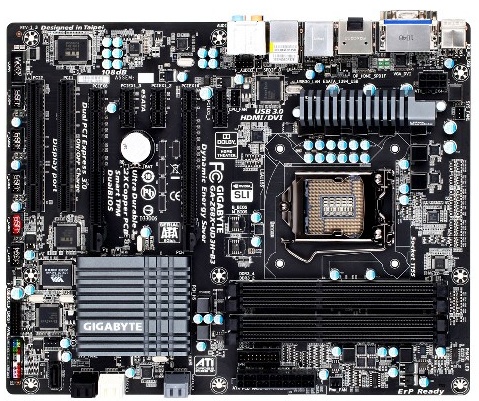
Gigabyte Z68X-UD3H-B3 motherboard.

If that doesn’t get your pulse racing, nothing will.

What’s striking about this cost comparison is not just the silly pricing of the MacPro (not to mention its very limited capacity for upgrades) but the exceptionally low cost of HP10 whose normally clocked Core i3 CPU outperforms all but the fastest iMacs. The Core i5/i7 CPUs in iMacs are under-clocked by Apple so they only melt one day after your warranty has expired. HP100 will be twice as fast as HP1 and 50% faster than the comparable MacPro. The HP100 upgrade will add five years of life to HP1.
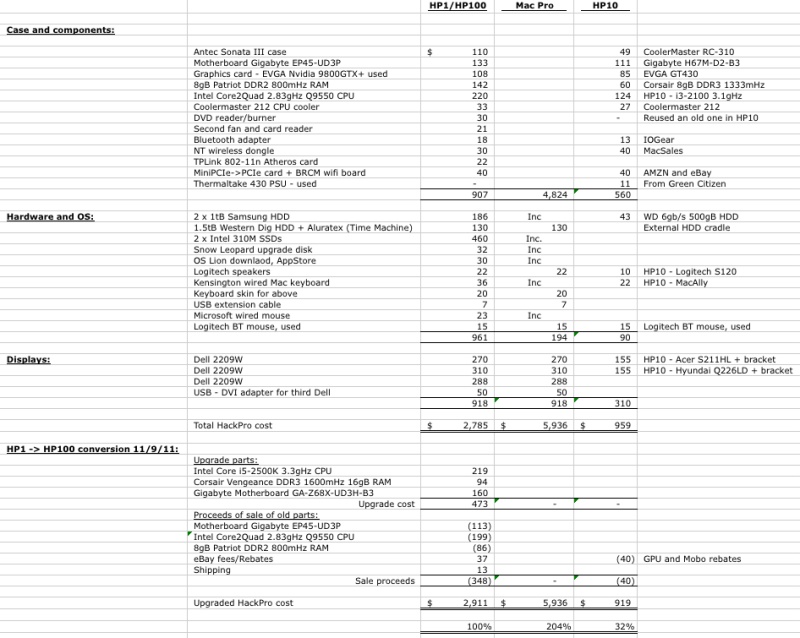
HP1/HP100, MacPro and HP10 costs compared.

Note also that the net cost of upgrading HP1 (Core2Quad) to HP100 (Core i5) is a mere $126. The old parts sold for a loss of 30% of original cost, incurred 30 months ago. That’s an outstanding value, helped by the excellent resale value of Intel’s older CPU.

With the mechanical difficulty of building a Hackintosh comparable to that of assembling a basic Lego toy and with the software tools freely available making hacking very simple, there has never been a better time to build the best desktop machine that (very little) money can buy. While the cheaper HP10 does not sport fancy monitors, its operating speed is perfectly fine for heavy Photoshop use and it runs exceptionally cool, all for under $1,000 with two wall mounted matte displays, easily profiled with a colorimeter.

That sum gets you the base 21″ iMac with a ghastly glossy screen which simply cannot be correctly profiled, lacking the necessary adjustments, identical operating speed and seriously compromised thermal engineering and that awful slot-loading optical drive. Finally, the HP10 has two internal HDDs and two independent Wifi systems – a plug-in dongle and a Broadcomm/AirDrop internal card, for broad redundancy So, your $1000 gets you two displays, two HDDs and two wi-fi systems, not to mention wired broadband. Without broadband, you are dead.

The iMac has one of everything and when it blows, the whole thing has to go back; once out of warranty, the melted motherboard will cost you $950 to replace, which is pointless. Finally, when funds permit, HP10’s Core i3 can be upgraded to an i5 or i7, both drop-in replacements.

Yes, desktop machines are trucks. The HP10 is the Toyota pickup and HP100 just happens to have a Ferrari V12 under the hood, at a Chevy price.

Part III is here.

The last Hackintosh – the HP100 – Part I

The final upgrade.

Steve Jobs described desktop computers as trucks and while the world will always need trucks, their prevalence on the home desktop is rapidly becoming a thing of the past. With tremendous performance now available in many 2 lb. laptops the need for the heavy iron is fading. Still, for this photographer, there’s nothing quite like the reliability, cool running and sheer grunt of a big desktop with an extended keyboard, be it a MacPro (soon to be discontinued, the rumor mill has it) or its cousin from the wrong side of the tracks, the Hackintosh.

My ‘go to’ desktop machine, the Hackintosh HP1, started life over two years ago with 4gB of DDR2 800mHz memory, OS Leopard, one 250gB HDD, one 21″ Dell monitor and a miserable little CPU cooler from Intel for their excellent Core2Quad CPU. It delivered decent results. Today, that same chassis sports 8gB of memory, no fewer than three Dell displays, a monster CPU cooler from Coolermaster, two Intel 120gB SSDs, two internal Samsung 1tB HDDs and an external 1.5tB TimeMachine HDD. The stock 2.83gHz CPU has been overclocked to 3.4gHz, yielding a 20% speed increase and HP1 runs the latest version of OS Lion with full iCloud compatibility. Running 7/24 no part has failed and no part cost more than $200. Most are now falling out of warranty.

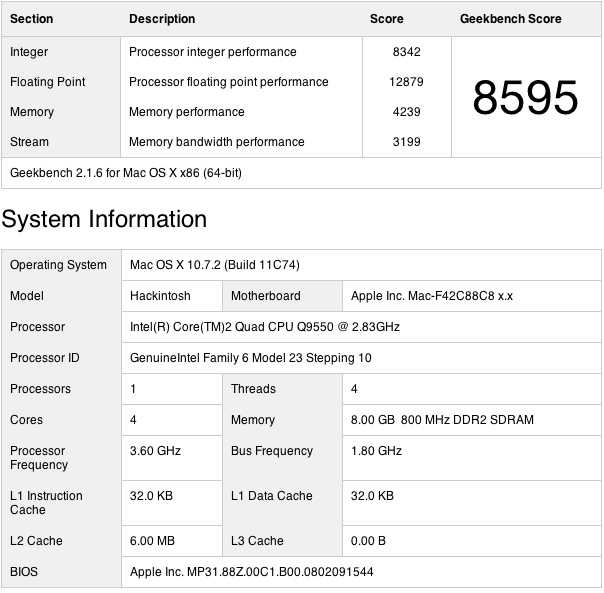
But its aging CPU and memory mean that HP1 has pretty much hit a performance wall, which Geekbench-64 reports as follows:

The Hackintosh HP1 today.

A few moments of noodling disclosed that HP1’s stock speed can be approximately doubled for a very modest net outlay of some $125 making, tra-la, its successor, the HP100. How does this magic work?

First, the previous generation Gigabyte EP45-UD3P motherboard, a hacker’s favorite, must give way to Gigabyte’s latest Z68X-UD3H-B3 – $160 which also adds HDMI and DisplayPort sockets. (If you do not propose using the integrated graphics GPU on the i5/i7 ‘K’ CPUs preferring a discrete, properly cooled GPU card – then the P67X-UD3-B3 motherboard at $135 is otherwise identical, deleting HDMI and DisplayPort sockets but sporting no fewer than 14 USB sockets compared to a mere 12 for the Z68, and the circuit board is blue, not black!) The 8gB poky 800 DDR2 RAM will be replaced with no fewer than 16gB of Corsair 1600 DDR3 – $95 and twice the speed and capacity of the current RAM. And finally the hot running Core2Quad CPU will cede pride of place to Intel’s latest cool-as-a-cucumber i5-2500K at $220. That makes an outlay of $480. Everything else – the superb Nvidia GT9800+ GPU, the drives, displays, power supply, case, and fans/cooler stay as is. The power needs of the latest CPU are substantially lower than those of the Core2Quad, so no power supply upgrade is needed and the GPU runs as fast in terms of video framing rate as Nvidia’s latest GT430. I know, having measured both.

You can download the manual for the Z68X-UD3H-B3 motherboard by clicking below:

Click to download the Gigabyte Z68 motherboard manual.

The old motherboard, Core2Quad and memory command high prices on the used market. The mobo is a hacker’s classic, the Core2Quad still sells new from Intel, albeit for 50% more than when I bought it, and the memory is not that dated and matches the mobo’s specs. I should net $350 for that lot after the usual eBay frauds/fees/defalcations.

So stay tuned as HP100 takes shape; meanwhile HP10, my Core i3 backup Hackster, burbles along comfortably as proof of concept and runs 30F cooler than HP1. HP10 has a Gigabyte H67M-D2-B3 mobo, 8gB of 1333mHz Corsair RAM, two DVI displays, the i3 CPU and the excellent Nvidia GT430 GPU, all of this delivering performance 10% faster than HP1 in stock form with a Geekbench-64 score of 7,098.

A few words on CPUs and mobos:

Intel’s latest range of Core ix CPUs comes in three speeds:

  • Core i3 – 3.1gHz, cannot be overclocked. This is a dual core CPU.
  • Core i5 – 3.3gHz, with the ‘K’ model permitting overclocking to 3.6gHz without voiding the warranty. This is a four core CPU.
  • Core i7 – 3.4gHz. This is a four core CPU with multithreading, which speeds video processing.

All those CPUs share the same 1155 socket and are plug-and-play replacements for one another, at prices of $125, $220 and $320, the ‘K’ variants of the last two commanding a $10 premium.

Gigabyte is the hacker’s board of choice and they make three ranges with 1155 sockets.

  • H67 – no overclocking, no onboard GPU support.
  • P67 – no onboard GPU support, overclocking support
  • Z68 – onboard GPU support, oveclocking support.
  • The ‘UD’ designator in the model number designates ‘heavy duty’ – a thicker PCB to support heavy coolers.
  • All other of their many variations addresses availability of differing sockets for peripherals.
  • ‘onboard GPU’ refers to the integrated GPU included in the i3/i5/i7 CPUs. A separate GPU card blows this capability away for fast video rendering.

Part II is here.

Digger

A study in skill.

The city is fixing some old sewer pipes locally and the pup and I needed no encouragement to watch the action on our evening walk.

Komatsu Digger operator. iPhone 4S, processed in Snapseed.

This enormous digger was replacing the old sewer pipes and it was truly a fascination to watch the operator move the pieces into place, manipulating the huge bucket and hydraulic arms with the delicacy and precision of a surgeon wielding a scalpel. As he finished work for the day he placed the heavy, steel cover plates – probably 8′ x 20′ in size – over the trench with such sureness that they abutted perfectly, yet never quite touched. His equally skilled colleague was operating a backhoe with exquisite precision, demonstrating that he could move a single pebble of the crushed rock filler along the road without damage to the surface, using a nine cubic yard scoop. Incredibly impressive.

It is never less than totally satisfying for this observer to see a skill expertly demonstrated, regardless of the occupation involved.

Wanted: An Apple camera

The time is ripe.

I have yet to see anyone asking hard questions about where new product ideas came from at AAPL in the past decade. Did Steve Jobs wake up, shout Eureka! and conclude the world needed an iPad? I doubt it. Jobs was adept at looking at mass market products whose execution/UI were poor (PCs, the Walkman, cell phones, laptops, mobile devices) and making them better.

I have long argued that Apple should make a camera – look at the simply awful UIs of every camera out there. Knobs, button, horrendous software/menus, etc. The world needs a Wii-like camera, the ease of use of the one in the iPhone with a physical design that makes it easy to hold. Add in Siri and get rid of all those stupid buttons. Why shouldn’t you speak to your camera? “Use HDR in this one”. “Blur the background”. “Stop motion”. “Focus on the eyes”. And like other fields Apple has entered, with existing low margins and commodity characteristics (PCs, phones) there’s room for a premium offering which works better.

The current rumor, resurfacing again, has it that Apple should make a television set. A camera melds better with Apple’s business model which seeks to force upgrades every 2-3 years. That characteristic is completely absent from the television market where technological change has ceased and ‘brains’ can be added with the likes of an AppleTV at very low cost. And those ‘brains’ can be upgraded for $100 in 3 years’ time.

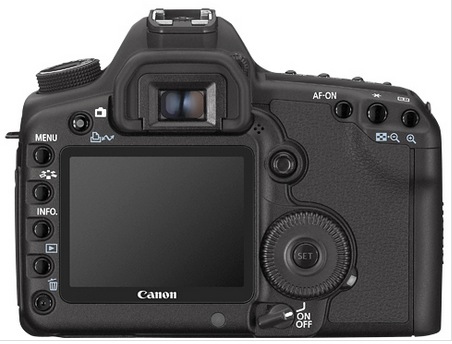
Digital idiocy. Today’s dinosaur, awaiting obsolescence – the DSLR.

In its thinking behind the design of the camera in the iPhone 4S Apple has clearly studied the needs of photographers. The outstandingly low shutter lag and inter-frame delay testify to the realization that not only sports shooters need those attributes. Mommy wanting to get little Johnny in the frame – rather than the background he has just vacated – spur the realization that the market for fast and responsive gear is anything but exclusively a professional one. Add in-camera HDR as the iPhone 4S does and one of the biggest drawbacks of the digital sensor is addressed – burned out highlights. But the 4S can only go so far. As a camera its ergonomics stink. As a design concept it has enormous promise. The five element lens is all plastic. That makes it light. I frankly don’t care what my lens is made of if its light, small and sharp. If it’s sharp because of software, that’s fine with me. If that same software confers limited depth of field that’s even better. ‘Fast’ lenses will soon be a thing of the past. All lenses will be ‘fast’ thanks to better sensors and better software. And, I’ll venture the guess, that’s also fine with all but the 0.1% of fetishists who get off on resolution charts.

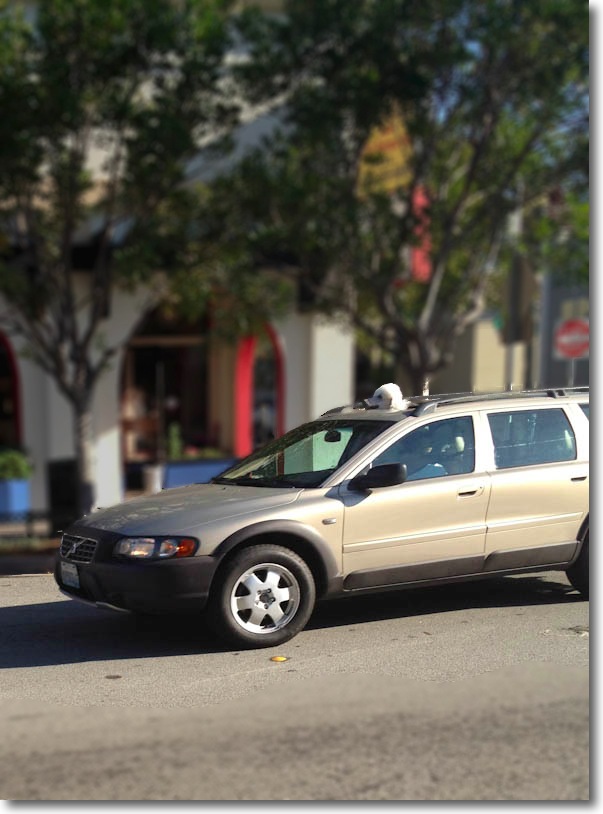
What got me thinking about this topic yet again the other day was a silly little snap I took when getting the groceries:

Woof!

The car was turning the corner and the magnificent Standard Poodle was pretty much directing things through the sunroof. In a second the picture would be gone. I grabbed the 4S from the belt holster, made the camera live without by passing the lock screen (two stabs at the Home button) and the snap was in the bag. Now if Apple can do that in the crappy form factor of a cell phone, why not do it right with a dedicated camera?

C’mon Apple, photographers everywhere are waiting to be told they need to pay up for fast and simple.

The Glif

A QR tripod mount for the iPhone 4/4S

Steve Jobs was right. ‘Simple is hard’, he said, when talking of sweating the details of a design. And, sadly, most of the accessory makers for the iPhone have tried for quick bucks and refused to sweat the details. ‘Think Different’, whatever the grammatical shortfallings of that mantra, is one foreign to their thinking, or lack thereof.

And so it is with tripod mounts. The plenitude of offerings out there is underwhelming to say the least. Most take the guise of snap-on backs or ugly straps which go across the face of the iPhone. But one, brought to us by the same funding mechanism which saw the outstanding success of the Luna-Tik iPod watch band, Kickstarter, really does Think Different.

The makers of the Glif had a similar success in raising capital for the funding of the injection molding process required to manufacture the device, though as I had decided to pass on the flawed iPhone 4 I had no interest in it. Now that the identically sized and shaped iPhone 4S is here with none of the antenna issues of the iPhone 4, I bought a Glif from Amazon and tried it out.

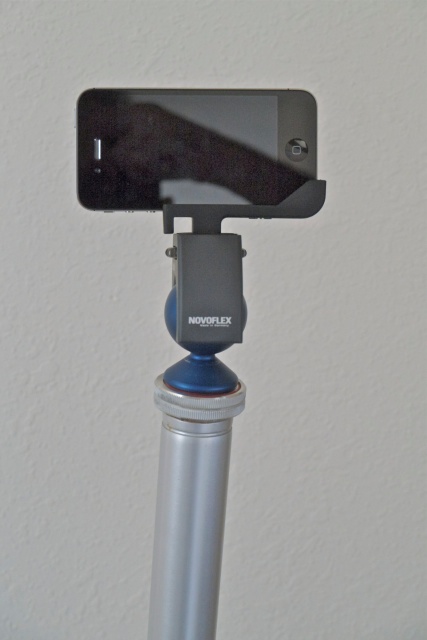
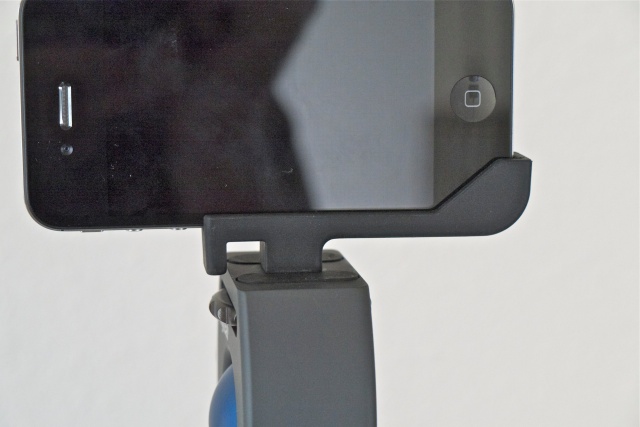
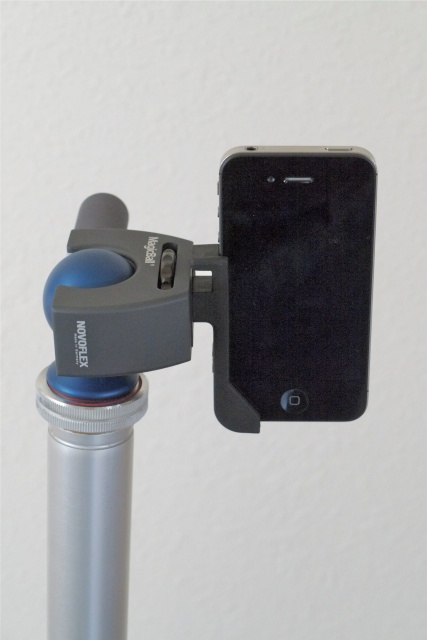
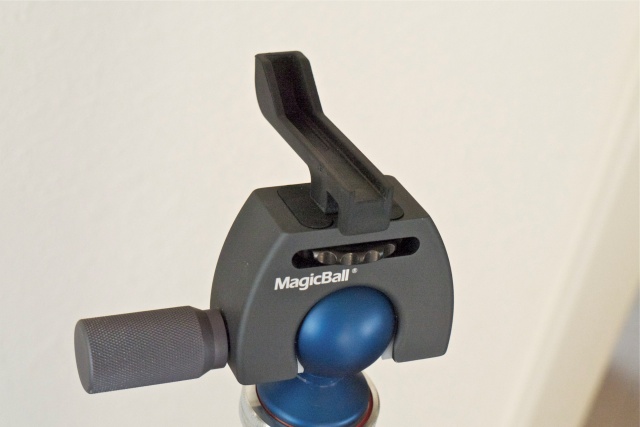
Suffice it to say that this is the iPhone tripod mount for thinking people. Small, light, take-anywhere and superbly functional, you can see it in use below.

The Glif can also function as an iPhone support, so check their site if eyestrain is your thing.

The Glif holds the iPhone securely and shaking it as hard as I could I was unable to make it part company with the iPhone. A GorillaPod would make a perfect mobile tripod accessory for the Glif. Until now I have resisted buying one as it just seems too flimsy for even a small DSLR. But given the iPhone’s low weight, the GorillaPod will likely be finding a home here soon.

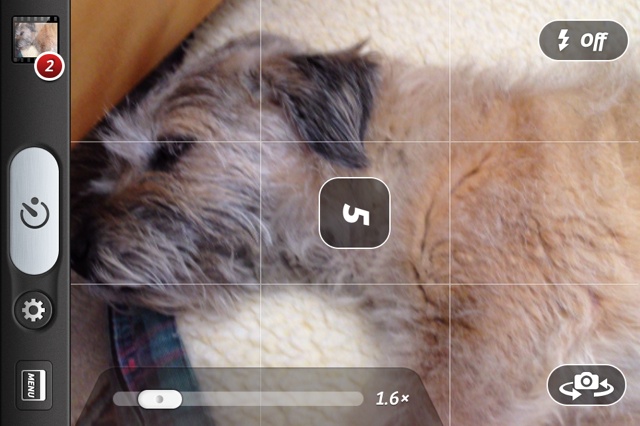
For taking movies just start the movie from the iPhone. For still shots, as there is no remote release available for the iPhone making the likelihood of camera shake higher, blow $0.99 on the Camera+ iPhone app which includes a nice self timer. Touch the self timer screen and it switches between 5, 15 and 30 seconds.

Bertie poses for Camera+ with its self timer.

More importantly, if you are into the whole ‘lone figure in the landscape’ thing, the self timer is just what the doctor ordered when you have to be the model.

If you use a screen protector or a case or some other encumbrance on your iPhone, forget it. The Glif is not for you.

iPhone 5 update: When Apple came out with its toy-like iPhone 5, a device whose flimsy feel and compromised assembly (uneven seams in mine) does not remotely live up to that of the 4/4S, it also made the phone thinner, rendering the above Glif useless. There’s now a slimmer model available for the iPhone 5 and it works just as well.