Category Archives: Technique

QTVR panoramas on my web site

Time to make these a page on the site.

I have assembled some of my recent panoramas on my web site and, to make them easily accessible, have added a Menu option on the Main Page. Click the Menu then click on ‘The Panoramas’.

Alternatively, you can go directly to the panorama index page by clicking here. Recommended especially for Safari users, as this web bowser is especially bad at refreshing its cached history of web pages.

Can panoramas be photographic fine art? I have absolutely no doubt – if art is something that evokes emotions and feelings, then the answer has to be a resounding Yes. Who could not thrill to the strains of Wagner’s Tristan and Isolde in Redwood Valhalla?

Another sound panorama

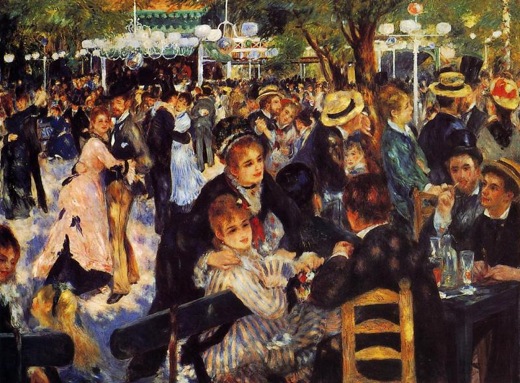
Not quite Renoir, but it will do for now.

Renoir’s Bal au Moulin de la Galette is as good as it gets. Suffused with warmth, gaiety, movement, sheer joy, modern crowd scenes simply cannot improve on this masterpiece.

But Renoir did not have QTVR + sound, though he came awfully close. I swear I can hear the revellers in his magnificent canvas. And look how tightly he crops his composition!

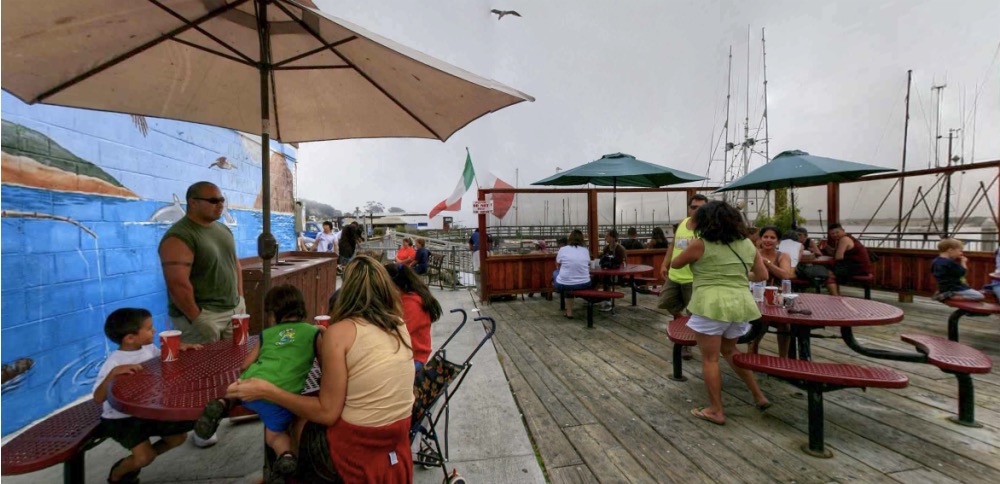
Here is my own imitation.


Click the image.

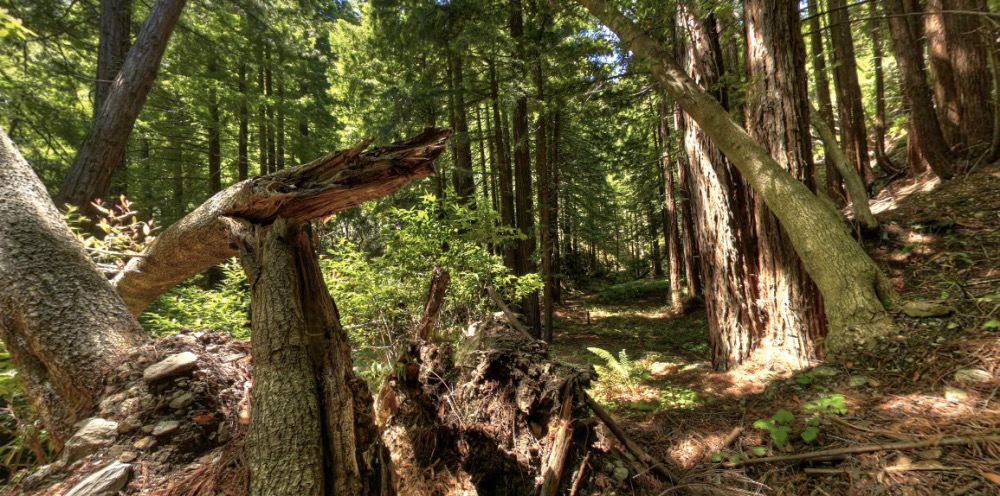
Strong foregrounds make for strong panoramas

Close foreground details makes for heightened drama.

I’m learning that QTVR panoramas are similar to using a very wide angle lens in conventional photography. Meaning that if the foreground is devoid of close, sharp details, likely as not the result will be disappointing.

The broken limb in this example – visible when the panorama first opens, was so close to the fish eye lens that it actually touched the front element at one point as I tried to gain a reasonably solid position for the tripod in what has to be years of dead leaves on the ground. Once again HDR techniques were used in this very challenging lighting.


Click the image.

Thrill to the sights and sounds of racing Porsches

Your intrepid panographer checks in from the Laguna Seca racetrack paddock.

Next weekend sees the Monterey Historics with Monterey and Pebble Beach overrun with tourists ogling the million dollar machinery on display and for sale.

The Laguna Seca track is as bad – hour long queues to get in.

The smart money goes to the racetrack the weekend before where all is calm, all the cars are there and twenty visitors turn up. Entrance to everything is free. I’m fortunte that the track is just 100 miles north of home. The mechanics and drivers – many of them retired famous racers – are relaxed, friendly and very accommodating. Until you have seen GP motorbikes or old Formula One cars take the Corkscrew at full chat you have not lived. As great race track corners go, perhaps only the Casino Hairpin in Monaco is more famous.

The paddock contains everything from true amateurs with no budget and one car trailered in to multi-million dollar marketing operations which think nothing of thrashing their pristine $2mm Ferrari Testa Rossas around the track at race speeds.

I took the attached yesterday in the Griot’s tent – more racing Porsches and the like than you could shake a stick at.

And in case you want to know, the sound track is of four great Porsches (aren’t all Porsches great?) – the 904, the 911 turbo, the 935 and the fabulous 956.
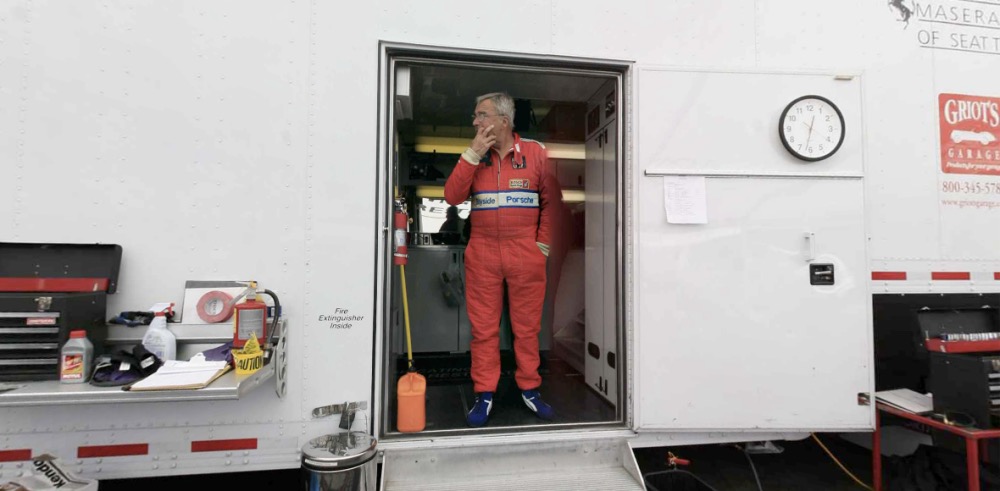

Click the image

The sounds come from four tracks and were joined end to end using a fine free application named Audacity.

The mechanics were nice enough to allow me, clunky tripod and pano head and all, into their tent.

One ‘pro’ with a Nikon and a two foot long lens – more boring pix of cars on the track – eyed my strange panorama rig with interest but male pride prevented him from asking what the hell I was doing. Shame – he might have learned something.

What on earth possessed me to sell my pristine 1967 911?
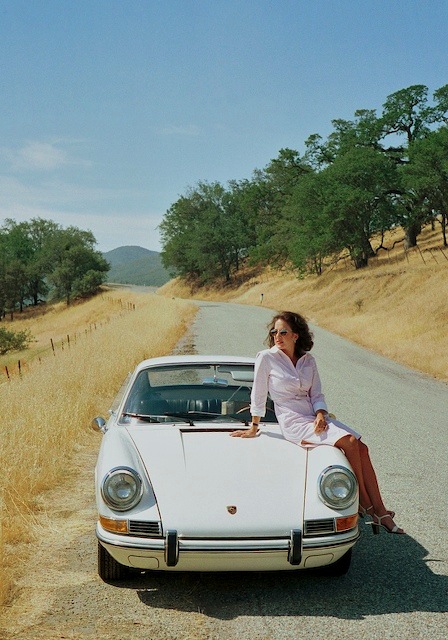
The author’s 1967 911 with girl. I miss the car.
Change or die

It has long been my motto, or mantra now that I’m a Californian, that you either ‘Change or Die’. It is instructive to consider this in the light of the equipment change my landscape photography has undergone during the past year:

Before:

Rollei 6003 + 45 degree prism
40mm, 80mm and 150mm Rollei lenses
Rolls of 120 Kodak Portra VC160 film
A Crown Graphic 4″ x 5″ camera with 90mm, 135mm and 210mm lenses
Several film holders for the above
A dark cloth and loupe to focus the bloody thing
A cable release
My old Linhof tripod
My even older Weston Master V exposure meter
A bad back from carrying all that stuff

After:

Canon EOS 5D
Canon 15mm fisheye lens
King Pano panoramic head
A two axis bubble level
A spare 1 gB CF card
An overpriced Canon ‘cable’ release
My old Linhof tripod
A headache from trying to remember to do everything right (strictly a hardware problem, I assure you)
And, shortly, an iPod-sized digital sound recorder

The software change has been no less dramatic.

Before:

Silverfast Ai for scanning the negatives
Photoshop CS2

After:

Aperture
Photoshop CS2
Photmatix Pro (for HDR rendition)
Photomatix Photoshop plug-in
Panagea Photoshop plug-in
PT Mac (to stitch panoramas)
ImageAlign Photoshop plug-in (to defish zenith and nadir images)
Cubic Converter (to adjust QT defaults)
Cubic Connector (to add sound)
QuickTime (free from Apple for Macs or PCs)
And probably some other things I cannot recall

I don’t think my mantra would be disappointed.

Back-end hardware remains unchanged – the superb Apple iMac G5

And, yes, you can do QTVR panoramas with film gear, but that’s about as sane as driving a Hummer with $4 gas on the horizon.