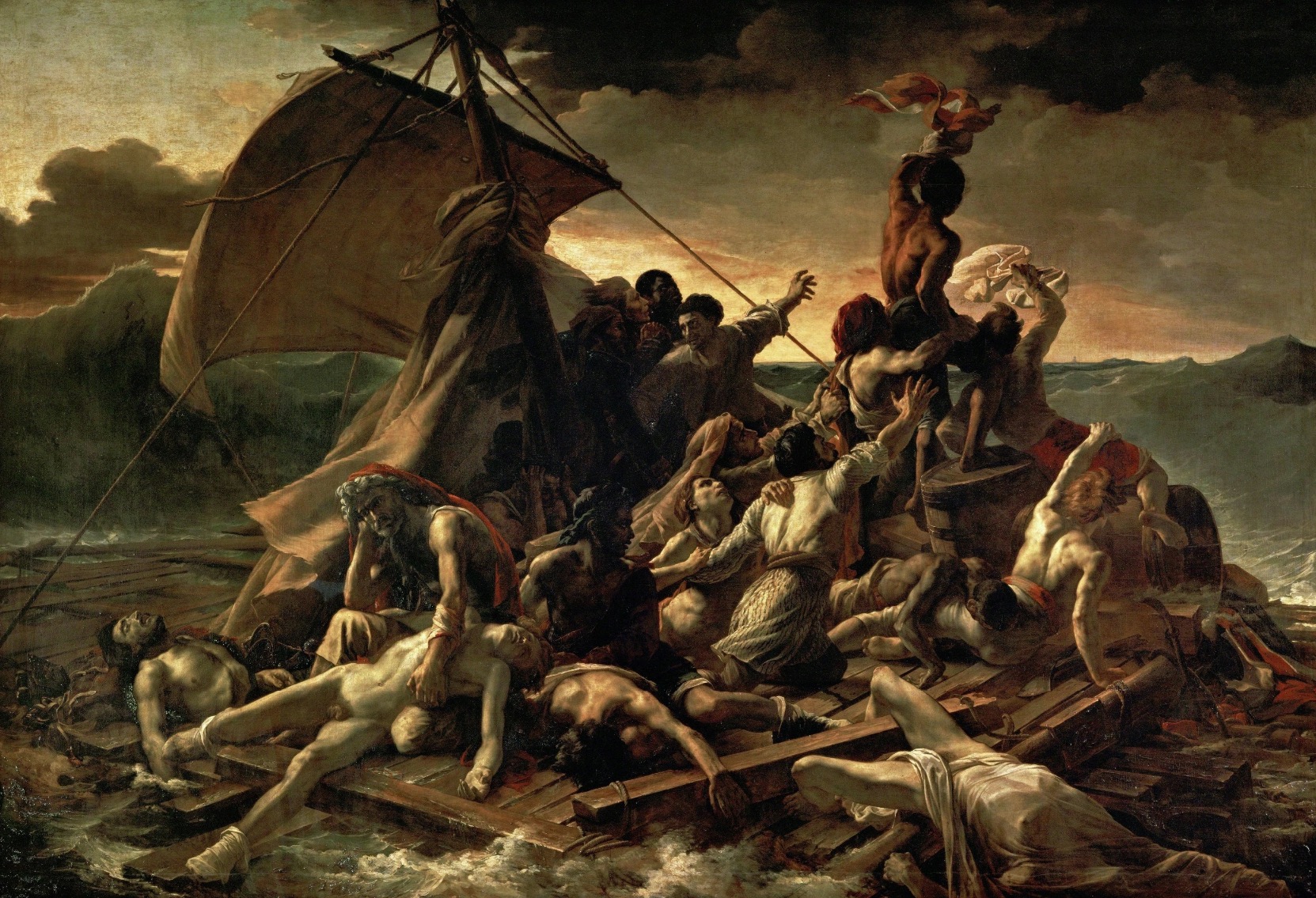
The Raft of the Medusa

A record of incompetence.


Dynamic composition heightens impact.

The designers of the Titanic learned nothing from history. When the French naval frigate Médusa ran aground in 1816 off Mauritania there were insufficient lifeboats to save all on board. Those that were there were, naturally, reserved for the incompetent officers and scumbag politicians and the captain, hearing some faint echo of his duty to the others on board, ordered the ship’s carpenters to construct a crude raft, where the poor wretches were placed. The Titanic had a similar shortage of lifeboats but the miserable captain made no attempt to even cobble together alternative solutions.

The horrors of survival – cannibalism, dehydration, putrefaction, death – are all captured in this composition, one which no photograph could ever equal. The painter has managed to record death and despair in the lower half of the canvas, along with hope and optimism at the top.

Theodore Gericault (1791-1824) completed this huge canvas in 1819 towards the end of his very short life and it remains an icon of French Romanticism. The painting is to life-size scale, and is 16 x 23 feet in size. It hangs in the Louvre in Paris, as it should. In a way it documents the failure of the 18th century Enlightenment which saw a growing focus on science and rational thought, rather than religious gobbledegook. Climate change and science denial, anyone? That failure echoes today in a purportedly rational, enlightened Western Hemisphere, with America the leader of the denial movement.

Gericault was seemingly magically gifted and remains one of the finest painters of horses. His portrait of Napoleon on a rearing stallion is maybe his most famous work but none exceeds the dynamism and sheer drama of The Raft.

There’s an interesting video explaining the work here which ends with a contemporary critic’s words: “We are all on the Raft of the Medusa”, a state in which America finds itself today, an imbecilic cockroach in charge with little empathy or caring for anyone but himself. As with the Titanic, history repeats.

German engineering design

Oh boy!

For those into protective clothing when riding a motorcycle, the Scottsdale riding season runs from September though April. The summers are just too darned hot.

So it was doubly upsetting when my 1975 BMW airhead started running incredibly roughly after a period of smoothness and bliss, robbing me of riding time. The right exhaust was popping and banging and the machine felt like a British product.

So I methodically went through the usual suspects, including points gap, timing, valve lash and so on, only to find all within spec. Next I turned my attention to the carburetors even though they had been recently overhauled and all rubber O rings and diaphragms replaced. And it was when removing the right hand carb that I noticed that the choke lever on the carb was at ‘full choke’ whereas the lever controlling that carb part was at ‘no choke’. The lever on the engine housing is connected to the carb with stiff wires in a steel and vinyl sheath, conferring a push/pull action on the carb-end controls to choke or de-choke the carb. And full choke is absolutely necessary on an airhead BMW which is notoriously unwilling to start from cold otherwise. This is probably inherited machine memory from distant times past and the Russian front of 1941/2.

To cut to the chase, when I operated the choke lever the left carb choke responded as expected but the right did not budge. So there must be a fault in the choke lever assembly which I duly removed from the engine housing and dismantled.

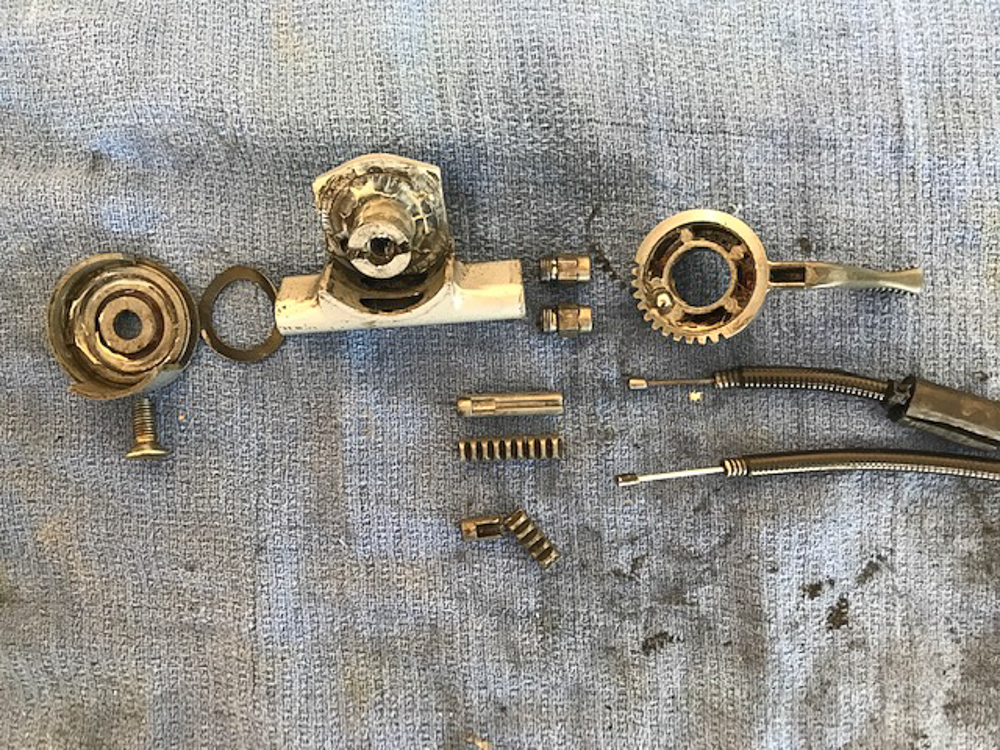
Here’s what it looks like , and as you can see it complies with the key dictate handed down in school to all German engineering grads: “Why make it simple when complex works just as well?”. Magura’s engineers, the designers and makers of this assembly, clearly complied with this instruction:


The clutch lever assembly dismantled.

As is clear from the image, one of the two toothed racks (the replacement is included), which are driven by the pinion with lever attached, had fractured. Thus full choke could be engaged on the carb as that’s a pushing action, but retraction was impossible owing to the fractured rack. So the right cylinder was running on ‘full rich’ all the time, which is not a performance enhancing feature. Quite how a hard steel part fails in tension when it is subjected to very light forces beats me, but after 45 years of use I guess I should not complain.

How does it work? The cover forces down the wave washer when the retaining screw is tightened. The pinion – the teeth on the lever assembly – moves the two toothed racks into which the stiff wires leading to the carbs are inserted. The two retaining nuts serve to keep the racks in place and are threaded to accept the steel, vinyl covered cable sheaths. The force of the cover on the pinion engages the ball bearing to provide detents – full, half and off. Why make it simple ….

I searched the parts fiche for a replacement rack – a 10 cent part – and when that failed I reverted to the 45 year-old illustrated book which is much more detailed, hoping to learn the part number for the rack and thus procure a replacement. No such luck for no components were listed for this assembly. You either buy the whole thing or do without. Very un-German, considering the assembly is easily dismantled. I posted a lament on the BMW MOA airhead forum and luckily one member there had a spare rack which he mailed me gratis, free and for nothing! I sent him a six pack as thanks.


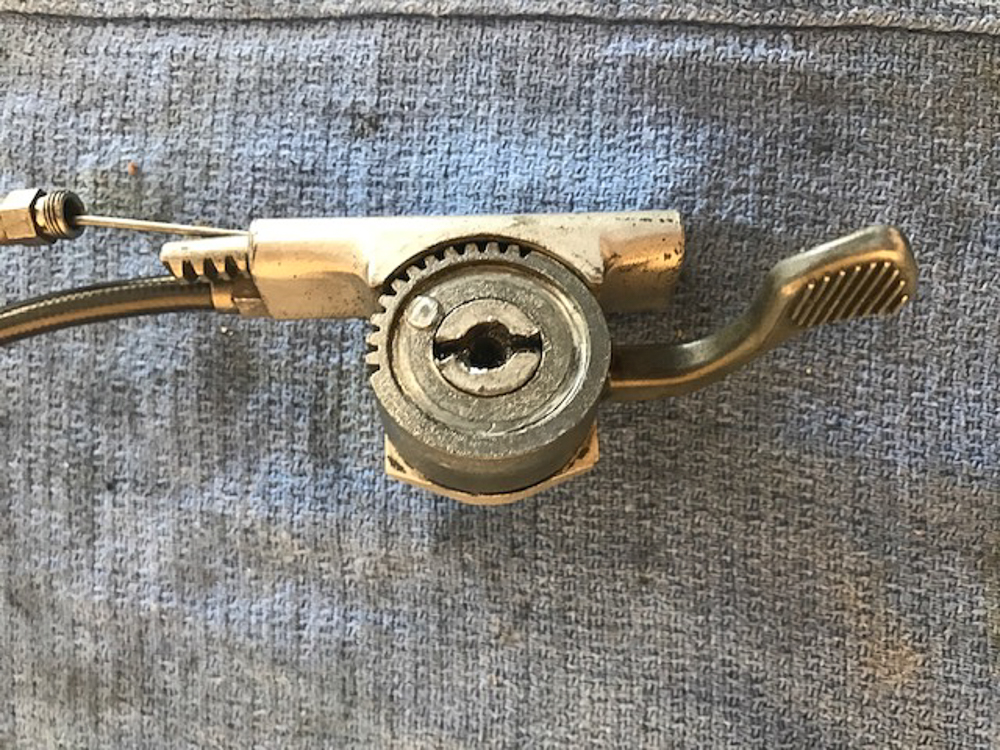
Wire and rack installation.

The racks are installed one at a time by dragging them in using the pinion/lever, then the retaining nuts are installed to secure the racks.


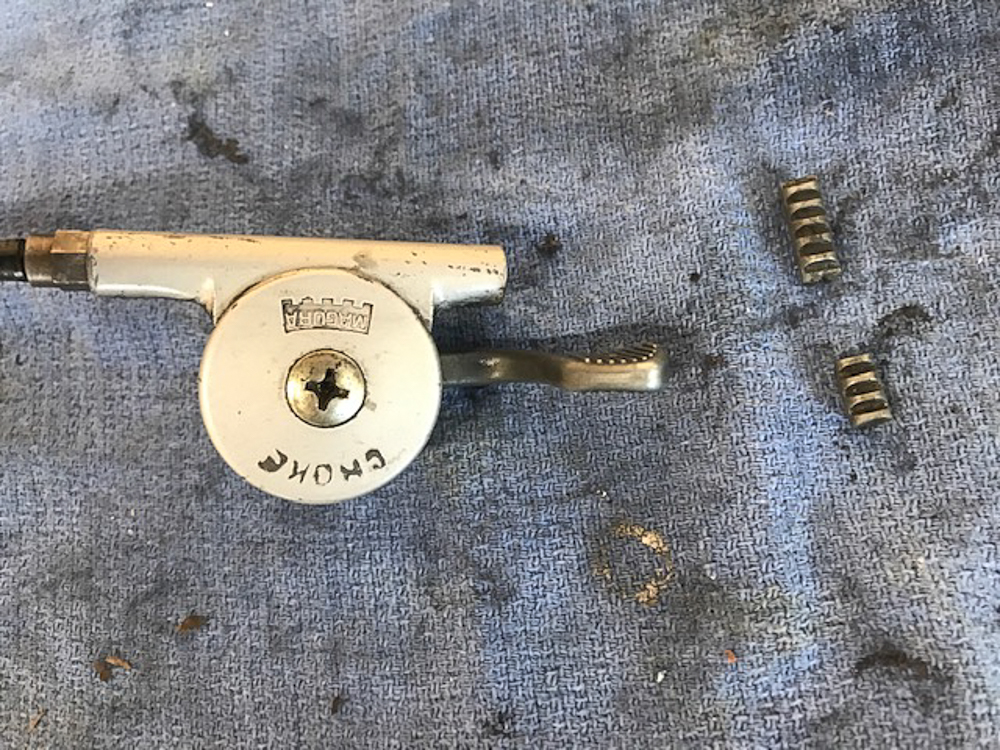
Assembly completed, after greasing moving parts.

And if you think that German attention to detail is as good as it gets, kindly explain to me why Magura managed to stamp its logo upside down and do a truly execrable job of engraving? Still, had this been a British design you can be assured the whole machine would have been on the scrap heap …. 40 years ago.


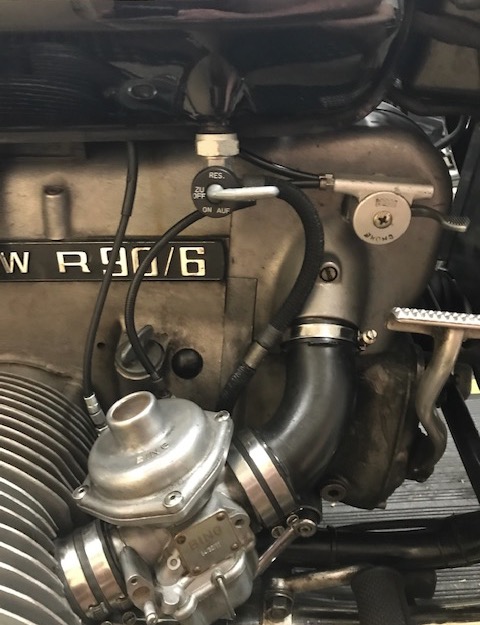
Installed.

Anyway, the clutch lever assembly is now reinstalled and I am enjoying the short remainder of the Scottsdale riding season.

Margaret Bourke-White and Gandhi

One of the past century’s greatest images.

No humanist and historian can deny a sense of schadenfreude at the rapid demise of the British economy, compounded by the idiocy of Brexit. Nationalism cloaking racism, all merrily helped along by the Kremlin’s poisoned hand. When you have access to a tariff-free trade zone and are the sole EC member which can devalue its currency, what do you do? Why, quit the trade zone and zap both your economy and currency at one go.

No one should feel sorry for the British, for their empire was built on three heinous schemes, monstrous to behold even in the aftermath of WW2 Germany, Stalin and Pol Pot. Those schemes were the export of opium to China, the slave trade and colonialism. Jointly they made England the wealthiest nation on earth, controlling one quarter of the global economy and land mass. The crimes spanned nigh on three centuries.

The opium trade saw Britain wage not one but two successful wars with China to protect its franchise. The slave trade, exporting blacks from west Africa to America’s south, killed more than Auschwitz. And colonialism, a miserable euphemism for unprovoked armed invasion and theft, was the icing on the cake. Trace the provenance of the hundreds of magnificent English country homes and palaces and you will likely find funding from all three. And even Joseph Goebbels must have cast an envious eye on the propaganda which saw Britain market its empire as one conferring fair play, decency and the rule of law on conquered nations.

No. Any sense of pity for the plight of the British and their economy is misplaced. They deserve everything they are getting.

The opium trade collapsed when the Chinese realized it was cheaper to grow their own than import British.

The slave trade was abolished in 1833 by Act of Parliament which, scandalously, saw the slave owners compensated by what remains the largest UK government bond issue. Superb research by University College, London confirms that the slave owners included not just the land barons but also the local vicar and that nice little old lady on the corner.

But colonialism, with its crown jewel India, was to take far longer to defeat.

And this is where Margaret Bourke-White comes in. A Cornell graduate fascinated by documentary photography, she cut her teeth at Fortune and in 1936 was the first woman photographer at LIFE magazine. In 1941 she became the first female war correspondent on assignment in Russia during the German invasion and documented German morality at Buchenwald in 1945. This was one very resilient reporter.

Hindus and Muslims having been at one another’s throats for millennia she went on to document the violence occasioned by partition and the creation of Pakistan, but it was her image of Mahatma Gandhi at his spinning wheel in 1948 which will forever speak to her genius. She made the photograph in Gandhi’s hut just hours before his assassination.

Gandhi had set himself two seemingly impossible tasks. Breaking the armed occupation by King and Country and resolving the issues between the warring Hindu and Muslim tribes. A graduate of my alma mater University College, London, where he read law, Gandhi early on set himself the task of evicting the British from India. The catalyst which sparked his desire was the denial of a First Class seat to a brown skinned man and eviction from the train when he refused to move to Third Class. Yes, this was appropriately on the predecessor of British Rail. The British were unceremoniously kicked out of India in 1947.

Gandhi’s second goal, religious peace, was the cause of his death, one of his own Hindu caste shooting him at point blank range in protest. The Muslim-Hindu fight continues to this day over a worthless piece of land in Kashmir.
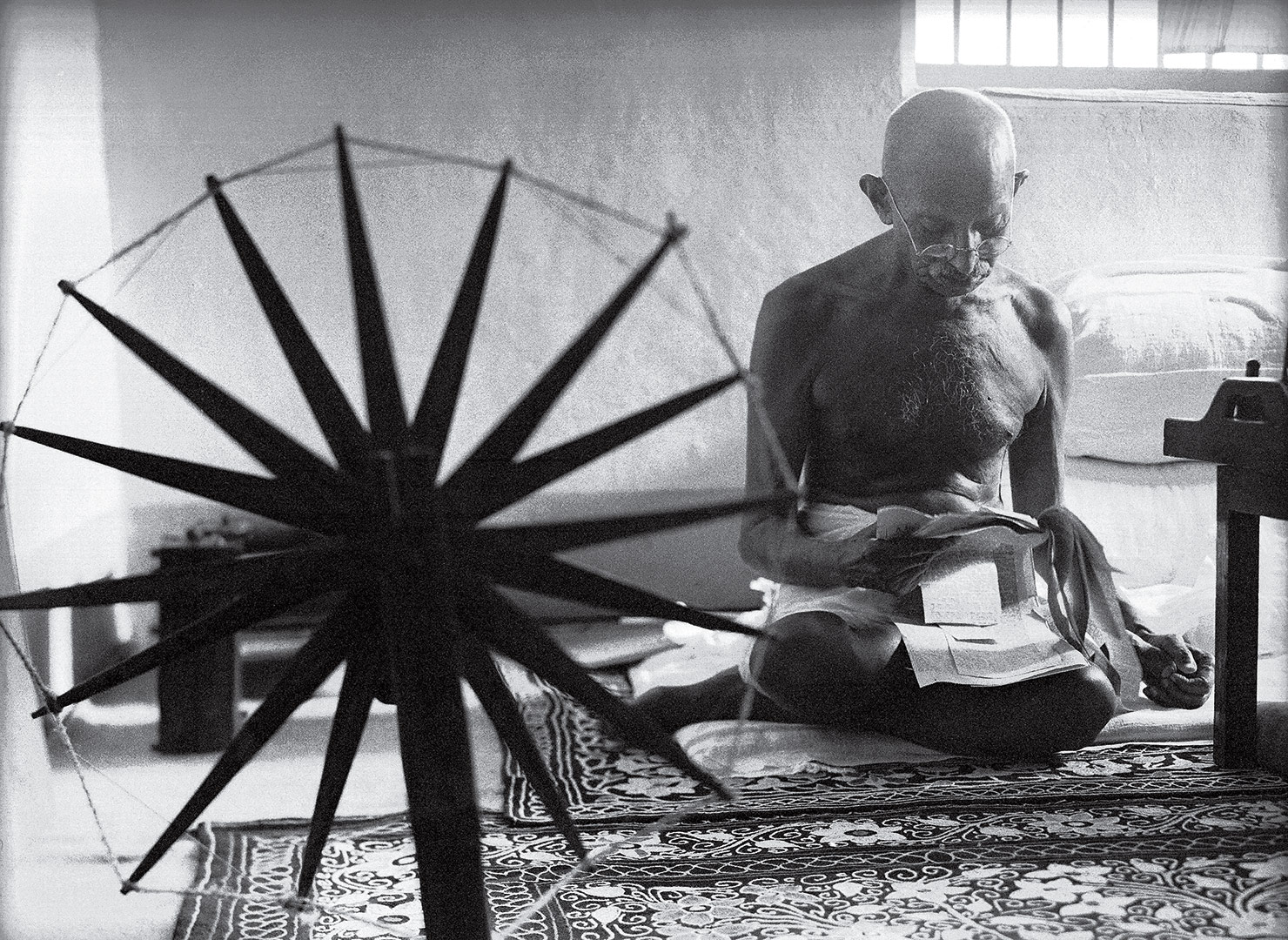

One of the greatest political images of the twentieth century.

A day later she was making her way to the Mahatma’s funeral when her bulky Crown Graphic plate camera was snatched from her hands. Mercifully, one Henri Cartier-Bresson was also on that assignment, his Leica in his pocket. He relayed back to LIFE the iconic images of the funeral though it’s amusing to relate that he did not take them. Finding himself with too low a perch amongst the vast assembly, he handed his camera up the crowd for an unknown mourner to take the snaps.

Bourke-White’s superb image lives on, a testimony to the power of the pen (and the loincloth) over the sword.
Class

No disclosure needed.

In the 1980s Toyota realized that their well deserved reputation for reliability could and should compete with Mercedes and BMW, both plagued by poor quality control and egregious repair costs. But lacking a powerful V8, it was not until 1989 that they entered the market with a jewel-like 4 liter V8 in the LS400 sedan. Putting out close to 300hp and reliable as a hammer, a new nameplate was required to distinguish the new car from the hoi polloi trucks and small sedans which had made its name, so Toyota came up with ‘Lexus’. This was a smart play on ‘luxury’ and ‘US’, and the price of $35,000 with no options seriously undercut the Germans’ offerings. Two early customer complaints about defective wiring saw Lexus deliver a new loaner to each of the first 8,000 buyers while they fixed the issue. Toyota recalled all cars sold and secured brand loyalty for generations. A model of how these things should be done. Once the Germans got their hands on the car a BMW engineer was heard to remark “What are they trying to do? Kill us?”. BMW and Mercedes quality control had received a well deserved kick in the pants.

Not to be upstaged, Nissan decided to emulate Toyota, making and even more powerful V8, throwing in a lot of race bred technology and christening their offering the Infinity Q45. Arguable a better vehicle than the LS400 the car failed spectacularly in the US market, selling hundreds to Lexus’s hundreds of thousands. The reason? A disastrous advertising campaign which has become a business school study. Infinity decided that their product was so great, so ethereally superior, that they omitted showing it in TV ads. Instead they opted for the now infamous images of swaying fields of wheat with a voice over. A disaster from which the brand never recovered.

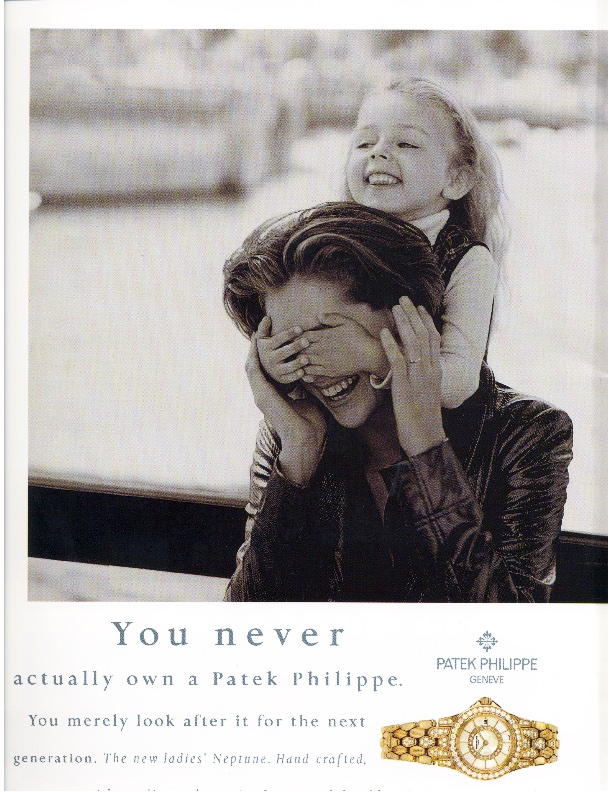
The maker of the finest mechanical watch, Patek Philippe, was not so much taking a leaf (sheaf?) out of Infinity’s book as it was recognizing that its brand power was and remains unique. Not only do they frequently omit showing the product, they know all too well that only Patek owners and aspiring owners would immediately recognize the brand from the images, without bothering to read the fine print. Because the imagery in this now long running campaign focused one thing and one thing only, the class of the wearers.

I found the above ad in issue three of the Patek Philippe magazine which has been published for many years now. Patek’s magazine is the ne plus ultra of what we horribly call ‘lifestyle’ magazines and while all others have fallen by the wayside, Patek continues putting out two or three annually. So proud are they of this production that they recently offered three free back numbers to Patek owners and I snapped up #s 1, 3 and 6. The above image is from #3. All you have to do to get yours is buy the timepiece.

And yes, my daily driver is a 2000 LS400, last of breed and, no, it’s not for sale. My son wants it.