At SF MOMA.

Panny GX7, 12-35mm zoom.
At SF MOMA.
Panny GX7, 12-35mm zoom.
A surreal touch.
Testifying to America’s profligate ways, the Phoenix area boasts over 100 golf courses. But of course. Where else but in the hot desert would you want your golf course, ensuring maximum waste of precious water so some inebriated old guys can ruin a walk by whacking a ball?
Drink, you ask? I asked around and was reliably informed by long timers that the Waste Management Phoenix Open is primarily a venue for excess alcohol consumption. The big name players stay away. Everyone else gets blotto including those board members of WM not currently in free taxpayer funded federal housing.
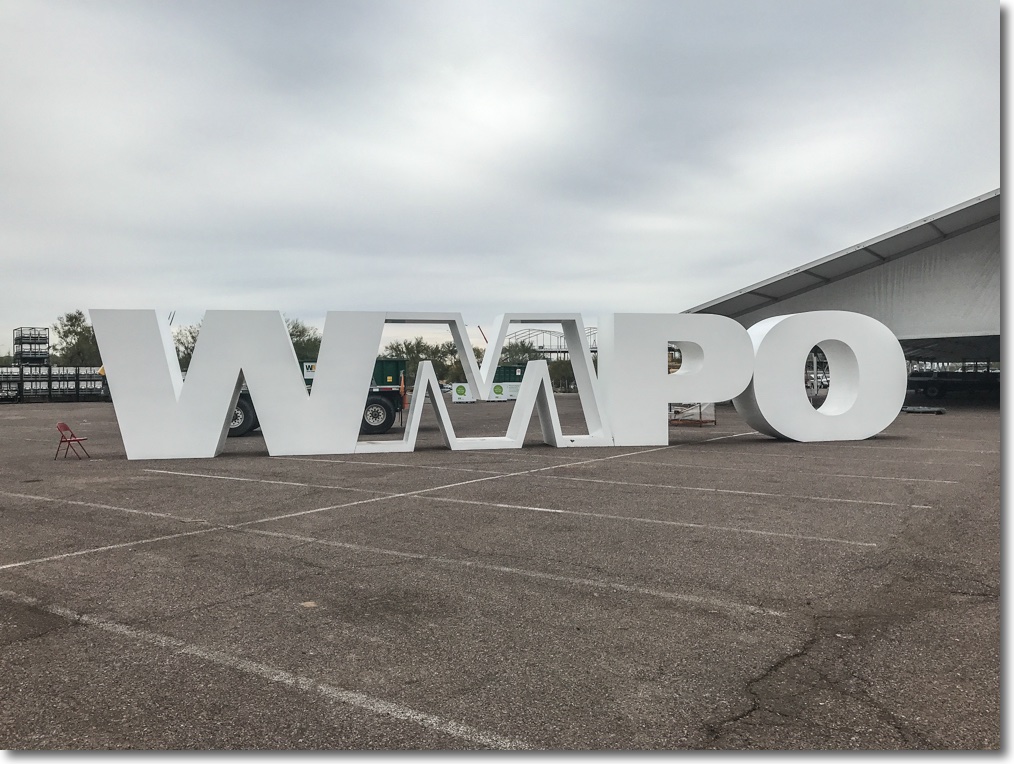
WM had spent great sums putting up some dozen temporary buildings in Scottsdale to serve aforesaid alcohol, not a couple of miles from my home, and with the event ended are now busy dismantling everything. I caught this surreal little scene on the way back from breakfast on a cool morning on the old bike:
One of the greatest sign images was, of course, taken by Walker Evans between the wars, around 1929:
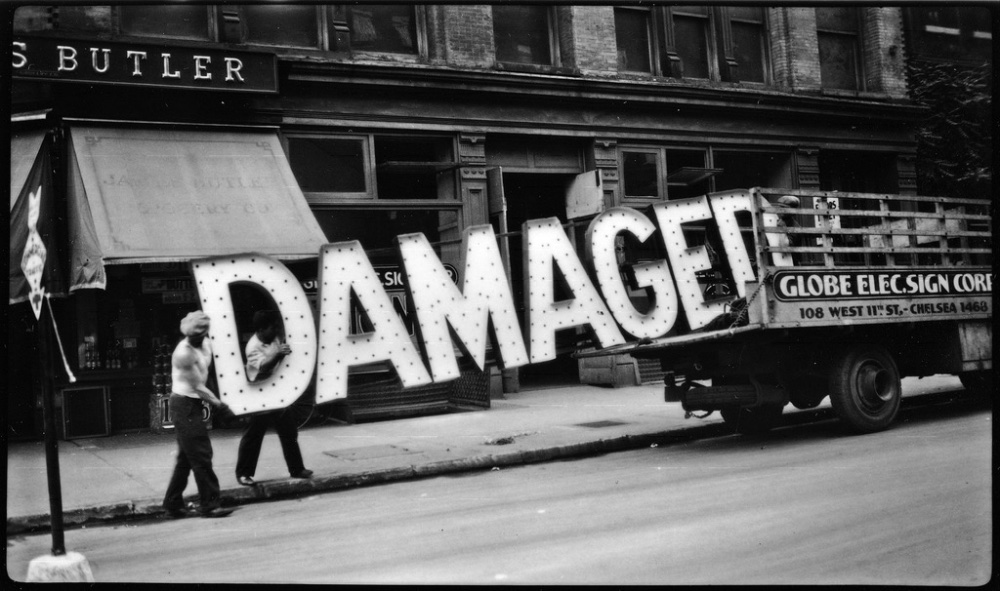
Evans used a plate camera. I used an iPhone 7.
As good as it gets.
Many actors have tried their hand at Churchill, most recently Gary Oldman whose performance in a horribly fictitious movie (WSC taking advice from a black man on the Underground? Please. …) garnered him an Oscar. But the definitive performance is by Albert Finney, true to the accurate biography by Martin Gilbert. And, truth in biographies of great men is a concept devoutely to be wished, and all the rarer for that.
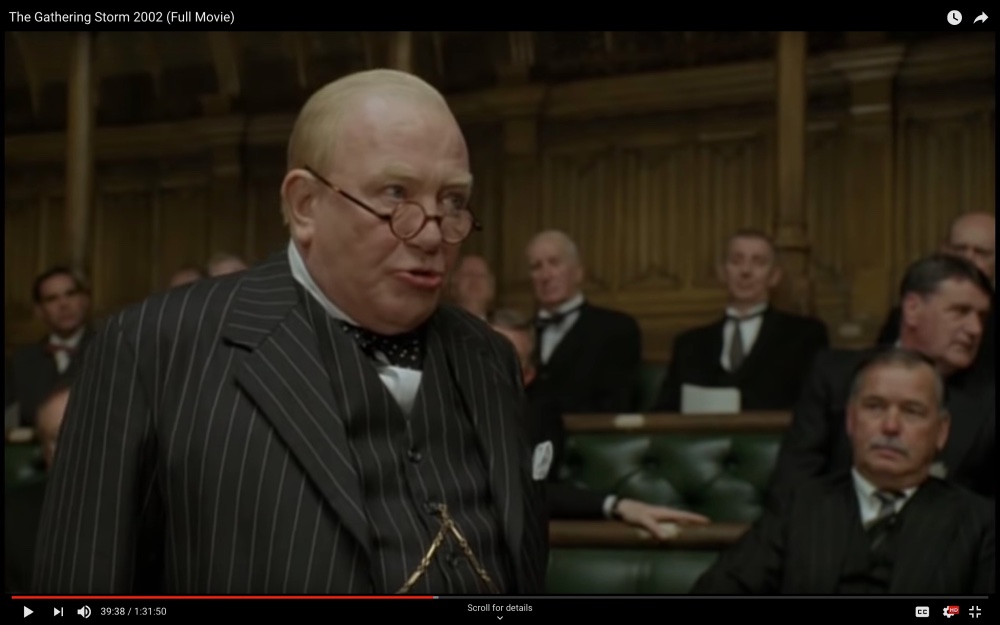
Albert Finney died today leaving a legacy of great performances. None was finer than his WSC in ‘The Gathering Storm’.
At MOMA SF.

Robert Indiana‘s most famous work graces the roof sculpture gallery, enjoyed by another happy visitor.
Panny GX7, 12-35mm zoom.
Outstanding restoration work.
New Zealander Peter Jackson has made some of the highest grossing movies in history. In 2018 he set his energies to celebrating the centenary of the end of World War I by restoring old film from the conflict. He rid the images of the grain, tramline scratches and dust blobs . and adjusted the playback speed to get rid of the jerkiness. Film of that era was shot at a hand cranked 12fps against the 24fps used in the cinema, so everything looks speeded up unless you interpolate frames to adjust the framing rate. Finally, and best of all, he colorized the results to add interest and authenticity. The sole narrative in the 90 minute documentary is from voiceovers of period writings of the soldiers in the conflict, with the moving images supplemented with the words and sounds appropriate to the time. Amazon has the DVD, titled ‘They Shall not Grow Old’, but be sure that your DVD player is multi-region as the disc is formatted for UK players.
In 1914 the masses could still be suckered into fighting and dying for ‘King and Country’ and King and Country ensured that they did so in droves. Or maybe that should be Tsar and Country. Of the 4.8 million Allied deaths, 35% were Russian, 24% French and 15% British. The Kaiser did a better job of the slaughter, sending 3.2 million to an early grave.
Idealistic Americans were suckered in with the same appeals to patriotism and the Old Country in 1942 but by the time of Viet Nam they had cottoned on to the con perpetrated by the military industrial complex, to borrow Ike’s phrase, with many deciding to stay away. And those who did serve were cruelly rejected by their fellow Americans on their return. Interestingly, as the documentary makes clear, the surviving British soldiers were met with like indifference on their return home in 1918. War is never pretty.
Here are some images from Jackson’s landmark work:
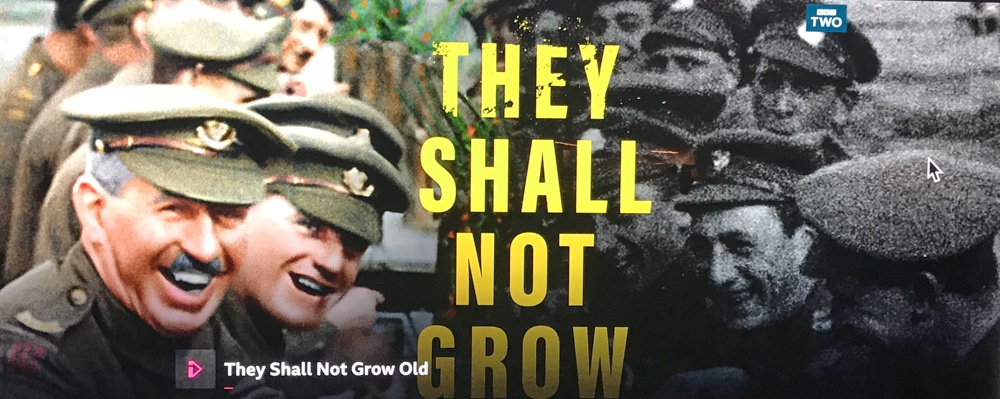
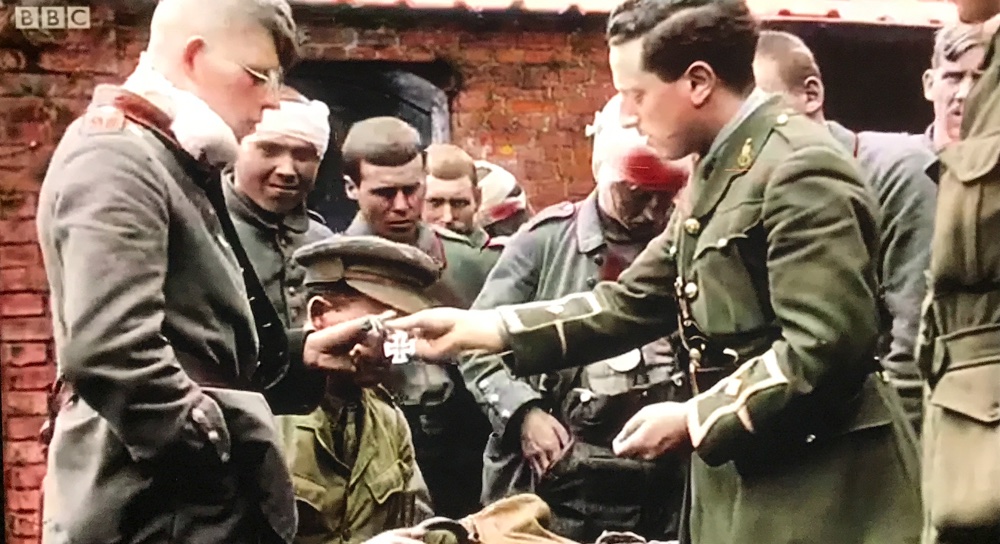
Captured German soldiers in the Allied trenches.
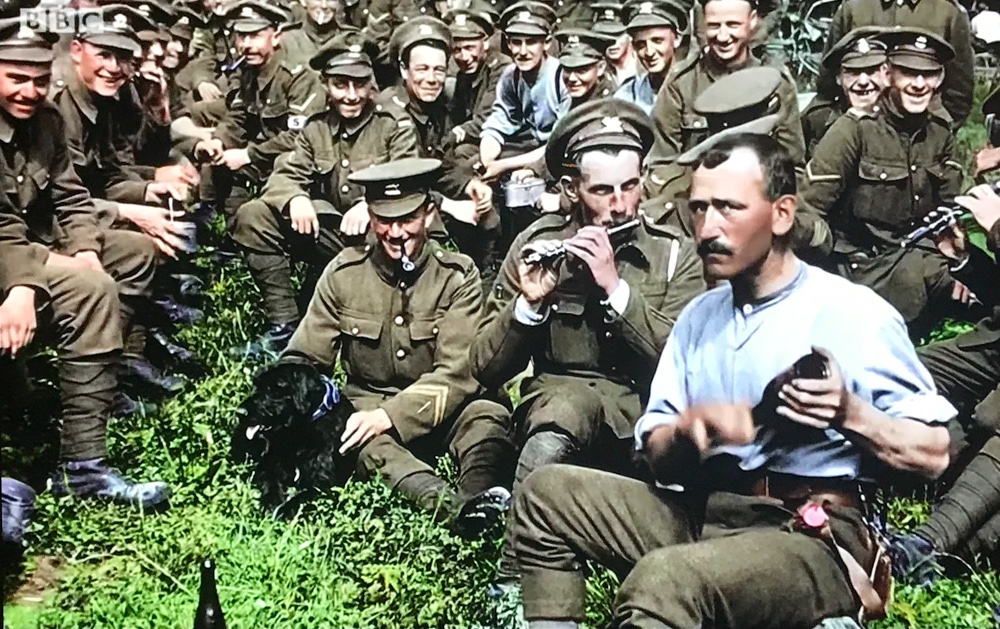
Making music between bouts of slaughter.
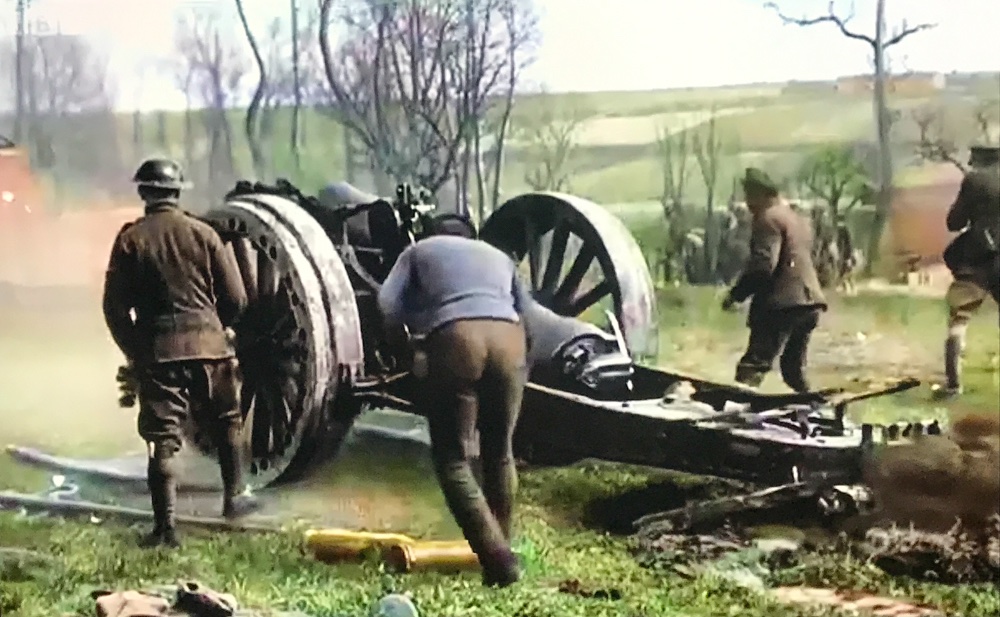
Shrapnel from the shells fired by the big guns did immense damage to men.
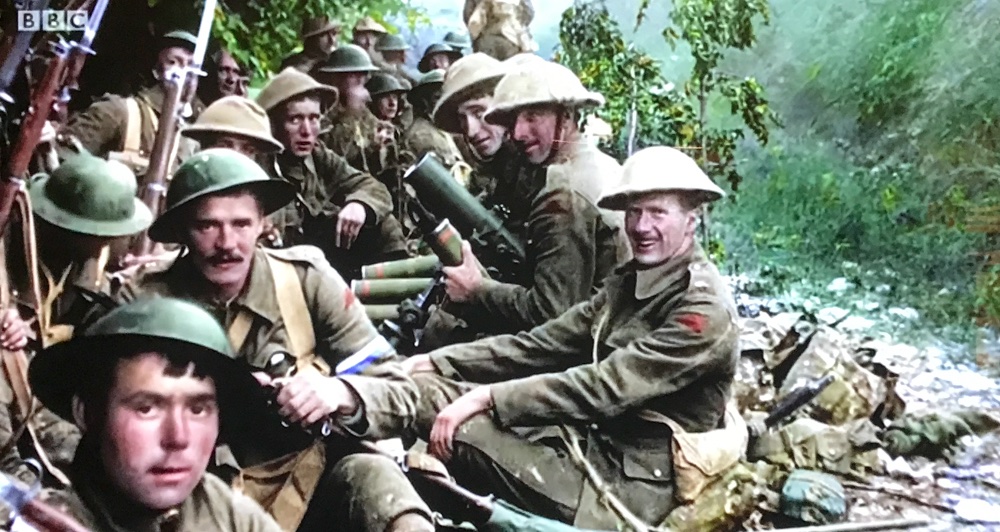
To be filmed in the trenches was a new experience.
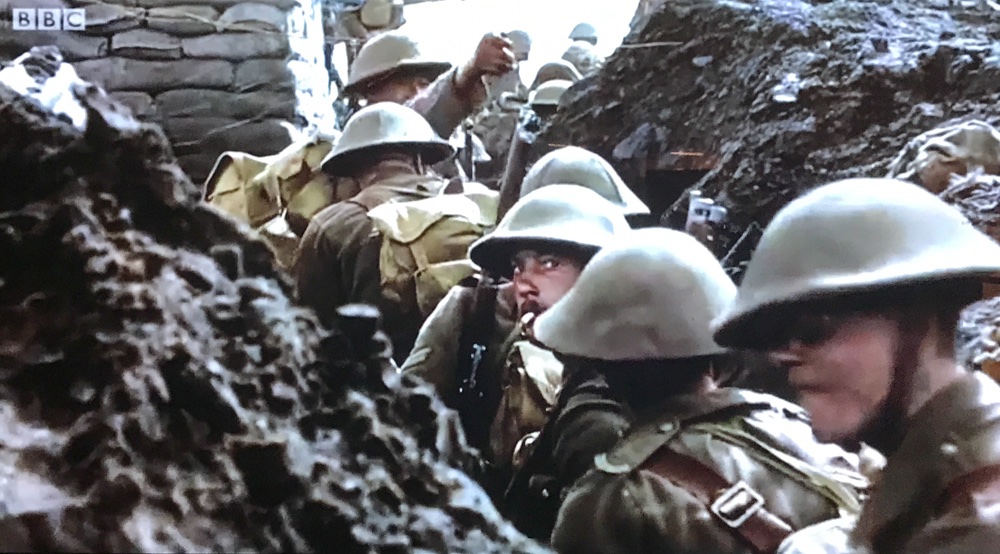
One of the most haunting images in the documentary.
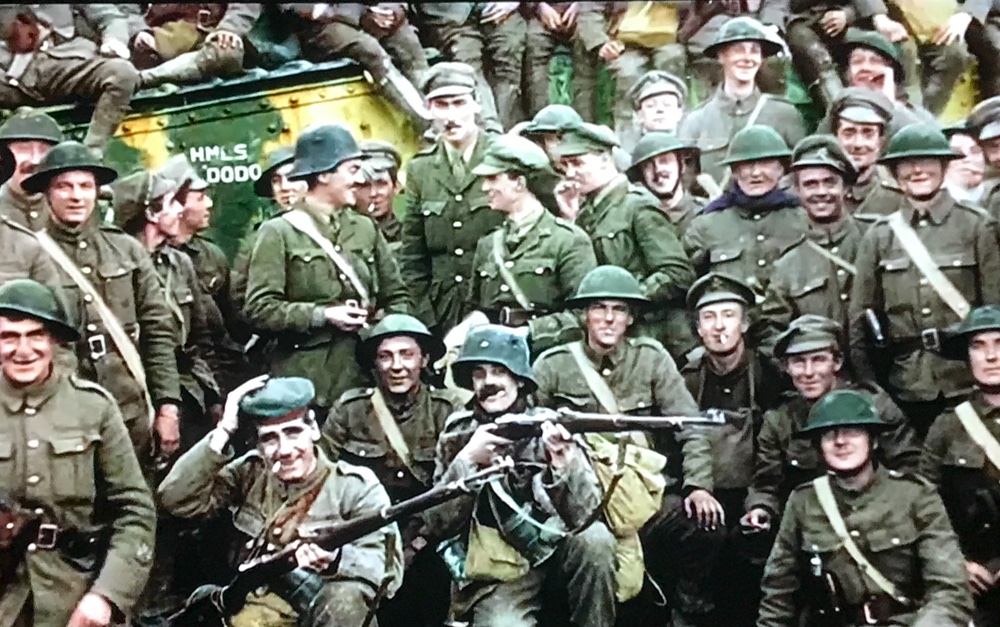
By 1918 with 8 million killed in the conflict, these smiles had faded.
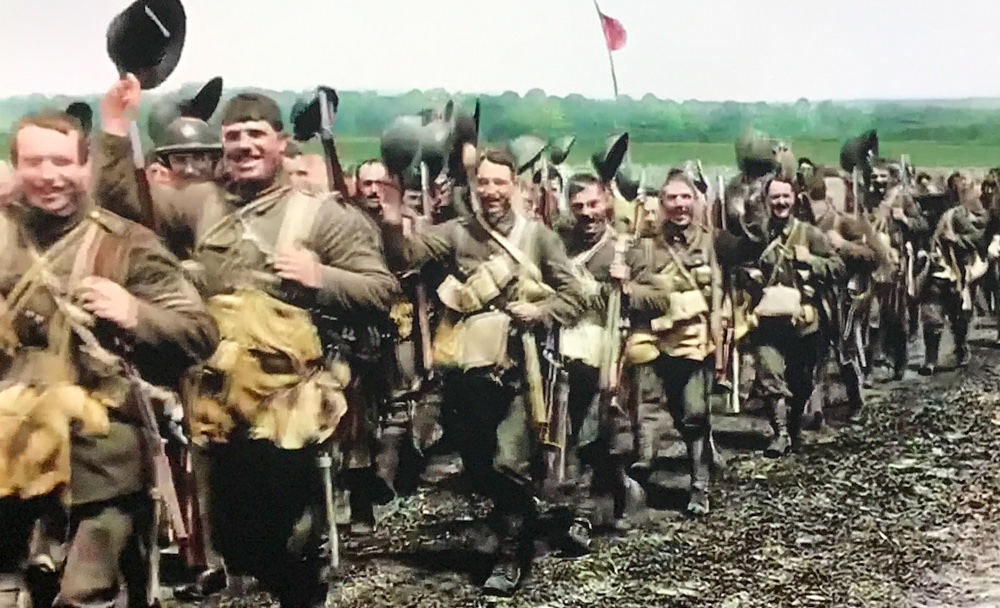
Cameraderie amongst the troops was strong.
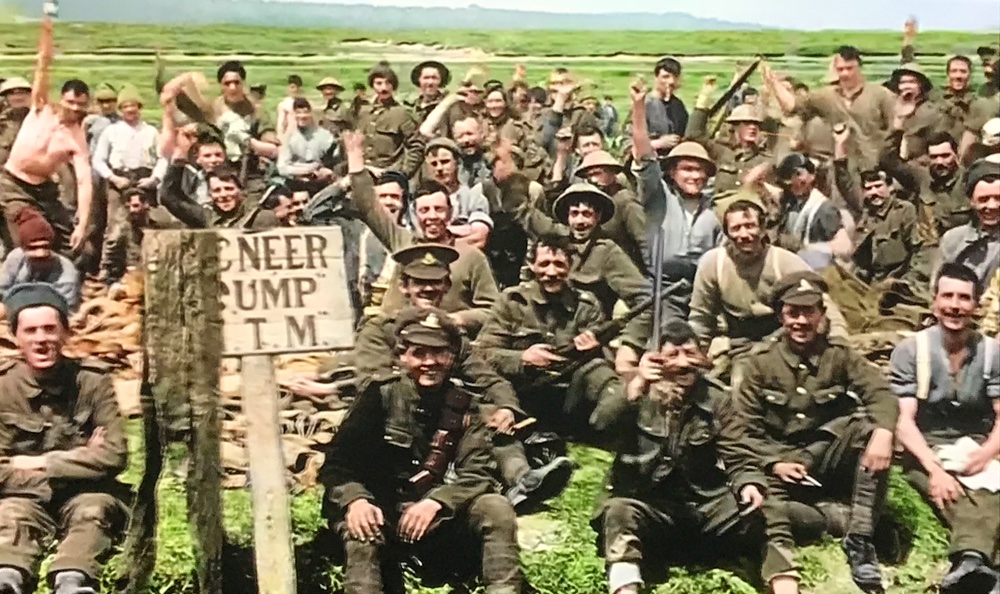
Early in the conflict.
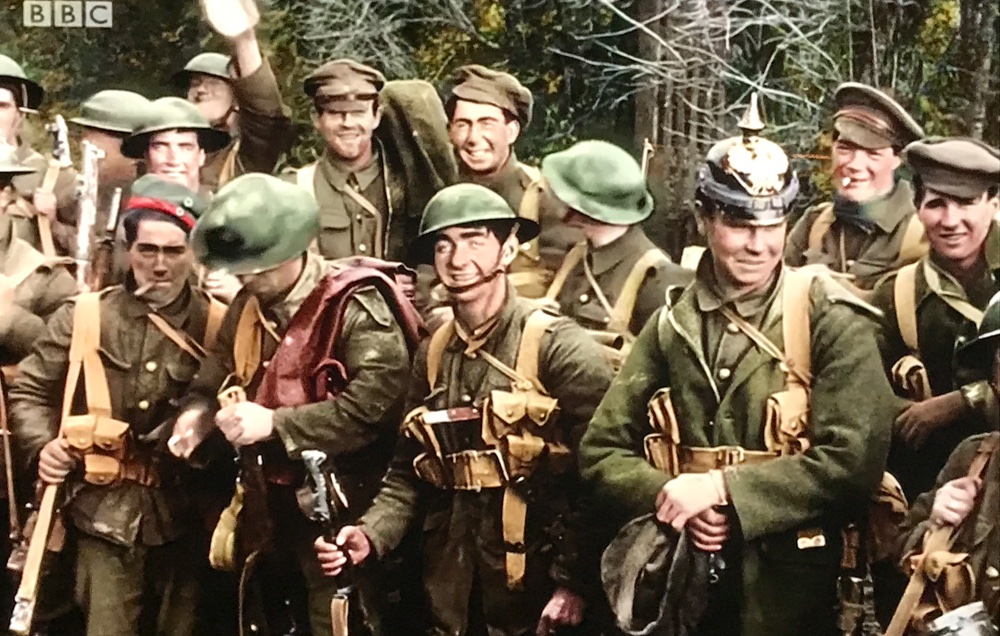
Captured ‘pickelhaube’ German helmet. The ridiculous worn by the murderous.
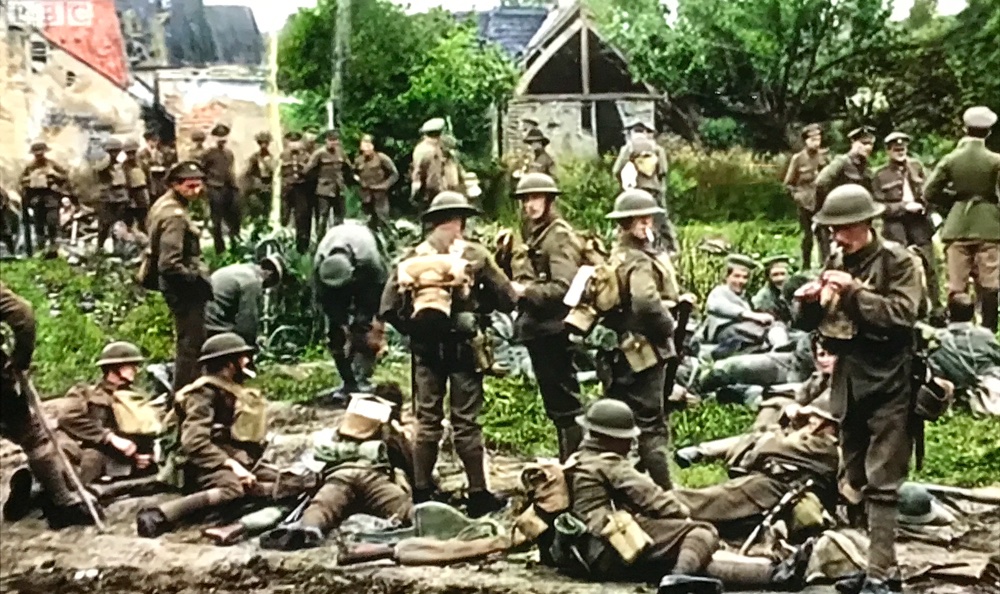
A break in the fighting.
Appropriately, the documentary commences and concludes with grainy, dirty, jerky stock footage making the transition to and from the restoration so much more effective.