Mise en place

Everything in its place.

German, the language of killing, would have that expression as alles in ordnung. The French mise en place adds charm and subtracts brutality with none of the functional coldness of the English ‘everything in its place’. The beauty of French is at one with the quality of their cuisine.

Mise en place is quite my favorite part of cooking a meal as it forces order without discipline, generating anticipation without apprehension.

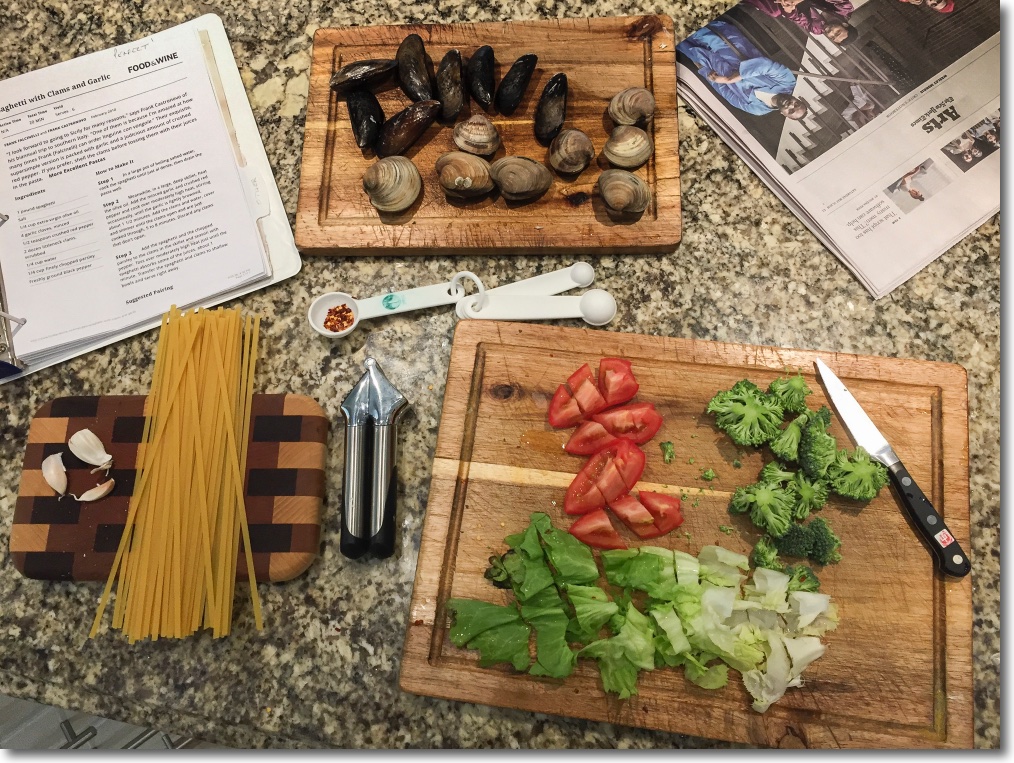
Here’s the setup for mussels and clams with garlic and fettuccine – as simple as it gets; the red peppers add a touch of zest in the broth:

The charming end grain checkered cutting board at left comes from Vermont, the last repository of American craftsmanship.

The shaved Parmesan is absent here, as is the white wine in which the shellfish are cooked. A Benriner mandoline is the best way to shave hard cheese into paper thin slices – but watch your fingers! Japanese make fabulous cameras …. and cooking tools. As for the white wine, this is strictly a bottom shelf choice.

iPhone6 snap.

The New Hudson

1950s American automobile advertising.

As a kid growing up in London I learned two important things when visiting my dentist, whom I always thought of as the Kensington Butcher:

  • Avoid British dentistry at all costs. Just look at their teeth.
  • Americans bought a new car annually.

The first realization was brought home forcefully as immigration to the States brought with it access to proper dental care. It is unusual to hear American dental professionals excoriate a predecessor’s efforts, yet I heard that in abundance about the Kensington Butcher’s work.

The second came from the National Geographic magazines on display in the KB’s waiting room, waiting time in which made my many hours in US Immigration Offices pleasurable by comparison. Those Geographic magazines, despite their small format, featured beautiful advertisements for American cars and the clear sense was that an annual upgrade to the latest model was quite the thing for the aspiring economic climber.

That thought saw acquisition, many years later, of an amusing book of 1950s US automobile advertising named Cruise-O-Matic, which shows Detroit’s many creations of that wonderfully prosperous Eisenhower era. Photography was still a nascent force in car ads, meaning that most of the illustrations were beautiful air brushed paintings, the better to show off the special appeal of that year’s model.

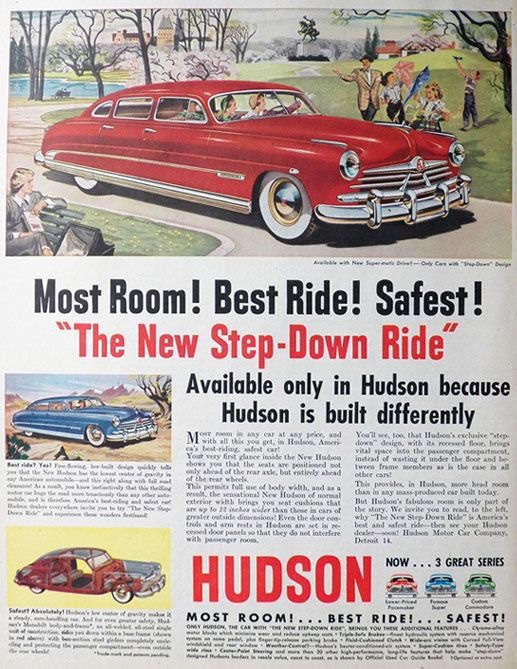
Here’s one of my favorites, for a 1950 Hudson:

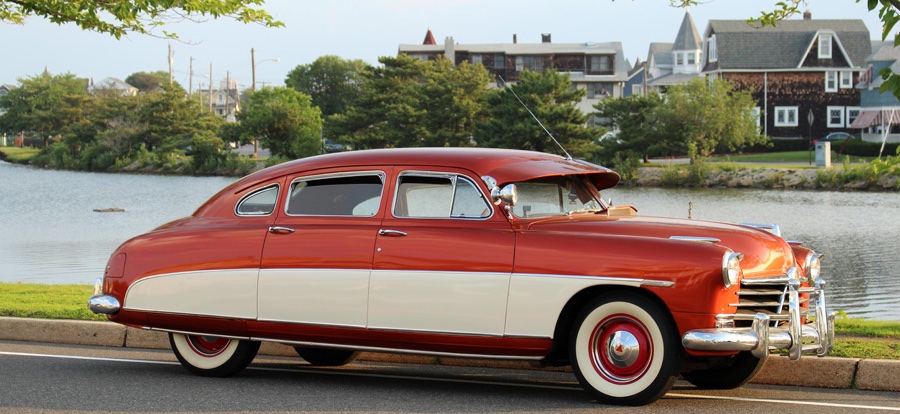
If the exotically elongated lines of this magnificent sedan seem too much to believe, they are. The artist has taken considerable liberties with the vehicle’s proportions as this contemporary photograph shows:

Cruise-O-Matic remains available in a reprinted version and you can buy it here.

Niko J. Kallianiotis

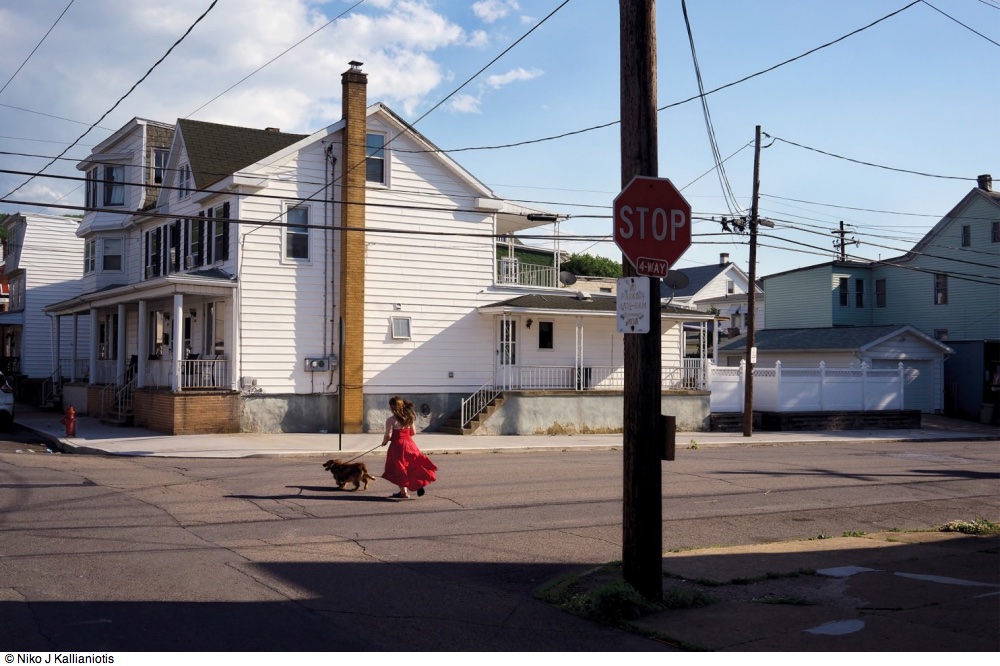
Fine images of urban decay.

WaPo just featured this photographer in a piece titled ‘Portraits of the fading American dream’ where he documents urban areas of Pennsylvania which have fallen into decay. That’s the great thing about the American Way. As industries and regions fade, Americans move to a better place, leaving behind those too old, too shortsighted or too unambitious to improve their lot in life. Natural selection, if you like. Americans have little sense of history or spirit of place.


Click the image for the article.

You can see more of Kallianotis’s work at his Instagram feed.

The cardinal returns

This time I was ready.

The bird is very shy, and wary of the rapacious quail and doves which dominate the feeder. If doves are the ornithological world’s idea of timidity then I fancy I would rather keep the company of vultures. An early attempt appears here.
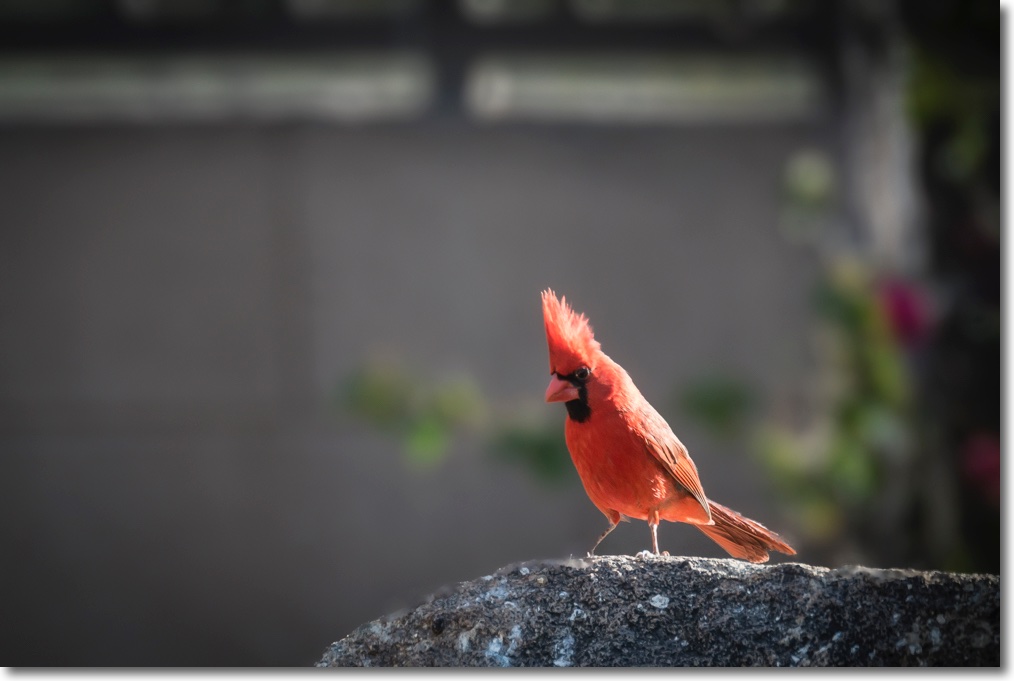
The cardinal is impossible to miss. One’s peripheral vision immediately catches the flash of bright red, like an electric shock to the system.

This time I was better prepared, the 500mm Reflex Nikkor attached to the Panny GX7 set at ISO800 which delivered 1/320 second. This at the lens’s fixed f/8 aperture. While hand-held, that’s poor technique as a 1,000mm FFE optic really needs a solid support. I got lucky, aided by the critical focus option in the Panny which permits enlargement of a selected area for proper focus. Of the twenty snaps the first (go figure!) was the only one usable. I would guess that depth of field at 30 feet distant is no more than a couple of inches. The image is from the full frame. I passed the file through PS to remove the out-of-focus ‘donuts’ typical with catadioptric lenses, and often quite distracting. More on that technique appears in the link in this paragraph.

In lieu of the use of Mirror Lock Up which I advocate with a conventional DSLR to cut vibration, I use the GX7’s silent and vibration-free electronic shutter. A Panasonic MFT body is superior in every way to a conventional mirrored DSLR with this lens if you need 1,000mm FFE. You get a vibrationless electronic shutter, a very light rig which can be easily carried slung over the shoulder all day, Panny’s superior magnified focus aid and, best of all, a bright finder image as the electronics automatically adjust for the small f/8 aperture. And to get 1,000mm FFE with the full frame DSLR you have to cut out a large part of the image in processing, rendering your DSLR’s sensor effective pixel count the same as the lower spec of the MFT’s sensor.

Here are the ‘after’ and ‘before’ images:
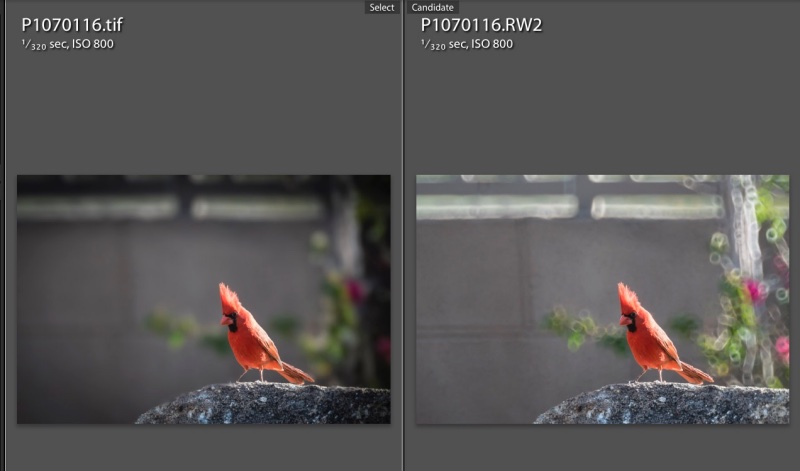
The Reflex is a special lens, small, light with delightfully smooth focus action, but easy to use it is not. Add a small, nervous subject and you have your work cut out for you.

To learn more of the design history of Nikkor’s reflex optics under Teruyoshi Tsunashima click here.
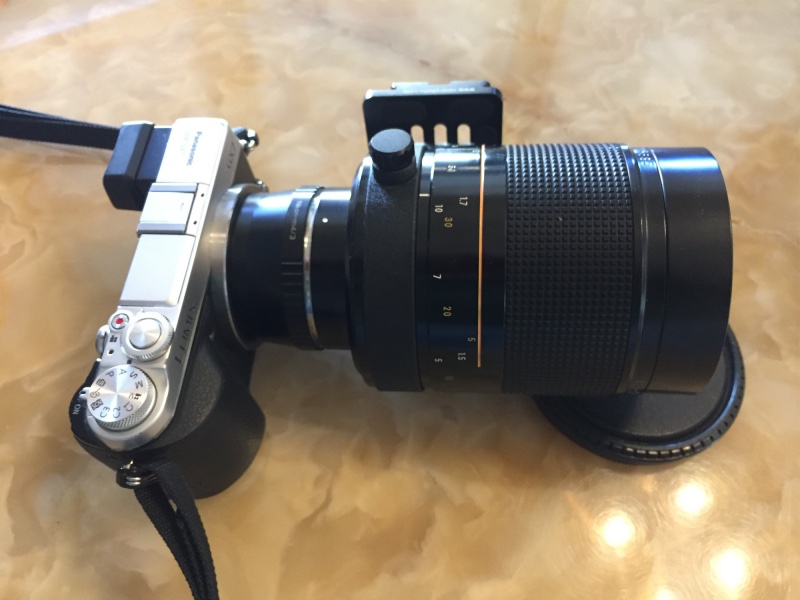

GX7 with the adapted 500mm Reflex Nikkor. Arca-style QR plate fitted.
Shulman and Bosch

History repeats.

While I have not had TV service for some two decades now, I do subscribe to Amazon Prime and they make available a lot of content, including their ‘made for TV’ series as Amazon moves to become a major movie studio.

One which caught my eye recently is the Harry Bosch series of detective thrillers, set in Los Angeles. The cinematography here appeals immediately, capturing that sun bleached look of the poorer parts of a city I love. Bosch, a somewhat dour and jaded Hollywood homicide cop, lives in a magnificent stilt house in the Hollywood Hills. You know, one of those due to become an insurance claim receivable when the Big One hits, for these Hills homes are perched on uprights which will be the first to go when tectonic plates commence shifting.

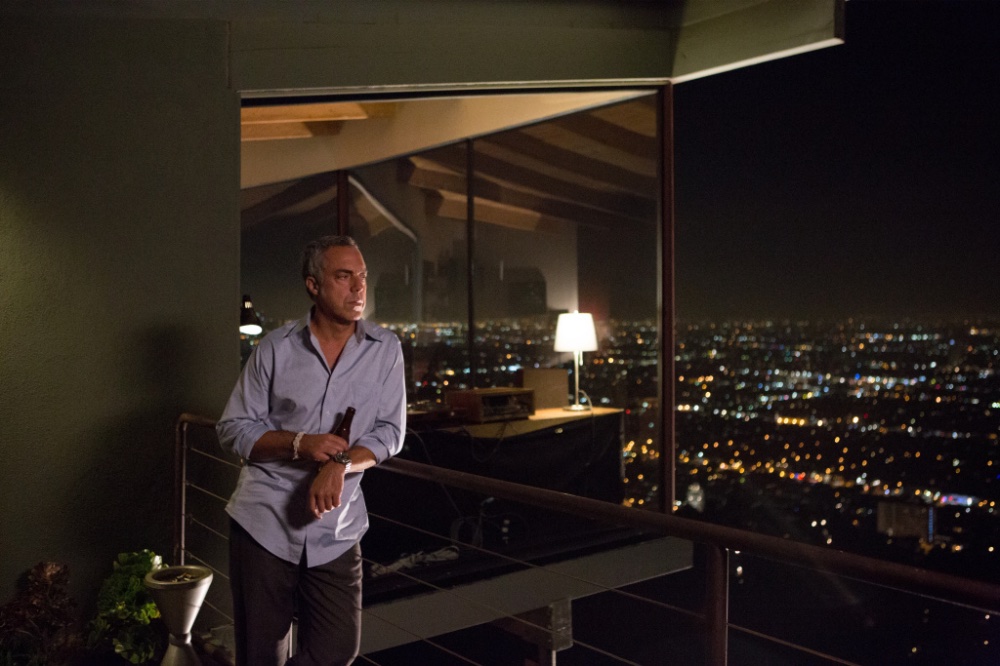
The story line, for no straight cop could afford this place on his salary, is that Bosch participated in the making of a cop movie – there’s a poster on his wall testifying to this – which rewarded him richly, affording him the magnificent home (1870 Blue Heights Dr, Los Angeles, CA 90069) along with some really cool vintage tube hi-fi hardware. The latter, sadly, is wasted on his preference for jazz, which is so much noise in my book, but each to his own. Here’s Harry in his pad:

This image, used in several episodes, immediately harkens back to the greatest modern architectural photograph of a Neutra inspired home, that of the Stahl house, taken by Julius Shulman:

The Stahl House.

If you like your detectives hard bitten, cynical and rule bending, with more than a dash of Philip Marlowe (and some of the complexity) thrown into the mix along with fine acting and cinematography, Harry Bosch is your man. The intense and splendidly named Titus Welliver is Bosch.