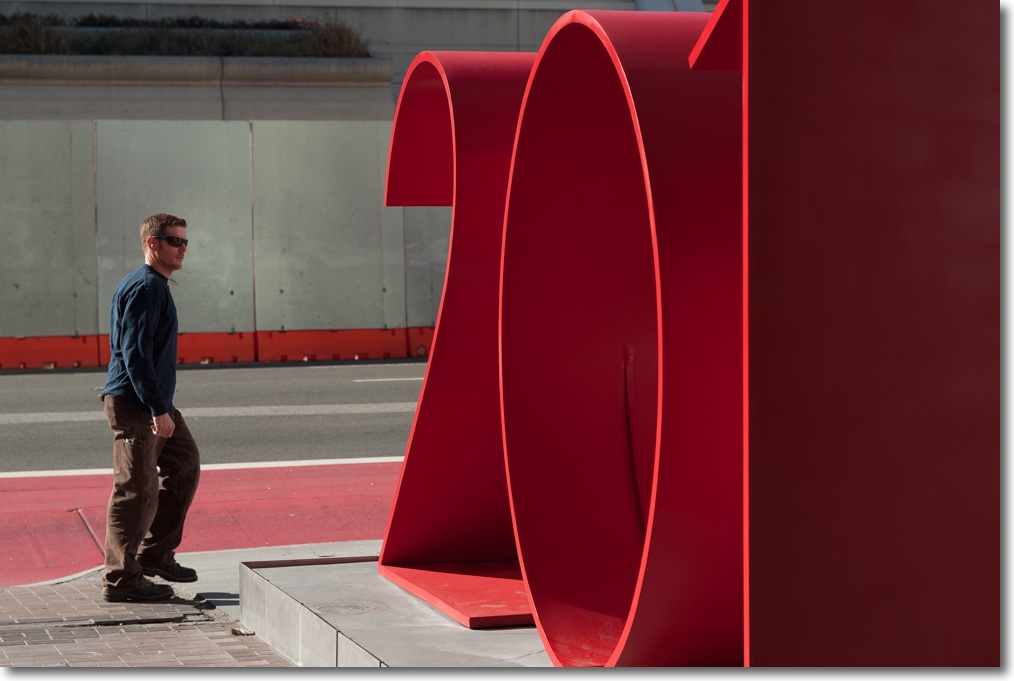
A blast of color.
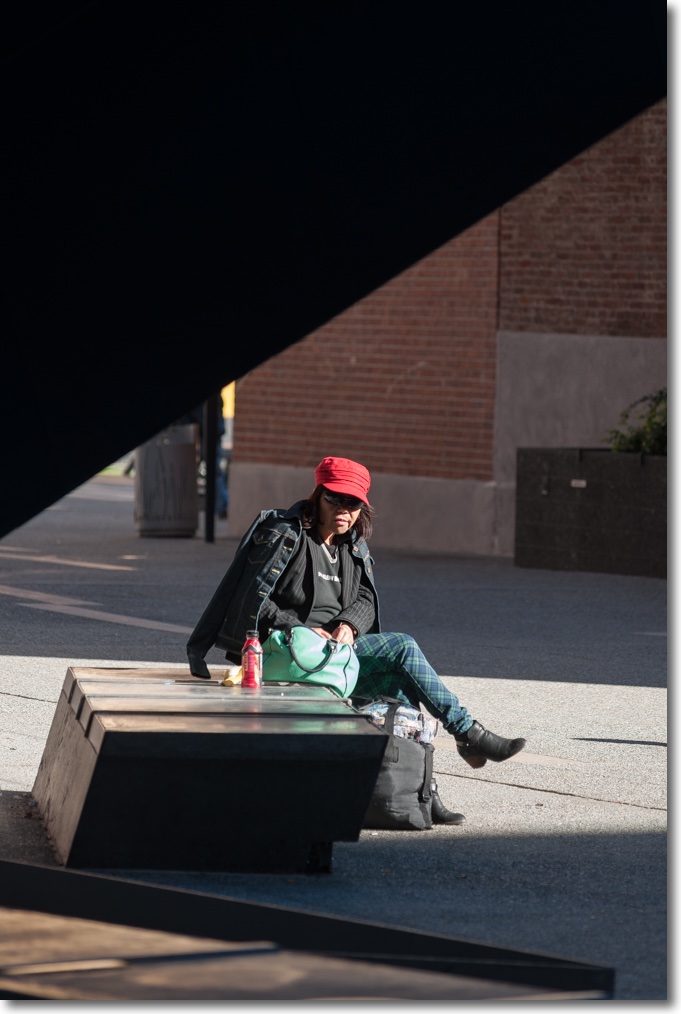
D3x, 200mm Nikkor-Q.
Catch 22 lives.
For an index of all my Mac Pro articles, click here.
Like logic applies to the dilemma of installing the latest Nvidia GPU drivers in your Mac Pro.
Here’s the background. The GTX680 GPU came from EVGA and was made for the PC, along with like GPUs from many makers including Nvidia, Zotac, PNY, Gigabyte – they all worked well. Typical port configuration was one DVI-D, one DVI-I, (both DVI ports limited to 2560 x 1200), one DisplayPort (4k and down) and one HDMI 1.2 (limited to 1080p).
The last Nvidia card sold as ‘Mac compatible’ was the EVGA special version of the GTX680. That one showed the full Apple boot screen on cold start.
Thus you had three choices when buying a GTX680:
Who needs a boot screen? Only those poor unfortunates who insist on running Windows under BootCamp. You install OS X on one volume of a drive, Windows on another then when cold starting, hold the Option key on the keyboard and the spinning cog (through OS Mountain Lion) or progress bar (Mavericks and later) changes to a display of all bootable drives. You elect the BootCamp drive and proceed in your misery. Want to revert to sanity? Reboot holding the Option key and select an OS X volume as the one to start from.
Users who merely need to choose between different OS X boot volumes or drives can do so in System Preferences->Startup Drive. Rebooting will make the volume or drive chosen the new boot drive.
The snag is that if you boot into the Windows volume, you must have a working boot screen to see other volumes if wanting to revert to OS X (or Linux or Ubuntu or whatever). If you can’t see the boot screen because your GTX680 is an unflashed PC variant you cannot get back into the OS X volume.
Things get worse. After the GTX680 was discontinued Apple ceased marketing ‘Apple certified’ Nvidia cards as they stopped making the classic Mac Pro at the same time, so there was no need in their cynical eyes to allow classic Mac Pro users to stay current with the rapidly evolving field of ever faster and more capable GPUs.
With the Nvidia GTX7xx generation you could still use the native drivers which came with OS X but you could not get a boot screen unless the card was flashed.
Then, with the current, and exceptionally capable GTX9xx generation of GPUs, not only did you lose the boot screen, you also needed to use Nvidia’s own drivers to make the card work as the GTX6xx/7xx ones were no longer compatible. To get there, while still using an older card, you would download the Nvidia drivers, which install as a preference pane, and then go into System Preferences->Nvidia and choose the Nvidia driver in preference to the OS X one. Reboot and your old card would continue working fine. Now power down, swap to the latest and greatest GTX960/970/980 and all was well.
Here’s where the Catch 22 comes in. Apple decides to release an ‘improved’ OS X – minor or major release. Chances are it breaks the driver so after a few days, Nvidia releases the upgraded driver. They are very good about this as it means continued sales of their latest cards to the Mac Pro set. But you cannot wait or, worse, have set your Mac Pro for automatic updates of software. You come in in the morning , OS X El Crapitan has been installed unknown to you overnight and you are welcomed with a black screen, as the OS is no longer compatible with the previous generation Nvidia driver on your boot drive.
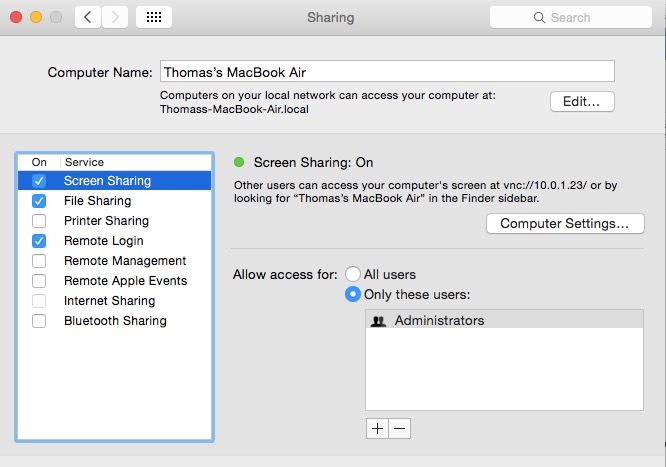
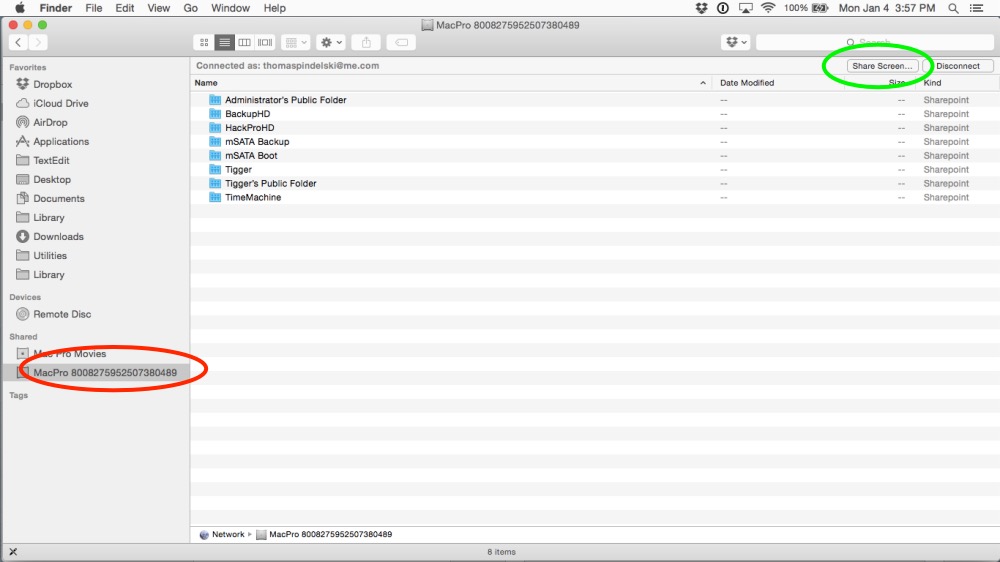
There are several ways to exit this dilemma:
Coming back soon.
The Flagmakers mural between Howard and Natoma Streets in San Francisco has been lost to sight as MOMA has undergone an extensive rebuild. The museum will finally open in May 2016 and let’s hope they make far better use of the internal volume than before where most of the display space was simply wasted, making for too few exhibitions.
When scaffolding went up all around I rather feared that Flagmakers would be lost to the world and my extensive collection of mural images – so many of them ephemeral and now gone – shows I photographed it in 2011 and 2012.
Here’s the 2012 version:
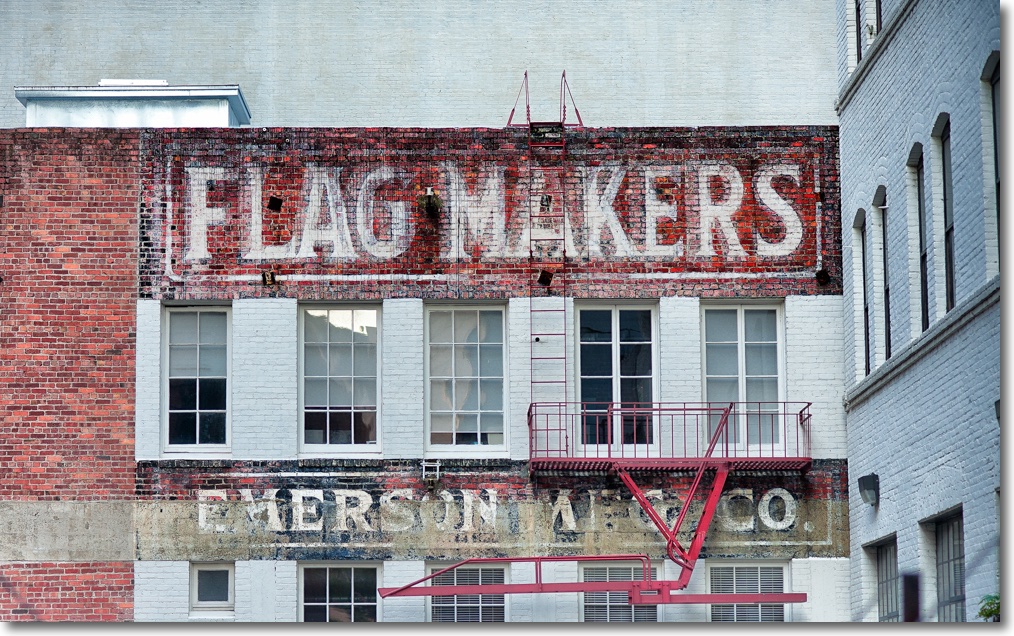
MOMA has an interesting story about photographer Janet Delaney who snapped the same scene in 1982 – seemingly as faded then as now.
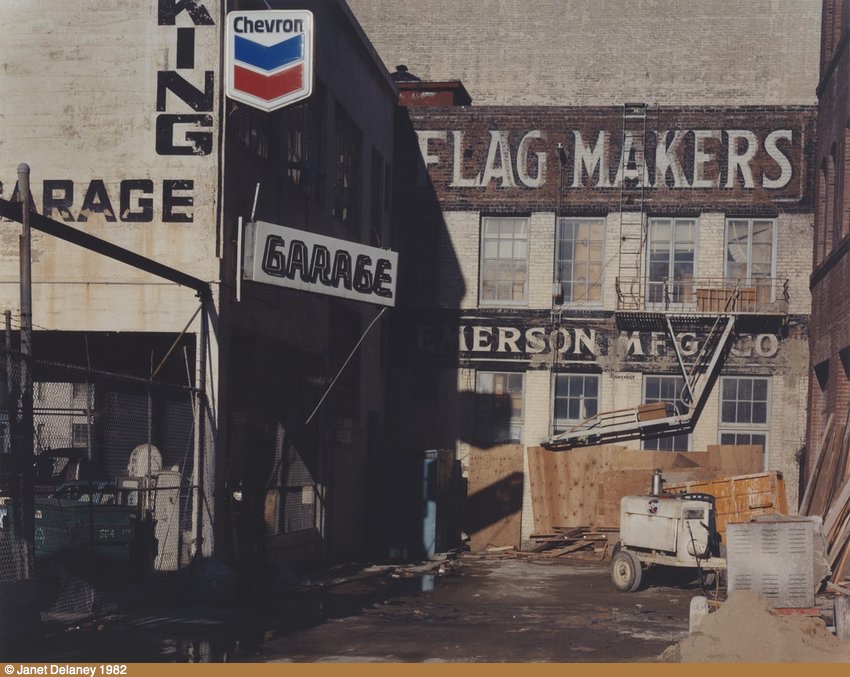
Click the image for the story. The good news is that the mural has been saved, if rather crowded out by the building additions.
Comparing the two, not that much has actually changed in the mural building. The fire escape ladder appears to have grown a counterweight to the right, the delicate iron balcony appears unmolested, the top of the fire escape now has handrails added and the sign was as faded then as now – I did add a little saturation here and there to the surpassingly bland original. The garage in the foreground is long gone, unlike Chevron, which should be around another century or so as we reluctantly migrate to renewable resources.
I’m reminded also of how much I miss the Nikon D700 body – no video nonsense, a modest sized sensor with superior low light capabilities and exceptional responsiveness. A photographer’s machine. No one needs more than 12mp in an FF sensor.
Another version of Flagmakers, no longer possible, appears here.
Last legs.
The Adolph Gasser photo hardware store on Second Avenue in San Francisco has been dying for longer than most can remember. The paint is peeling, the help inattentive and the whole thing decrepit. In addition to their great location on the east side of Second Avenue the west side, directly opposite, is home to some priceless real estate owned by Gasser which is used as a free parking lot for their increasingly missing customers. Talk of unrealized value.
Currently it’s home to a shoddy exhibit of photographs, the presentation consonant with that of the store across the road.
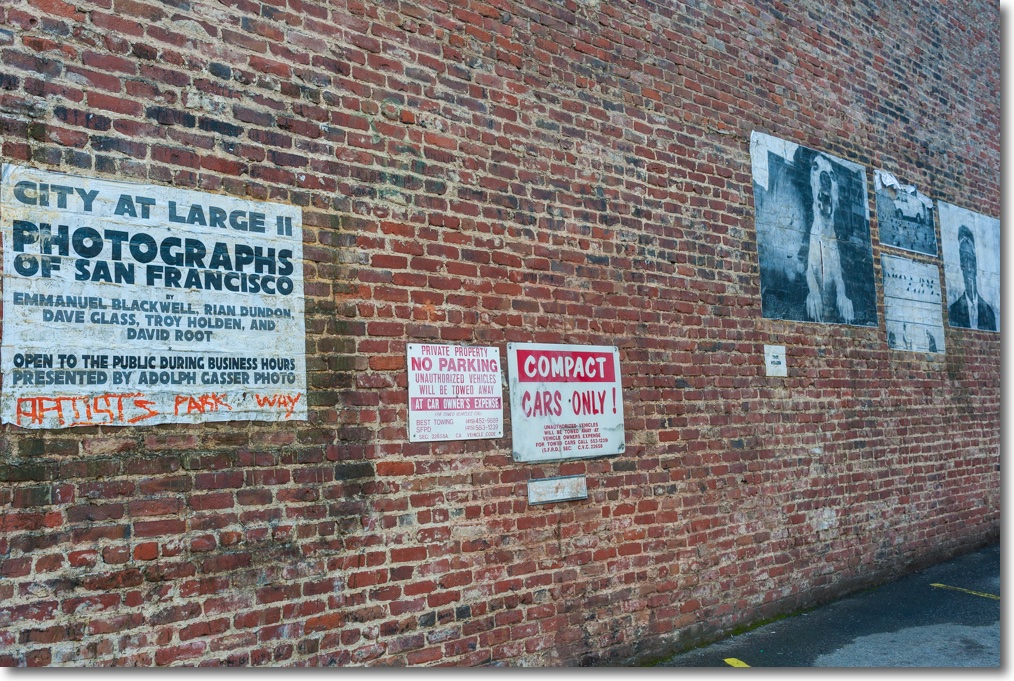
Talk of development potential. That there is even a camera store remaining in SF is to be wondered at.
D3x, 35mm f/2 Nikkor with my profile.