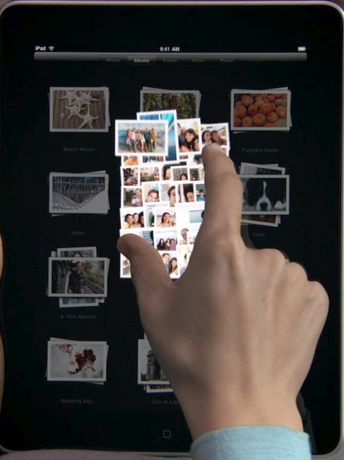
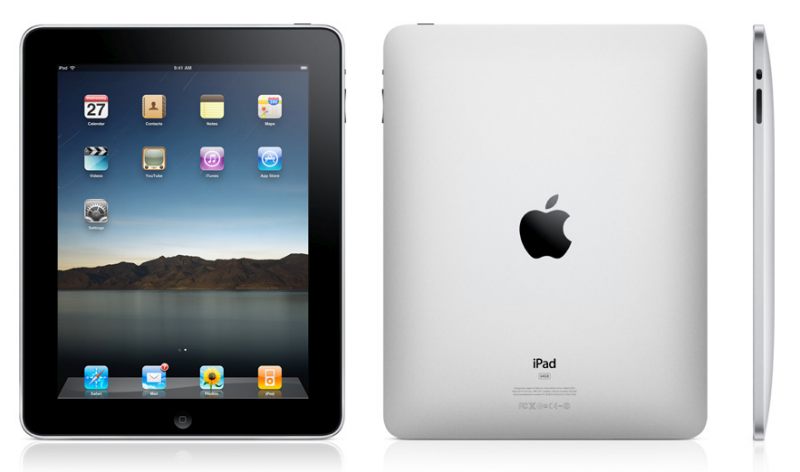
iPad – getting ready

First reviews are in.

The first reviews from credible journalists – Walt Mossberg at the WSJ and David Pogue at the NYT – are in and the biggest surprise is that Apple did not lie about the battery life. Both journalists report nearly 12 hours on one charge compared to the “up to 10 hours” claimed.

Mossberg points out that the OS has no multitasking but that is coming for the iPhone so expect it on the iPad soon. And Pogue makes the good point that nerds will hate it because it’s simple and Just Works. These are the same people who adulate keyboards (over which they delight in eating pizza) and mice (they have two – one on their desktop and another eating their crumbs below) so we can move on.

From a personal perspective I have done a quick spot of upgrading to prepare for my iPad. Quick and free upgrades to iPhoto and iTunes on my MacPro get the desktop ready to ‘speak’ to the device. Then I blew some serious coin, meaning an additional $5 per month, to increase my AT&T Uverse broadband speed to something about half the speed available to the rest of the civilized world. The upgrade took all of 5 minutes before becoming available. You tune in Uverse using Safari, tell them you want more speed and it’s done without any need to wait a month for a technician. 5 minutes later.
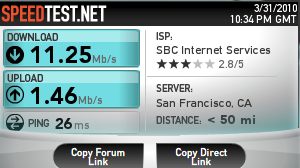
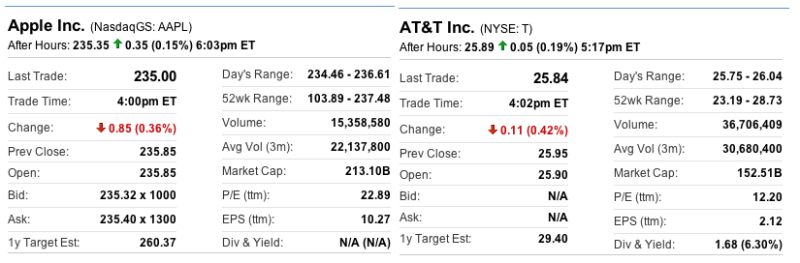
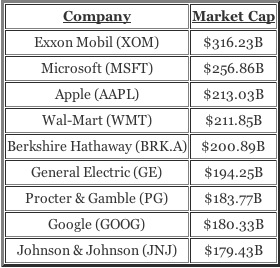
As the 32gB iPad I am getting is wifi only I thought I might as well speed it up. A quick word about AT&T’s digital Uverse service. Every nerd likes to trash the Telephone Company for its many coverage and capacity issues caused by the wild popularity of the iPhone which, in America, runs on AT&T only. I do not think that is fair. First, as a little remarked piece of (rare) excellent journalism in the Wall Street Journal recently pointed out, much of the bottleneck problem with the iPhone and AT&T was the cause of …. poor wireless application design by Apple! AT&T sent in a team to teach Apple how to do it right and expects improvements. Of course, they dare not admit to this for to question the sanctity of Apple’s programmers would doubtless incur the wrath of Mr. Jobs. And Apple’s market capitalization is, if you can believe this, larger than AT&T’s:
I have been using Uverse for a couple of months now and while the installation made a root canal seem like a fun time, the ability to change your service level for TV and broadband from your keyboard is pretty special. No more waiting all day for the technician who forgets to show up. And yes, you can simultaneously record several shows of the crap that passes for television in the US using the optional DVR (made by Motorola) whose integration into the remote and general reliability is as good as anything from TiVo. Oh! joy. The service works well and has only gone down once – compared to weekly failures I enjoyed from my former provider, Charter Cable. Uverse is available in civilization – meaning the big coastal cities and Chicago – but don’t expect it any time soon in your area if you think grits are a delicacy. And it you think the Telephone Company doesn’t know technology, how do you explain providing broadband and digital TV over copper cables designed and installed one hundred years ago? It’s no accident that the old Bell Labs boasted more Nobel laureates in its ranks than any other organization. Yes, the company is big and unwieldy, often frustratingly slow and bureaucratized (thanks to excessive regulation which constrains competition) but this sort of innovation makes you think well of America’s future.

Finally, the reviews published today confirm what the sneak videos taken on the day Jobs presented the device to the press a while back suggested. The device is ‘blindingly fast’ (Goatbeard’s words, not mine) – another pleasant surprise.

Tomorrow I shall disclose the carefully planned strategy our eight year old and I have devised to beat the crowds when we pick ours up on Saturday morning. And, of course, you can expect photo coverage from your intrepid reporter of the day that will change the way we use computers for ever. I don’t know about you, but I propose to be a part of that change. Stay tuned!

By the way, easily the best piece yet written on the iPad is by English humorist Stephen Fry in, of all things, the otherwise culturally arid desert known as Time magazine. And yes, he gets to meet God.

On a happy note for AAPL investors, you can expect MSFT and AAPL to swap places in this table of America’s largest companies by market capitalization within 12 months:

Disclosure: Long AAPL. Hey – you didn’t expect me to pay for it, did you?
iPhoto on the iPad

A disappointment.

I confess to spending a minimum of time watching the iPad videos on Apple’s web site. There’s only so much self-congratulatory hype I can take.

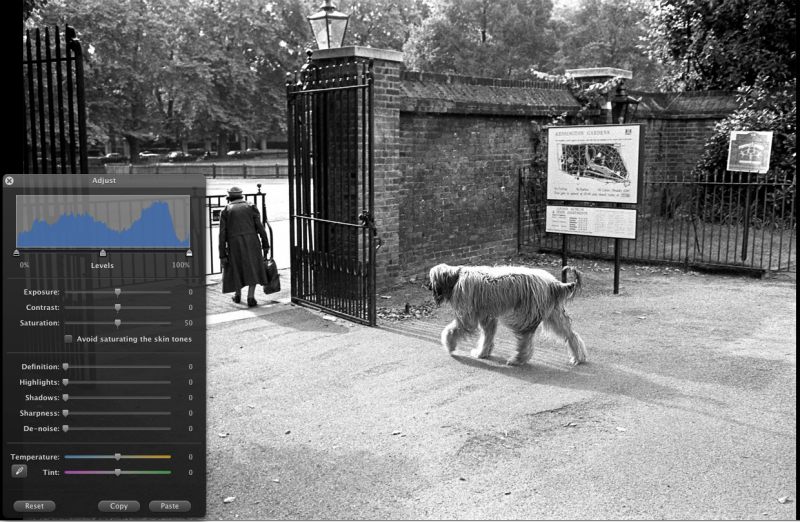
However, a friend, an enthusiastic Mac user, watched a few and pointed out that the iPhoto app on the iPad has no editing controls. I checked the video and she appears to be right.

That’s a major disappointment as iPhoto on a Mac, in its current version, is a remarkably competent application. Sure, when I get serious it’s Lightroom (and Photoshop if I really must) but the processing controls in iPhoto are non-trivial and largely eschew the simplistic Disneyfied world Apple places many of its users in. You now what I mean – everyone only takes pictures of Mom and Pop and the Kids’ birthday parties thewhile listening to the inane pap passing as music from the iTunes store before settling down to some mainstream saccharine coated garbage movie or sitcom, rated G of course.

iPhoto on the Mac – seriously competent

Adapting this clean and simple interface to theiPad is surely the work of moments for the smart programmers at Apple, so let’s hope that the iPad soon has a version 2 available with functionality comparable to that in the desktop version.

iPhoto on the iPad – an intuitive interface

On the other hand, when it dawns on programmers that there will be huge demand from enlightened photographers for the iPad as a processing platform, rather than just as a tool for retrieval, you can bet we will see some truly innovative photo processing apps in the AppStore, if Apple allows them in. There are some lightweight ones available for the iPhone already and I am looking forward to more and better.

Eye-Fi and iPad

Lot’s of ‘i’s

The original Eye-Fi card was underwhelming, even if it was a piece of technological serendipity. This SDHC card included a wireless transmitter which could send your pictures to a nearby computer using wifi. I say underwhelming as the card was slow to transmit data and could not send out RAW files.

Now the newest Eye-Fi card looks much more promising, but it is quite expensive.

RAW is now supported but you should check their compatibility list for your camera – not all work. Wifi speed is 802.11n. They claim the sending speed has doubled.

Why is this relevant?

Well, owing to what can only be described as a monumental procurement cock-up in Cupertino, the SDHC card reader for the iPad will not be available until late April. So if you want to use an iPad as an on-the-road photo storage and culling tool, tough luck until then. I mean, what is so difficult about making a low tech plug-in card reader when they have been around for the best part of a decade and the technology of the iPhone/iPad connector is now 3 years old?

Reviews of the 4gB ($100) Eye-Fi Pro X2 at Amazon suggest an upload speed of 1-2 mb/s, so your 12 mb RAW file will take some 9 seconds to make it to the iPad – not stellar, but maybe a worthwhile workaround?

Eye-Fi’s site also has some disclosures concerning use of these with SDHC to CF adapters in cameras like the Canon 5D/40D which do not accept SDHC cards. It seems there are workarounds but few guarantees. so caveat emptor is the order of the day.

iPad in the studio

Some thoughts.

One of the more charming moments in ‘The September Issue‘ which I wrote of yesterday occurs during the studio session where actress Sienna Miller is being photographed for the cover.

In a documentary otherwise focused on hard headed business people there is a moment all photographers and creative people will identify with. The Hasselblad digital files have been moved to a Mac and everyone is gathered around the monitor while the technician flips through the images (using grungy old Photoshop, of all things). Some object to this, others to that until suddenly one image elicits a collective ‘Wow’ from everyone. It becomes the cover shot, albeit after much post processing – a shadow added here, a filling removed there, a skin blemish corrected, and so on.

I found myself thinking how this scene will change once tablet devices like the iPad are mature. The photographer will be banging away. The images are sent wirelessly to a half dozen iPads in the hands of the various parties in the studio – the art director, the lighting man, the make-up man, the client, the editor. There will be no need to import, load in Photoshop or whatever, or to reshoot. Everything will be done in real time. Indeed, once EVFs take over from flapping mirrors in studio gear, everything will be visible on the group’s iPads before the picture is even taken. The speed of turnaround is greatly improved, the results will be better and the whole experience will move into the twenty-first century. The incremental cost is modest, the savings in a business where time is money will be significant.

A device for creative types

Another anomaly in the documentary is that the whole issue of the magazine is still proofed using hard copy – the pages are assembled on large tables for repeated scrutiny by the editor and her staff. 16th Century technology. It will not be much longer before a few dozen iPads will replace the time consuming paper copies which take ages to make and a flip of the finger on each will permit editorial decisions between alternatives, with change easily made by a couple of nerds in the back office. Press another button and it’s off to the press which, of course, is an electronic copy of Vogue for distribution to iPads everywhere. And the world’s forests will be saved. Probably not a good time to load up on forestry stocks. The cost of one hundred iPads to a publishing powerhouse like Vogue magazine – call it $40,000 after bulk discounts, or about the cost of one Hasselblad – is trivial. That’s probably their weekly entertainment bill.

By the way, the prints used by Anna Wintour to critique the layout of the issue are considerably smaller than the display area of the iPad, as the documentary shows time and again.

The iPad and devices like it will storm the creative world as the ultimate feedback device, even though it may be originally targeted at the couch potato set for feedforward only.

Nuclear Wintour

A fun movie.

If I write from time to time about fashion photography in these pages it’s not because I am some sort of fashion maven, but simply because I like good pictures. To see why, take a look at a recently released movie named The September Issue which details the making of the eponymous 2007 issue of Vogue magazine under it fearsome editor of over twenty years, Anna Wintour.

Known as Nuclear Wintour in the business – because when she’s done the only things left standing are the buildings – it chronicles the production of the key issue of the magazine and the relationship between Editor Wintour and Art Director Grace Coddington, the latter a famous model before a car accident ended that career.

Wintour is the scalpel to Coddington’s more sensitive feeler. They make a great team and their sheer professionalism does much to discount the pretentiousness with which the fashion world is so often associated.

The scenes with photographers Mario Testino in Rome or Patrick Demarchelier in Paris show just how tough and businesslike this world is.

As for Wintour’s silences, they strike more fear in the viewer than anything you find in an otherwise male dominated business world. The movie is available for rent on Netflix On Demand or iTunes, and is highly recommended.

And by the way, the frenetic world portrayed by Meryl Streep in The Devil Wears Prada looks just plain silly compared to the real, hard headed atmosphere of Wintour’s world, but it bears re-watching for some innocent hilarity.

For Apple fans, there’s not one revolting PC to be seen in either movie. OK, just the one in the loser’s home in the Prada movie, which you would expect.