Barrett-Jackson 2020

Mega show and auction.

The annual mega car show and auction, run by Barrett-Jackson, is running this week in Scottsdale. It’s a couple of years since I attended and as it’s just a mile down the road there really is no excuse for missing it.

Two things to note this year. Attendance appears to have quadrupled (I rode my scooter to avoid a parking lot trek) and prices have gone through the roof. That said, my hot dog was only $395 and they threw in a Diet Coke for a scant $49.95 extra. The pickles were free. I expect the B-Js will charge for oxygen next year, provided a recession does not wipe them out. That would certainly substitute for crowd control.

My attention was captured by two attributes – the strange and the magnificent.
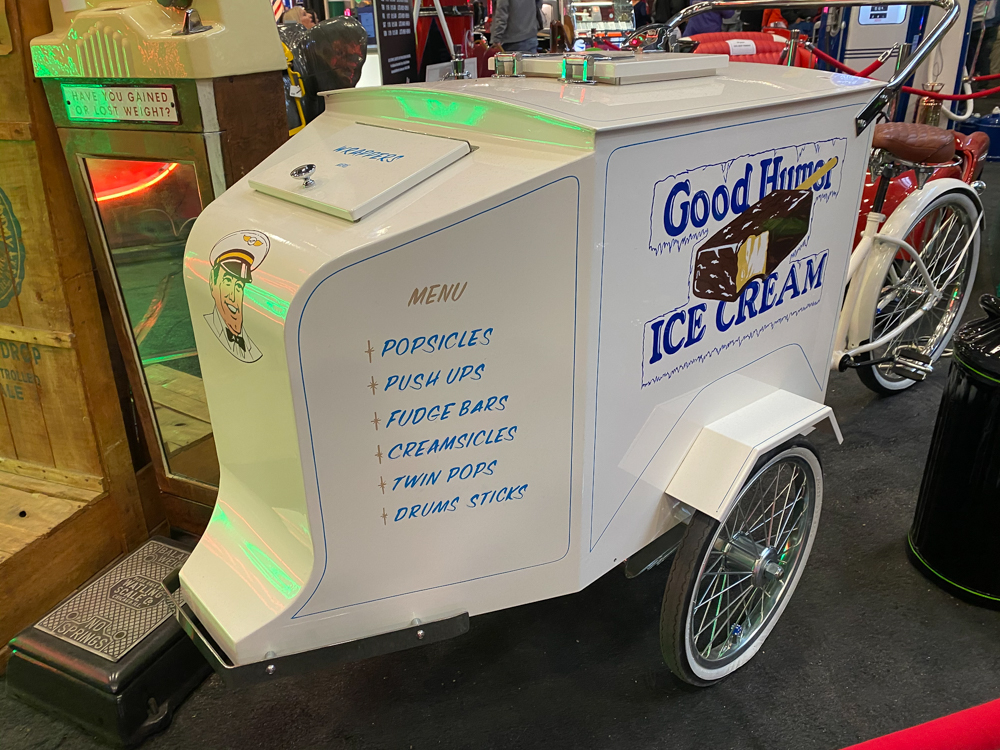


Yesteryear’s ice cream man.
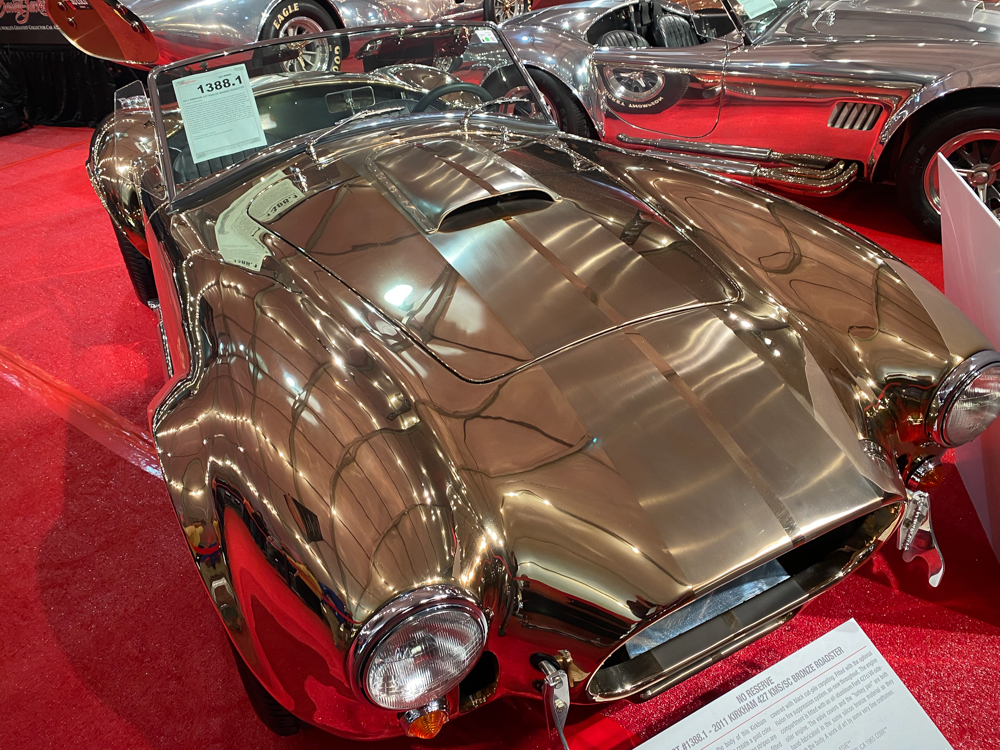

Oval Office ride.
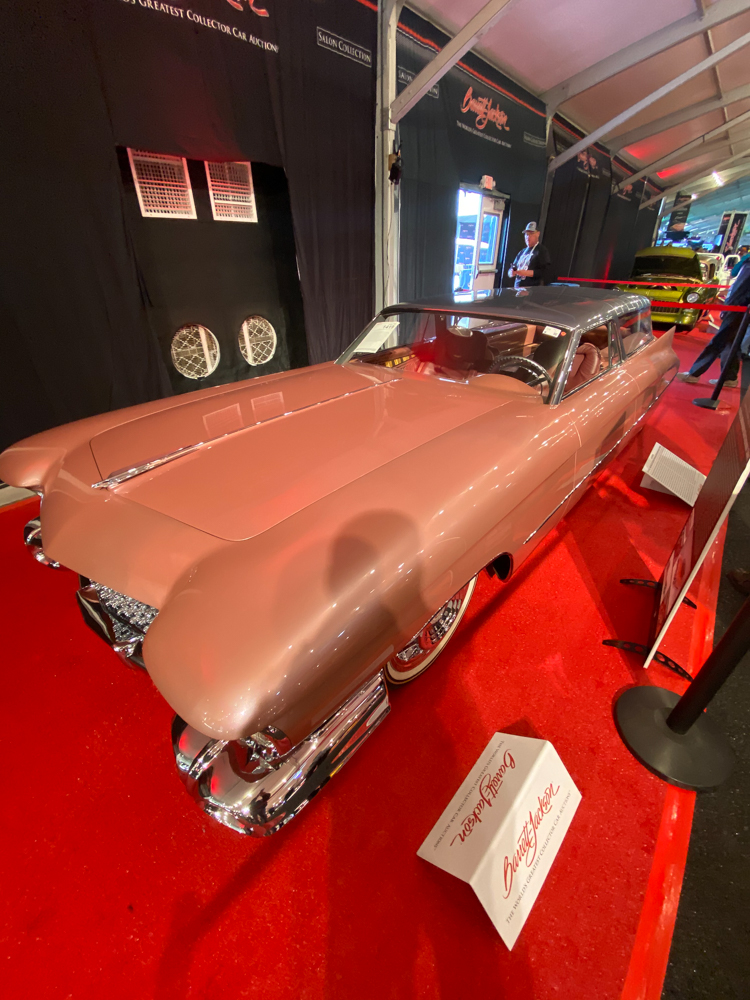

Cruella DeVil’s wheels.
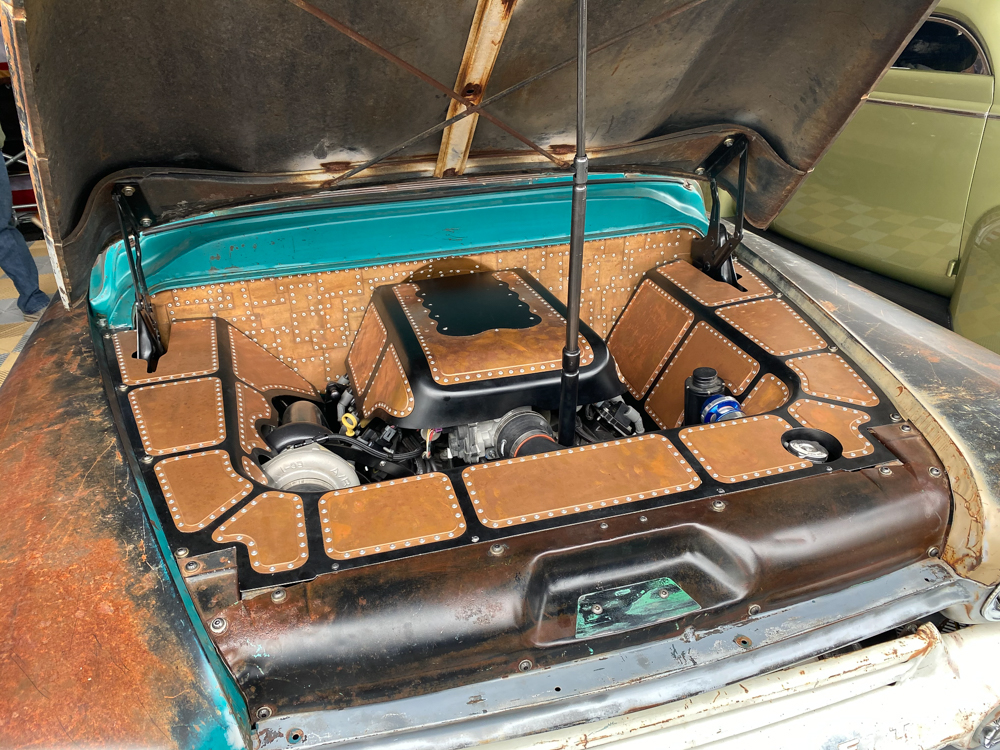

All leather interior.
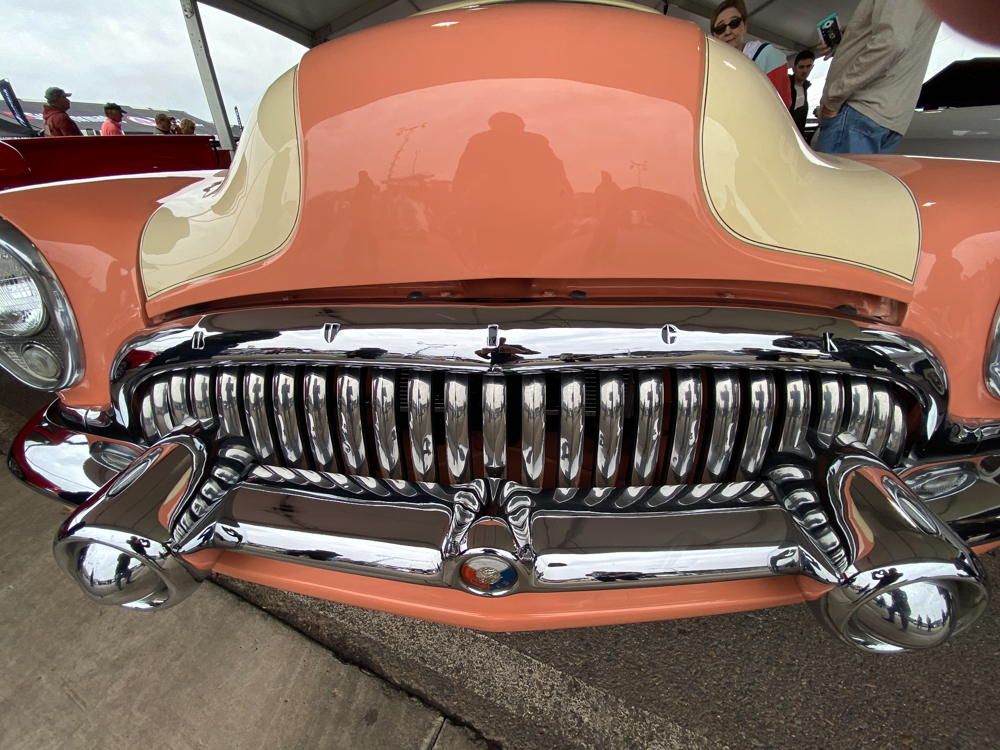

Big, Beefy Buick.
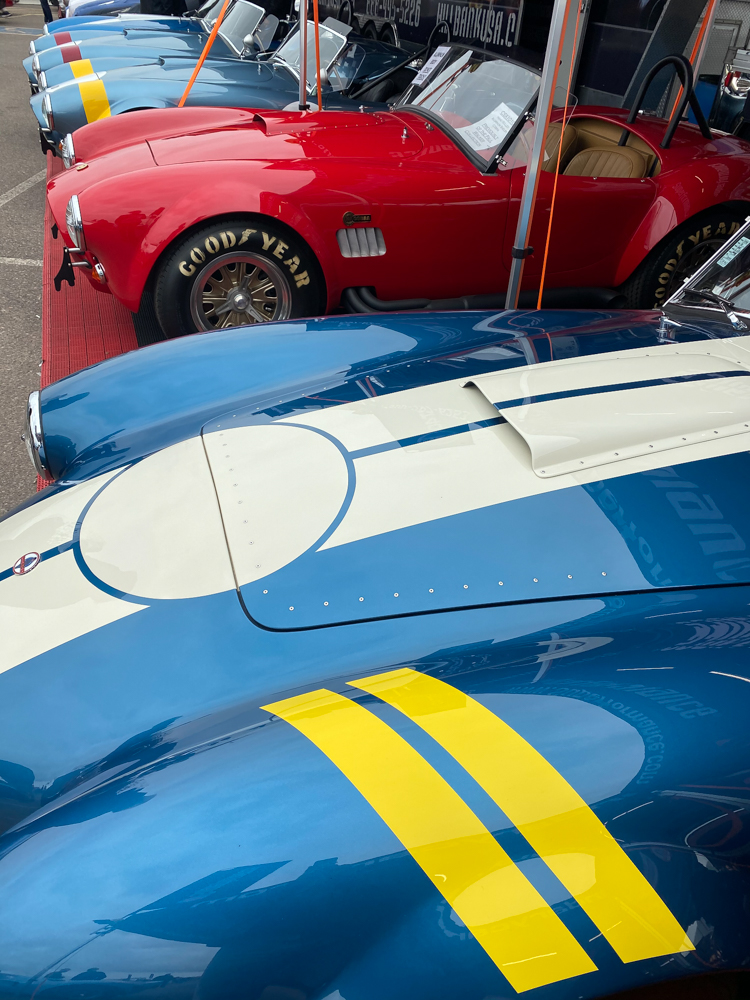

Cobra, Cobra, Cobra. Carroll Shelby was onto something when
he stuffed a 427 c.u. Ford motor into a lightweight AC chassis.
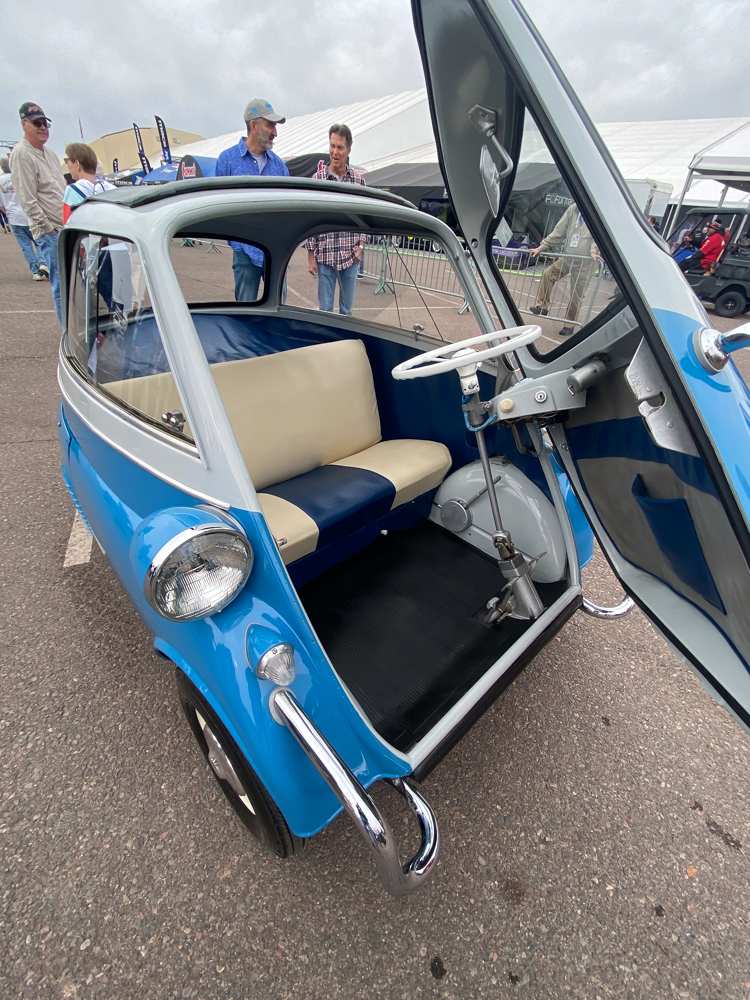

BMW Isetta, 1957. 300cc, front access, just don’t let anyone park directly in front of you.
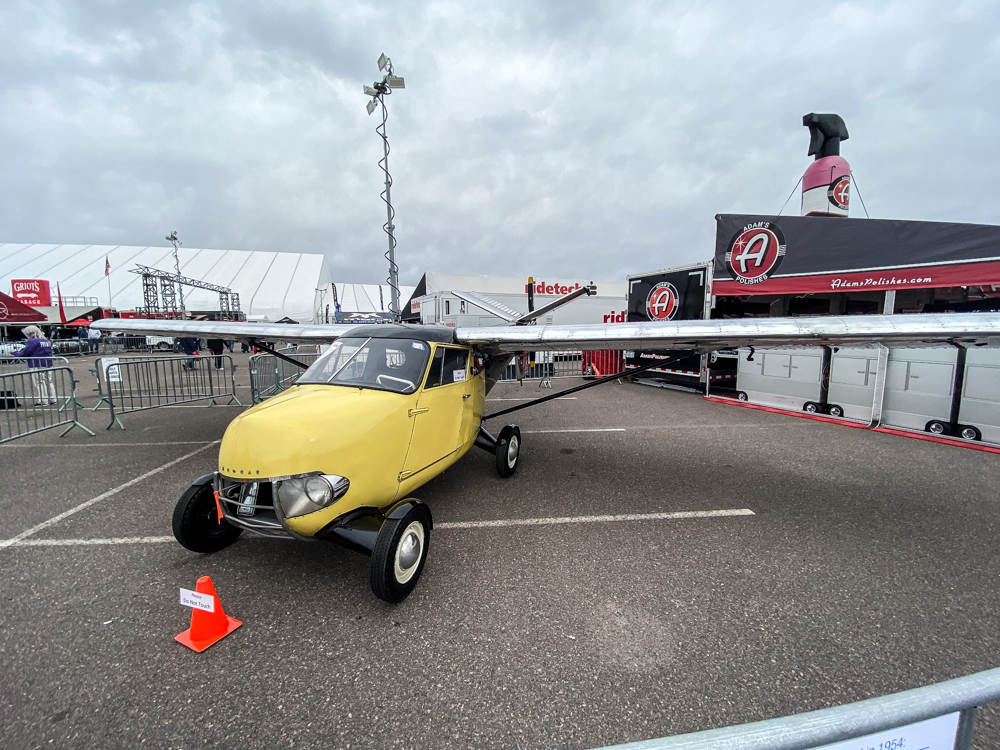

Francisco Scaramanga’s ride. 150hp Lycoming engine, 12,000 foot service ceiling.


Luxe interior of the $100,000 Airstream trailer. A film set favorite.
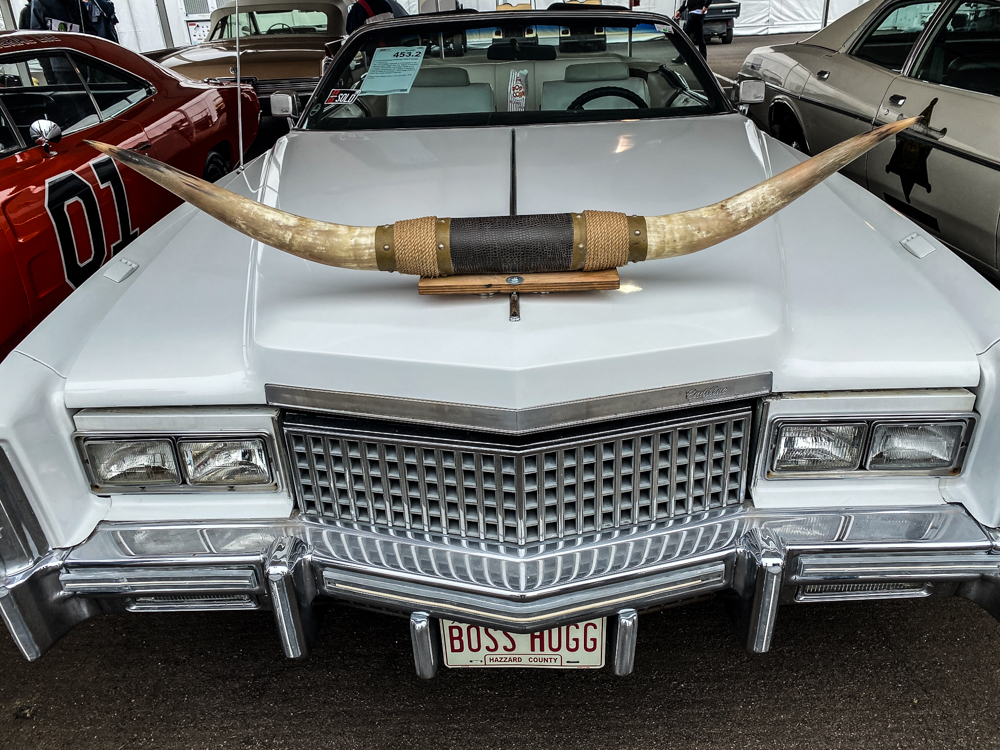

Boss Hogg.
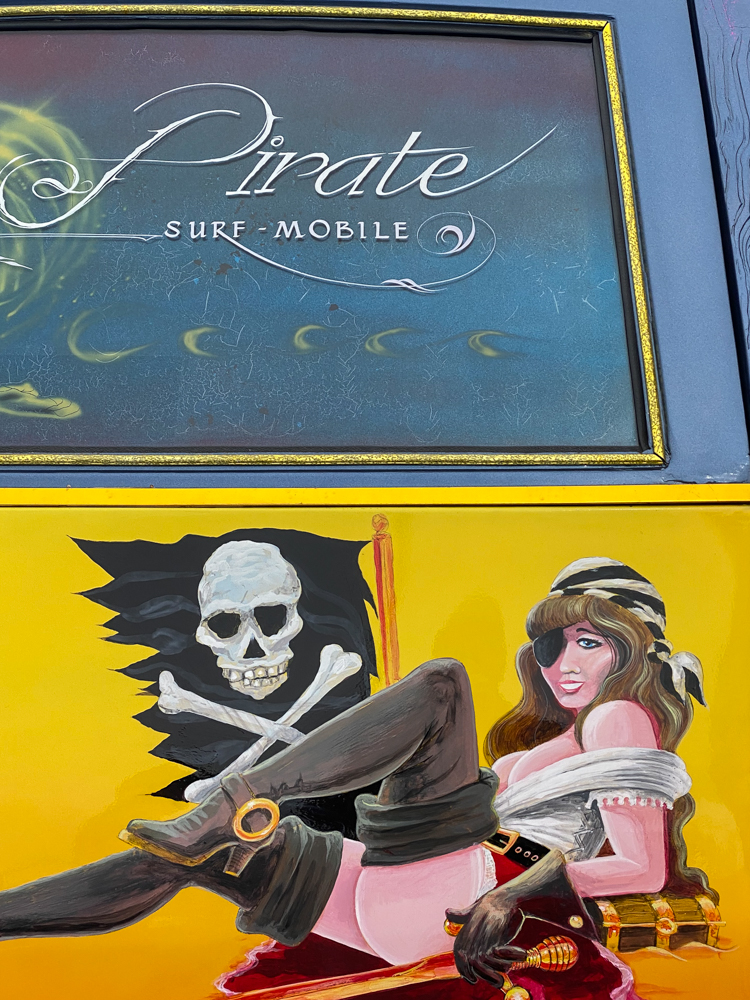

Pirate surfer babe.


Packard. No expense spared.
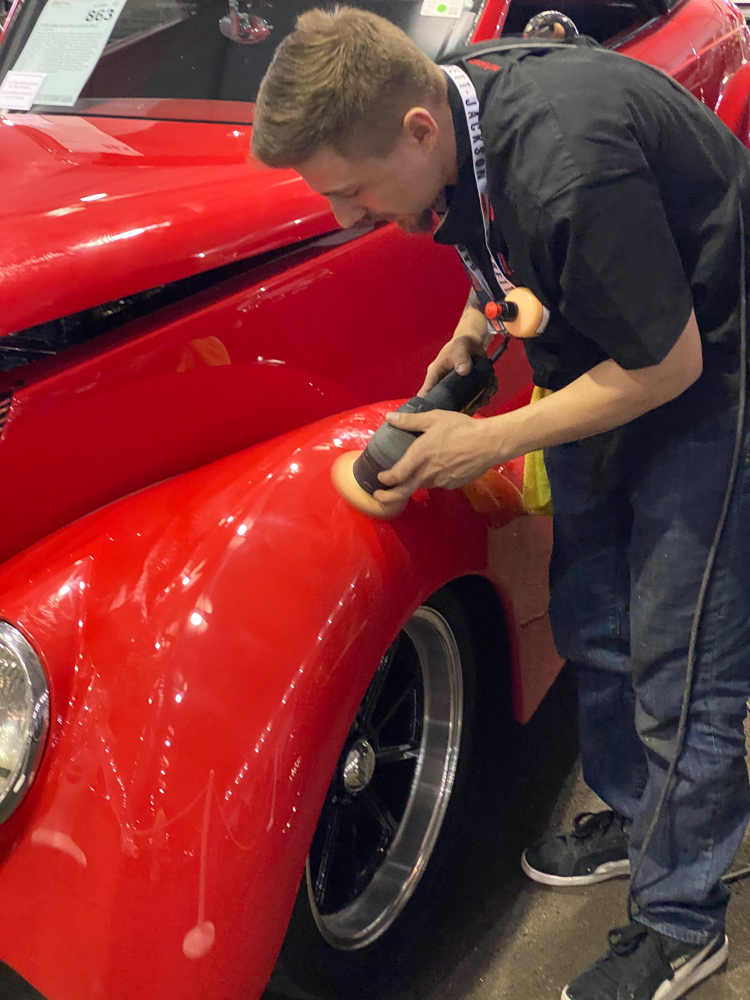

Sale prep.
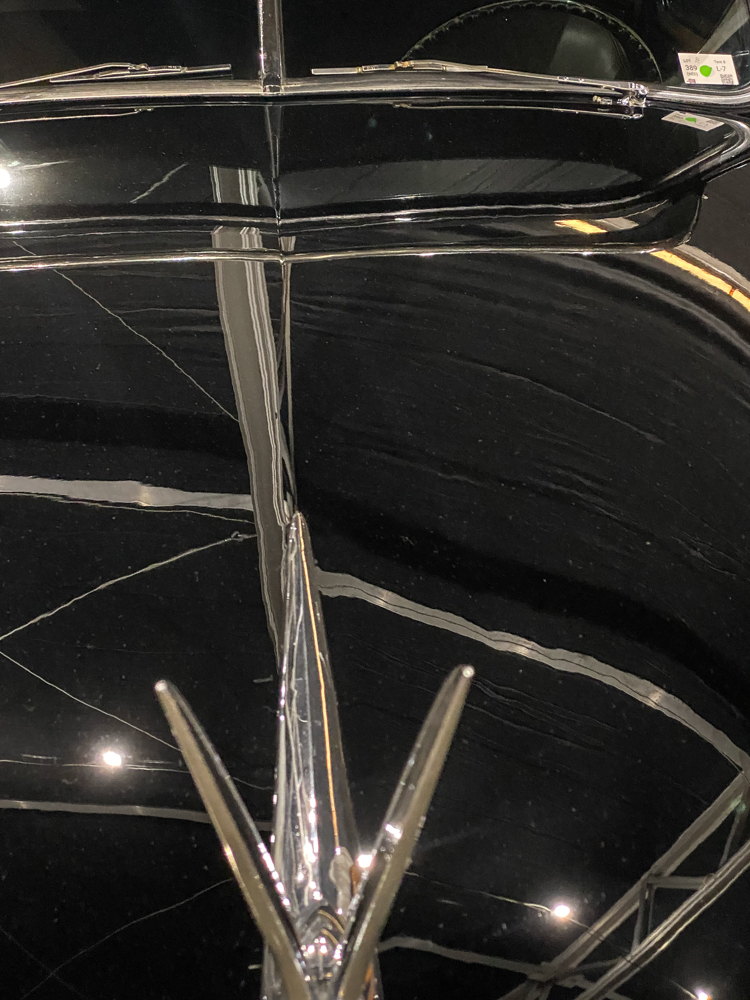

Devil’s Packard.


Surfin’ USA.
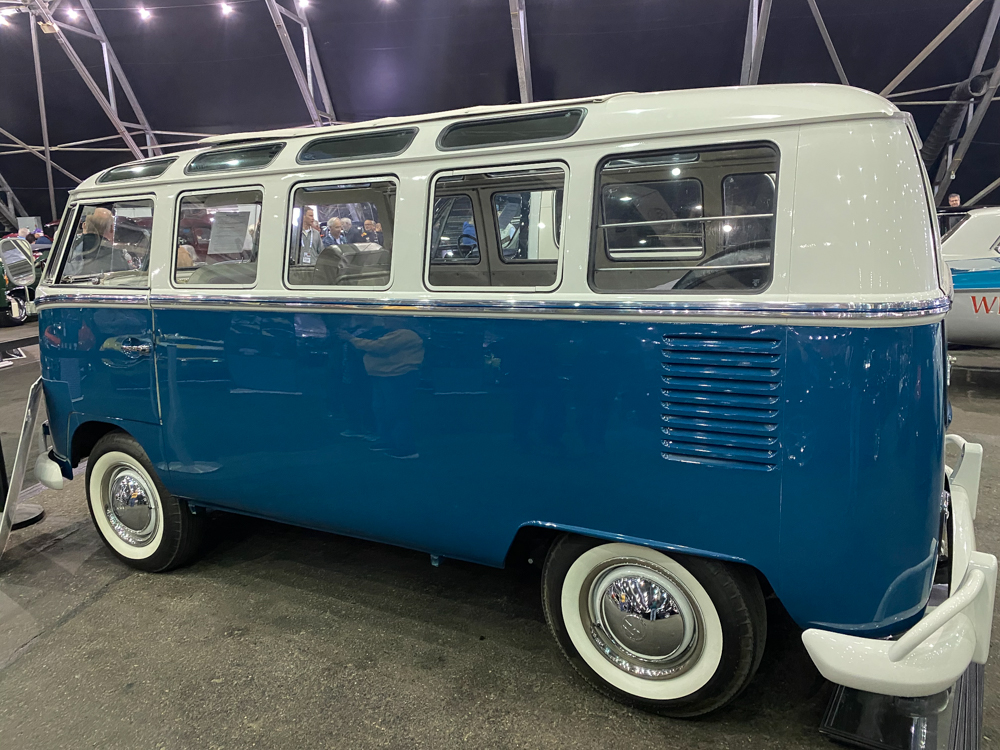

Gorgeous VW camper van.
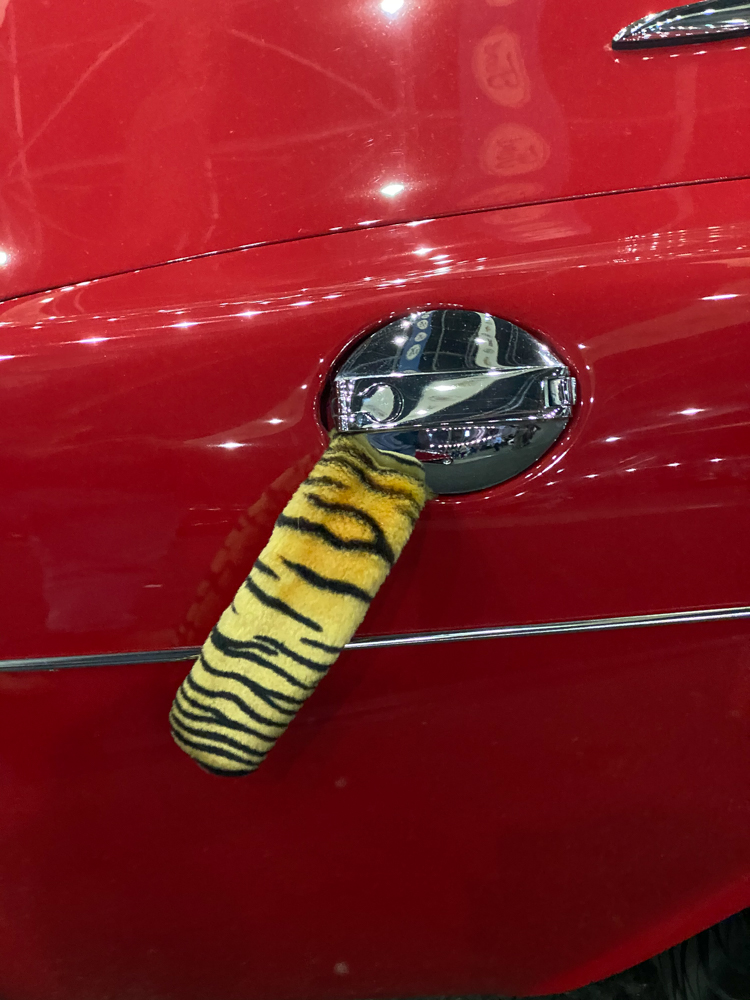

Sunbeam Tiger. Ford V8 under the hood and a tiger in the tank.
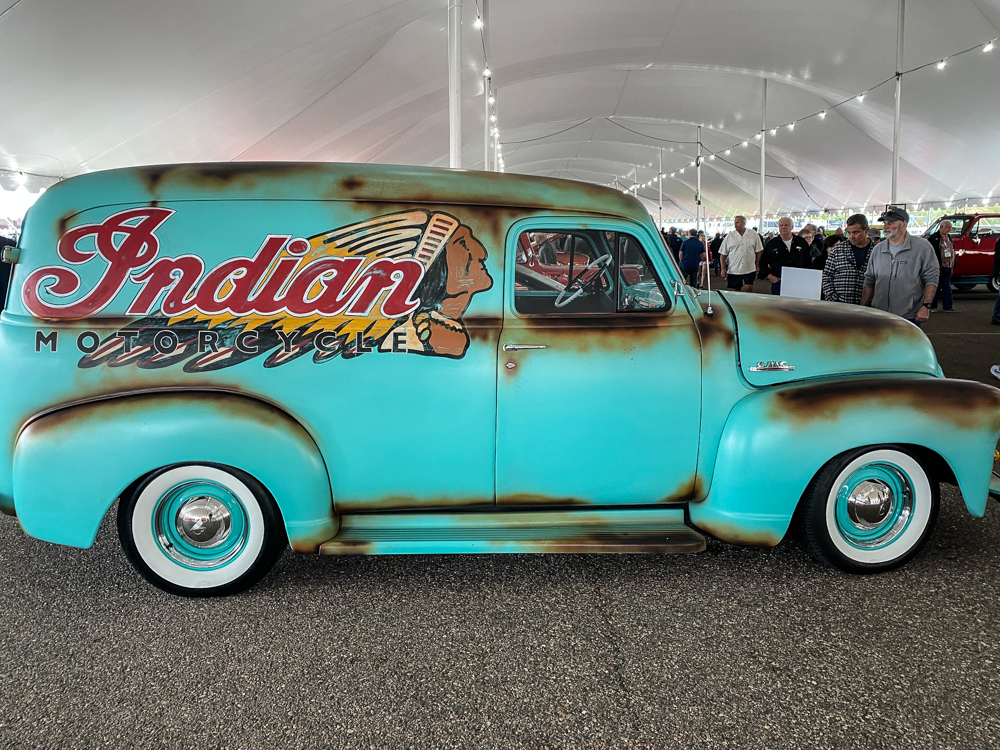

1951 GMC 3100 Custom Panel Van.
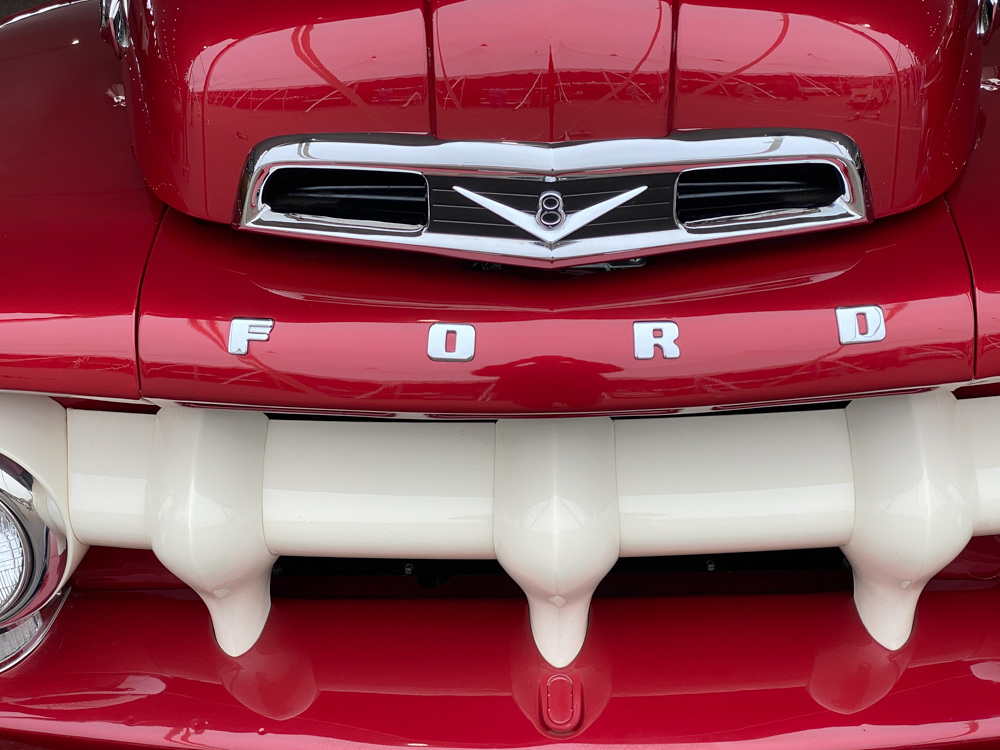

Ford knew how to say “solid”.
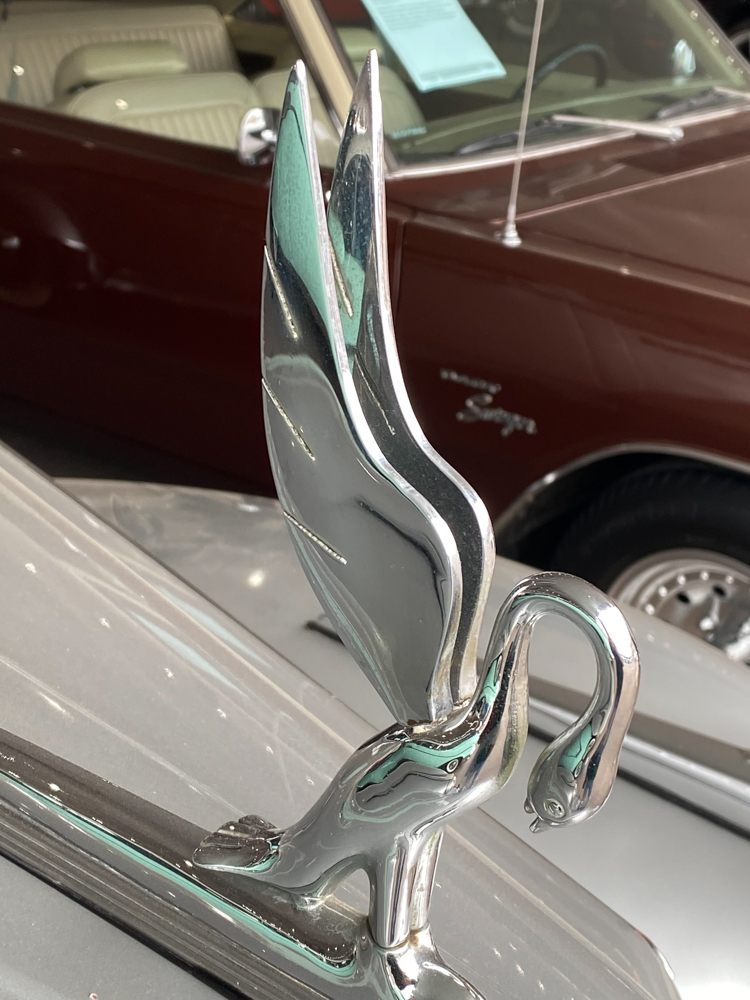

Packard opted for “elegant”.
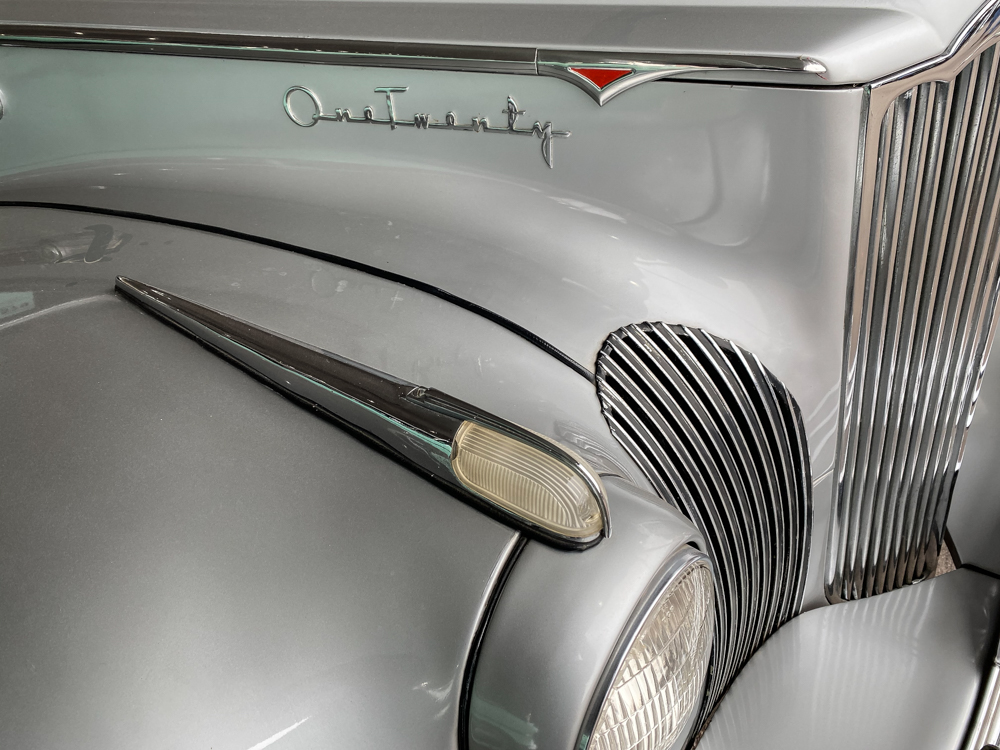

1941 Packard straight eight convertible. Perfection.
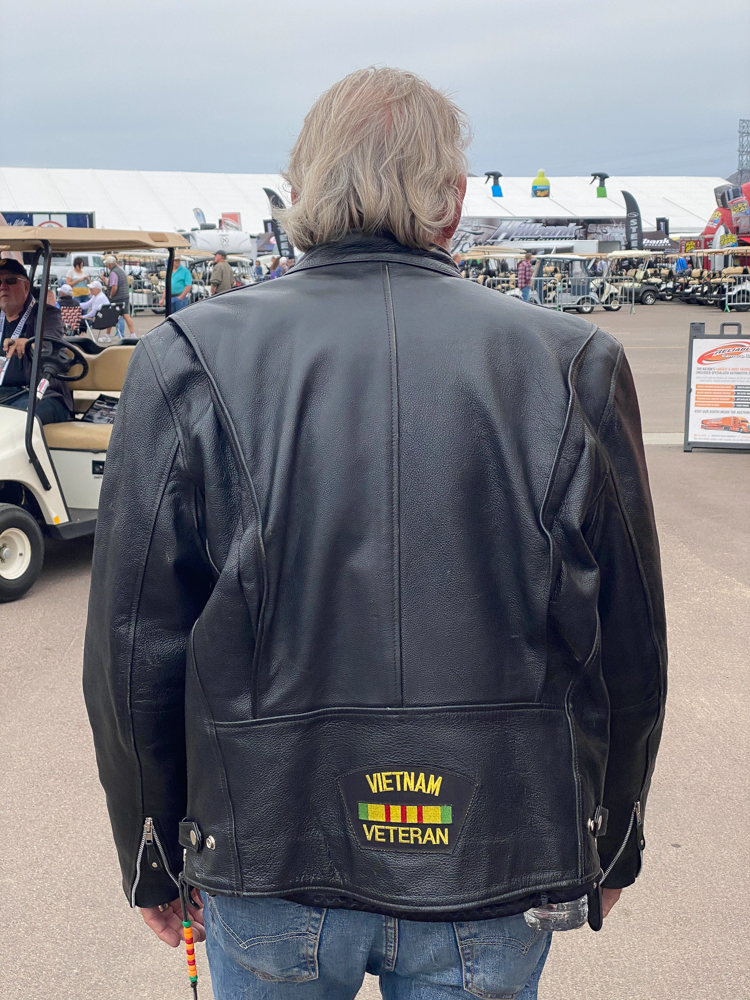

Forgotten generation.


Coker had a large classic tyre display.


Snake oil will always be with us.


Waiting for his ride.

All snaps on the iPhone 11 Pro.

I took 141 images and 140 were perfectly exposed. The other saw the flash go off for some reason and was awful. Not sure how it got turned on but, frankly, with Night Mode, the flash on the iPhone can be dispensed with.

A couple of things I noted.

There was not one DSLR or serious looking camera to be seen and there were thousands of people in attendance. In what is a photo-rich setting, cell phones dominated.

Second, popping in and out of the tents, some very poorly lit, Night Mode would kick in seamlessly when required and the results were perfectly exposed and color corrected, regardless of the light source. I have never published so many images with so little post-processing. Absent a crop or two here and there, and a couple where I touched the Clarity slider in LR, these are all straight out of the camera. All three rear-facing lenses were used in about equal measure.

Battery life is a non-issue with the iPhone 11 Pro (and even less so with the larger ‘Plus’ model). I was down to 74% from 100% after three hours of keeping the camera turned on (meaning it was showing everything on the display), during which time I also emailed many images to friends. Anyone opting for an external battery for an iPhone 11 is likely wasting money or has special needs.
The supreme fake

He got away with it.

The French ‘artist’ Marcel Duchamp (1887-1968) started it. He would exhibit common objects – toilet bowls, dinner plates, you name it – as ‘art’ and the fools passing as critics lauded him for his insights and originality. Duchamp was a fake and he new it. He must have got a good laugh at the expense of his critics. But his fakery did not make him rich. You see, he was French where art rules over income.

Andy Warhol (1928-87) saw Duchamp’s work and, being American, smelled profit. He crafted a mysterious image for himself and proceeded to paint ridiculous canvases of Campbell’s soup cans which now sell for $50 million and up. To my considerable disgust, Cornell University’s otherwise superb Johnson Museum of Art houses one of these pieces of garbage which should be immediately sold, the proceeds applied to reducing students’ fees – and maybe, you know, letting some more Americans into STEM classes?

Warhol’s crowning cinematic achievement? A static 24 hour reel of the Empire State Building. God alone knows what chemicals his audience was ingesting. People paid good American money to watch this tripe.

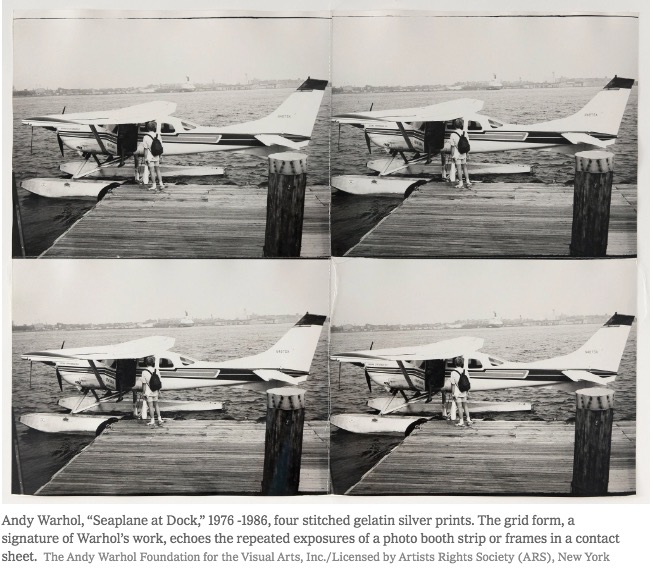
Proving that there’s one born every minute, a New York Times art writer falls for it and repeats all the utter nonsense written about this skillful grifter. You can read his nonsense by clicking the ‘art’ image below. Can you believe this crap? “Given the exponential influence of Warhol, it’s hard not to think about this show of his photographs as a historic template for our current Instagram moment, in which every commonplace detail of people’s lives is recorded and posted for an anonymous audience, and the ubiquitous “selfie,” an emblem of the endless lust for fame that replaces actual lived experience. What an odd and burdensome legacy for the pantheonic artist.” . Pantheonic? Yup.


Click the image to read nonsense.

Warhol was, indeed, the supreme fake, and laughed all the way to the bank with his fakery.

For more fun quotes from Pseuds’ Corner, click here.

More light at night

LEDs rule.

It’s hard to describe how barren the garden was in my home when I bought it three years ago. After some 20 years the extent of the landscaping was a couple of dying Texas Sage bushes with blown irrigation. Landscape lighting was provided by those execbrable solar cell units, doubtless stuck in the ground by some cretinous realtor looking to make her 6% for showing buyers the bathroom. Their light output was reminiscent of the three position lighting switch on British motorcycles equipped with lighting by one Joe Lucas – the options were Dim, Flicker and Off. Mostly the result was Off regardless of the position of the switch and these miserable landscape lights were probably made by Joe also. The first two things I did was have the garden dug up to lay all new irrigation lines and then chucked those solar lights in the garbage.

Their replacements came from LampsPlus in the guise of floods and spots, the latter used to accentuate the many sculptures and dramatic new plants I installed. These are not cheap, but you will not be replacing them any time soon – read on.

One unexpected result was that the new irrigation saw to it that the new plants prospered, even in the blast furnace summers in Scottsdale, Arizona, and one of the honeysuckles was now denying light to my twin crane sculpture. The option of cutting back the plant was simply not a choice, so I did the logical thing and added another spot, wiring it into the 14AWG bus line I had installed in a huge loop under the gravel. The lights tap into the bus, so if one fails the others are unaffected.


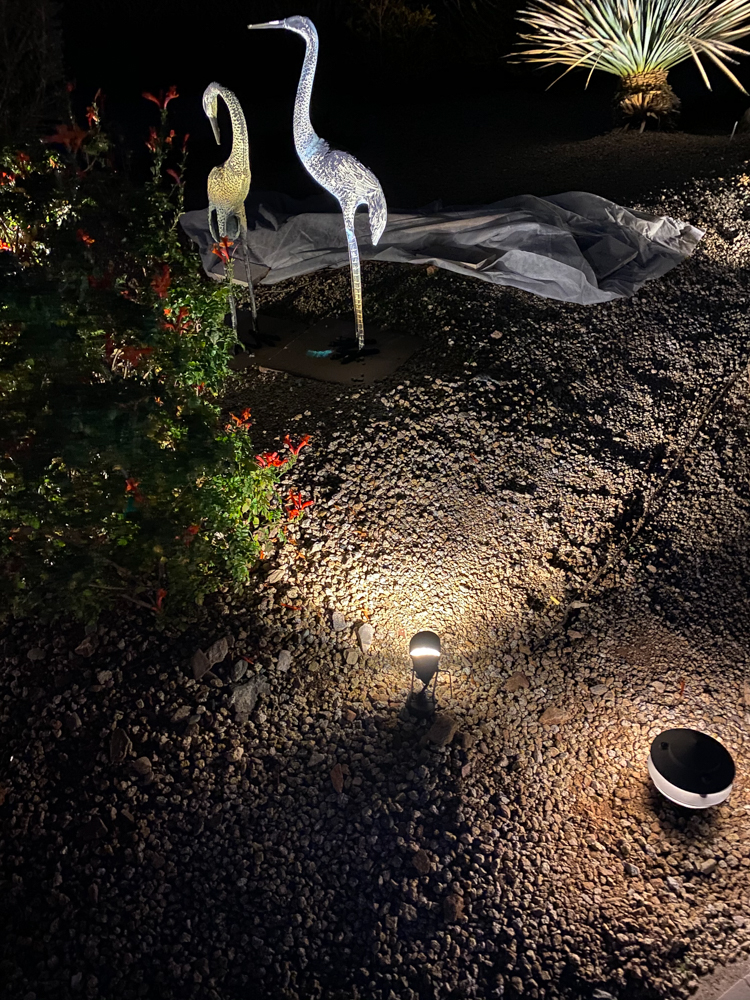
The second crane enjoys drama again.
The thermal blanket in the rear protects fragile Lantana from frost.

These LED spots – a three lens affair set in a very robust metal enclosure – consume but 3 watts (the floods draw 4 watts), and it will give you some idea of the number of lights installed that I use dual 120 watt timed power supplies/transformers; the whole thing runs on safe 12 volts power. In the three years since installation not one light has failed and they burn 5 hours every evening. So that’s almost 5,000 hours and counting. The manufacturer claims a 30,000 hour life.

But all this preamble is yet another excuse to show off the iPhone 11 Pro’s Night Mode. I clicked the button, the iPhone told me to hold steady for 3 seconds and the result is SOOC, of course.

The Flying Scotsman

Steam locomotion at its best.

The Flying Scotsman was a British three cylinder steam locomotive which served on the London to Edinburgh run from 1923 through 1963. It was the first passenger locomotive to reach 100mph (that in 1934!) and was designed by the Englishman Sir Nigel Gresley who would go on to craft the Mallard, the fastest ever steam train, and the most beautiful.

The British, despite having ruled half the world’s economy just one hundred years earlier, were slow to convert to diesel power which was clean, far lower maintenance and cheaper to run, so whereas America had largely done so by the late 1950s, the British continued on their merry way building more steam locomotives well into the 1960s, all scrapped after very short service lives.

I am a member of that dwindling cadre of passengers who can claim to have enjoyed 100 mph on the Scotsman, having taken it from London to Dundee in 1960 at the tender age of nine, to visit my eldest sister, then a student at nearby University of St. Andrews. She gave my youngest sister and me a Scottish Terrier, the source of much joy for the next decade and a half. Tough, resolute, no toady, he exemplified all that is best in the Scot.

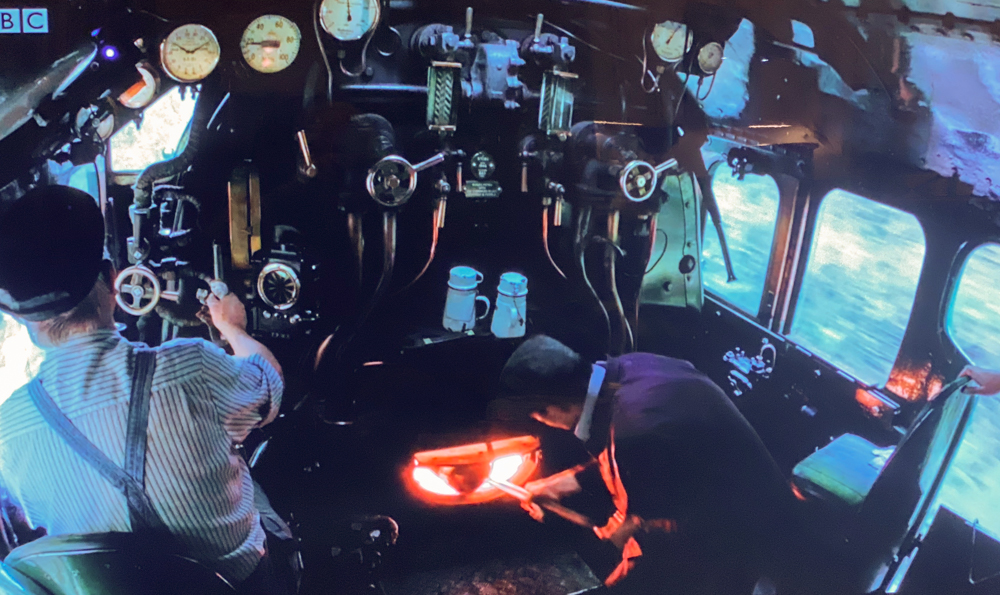
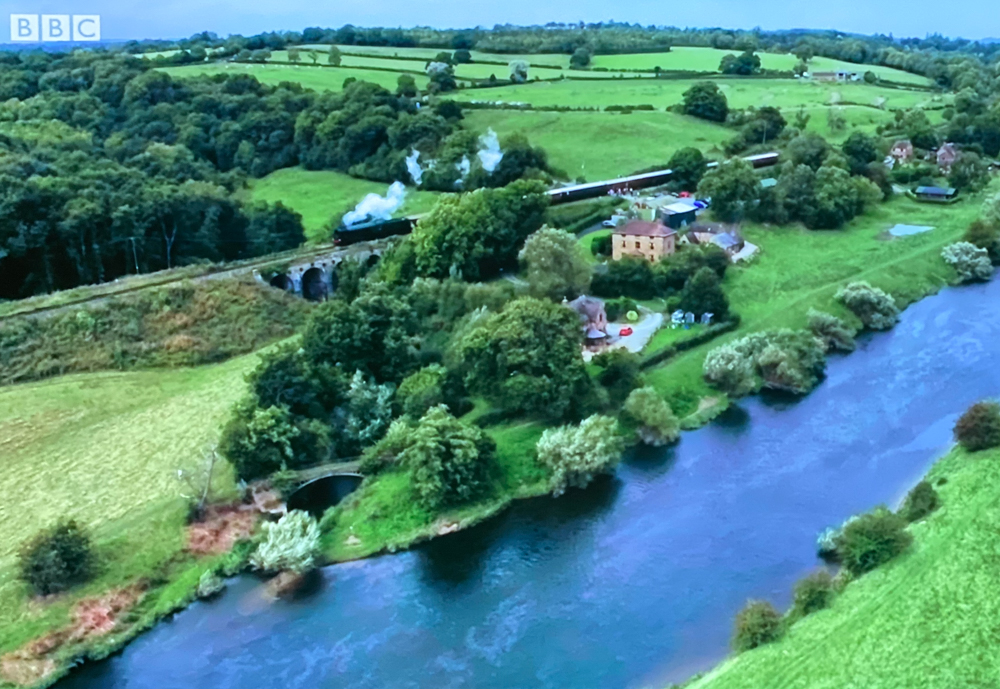
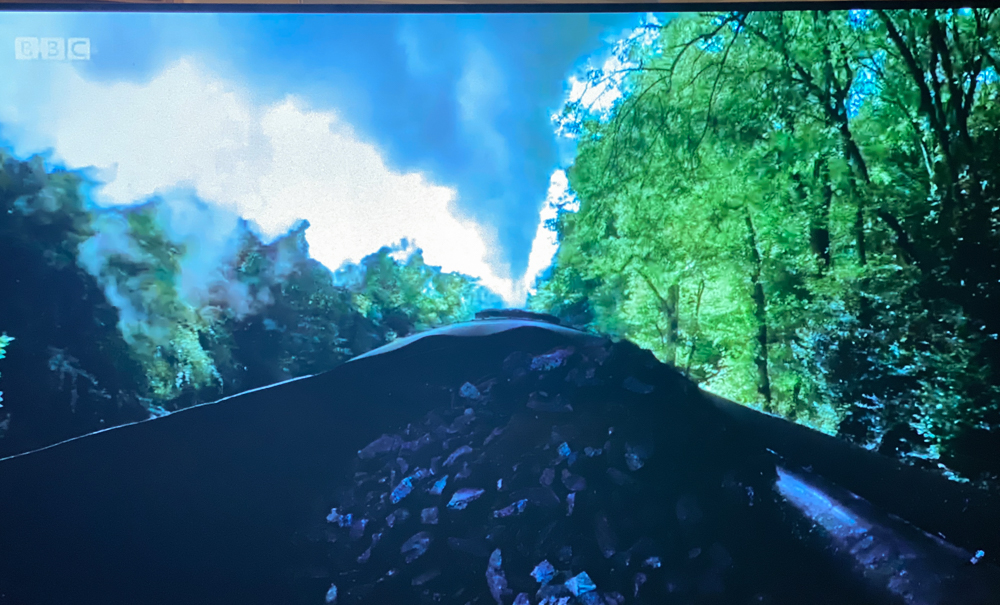
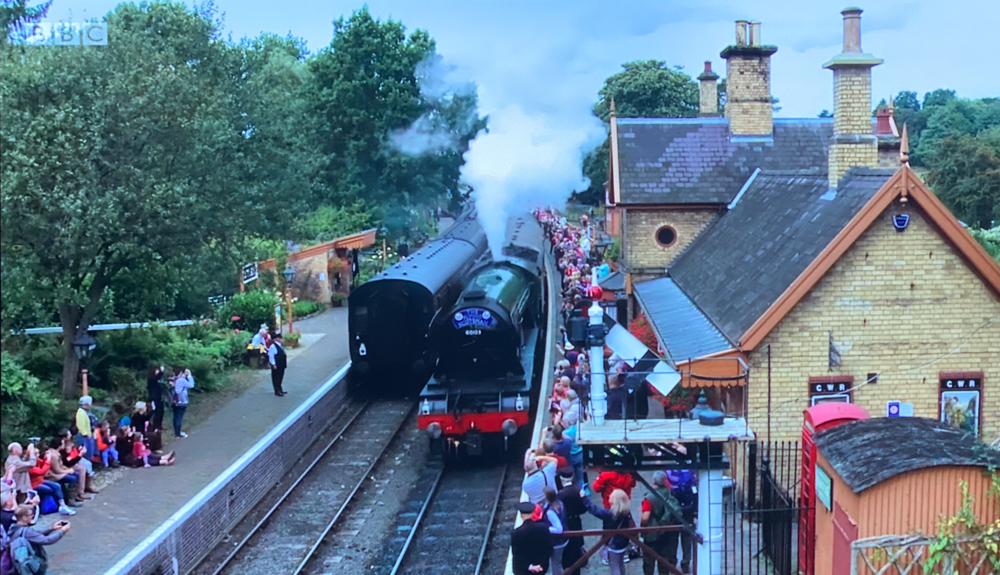
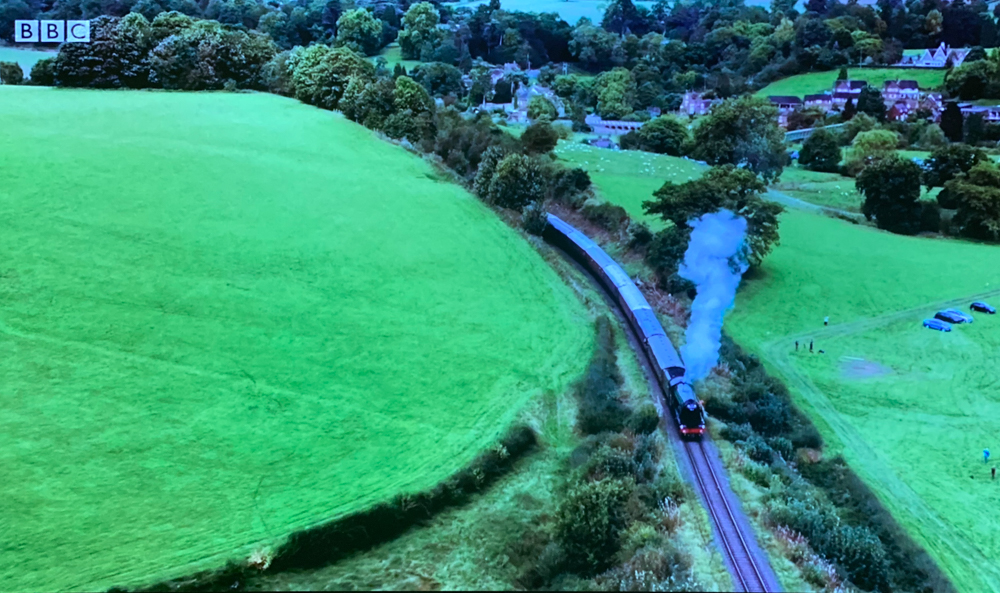
The BBC had a program with current video of a restored Scotsman running – at sadly low speed – on a midlands cruise. This is (mercifully) a commentary ‘lite’ documentary, allowing the viewer to enjoy the sight and sounds of this special locomotive. Some of the images are nothing less than spectacular, though it has to be added that someone should give the Beeb an iPhone so that they can learn about HDR.


In the cab. The American instruments are marked ‘Westinghouse, England’.


Simply gorgeous.


Letting off steam – too much and your boiler will burst!


The locomotive is incredibly popular, crowds lining the route.


Ah! England, where the sun always shines.

Now when I wrote ‘enjoyed’ that needs qualification. In reality, steam train travel was awful. Noisy with dated and grimy interiors, and when I foolishly opened the window in a tunnel the full reality of steam, oil vapor and coal dust was visited upon my person. I arrived in Edinburgh smelling like a Welsh miner, and suitably bruised from the pounding my youngest sister had deservedly given me. Steam trains are great as long as you are a spectator from a distance, and this BBC documentary does the Flying Scotsman justice.

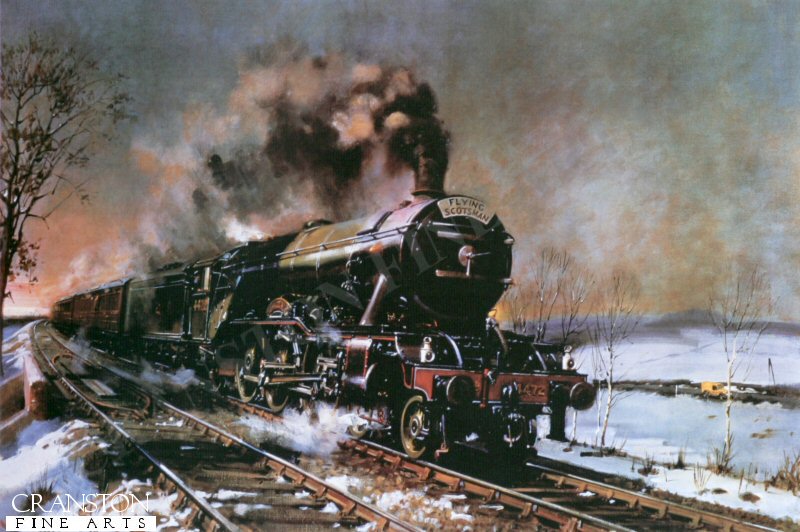
The fine British painter Terence Cuneo has done the Scot justice in oils, and reproductions of his canvas make for fine gifts for those of your friends with good taste.


Terence Cuneo’s tribute in oils to the Scotsman..

Should Apple make a stand alone camera?

Capitalizing on its software and hardware advances.

In an end-of-2019 piece I wrote:

“I have had two transformative iPhone experiences – in 2007 when I bought iPhone 1 on the day it became available, and this year when I bought the iPhone 11 Pro which will change the photography hardware landscape permanently. All of the big makers will be gone in a few years. The iPhone’s camera is an order of magnitude better, doing things the clumsy SLR offerings can only dream of. The remaining reasons to buy clunky gear are that you need high definition from really long lenses – a couple of guys at Nat Geo – and because showing up at the Vogue studios with an iPhone to snap today’s supermodel just does not earn machismo points.”

So should Apple make a stand alone camera?

Apple has made a stand alone camera before. That was in 1997 and sensors were not up to much and, face it, the product looked like a door stop.

But now, with computational software making bad images great, with image quality rivaling that from big, clunky gear, and Sony’s superb lenses and sensors in the iPhone 11 Pro, is it not time for Apple to capitalize on its imaging prowess and make a true camera?

I no longer think this make sense. No one who has used the latest iPhone as a camera wants to revert to interchangeable lenses and all the bulk and weight of the traditional digital body. When you have computational photography working for you, a feature missing from every stand alone camera out there, who needs the clutter of lenses and gadget bags? Heck, even tripods are passé. On the other hand, most serious snappers using the iPhone will confirm that its ergonomics are pretty awful. There is a total absence of physical buttons and dials with all those satisfying, confirming clicks, and gripping the thing steadily – and keeping digits out of the way of the ultra wide lens’s field of view – is not easy. However, I do not think that Apple is about to return to physical controls in its pocket devices any more than it is likely to add a mechanical keyboard to the iPhone.

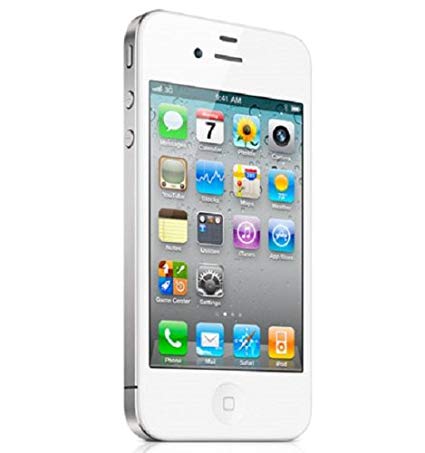
No, there’s lots of room for ergonomic improvement within the constraints of the iPhone’s small size and now, with chief designer Jony Ive no longer with the company, I expect that ergonomics will improve fast. Ive confused svelte with easy to use and his obsession with light weight and looks resulted in devices increasingly hard to hold and with mediocre battery life. A minuscule increase in thickness in the iPhone 11 fixed the battery life issue for good – good for a day of really hard use with ease – and I expect that the iPhone 12 will revert to the square sides design of the magnificent iPhone 4.


The iPhone 4 of 2011.

Aperture wheel? Not needed, as each image is stored with a depth map, allowing depth of field to be adjusted in post processing. Shutter speed wheel? Nah. With OIS shutter speeds don’t matter a whole lot and in action images burst sequences allow the best image to be easily chosen. Point of best exposure? Just touch the screen. So after much use of cameras in the iPhone I am coming around to concluding that the desire for physical controls is so much refusal to adapt and change. All that’s needed is a carcass design which allows this slippery-as-an-eel device to be held with solid purchase for the fingers. You know, like that iPhone of a decade ago.

Plus who wants a stand alone device robbed of all the functionality of the regular iPhone?

P.S. Apple – a longer fourth lens would be nice!