Yearly Archives: 2006

On speed

Not enough light? Just crank up the ISO!

I was snapping pictures at my son’s fourth birthday party the other day and rather than use an intrusive flash, I though “Why not just crank up the ISO on the Canon EOS 5D and see what happens?”

So I set the speed to ISO 1600 and let the IS lens do it’s thing, taking pictures at the f/4 maximum aperture with the camera setting the shutter as low as 1/8th second. The only duds were where the subject moved. The picture quality is simply breathtaking. On 35mm film I would be using a Leica with an f/1.4 lens with ISO 400 film and the grain would be obvious on an 8x enlargement. With these digital snaps, 13x enlargements are grain free, pores clearly visible.

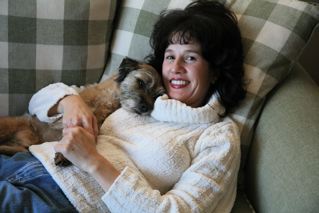
When all was said and done I reset the ISO back to 650 and snapped this image of my exhausted wife, Elenia, with Bertie the Border Terrier. There is something amazing going on here.

In this picture of my wife, in the 13″ x 19″ print the details in the window are clearly visible in the reflections on her rather gorgeous American Teeth. At ISO 650. Hand held by window light.

Advertising hoarding seen on the 101 freeway in Silicon Valley, California, with a picture of the Canon EOS 350 digital camera: “Film? History.” Yes indeed.

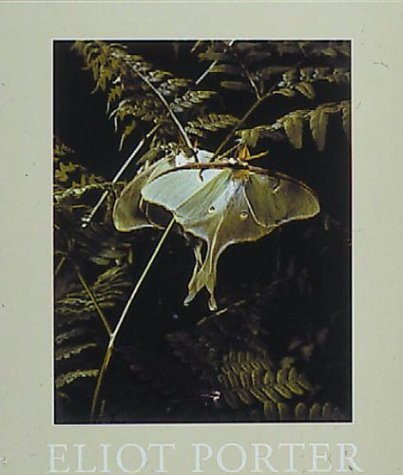
Eliot Porter

The Color of Wildness – book review


Click the image for Amazon – I get no reward if you do that.

Porter’s work changed how we look at the outdoors, moving away from the mundane, overrated monochromes of that adept darkroom manipulator Ansel Adams, and seeing the details in all their beauty. And yes, the emphasis in all of Porter’s work is beauty, greatly aided in this case by the well reproduced, large format pictures.

The book includes a fascinating essay by John Rohrbach explaining how Porter moved from black and white to color, despite snide asides from Adams and his set of toadies. It has long been my contention that Adams rejected color owing to his lack of ability in the medium, hiding behind the mistaken belief that if it’s monochrome, it’s Art. And it doesn’t hurt to print on fancy paper using ridiculous assortments of chemicals to emphasize the fact.

The modern version of this idiom is the growing reference by photo sellers to ‘giclee’ prints, as if association with something French must be a good thing. What they mean is that they printed on an Epson ink jet. Making a virtue out of necessity. Sounds sexy and mysterious, it has to be said.

In Porter’s own words ‘I believe that when photographers reject the significance of color, they are denying one of our most precious attributes – color vision.’

Highly recommended.

Limekiln

A very special place.

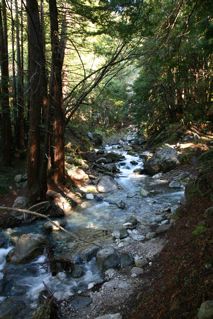
I have been visiting Limekiln State Park for some time now. It is seventy miles or so from home, up Highway One, so no excuse is needed for the drive. Roughly midway between Cambria and Carmel on the central California coast, it offers magnificent ancient redwoods and waterfalls galore. Best of all, it’s generally deserted and though I have paid more than my fair share of California taxes, I do not feel too badly about the $6 entrance fee. It is a special place and sheer hell to photograph.

One reason is that you are simply overwhelmed by the beauty of the venue, meaning your first few trips result in lousy pictures. Then as you get to learn it you begin to appreciate the huge contrast range and begin to tackle it as best as you can. Unlike most landscape photography where the best lighting is early and late, Limekiln is best photographed between noon and 2 p.m., by which time the coastal fog has burned off and the sun is high enough in the sky to penetrate the dark forests of one hundred foot high redwoods. Then you get that magic light effect of sun dappled spots surrounded by this herd of ancient giants.

Up to now my best work there has been on 4”x5” film, which means 1-8 second exposures on my favorite Kodak Portra VC160 film with the 90mm Angulon wide angle stopped down to f/22 or smaller in the perennial quest for depth of field. That means the massive Linhof tripod has to come along with the Crown Graphic and all those film holders. Well, by the time you get there, what with lugging all that gear, it feels like the cocktail hour. Anything to stop the shakes.

So today I tried something different. No excuse was needed to try the new toy, the Canon EOS 5D, but the gear was minimalist at best. The camera, the 24-105mm lens (OK, so it’s the only one I have. I’m making virtue out of necessity here), my little alloy monopod and that wonderful Leitz ball and socket head which I seem to have been born with. Add an inexpensive quick release plate on the camera and the monopod and you have the kit I used today.

Now I’m still sticking with 6mp JPGs. Not that RAW scares me but because I’m a dumb ass. In all my excitement when I was placing the order with B&H, all those eBay medium format sale proceeds burning a hole in my pocket, I forgot to order a couple of 1gB CF cards on which to store the large 13mB RAW files. The only CF card I have at home is a 256 mB used in the Olympus C-5050Z, the one with the one hour shutter lag, so I stuck that in the 5D while waiting for the big capacity cards from B&H to arrive. Boy, UPS must just love me. In fact the gate to the estate finally gave up the ghost today from all those deliveries…. JPG gets me 47 images, RAW 13. Now 24 is about right for me, so JPG it is for now.

I’m rapidly learning that to extract maximum dynamic range from digital your exposure has to be pretty much spot on. It feels like using slide film again. Maybe 1/2 stop tolerance either way. That means sharpening my skills as I’m used to the two stop latitude of color negative film. It also means that, in Limekiln’s dark interior, I finally used the built in LCD screen on the back of the 5D to optimize exposure. At least it was dark enough to see it. Several pictures were a stop out, so I erased them on the spot (that wretched 256 mB card!) and re-exposed. Two clicks on the Info button and you get a little picture on the camera’s LCD screen with the overexposed bits flashing at you. Now is that cool or what? The working dynamic was fascinating to compare with 4”x5”. Where the latter dictates f/16 or smaller apertures, meaning seconds of exposure. I cranked up the 5D to 400 ASA (oops! ISO. That dates me!) having learned that the big sensor in the camera shows no noise at this speed. 1 1/2 stops gained. Then I shot at f/4, the maximum aperture on the 24-105mm, as the lens is simply very, very sharp at all openings. 4-5 stops gained. Then I used the IS in the lens to cut vibrations for another three stops gained. That’s some 9 stops gained over 4”x5”, meaning I was shooting at 1/30th @ f/4, aided by the monopod. And the results are critically sharp. My back does not hurt and I don’t feel a day over 50 on arriving home.
Next time you visit here I shall be messing about with RAW. Is this a steep learning curve or what?
Fix that flap

A simple workaround for the clumsy flash socket cover on the EOS 5D

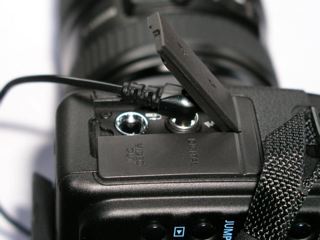
When using non-hot shoe flash, like my studio Novatron flash kit, this is how the flash cord is attached to the Canon EOS 5D body:

Can you believe this design?

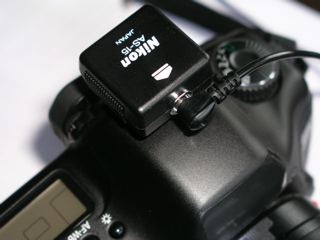
However, for less than $20, Nikon still makes a hot shoe flash adapter, the AS-15, which can be locked in the hot shoe on the camera and the flash cord is then attached to the front:

It makes hand holding a lot easier and you prolong the life of that very fragile flash socket cover. What were they thinking of?

Cecily

Not just your average queer.

I cannot remember a time when I was not aware of the multi-talented Englishman, Cecil Beaton (1904-1980). Photographer, writer, designer, he did all of these at the highest level.

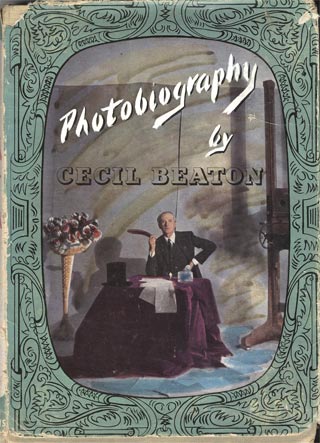
Whether it was 1964 when My Fair Lady hit the big screen (Beaton designed all the gowns) or 1971 when his landmark show An Anthology of Fashion premiered at the Victoria and Albert museum in Kensington, or 1962 when at the tender age of ten, I first read his book, Photobiography, Beaton has always held a special place in my growth as a photographer.

Central to his development was a surpassing interest in fashion, and it has to be said that the classic Vionnet, Schiaparelli and Gres costumes on display at the V&A show were breathtakingly well exhibited. The Gres and a couple of magnificent Balenciagas stick in my mind even today. How did women fit in these? Beaton, of course, had all the right connections to secure loans of these high flights of couture from their rich and famous owners. Sharing an alma mater with Churchill (Harrow School) and a Cambridge graduate, Beaton occupied the rarefied, dandified world of fashion and aesthetes from day one. Even as a boy, he experimented, using his sisters and relatives as models, with exotic lighting and backgrounds, the latter of his own creation as often as not.

And before you dismiss him as just another pansy in a cultural subset seemingly dominated by them, take a look at his pictures of war torn London and you will see the work of a great, tough photographer, unafraid to risk life and limb. How can one look at his pictures of the ruins of St. Paul’s even today, and not feel hatred towards the German Master Race?

None of this is to deny that Beaton came in for his fair share of ridicule during a long life. His epicene manner did not help. In 1971 David Bailey made a vicious television documentary named Beaton by Bailey, where Beaton comes over as nothing so much as a tired old fag, none of this helped by Bailey’s reference to him as Cecily in a newspaper interview of the time. Not for nothing was this hatchet job dubbed ‘Beaton by Bailey’ soon after its showing.

Then there was the ridiculous ‘love affair’ with Greta Garbo. A homosexual and a lesbian. Straight out of the Tchaikovsky playbook and just about as successful. Add accusations of being a relentless self publicist and publicity hound – how else does one get known for heaven’s sake? – and you might view the man with faint ridicule. Yet just one look at the Ascot scene in My Fair Lady or any one of hundreds of his great photographs of royalty and fashion (no confusing those two!) and you see the work of a great and original artist.

Hunt down some of his work. It’s worth it.