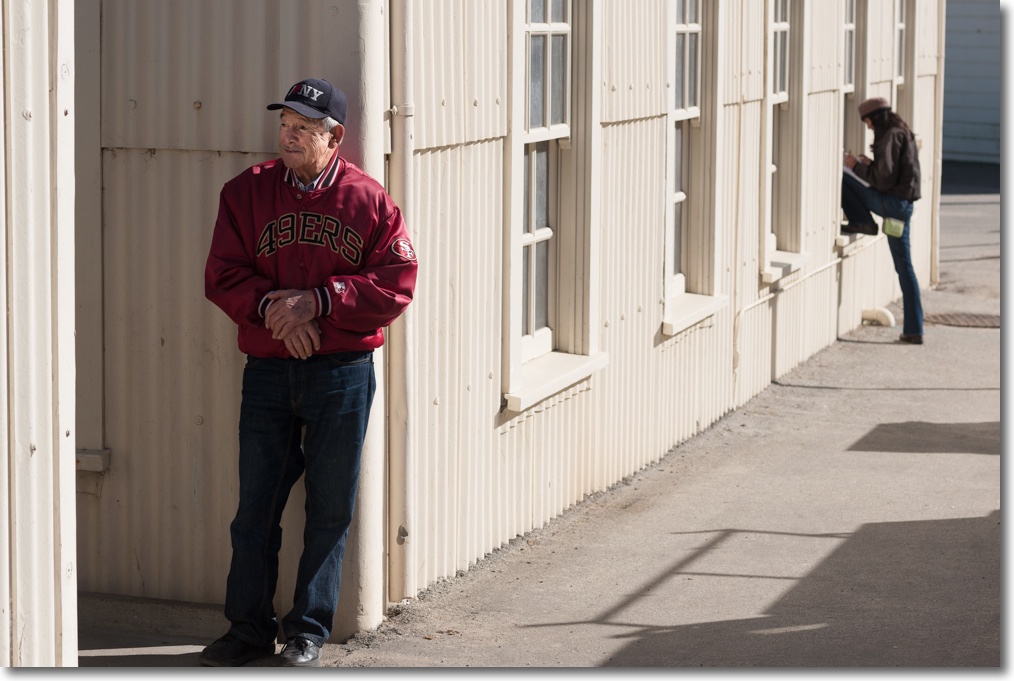
In the Marina District.
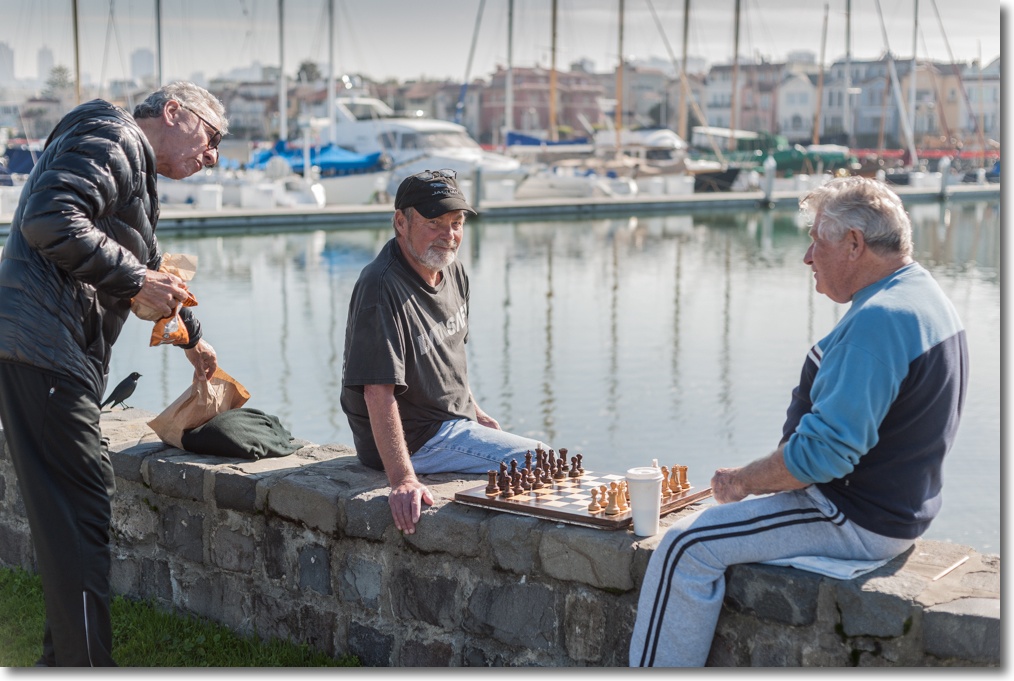
Nikon D3x, 50mm f/1.4 pre-Ai Nikkor at f/2.8.
Looks like Nikkor MF beats Sigma AF into a cocked hat:
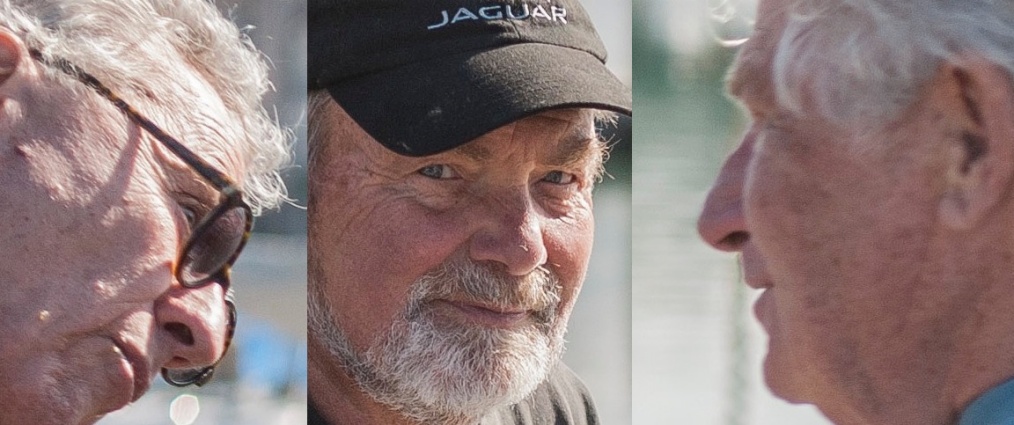
In the Marina District.
Nikon D3x, 50mm f/1.4 pre-Ai Nikkor at f/2.8.
Looks like Nikkor MF beats Sigma AF into a cocked hat:
Hanging on in quiet desperation ….
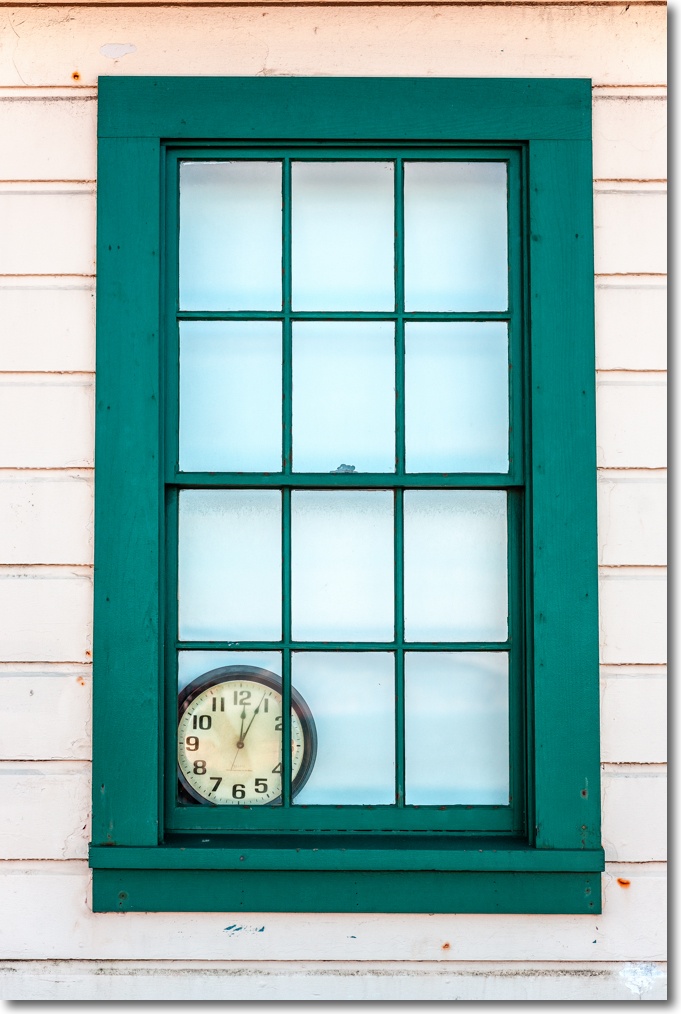

Nikon D3x, 85mm f/1.8, AF-D, Fuji Velvia 50 effect from DxO Filmpack.
Outstanding and tiny.
I wrote about the 20mm f/3.5 Nikkor Ai-S of the early 1980s a year ago. This prime lens continues to delight, not least for its diminutive size as well as its outstanding optical performance. A fraction of the vast bulk and weight of the modern 16-35mm f/4 VR zoom, it deletes VR and the zoom range for compactness with little performance sacrifice. From reading various sources on the web, it seems that Nikon has never made a prime at this focal length which was a stinker. Starting with the pre-Ai f/3.5 UD Nikkor of the 1960s (which I would love to own as its size will balance nicely on the bigger bodies), the Ai f/4 of the 1970s, through to my f/3.5 (mine is Ai-S, earlier ones are Ai) and the even later Ai-S f/2.8, each has a fine reputation. The f/3.5 and f/4 versions remove any excuse for taking it with you, as size and weight are barely noticeable. I use no lens hood, just a UV protective filter.
When I set out for San Francisco’s gorgeous Presidio National Park the other day – the park runs from the foot of the Golden Gate Bridge to the spectacular old mansions of Pacific Heights to the south – I took my ‘around the world’ outfit consisting of one body and but three prime lenses – the 20/3.5 Ai-S, 35/2 pre-Ai and the splendid 85/1.8 AF-D, plastic barrel notwithstanding. The 20mm saw its share of action.
First, inside the beautifully restored Inn at the Presidio bed and breakfast Hotel. Yes, you can stay there but weekend reservations must be made a year in advance! The government, as usual, has no sense of supply and demand. Triple the price and reservations would equal demand.
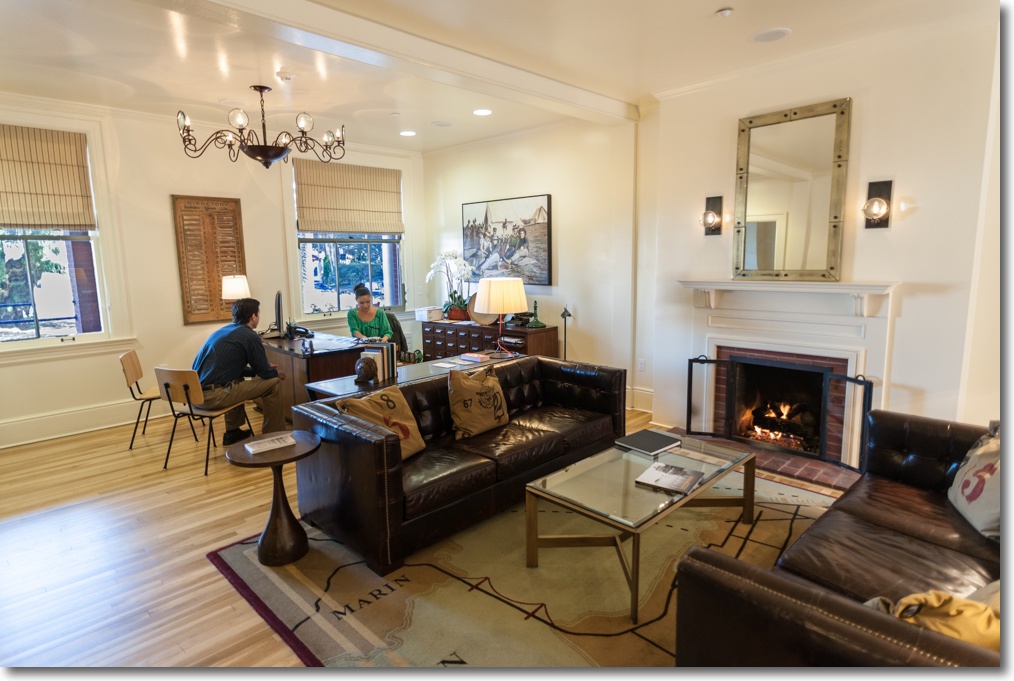
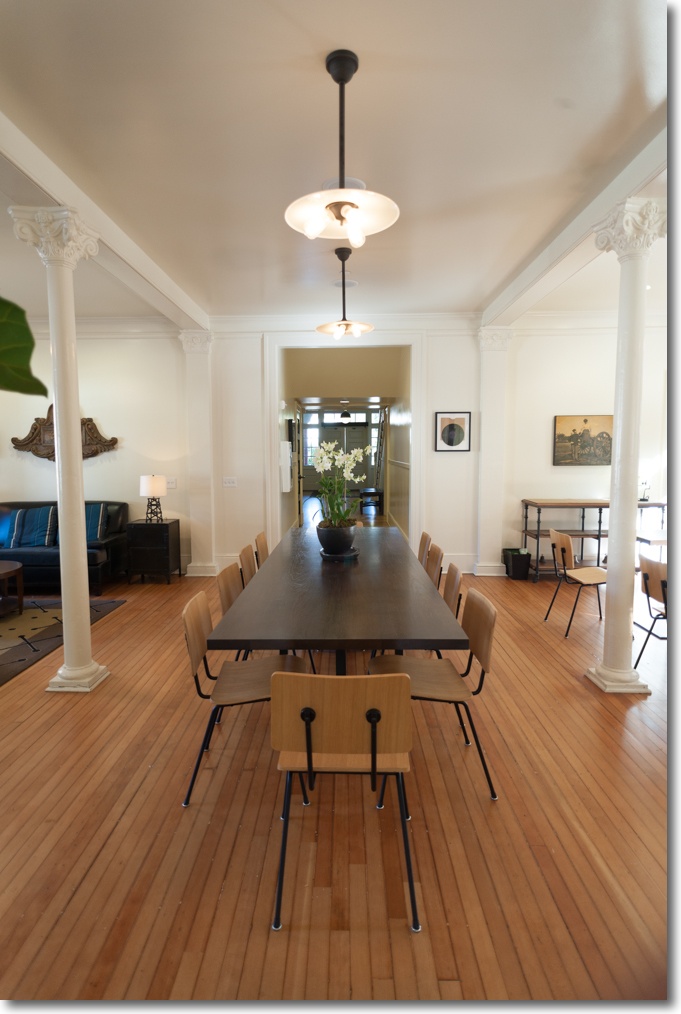
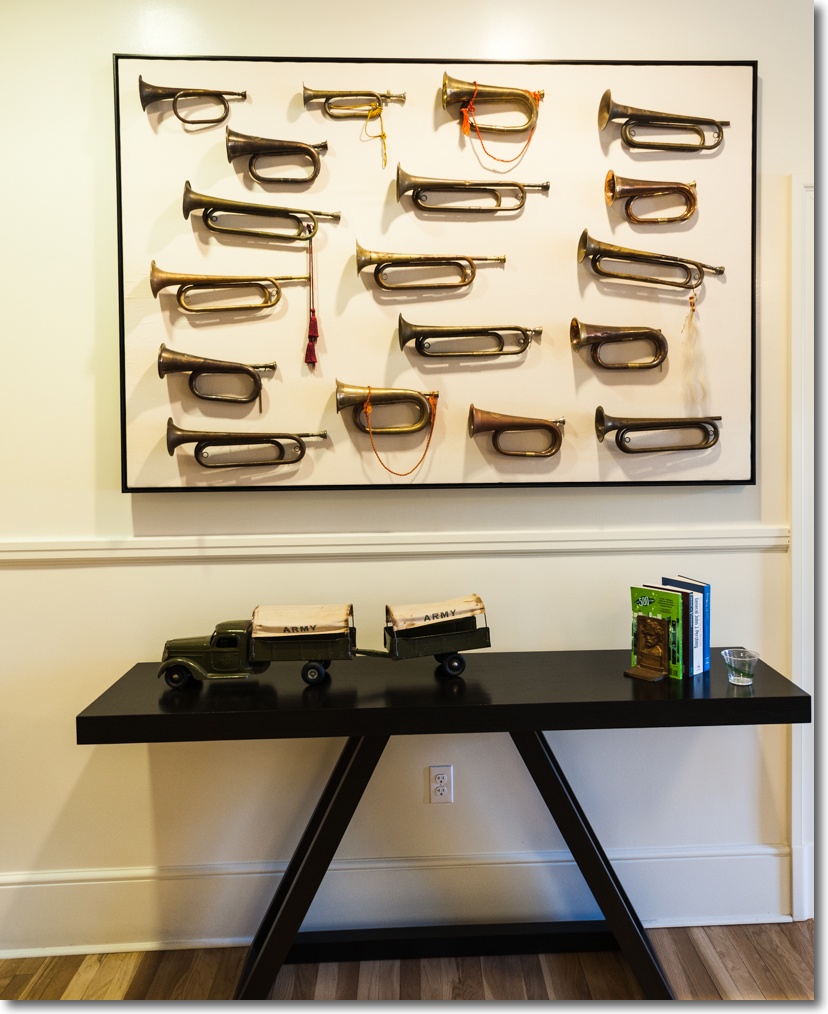
Of the last snap a friend, and a former member of the US Coastguard, writes: “Arrgh….. I’ve awakened to reveille too many times 🙂 Fortunately, it was accompanied by a full breakfast in the mess hall or galley. (Our national debt is partly due to my consumption of lobster, steak, and cheesecake.)”
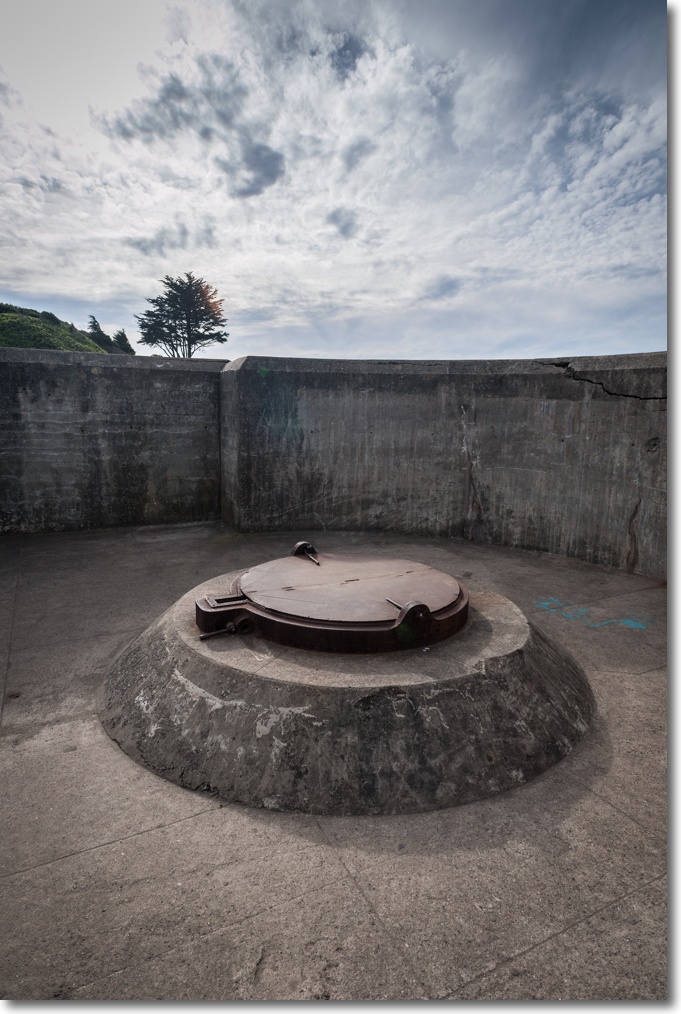
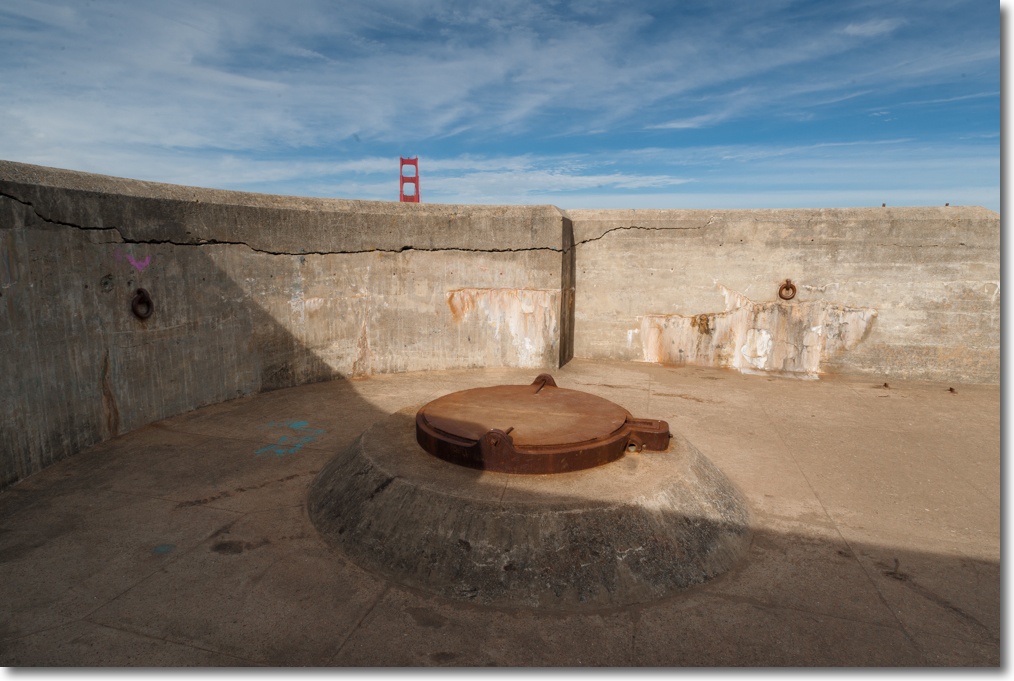
Making my way down to the Golden Gate Overlook I meandered around the old gun emplacements, set in feet of concrete. Guns gave way to rockets which gave way to nothing as satellites took over, but the concrete remains in place:
Finally, wandering around Crissy Field, these two kids burst out of the swimming pool building and it was all I could do to get the snap. No chance to get closer:
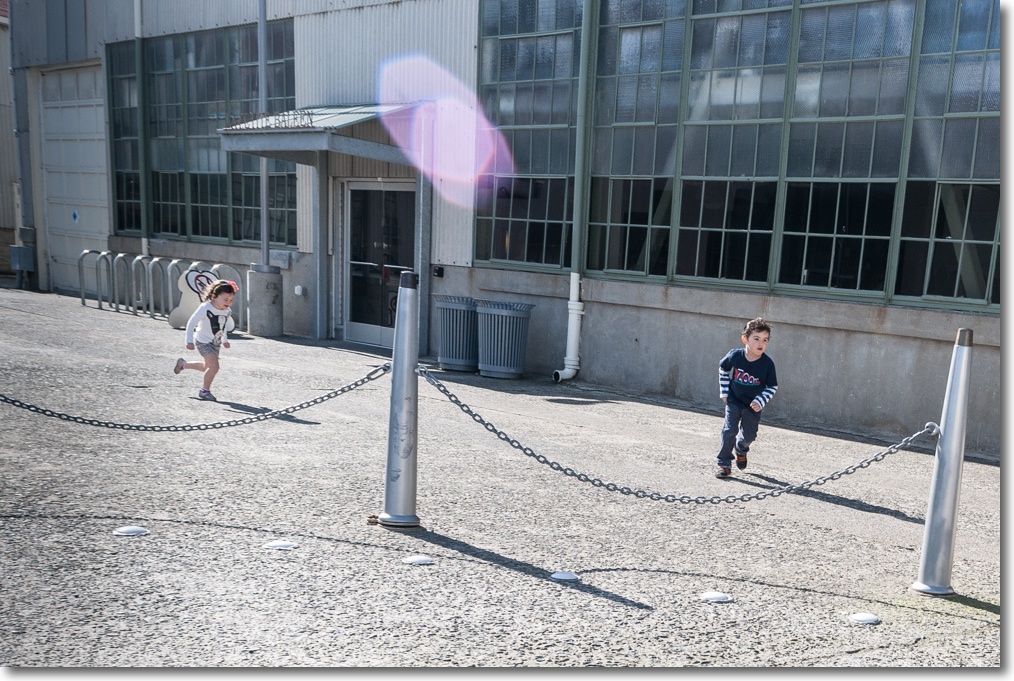
High pixel count sensors are not just for big prints – here’s the sectional enlargement:
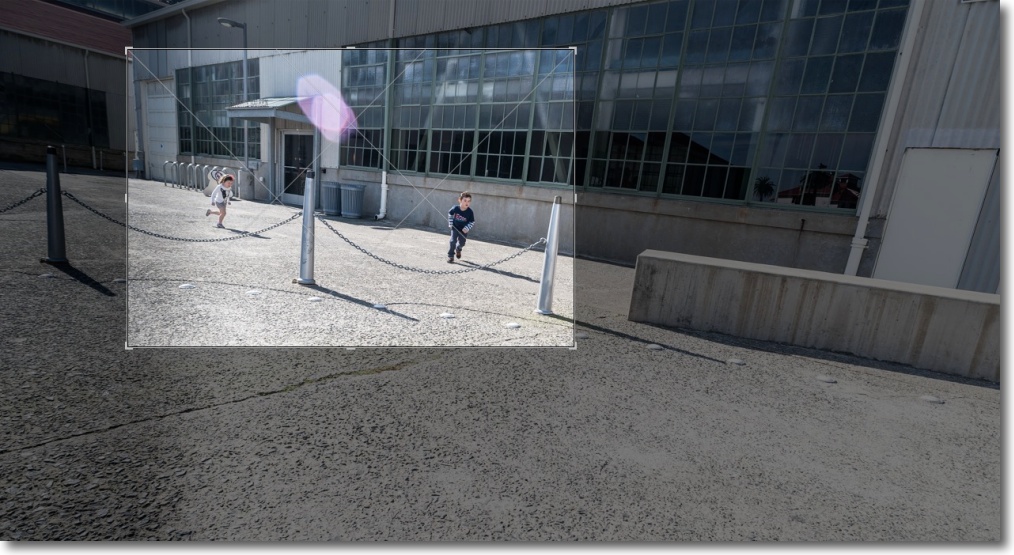
Sure, the old 20mm flares a bit into the sun but the effect works well here, so I have left the flare spots untouched.
So if dragging around pounds of glass is not your thing, check out these old MF primes. At 20mm it’s not like you have to do a lot of focusing. Nice used f/4 and f/3.5 versions can be found for $225, though prices are creeping up as word gets out how stellar these older MF Nikkors are. For some reason the older f/4 version seems to sell more typically for $300. All four versions can be easily chipped, the $29 CPU adding a host of functionality (matrix metering, proper EXIF data recording, automatic invocation of the lens correction profile, etc.) and requiring only a dab of epoxy to keep it in place. What little ails the f/3.5 version is easily corrected using my lens correction profile. That profile corrects the lens’s ‘moustache’ non-spherical distortion of straight lines at the edges, something Photoshop cannot do. Nice for architectural work. f/5.6-f/11 is the sweet spot for the f/3.5 optic, with tack-sharp 24″ prints the order of the day.
All snapped on the D3x, 20mm f/3.5 Ai-S MF Nikkor.
Generations apart.
It’s the prospect of images like this which always gives me a thrill when setting out with a camera.
Nikon D3x, 85mm f/1.8 AF-D at f/5.6.
Gorgeous neo-Dutch work.
A reader put me onto the work of still life photographer Paulette Tavormina. Much of her best work is done in the style of the great Dutch painters of still lives who originated the movement in the late-16th Century.
Here’s a typical Dutch piece, oil on copper:
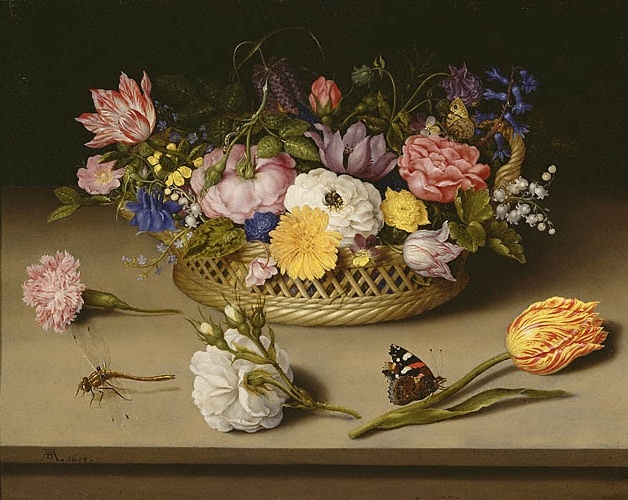
And here’s a photograph by Ms. Tavormina:
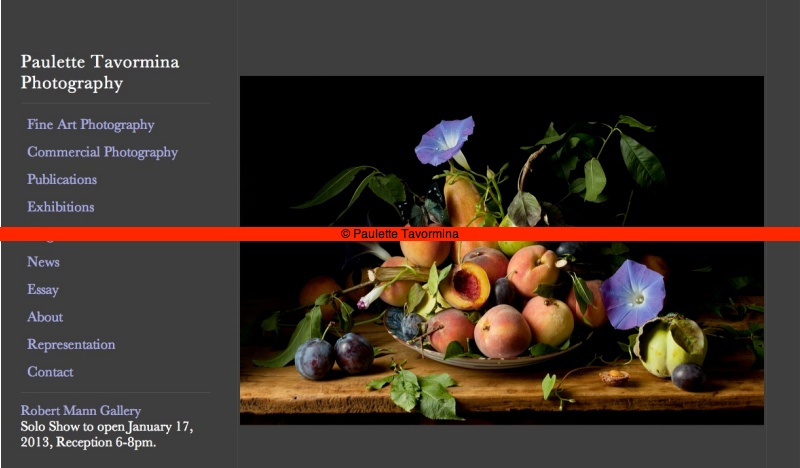
An avid collector of butterflies, shells and ephemera, Tavormina makes a living from her still lives and it’s easy to see why. Her work is quite exceptional and gorgeous to look at. Take some time to look around on her elegant blog. And thank you Peter S. for the lead.