Category Archives: Photographers

Once Upon a Time in the West

A Western masterpiece.

It took an Italian to make the greatest Western movie of all time. When Sergio Leone came to make Once Upon a Time in the West (1968) he already had three of the finest Westerns under his belt – The Man with No Name trilogy with Clint Eastwood. But for this, his final effort in the genre, he set out to surpass himself. He did so, in spades.

Forget Shane, forget The Searchers, forget High Noon, forget The Man Who Shot Liberty Valance, forget The Long Riders.

Once Upon a Time in the West is in a class of One.

What makes this masterpiece so special? A great director, of course, who has an innate grasp of what the railroad meant to America’s growth in the nineteenth century and an organic sense of the great expanses of the west. A script which is direct, simple and easy to follow. The finest actors – you cannot make a great movie with pikers. Charles Bronson, Henry Fonda, Claudia Cardinale and Jason Robards. You can’t improve on that. Superb cinematography by Tonino Delli Colli. But the glue that holds the whole project together and escalates it to greatness is Ennio Morricone’s extraordinary score, in turns lush, comical, poignant, tragic and triumphal.

At almost three hours in length this is not a movie for modern attention spans. Nor is it one for poky screens. With a 100″ screen you begin to understand what Leone demands – that you must be totally immersed in the picture, at one with the landscape of Monument Valley and the West. But you really need to see this in a revival house on something 250″ or more in glorious widescreen, which fits the infinite vistas of the west just so. And if you have never been through Monument Valley in Utah and Arizona, you must go. Your appreciation of the vastness of the west will redound to your enjoyment of the movie.

Not only is the whole an immersive, captivating experience, there are individual pieces of magic which, even out of context, are memorable like in no other Western. The opening 14 minute sequence, with barely a word spoken, culminates in an explosive shoot out. Yet during those fourteen minutes you are treated to an orgy of sound – wind, creaking floorboards, rusty signs swaying, the ticker tape machine, the fabulous sequence of Jack Elam with the fly – it’s all there. And it is magic.

Here are some favorite vignettes:
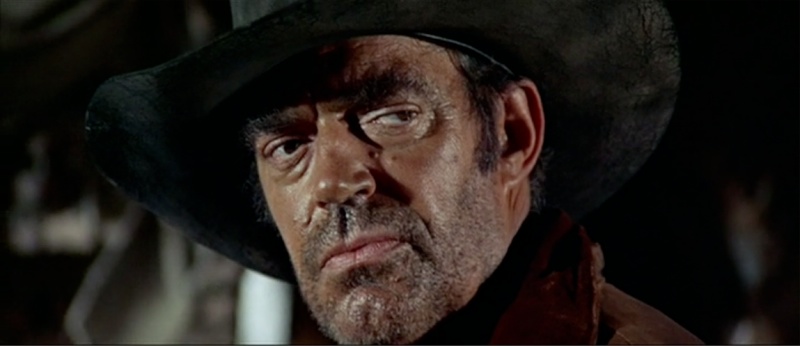
Jack Elam, awaiting Bronson’s train.
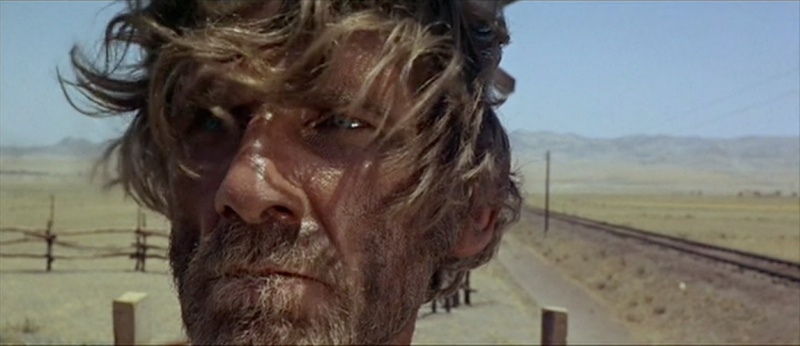
Al Mulock in an extraordinary ultra wide close-up, awaits Bronson’s train.
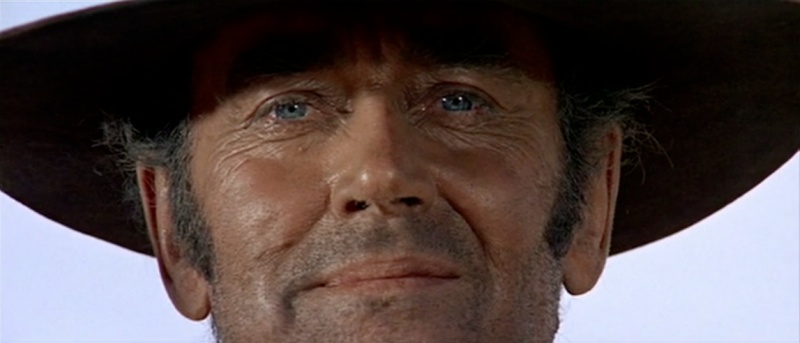
A sadistic Henry Fonda about to kill the McBain child in cold blood.

This was Fonda’s only bad guy rôle, and his greatest by far. The mix of sadism and delight in what he is about to do in the original is palpable and chilling.

When Cardinale’s character arrives in Flagstone, the railroad town in Monument Valley, there follows what is simply the greatest soaring pan shot in cinema history. Not even Hitchcock comes close to anything like this and only Kubrick’s opening Steadicam work in ‘The Shining’ even compares.

She enters the station house:
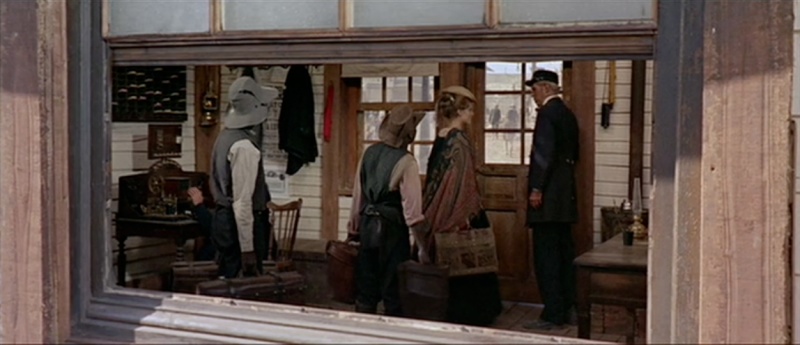
The camera then rises in the air and soars over the building , showing her exiting the other side:
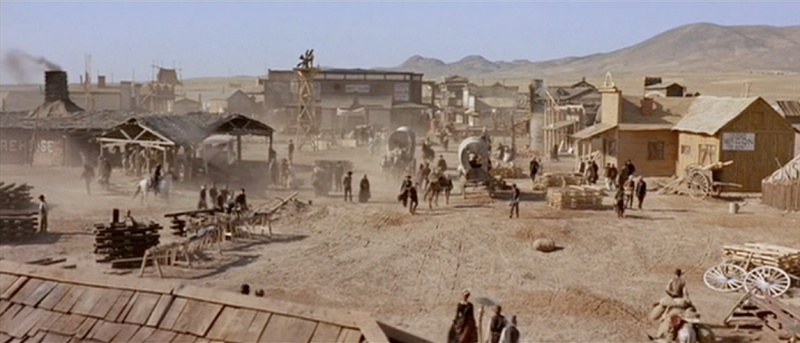
Morricone’s music soars with the camera and there, in one 10 second sequence, you have a perfect encapsulation of what America’s nineteenth century growth was all about. The effect simply cannot be conveyed in a static web page.
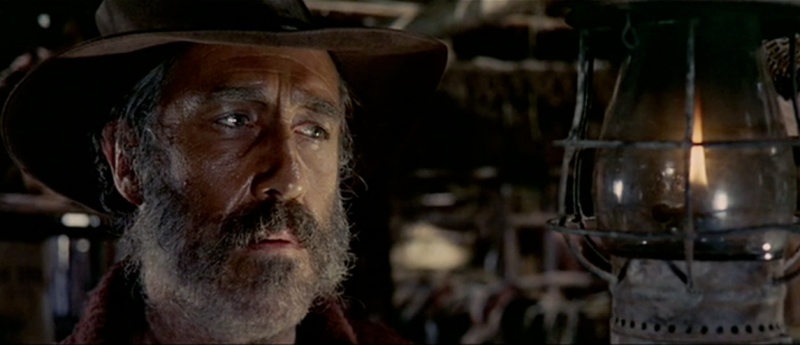
Jason Robards’s lovable bandit rogue provides comic relief, suitably aided by Morricone’s score.
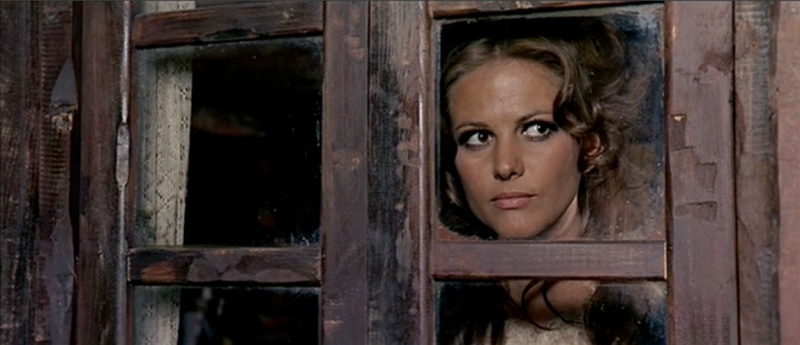
There are many stunning still photographs, like this one of Claudia Cardinale.

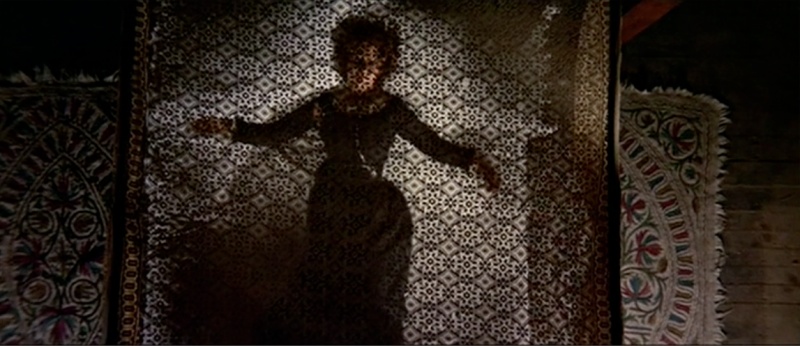
Perhaps the most memorable still is of Cardinale lying on her bed after attending her husband’s funeral. The shot, from above, views her through a black veil.
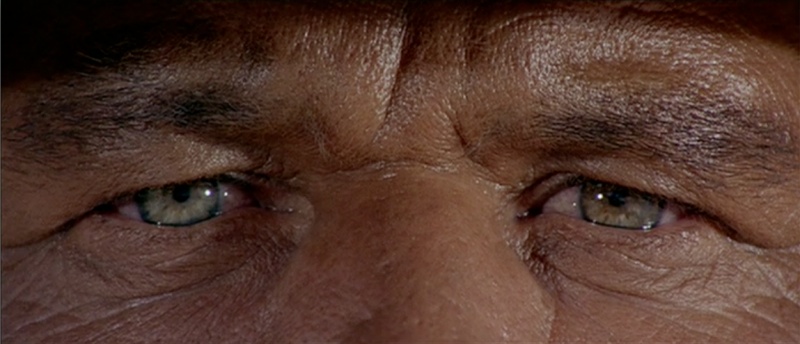
One of the most effective techniques used by Leone is the super close-up of the many craggy faces in the movie, never more effectively than with Bronson’s. On a huge screen this is quite overwhelming.
Bronson at the final shootout with Fonda.

An orgy of pictures, sound, emotions, the triumph of right over wrong, this is any photographer’s ultimate movie.

Update February 28, 2016:

Ennio Morricone just won the Oscar for the best film score for his music to Quentin Tarantino’s ‘Hateful Eight’ at the age of 87. The oldest ever recipient of an Oscar. He should have received it 48 years earlier for ‘Once Upon a Time in the West’. Or for ‘The Good, the Bad and the Ugly’ in 1966. Or for ‘The Mission’ in 1986. Or for ‘Bugsy’ in 1991. Or …. heck, this will do fine. Just delighted for him.

Update July 5, 2020:

Ennio passed away.
The Music Teacher

A visual feast.

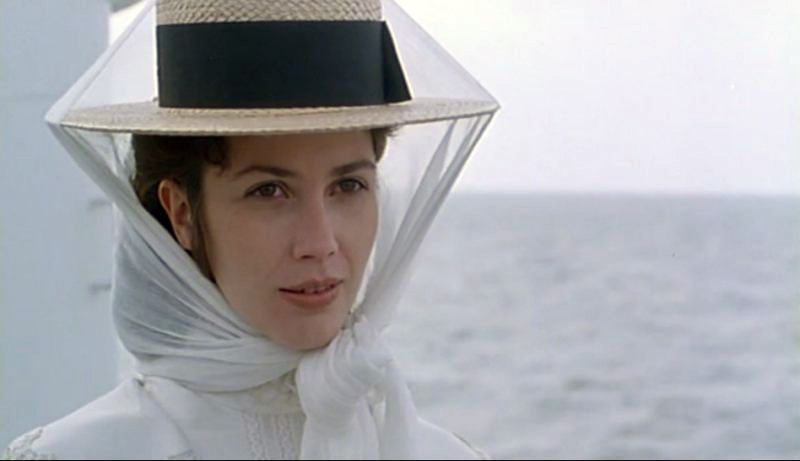
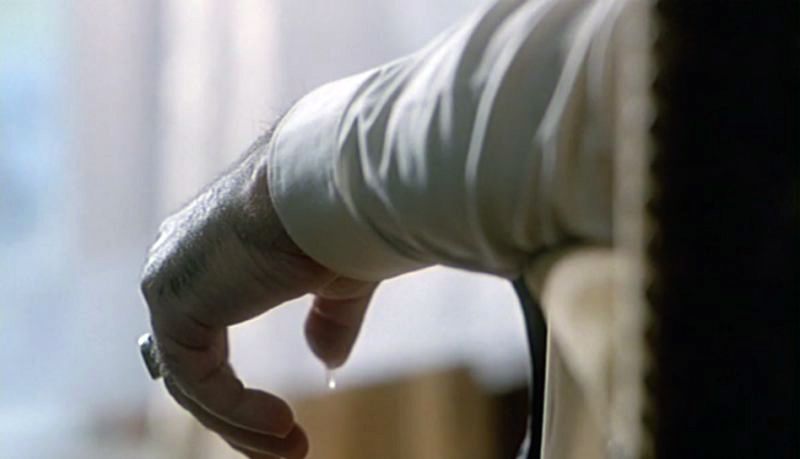
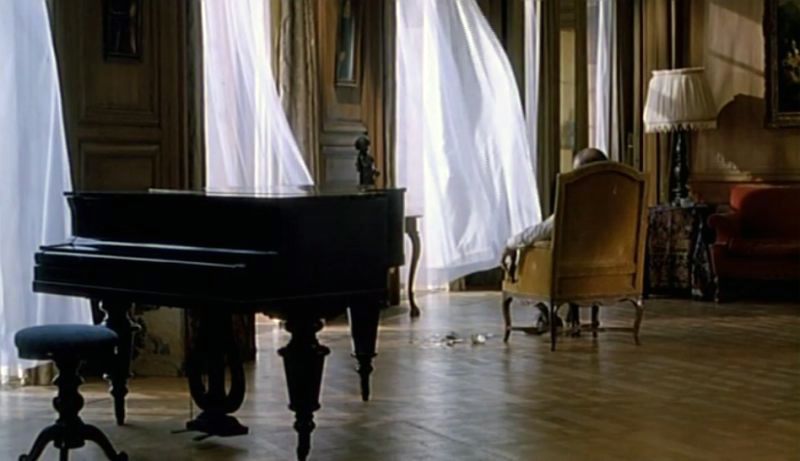
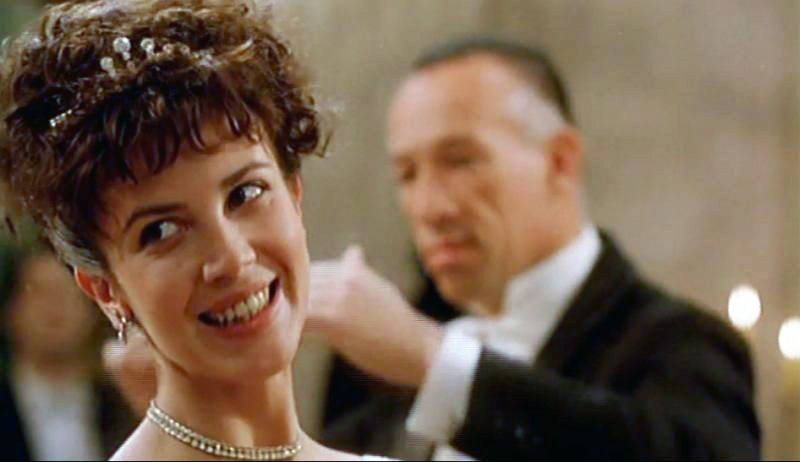
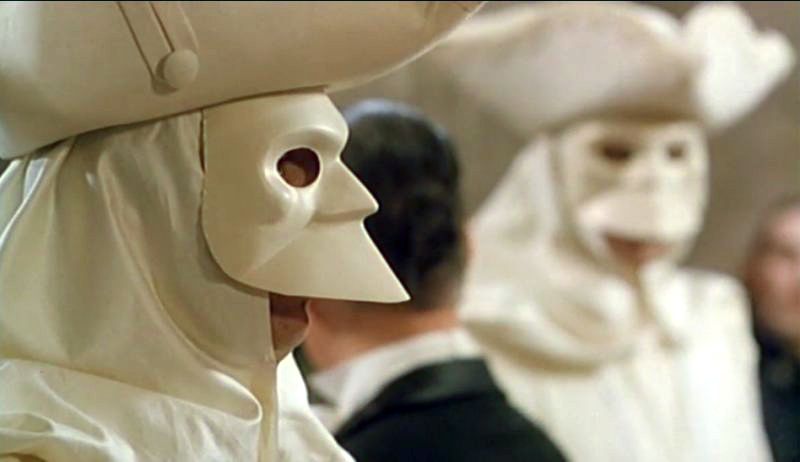
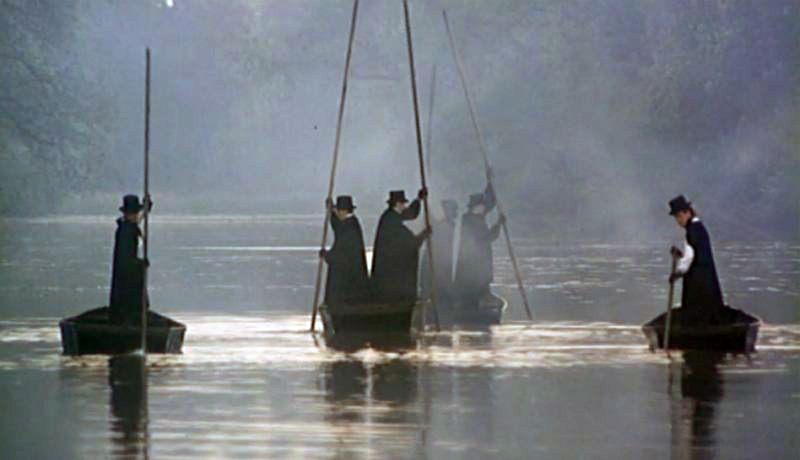
Made in 1988, the Belgian movie ‘Le Maître de Musique’ dispels the oft held belief that there is no such thing as the Belgian cinema. Directed by Gérard Corbiau it is a lush, visual masterpiece. The story of a great baritone who retires and grooms two star pupils to once again defeat an old nemesis whom he himself bested in a singing duel years ago, it is replete with image after image that any photographer will warm to.

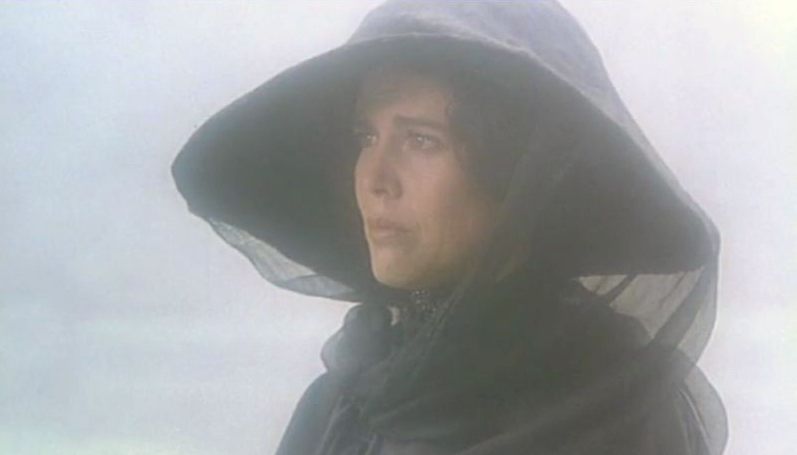
It doesn’t hurt that the whole thing is made on Fuji Film and set to Mahler, Verdi and Schubert. As befits the greatest baritone of his day, José van Dam does his own singing and superb acting, the latter understated to a degree that will never capture modern attention spans. But if there’s an overpowering reason to watch this movie it’s for the luminous beauty of Anne Roussel who has one of those faces a camera adores. An exceptionally beautiful woman, and ably supported by the darkly sensuous Sophie Fennec as van Dam’s accompanist and factotum.

The movie has long been out of print but DVD copies are available from Amazon US on a regular basis, which is where I got mine, having worn out the VHS version! It’s in French with available English subtitles, but you really don’t need to understand the words to enjoy the movie.

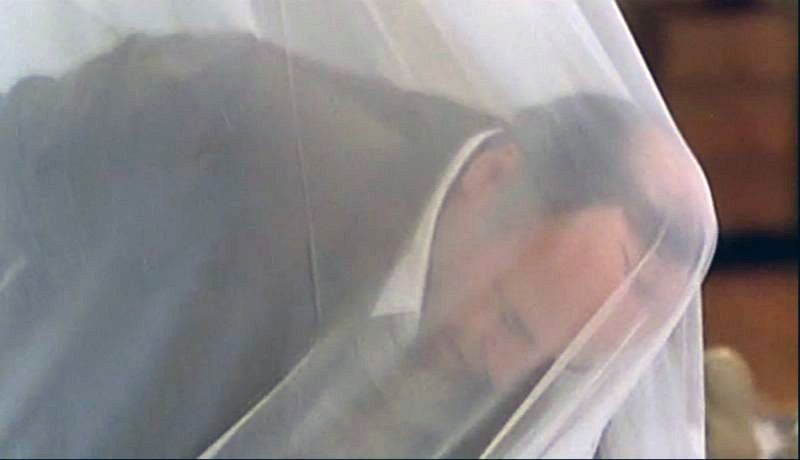
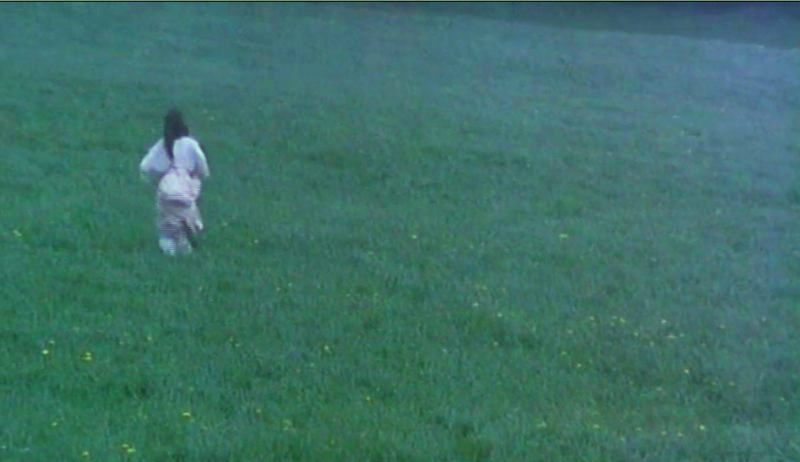
The cocoon image, the second below, is a straight take on the opening to Ken Russell’s expressionist masterpiece ‘Mahler‘ (1974). Also unavailable. What is it with US movie studios? Those familiar with Andrew Wyeth’s painting ‘Christina’s World’ (1948) will see it in the third picture below. And if ever photographs could be styled ‘Mahlerian’ well, the last two have it in spades.

Best of all, if you are into Mahler and Verdi, you are in for a real treat.

The Alien

The boy can see.

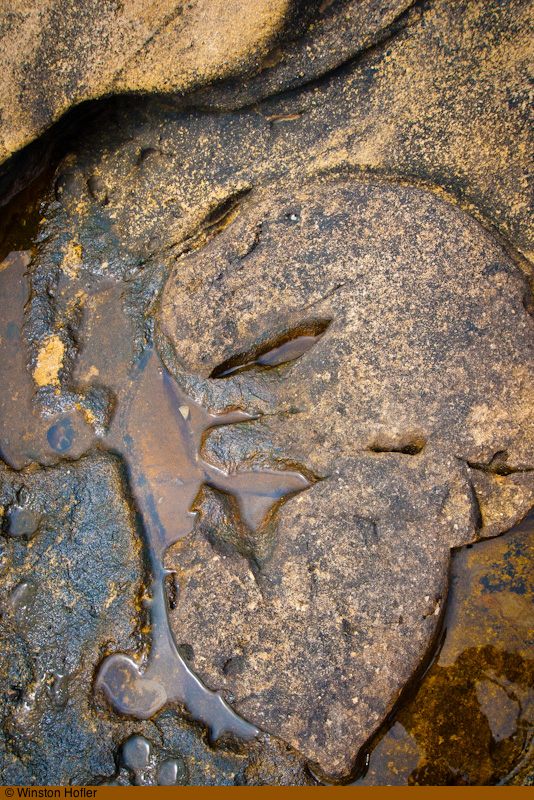
Responding to excited squeals of “Daddy! Daddy! Look, look! It’s an alien” I did the only reasonable thing possible and handed our 9 year old a camera.

G1, kit lens @ 17mm, 1/1000, f/5.6. Picture by Winston Hofler.

There’s no denying the boy has an eye. A large print of this now hangs on his bedroom wall.

Snapped at Bean Hollow beach on the way down to Monterey, where Winnie rejoiced in once again petting the sting rays at the Aquarium.

Haeber and his team in Detroit

Urbex at its finest.

I suspect a key reason that urban exploration photography so appeals to me is that you see the recent past through the mantle of a veil of decay and decrepitude. What was once vibrant and magnificent is now sad and rotted. The decay somehow heightens the sense of a locations magnificent past. It’s also no surprise that probably the best urbex work is being done in America for no other nation places so little value on the appearance of its land. A car is old? Dump it in the field. A factory closed? Place barbed wire around it and let it rot. Cheaper than flattening it. Seldom, it seems, is any attempt made to raze and redevelop the land which created so much wealth back then.

Jonathan Haeber, that prince of urbex artists, took his team to McLouth Steel in crumbling Detroit. He relates that McLouth was once one of America’s largest steel producers. The photographs accompanying his article are outstanding and very worthy of your time. Click his magnificently lit picture below to see more.

Click the picture for Haeber’s documentation of McLouth Steel.

If you are interested in American industrial history, there’s no finer way of getting a snapshot than the chart put out by Financial Graph & Art of the changes in the Dow Jones Industrial Average of common stocks from its inception in 1896, when it numbered 20 stocks. Today it’s 30. You don’t have to be a money management maven to appreciate what this chart shows. For example, in 1896, fully 50% of the Dow was comprised of metal, mining and rail, with agriculture the runner up at 25%. America made things. Finance (which produces nothing) and retail (which has us spending what we do not have) were mere slivers. Today? Finance – one third. Retail – one third. Everything else – the remainder. America borrows to buy garbage. The chart also shows how very few businesses survive for long and just how wild some of the market’s swings have been through our never ending booms and busts. I gaze at this chart often and never fail to learn something new. Just like Haeber’s photographs.

Lennart Nilsson

A Swedish master.

Lennart Nilsson (b 1922) is best known for his endoscopic photographs of the early stages of development of a human fetus. They remain as startling today as when he took them for LIFE in 1965.

Click the picture for his web site. The pictures are pure magic.

Click the picture.