Category Archives: Photographers

Edwin Smith

As good as they get

Edwin Smith (1912-71) was a photographer of the British heritage. That sounds pretty dry, but once you have seen the work of this architect-painter-photographer, you realize that he really is as good as they get.

His wonderful vision, perfect technique and aesthetic sensibilities are perfectly displayed in this book, published by Merrell and the Royal Institute of British Architects, with monochrome reproductions of the very highest quality.

If high aesthetic sense is your thing, executed at an incomparable level of excellence, this book is for you.

Another Haeber special

Superb and original work.

I make no secret of the fact that I dislike authority in nearly all its guises, for so much of it is mindless. So when it says “Don’t Walk on the Grass” I generally make a point of doing just that.

Jonathan Haeber is a kindred spirit, but one much more daring. I last referred to his work when he showed pictures of the awful Jackling Mansion – Steve Jobs’s property in Woodside, CA, which he is having such difficulty tearing down owing to misplaced envirolooney thinking, and possibly by local councillors looking for a kickback. C’mon, let’s get real here.

This time, with his pictures clandestinely snapped from within the abandoned PacBell building in San Francisco, Haeber has outdone himself. With friends he gained access to the innards of this neo-Gothic masterpiece through a manhole cover in the dead of night, and the results speak for themselves.

Click the picture for more:


The PacBell building at night

Our world needs more Haebers to restore the ‘can do’ American spirit and to deny creeping authoritarianism. Well done, sir.

The Seeberger brothers

A fascinating chronicle

When it comes to fashion – the great years of fashion through 1960, that is – the interested student can indulge in one stop shopping with no fear of missing anything of importance. And that one stop is Paris. Throughout the first sixty years of the twentieth century the domination of this creative center of the world was all you needed to know about, a natural magnet for the best and the most innovative in the world of women’s clothing and accessories. Poiret, Vionnet, Chanel, Gres, Balenciaga, Dior – the list is a Who’s Who of the nucleus of clothing design.

Naturally, the greatest photographers of the age gravitated to this force of nature, and it certainly didn’t hurt that their city of choice was the most beautiful the western world had to offer. It remains so to this day. While the British were busy trying to hold on to a fading empire and the Germans were busy killing everyone, the French devoted their efforts to what the French do best. Great clothes, great design and great food. A casual visitor to the City of Light need only glance at the delicious filigree cast iron entrance to any Metro station and he will know that there’s something special in the air.

So the best photographers either ended up in Paris or were to be found photographing Parisian fashion for Vogue and Harper’s. If you liked high-end kitsch Baron de Meyer and Beaton were your first port of call. High style romantics gravitated to Hoyningen-Huene. Ascetics to Penn. And the cubist set settled on Horst P. Horst. That was the top end. But Vogue needed to fill its burgeoning page count with more than any one of these exemplars of taste and quality could produce so they went to the journeymen of the fashion photography world, the Seeberger brothers. Unlike the Penns et al of the photo world the Seebergers never made it into society or the salons. They were tradesmen photographers and traded quantity, in the guise of snaps of the latest fashions, for quality. And the magazines bought their work throughout the period.

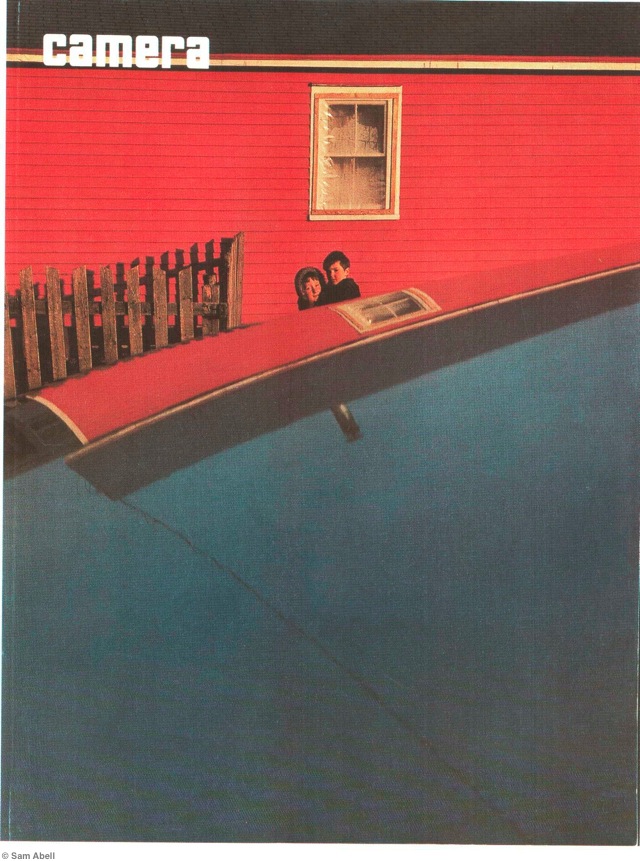
This book is a fascinating look not only at the fashions of the era but also at the gargantuan output of the three brothers – you cannot distinguish the work of one from that of the others. It’s production line quality. Invariably taken at the racecourses of Paris, where the smart set liked to show off its finery, the pictures show both the rich and the ‘plants’ (models masquerading as society to better show off Chanel’s latest) in a functional way. The emphasis is totally on the clothes, gowns often photographed from behind to show off the details. If there’s a sea change in photographic style here, it occurs in 1935 when the brothers migrated from 5″ x 7″ glass plate ‘portable cameras’ (the book’s words, not mine – tripods were forbidden at racecourses, so these monsters had to be hand held!) to the Rolleiflex. Depth of field suddenly changes from isolated to contextual, and for the better. You can make out the setting without being distracted by it, whereas in the earlier plate camera pictures, backgrounds are completely blurred, often to distraction. Witness the pre-Rollei cover picture, above.

This is a lovely book, with a compelling, well informed narrative. In 1970 the Seebergers’ collection passed to the Bibliothèque Nationale de France where, mercifully, it safely remains to this day.

The Race Track improved

Dykinga was good. Edwards is better

There’s a magical place in Death Valley, Arizona and it’s called the Race Track playa.

Jack Dykinga illustrated it in his magnificent book which I reviewed a couple of years ago. Simply stated, stones of substantial mass move, magically, yet no one has ever seen this occur. I choose not to dwell on the reasons. Some things are simply magic. The Race Track is one of those.

Why not leave it there?

Well, because a fine photographer whose work I have been privileged to mention here on occasion, has done it better.

Rod Edwards, a UK professional, is that photographer and he has taken Dykinga’s work to a higher level in his rendition of that phenomenal place in Death Valley.

I have been unsuccessful in monetizing my QTVRs, much as I have tried. I would take my iBook around various wineries in central California and show them to proprietors, only to be met with blank stares. Indeed, when I had my one man show I considered including a couple of big screen TVs to better show them off, sound effects and all, but gave up on the idea based on those self same stares.

However, to Edwards’s credit, he has persevered and has been justly rewarded with a commission from Britain’s National Trust – an institution which you can best learn about from the wonderful writings of James Lees-Milne, a magnificent conservator and writer about the early years of the NT. Simply stated, the National Trust is charged with the preservation of the UK’s architectural and cultural heritage – a rare good use of taxpayer monies.

No need to dwell further on the subject – just click on the picture below.


Rod Edwards’s Race Track

Update August 27, 2014: The mystery of the moving stones has finally been solved and you can read all about it here.

Contacts

A forgotten technique

One of the more fun aspects of the drudge that used to be darkroom work was making a contact sheet of your 35mm film roll. Arraying 36 snaps on one sheet of 8″ x 10″ paper made for easy selection of the winners.

It’s a forgotten technique as now we bang away, a million snaps a minute, and then examine everything on a computer screen. Every bit as valid but far less contemplative. And easier to miss a good one amongst all the noise.

Here’s a contact sheet from the great humorist with a Leica, Elliott Erwitt:

And here’s the one he chose:

You can enjoy more of this sort of great learning experience by subscribing to the Patek Philippe magazine.