Category Archives: Photographers

Competition lives

And it helps improve the breed, as ever

When I read the other day that Mamiya was quitting the photography business, having blown not a few Yen in developing its medium format digital camera, I confess my first reaction was unease. While Mamiya may have been guilty of poor market analysis – Canon’s 35mm format sensors being the equal of just about anything medium format offers at a fraction of the price – it is never a good thing to have less choice.

Take a look at today’s monopolists and their uniformly execrable products and customer service – Microsoft’s operating system, Adobe’s Photoshop, Intuit’s Quicken, the handful of oligopolistic US defense manufacturers, the US Government (the worst monopolist of all) – and you get the idea.

However, I thought a more analytical approach might make better sense of Mamiya’s demise, so I dug out the old 1976 Wallace Heaton Blue Book, the photography equipment catalog published by a famous London camera store, and did some figuring.

Here were your choices some thirty years ago:

First, 35mm SLRs: Nikon, Canon, Pentax, Leica, Rollei, Zodel (Zodel?), Olympus, Minolta, Miranda, Yasicha, Petriflex, Praktica, Mamiya and Exakta were listed in that order.

35mm rangefinder cameras included Leica, Minolta, Yasicha, Canon, Agfa, Dignette (what?), Nikon, Rollei, Olympus and Konica.

No digital cameras, of course.

Seventeen manufacturers all told.

Then I went to the B&H web site to see what’s out there today.

SLR film cameras: Canon, Contax (now defunct), KonicaMinolta (kaput), Leica, Nikon, Pentax, Phoenix, Sigma, Vivitar and Voigtlander.

35mm film cameras: Canon, Contax (now defunct), Fantasea, Goko, Kalimar, KonicaMinolta (now defunct), Leica, Lomographic, Nikon, Olympus, Pentax, Rollei and Zeiss.

Digital cameras: Bushnell, Canon, Casio, Epson, Fuji, HP, Kodak, KonicaMinolta (gone), Mamiya (gone), Nikon, Olympus, Panasonic, Pentax, Rollei, Samsung, Sanyo and Sony.

Make that twenty four active manufacturers, or some 40% more than there were thirty years ago. And many of these are consumer electronics companies first (Canon, Casio, Epson, Fuji, HP, Panasonic, Samsung, Sanyo and Sony), and camera makers a distant second.

So while Canon could do with some serious full frame sensor competition, the capitalist world as seen through the metric of choice of photo gear seems to be ticking along just fine. Those that fell by the wayside, KonicaMinolta, Mamiya, Miranda etc. just failed to make products enough people wanted, which is as it should be.

Look, the alternative is GM – a company making products no one wants with its hand out to the government, aka the taxpayer’s pocket. I prefer a good bankruptcy myself.
Boxers

Book review

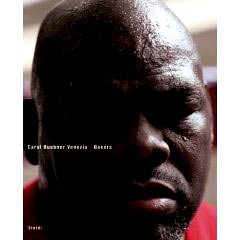
I confess that I approached ‘Boxers’ by Carol Huebner Venezia (an American photographer, the exotic name notwithstanding) with great anticipation. The publicity talked of how the photographer had got inside the psyche of the professionals in Gleason’s Gym in Brooklyn where many famous fighters had trained. Further, the publicists intoned, she counterbalances the tough end of the sport with pictures of fighters in Italy. I quote:

“Boxing offers those working class men who learn the sport a slim chance of realizing the American dream. But the price for social standing and above-average income is often broken bones and chronic health problems. In contrast, in Assisi, in the center of the Italian boxing world, boxing is about athletic competition and the art of the sport.”

Well, based on what I see here, she never made the remotest emotional contact with her subjects in either location. Indeed, some of the best pictures have no boxers in them – one of a young child in the ring and another of swinging sacks, or whatever you call those things, that boxers pummel. Nary a boxer in sight. Great pictures though.

Despite the high fallutin’ text, based largely in academic drivel, the woman’s inability to get inside the brains (or what’s left of them) of her subjects is mystifying. It’s not as if she didn’t try, as the pictures span over a decade.

Let me quote from the introduction just to reassure you I am not making this up:

“If we look at the group of pictures as a whole, there appears to be a clear impulse to movement both in the single photographs and as a sequence”. What? Nearly every picture in the book is stiffly posed in a pale imitation of August Sander. Sander is much lauded in the introduction let it be said, and the comparison only goes to show the photographer in a negative light.

One of the few snaps with movement is of the swinging medicine (yes, now I recall what they call them) balls in a deserted gym. Why these should be moving when there is no one in sight beats me, but it’s a neat idea, I suppose.

Here’s another Doozie from the intro:

“The objective approach of this photography avoids pathos or any explicit critique of society”.

Please.

So that’s where our higher education monies are going? To pay boobs to write claptrap like that? What a travesty. Time they got a real job and learned to write English.

Lots more of the above garbage is to be found in the introduction. No need to dwell there.

On to the pictures.

There are a scant thirty all told, one of which, the one so badly exposed that no facial details can be discerned, also appears on the cover. Not exactly what you would call value in a $30 paperback. Fully half of these are static portraits, some in what could be a studio setting, of half naked guys who, absent their gloves, could as well be construction workers. Or fit investment bankers, come to think of it. The remaining pictures are generally so irrelevant to the genre that I really wonder why the woman bothered? Maybe she liked to go to Gleason’s for the vicarious pleasure of seeing all those muscles, the camera as an excuse, but the guys in the ring clearly did not accept her as one of their own. Heck, she’s probably the wrong gender and color anyway.

I would like to say something positive about this book. I cannot. I just feel I have been ripped off.

Update May 18, 2009: This book is so unquestionably bad, the photography so regurgitably awful, that I finally consigned my copy to where it belongs. The garbage bin. Good riddance.

Harry Callahan

Book review

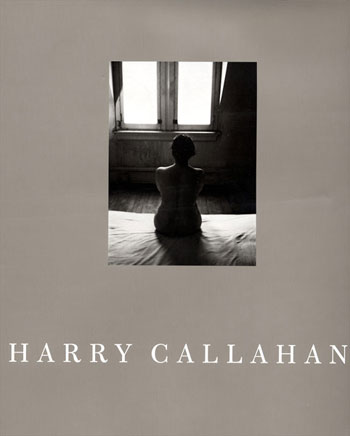
Harry Callahan (1912-1999) left a substantial body of work, yet I cannot help thinking he rues the fact that what he is remembered for most is the many pictures, frequently nudes, of his wife Eleanor.

And while he was an enthusiastic experimenter, be it with double exposures or light traces, these wonderful early pictures set a standard and style imitated, but seldom equaled, by many since.

It’s not that Eleanor is some sort of model ideal of a woman, whose modern image in men’s eyes dictates exaggerated breasts and miniscule hips. Quite the opposite. She is powerfully built, a woman of the mid-West, with solid bones and generous hips. A Real Woman. And does he do her justice. Whether it’s the powerful, face-on image showing a determined chin and direct gaze, or the many nude-in-landscape studies which define the genre, his photographs of his wife are never less than special and deservedly define his oeuvre.

The Chronology of his life in this book, published by Bulfinch, goes a long way to illustrating his restless mind and thirst for experiment. I quote:

1938 – Purchases first camera, a Rolleicord 120.

1941 – Begins to work with a 9 x 12 Linhof Technica (sic) camera.

1941 – Moved by the sharpness of Adams’ (sic) prints, trades enlarger for an 8 x 10 camera and begins to make contact prints.

1943 – Buys 35mm Contax single-lens reflex camera (sic – can’t they get anything right?) and begins two-year series of photographs of pedestrians.

The latter rival, by the way, anything done by Walker Evans in this genre, adopting a far grittier approach.

This is curiosity at its best and not mere fascination with equipment as Callahan takes lots and lots of pictures along the way.

He starts exhibiting in 1941 and thereafter it seems there is scarcely a month when a show or publication does not come to market.

Rightly so, for there is much to be learned from the mind of this true original, whether from the early monochrome or later color work.

Highly recommended.

Elton John’s collection

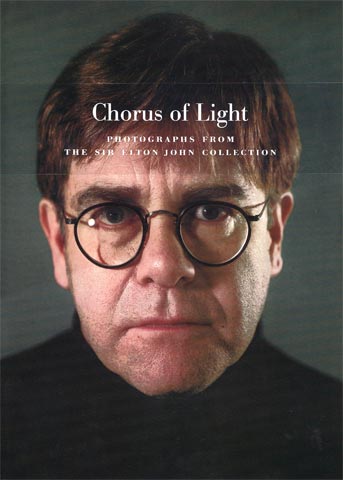
Chorus of Light – Photographs from the Sir Elton John Collection – book review

Elton John (sorry, ‘Sir Elton’ just sounds too silly) has a lot of talent. He also has a lot of money which allows him to feed his manic collector’s streak. The collection on view here is of his photographs.

The only reason to buy this book is that it can be picked up for just a few dollars, having been remaindered no sooner than it was published. What you get is a 13” x 9.5” collection of some 150 photographs, nicely reproduced, representing many of the classic images of the twentieth century. Why anyone would want to pay huge sums of money for ‘original’ photographs – a contradiction in terms if there ever was one – beats me, but you get to peek, almost free, at a fine collection here.

The interview with John, who is predictably egotistical, is actually quite interesting.

If you like classic photography this is a cheap entrée.

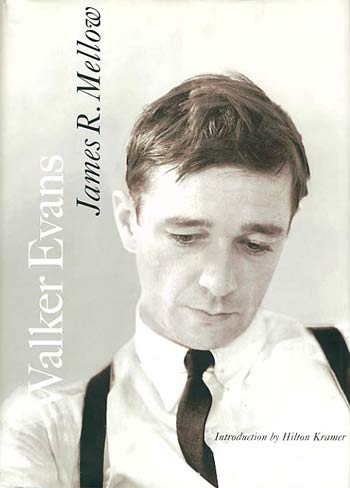
Walker Evans

Book review

It’s hard to know what to make of Walker Evans’s photography.

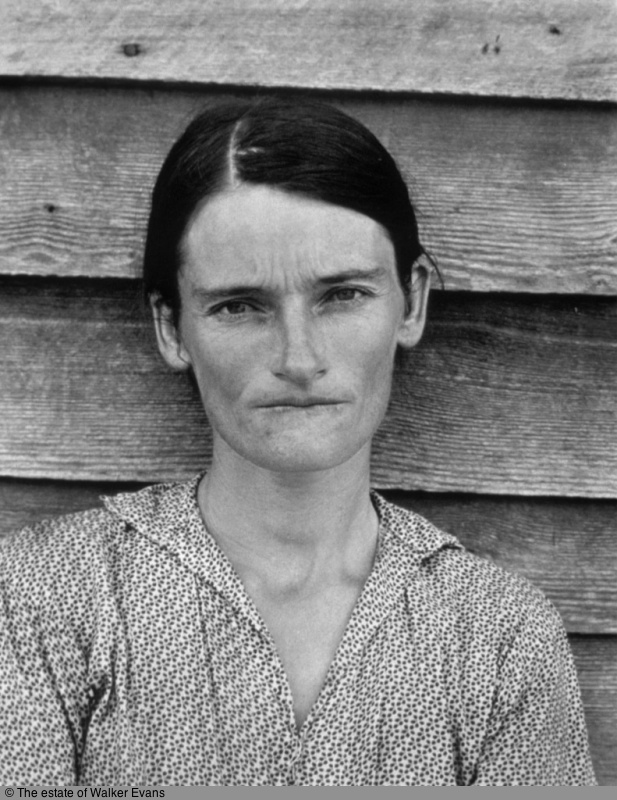
On the one hand he is justly famous for his depression era photographs of American sharecroppers and the misery of their existence, photographic work commissioned by the Roosevelt administration.

On the other hand, much of his work can be dismissed as a twentieth century variation on Atget’s nineteenth century pictures of a seemingly deserted Paris.

In Atget’s case, the lack of people can be attributed to the slow films of the era, where a passer by would render a ghostly image, if he recorded one at all. By contrast, for Evans the stillness of the cities he photographed is solely due to careful planning and composition. And frankly, the architectural photographs are, for the most part, unexceptional and boring, despite having been set up with infinite attention to lighting and timing.

To make matters more difficult, this book comes from the ‘sell it by the pound’ philosophy of American biography, one of the saddest developments in modern writing. Weighing in at some six hundred and fifty pages, it closes in 1956 with the death of the author, James Mellow, who died in 1997. Evans died in 1975 aged 72, leaving the last eighteen years of his life sketched by Mellow in a few paragraphs. So even allowing for the fact that those years were not amongst the most productive in Evans’s life, they would have conceivably added another 200 pages to an already ominously thick tome

These were some of the thoughts going through my head as I approached the daunting task of reading about one of America’s most respected photographers. It has to be said, then, that this biography is really quite gripping. Mellow writes beautiful, idiosyncratic English and displays a genuine love for his subject. His exhaustive research never makes the text lugubrious or boring. Best of all, the many reproductions of Evans’s work are interspersed with the text, thus placing them in context with the writing. It is well worth trading some loss in reproduced quality for this optimal presentation of the work.

Evans was a curious mixture. Well versed in literature and painting, he more or less stumbled on photography. Maybe his most telling comment about his contemporaries was to the effect that he denigrated the obsession with technique shared by Ansel Adams, Edward Weston and Paul Strand “….none of whom I admire”, while admitting that technique interested him more than it did Cartier-Bresson “….though I admire his work very much.” A telling statement when you consider that Evans’s second exhibition at the Julien Levy Gallery in New York in 1934 was with Manuel Alvarez Bravo and….Henri Cartier-Bresson. So one can read an element of envy into the comment on technique, and it brings one in a roundabout fashion to the realization that his best work by far was very much in the style of Cartier-Bresson.

Sharecropper’s wife.

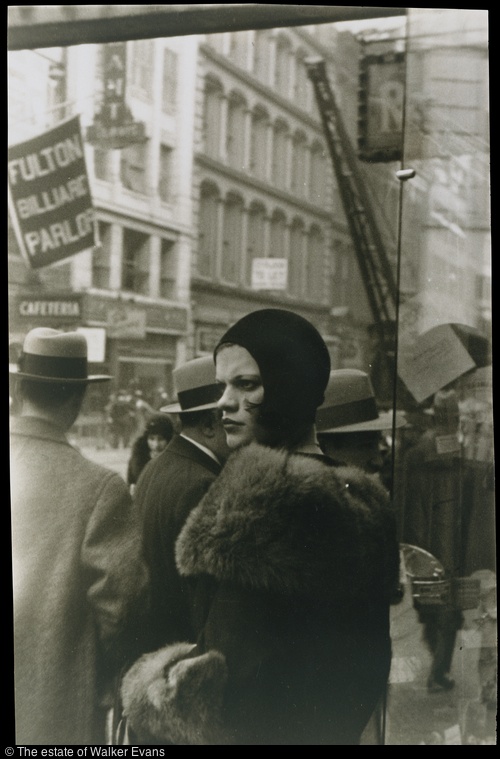
Memorable photography is just that. Memorable. One remembers the pictures without having to look at them and those of Evans’s pictures I recall are all from the great street and subway images he took in the late-1920s and throughout the 1930s. The aggressive girl snapped on Fulton Street in 1929, the incongruously fur-attired black woman on 42nd Street in the same year and those incredible subway pictures taken in the late 1930s. Amazingly, Evans had challenged himself to take the subway pictures but then had to be pushed by mightily impressed friends to complete the project. He was nothing if not self-effacing. This seems very much a character trait – he was no self starter and needed the prodding of colleagues and business associates time and again to get on with the job. A self-starter would have left a broader body of work albeit maybe one of lower quality.

Girl on Fulton Street.

So Evans’s work can be enjoyed on many levels, from straight reportage and historical documentary to some of the finest street photography of his time. No prizes for guessing which impresses as great photography, though. Don’t be put off by the weightiness of this tome. It is an excellent study of a great photographer.

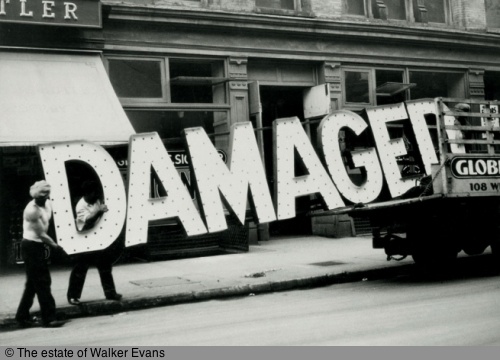
Damaged.