Category Archives: Photographers

Quality Time with Ansel

It must have been back in 1999 when good fortune caught me staying at The Inn on Spanish Bay just up the road from the links at Pebble Beach. Few places offer more breathtaking vistas and opportunities for relaxation. When you next stay there, I greatly recommend the squid special, black ink and all, and that bagpiper chap playing at sunset, praying a gust of wind will not disclose all.

Anyway, as is the wont of ladies in overpriced neighborhoods, my better half went shopping (ouch!) while I strolled the few yards from the front door of the Inn to the grandly named Weston Gallery. A very sincere young man, schooled in the world of sales, immediately buttonholed me and asked my interest. I did not have the heart to disabuse him of his evident belief that Ansel Adams should replace at least one, maybe two, members of the Holy Trinity, so rather than saying ‘Anything But Adams’ I ventured that I rather enjoyed American landscape photography of the west. Noblesse oblige, and all that.

Well, drat, it didn’t work. I was marched over to the Adams Collection, the salesman doubtless eyeing my less than pristine Levi Button Fly Shrink to Fit Jeans, and wrongly concluding that I was another in a long string of Silicon Valley venture capitalists off for a day or two to blow some serious coin. Sadly not the case. Yes, it must have been 1999, for memory suggests that 2000 was not the happiest in history for Silicon Valley, and I was feeling pretty happy at the time, pre-ticker shock.

Now, I first began to smell a rat, nay a giant size capybara, when this smug twit pulls on a pair of cotton gloves, proffering a matched set to me. Now I know that parting photography collectors, excuse me, investors, from their hard-earned dough requires something akin to surgical precision, but I was a tad confused as to what the devil I was to do with these gloves.

Kind of when a friend asked me to belt up in his racing Cobra. I looked at the darned belts with confusion, having seen nothing like them before. “Standard Simpson racing belts” he intoned with the bored air of one who has seen it all before. Do I knot these things together or what? I remember thinking. Only when he made a dive for my crotch – a troubling moment indeed as I never suspected he was one of Those – did I realize these things come up through the legs and buckle together from all directions over the very part my old mum used to afford me sustenance through before I first saw this wonderful world.

Anyway, being offered those cotton gloves caused that same momentary look of fear to cross my face. Was I going to be asked into a dimly lit back room next? Mercifully, El Twit donned his by way of example so I dutifully followed suit, making nary a complaint that my fingers were about two inches too long for what was offered. Discretion, in this case, was surely the better part of valor. I think I sort of pulled it off by affecting an air of insouciance while struggling in a manly way with the wretched gloves.

So there we are, The Twit and I, standing in the Weston Gallery, cotton gloves and all, when he starts pulling prints from a drawer. Each, you should know, was some 5”x7”, matted with acres of white and separated from its neighbor with a sheet of something. Acid Free, I was immediately assured Oh! says I. No hallucinogens in this joint, even when it comes to the price tag. Bother!

Now much as I would die happy never seeing one of these again, there they all were. Half Dome, the fake Moonlight Hernandez (you know, the one taken in broad daylight with poor old AA spending hours dodging and burning in his darkroom, but forgetting to get rid of the shadows cast by the gravestones in the bright sun), the one of Bridal Veil Falls, the absurdly over-filtered Monolith, and many others I shudder to recall. You would think the purifying qualities of monochrome would at least filter out the worst lapses of taste, but Adams managed to hurdle that barrier with supreme ease. Can you say Monochrome and Garish in one sentence? Because, believe me, seeing these ‘originals’ made me realize he had accomplished something his books only hinted at. Loud Monochrome. How so poor a collection of over-manipulated fakes could manage to fit in one drawer boggles the mind, but El Twitto was saving his best, his killer sales line, for last.

“And here Sir is our finest masterpiece from the Ansel Collection”. Needless to say, it was yet another print of Half Dome. But wait a minute, how do I break it to this chap short in grey matter that the print was yellowed and faded? Now I liked the look – at least half the garishness had almost disappeared. “Seems a bit different from the one you showed me earlier”, I offered. “Yes, Sir” responds the sycophantic nonentity, “this print was made by Mr. Adams himself, no less”.

“Oh”, says I, “How do you know?”. Well, that was a bit like calling the Queen German. It may be true, but it is not said in polite company.

“Sir, please”, he intoned, wrist held just so, “It’s our job at the Weston Gallery to know”.

Well, in true civilized manner, I quickly steered the conversation to the weather and isn’t it really lovely here and where would you recommend for dinner?

Sadly, he wasn’t buying it. “Well, sir, what do you think of the Ansel print?” A familiarity available only to those who have never met the famed subject of their dreams. “At $15,000 we think it very attractively priced for an investor like yourself who obviously appreciates fine art.” And to think I could get the really garish one for a mere five large.

Now you must understand that this Weston Gallery is not a place to admit to color lightly. White walls, El Twitteroony all in white, white flowers even. When you see that much white you know sticker shock cannot be far behind. Nonetheless, the vivid shade of green I had just acquired contrasted quite nicely with the foul yellow of this appalling print held in Twitterino’s becottoned manglers.
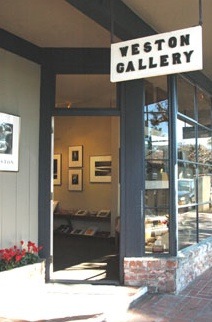

Home of The Twit

So I quickly pulled out that old line which is a curse to salesmen everywhere. “Oh! it’s really quite special, I agree, but let me check with the wife and get back to you”. The power of agency. Always blame someone else. I would love to, but…. Look, I Really love it, but the old ball-and-chain, you know. Got to check with the little lady. Can’t rob the grocery money. So I leg it out of there, shedding cotton gloves right and left and quite possibly setting a new World and Olympic record for the 100 metres.

Why, oh! why, do fully half of all art photographers want to imitate something so bad? Have they not the courage to recognize poor darkroom work and worse photography when they see it? Or is it just the comfort of hordes? Don’t rock the boat and no one will notice. The way to fix art photography? Ban all cameras from Yosemite.

Look, if you love Adams’s work well and good. Ask yourself why and don’t expect everyone else to.
Expose yourself

Let’s face it. Your photographs are no good until you have shown them to the world. Whether that means your next door neighbor, an exhibition at the local town hall, a book or the virtual universe, the world is waiting.

One thing you can be sure of is that the world will most certainly not come to you.

So if you don’t screw up your courage and expose your work to the broadest possible audience, you will never know whether it is any good.

I know of what I write. I have had my work published in competitions, put out a book of my pictures and a while back started a Photoblog. I have an extensive web site of my pictures. Be assured, only someone with the ego of Attila the Hun would venture into any of these display avenues without a few butterflies in the old stomach. Why? You know why. You will now be subjected to criticism from all and sundry. The critics will all be strangers. Only friends and relatives will be consistently supportive and nice, even though much of their feedback will be damning with faint praise.

But without criticism, how will you ever know if your work is any good?

Not fair, you say. Like Oscar Wilde’s Lord Darlington, you believe that all critics are, at best, cynics who know the price of everything and the value of nothing.

Look, even Wilde made a living as a critic before he started earning income from his plays. And you can be consoled by the knowledge that when you do finally expose your work to criticism, you will be dealing with the same, bunch of snobs, ignoramuses, morons, petty idiots, ill educated fools and sundry other losers that plagued Wilde. But without them your work will never be seen or appreciated. Is that not one of the reasons you take photographs – recognition and appreciation by your fellow man?

My experiments with criticism started when I got my first serious camera, the Leica M3 I use to this day, in 1973. As I started making street pictures which I thought had merit I began to submit them to the many photography magazines in the England of my youth, only to be rewarded by much critical feedback. Sadly, most of it was printed in form letters known as rejection slips. Very hurtful. How could everyone else not like my work? Plus, let’s face it, as a poor student whose scholarship money and governmental support could only go so far I needed the money for film and paper. So I kept banging away and as my ability to produce decent prints gradually improved the Honorable Mentions and better started to roll in. I must have been doing something right because the leading photography magazine of the day, a monthly named, originally, ‘Photography’, saw fit to award me The Photographer of the Year award – for one single picture no less! – in the mid-1970s. An award built on rejection slips. Here is that picture, if you must ask, dust spots and all. You did ask, didn’t you?

What a joke. One picture makes you Photographer of the Year. Of course, by that time you had paid your dues with any number of rejection slips, Honorable Mentions, Third Prizes, Second prizes, and so on. So acceptance had to be due any time soon. Like being a frequent poster to a discussion forum at your favorite internet chat board, say. The fact that your content is undiluted tripe, the fact that your claims to fame are never substantiated with a single picture, just having done your time and consistently published your work makes you accepted and lauded.

About the same time Leica Fotografie, the house organ of the camera maker of the same name, published a snap I had taken on Rue Mouffetard in Paris and I thought I had arrived.

So I stopped submitting pictures for publication. I had beaten the system. I had got inside the minds of those lousy critics, the same ones who had sent me all those rejection slips, and beaten them at their own game. It didn’t hurt that I still liked the work I was submitting, but I no longer needed the rewards, economic and psychic, which resulted. I now had a full time job and could take pictures to please me, not the critics.

Well, of course, that was all wrong. For twenty years thereafter I banged away, filling boxes with beautiful 8 x 10” prints which no one ever saw. I was self-satisfied with my work and did not need anyone else to tell me it was good. Or bad.

Yet something was missing. As human beings we all have an ego and not one of us dislikes being told that his work is good. Why, screw up your courage and you will even be prepared to hear that, well, maybe it’s not so good. Find a good critic who will help redirect you, question his input, and maybe you will find new directions and meaning in your photography.

One thing has changed greatly since those days of my youth and it is access to distribution. It has never been easier or cheaper to get your work out there and you no longer need to butter up publishers, attend obligatory cocktail parties or call people ‘darling’ while reminding all and sundry that the editorials of the New York Times and Guardian are your thoughts exactly. One month from reading this there is no reason why you wouldn’t have scanned your hundred best pictures, placed them in a word processed document and submitted your output to a print-on-demand publisher at very modest cost. Why, if you are a digital photographer the most onerous part of the task, the scanning part, does not even exist.

But the chances are you will not do this and that is a shame. Excuses are easy. I don’t have the time. The spouse is ill. It’s too complex for me to learn. No one is interested. And on and on.

All of these excuses say just one thing. You really do not care enough for your photography to do anything with it.

OK, so the book route is not for you. Well, how about a Photoblog? Access is even easier than publishing a book. You go to any one of the providers on the web and set up an account. It can be paid, like the one I use, where the friendly people at Expressions charge me the stunning sum of $3 monthly to host my picture uploads. I use them as they provide a nice point-and-click selection of screens to display your work and have been very nice in helping me design a screen to my own liking which is not available in their canned selections. Plus, I’m not exactly God’s gift to the coding profession.

Or you can try a free service such as the oddly named Flickr and share your work for all to see. Free.

So now tell me, why, within 60 minutes of reading this, you should not have a Photoblog up and running. You want to get paid for doing this?

Frankly, unless you are an equipment collector, in which case why are you even reading this, there is no reason.

Tomorrow I will share my Photoblogging experience with you, by which time your Photoblog will be up and running. Promise?

And closing on another Wilde witticism, when you get rude, uninformed morons trashing your work, “Always forgive your enemies; nothing annoys them so much.” Then delete their droppings.

A sense of purpose

I emigrated from the United Kingdom to the United States in 1977 so now more than half of my life has been spent in America, some of that in New York but mostly in California. What so attracted me to the New World was my experience working with Americans in London. The singularly distinguishing attributes of the ‘Yanks’, as xenophobic Englishmen still thought of them back then (now we have the equally unappealing sobriquet ‘Brits’ for my former countrymen), were that they had a lot of fun in doing whatever they did and their driving sense of purpose. They were goal oriented.

What has all that to do with photography? Well, I am convinced that without a sense of purpose your chances of taking good photographs are poor to non-existent. As for profits in business, opportunities for good photography rarely just happen. If you are going to go swanning about, camera in hand, blithely hoping that something good will come alone, well, keep hoping. You have to make it happen.

I believe this to be true regardless of whether your subject is the serendipitous one of street photography or the much more planned variant of the landscape. I happen to enjoy both. Maybe a couple of illustrations will do the trick.

As the proverbial impoverished student in 1977, my last year in London, I mustered what little cash I had and boarded the ferry to Calais, then the chemin de fer to Gare du Nord in the heart of Paris.

I had two very focused goals in mind.

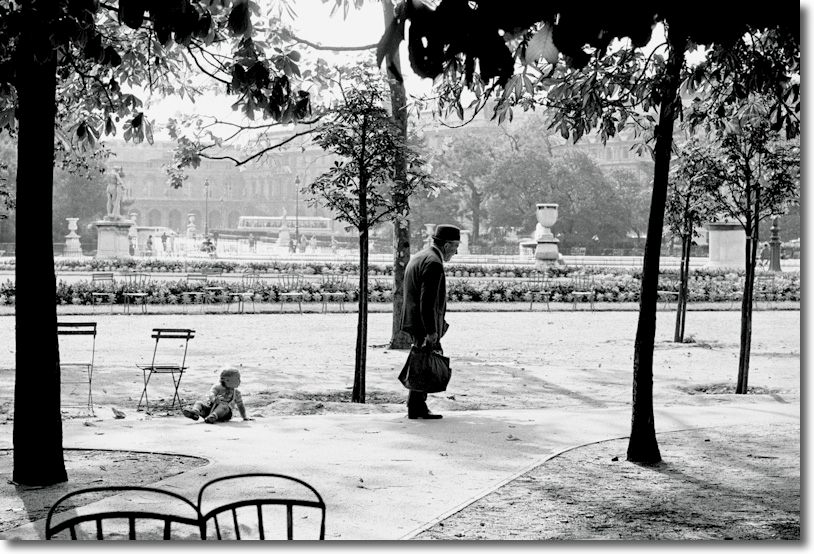
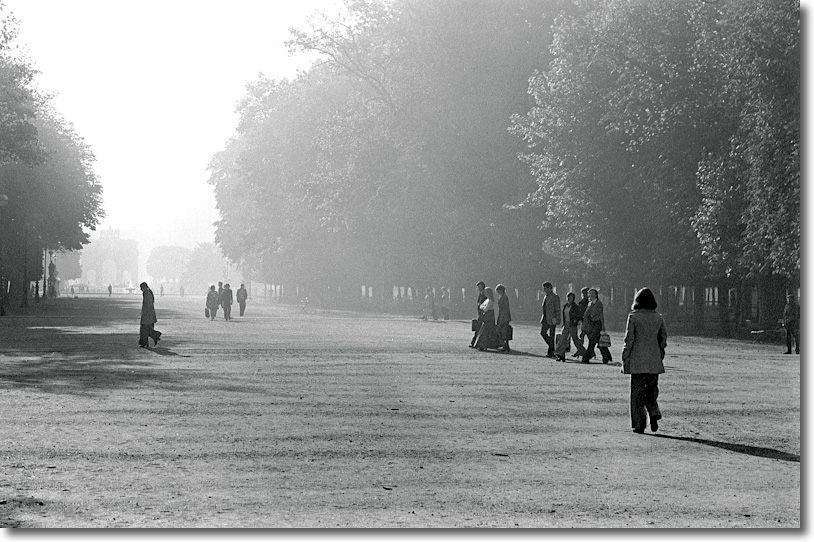
One was to visit the Louvre, the Orangerie and the Jeu de Paume museums and art galleries in the Jardin de Tuileries in the heart of the First Arrondissement. My sole purpose was to gorge on nineteenth century French painting. Corot and Boudin. Cezanne and Manet. Renoir and Monet. Degas and Seurat. Painters modestly represented in the great British museums, but very much on their home ground in the Tuileries Gardens. Fulfilling that goal, with the three galleries a stone’s throw apart, involved nothing so much as a stout pair of shoes and the entrance fee.

The other was to see and photograph the light of Paris, that light which I had studied for so many years and dreamt about experiencing first hand. Paris has the twin distinction of being the most beautiful city of the Western Hemisphere and well as having the most gorgeous light. Or maybe it is so beautiful because of the light? Lacking the lugubrious architecture that typifies much of London and, mercifully, lacking that city’s foul weather, Paris is a city of joy and romance where London is one of industry and commerce. Artists created one, burghers the other. And for all the bad things we, as Americans, may think of the Parisians, casting off those veils of prejudice reveals a magnificent place for the ages. Truly you have not lived until you have been in Paris.

So to finally have the opportunity of taking photographs in Paris was not only immensely exciting, visual and sensory overload threatening at every corner, it was a goal I had long strived for. And Paris did not disappoint.

Jardin de Tuileries, sunrise

Jardin de Tuileries, noon.

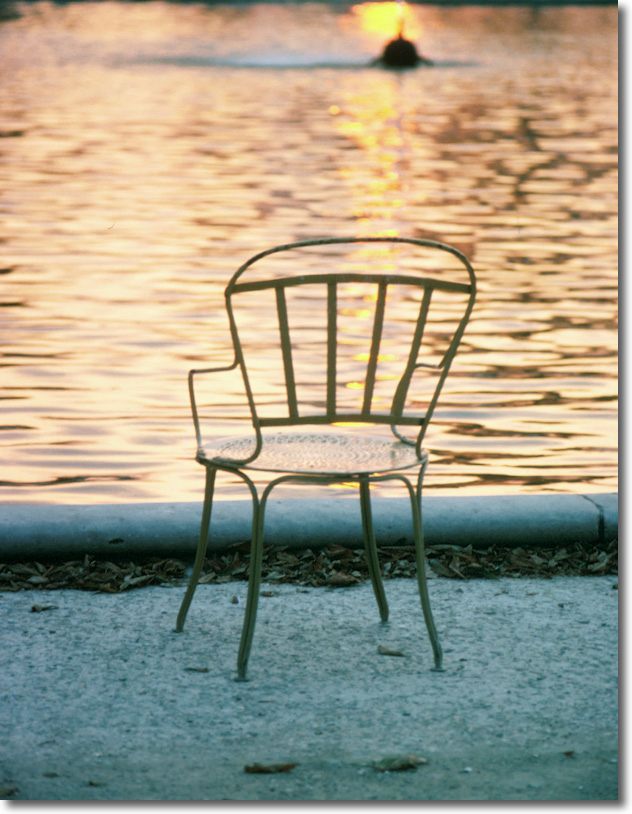
Jardin de Tuileries, evening.

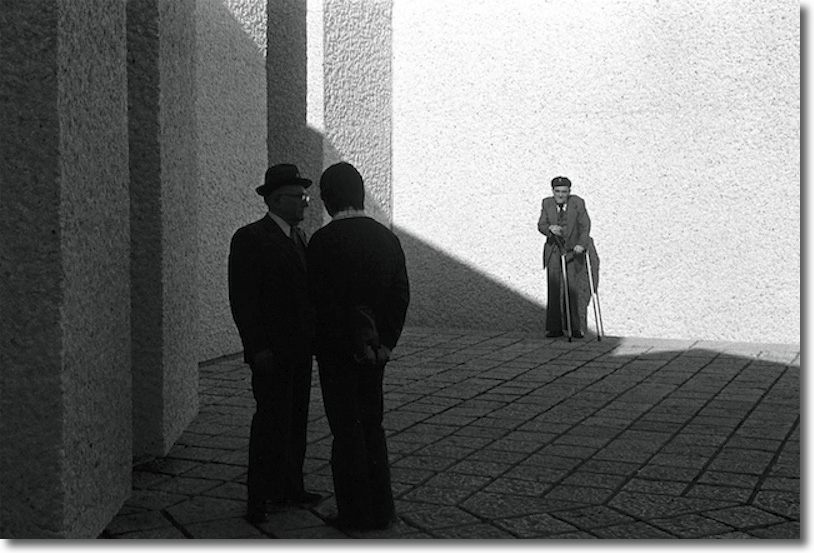
And even when you come across something very special, a picture that you will always remember the journey by, luck has nothing to do with it. I waited for two hours at the Holocaust Memorial, that monument to French Guilt, for the juxtaposition of the players to be just so:

Holocaust Museum, Paris.

There are very few lucky accidents in life or in photography. A goal, a sense of purpose, makes luck happen.

Set that goal and only then pick up your camera.

Books by the foot

You think of yourself as a decent photographer. Your work gets better and you expose it regularly to peer groups for constructive criticism.

Now and then fortune smiles upon you and you find yourself with some spare cash. Money to blow. Like photographers through the ages, your thoughts turn to that new body, lens, gadget, whatever.

Stop.

None of those will make your pictures better.

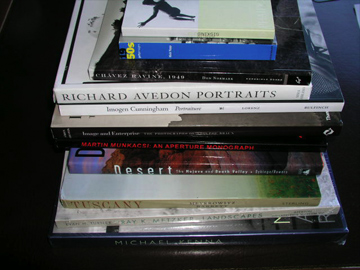
Instead, buy some books showing others’ work. They will teach you more in a pleasurable hour or two than that new camera/lens/gadget ever will. Plus, as X. Trapnel famously remarks, somewhat the worse for a couple of glasses of wine, in Anthony Powell’s ˜A Dance to the Music of Time”, ‘Books do furnish a room’. So if you are a real philistine, at least you end up with nice decorations even if you don’t read the book. Do remember to take the plastic cover off, though.

Ridiculous, you say. Have you seen the price of picture books recently?

Well, if you are a Wall Street investment banker then, yes, by all means go to Rizzoli’s on Fifth Avenue in New York and pay retail. I, however, will be buying the same book remaindered some 6-12 months later at 25 cents on the dollar. Suddenly, that $100 tome is the price of four visits to Starbucks.

Here’s where I get mine:

1 – Strand Books in NYC. Its eight miles of books qualifies it as the eight wonder of the world. Next time you are in New York, forget the obligatory visit to the excess that is B&H and go here instead. Sales tax to the poor residents of NY only, and any walk-in. For philistines, Strand will even sell you ˜Books by the Foot™ (no kidding) so you can impress your friends while watching sports on your large screen television.

2 – Powell’s Books in Oregon. No sales tax to anywhere. And you thought the Left Coast was full of Fruits and Nuts, eh?

3 – Edward R Hamilton. OK, so they are still in the nineteenth century and accept mail orders only, but at 20 cents on the dollar you can wait a couple of weeks no?

Here are this week’s deliveries – these averaged under $25 each:

The Greatest Photographic Portrait

Some historical context is appropriate.

The Nazi hordes had swept Western Europe before them. Only Britain alone was holding out, having grimly fought back the air invasion during the Battle of Britain during the fall of 1940.

America remained staunchly isolationist, egged on by Nazi sympathizers Henry Ford and Charles Lindbergh, both sporting Iron Crosses awarded by Hitler. Roosevelt, anything but an isolationist saw the threat and had enacted the Lend-Lease legislation which provided a lifeline of essential supplies and materiel to Britain, braving the perilous Atlantic route. His hands, however, were tied by a reluctant Congress.

British Prime Minister, Winston Churchill, saw early on that the Nazi terror could only be crushed with America’s involvement, and had set about a long courtship of Roosevelt shortly after the epic air battle over the fields of South East England had been won.

On one of his many visits to the United States in 1941, Churchill made a side trip to address the Canadian Parliament in Ottawa on December 30, 1941, famously intoning: “When I warned them that Britain would fight on alone, whatever they did, their Generals told their Prime Minister and his divided cabinet that in three weeks, England would have her neck wrung like a chicken – Some chicken! Some neck! The brilliant use of American vernacular (Churchill’s mother was American) produced loud applause and laughter from the assembled House of Commons.

It was appropriate that the speech should be in Ottawa, for that fair city was home to a refugee who would soon make his name as the most famous photographic portraitist of his time, Yousuf Karsh.

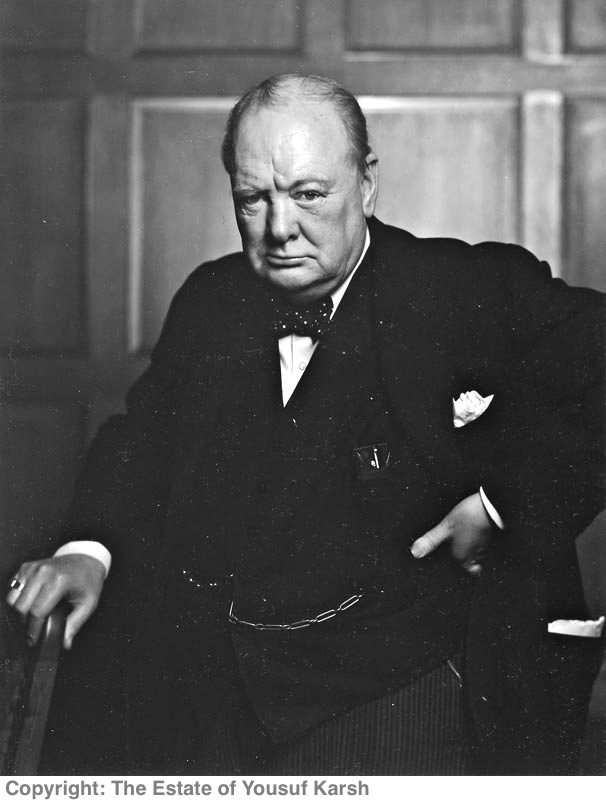
Churchill had not been forewarned that his portrait was to be taken after the speech and was suitably irritated on being led into the antechamber where Karsh had set up his camera and lights, puffing mightily on his cigar. Karsh asked him to remove the cigar and, when Churchill refused, snatched it from his mouth to take the Greatest Photographic Portrait ever made.

In this magnificent picture you see a statesman at the peak of his power, defiant, belligerent, determined.

After the first picture was taken – the whole sitting was all of four minutes in duration – Churchill permitted Karsh to take still another, jokingly commenting “You can even make a roaring lion stand still to be photographed.”

The picture made Karsh’s reputation, and deservedly so.