Category Archives: Photographers

Cecily

Not just your average queer.

I cannot remember a time when I was not aware of the multi-talented Englishman, Cecil Beaton (1904-1980). Photographer, writer, designer, he did all of these at the highest level.

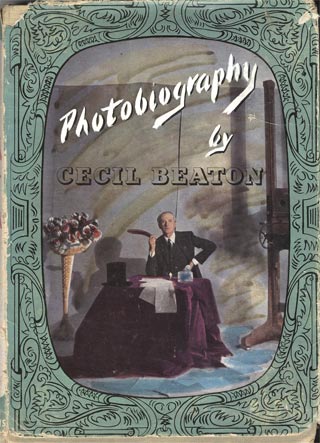
Whether it was 1964 when My Fair Lady hit the big screen (Beaton designed all the gowns) or 1971 when his landmark show An Anthology of Fashion premiered at the Victoria and Albert museum in Kensington, or 1962 when at the tender age of ten, I first read his book, Photobiography, Beaton has always held a special place in my growth as a photographer.

Central to his development was a surpassing interest in fashion, and it has to be said that the classic Vionnet, Schiaparelli and Gres costumes on display at the V&A show were breathtakingly well exhibited. The Gres and a couple of magnificent Balenciagas stick in my mind even today. How did women fit in these? Beaton, of course, had all the right connections to secure loans of these high flights of couture from their rich and famous owners. Sharing an alma mater with Churchill (Harrow School) and a Cambridge graduate, Beaton occupied the rarefied, dandified world of fashion and aesthetes from day one. Even as a boy, he experimented, using his sisters and relatives as models, with exotic lighting and backgrounds, the latter of his own creation as often as not.

And before you dismiss him as just another pansy in a cultural subset seemingly dominated by them, take a look at his pictures of war torn London and you will see the work of a great, tough photographer, unafraid to risk life and limb. How can one look at his pictures of the ruins of St. Paul’s even today, and not feel hatred towards the German Master Race?

None of this is to deny that Beaton came in for his fair share of ridicule during a long life. His epicene manner did not help. In 1971 David Bailey made a vicious television documentary named Beaton by Bailey, where Beaton comes over as nothing so much as a tired old fag, none of this helped by Bailey’s reference to him as Cecily in a newspaper interview of the time. Not for nothing was this hatchet job dubbed ‘Beaton by Bailey’ soon after its showing.

Then there was the ridiculous ‘love affair’ with Greta Garbo. A homosexual and a lesbian. Straight out of the Tchaikovsky playbook and just about as successful. Add accusations of being a relentless self publicist and publicity hound – how else does one get known for heaven’s sake? – and you might view the man with faint ridicule. Yet just one look at the Ascot scene in My Fair Lady or any one of hundreds of his great photographs of royalty and fashion (no confusing those two!) and you see the work of a great and original artist.

Hunt down some of his work. It’s worth it.

Erwin Blumenfeld

There’s a lot to learn from this great photographer.

Whenever I get tired of reading yet another homage to Ansel Adams, that most glorified of darkroom technicians, I turn to the work of a real photographer who also happened to be a competent technician. The difference is that visualization never takes second place to darkroom technique with Erwin Blumenfeld.

Another in a long list of German outcasts, Blumenfeld (1897-1969) chanced upon a darkroom in his retail store in Berlin and a lifetime’s addiction started. Changing careers, he made his at Vogue and Harper’s during and after the war and was given remarkeable creative freedom.

His influence spread wide, his work a mix of the abstracted and the expressionist.

The other day I was rewatching the greatest Western film ever made, Sergio Leone’s Once Upon a Time in the West and there, right in the middle, is a jaw dropping shot of Claudia Cardinale, whom the camera observes from above and through a screen atop her four poster. Now every image of Claudia Cardinale is an occasion for rejoicing, it’s just that this one immediately says that Leone was a Blumenfeld fan, and the movie is nothing more than a succession of glorious still images. Blumenfeld’s net of influence was cast wide.

The book’s cover picture is but one example of where less is more. Appearing on the cover of Vogue in October 1952, it personifies glamour, class, sensuality and eroticism yet nowhere are the model’s eyes to be seen. Seldom has a Jacques Fath dress or a gorgeous neck been done greater justice.

And as you leaf through this slim book, just the right length to prevent overload, you realize that Blumenfeld’s compositions are what makes the pictures so striking, never mind the peerless technique.

It’s a whole lot more fun than those wretched Adams prints.

At the movies

Three great films about photography

Hollywood, for the most part, has not served still photographers well and there is little of note when it comes to portraying the profession. By the way, have you ever wondered why we refer to photography and prostitution as professions, when either can be practiced with a bare minimum of education? These are trades, not professions, though each doubtless includes some real artists in its ranks.

However, three films come to mind which not only do photography justice, but are also shining examples of great film making within their respective genres of comedy, drama and musical.

First comedy. John Waters’s ˜Pecker”(1998) is, well, a typical John Waters movie. Something to offend everyone and hilariously funny for all but the thinnest skinned. This comedy portrays a teenager who is accidentally vaulted to stardom for his snapshots and somehow manages to survive the experience. No great substance here, but an absolute hoot to watch. Filmed, of course in Baltimore, which is the director’s home town.

Next drama, and here we are talking of a very great film indeed, made by the splendidly named Michelangelo Antonioni – a name to conjure with. “Blow Up”, dating from 1966 and purportedly modeled on the working-class-photographer-who-made-it-big David Bailey, the anti-hero, played expertly by David Hemmings, thinks he has photographed a body in a public park. Or has he? Full of mystery and great acting, filmed in a 1960s London largely devoid of people, the film has a haunted air. It’s a fascinating piece of history that bears repeated viewing and denies the audience simple solutions or a nice ending.

But I have saved the best for last. A delightful confection with Fred Astaire and Audrey Hepburn. ˜Funny Face” was made by Stanley Donen in 1957, which seems a long time ago. Add the wonderful Kay Thompson and you have a prescription for champagne. French champagne (is there any other kind?) as the whole thing largely takes place in that most beautiful of cities, Paris. Mercifully, Parisians take up negligible screen time.

Fashion magazine photographer Astaire, modeled on Richard Avedon who advised on the movie, is invariably draped with Rolleiflexes, though almost all the pictures he takes are made on a huge field camera. Even the action shots. Not that hard to believe when you realize the shutter lag on this monster is far less than that on most modern digital wonders.

Kay Thompson’s opening number, ˜Think Pink” is simply a show stopper. Diana Vreeland at Vogue was never this much fun.

And, of course Audrey Hepburn. Like her or hate her.

Astaire being Astaire manages to dance and sing between photo opportunities and Hepburn almost keeps up with him.

Let’s see, what else?

Well, did I mention the Givenchy gowns? Or George Gershwin’s music?

Should you ever get jaded with the process of taking pictures, just pull out this movie and watch the sequence in Paris where Astaire snaps Hepburn in a variety of posed settings, each snap appearing immediately on the screen once taken. When the cape swirls about her head and she squeals “Take the picture. Take the picture.” you are reminded of the sheer joy and excitement of photography. Just like the time that first black and white print appeared in the developer tray in your darkroom.

Impossible to think that any self respecting photographer would not have this magnificent movie on a shelf at home.

Stumbling about

Visit twenty new photography sites daily

One of the great frustrations of finding new photography on the internet is not knowing where to look.

You read about a site here, a friend recommends one there, in other words pure serendipity.

Now the StumbleUpon tool may not remove the random chance aspect of the search, but it does at least make finding new work easy …. and enthralling. The tool plugs into the Firefox browser and appears in a menu bar like so:

If you don’t use Firefox you can download it free from the web. Mine runs on an Apple and it may even run on a Windows PC, though candidly I couldn’t care less whether it does or not as I do not care to use the deeply flawed Microsoft operating system. I prefer something that does not constantly lock up.

The picture above is a screenshot of Firefox from my iMac. Download the tool (http://www.stumbleupon.com/), tell it you are interested in Photography and then click on the ‘Stumble!’ icon. You are taken to a random photography oriented web site. Click again and another site pops up. The rate of repetition is very low, so if you see something you like be sure to bookmark it.

Sites vary but the ratio seems to be about 80% photography: 20% technical instruction.

Every time I have Firefox on the screen I find myself heading for the Stumble! icon and discover wonderful images on many talented photographers’ web sites.

Irving Penn again

The man was a God, but why the pretentiousness?

Proving yet again that there’s no money to be made in Art Books, I splashed out the princely sum of $31.50 on “Irving Penn Platinum Prints”. This book had no expense spared at the altar of authenticity.

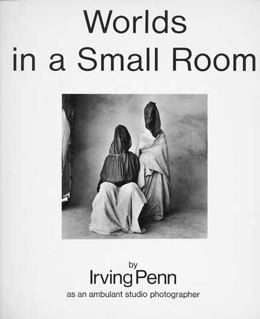
Now before you accuse me of being unduly critical, a quick check of my earlier piece on Penn’s fine book “Worlds in a Small Room” may be found here.

The man, clearly, is a God in the history of twentieth century photography.

So when I decided to blow serious coin on “Platinum Prints” it was not without foreboding. I have always eyed anything which purports to apply Secret Sauce to a common or garden process with deep suspicion. And, sadly, skepticism was more than justified in this case.

Yes, the famous pictures are all there – that old fraud Picasso, the future Mrs. Penn (well, at least the guy was straight, or it was one hell of a cover), that great black and white Vogue cover of the mesh vail, the Harley Hell’s Angels disguised as Greek gods, the mud people, Cecil(y) Beaton, all those neo-Sander portraits of horny handed sons of toil, those foul/smelly/gorgeous cigarette butts. In other words, Penn’s finest. No question, the reproduction quality of the prints is beyond criticism.

Then, over that height of civilized existence, the evening vodka Martini, I chanced on the back cover of the book only to see the following solemn inscription: “Over the years I have spent thousands of hours silently brushing on the liquid coatings, preparing each sheet in anticipation of reaching the perfect print. Irving Penn”.

Phew!

So the guy:

1 – Despite working for Vogue with all its resources, values his time so little that he has to make his own prints. Something a trained monkey can do reasonably well.

2 – He elects to waste thousands (thousands – do you believe that?) of hours in a darkroom rather than share more of his great vision with the world.

3 – An exotic process is clearly involved. Do I smell snake oil?

I yield to no one in my admiration for Irving Penn. Unlike his fake contemporary, Richard Avedon, Penn had an eye for what he believed in, not for what would sell. He was the Real Thing.

But then he has to go and tell the world that he is using some inane, archaic process to make his prints. They are no better for the fact that he wasted thousands of hours on them, and that means they really are awfully good. Buy the book, disregard the blurb.

Just because the printing process is complex does not mean the print is a good picture. Thank goodness Penn’s work transcends the nonsense this book propounds.