Category Archives: Motorcycles

About BMW Airhead motorcycles.

Another occasion

This is as good as life gets.
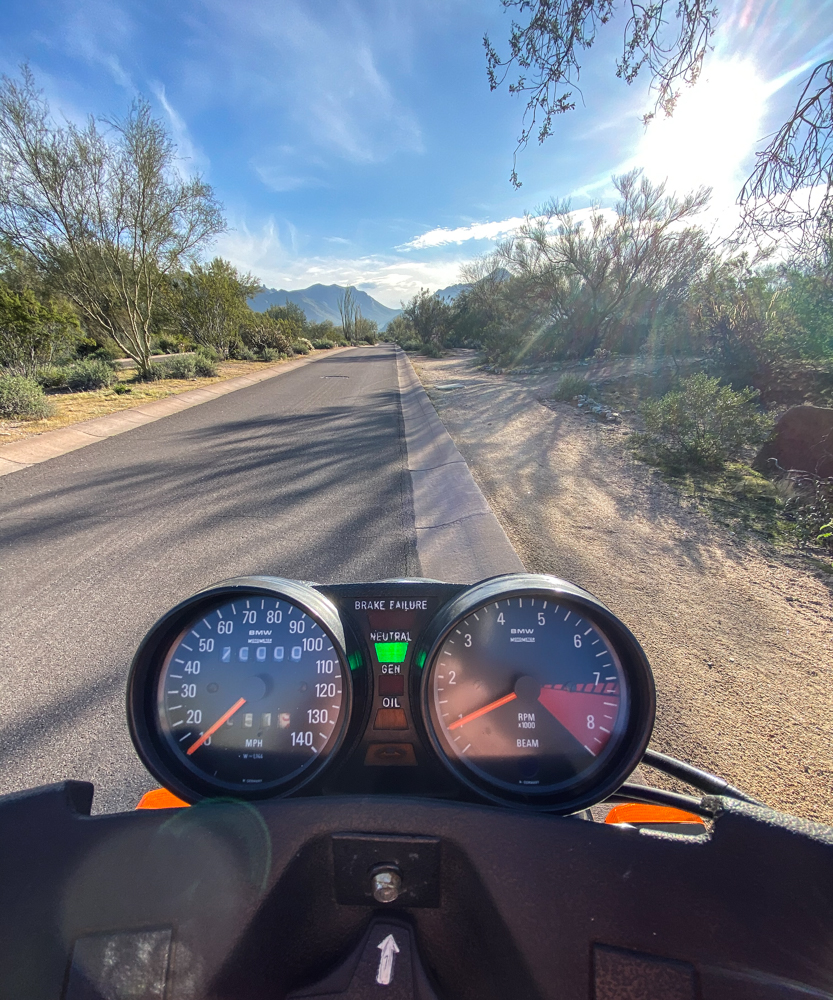


The two costliest repairs I have suffered on my 1975 BMW R90/6 ‘airhead’ have been replacement of stripped nylon gears in the totally mechanical instruments – the drive is by gear and cables. Some genius in Munich decided a nylon gear beats the 2 cents costlier brass alternative used through 1969, and both stripped. He was probably British, and formerly worked on Triumphs. The tach gave out at 60,676 and the speedo joined it in sympathy at 61,724. If the needle goes crazy, the gear is stripped. If it just jerks about then a new cable is called for, the Teflon liner being worn out. The last thing you want in that cable is lubricant, which will only hasten its demise.

The work was done by Palo Alto Speedometer – unreservedly recommended. I used to use them on my old MB’s instruments also – but at $300 a pop they are not cheap.

A properly tuned air cooled BMW boxer twin is happiest at 4,000-5,000 rpm. Many owners ride these at far lower revs, constraining proper oiling and doing awful things to the crankshaft. It does well to remember that Germans only understand one thing – a strong hand at the tiller. Subtlety has no part in their make up. And, by the way, not only is the tach needle as stable as can be, given the early Industrial Revolution technology, the speedometer is also dead accurate.

iPhone 11 Pro, UWA optic.
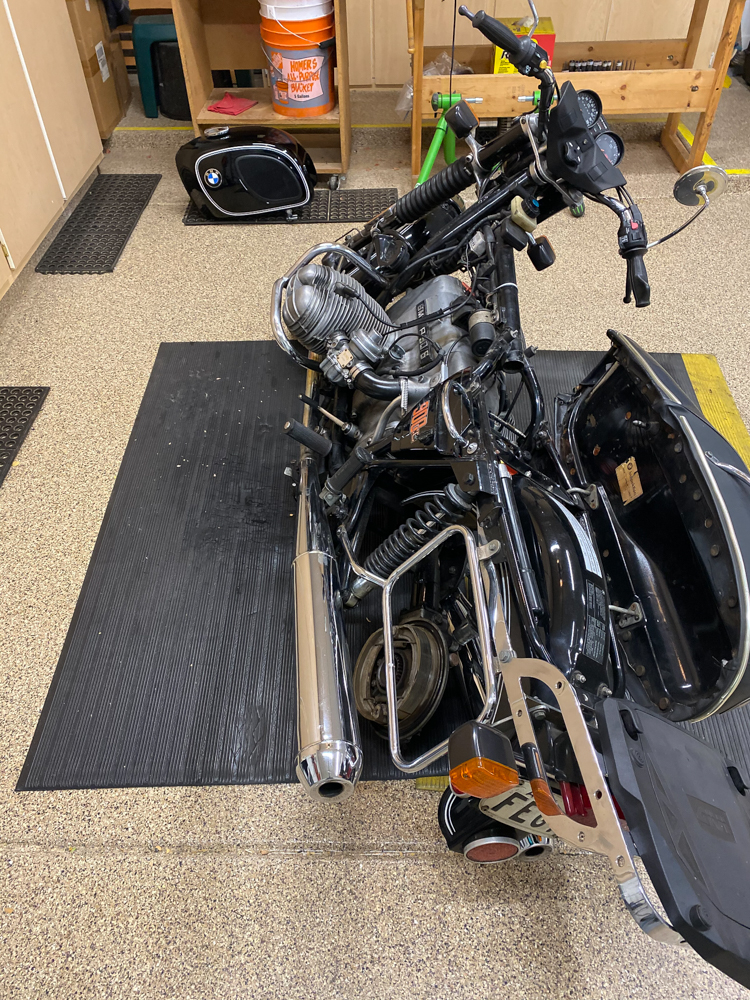
O’er she goes!

Time for a new rear tire.


Taking a rest.

Do not try this with a modern motorcycle, My nephew, who has the misfortune to ride a modern, high tech rice burner, writes: “If I were to do that with my bike, I would have $3,000 of plastic to replace.”

My hard working 1975 BMW R90/6 actually does give a nod to the world of tech. It has exactly one purely electronic part, in addition to the usual collection of electro-mechanical relays. It’s a $1 diode which, naturally, failed last year. Its purpose is to permit use of the electric starter with the bike in gear, when the clutch lever is pulled in, should you stall at a red light. Not something I would ever do, you understand.

With this shaft driven masterpiece, rear wheel removal – a new tire is dictated – is a matter of removing one axle nut, loosening one axle pinch bolt, removing the gas tank and draining the carbs. That all takes five minutes. Then, ably assisted by my son, who is home for the holidays, she’s tipped onto the right cylinder and passenger foot peg, the axle is pulled and the wheel lifts right out. I’m too old to replace my tires at home, so it’s off to the local grease money and $25 and a few minutes later all is done, with no garage language required.


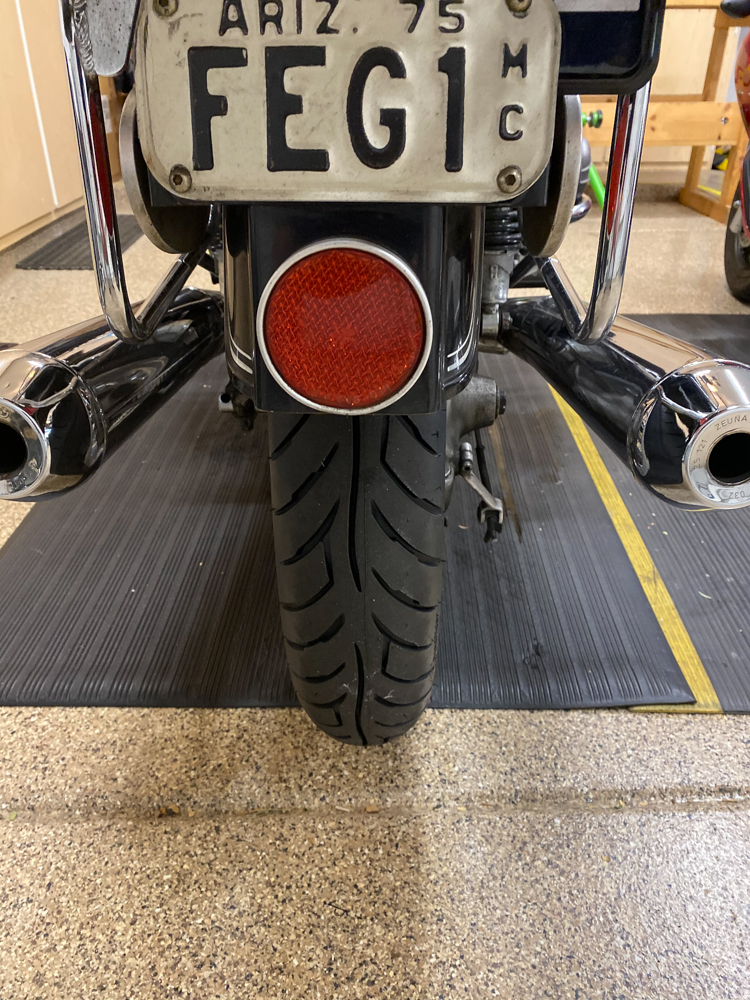
New British Avon AM26 tire in place. It pleases me no end to use a fine British tire on a German motorcycle.

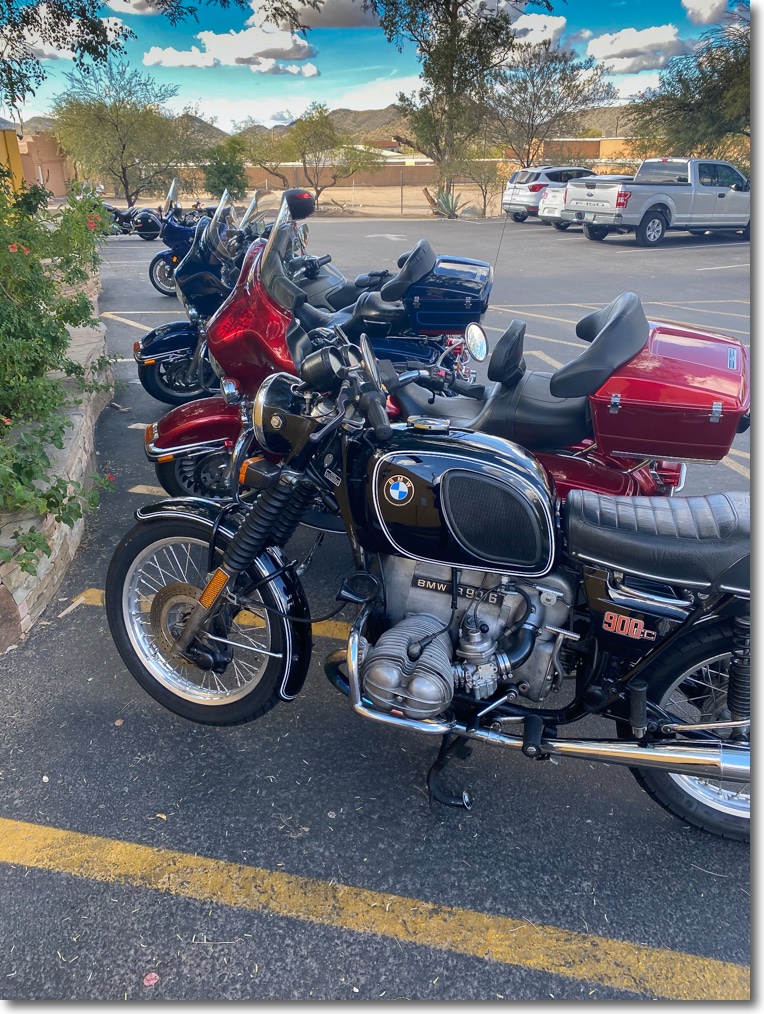
A peaceful lunch

In the desert.


Before the rumble.

Not disclosed in this image is the violent aftermath, the result of my pointing out to the pig riding the Harley that his machine was 90% made of Chinese steel. The other 10% is the Japanese parts. He took umbrage and I had to lay out his 400lbs of blubber using nothing more than my bare fists. Real Men do not need tire irons.

iPhone 11 Pro snap.

A new tire

Made in England, no less.

I generally alternate the make of tire on my 1975 BMW motorcycle between German Metzelers and British Avons.

One thing of note since moving to the hot Arizona summers from the Bay Area three years ago is that rubber and batteries take a beating over the warm months, where the garage temperature can rise to 130F. On my nephew’s suggestion – he is also a keen rider – this next summer will see me drain the gasoline from the tank and move the bike for display in the air conditioned indoors. The summer months are too warm for riding in any case, and this will save wear and tear.

Anyway, my last front Metzeler lasted but 7,000 miles compared to 12,000 or so in the Bay Area. My riding style is no different and pressure is maintained carefully, so I can only think it’s the heat that is causing the reduced life expectancy.

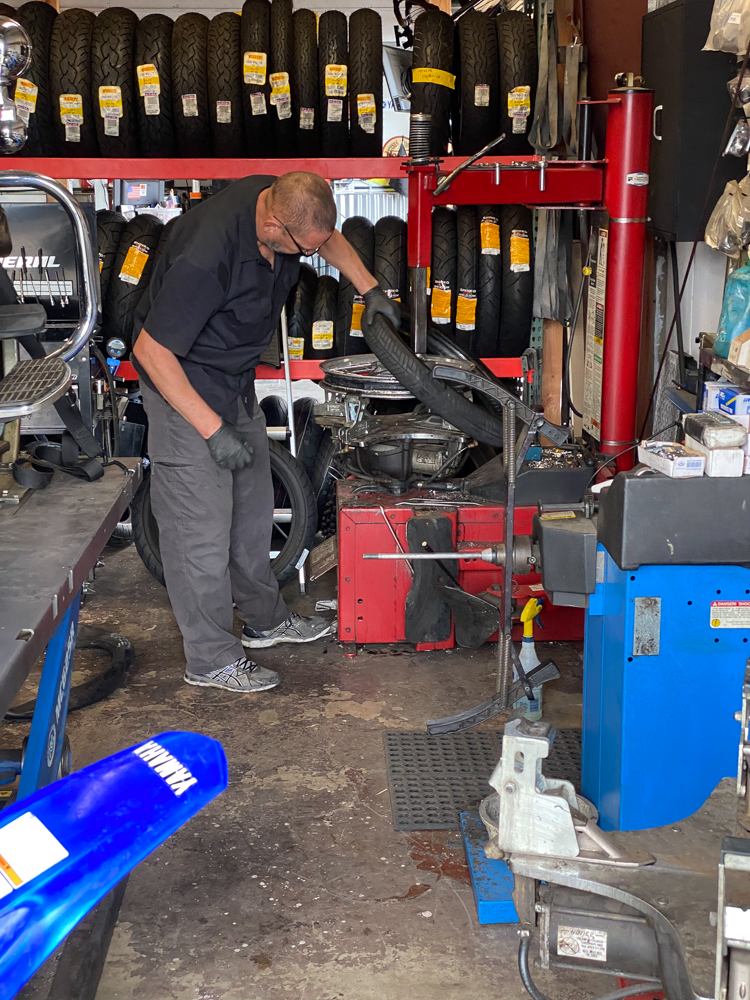
So on a rare rainy day in Scottsdale it was off to MotoTire with my wheel and new front tire for installation and balancing.


The old Metzeler ME33 Lazer, its tread down to 0.08″, is removed.
The rubber rim strip protects the inner tube from punctures from the nipple nuts.


On with the new – 0.18″ tread depth on the Avon AM26 Roadmaster.
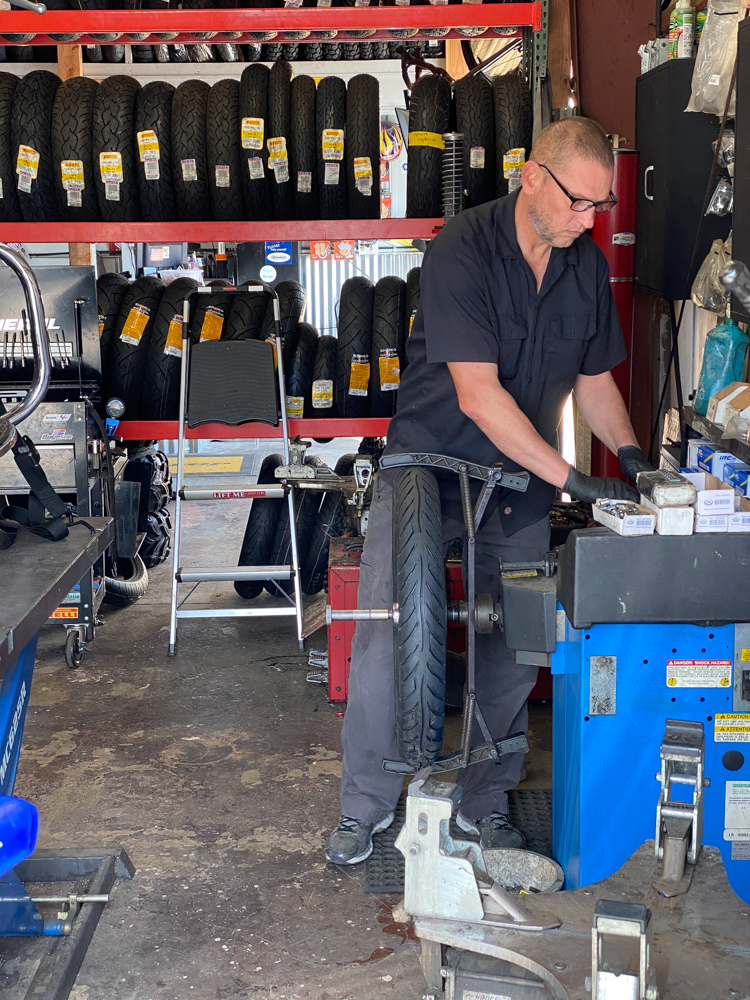
The wheel with new tire is on the balancing jig.

While both tires are tubeless, I have to use tubes with the old, spoked rims on the bike, which leak air. It’s the one thing I would change on the bike if I could, as a puncture with a tubeless tire is far slower – and hence safer – than with a tubed one. Don’t ask how I know.

We will see how the new Avon holds up. I make it a point to buy tires online from a high volume dealer, meaning I get fresh rubber. The molding of this one back in the land of tea and cricket was just 4 months ago.

One strange quirk is that the factory always specified English inch sizes for tires of that era. The closest metric size does not fit well within the wheel well, making for lots of garage language when replacement is due.

I never cease to wonder at the speed and expertise of the mechanics who do this work. Ten minutes and $20 later the old tire is removed, the tube replaced, the new installed, inflated and the wheel assembly balanced. Amazing.

iPhone 11Pro snaps.

A tale of two tanks

Germania redux.

In the 1970s BMW airhead motorcycles were still very much the gentleman’s ride. Not super fast but comfortable, long legged and superbly made, in contrast to the garbage Britain was churning out and distinct from the increasingly ubiquitous Japanese offerings. The latter, affordable and beautifully made, killed the British motorcycle industry and almost saw off BMW, who migrated to garish colors and weird looks as part of their recovery strategy. Testifying to poor taste, that strategy succeeded and BMW Motorrad is a loud success today. I wouldn’t be seen dead on any of their modern machines.

In the early 1970s you could have your new BMW with either the small 18 litre (4.7 gallon) or 22 litre (5.8 gallon) tank. The looks were quite different and the latter extended the touring range to over 250 miles on a fill up. When I bought my 1975 R90/6 from the original owner in 1990 it came with the smaller tank. I tracked down a tired larger one for touring and when my body finally cried ‘enough’, ending my long distance riding days, I reverted to the small tank. In beautiful shape with pin-stripes hand painted by the ladies in the Berlin factory, it restored pride of ownership. The large tank was trashed, the paint crazed, the inside flaking and, worst of all, the pinstripes were ghastly stick-on types. Sacrilege.

If you want to see the ladies in action jump to 6:06 in this French video of the factory, made back in the day. It loads slowly.

Anyway, the small tank never looked quite right proportionally:


18 liter tank in place.

So I took out a second mortgage, took the trashed large tank down the road to Spooky Fast Customs in Scottsdale, and eight weeks later I had a pristine tank with a new liner, paint job and exquisite hand pin-striping:


With the 22 liter tank.

The knee pads afford a proper grip over rough terrain, and the proportions are better, looking more Germanic – meaning more functional and stolid – in keeping with the character of the nation and the motorcycle. Sure, my bank balance took a blow, but after 30 years of service it was the least I could do for the machine.