Staring me in the face.
It’s not for nothing that my mother gave birth to me on St. Thomas’s day and duly named me Thomas. For those into Christianity, Thomas was the ultimate skeptic. Judas, unlike his fellow scum in the banking sector today, at least had the courage to off himself. All but one of the remaining eleven apostles took Christ’s wounds for granted, but Thomas was having none of it. He had to check it out. I like that guy, and it took Caravaggio to truly do him justice and, as usual, he pulls no punches.

St. Thomas, that greatest of skeptics, checks for himself.
In a world where everything on the internet is taken as gospel, we could do with more like him.
So, having been duly skeptical about the hype surrounding Panny’s 20mm lens yesterday, and after returning the lens to B&H in disgust after one day and 434 exposures, I think it’s only fair to set the record straight. The good thing about being a skeptic is that you rarely get ripped off; the bad thing is that when something really good stares you in the face you tend to take it for granted. And that ‘something good’ has been staring me in the face for some 18 months now. I admit it. When it comes to the expression ‘kit lens’ I am prejudiced. Prejudiced as in ‘It’s a piece of plastic junk used to keep the price of a basic DSLR low’.
So my ghastly experience with the Panny 20mm f/1.7 MFT lens is a salutary lesson, one which taught me that the Panny ‘kit’ zoom is one of the great optics of our time. It’s appropriate, therefore, to devote a journal entry to that kit lens, the Panasonic 14-45mm f/3.5-5.6 OIS MFT Lens. I have been taking it for granted for far too long.
With some 9,500 exposures using this lens under my belt I can lay some claim to living in the real world of results, not in the theoretical one of chart and laboratory measurements.
Almost everything about this lens is right. It is small, it focuses very quickly, it’s sharp at any aperture and subject distance and it delivers every time. Let’s get the complaints out of the way first. It’s not a large aperture lens, meaning everything will be pretty much in focus at every aperture and most subject distances. You will not be adjusting the zoom ring with one finger because it binds and jerks. And, yes, there’s a lot of plastic in it, if that bothers you, though how that is relevant to the quality of your images beats me. Ever tried dropping your brass and steel (brassy steal?) $3,000 Leica Summicron on the sidewalk to see how well malleable, deformable metal survives gravity compared to plastic?
And, my word, this lens delivers.
You want blurred backgrounds? Hop into Photoshop CS5, use the lasso and ‘refine edges’ tools with Filter->Blur->Lens Blur and you have all the background blurring you need. Takes seconds to do on those special images. For a quicker, less nuanced result, you can just use the localised adjustment brush in LR3 and turn down the sharpness, using the slider, for the highlighted area. Don’t forget to hit Command-Option-O (it’s a toggle) to show the outlining mask as you do your outlining.
Point this lens into the sun, as in ‘the sun is in the picture’, and you will get an occasional flare spot, easily removed in Photoshop. Does the result lose contrast as a result? No.
Use this lens in poor light and you will be struggling with a compromise between noisy high ISO and movement blur. But compromise you can, and you will still get the photograph. At ISO1600 noise from the G1’s sensor is not nice, but a bit of post-processing and you can get a decent 13″ x 19″ print. One that works fine unless you like sticking your nose in the canvas.
So, Panny, thanks for one of the truly great optical masterpieces of our time. I don’t care how you got there, I don’t mind if you used plastic ‘glass’ and polycarbonate this and that, because I have an incredible hit rate with your optic on my G1. And I much prefer to cull images for poor timing/composition/realization than I do for wrong focus or flare. Further, the built in shake reduction (OIS) gets me the equivalent of two stops of sharpness (if not two stops less depth of field) so the f/3.5-5.6 becomes an effective f/1.7-2.8. Where I might use a 1/30th shutter with a non-OIS lens, here I can use 1/8th with the same result. What’s not to like? The 13″ x 19″ prints on my wall tell a story no LCD monitor can. This lens is superb.
When Panny went to the G2 and later models the 14-45 morphed into a 14-42, which sells for $150 less. Whether that’s because it’s a poorer optic or not, I cannot say as I have yet to try one, but I do know that my 14-45 is very much a keeper.
Until the recent Panasonic GH2 camera came along all Panny and Olympus MFT bodies (which is the same as saying ‘all interchangeable lens MFT cameras’) used the same sensor. The GH2 claims to improve on that sensor and, if they are to be believed, the 14-45 kit zoom will only move to strength with the additional benefits of an improved ‘back end’.
The kit zoom is highly recommended if it’s the only lens for your G-body and street snaps are your preferred genre. And I promise never to use the words ‘kit zoom’ as pejoratives again.
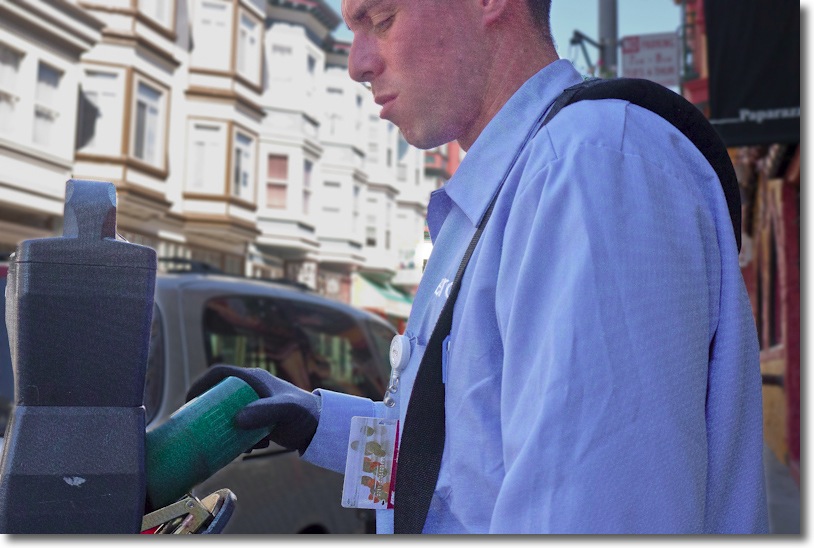
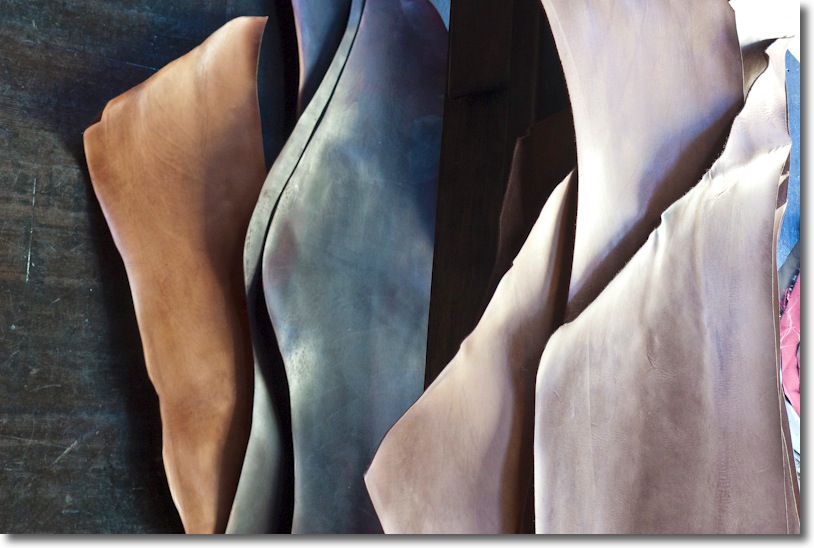
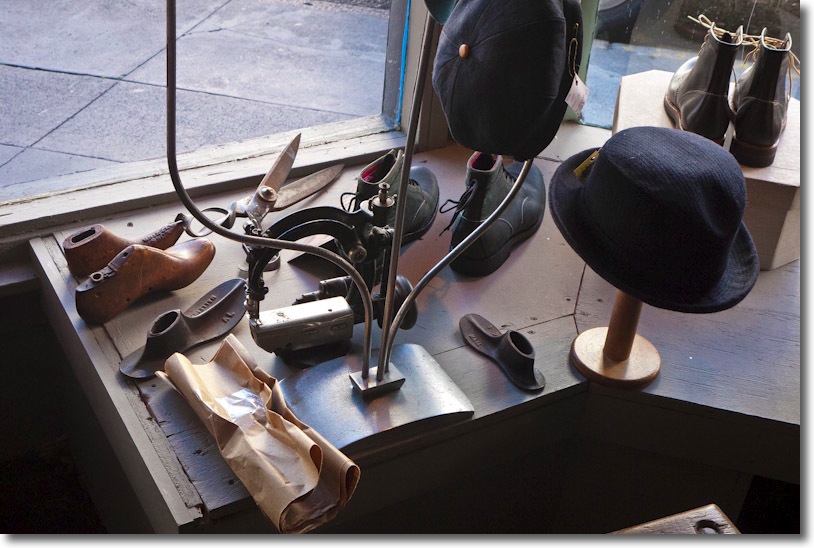
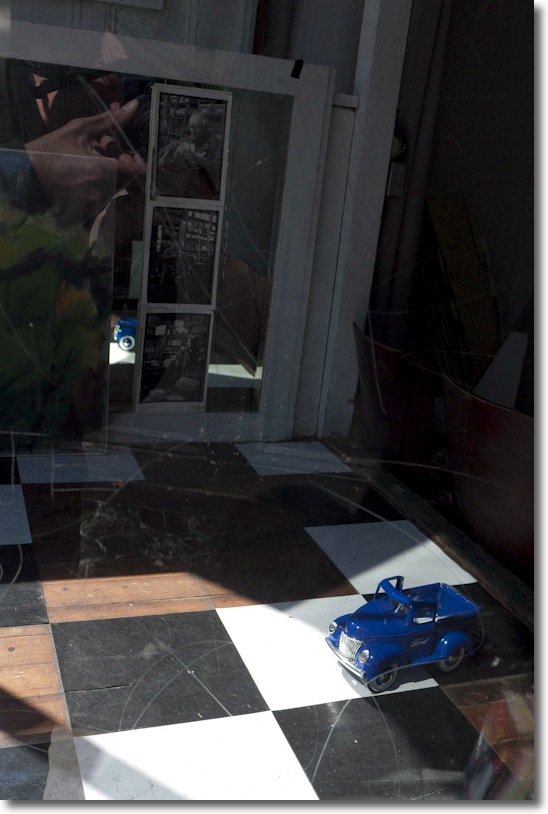
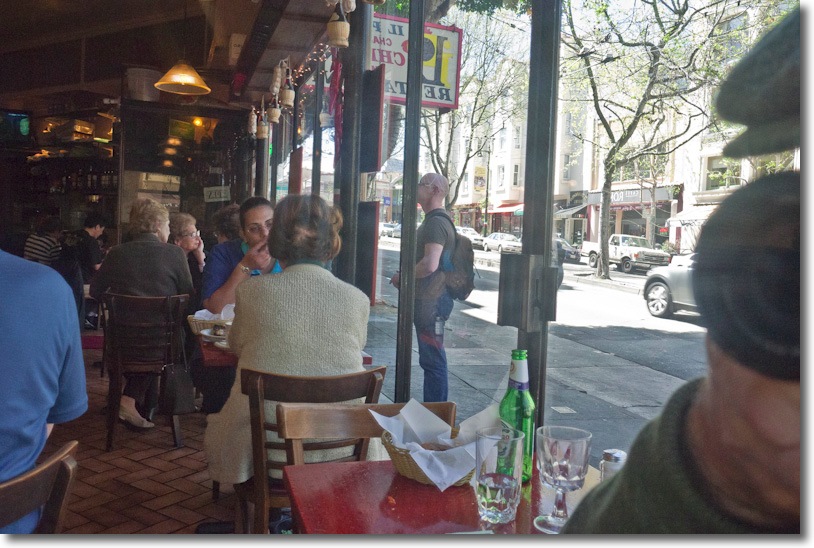
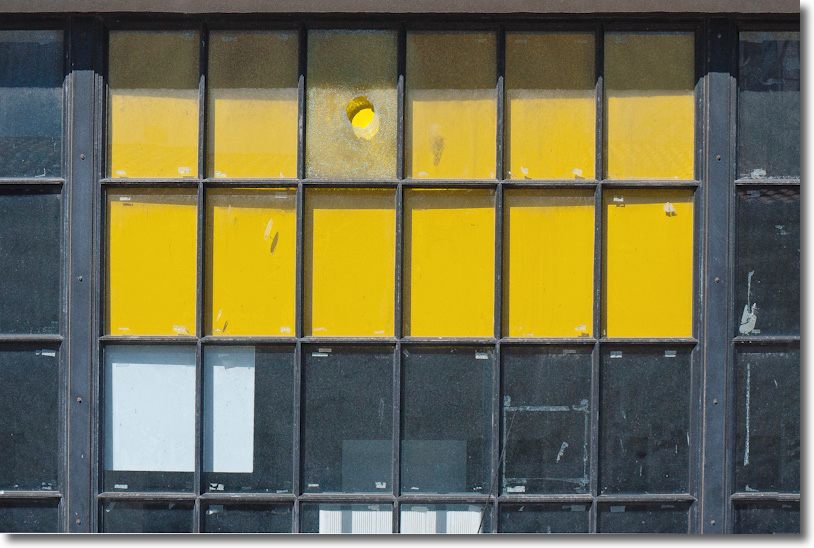
Pictures speak louder than words, so I took the kit lens out for a spin yesterday, just to heal the wounds left by the 20mm, and here are a few results:

Click the picture to see the PDF.
All taken at ISO320 on the G1 body with minimal post processing.