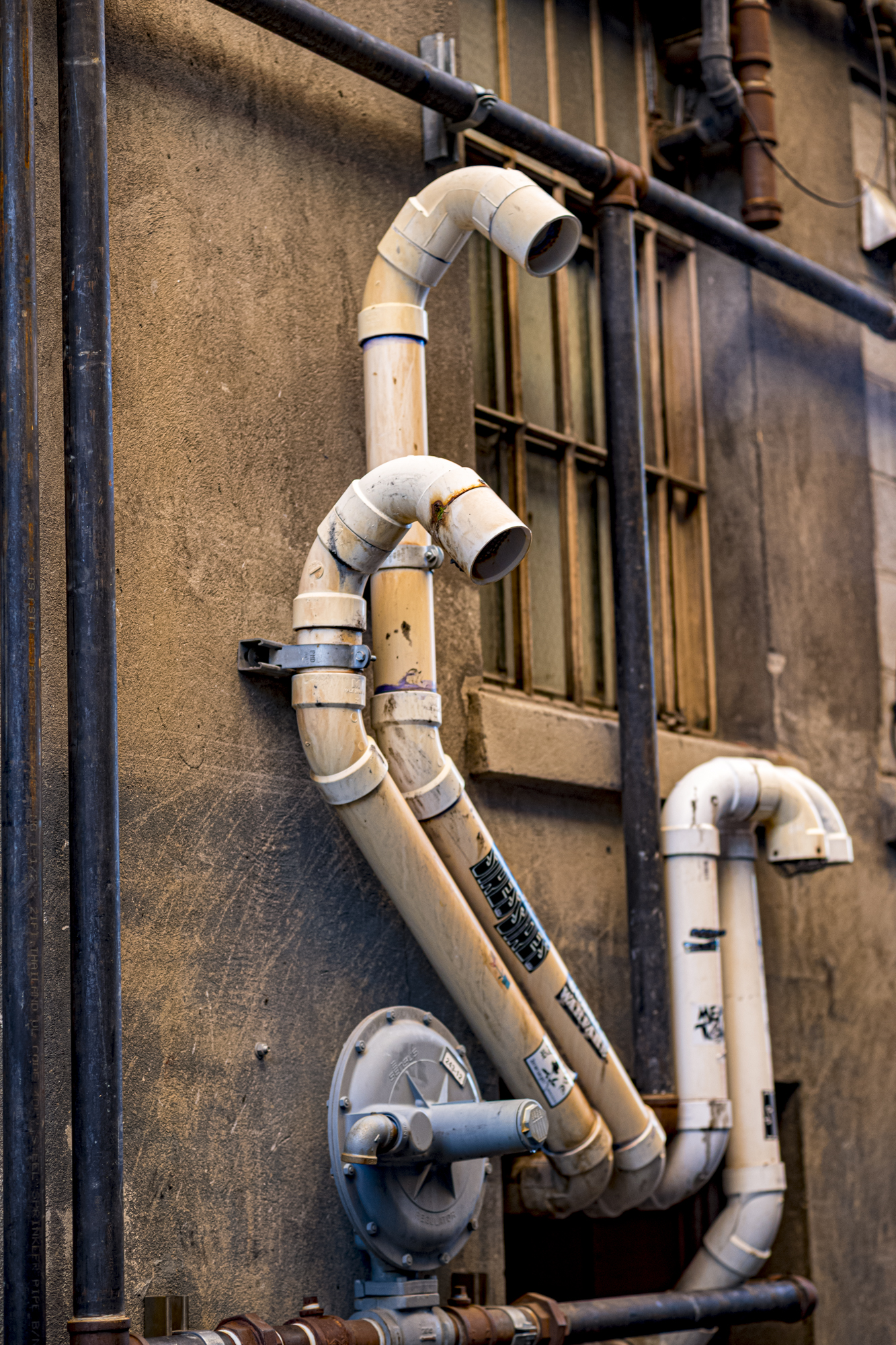
From my front yard.

Leica M10, 35mm Canon LTM.
Design purity.

In contrast to the oft luxurious interiors, the exteriors of Airstream trailers are admirable for their severity and cleanliness of line.
iPhone12 Pro Max, Apple Pro RAW.
When life was slower.
My local community stages Old Time Farm Days annually, the goal being to show how farms were run a century ago. It’s a lot of fun, especially for kids.


Revolutionary War soldier. Those muzzle loading muskets
may have been slow and wildly inaccurate, but they
still managed to do a number on the Redcoats.

John Deere.

Old time tractor.

Barn.

Horse harnesses. Even at full aperture the 35mm f/2
Canon LTM lens delivers fine resolution.

98 year old cream separator.

The hand cranked separator in action. The centrifuge
spins at 4,000 rpm flinging the heavier cream
to one side, the skim milk to the bottom.

Children watching the separator in action, all rapt attention.

Corn husker. Simple, effective and fast.

Blacksmith working cast iron.
All snapped on the Leica M10 with the 35mm f/2 Canon LTM (all but the first image) and the 90mm f/2.8 Tele-Elmarit.
Making for a fun environment.
In yesterday’s piece I illustrated how continuous improvement of a workspace makes for a better work environment. More welcoming, more useable, more efficient.
I also mentioned how art works interspersed with the various tool walls and shelves lighten up the space, making for a warm welcome on every visit. More fun!
Here are the twenty varied pieces on display in my garage.
These four prints are from images snapped at the Laguna Seca Historic Races in 2008, where the paddock is nothing less than a cornucopia of vintage machinery. As always, it’s the details from the height of the mechanical age which fascinate. All snapped on the Canon 5D with a 100mm EF Canon Macro lens and a ring flash:


Classic motorcycles are always of interest, here displayed on tinplates:


When it comes to classic BMW air cooled twins, nothing beats period posters:


I first encountered the Sinclair Dino when filling up on a long motorcycle trip through beautiful Utah:


Ford advertisement from the early days:

Back in the day 250,000km was deemed a high mileage for an engine. So much so that Mercedes would give owners a certificate commemorating the event. My 1983 300SD turbodiesel was on 343,000km when I finally sold it in 2005:

License plates from my many locations:

No self-respecting garage is complete without some bawdy tinplates:


So there!

Handy and inexpensive.
I have hit a bad battery spell. The one in the two seater died, no start. The one in my 1975 BMW R90/6 died despite being just 14 months old. And the one in my scooter was beginning to sound weak. All batteries are maintained on a trickle charger in a heated garage.
Now I have been very lucky as all my recent battery failures have occurred at home, meaning I was not left stranded on the road. But this spate of failures left me determined to become more proactive about knowing the state of health of my vehicle batteries so I splashed out $23 on a Konnwei KW208 car battery tester. Maybe not the greatest choice of name, true, more like something you expect of the White House, but at that price hardly a great risk either.

First, the manual, in half decent English is printed in minuscule type. Click Konnwei instruction manual and you can enjoy a proper sized version.
The device can test batteries in or out of the vehicle, and this model is limited to 12 volt cells. If in the vehicle and still working you can also test the cold cranking amps (CCA) as a percentage of the rated value (it’s on the battery’s label under ‘CCA’). This is a key measure as CCA is the high current delivery required to activate the starter and turn the engine. Additionally you can test the alternator’s power delivery (the alternator keeps the battery charged when the vehicle is running) as well as the starter’s cranking efficiency. I tested all of these on a failing and then on a new motorcycle battery and the measurements accurately reported ‘Replace’ and ‘Good Battery’, respectively. For the good battery state of health (SoH) and state of charge (SoC) were both reported as high, as expected.
The cables are nice and long so there is no difficulty installing the clamps (remember to connect the red – positive – first and disconnect it last) and the clamps grip well. No battery is required as the tool uses the vehicle’s battery for power. The LCD screen is easy to read, unlike the instruction book.
As for getting stuck on the road with a dead battery, I carry one of these jump starters – it delivers the instantaneous high cranking current which a failing battery cannot deliver and, once the vehicle is running is disconnected as the alternator can pass sufficient current through the dying battery to keep the engine running.
I now feel better prepared for the inevitable battery failure(s) down the road …. or in the garage!