Category Archives: Paintings

Without paintings we are nothing

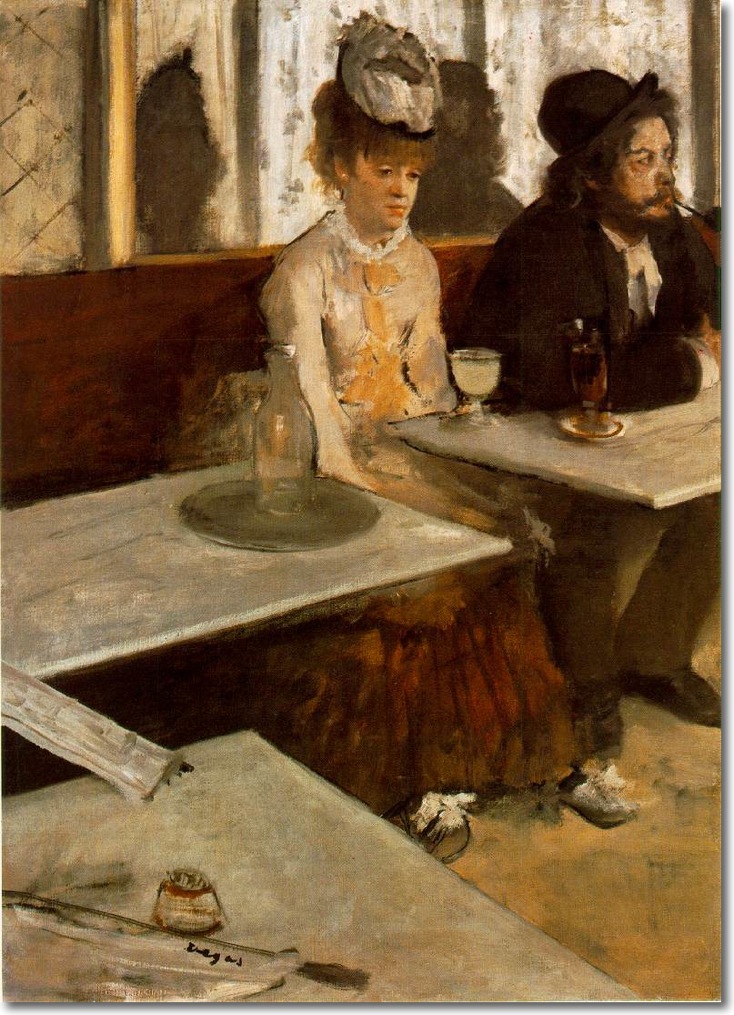
L’Absinthe

Hope dissolved.

Degas had a good crack at it in 1876. As the most photographic of painters, he showed life without hope, the pair deep in their cups, drinking ill distilled absinthe en route to blindness and death. And then there’s that wide-angle vision of his, with the signed knife in the foreground.

Until this time just about every painter saw though a 50mm lens, with the possible exception of the incomparable Paolo Uccello (1397 – 1475, quite an innings) whose Battle of San Romano was very much seen through a 21mm. Fortunate Europeans can see this work in the National Gallery, the Uffizi or the Louvre, but without a shadow of a doubt the one in London is a standout, one of the true materpieces of Western art. High time someone in America bought it …. a rounding error for a tech IPO windfall. I so miss standing close to the canvas completely subsumed by the action. After all, it would be a challenge to sanity to return to rain and Ivan saturated London.

I had a go at the same theme recently, at the oldest drinking spot in South Beach, SF, The Saloon, a survivor of the 1906 earthquake and fire. The default beer here, Pabst Blue Ribbon, is arguably worse than badly distilled absinthe. I asked the barman for permission to take pictures yet this image was completely unposed. ‘L’Absinthe’ flashed through my mind as I pressed the button. Degas pioneered the technique of cutting people off at the edge of the frame, one devolved from his photography. I just copied that. This is from the full frame, no cropping.
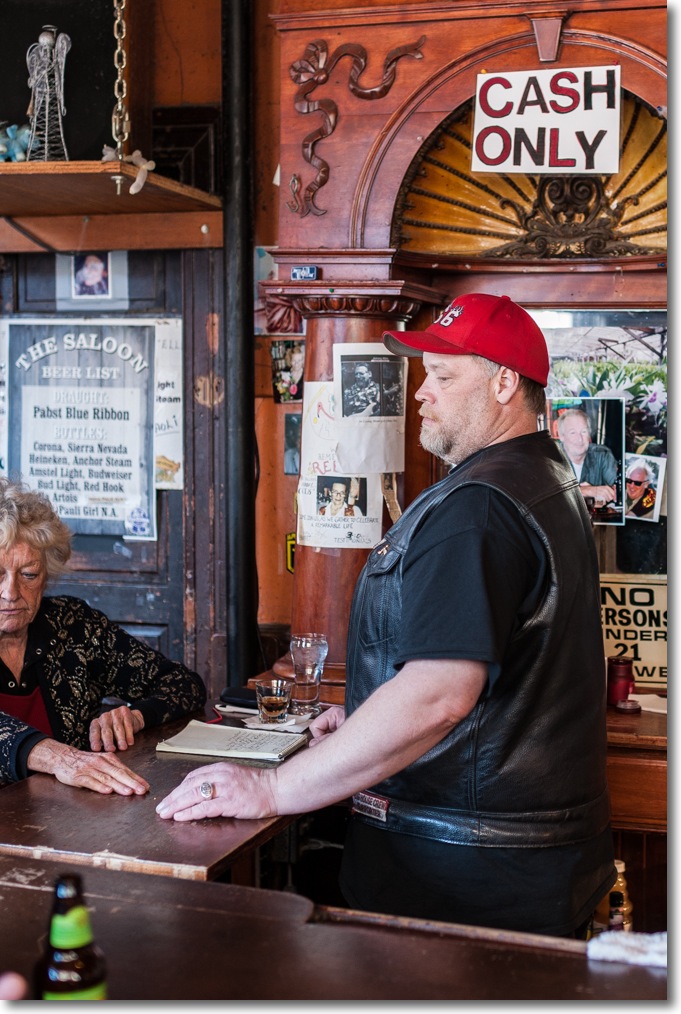
Nikon D3x, 35mm f/1.4 Nikkor G at f/2 (a loaner, before I finally got a 35/1.4 Sigma which actually focused properly. Decent lens, the Nikkor, focuses well, but no Siggy when it comes to resolution wide open). That said, the 18″ x 24″ print of this little drama on my wall is simply a showstopper, with especially lovely rendering of color. You will not go wrong with the 35mm f/1.4 Nikkor G, though it costs an arm and a leg.
David Hockney at the de Young

An exceptional show.


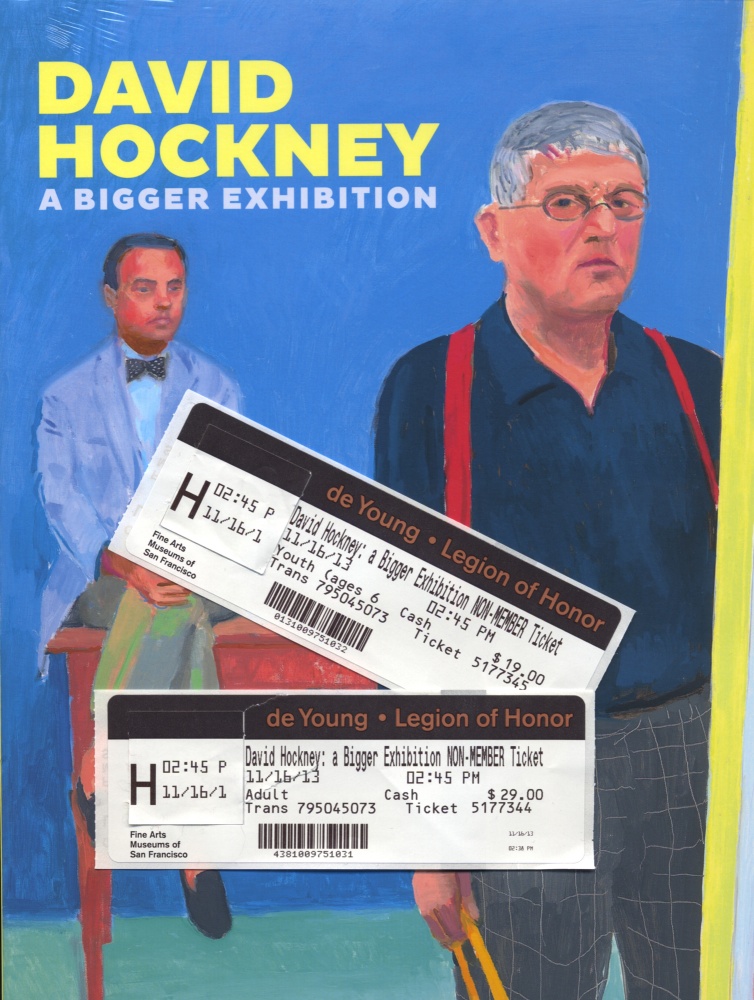
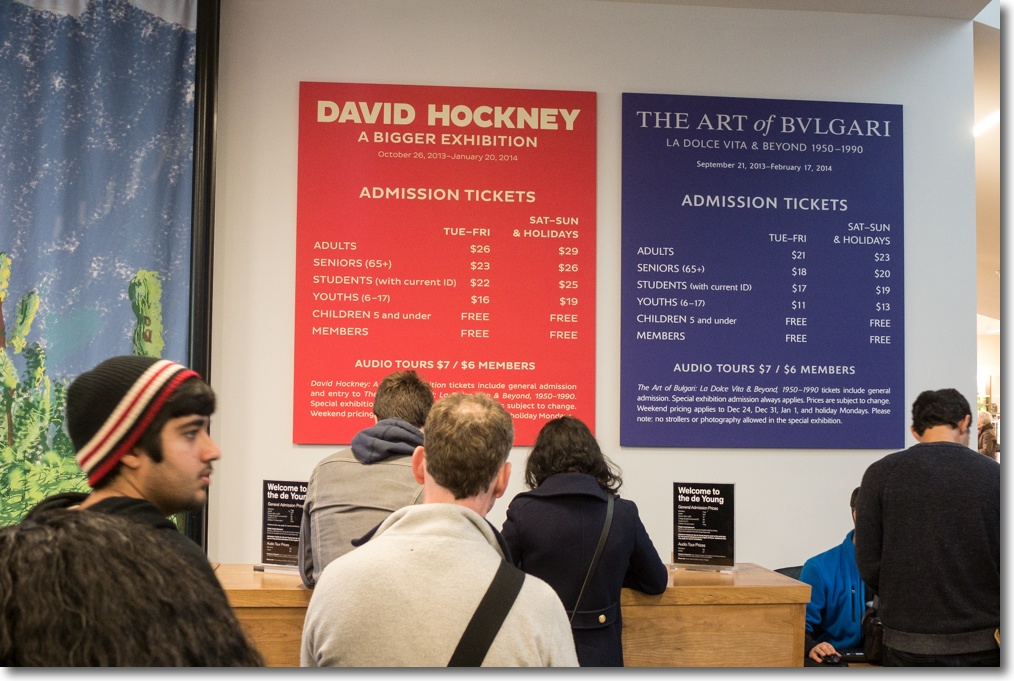
Buying the costly tickets.


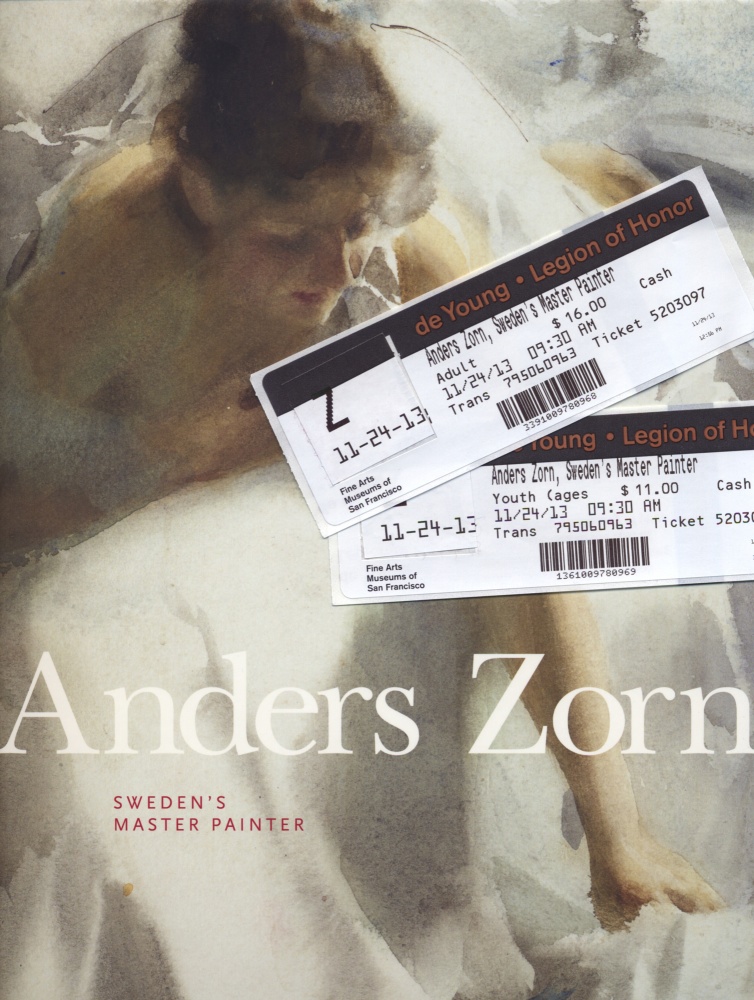
The book of the show – highly recommended.

The David Hockney show at the de Young museum in Golden Gate Park is exceptional in every way and a must see for any photographer. Only works by this prolific artist since 2002 are shown in what is the largest exhibition the de Young has ever mounted. Hockney makes use of modern and traditional technologies in inspiring ways and the New York Times’s critic was bang on in describing him as ‘… one of the greatest colorists since Matisse’, though it has to be added that Raoul Dufy is a kindred spirit.


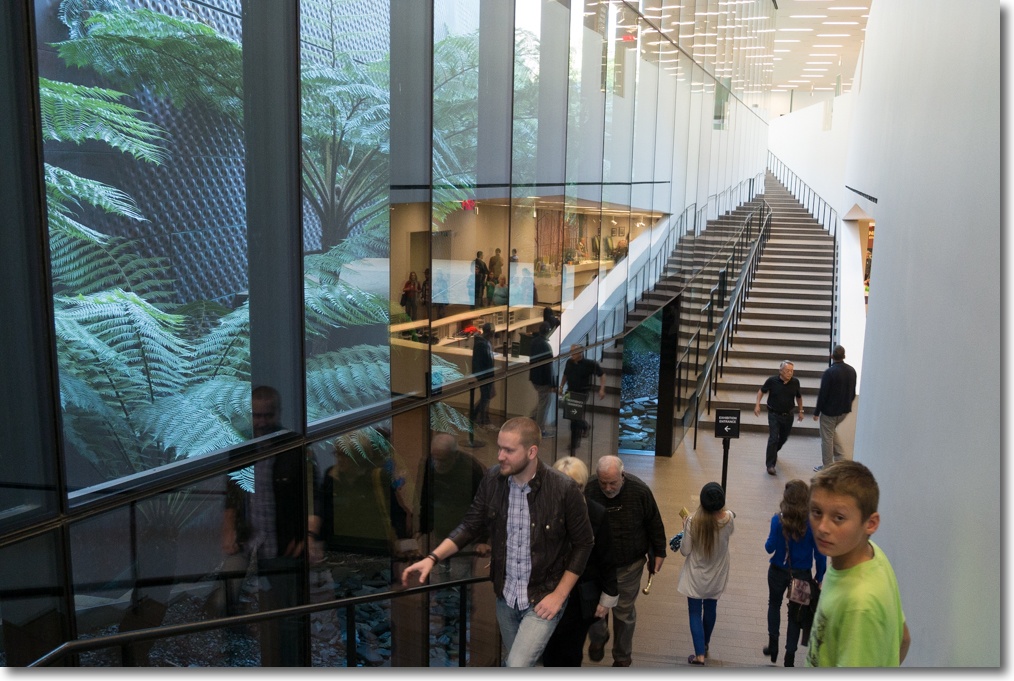
My son Winston approaches the show with unjustified trepidation.

Among the many compelling images on display here are video displays showing Hockney’s iPad compositions in time lapse – quite riveting as you literally see the creation of the work (the artist explains that he discovered that the Brushes app actually records each image creation session) – as well as the huge wall displays of eighteen or more large LCDs showing the beauty of the Yorkshire countryside whence Hockney hails. The last eight years he spent there (he lives in Los Angeles) were exceptionally productive and one room, whose four walls show giant multi-panel paintings of a country lane in each of the four seasons, is perhaps the finest thing in the show. The images are, without exception, joyful and Hockney’s love for his native Yorkshire shines through.

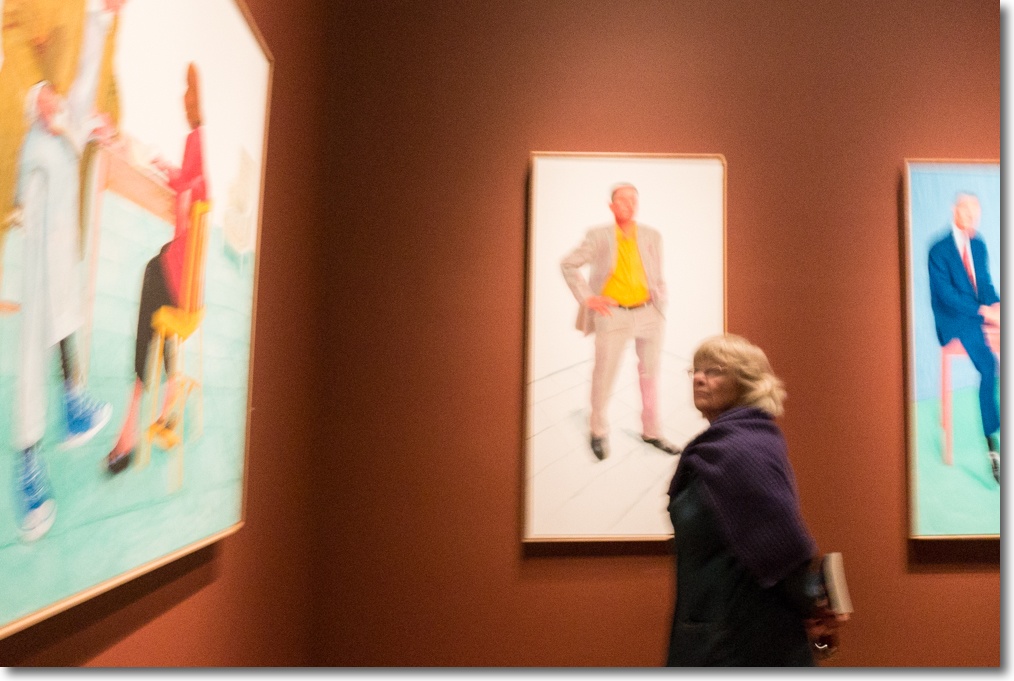
There are also many portraits of his friends done in that somewhat flat and naïve style which maybe could be represented in less volume, but are charming for what they are.


Portraits. No photography allowed.

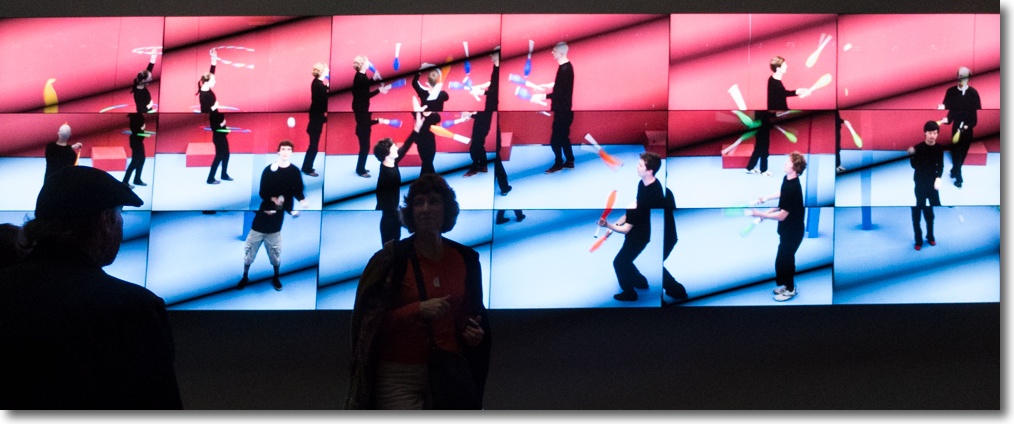
Another room contains no fewer than twenty-four large LCD panels with motion images of jugglers doing their thing. It’s a lot of fun and reminds us that Hockney never gets pretentious about his art or takes it too seriously. He’s too well grounded in his Yorkshire roots to permit that sort of silliness.


Jugglers.

One large room is dedicated to the ‘Great Wall’, containing Hockney’s clippings of great paintings since 1400 and showing how the use of the camera obscura from around 1420, where painters traced a projected image of the scene in a darkened room, started to affect ways of seeing. The camera may not have been invented for another four centuries but the room shows compellingly how seeing changed with the introduction of technology.

Highly recommended.

All images except the second on the Panasonic GX7 at ISO 3200.

Stacks

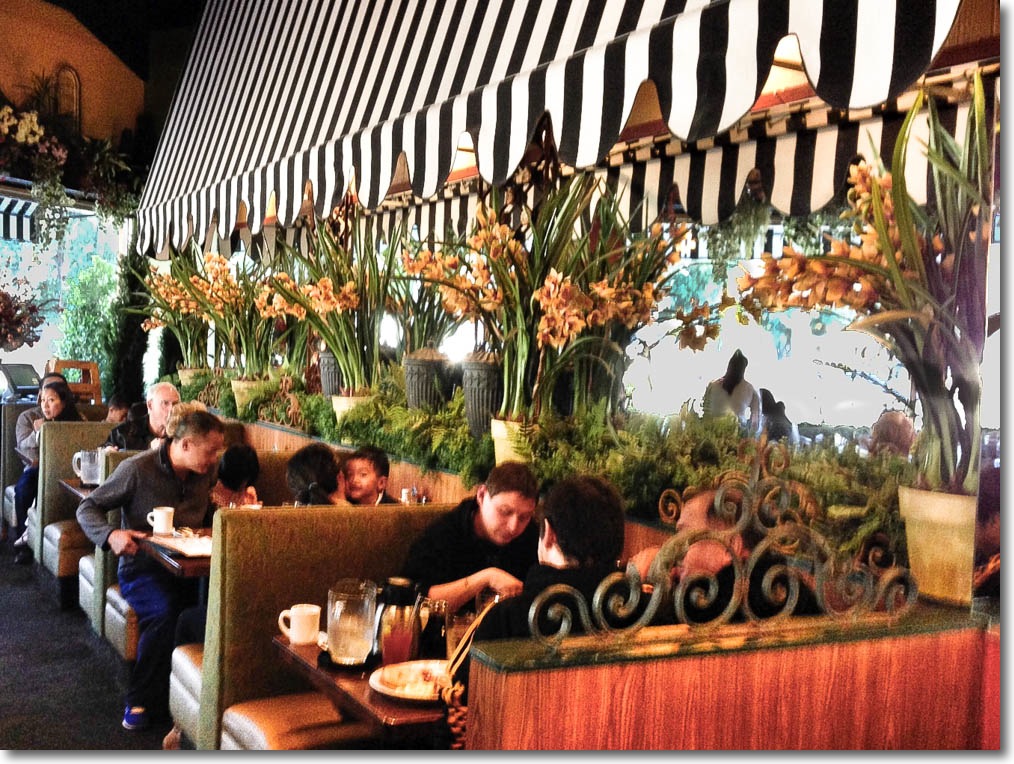
A lovely environment.

If you want to get into any of the three Stacks restaurants – in SF’s Hayes Valley, in Palo Alto or my local, in Burlingame – get there as soon after 7:30am opening as possible. Much later and there is certain to be a long line outside and there’s a good reason for that.


Stacks this morning. iPhone5 snap.

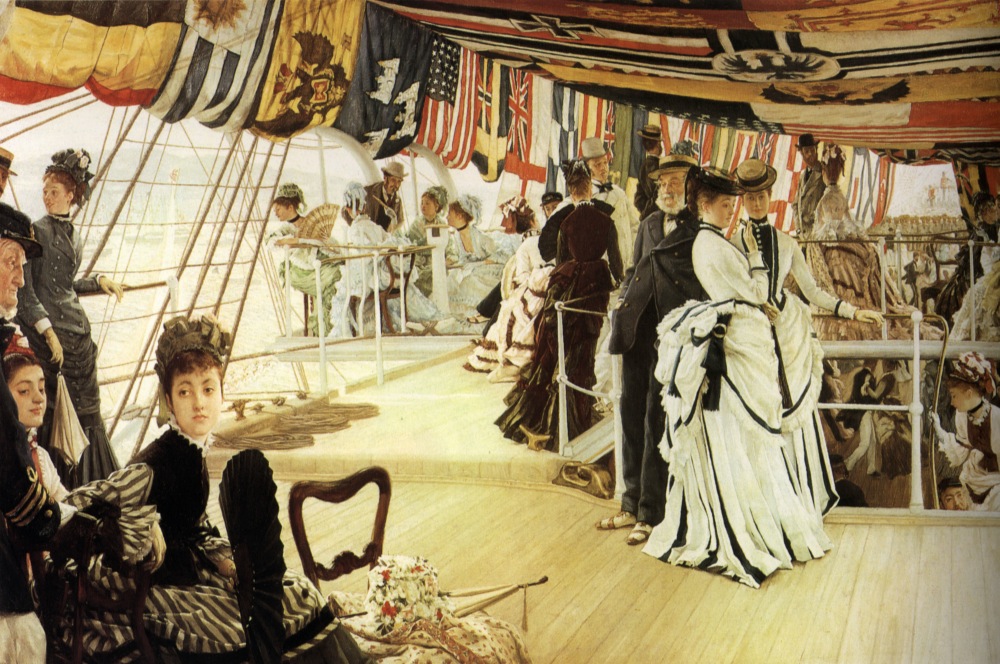
The service is world-class and the environment is reminiscent of nothing so much as a Tissot, although dress standards are not what they were in Victorian times:


James Tissot’s ‘Ball on Shipboard’ – 1874. Tate Gallery.

And while you can probably get similar food at the local greasy spoon for less, you will not get the atmosphere to be enjoyed here, at Stacks you will not be forced to converse with horny handed sons of toil at the bar. My son did serious damage to a couple of pancakes and I destroyed the all meat omelette. The pot of coffee provided, and left on our table, would have fueled a whole Arctic expedition. With tip our meal came to $30.

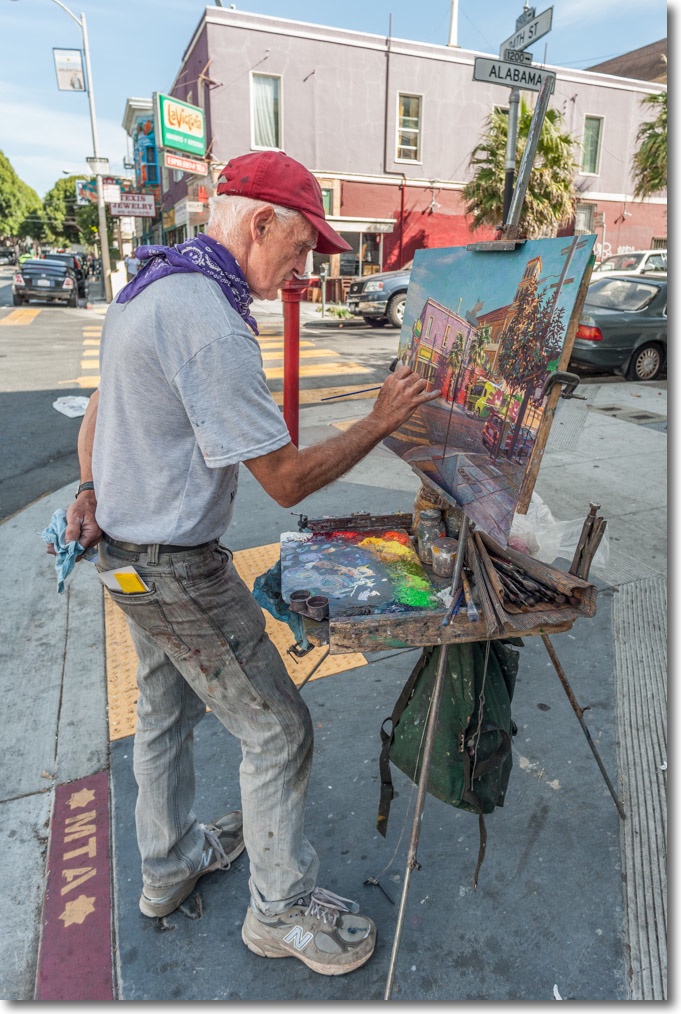
Anthony Holdsworth

Painter of street scenes.


24th Street and Alabama.

“So are you here on vacation?” Anthony asked.

Boy, I thought I would have lost the accent by now.

“Well, not exactly, I moved here in 1977 from London, so it’s been home for more than half my life. How about you?”

“My folks came to the States in 1955 from Bournemouth, and I have been painting all my life. Our ‘special relationship’, huh? What do you do?”

“Oh, I take pictures. I do love the wide angle look you have in this painting.”

“Yes, that’s the advantage we painters have – we can choose our angle of view regardless of the subject’s distance. And, of course, we never have to struggle with dynamic range, but I guess you can always use Photoshop?”

“True, but it’s not a great answer much of the time. How long does one of your paintings take?”

“Depends on how much I have to correct, but generally about 20 hours. I try to do two a week. The Mission District is really changing, you know.”

“You mean the Starbucks?”

“Yup. And it’s driving prices of everything through the roof and driving out the locals.”

From his web site:

“Anthony Holdsworth was born in England in 1945. He was introduced to oil painting in high school by the New England painter, Loring Coleman. Holdsworth embarked on a painting career while working as Head of Outdoor Restoration for the Uffizi Gallery in Florence, Italy after the flood of 1966. He continued his studies at the Bournemouth College of Art in England where he studied with master draftsman Samuel Rabin and color theorist Jon Fish and at the San Francisco Art Institute where he studied with Julius Hatofsky.”

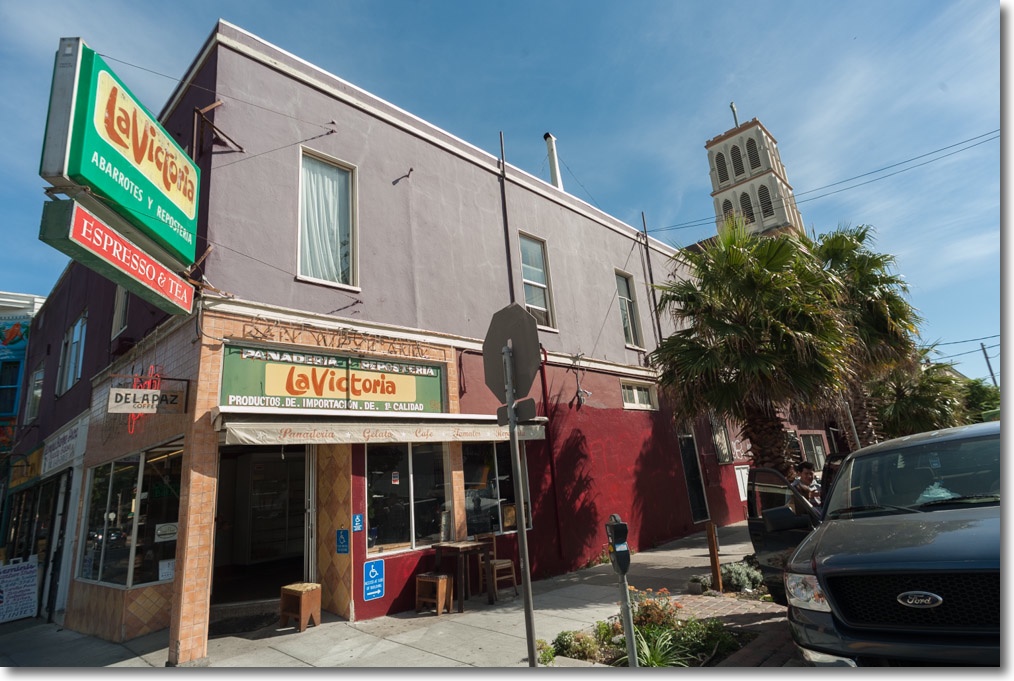
Here’s is Holdsworth’s subject, from close-up to recreate his perspective. As you can see, he was well distant, across the street, whereas I was very close to his subject.

Nikon D3x, 20mm UD Nikkor.

Holdsworth’s paintings of the Mission District, mostly on 24th Street, are here.