Abstract expressionism in the Mission District.
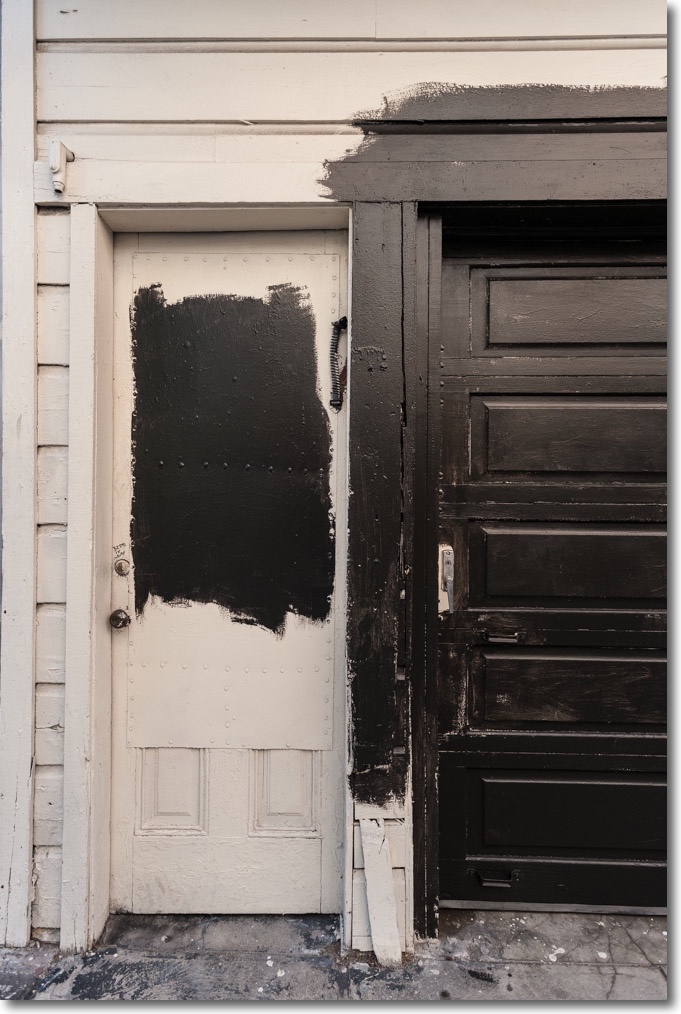
In Cypress Alley, off 24th Street.
Nikon D3x, 20mm UD Nikkor.
For more about Robert Motherwell, click here.
Abstract expressionism in the Mission District.
In Cypress Alley, off 24th Street.
Nikon D3x, 20mm UD Nikkor.
For more about Robert Motherwell, click here.
Online.
Holland’s wonderful Rijksmuseum is now available online and consonant with Dutch philosophy, all the museum’s great art works can be downloaded free in high quality JPGs for personal use.
Sign up for an account and have at it.
What’s not to like about the Dutch? A splendid work ethic, a liberal mind set, and they speak English. Germans without guns.
The most photographic of painters.
A friend in London is visiting the Manet show at the Royal Academy and sent over a clandestine snap of The Luncheon. The image below is the real thing.
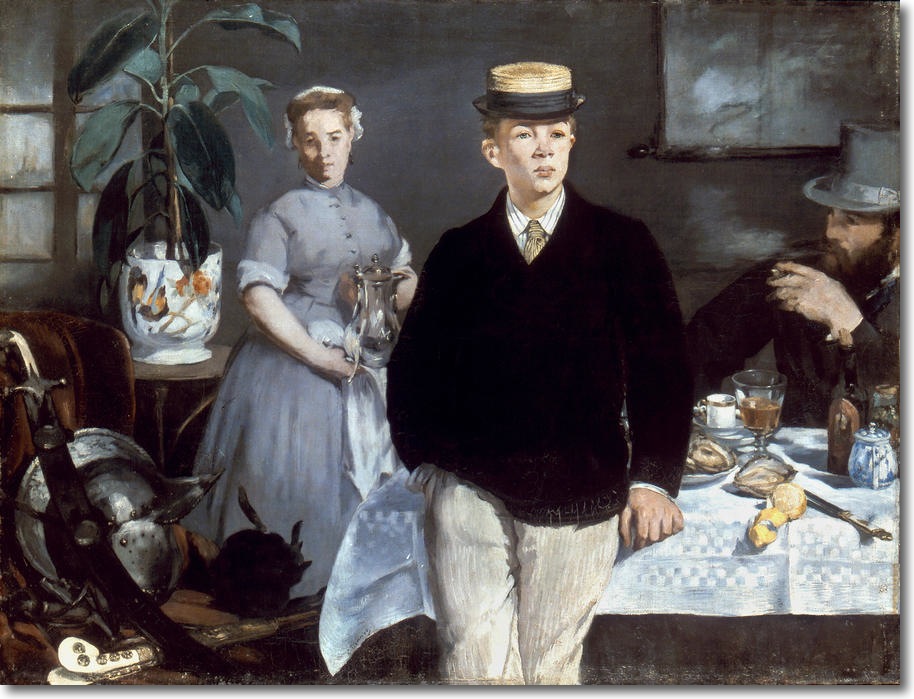
Has there ever been a more purely photographic vision in oils? Manet’s genius was that he snapped the image of the haughty, wealthy young diner departing the feast in his mind, only later transferring it to canvas. The modern photographer is spared both the need for genius and of the skill in rendering something similar. Manet used what looks like the equivalent of 24mm lens vision here, albeit using a large aperture to render the waitress blurred.
The no less special The Railway from the National Gallery is also in the show.
It’s all been done before, generally better.
A friend sent me a piece on a London exhibit which documents the history of photo manipulation in pre-Photoshop times. When Content Aware Fill came to Photoshop a while back, allowing the near instant removal of obtruding elements in images, it was merely automating something image makers have been doing for thousands of years. That something is pleasing a client or finding the pantry bare on returning home. In reportage this is inexcusable but in all other fields of endeavor my reaction is ‘Have at It’. If it looks better, it sells the product or keeps a starving artist in bread and water.
Take a peek at any Raphael or Titian or Giorgione. The players are model perfect. The protagonists in Titian’s ‘Noli me Tangere‘ are straight from a latter day Hollywood. Perfect. Christ is out of a Ralph Lauren ad and Mary Magdalene has the classic profile of a Roman goddess, not that of the scrubber she really was.
But there were a couple of bad boys who really didn’t much care what the client thought and hewed to their own vision. Degas (1834 – 1917) is one and he was wealthy enough not to care about sales. The other, the shining example of the breed, was Caravaggio (1571 – 1610) and everything I have seen of his work suggests that he not only knew how good he was, he knew he was so good that it was his way or the highway. “You want pretty” I can hear him saying, “Buy a Raphael” (1483 – 1520). “You want real, here’s my bill”.
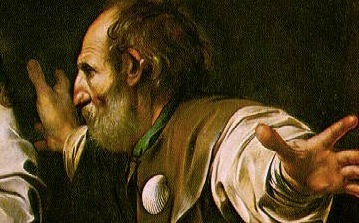
Let me step back. As the proverbial starving student in 1970s London, one of the great blessings of a Socialist administration – maybe the only blessing – was its conviction that free museum entry for anyone with a student card was a fundamental right. So thank you, Mr. Wilson, for the many free afternoons I spent in London’s National Gallery, arriving courtesy of a like-priced subway pass. And what was the primary cause of my many visits? What remains unquestionably the greatest image, nay, the greatest photographic image, of the Renaissance. Caravaggio’s ‘Supper at Emmaus’. (There’s another version in Milan. The London one is what you want).
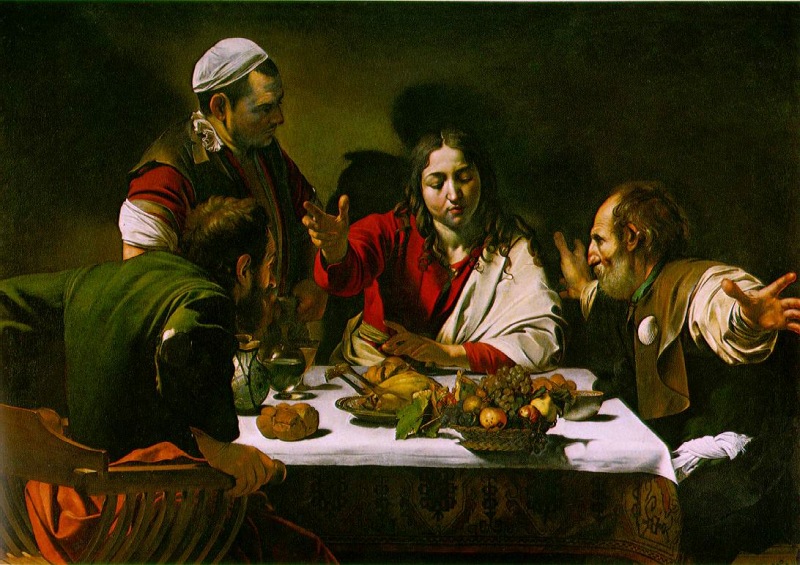
Sure, the lighting is manipulated, the composition beyond perfect. But that’s where Madison Avenue stops.
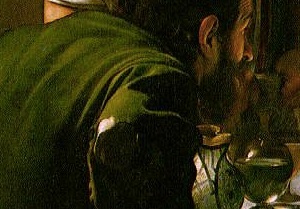
The torn sleeve
The broken nose
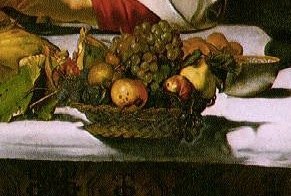
The rotten fruit
And the faces were those of the working people the artist found on the street. No make-up or plastic surgery here. A painting like no other. Well, maybe excepting the few dozen other Caravaggios extant.
So while Joe Stalin though he was onto something years before Content Aware Fill, there really is little new under the sun.
I left the socialist’s English paradise behind in 1977 but feel for those poor students who now may never revel in Caravaggio’s masterpiece as they cannot afford the price of entry. Subsequent administrations put paid to free entry and of course, like all ‘conservatives’ with their Oxbridge degrees safely on the wall, they sought to deny others that which so mightily benefitted them. That seems to be a global belief of the greedy. Whether the Japanese, British or French leaders with their select degrees from the best schools, or their latter-day successors from Harvard and Yale, once they got theirs free they jolly well made sure you paid for yours.
There’s a lot for any photographer to learn from that bad boy Caravaggio.
A dark modernist.
No painters used photography more than Degas, David Hockney and Francis Bacon (1909-1992). For the last, it was the source of much of his output of dark, brooding, tortured canvases, familiar to all. I doubt that his personality was captured better than by the expressionist photographer Bill Brandt in this powerful portrait:
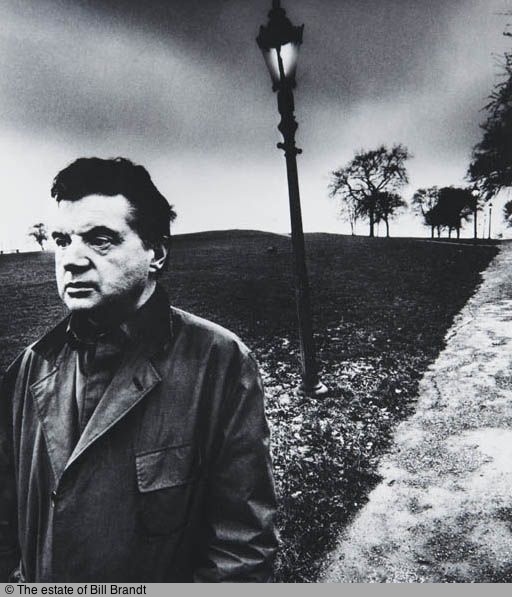
Bacon’s foundation has just released a free e-book on the painter, his studio and his use of photography, well explained in the first of the two included videos. You can read more about it here, whence you can download it to your iPad at no cost. The book is an example of where art publishing is headed and is beautifully done.