Category Archives: Paintings

Without paintings we are nothing

Devorah Sperber

An unusual digital artist.

Mention of the Stein show at SF’s MOMA prompts me to add that a far more interesting show, with insights into Stein’s collecting, writing, sponsorship of artists and friendships with photographer, is to be seen at SF’s Contemporary Jewish Museum.

The size of the show is far more manageable than the overblown offering at MOMA and you come away with a better understanding of the woman and her work. While her writing is pure, undiluted crap, we owe her a debt of thanks for sponsoring so many struggling artists and photographers.

The fact that Stein continues to inspire contemporary artists is seen in the last of the five rooms of the CJM show and one of the pieces on display there is quite startling.

Detail View: “After Picasso,” 2006, by Devorah Sperber, 5,024 spools of thread, stainless steel ball chain
and hanging apparatus, clear acrylic viewing sphere, metal stand (104″-122″ h x 100” w x 60”- 72″d)

Sperver has done nothing less than recreate, on a large scale, Picasso’s famous 1906 portrait of Gertrude Stein. Her choice of pixels is ….5,024 spools of thread! Viewed though the small magnifying glass some feet in front of the spools, the compressed and right-way-round image of Stein is a perfect reproduction of Picasso’s masterpiece.

It’s easy for me to say that anyone could do this. Simply create a look-up table for the colors of each pixel on your computer then order $30,000 worth of spools of thread. Tell your nine year old to assemble it according to your table and there you have it. All you need add is a $5 magnifying lens. And just imagine the image taking to life as your child gradually assembles it!

Simple to say because I didn’t think of it and neither did you. This is a different kind of digital imaging.

You can visit Devorah Sperber’s web site here.

One Magic Second

Just divine.

One Magic Second.

Date: July 2, 2011
Place: 24th and Folsom Streets, San Francisco
Modus operandi: Loitering about.
Weather: Fabulous morning light.
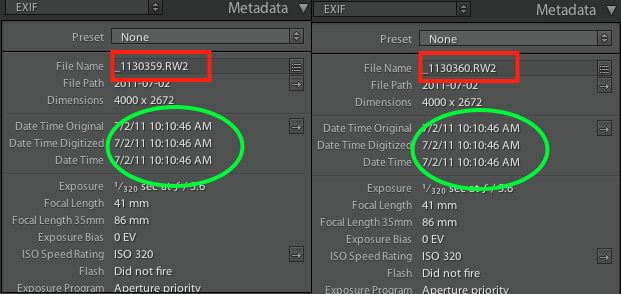
Time: 10:10:46 and 10:10:46
Gear: Panasonic G1, kit lens at 86mm FFE
Medium: Digital
Me: Creating an indelible memory
My age: 59

Our boy has been taking cartooning lessons at the Sirron Norris studio on Valencia in the Mission District. Sirron is a marvelously talented cartoonist and his work is to be found on murals all over the Mission District. As he relates it, the only thing he recalls wanting to do as a child was to draw, and his vocation has become his profession. While Winston labors away under Sirron’s watchful eye, I traipse around the area hoping to catch a snap or two of the vibrant street life that is everywhere. Truly, few square blocks of San Francisco so abound with possibilities as do these.

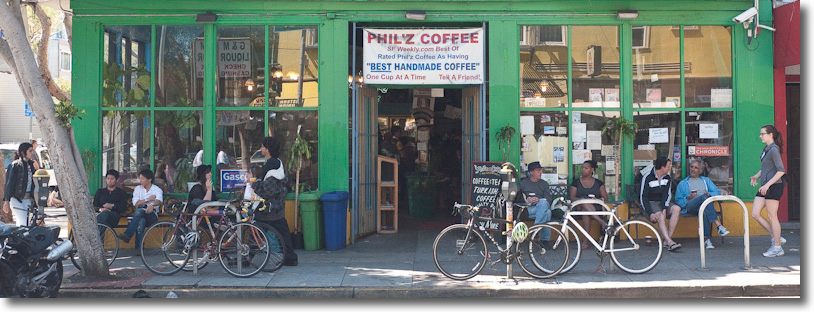
Phil’z Coffee at 24th and Folsom is very much at the center of Mission District culture. On any morning you will find the locals gathered for a cup of joe and some gossip. And, if you get lucky, you will see some beautiful people there.

Phil’z Coffee at 24th and Folsom Streets. G1, kit lens @ 23mm, 1/500, f/4.7, ISO 320.

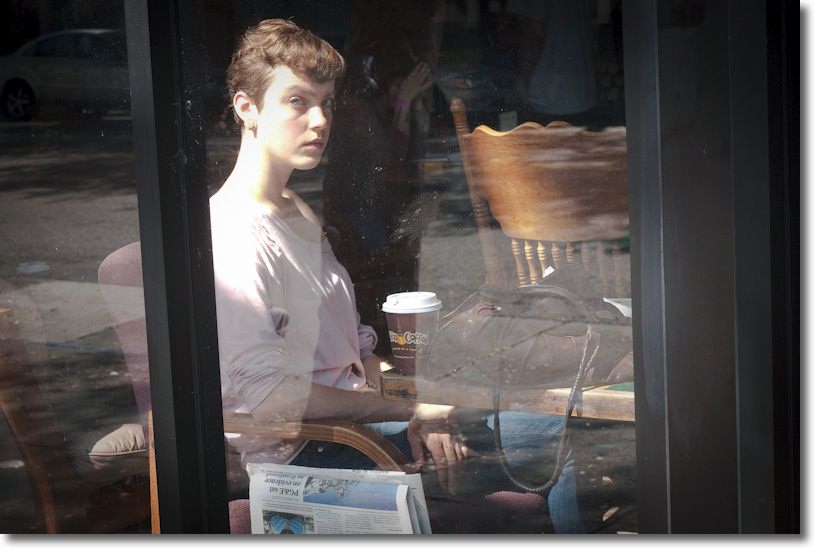
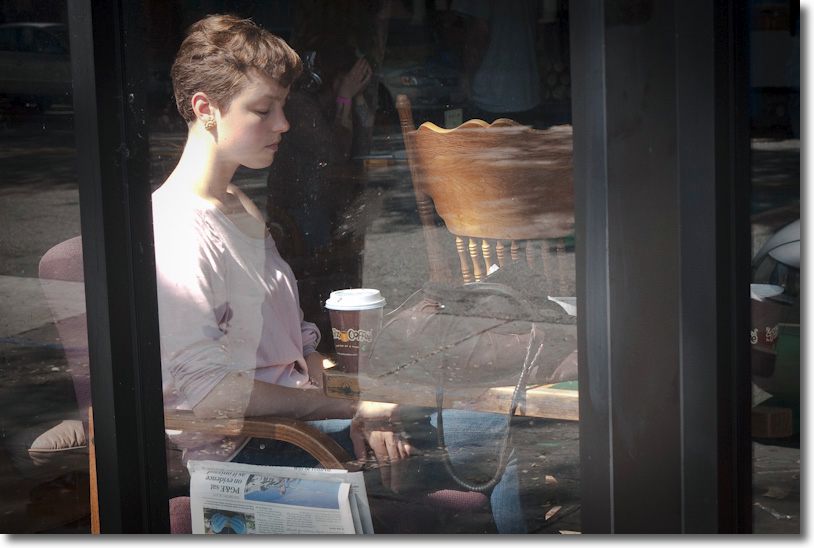
I was meandering along 24th Street yesterday morning and idly turned the corner onto Folsom where my eye was instantly drawn to this serenly beautiful young woman, posed as if for Titian and his oils. She saw me raise the camera deliberately to my face, gazed back at me untroubled and unthreatened, then looked down, lost in thought, the morning sun outlining her swan-like neck. The magic moment was over so quickly I found myself wondering if it had really happened, yet the processed film suggests it did. This is the sort of thing any street snapper absolutely lives for. Literally, One Magic Second.

Swan Neck. G1, kit lens @ 41mm, 1/320, f/5.6, ISO 320.

So fleeting was this moment that a check of the EXIF data for the two snaps shows both were taken within the same magical second of time – 10:10:46 am, July 2, 2011.

This sort of thing used to be the province of the rangefinder Leica but, frankly, that camera’s antiquated, slow manual focusing could scarcely be a worse choice for the modern street snap genre. Quite why anyone buys these anymore leaves me mystified – too slow for street snaps, no zoom lenses, too limited for anything else and silly-priced. Doctors and dentists, I suppose. Or should that be hedge fund managers?

Update: I shared these snaps with a friend who writes eloquently:

“That look…… the right half shows the shyly flattered contentment …(wild inward pleasure)….at being considered actionably photogenic.”

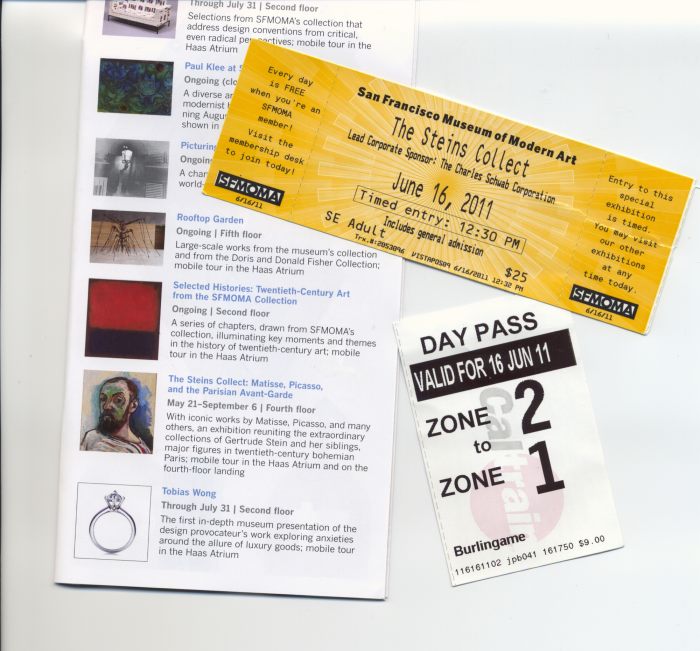
The Stein show at SF MOMA

Quite special.

When it came to collecting early twentieth century modern art, none could outdo the Steins. Not only was their appetite voracious, their taste was also excellent. All of this is clearly on display in the show at SF MOMA which presents most of their collections, many of the canvases and sketches now spread all over the world. The fours Steins, author Gertrude and her two brothers and sister-in-law, left America for Paris just as Picasso and Matisse were rewriting the history books of art, and started buying much of these artists’ output around 1905. While the Steins were far from robber baron rich, they could afford to buy for the simple reason that canvases from these masters ran a few hundred francs a pop. Today, Picasso’s portrait of Gertrude would likely run to eight or nine digits, though I very much doubt its owner, the Metropolitan Museum of New York, is a seller.

The show is huge and exceptionally well curated. I’m no great fan of Matisse and Picasso, but confess that seeing the original sketches for ‘Les Demoiselles d’Avignon’ was enthralling. It’s one of the few mistakes Gertrude made – she bought the sketches but passed on the canvas, now largely recognized as being the dividing line between representative and cubist art. Picasso’s portrait of Stein is also really special, though my favorites were Matisse’s ‘The Girl with Green Eyes’, his ‘Woman with Hat’ and the two sloe eyed portraits of Sarah and Michael Stein. There was also an exceptional Picabia portrait of Gertrude, deeply insightful.

SF MOMA was fortunate that Sarah Stein retired in California and gave some of her best works by Matisse to the museum. Mercifully she did not live in Arkansas.

Matisse – The Girl with Green Eyes. SF MOMA collection.

Matisse – Woman with Hat. SF MOMA collection.

It’s amusing to learn about the ridicule critics laded on these works, having done the same to the impressionists not 30 years earlier. That’s what so distinguishes the Steins’ collections. They did not have great wealth, just great taste, and did not need anyone to tell them what to like. When you look at some of the great Robber Baron collectors like Henry Clay Frick (now in his mansion on 5th Ave, NYC – the collection, not the man) and Charles Tyson Yerkes (dissipated by creditors) they were all professionally advised. Someone had to tell them what was good. Figures, I guess.

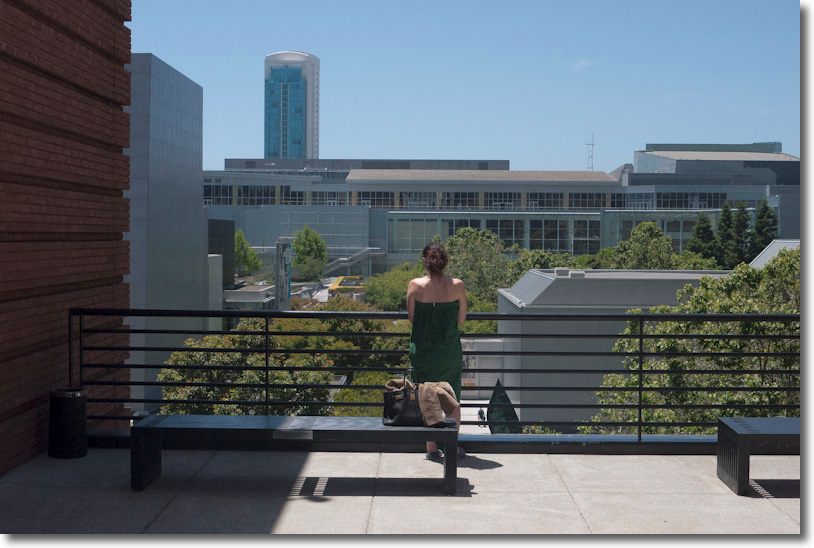
The exhibition is large, but then so were the Steins’ collections. Half way through you can pop out on MOMA’s balcony and take a breather.

MOMA’s balcony. G1, kit lens.

Strongly recommended, even at $25 to get in. Despite going on a weekday, the place was full, so weekends are likely not much fun. The $250 annual membership option at SF MOMA almost makes sense, as it includes private ‘members only’ viewings of great shows like this. I would think that means fewer people crassly stepping in front of you when you are trying to enjoy a canvas on the wall.

If you want a fine biography of the American expatriate set in early twentieth century Paris, I recommend James Mellow‘s ‘Charmed Circle’. It’s out of print, but mine ran me all of $1 from Alibris.com. Or for more fun, just catch Woody Allen’s latest masterpiece ‘Midnight in Paris‘ where you can join Owen Wilson, transported back in time, to Gertrude’s salon at 27 Rue de Fleurus. A light as air confection, it’s every bit as enjoyable and amusing as the work of the artists the Steins supported.

Gustave Caillebotte

A street snapper amongst painters.

If you are of the persuasion that Renoir’s confections are nausea-inducing, but one step removed from the modern horrors of Thomas Kinkade, then like me you may find yourself hewing to the astringent vision of Gustave Caillebotte (1848-1894).

As Paris became the city we know, magnificently laid out with wide boulevards and mansard roofs, Caillebotte was there to record the most perfect city in the world. He had no need to paint for a living, having inherited a fortune, but as history has shown time and again, poverty is not a qualification for great painting – or photography. For every impoverished Monet I can show you a wealthy Degas. For every Doisneau struggling to make the grocery bill, there’s a Cartier-Bresson enjoying his balcony view of the Tuileries.

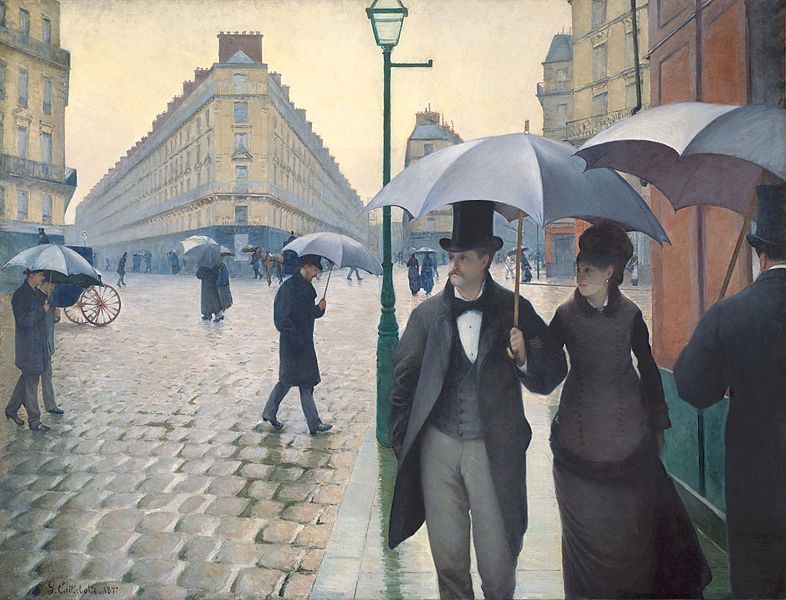
And both Degas and Caillebotte were very much infused with a photographic vision, the street paintings of both replete with photographic framing and decisive moments all over the place, long before HC-B saw the light of day. Caillebotte’s best known canvas is his ‘photograph’ of a rainy day in Paris in 1877:

The passerby on the right is cut off by the frame and the horse drawn carriage largely obscured at the left. Caillebotte loved the vision photography made possible but lacked access to gear with the technological prowess required for snapshots. The perspective in the painting is very much at the wide angle end of the spectrum – he was seeing through a 21mm lens.

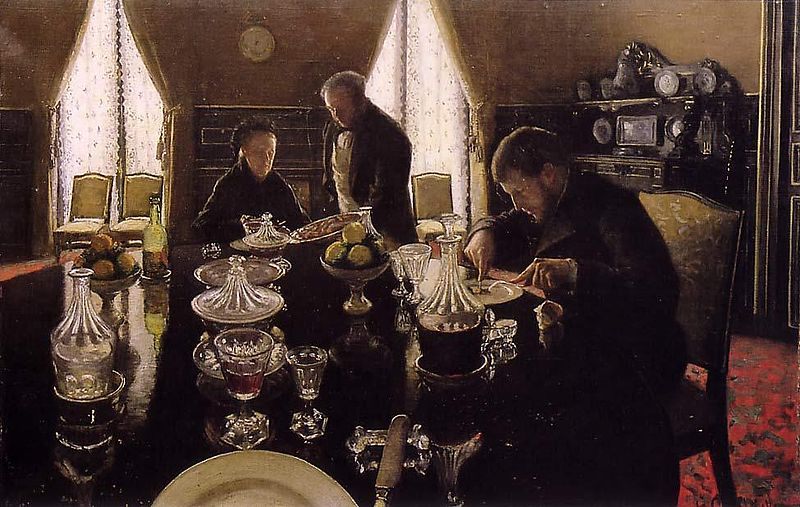
Nor was Caillebotte’s technique less than the finest. Look at this magnificent use of backlighting and the rendition of glass worthy of the finest from the Dutch school:

Modern photographic vision thinks nothing of compositional techniques which seemed so shocking back then. The reality is that we have all learned from the French street painting masters.

In San Francisco. G1, kit lens at 18mm, 1/2500, f/5, ISO 320.

In San Francisco. G1, kit lens @ 18mm, 1/1600, f/5, ISO 320.

Panasonic 14-45mm f/3.5-5.6 OIS MFT Lens

Staring me in the face.

It’s not for nothing that my mother gave birth to me on St. Thomas’s day and duly named me Thomas. For those into Christianity, Thomas was the ultimate skeptic. Judas, unlike his fellow scum in the banking sector today, at least had the courage to off himself. All but one of the remaining eleven apostles took Christ’s wounds for granted, but Thomas was having none of it. He had to check it out. I like that guy, and it took Caravaggio to truly do him justice and, as usual, he pulls no punches.
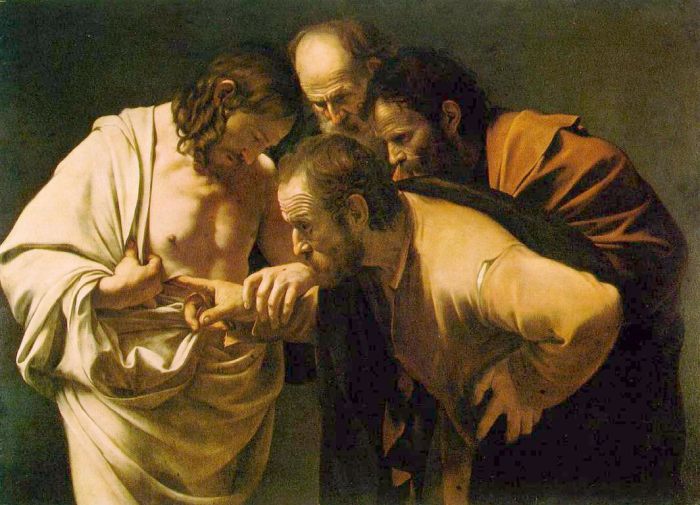
St. Thomas, that greatest of skeptics, checks for himself.

In a world where everything on the internet is taken as gospel, we could do with more like him.

So, having been duly skeptical about the hype surrounding Panny’s 20mm lens yesterday, and after returning the lens to B&H in disgust after one day and 434 exposures, I think it’s only fair to set the record straight. The good thing about being a skeptic is that you rarely get ripped off; the bad thing is that when something really good stares you in the face you tend to take it for granted. And that ‘something good’ has been staring me in the face for some 18 months now. I admit it. When it comes to the expression ‘kit lens’ I am prejudiced. Prejudiced as in ‘It’s a piece of plastic junk used to keep the price of a basic DSLR low’.

So my ghastly experience with the Panny 20mm f/1.7 MFT lens is a salutary lesson, one which taught me that the Panny ‘kit’ zoom is one of the great optics of our time. It’s appropriate, therefore, to devote a journal entry to that kit lens, the Panasonic 14-45mm f/3.5-5.6 OIS MFT Lens. I have been taking it for granted for far too long.

With some 9,500 exposures using this lens under my belt I can lay some claim to living in the real world of results, not in the theoretical one of chart and laboratory measurements.

Almost everything about this lens is right. It is small, it focuses very quickly, it’s sharp at any aperture and subject distance and it delivers every time. Let’s get the complaints out of the way first. It’s not a large aperture lens, meaning everything will be pretty much in focus at every aperture and most subject distances. You will not be adjusting the zoom ring with one finger because it binds and jerks. And, yes, there’s a lot of plastic in it, if that bothers you, though how that is relevant to the quality of your images beats me. Ever tried dropping your brass and steel (brassy steal?) $3,000 Leica Summicron on the sidewalk to see how well malleable, deformable metal survives gravity compared to plastic?

And, my word, this lens delivers.

You want blurred backgrounds? Hop into Photoshop CS5, use the lasso and ‘refine edges’ tools with Filter->Blur->Lens Blur and you have all the background blurring you need. Takes seconds to do on those special images. For a quicker, less nuanced result, you can just use the localised adjustment brush in LR3 and turn down the sharpness, using the slider, for the highlighted area. Don’t forget to hit Command-Option-O (it’s a toggle) to show the outlining mask as you do your outlining.

Point this lens into the sun, as in ‘the sun is in the picture’, and you will get an occasional flare spot, easily removed in Photoshop. Does the result lose contrast as a result? No.

Use this lens in poor light and you will be struggling with a compromise between noisy high ISO and movement blur. But compromise you can, and you will still get the photograph. At ISO1600 noise from the G1’s sensor is not nice, but a bit of post-processing and you can get a decent 13″ x 19″ print. One that works fine unless you like sticking your nose in the canvas.

So, Panny, thanks for one of the truly great optical masterpieces of our time. I don’t care how you got there, I don’t mind if you used plastic ‘glass’ and polycarbonate this and that, because I have an incredible hit rate with your optic on my G1. And I much prefer to cull images for poor timing/composition/realization than I do for wrong focus or flare. Further, the built in shake reduction (OIS) gets me the equivalent of two stops of sharpness (if not two stops less depth of field) so the f/3.5-5.6 becomes an effective f/1.7-2.8. Where I might use a 1/30th shutter with a non-OIS lens, here I can use 1/8th with the same result. What’s not to like? The 13″ x 19″ prints on my wall tell a story no LCD monitor can. This lens is superb.

When Panny went to the G2 and later models the 14-45 morphed into a 14-42, which sells for $150 less. Whether that’s because it’s a poorer optic or not, I cannot say as I have yet to try one, but I do know that my 14-45 is very much a keeper.

Until the recent Panasonic GH2 camera came along all Panny and Olympus MFT bodies (which is the same as saying ‘all interchangeable lens MFT cameras’) used the same sensor. The GH2 claims to improve on that sensor and, if they are to be believed, the 14-45 kit zoom will only move to strength with the additional benefits of an improved ‘back end’.

The kit zoom is highly recommended if it’s the only lens for your G-body and street snaps are your preferred genre. And I promise never to use the words ‘kit zoom’ as pejoratives again.

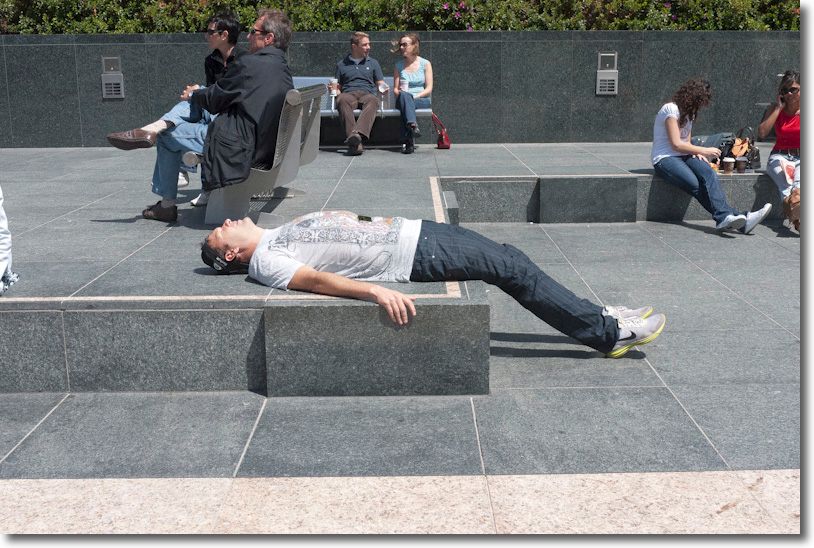
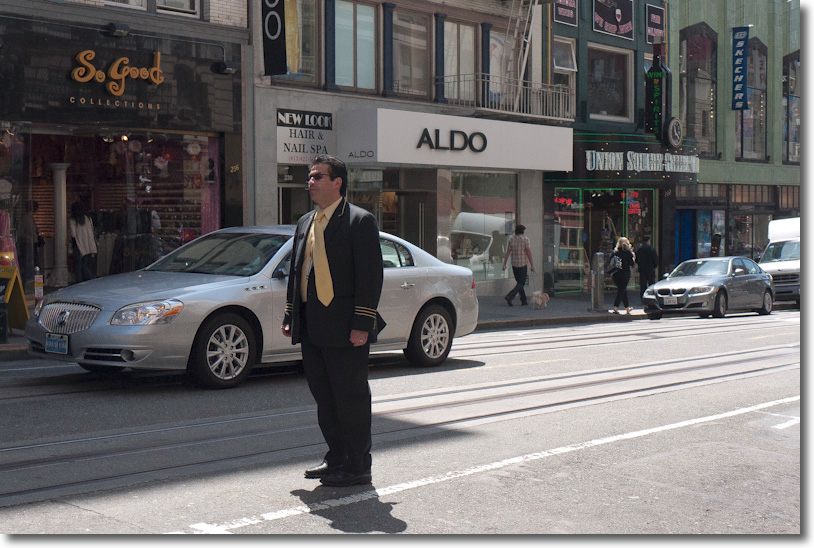
Pictures speak louder than words, so I took the kit lens out for a spin yesterday, just to heal the wounds left by the 20mm, and here are a few results:

Click the picture to see the PDF.

All taken at ISO320 on the G1 body with minimal post processing.