Category Archives: Paintings

Without paintings we are nothing

To get ahead ….

…. get a hat.

“To get ahead, get a hat” was a famous slogan of men’s hat makers in the middle of the last century when every respectable man wore a hat. Come to think of it, a lot of not-very-respectable guys wore them, too.

Speaking for myself, I wear a hat, more correctly mostly a cap, 365 days in the average year, more in a leap year. My choice is one of many English Tweed (sorry, Scottish Tweed) caps in my collection, though now and then you might find me under a Trilby or, on particularly eccentric days, a Sherlock Holmes Deerstalker. This one is ideal for taking street snaps as everyone writes you off as a harmless nut which, of course, you are. Summer, as often as not, finds me sporting a Borsalino linen number and I confess to always having had a hankering for a straw boater but have yet to own one. For years you could have found a Greek fisherman’s number gracing the old noggin and if I ever owned a bowler I am most certainly not admitting that here.

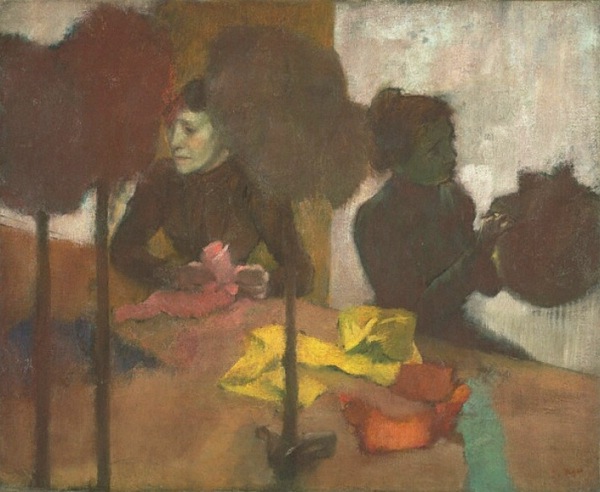
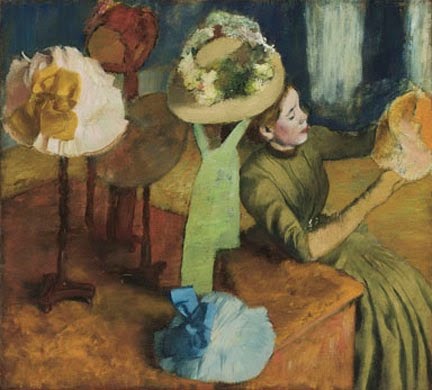
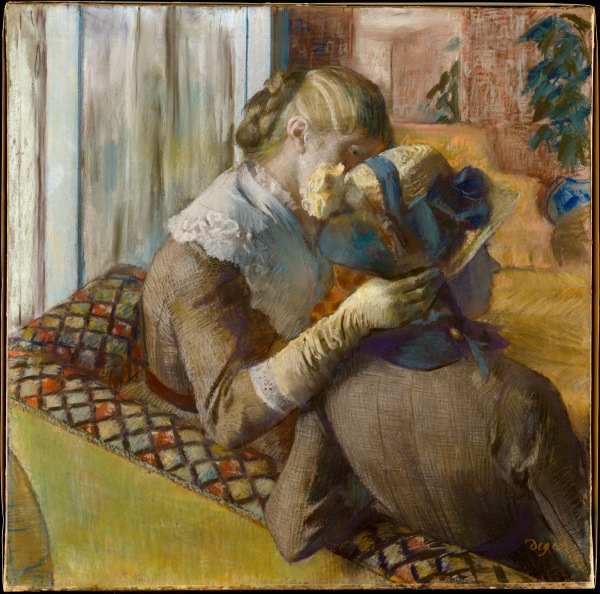
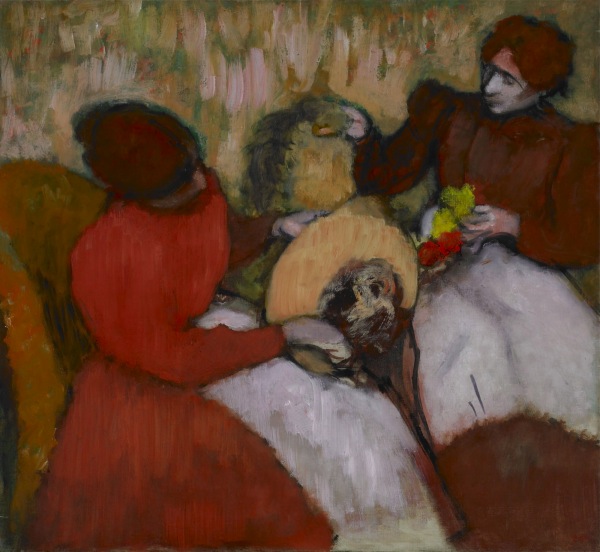
The milliner is a special kind of hat maker, catering solely to the gentler sex. No finer expression of his work – or his clientele – exists outside Degas’s priceless renditions.

And it’s not like he did it once. There are many renditions.
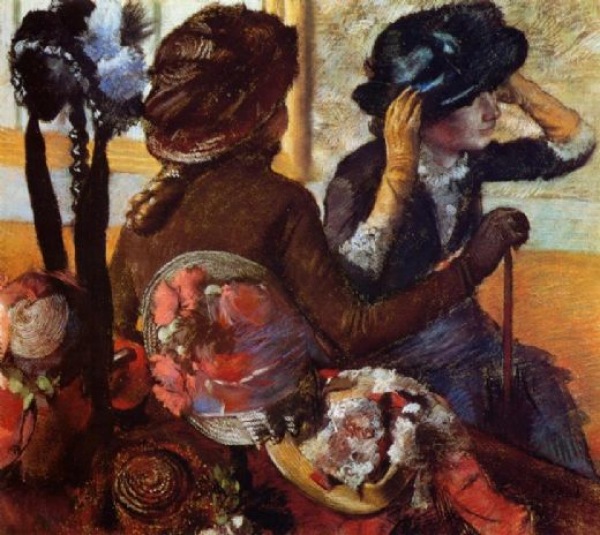
So show me a hat shop and you can bet on one thing. I’m going inside.

Here’s one in San Francisco’s Little Italy and, yes, you know who I was thinking of:
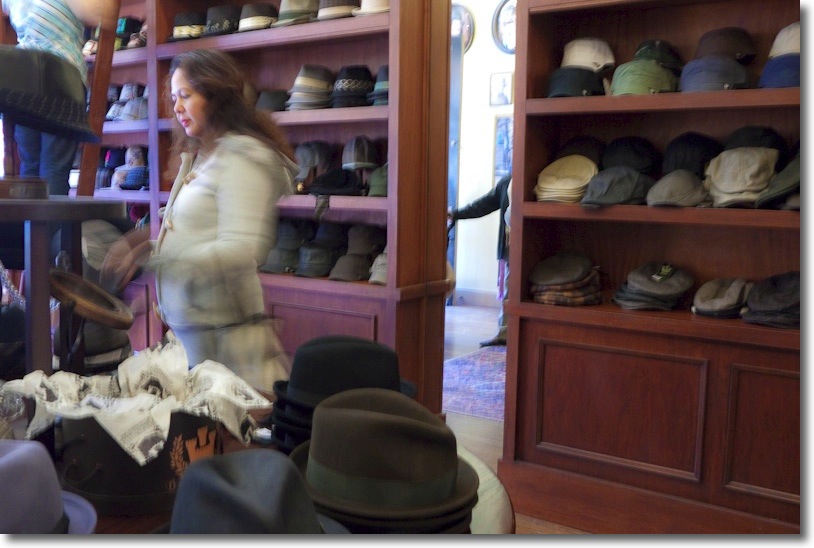
In the hat shop. Panasonic G1, kit lens 1/3rd sec., f/6.3. ISO 320.

1/3rd second, hand held? Yup. Sometimes you get lucky, and no way I was letting this one get away. No time to mess with the wretched little buttons on the Panny to increase the ISO, so 1/3rd it was. Snapped at the Goorin Brothers Hat Shop on Washington Square in Little Italy, San Francisco, which has been selling hats since 1895, when Degas was still doing his thing.
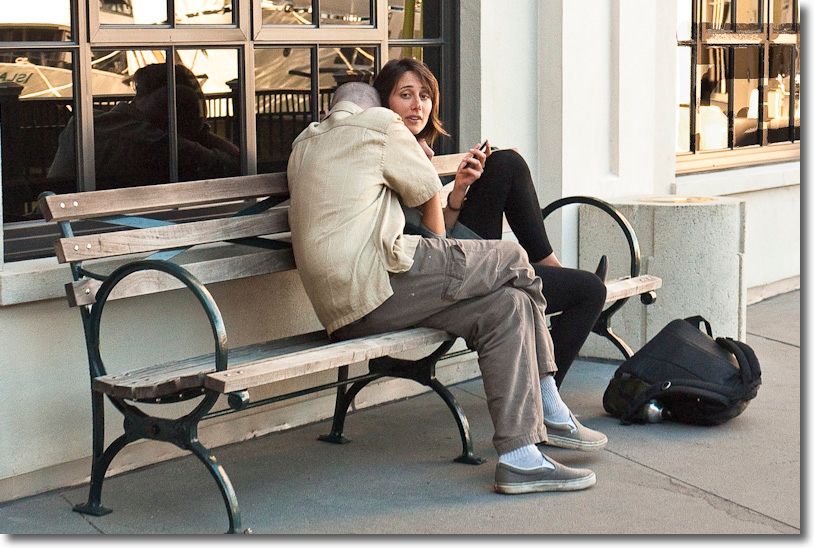
The embrace

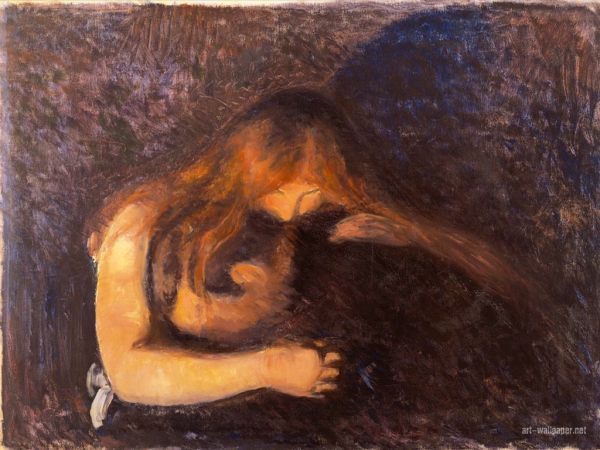
Edvard Munch lives!

The embrace

Date: Feb 6, 2011
Place: The Embarcadero, San Francisco
Modus operandi: On the BikeCam.
Weather: Just perfect.
Time: 2:07pm.
Gear: Panasonic G1, kit lens at 28mm, f/5.6, 1/160th, ISO320
Medium: Digital
Me: Seeing Edvard Munch
My age: 59

While the gender rôles may be reversed, Edvard Munch saw the same vampiric behavior in the enamored lover in his painting Vampire (1893) and I confess that was my sole thought when pressing the button:

Edvard Munch – Vampire – 1893.

High tech Hockney

Art and technology.

Painter and photographer David Hockney has migrated from a paint brush and camera to an iPhone and iPad to create new works of art.

He creates images on his iPad and sends them to friends. The app he uses is named Brushes – click the picture below for more:

As this fascinating article from NPR relates, Hockney is so intense when using the iPad and Brushes that he occasionally wipes his finger on his smock, forgettting that he is not using a real brush loaded with paint!

Most intriguingly, his current Paris show is displayed on iPads to any of which he can simply send a new image when he feels like it – a dynamic, ever changing exhibit which will make multiple visits worthwhile and is surely the right way to display photographs in the modern age. I wrote of this concept over four years ago suggesting that ever cheaper LCD televisions would be the display ‘canvas’ of the future. LCD displays have halved in cost since I wrote that earlier piece. though it seems like the iPad beat the TV to the punch in Hockney’s capable hands.

Were I a photo gallery curator, I would chuck out all the frames, fire the framers and printers and museum guards, buy 50 iPads and 50 big screen TVs and advertise “See our latest show – no two days alike. Come as often as you like with a show pass allowing any number of visits for just 50% more than the regular price. See photographs in their true splendor and dynamic range.”. Result? Costs halved, revenues up 50%. Gallery saved at a non-recurring cost of $60k. Further, sell each show as a download at the conclusion of the exhibit and really clean up. Oh! yeah, and sell all those dumb ass prints to collectors to pay for the hardware and severance costs.

There are still those who maintain that the iPad is a device purely for consumption. Disregard these luddites.

The original bad boy

aka Michelangelo Merisi.

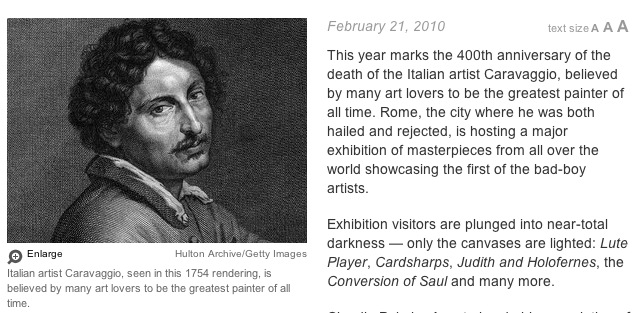
No painter has so influenced photography and photographers as has Caravaggio, whom NPR amusingly and accurately refers to as the first of the “Bad Boy artists”. An exhibition in Rome is celebrating the 400th anniversary of his death and you can read more of this master by clicking the picture below.

I prefer the version that has him dying in a sword fight as it seems so in character with the man. Brawler, debauched party goer and totally original genius. His use of light and shade is as fresh today as it was four centuries ago.

On of the best episodes of Simonn Schama’s ‘The Power of Art’ illustrates Caravaggio’s life with some stunning recreations of his signature pieces, not least ‘The Calling of St. Matthew’. You can rent it from Netflix. It’s clear that while his commissions came largely from the Catholic Church (who else had money back then?) his art is about as secular as it gets. Another reason to adore his work.

Goya and snapshots

The first snapshot artist.

While Spaniards may have hated Napoleon for the invasion of their nation and the destruction of the ruling Bourbon dynasty they should, in fact, have been grateful to the French dictator. By hastening the end of monarchical rule, Napoleon effectively put a simultaneous end to the power of the Catholic church in Spain and ushered in a secular constitution with representatives elected by the people, not by Rome. Poor Spain. We think nothing of damning modern religious dictatorships while conveniently forgetting the cruelest of systems which denied citizens even the basest rights. That system, of course, was the Spanish Inquisition.

Nations of all stripes continue to use similar tactics today to deny people their rights – torture and execution in the name of the state – though the excuse is now national security rather than exorcism of witches. And the actions of our rulers are no more representative of the will of the people than were those of the Bourbon kings of old.

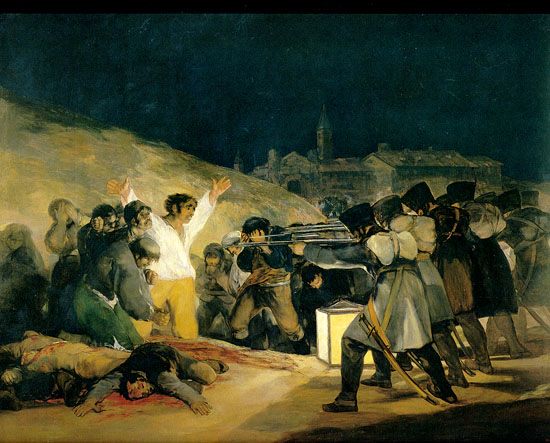
In the thick of all of this back in the days of the Inquisition was the Spaniard Francisco Goya (1746-1828). He was lucky to have died in his bed. While he took on a number of church projects – who wouldn’t when trying to put bread on the table – he was the most secular of painters. In his powerful etchings and sketches of the horrors of war and the Inquisition he documented, as never before, the evils committed in the name of a ruling power. His anti-war work reached a peak never before scaled by Western art in his painting of French soldiers executing loyalists on May 3, 1814. This snapshot-like vision was conjured up from his imagination, as he was too old and too deaf to be traipsing about the streets of Madrid while its citizens were waging guerilla war against the French enemy,

Goya – May 3, 1814, Madrid

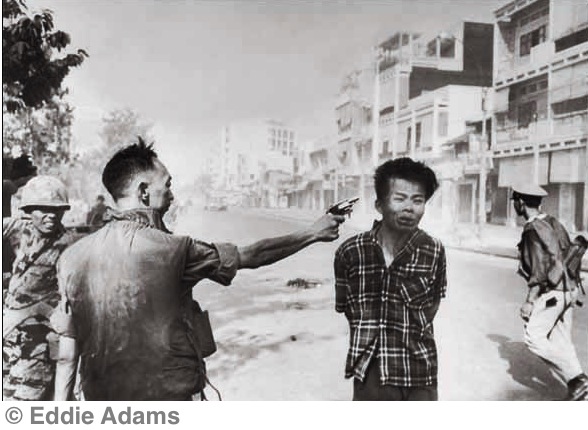
Modern times make it far simpler to record the horrors of armed conflict and that fact takes away much of the power of the message. We are numbed by so much of this that it no longer gets through. While the most famous picture of the Vietnam war undoubtedly speeded America’s defeat and exit, few remember it now. It is Eddie Adams’s picture of a Viet Cong having his head blown off.

Unlike Goya’s snapshot, Adams had no need of imagination. He just had to be there. There’s a newsreel of the same event so it’s not like he was the only photographer there or the only one to see this ‘photo op’ coming. And, to his lasting surprise, he helped end a war in much the same way that Goya’s snapshot put paid to the Spanish peoples’ prosecution by church, state and invader. The difference is that Goya was recording with intent whereas Adams was just another guy with a camera.

And while Adams’s picture, in its own way, is no less powerful than Goya’s, I need not ask which you would rather have hanging on your wall.