Category Archives: Leica

All about the wonderful cameras from Wetzlar.

The Russar 20mm lens

Major league strange.

For an index of all Leica-related articles click here.

The Unfinished Church, Bermuda, 1999. Leica M6, 20mm Russar, Kodachrome 64.

Mention of the quirky Leitz Stemar stereo lens yesterday got me to thinking of some of the stranger lenses I have owned. Without a doubt on of the oddest was the 20mm Russar-M f/5.6.
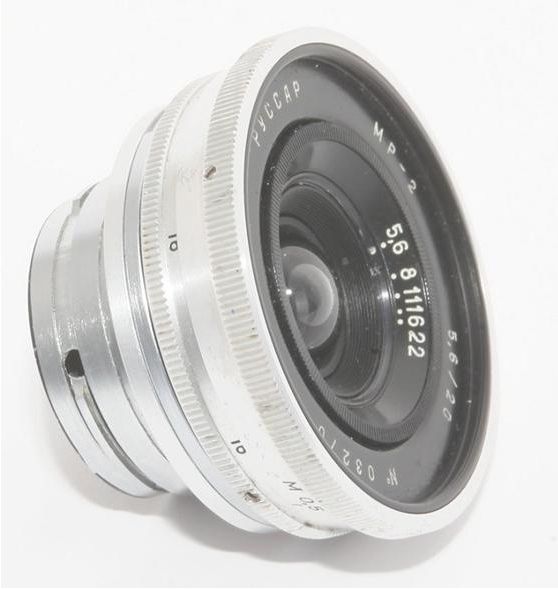
Mine came in black – the Russar 20mm f/5.6 ultra-wide angle lens.


This was a super wide angle Leica thread mount lens without rangefinder coupling. Not that any was needed as at 20mm pretty much everything was sharp all the time. I got mine shipped from the UK for under $200 and it came with the best wide angle viewfinder I have yet seen. Not only was the image clear and relatively undistorted in the finder, the field of view was accurately defined and the whole thing was superbly made using light alloys. None of these atrributes apply to the awful Leica 21mm finder, now in plastic and costing a ridiculous $750 today. Further, the Russian finder had a swivelling foot which allowed you to tilt it down for parallax correction at close distances. A masterpiece.

But the lens was even better. When the Russians took possession of eastern Germany in 1945 one of the priceless properties there was the old Zeiss, Jena factory. I cannot confirm this but am fairly certain that the 20mm Russar was optically identical to the 21mm Zeiss Biogon and like designs, meaning a deeply protruding rear element which rested very close to the camera’s shutter and required a deep rear lens cap for storage. The oddest ‘feature’ of this lens was the aperture ring which was deeply recessed within the front of the lens so you had to stick your finger almost into the lens to change f-stops.

This placement, of course, precluded the use of a filter as with one in place you could not adjust the aperture.
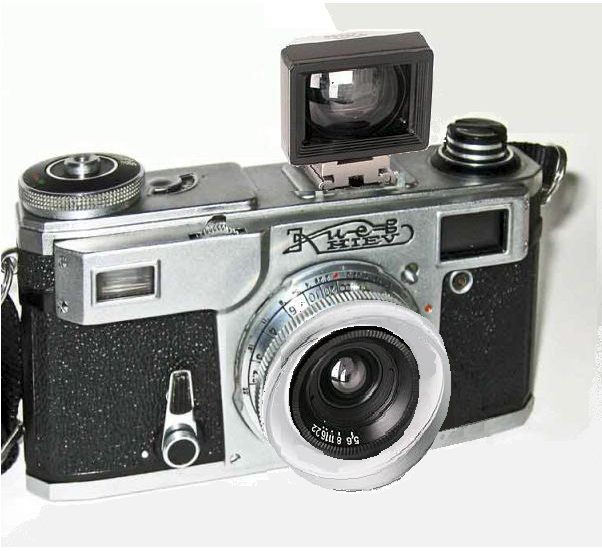
Viewfinder and Russar 20mm on the Kiev copy of the Contax II. The lens also came in a Contax bayonet mount.

The definition was excellent at all apertures and best at f/8. In practice you would simply take a wild guess at the correct focus distance (in meters, not fun for one brought up to estimate in feet!) sight through that wonderful finder and bang away. I kept it permanently mounted, using a screw to bayonet adapter, on my Leica M6 which had such a poor viewfinder (can you say flare? – I shoot into the sun a lot) that it made a natural mule for the Russar. What’s more, it amused me no end to have a Russian lens mounted on what was then Germany’s finest.

The lens was an inexpensive alternative to the Leitz Super Angulon f/3.4 (the earlier f/4 was a real dog) and later Leitz Elmarit and Aspherical Elmarit f/2.8 designs which cost and arm and a couple of legs. The Aspherical variant remains in the catalog at $4,400, so you get the picture. When my Russar-M finally moved on, replaced by that same unbeatable Aspherical Elmarit (it was one of my ‘more money than sense’ moments, I confess) I found myself missing the Russar’s compactness and built-in ‘hood’. The Elmarit was gargantuan by comparison, and the even larger hood an object of ridicule. I never used it. When the Aspherical Elmarit was finally sold I did at least have the pleasure of doubling my money on it, Leica gear prices having gone through the roof.

The equipment pictures above are from the excellent USSRPhoto site which has masses of information on all sorts of Russian camera gear.

Bermuda Sky, 1999. Leica M6, 20mm Russar, Kodachrome 64.

A 20″ x 16″ print of the above over the mantlepiece at home testifies to the quality of the Russar.
Panasonic 3D lens

The Stemar is back!

For an index of all Leica-related articles click here.

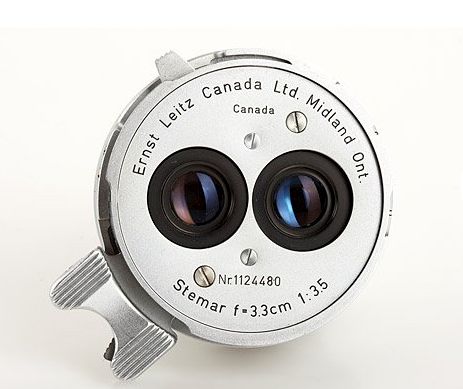
Sold in very limited numbers in the mid-1950s, Leica’s Stemar lens was an elegant way of making stereo pictures with your rangefinder Leica.

The 33mm f/3.5 dual lens Stemar

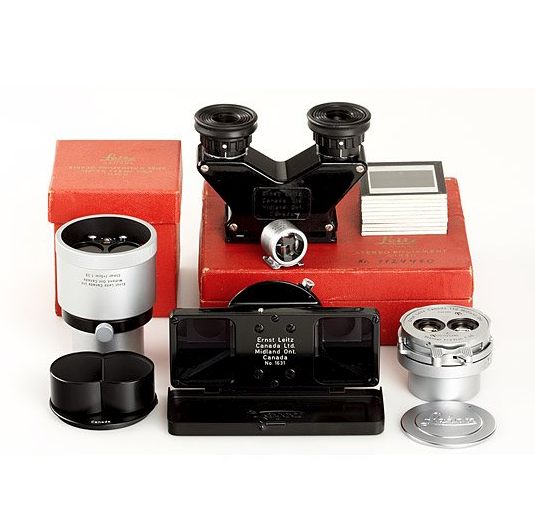
The Stemar lens (the name derives from STEreo elMAR – meaning a simple four element design like the 50mm Elmar) would take two images, each 18x24mm on a standard 24x36mm film frame and came in a kit with a tailored lens hood, a 33mm clip-on viewfinder, a close up lens/prism, and a binocular viewer to permit 3D examination of the transparency image. There was also an even rarer attachment for your slide projector to project the twin images on a large screen. All are visible in the picture below.

Stemar outfit.

Given that it came in a Leica screw mount, easily adapted to the latest Leica M cameras, there’s no reason why it wouldn’t work every bit as well with the latest M7 Leica film camera or even the M9 full frame digital, though I’m not sure how you would create viewable transparencies with the latter; doubtless possible with some ingenuity.

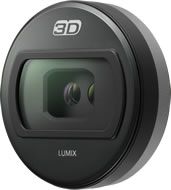
As the picture shows, the lens was something of an ugly duckling, screws showing prominently on the front plate, the ugly protruding finger focus tab, the many gadgets needed to make it work, and definition cannot have been that great. The four element Elmar design works reasonably at 50mm and 65mm (the latter on the Visoflex SLR ‘mirror box’) and well at 90mm but is probably poor at 35mm. Leitz made a 35mm full frame Elmar pre-war and it was soon replaced with the excellent six element Summaron. Compare with the Panasonic lens, below and see what stylish modern design is all about.

As with all low production Leica hardware, the Stemar has now acquired that awful epithet of ‘collectible’, meaning it’s doomed to a china cabinet and commands a $6,000 price tag at auction. I find this every bit as damnable as the $1mm Ferrari treated in like manner rather than thrashed on the backroads, which was the design intent.

Now a Stemar was not something I ever owned. Even a few years ago when it was actually affordable it would have been no use to me, as a childhood eye defect forever rendered me incapable of seeing in three dimensions. My brain – such as it is – cannot fuse the disparate images, with the happy result that I read with my right and drive with my left eye. It makes for interesting moments when trying to pour red wine in a white tablecloth restaurant, as I have no depth perception, and is the reason you will invariably find me delegating the task! I have experienced too many reddening tablecloths to want to repeat the experience, testimony to my having missed the glass completely ….

But I console myself that my infirmity has been all to the good. Like the blind man with an overly developed sense of hearing, this One Eyed Jack simply tries harder with what he has. While motorcycling near the cliff edge can be an unusually unnerving experience, I grit my teeth and try harder, consoling myself as the journey ends that I am a better and stronger person for the experience! Further, I get to save money and weight on binoculars, as a monocular is fine, the second optic being wasted on me.

But 3D is the coming thing. In one of those mail catalogs I simply cannot seem to unsubscribe from, the assorted big screen TVs for sale were dominated by one thing – labels screaming ‘3D’. Motion pictures are a hit in the format (or so my 8 year old assures me – I cannot go with him as I cannot actually see anything but a head-splitting mess on the screen) as Hollywood discovers the latest in moneymaking technology. More power to them. I get to save on the entry price to the 2D theater.

Many of those 3D TVs in the catalog come, of course, from Panasonic, which is a pioneer of the technology. So it’s hardly a surprise that they will shortly release a 3D lens – just like the Stemar but auto-everything – for the G-series of micro Four-Thirds camera bodies.

Panasonic’s modern Stemar.

I don’t know the focal length but would assume 16mm or so, as the Full Frame Equivalent of 33mm used in the Stemar is ideal for 3D images – anything much longer and the subject tends to lose the 3D effect. Or so I am assured by those with binocular vision. I think it’s a tremendously exciting development as the images taken with this optic will simply be ported to your Panny 3D TV set for viewing with those funky glasses, a far superior experience to the Stemar’s hand-held binocular viewer, I would guess. In that case, your ‘collectible priced’ Leica M9 may finally fulfill the potential, with its equally collectible Stemar, which the latter so under-delivered on over fifty years ago. The G-body + Panny 3D lens will run you some $12,000 less, by the way.

Just goes to show, doesn’t it? There really is not that much new under the sun.

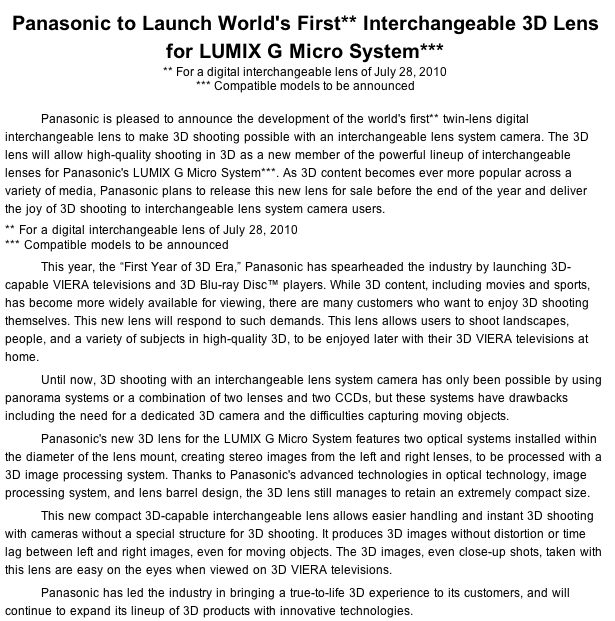
Here’s Panasonic’s press release on the subject; check the double asterisked note – you can bet Panny’s designers have a Stemar or two in their labs. The English may be stilted but the awareness of the predecessor design is clear:

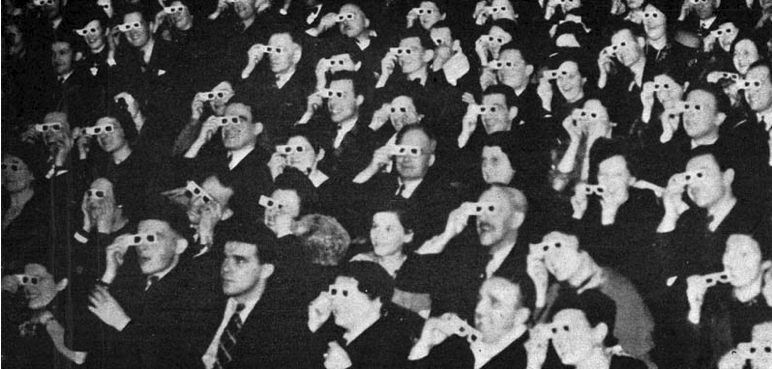
And here’s the 1954 audience enjoying the predecessor anaglyph system – one lens red, one green:

The Leica M9 and the Viewfinder Revolution

The last face lift.

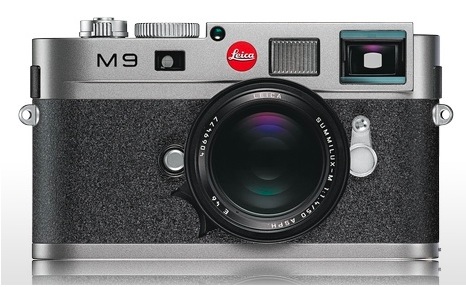
I wish Leica well with its new M9. There’s always a market, however small, for the dowager on her third face lift and no shortage of insecure, wealthy buyers with weak egos craving fame by association. I think of the M9 as the Joan Collins of cameras. Neither is cheap.

The Joan Collins of cameras – the Leica M9.

The best thing to be learned from the M9’s tired makeover of a design that peaked in 1959 with the M2 is that the viewfinder is key. It is the window to the soul of the photographer’s subject, and the less it imposes itself between subject and snap, the better it serves its purpose.

The first twenty years or so of digital camera design will, I believe, go down as the period during which manufacturers’ disregard of the needs of consumers was at an all time high. So enamored did they become of digital this, and LCD that, their design results were some of the slowest, least responsive and unusable cameras ever made. You hardly need me to tell you that. Go to any crowded place on a sunny day and enjoy watching their owners squinting at silly little screens held two feet away from their eyes while taking pictures far worse than their parents managed on the Brownies and Instamatics of yore. Those at least were properly framed and action shots were the order of the day.

At the other extreme from the point-and-shoot set were the ‘professional’ DSLRs which made matters even worse. Like the Leica M9 these depended on fifty year old technology, this time in the guise of flapping mirrors and bulky glass prisms to get the image to the snapper’s eye. But as this is the digital age, these cameras started to sprout dozens of excrescences in the guise of control buttons and yet more ergonomic noise on their miserable LCD screens and ever more cluttered viewfinders. The only significant change in appearance was that the shapes became more organic and free flowing as modern plastics and manufacturing technologies took the sharp edges off. Just look at the original Nikon F for comparison, if you want to see what I’m talking about.

But the innovators in camera design, the Japanese, have woken up. First, they need a new idea to sell more gear to all those current digital owners, be they amateurs or pros. Second, some of them actually use the gear they make and grew up adulating the Leica M as the touchstone of camera and industrial design for, in 1959 when Mr. Yamamoto was knee high to a grasshopper, the Leica M2 was the unique blend of form and function. Small, fast and with decent lenses, it was the traveling companion of choice not just for well heeled amateurs but for pros wanting the best there was. And Yamamoto san, when he finally migrated to longer pants, found that the M2 was his snapper of choice, surrounded as he was by flashing LEDs and beeping buzzers galore.

To cut a long story short, the example set by the Leica M has placed camera design on the cusp of the next revolution. The changes that will bring will be nowhere near as earth shaking as the invention of digital sensors but they will finally make the digital camera the practical tool it has so far largely failed to be. And the most significant of those changes will, simply stated, be in the area where the Leica M once excelled. The viewfinder. The window to the subject’s soul.

I doubt it matters what the sensor size or format will be, for the new crop of digital cameras will come in any size you want. Medium format, full frame 35mm, APS-C, Micro four thirds, microdot – whatever. But what all of these designs will boast will be an absence of the ridiculous pentaprism, flapping mirror and LCD screen, all obsoleted by the growing availability of fast, noise free, bright-in-any-light and superbly compact electronic viewfinders. And they will focus fast with no shutter lag. A whole new selling proposition, rediscovered from those halcyon Leica days.

The maker at the cusp of what I call the Viewfinder Revolution is, of course, Panasonic, with their ground breaking G1/GH1 designs. That will not last long and you can bet that the basements of Nikon, Canon, Sony, Pentax/Samsung, Olympus et alia are a beehive of activity, filled with engineers and lawyers finding workarounds to Panny’s patents.

And their new designs will boldly drop the faux pentaprism hump that Panny felt was needed to introduce users to a new design ethic, will delete all the silly little buttons and will relegate the LCD screen to its rightful place as nothing more than a rarely used configuration display for favored settings. The EVF, whether eye level, waist level or both, will move modern camera design to a place where the wonderful digital sensors of today and tomorrow will finally be wrapped in a body with a viewfinder which can do them justice.

So thanks, Leica, for pointing the way. It’s just too bad that, like our heroine in the first paragraph, you refuse to age gracefully and pass to the museum which is your well deserved resting place.

The Leica M of women – Joan in 1960 and in 2007

Note: The writer used Leica M2/3/6 cameras and lenses almost exclusively in the period 1973-2008 (doubtless all now owned by Yamamoto san) and can assure the reader that the only ‘Leica glow’ he ever felt from all those wonderful lenses was from the red ink on his bank statement. Only those who have paid the asking price of the M9 and its glass will feel that glow, and they will spare no effort telling you about it.

The Leica X1 and street snaps

Some thoughts.

It’s 9/9/09 and Leica finally introduced its full frame digital M9. I won’t be dwelling on it here as I doubt there’s much need for, or interest in, a $10,000 camera (with lens) which comes with almost no automation, bulky lenses and a near total lack of weatherproofing. For that sort of money there are several rugged and capable DSLRs available from other makers and the specific situations in which a rangefinder camera excels are few and far between. Street snapping is probably the main genre where the r/f is most at home. A good reality check may be found here.

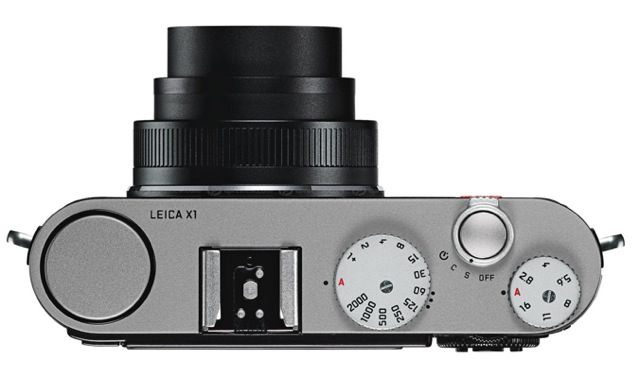
Leica has also introduced the X1, a fixed lens (35mm equivalent) APS-C body with a very appealing design. They deserve hearty congratulations on this as it’s not yet another rebadged Panasonic, though the premium price of $2,000 is hard to swallow. Plus you will need to add an optical viewfinder to make the thing workable in street situations which adds more cost. With v/f and with its non-detachable lens extended it’s much the same size as the G1 or GF1:


Leica X1

Note the full manual operation afforded by separate shutter and aperture dials.

So who needs this? Well, my perspective has altered significantly in the two short months during which I have owned the Panasonic G1. Having been a street snapper since childhood and having given up on film when the Canon 5D came along, I have been waiting for the ‘digital Leica’ a long time. And the G1 has changed how I think about street cameras.

In days of yore you would load up your little shoulder bag with a 35 and 90mm Leica lens, leave the 50mm on the M2 or M3 slung over your shoulder, and cram in a few rolls of film wherever you could stash them. After decades of use all the manual adjustments required became second nature – aperture, shutter speed, focus and the endless tedious changing of film in fair weather or foul (mostly foul in my London days). The results of those early efforts can be seen in all their monochrome splendor here. You didn’t complain because there not only was no alternative, no one saw digital coming. And SLRs were too loud and bulky and noisy to be an alternative for the truly unobtrusive and relatively quiet Leica M. You just learned to pre-visualize the image and would change lenses on the run to make sure the right one was in place by the time you pressed the button. And it made sense to have the right lens in place as film could only handle so much enlarging.

When the 5D came along you suddenly had medium format film quality at an affordable price with full automation thrown in. The bulk seemed modest compared to my Rollei 6003 and the ergonomics superior, but no one could accuse the 5D of being a street snapper. Landscapes, macro still lifes, portraits, QTVRs, HDR, all well and good, but unobtrusiveness is not that camera’s strong point.

So along came the Panasonic LX-1 with its host of compromises. Shutter lag, slow autofocus, an awful LCD screen replaced with a glued-on optical finder and too small to handle easily in a hurry, yet it was the best this street snapper could find at the time.

But the digital Leica did finally come along and the logo said ‘Lumix G1’.

After the first few hundred street exposures you realized that the craving for the rumored 20mm f/1.7 (now available) pancake lens was gone. I don’t need f/1.7 but I do occasionally like 35, 50 and 90mm focal lengths, much as I did in the M2/M3 film days. And the G1 went one better at the wide end, stretching to 28mm.

But it’s the total automation and that revolutionary Electronic View Finder which make the G1 the digital Leica. No need to change lenses. No need to excuse the quality of the kit lens or sensor, both small and superb. No need to wait for autofocus – in 1,200 exposures I have ‘beaten’ the AF just once. It’s that good. And as for the sensor, you may not want to make 30″ prints (who any longer makes these regularly?) but 13″ x 19″ is par for the course. And no need to set anything other than the aperture or squint into a dark finder trying to figure out what the camera is doing. The automation is outstanding and the EVF even better. In fact it’s pretty close to my wish list. Best of all, you can set the frame aspect ratio to 3:2, just like in that Leica of yore, and that’s how I use my G1.

So while Leica has done a fine aesthetic job (let’s just hope the shutter and focus delays are low) in designing the X1, I really question who needs a fixed focal length camera at such a price when you can have a more versatile tool with the same bulk for under one third of the cost? The only thing the G1 has which I have realized that I do not need is the interchangeable lens. The kit lens is this street snapper’s ideal.


Distraught. G1, kit lens, 14mm, f/5.6, 1/400, ISO100.

So yes, the digital Leica is here. It just happens to be made by someone else.