Category Archives: Nikon lenses

Some of the best optics ever

Sigma 35mm f/1.4 DG HSM A1 for Nikon – Part I

My Sigma 35mm f/1.4 review.

I have generally stuck with lenses from the maker of the camera body – Leica, Canon, Panasonic/Olympus and Nikon – for the simple reason that I have the most awful memories of the aftermarket alternatives. When I worked in cameras stores during vacations as a kid, the most returned items were lenses from the likes of Tamron, Soligor and especially Sigma which, when not just downright awful optically would often fall apart mechanically. For the generally modest savings compared to the real thing and the massive attendant depreciation, the economics simply did not solve. My Sigma 35mm f/1.4 review follows.

But more recently old line designers, like Zeiss and Schneider, started making inroads into the super premium FF, APS-C and MFT lens markets, generally at prices substantially higher than the camera makers’ own lines. Cosina manufactures the Zeiss designs. I’m not sure who makes the Schneider ones. Maybe it’s Samsung, given how many of their cameras feature Schneider lenses. One thing is fairly sure and which is that neither is made in Germany.

Sigma, that maker of many of the worst clunkers in optical history, made some early progress under contract to Leica for Leicaflex lenses, the 28-70mm f/3.5-4.5 Vario Elmar being one example where Leica’s eagle-eyed inspectors claimed to have bestowed some QC discipline on a manufacturer alien to the concept. That was ages ago. More recently, Sigma came out with two well reviewed primes in the 50mm and 85mm optics, both AF and both f/1.4, though reports of autofocus issues with both abound. That’s pretty tough competition with the Canon and Nikon versions, especially at 85mm, but Sigma garnered a following for its lenses, suggesting that they were turning a new leaf.

It is very much in all photographers’ interests that independent lens makers succeed. Nikon and Canon have greatly increased the prices of their best primes, with their 35mm f/1.4 offerings selling for $1,500 and $1,600 respectively, with stellar reputations to match. That is a lot of money. Yet, had you told me that I would be trying a Sigma lens on my Nikon I would have laughed all the way to the boozer. But I am doing exactly that (trying the lens, that is, not laughing en route to the boozer), awed by the incredible critical reception for this optic. Either Sigma has very deep pockets to fill the shallow ones of the paid review set, or there’s something exciting going on here.

The Sigma 35mm f/1.4 DG HSM A1 is a non-VR AF full frame lens from Sigma which comes in a variety of mounts. Nikon versions remain back-ordered but I was able to rent one for the weekend and can report on it here. It will cost $900 with hood and case.

My rental, s/n 50004444, came from Borrowlenses.com for the simple reasons that they are down the road from my home and because they had just got the first ones in stock. I paid $60 for a weekend rental. After the foul stench left by my prior Sigma experiences I was not about to plonk down cash without a dry run first. The big appeal here, of course, is the auto focusing design and f/1.4 does not hurt either. That should mean optimal resolution by f/2.8 for really large prints, and 35mm is very much in my sweet spot for street snapping. I do not really need a zoom or anything much longer for that.


The cool dudes at BorrowLenses.com. D3x, 35mm Sigma at f/4.

Some of the best lens test data recently is coming from Roger Cicala at a competing lens rental place named LensRentals.com. What distinguishes his analyses is that he tests dozens of lenses of any one type on his optical bench, thus reporting not just on quality but also on manufacturing consistency. And that’s a must have for Sigma optics whose history of poor QC and inconsistency is legendary. Cicala only has one sample of the Sigma in Canon mount at the time of writing, and you can see his review here. Doubtless he will soon report on sample variability.

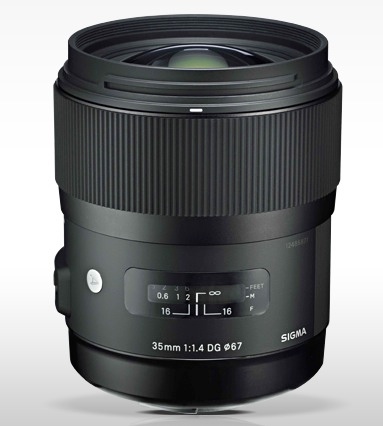
The lens is distinguished by its largely metal (there’s a thin rubber coating on the focus collar) finish, a marked departure from the plastics used by Nikon and Canon in even their costliest offerings and, uniquely, a rumored add-on device which will attach to the lens and permit updates to firmware and focus collimation through a PC (please, Sigma, make it work with Macs) with a USB connection. No details yet on the pricing of this innovative device. It really should come free with the lens, given Sigma’s reputation. The lens is all black, with none of the garish gold markings (Nikon) or ‘look at me’ red rings (Canon) which add zero value to the user experience. The gold and red stuff always reminds me of insecure Americans who emblazon their rear view windows with ‘Harvard’, ‘Yale’ or ‘Balls Pond Road’, the last for the degree-mill set.

The depth-of-field scale on the lens – visible in the image above – is useless and should be dropped. The gearing of the focus movement means that there’s insufficient space for a proper DOF scale. Further, these scales can only be meaningful at a specific enlargement ratio and really are a thing of the past. For that matter, the focus distance scale should also be dropped.

The chromed blob visible in the above picture is marked ‘A’, and is purportedly a statement that the optic is a member of the manufacturer’s ‘Art’ line of lenses. This is marketing BS of quite exceptional purity.

I do not understand weatherproofing issues. The Sigma has no rubber O ring – found with certain allegedly weatherproof Nikon and Canon optics – on the bayonet flange. My 16-35 Nikon AF-S has this ring and it strikes me as an exercise in futility. Quite how water could penetrate the very tight seal between lens and body beats me, O ring or no O ring. What ‘weatherproofing’ means to me is that there is a good seal between the moving parts of the lens – the focus collar and A-M switch – and there is no data I have seen which compares the Sigma with the Canon and Nikon offerings in this regard. So I am pretty clueless here. Suffice it to say that ‘reviews’ state the Sigma is not weatherproofed. Beats me what that means or how they know. In heavy rain I would simply encase the barrel in a plastic bag and have at it, using AF, as no external parts move when the lens is focused using AF.

Early reviews suggest that the lens not only outperforms the Canon and Nikon alternatives optically, it also is more than a match for the $1,840 Zeiss 35mm f/1.4 optic, which is MF only. I cannot comment, not having used any of the alternatives. The Sigma is AF with AF override or MF optional. The feel of the focus collar does not change between the A and M settings and is quite the best I have experienced in a lens with internal motors, and superior in smoothness and damping to the AF-S 16-35 Nikkor. You do not feel or hear any gears using AF override or MF. The AF mechanism is audible to the user in quiet surroundings, inaudible to everyone else. A tactile and aural delight.

The lens is very solid in the hand and no lightweight. Balance on the Nikon D3/D2 is a bit front heavy as there’s a lot of glass in this optic, but the combination handles well. My 16-35mm Nikon f/4 AF-S VR weighs 1.5 lbs and is 4.9″ long, taking 77mm filters. The Sigma, a non-VR prime, comes in at almost the same weight but is only 3.7″ long. It takes 67mm filters. Fit, feel and finish all harken back to the golden era of all metal lenses with brass helicoids. The plastic petal-type hood, included, clicks on nicely but adds a lot of bulk and length. My rental came with front (pinch type) and rear caps, the hood and a protective filter. I did not use the hood – it is silly-large for a street snapper, though it does clip on and reverse nicely, still permitting the use of the front cap. The rental lens appears new.

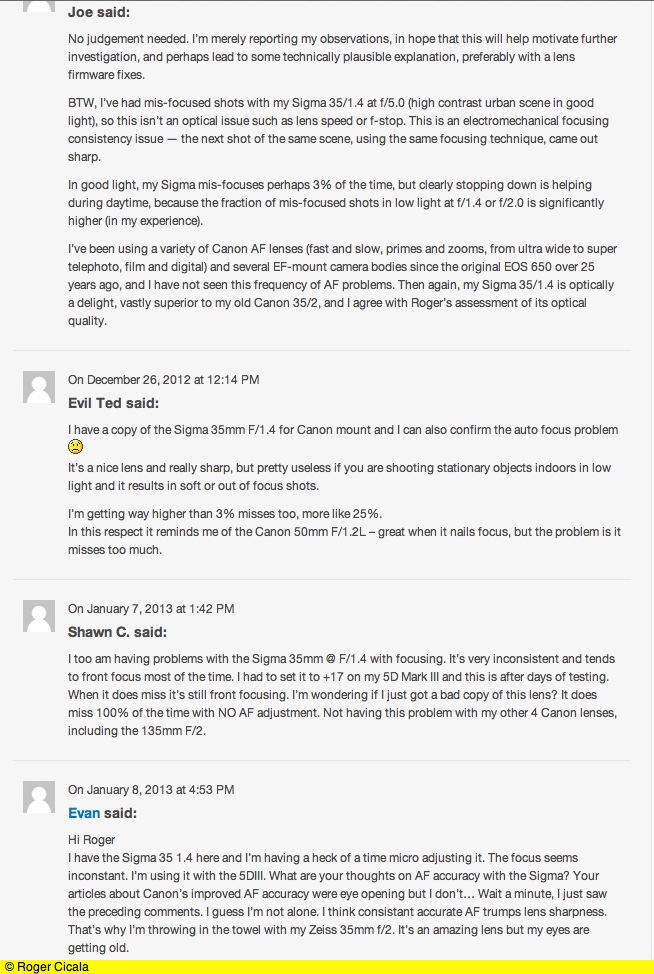
Because of Sigma’s poor reputation, the first thing I did was point the lens at a bookcase – tripod, MLU, remote release – to determine whether any fine focus adjustment was required. My Nikon D3x correctly reported the lens as a 35mm f/1.4 in the fine tuning menu and required absolutely no adjustment for optimum auto focusing. I wasn’t about to hit the street only to find that everything was out of focus. Further, infinity focus was just as accurate. Indeed, I simply could not reliably get sharp focus at any distance at f/1.4 and f/2.0 with manual focusing, using the LED focus confirmation light, whereas AF nailed it every time. Impressive, especially in light of all the grumbling on the web. Impossible to know if this is sample variation or user error.

The obvious comparison here is to my 1971 pre-Ai 35mm MF Nikkor f/2, a stellar performer from f/2.8 down, and clearly delivering better resolution than the current 16-35mm f/4 AF-S optic I also use. More on that in Part II.


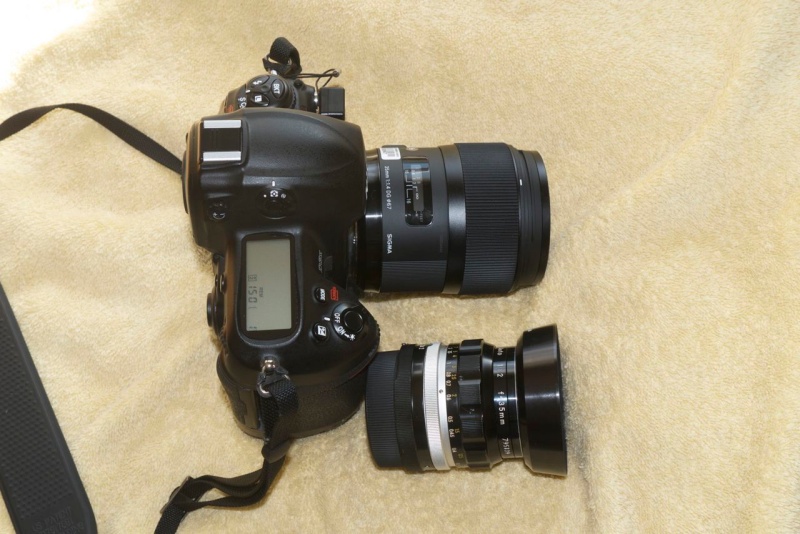
Sigma on the D3x compared to the much smaller 35mm f/2 MF pre-Ai Nikkor. Sigma’s hood removed.

The one anomaly compared to Nikkors is that the focus collar rotation is opposite to that of the Nikon optics. Still, with AF it’s not a big deal but may take some getting used to if you use AF override, done by simply manually rotating the focus collar in AF mode, like on current Nikkors.

The next task was to make a lens correction profile as the Sigma is known to exhibit fairly serious vignetting at f/1.4, and my profile corrects it. If you must have vignetting, that should be a user choice at the processing stage, not a lens default. Doubtless Adobe will publish one eventually. Mine is made at f/1.4, f/2, f/2.8 and f/4. Vignetting is gone by f/4 and Lightroom and Photoshop will automatically select the correct version defaulting to the last at any aperture smaller than f/4. This profile also removes the small amounts of lateral chromatic aberration the lens displays and also removes a small amount of barrel distortion. You can download the profile here. This profile works with RAW images only. That page includes OS X and Windows installation instructions.

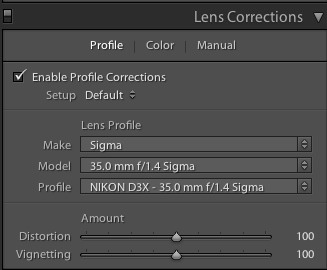
If your import preset in Lightroom is checked to invoke the lens correction profile or if you check the box below, you will see this on import in the Develop module:


Lens correction profile in Lightroom 3 and 4.

While I have named the profile “Nikon D3X ….” it will be correctly invoked with any Nikon camera. The ‘Model’ field description is what LR uses to look up the matching lens profile; the name of the camera body is irrelevant. I have no other non-Nikon bodies or lenses with which to test this profile, but it should also work fine with Canon, Sony and Sigma bodies, though you may have to select it manually. The profile is fine with FF and APS-C, though less needed on the latter which cuts out much of the corner vignetting.

DPReview drooled all over their sample and you can read their findings here while I make off to take some snaps with it. Just don’t get too thrilled about their field snaps as one of the qualifications for being a DPReview tester, an otherwise worthy bunch, is a total inability to take a good photograph, a qualification shared by optical lab rats worldwide. No problem. They are not paid to take great pictures.

I’ll update this Sigma 35mm f/1.4 review in Part II.

Nikkor-H 28mm f/3.5 lens

A lightweight 28mm.

This one seems to have slipped through the review mill, so here are the details.

Mine is the pre-Ai version of 1971 with the metal scalloped focus collar . It’s considerably smaller and lighter than its f/2 sibling and can often be found for around $40. My mint copy ran $63 delivered. Construction and engraving quality represent the very best Nikon ever accomplished. The lens is a fine match for lighter bodies; it tends to be a bit too small for best handling on the larger bodies with battery grips.

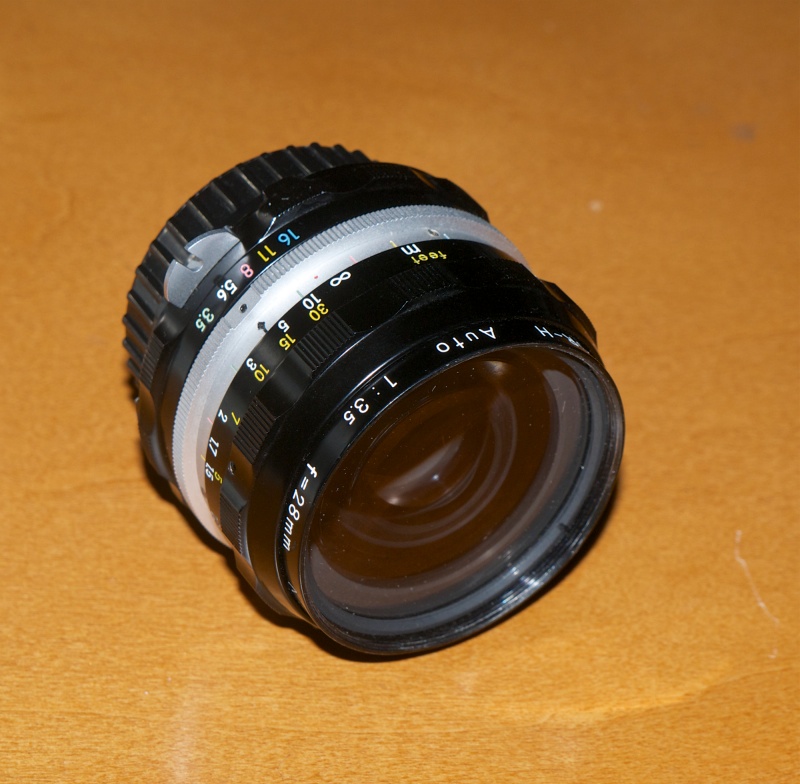
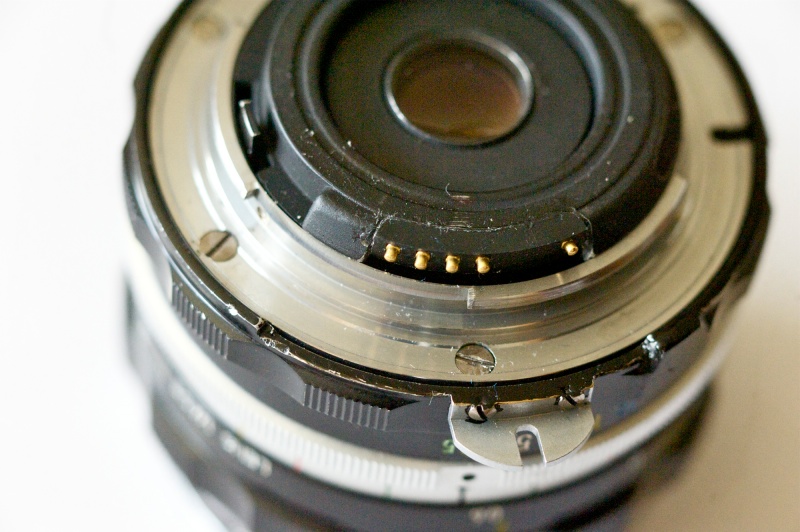
I removed the five slotted screws retaining the bayonet flange, removed the aperture ring and filed down the necessary relief to clear the aperture feeler on modern Nikons, making this into an Ai lens. You can see the relieved arc in the picture below.

CPU installation on this one is tricky as the rear baffle is sloped, for some reason. It has to be removed and cut back to create the plane perpendicular surface to which the CPU is glued.


CPU installed after the baffle was cut back.

As usual I have created a lens correction profile which you can download here.

This file includes three profiles, at f/3.5, f/5.6 and at f/8. LR and PS will use the closest match. The 28mm f/3.5 shows vignetting at f/3.5, disappearing by f/5.6 with very minor barrel distortion being corrected.

This profile is for the pre-Ai and Ai versions, which had 9 elements in 8 groups. I have not tested this profile with the later Ai-S lens, though it appears to have a similar optical design.

If you use a filter, make sure it’s a slim one. The correct hood is model HN-2. I use one with a standard slim Nikon 52mm UV filter.

As is common with pre-AiS lenses, the aperture stop down lever exhibits substantial non-linearity, as illustrated here so you really want to pass aperture control from the camera to the lens’s aperture collar to assure proper metering.

The lens is sharpest between f/5.6 and f/11 where it cedes nothing in definition to its far costlier sibling.

Nikkor 16-35mm AF-S f/4 ED N VR lens

An ideal ‘crossover’ lens.

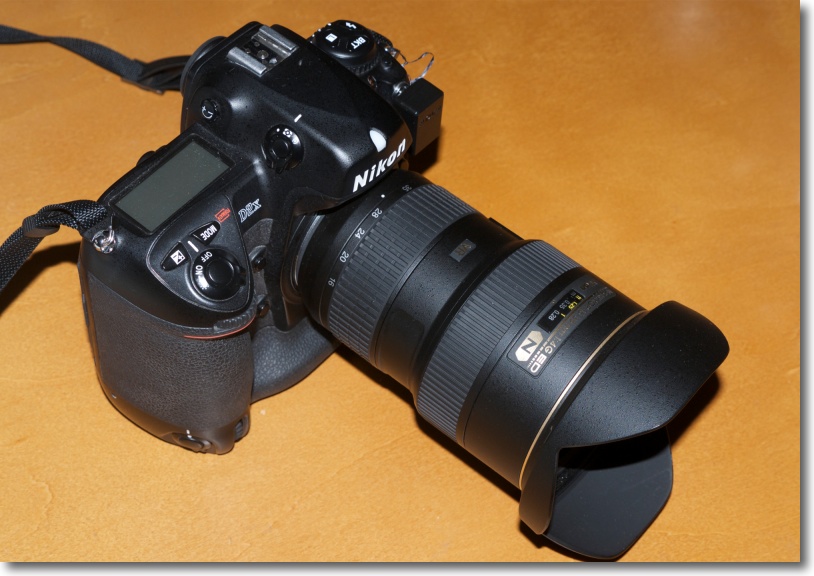
On the Nikon D2x.

By ‘crossover’ I mean that this current auto-everything lens provides a useful range of focal lengths for both full frame and APS-C frame Nikon bodies. On the cropped frame D2x it provides a full frame equivalent range of 24-52mm, ideal for street snapping.

I have been using mine for some nine months now and might as well start by saying what I do not like. It’s bulky, the gargantuan lens hood is needed to shade the exposed front element, it’s set in a yucky resin body and at 24 ounces it’s no featherweight. The maximum aperture of f/4 is relatively modest and you will struggle getting dramatic differential focus effects. Being a ‘G’ optic there is no traditional aperture ring, aperture control being solely possible from the control dial on the body. I prefer a ring on the lens. Finally, at just under $1300 it’s anything but cheap.

But there is a lot to like here. It’s a two-ring zoom, meaning zooming is done by rotating the rear ring rather than by push-pull. The focus ring does not rotate when the lens is used in AF mode. AF is stunningly fast on both the D2x and the D700, faster than with the older AFD lenses. AF is accomplished by a linear motor within the lens, rather than by the older ‘screwdriver’ mechanical coupling used in AFD optics. In AF mode you can simply override autofocus by turning the focus collar which is tolerably smooth, if nowhere near the quality you will find in the vast range of discontinued MF Nikkors. Into the sun the lens displays exceptionally low flare, maybe owing to Nikon’s new ‘Nano’ coating. VR is switchable and whatever Nikon’s claims may be I generally find it’s good for two shutter speeds – 1/60 without being much the same as 1/15th when VR is used. It’s not a panacea, but it helps to overcome some of the limitations of the slow f/4 maximum aperture.

The 16-19mm range shows strong barrel distortion on FF, and it’s still quite noticeable on APS-C. However, both PS and LR come with excellent lens correction profiles from Adobe which you can set to be invoked on import – and I recommend you do so – meaning that straight lines at the edges will once more be straight rather than significantly bowed. Essential correction for architecture snappers.

I have no hesitation in using this lens at its maximum aperture and probably do so half the time. The definition fully open is excellent, and any improvement with stopping down is barely noticeable. Best of all, paired with the older sensor in the D2x which does such a special job of rendering colors well, this lens really shines, even if the APS-C sensor is discarding a significant part of the image circle. Stated differently, if APS-C is your sole sensor use, you may be better off with a much smaller lens designed with this sensor in mind. Balance on both the D700 (with add-on battery grip) and the D2x (with integral grip) is outstanding.

Here’s a mix of recent images taken on both the D2x and D700 using the 16-35mm lens.


Pelicans line astern. D2x, at 35mm, f/6.7.


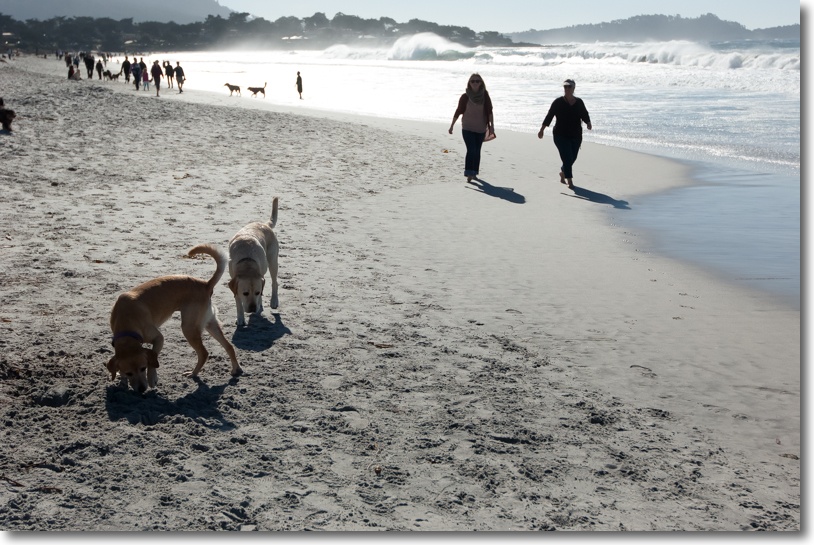
Doggie heaven on Carmel Beach. D2x, at 32mm, f/4.


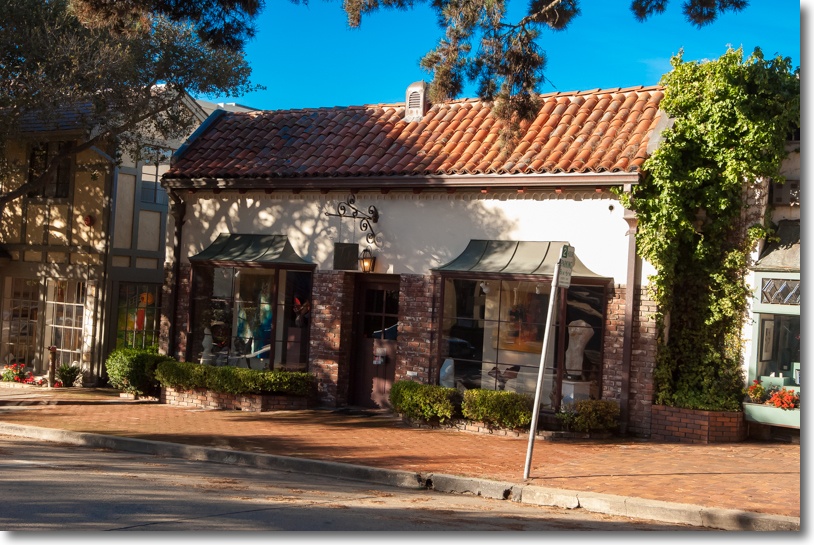
Carmel street scene. Rich, saturated color rendition. D2x, at 32mm, f/6.7.


Marching band. Vibrant colors on an overcast day. D700, at 18mm, f/11.


Gate to Alcatraz exercise yard. D700, at 29mm, f/8.


Kryptonite. Yerba Buena gardens, SF. D700, at 35mm, f/4. 1/30th with VR.

Nikkor 180mm f/2.8 AF ED-IF lens

Wonderfully sharp.

The 180mm Nikkor f/2.8 on the Nikon D700.

I confess I miss the superb 200mm f/2.8 Canon EF autofocus lens I used to use on my 5D body, so when an opportunity arose to buy a used 180mm f/2.8 ED Nikkor AF-D on the estimable Fred Miranda forum (unlike eBay, it’s home to sellers with integrity) for just $375, I snapped it up. The lens retails new for $900. Mine has some superficial wear on the crinkle finish but the mechanics and optics are fine, and that’s what matters to me. At 27 ounces (same as the Canon) it’s 6 ounces heavier than the gorgeous 200mm f/4 Nikkor I own but a stop faster and with auto focusing. Worth the difference so long as you need f/2.8!

The lens, as with all Nikon AF-D lenses, uses the ‘screwdriver’ focus mechanism. A slotted pinion in the lens drives the focus rack and is in turn driven by a screwdriver attached to a motor in the bayonet flange on the body. A bit Rube Goldberg, perhaps, but it does assure compatibility with a large number of older Nikon bodies back to the film era. For digital users, screwdriver focus is still included in pro/prosumer bodies (Like the D2/3/4, D800/700/600) and in the better amateur ones (D300/300S/7000 etc)


The screwdriver pinion in the flange of the lens.

The drawback of screwdriver focus is that it is slower than the linear in-lens motors found in Nikon’s latest AF-S lenses and, incidentally, in all Canon auto focus digital lenses in various guises. As Nikon does not offer this lens in an AF-S version, if you want a Nikon 180 f/2.8 you have two choices – this lens or the much costlier and heavier 70-200 f/2.8 for some $2,400, weighing in at a porky 54 ounces. However, the zoom adds Vibration Reduction, sadly missing from the 180mm optic.

Balance on the heavy D700 body is excellent and makes for an easily hand-held combination. It’s even better on the larger D2X with it superior ergonomics. With the APS-C frame in the D2X the lens becomes 270mm long. The lens is light enough that no tripod collar is required for tripod use. The black crinkle alloy barrel is functional enough (as in functional-ugly) and cannot hold a candle to the machined, mechanical beauty of the early 200mm f/4 MF lens. Then again, nothing can.

As with the 300mm ED IF MF Nikkor, there is no glass between the rear of the diaphragm and the lens mount, so keeping a lens cap on the rear when not in use is probably a wise precaution to prevent debris interfering with the aperture blades.

Minimum focus distance is 5 feet, which is like a 50mm focusing down to 17 inches. Frame filling portraits are not a problem. The focus barrel has an M-F switch but it’s a bit funky design wise. Switch it to A and it’s locked, operable solely by the motor in the camera. Switch it to M and you can focus manually but the focus confirmation light (D700 and D2X) remains fixed and unvarying. Only when you change the C/S/M control on the camera’s escutcheon to ‘M’ does the focus confirmation light come into play and the screwdriver connection is de-clutched, evidenced by the smooth turning of the focus collar on the lens. Still, that sounds worse than it is because, for all except photography of fast-moving objects coming at the camera, the AF in this Nikkor is fast enough and is absolutely dead on accurate on my two bodies. The latest AF-S lenses have none of this MF complexity – just grab and twist the focus ring to override AF.

ED in the designation denotes the use of high refractive index glass for selected elements and IF means Internal Focus, the length of the lens remaining unchanged as it is focused. No external part of the lens rotates during autofocus for those into polarizing filters and the like. The extensible lens hood is built-in and does not wobble once extended.

The real beauty of this lens is to be found at f/2.8. What little vignetting there is can be automatically corrected in Lightroom which ships with the lens profile for the 180mm. My lens was recognized correctly and the profile automatically corrected both vignetting and minor pincushion distortion.

This is very much a ‘glamor lens’ and one you want to use fully open all the time. Backgrounds are massively blurred making the subject simply pop – these are all at full aperture on the D700 snapped while taking the pup for his evening ramble around the ‘hood:

Tar truck. Molten tar is poured into the seams where new road work joins the old.
This prevents the entry of water and slows erosion at the seams.

Leaf blower. Needless to add I got something in my eye….

Even apartment buildings can be pretty. This one is done in southern plantation style.

Typical 180mm full aperture rendering.

Last growth.

Autumn.

Should you opt for the AF or earlier MF optic? Both have stellar reputations. The answer is that the decision depends on what your uses are. Certainly focusing a lens this long and bright manually is easy. Objects snap in and out of focus with authority. If your persuasion is more on the candid/people side, as is mine, then AF makes better sense. If a more contemplative approach suits you, such as with architecture and landscapes, then MF is fine, and the lens will likely be cheaper. Good used AI-S versions may be found for $200-300 and adding a CPU means another $29 or so. Be warned though that CPU installation will require similar machining to that I adopted for the 300mm – see the link above. It’s not a simple ‘glue on’ job as there’s insufficient clearance between the baffle and the camera’s CPU contacts. It’s not difficult but if you are not handy with a Dremel and a file then this is not for you. And a CPU greatly enhances the functionality of the MF lens. The AI-S version is a couple of ounces heavier and the even earlier AI variant is 4 ounces heavier than the AF-D version. All have built-in hoods. There are also a pair of ‘non-D’ AF versions (the earlier with a plastic barrel which scratches easily, the later with the current crinkle finish) which do not sync up as well with Nikon flash units, but if flash is not a big deal for you everything else about it is identical to the current AF-D lens. The plastic barrel AF ‘non-D’ version is probably the best bargain if you can live with worn cosmetics.

Want to make your photography instantly better? Get a fast 180mm lens.

For snaps from my first serious outing with this lens, click here.

100mm, f/1.4

Nikkor MF lenses on the Panasonic MFT bodies.

This piece will finally join the heretofore parallel lines for the Nikon D700 and Panasonic G3 systems I use. Absent the one in the iPhone 4S and an old Panasonic Lumix LX-1, I have no other cameras.

Adapters and their limitations:

Adapters, most around $25, are available to use Nikon and Canon and a host of other manufacturers’ lenses on MFT bodies made by Panasonic and Olympus. But just because you can do that, does it make sense?

For the most part the answer is a resounding ‘No’.

You have no autofocus, auto-exposure is aperture-priority only, and Canon EF and Nikon ‘G’ lenses require specialized adapters to control the aperture. Otherwise you are restricted to full aperture only as those lenses lack a manual aperture ring. Except for Olympus MFT bodies which have anti-shake built into the body, a Panny user loses that feature also. Any VR/IS in a Canon or Nikon lens is lost. The sheer bulk of most full frame lenses destroys the compact concept of the MFT body’s design and the whole idea has a rather Rube Goldberg aspect to it. Cool to tinker, useless in practice.

Still, I plonked down $23 for one of these the other day and just received it. It adds some value in specialized applications and works with Nikon pre-Ai, Ai’d, Ai, Ai-S and AF-D (manual focus) lenses. If you want to adapt a G series AF-S lens as well as all older Nikkors, buy the costlier adpater with a mechanical aperture control ring. Read on.

Click the picture to go to Amazon US. I get no click-through payment.

Adapter quality:

I opted for the Rainbow Imaging version as user reviews suggested it has a better release catch for Nikon lenses than other cheap ones. Manufacturing quality is very high, the interior is semi-matte but that’s unlikely to have any effect on image quality as the reflectivity is low. Fit of both the Nikon end and the Panasonic end is excellent. Novoflex makes adapters for $300. Save your money. The cheap ones are fine. You can see the full range of Rainbow Imaging adapters by clicking here. There are 30 adapters for MFT alone, including such odd ducks as Alpa (a superb Swiss 35mm film SLR whose quality of engineering puts Leitz to shame), movie C-mount, Contax/Yashica, Retina Reflex (!), Exacta/Topcon, Zeiss Ikon Contax rangefinder (!!), and many others. Fotodiox makes an inexpensive adapter for Hasselblad lenses to MFT.

Checking the flange-to-flange dimensions with a micrometer I found a maximum-to-minimum variation of 0.0001″ (0.0025mm), right at the limit of accuracy of the measuring tool. That would be tough to beat at any price. The grinding of the front flange, which mates with the Nikon lens of choice, is to a very high standard. The body of the adapter is made of very thick alloy and not about to flex, regardless of the lens fitted. The serrations on the barrel provide a decent grip for installation and removal on the camera. A small set screw on the rear flange provides adjustment of tightness of fit on the camera. Springs permit adjustment of the tightness of the front mount. Both front and rear on mine were set just right on receipt, but it’s nice to know that adjustments can be made in the event of wear.

Best lenses:

So which lenses make sense? The MFT sensor is one quarter the size of a full frame one, meaning that you are using only the center of the image projected by a full frame lens. Thus a 50mm lens becomes a 100mm. However, the depth of field remains that of a 50mm lens. Depth of field is solely a function of focal length. A 50mm lens on a 4″ x 5″ plate camera will have the same DOF at any given aperture as a 50mm lens on medium format, full frame, APS-C, MFT, you name it.

That pretty much means wide angle lenses from full frame bodies are a waste of time. Even a super wide 17mm, with all its associated bulk, becomes a semi-wide 34mm on MFT. You are far better off using the kit zoom with all its automation, than using a gargantuan FF wide. It just gets worse the wider you go. A monster 14mm Nikon or Canon is a not so wide 28mm on MFT. Silly. If you want really wide, use something like Panny’s 7-14mm or Oly’s 9-18mm. I use the latter and it’s an outstanding optic.

Likewise, modest aperture standard or medium long lenses make little sense. The Panny kit zoom – 14-42 or 14-45 – meaning 28-90 equivalent on FF, has you covered. And if you want something really long, using a monster FF telephoto on MFT bodies makes little sense unless you need a very fast aperture. But then why bother with an MFT body when FF will deliver superior results with little aggregate change to weight and bulk? The superb Panny 45-200mm (=90-400mm) has decent apertures fully open and built-in anti-shake, making it perfectly useable at the long end hand-held. And it’s tiny compared to anything from a full frame body.

That leaves fast FF lenses and special purpose ones.

50mm f/1.4 Nikkor-S on my Panasonic G3 body.

The fast 50mm makes for a fine portrait lens and permits limited DOF effects, if you can handle manual focus.

Winston. One 60 watt bulb for lighting. Nikkor-S 50mm f/1.4 at full aperture, Panasonic G3, ISO 1600.

As you can see from the snap, DOF is extremely limited fully open and close-up.

In use on the Panny G3:

You switch the body to Custom->Use Without Lens (go figure; I saved this to C2-2 – the G3’s custom settings allow one on C1 but three on C2, the latter selectable using the LCD rather than the top dial) to enable control of the adapted lens and here’s where one of the great advantages of the electronic viewfinder in selected MFT bodies kicks in. With the camera set to aperture priority automation, as you stop the lens down the finder brightness remains unchanged. It’s as if you were using a standard auto-aperture MFT lens! The EVF adapts as the FF lens’s aperture changes, only the perceived depth of field changes. If only the D700 came with an EVF ….

So aperture automation is not an issue, though the finder will report the aperture as 0.0 regardless of how set. You have to check the lens to see which aperture you are using. With aperture-priority automation, the shutter speed is correctly displayed in the EVF.

As for focus, Panny has another trick up its sleeve. By depressing the control wheel into the body, with the G3 you get a 10x magnified center rectangle (the magnification is variable at will), picture-in-picture, which makes manual focus trivially simple and dead accurate. (Panny’s MFT bodies do not have a focus confirmation LED). Far easier than using MF on the FF D700! Press again or touch the shutter release and the EVF returns to normal display. (In the earlier G1 the whole finder image is magnified, but the functionality is near identical). Thus, with a 50mm lens you are getting the focus accuracy of a 500mm, and even at smaller apertures the magnified image snaps in and out of focus sharply, leaving little room for doubt.

Picture-in-picture 10x focus tool in use on the G3.

For my purposes there are just a few lenses in my extensive Nikkor MF collection which make sense to use on the G3. They include the 50mm f/1.4 and 85mm f/1.8 for their fast apertures and shallow DOF when fully open (one of the banes of MFT is too much DOF with just about any lens), the 100mm f/4 Micro-Nikkor for its close focusing ability, and the 300mm and 500mm Nikkors for extreme reach. The 300mm is sort of silly as it’s large, heavy and hard to hold at the best of times, but the 500mm (1000mm equivalent) is a real surprise. This mirror lens, with its slow f/8 fixed aperture. is an absolute pig to focus on the D700. The focus LED indicator is at the very limit of its capability (it starts checking out much below f/5.6) and the finder image is dark. With the G3, the finder image is bright as can be and focusing is a joy. No need for the 10x focus feature. The unmagnified image is easy to focus in any light. And the 500mm Reflex Nikkor, once you get the hang of it, is really a special lens – positively a midget for that focal length and sharp as can be when properly handled. Balance on the small G3 body is excellent.

500mm Reflex Nikkor on the G3.

Neighbor’s backyard test target. 500mm Reflex Nikkor, 1600 ISO, G3, 1/1000.

The above was snapped hand held through a dirty window, the ‘target’ is some 100 yards away.

So the FF->MFT adapter has its uses, even if they are somewhat limited. However, a mirror reflex on the G3 is a joy and a pleasant surprise. It’s almost as if the Reflex had to wait all these years for a body capable of doing it justice.

Using the adapter with the Nikon Micro-Nikkor 105mm f/4 makes for a powerful combination. At closest focus you get 1:1 reproduction, compared with 1:2 on an FF body. Despite the small maximum aperture, critical focsuing is very easy thanks to the EVF, and the outfit balances nicely in the hand.

An even better body for use with really long lenses would be the recently released Olympus OM-D MFT SLR, which has in-body image stabilization, though I do not know whether the IS in that camera works with adapted lenses. However, at $1,000, this overpriced body currently costs twice as much as the G3.

A note on CPUs, processing and EXIF data:

If you have installed CPUs in your Nikon MF lenses, as I have, these do not interfere with the adapter. EXIF data in LR or whatever you use for processing will be missing any lens information, as the camera has no way of knowing the focal length used. Thus if you want to apply a lens correction profile, it will have to be selected manually. As only the central part of the image is being used, the need for lens correction profiles is lower than with FF sensors.

The 16mp G3 sensor figures to the equivalent of 4mP on a four times large FF sensor for same-sized prints. That’s perfectly adequate for 18″ x 24″ prints, as the walls around me testify, provided your technique is up to it.