Category Archives: Hardware

Stuff

Olympus fades

Camera business sold.


The announcement.

The buyer is the same that bought Sony’s Vaio laptop business a few years ago. Ever seen one since? No, I thought not. And that will likely be the fate of Olympus cameras, too.

What is surprising is that this took a full decade after Olympus perpetrated one of the largest accounting frauds in history, hiding $1.5 billion in investment losses. Japan Inc. covered for that but could not cover for a failing sector – the stand alone camera business.

Over the years Oly has made some excellent innovative cameras, including the half-frame Pen F with the side flapping mirror and the compact OM1 in the film era.


The excellent OM1 – small, quiet and with a great selection of lenses.

But the failure of Olympus is not the result of accounting fraud. It’s the same cause that will see Pentax, Ricoh, Sigma, Panasonic and probably Nikon exit the camera business in the next few years, once corporate pride and loss of face are dealt with. The reason is a catastrophic failure to innovate. The high prices of even entry level DSLRs or mirrorless cameras, typically north of $600, puts them in square competition with the iPhone and its outstanding camera. The computational photography aspects of the cell phone’s camera moxy include variable depth of field, exceptional night imaging and the ability to instantly share images with the world. No traditional camera body, be it FF, APS-C or MFT can offer those features. And Apple is just getting started with its in-house designed Axx series of CPUs, now migrating to their laptops and desktops. And Apple’s in-house designs make it very much harder for the serial thieves at Samsung to keep up, fair reward for their crimes.

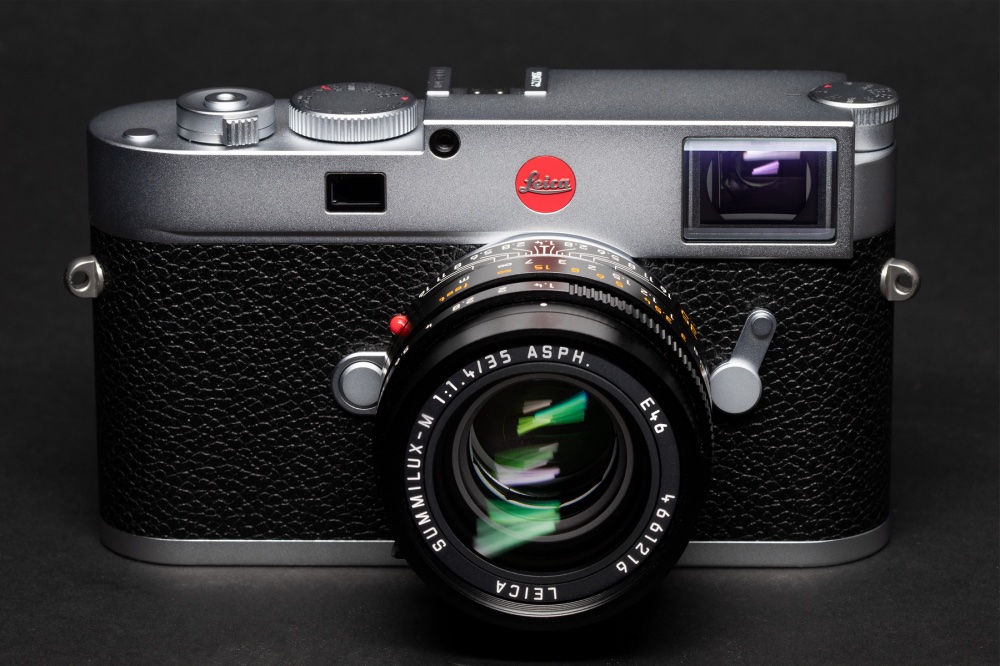
The other survivors? Canon, for whom cameras are a small revenue center and Leica, which changed its business model years ago. They now no longer make cameras, focusing on jewelry.

So goodbye, Olympus, and hullo, iPhone. It’s time to move on.

Apple to fire Intel

No more Intel CPUs.

I well recall the growing disaster of the IBM PC CPUs, the G3, G4 and G5.

Apple used these in their desktops and laptops through 2005, when Steve announced that Apple would be dropping the IBM CPUs in favor of Intel CPUs.

The best laptop at the time was the Apple Powerbook G3 which used the G3 PowerPC CPU. The problem was that as speeds increased with the G4 and G5 the CPUs ran hotter and hotter and Steve concluded that, as IBM was unwilling or unable to address the heat and high power consumption issues, a change was called for. Indeed at the time I recall using a G5 iMac and the machine could have doubled as a toaster. It revved up the fans at the slightest provocation and you just knew that its service life would be limited. I sold it and went to Hackintoshes when Apple switched to Intel. The Macs of the time were too expensive for my taste.

When the first Intel CPU Macs were introduced they came with a truly brilliant application named Rosetta. This ran invisibly and was an emulator which ensured that if you fired up a PowerPC application that it would run seamlessly under Intel’s architecture. That took years to develop, was invisible to the user, and it will be intriguing to see how Apple does like magic this time around.


The G5 iMac – the Apple toaster.

Now it seems that Apple is about to announce that it is switching from Intel to ARM CPUs in its laptops and desktops and the reasons appear similar – too much power consumption, too much heat and too slow a development cycle. And this time Apple will have total control over the CPU’s design, predicated on its years of expertise with the Axx series of CPUs in the iPhone and iPad. I can testify to the prowess of the A13 ARM CPU in my iPhone 11Pro which is a wonder and a great pleasure to use.

For the full story check out this Apple Insider article, which also includes details on the financial aspects of the switch. It is written by the estimable and always dependable Daniel Eran Dilger.

Three hundred bucks a year

High end photography has never been cheaper.


The iPhone 11 Pro lens array.

The ever bubbling rumor mill has it that this year’s iPhone 12 Pro will come with a 60+ megapixel sensor and a fourth ‘time of flight’ lens which will enhance virtual reality viewing as well as providing more granular depth map data for selective focus effects, rendered in software.

I will immediately list my iPhone 11 Pro on Swappa and will sell it for $300 less than its iPhone replacement. This is the extent of my annual hardware cost, the equivalent of a few rolls of film plus some prints or another lens for a DSLR or mirrorless body. Photography has never been cheaper. And I get a new camera annually, comfortable in the knowledge that every iPhone camera has been better than the one which came before it.

Night Mode optimisation

A modicum of care does the trick.

Night Mode is one of those brilliant enhancements in the iPhone 11 which obsoletes every ‘serious’ camera on the market.

Those 8 billion plus transistors in the iPhone’s A13 chip are put hard to work taking multiple images and then stitch together the best bits for a stunningly good result. And the device’s outstanding HDR technology makes sure that the dynamic range is constrained to what the technology can handle. No highlights are burned out.

Still, a modicum of care will be repaid with the best possible images. If you use the iPhone’s default Camera app, Night Mode is automatically invoked when needed. You cannot force it ‘on’.

When Night Mode is active a yellow flag appears at the top left of the iPhone’s display and the image ‘seen’ at the time of exposure remains frozen on the screen. When processing is complete some three seconds later – and you are warned to keep the camera still – a second image appears on the display showing what was recorded. If you notice a significant shift between the locations of objects in the second image compared with the first then it’s more than likely that the result will be blurred. I obviate this problem by using a monopod, which eliminates vertical motion which is the real killer here. I don’t bother with any attachment device, simply holding the iPhone tightly against the top of the monopod. The results are peerless, as these two images from the garden at night illustrate. The extreme dynamic range will only embarrass your DSLR or mirrorless monster. Don’t bother. Get an iPhone 11 – these are SOOC, naturally:

Back to the future

Minolta pointed the way.

Given that they have yet to have an idea not stolen from someone else – meanly mostly from Apple – I spend little time in reading about anything from Samsung.

But their most recent theft is surprising only for how long it took them to think of it, for their latest ‘high-end’ phone (there’s an oxymoron for you) steals from a 2002 inspired design by Minolta in its 2mp Dimage digital point and shoot.


The elegant Minolta Dimage of 2002.

This elegant design had one truly original feature, in addition to its neat packaging in that small square case. It used a periscope optical zoom, vertically oriented inside the case, with light rays deflected through the associated right angle with a mirrored prism. This allowed the incorporation of an otherwise lengthy optical path within the tight confines of the body, a small 3.3″ x 2.8″ x 0.8″. For comparison, my iPhone 11 Pro in its case measures 5.5″ x 3″ x 0.5″.

This cutaway view shows how it worked:


Illustration of the ‘folded’ optical path.

We can expect to see this sort of thing in a future iPhone as modern technology has made things even smaller 18 years after Minolta’s inspired design. Optical zooms beat digital zooms as there’s no pixel degredation as magnifications increase.

Now if there’s a criticism to be leveled at the iPhone 11 Pro – in addition to its poor ergonomics – it’s that there’s no lens at the long end. Sure, there’s a 10x digital zoom, but you can do that just as easily in Lightroom, with all the attendant issues. So you are stuck with ultrawide, very wide and normal, call it 12mm, 24mm and 50mm FFE, all superb but none of them long.

So if Apple can add one of those ‘periscope’ optical zooms and make the 50mm a 50-200mm optic, well, that’s going to be all she wrote for the few remaining sales of silly-priced and even sillier-sized DSLRs.