Category Archives: Hardware

Stuff

Panasonic 12-35mm f/2.8 Power OIS MFT lens – Part I

More bulk and weight, but maybe worthwhile.

I have been using the stock 14-45mm f/3.5-5.6 kit zoom which came with my Panasonic G1 for almost a decade now, and took years to write about it, taking it for granted. Only Panny’s miserable 20mm f/1.7 optic prompted a piece on the kit zoom, which finally appeared here and while I have continued to grumble about the rough zoom ring everything else has been sweetness and light(ness). That groundbreaking G1 body has long since been replaced, now with two GX7 bodies which I continue to find perfect for my needs, and as a traveling outfit those bodies with the 14-45 kit zoom and the 45-200mm long zoom are a powerful and lightweight combination. No FF snapper I know regularly travels with a 400mm lens yet the latter MFT zoom, 400mm at full chat, fits in any travel bag with impunity.

However, during my month long travels with my son to visit his future college choices in New England I found that my grumbling about the rough zoom ring on the 14-45mm was regularly being joined by a chorus which complained about the slow maximum aperture, especially at the long end, and the limiting 28mm FFE focal length at the short end. Put it down to all those magnificent spired buildings and the dark chapel interiors. While I have purposely kept the MFT hardware to a minimum, preferring to concentrate on utility over versatility, the Market God or some other mysterious force saw me buying the 12-35mm f/2.8 Panny posh variant the other day, which adds width at the wide end and a constant f/2.8 aperture throughout the zoom range, while sacrificing the FFE 90mm long end for a more modest 70mm.

Nothing here is going to vie for current reporting as the posh variant has been available for some 5 years now, but as a long time user of MFT with many readers also using the format, I thought some comments would be of interest. As usual there is nothing on video use here – where the posh lens has its share of critics – as I do not make videos.

First impression out of the box is of a ‘pro’ quality lens. Where the kit lens is utilitarian in appearance, the pro speaks of a step up in quality. Ford vs. Porsche, if you like. Fit and finish are stepped up from the kit zoom, the zoom ring is (finally!) as smooth as can be and the fully extended lens barrel at the long end displays no wobble, unlike that in the kit lens. Yes, there’s a lens hood but I opted for a B+W haze filter instead. On the rare occasions a hood is called for I shield the lens with a hand, which does the trick while saving bulk.
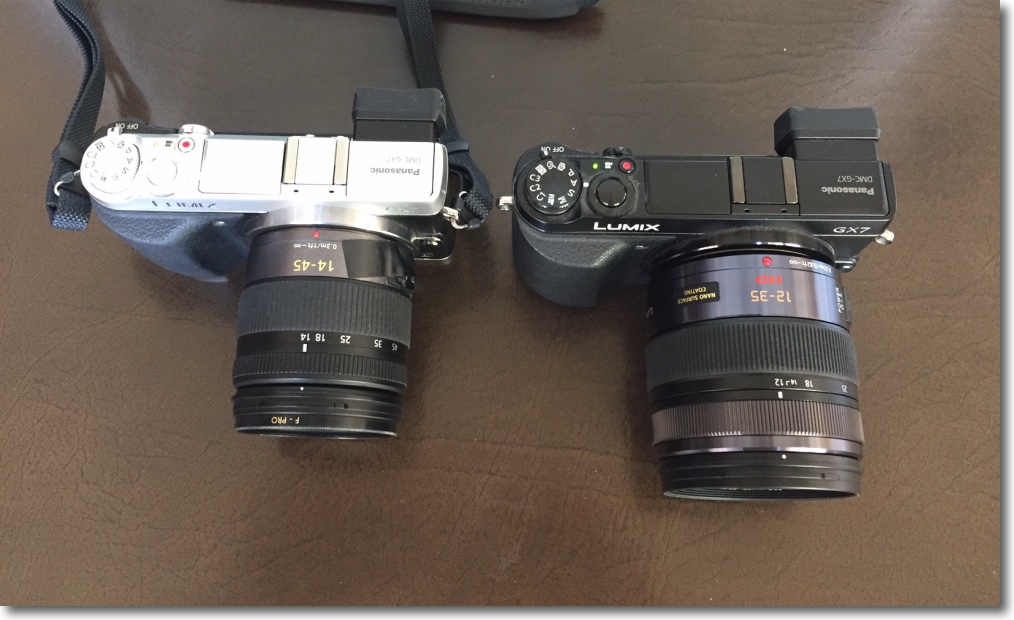


Two GX7 bodies fitted with the stock kit zoom on the left, the pro zoom on the right.
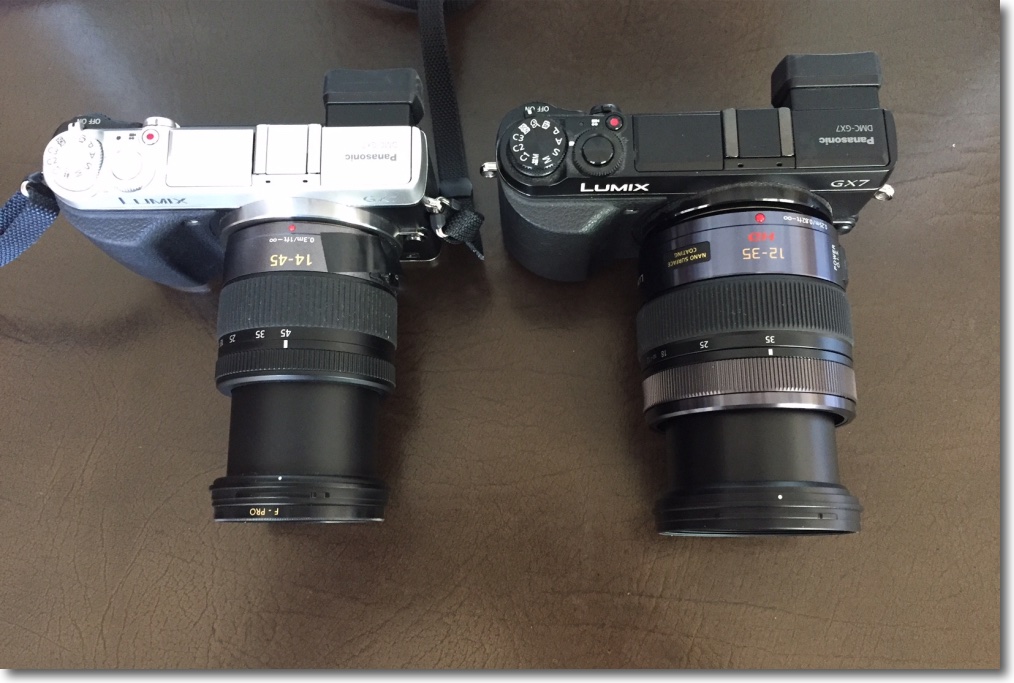

Both lenses at maximum zoom.
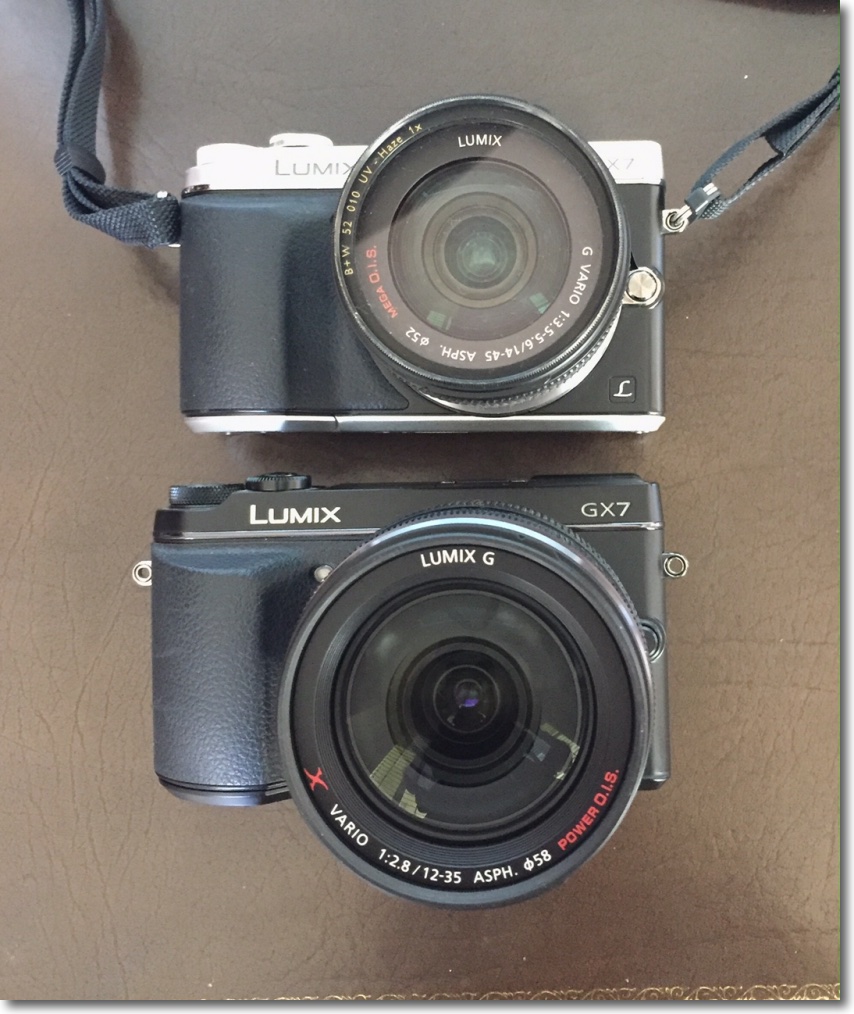

Front view. Note the increase in filter size from 52mm to 58mm.


The least appealing aspect of the APS-C digital format is that the savings in lens bulk compared with FF hardly seem worth the trade-offs in sensor size, and the most remarkable aspect of the smaller MFT-sensor hardware is the small size of the lenses compared with APS-C. Now this advantage is being pushed to the limit with the Panny pro zoom as the images above show. The pro zoom looks like the proverbial cuckoo in the warbler’s nest on the diminutive GX7 body, yet the total camera + lens weights testify to the continued benefits of the MFT format:

  • Panny GX7 with 24-45mm kit zoom: 22 ounces
  • Panny GX7 with pro zoom: 25 ounces

So the cuckoo’s bulk does not result in a material weight penalty.

Part II, with many images, appears here. I paid $710 (the lens was $1300 when introduced all those years ago) and there’s a costlier variant with improved zoom and OIS, Mark II, available for close to $1000. Another option is the fixed lens Panny LX100 with its very fast continuous f/2 Leica-branded zoom (you can be sure the innards never saw the inside of a Wetzlar production line) covering a range of 12-37.5mm for a modest $525 or so. I wrote about my son’s here and while it’s a fine value combination I find the small size just a tad too fiddly for my largish hands. There are some more technical field notes on the LX100 to be found here. It’s a serious contender for the ultimate travel camera and, as a friend remarked, you get a great lens with the body thrown in free.
The iPhone is 10

Ubiquity in a decade.

It’s easy to remember the date as it’s the one on which I shelled out a shocking amount of money on a device the likes of which no one had seen before.

Seldom has technology been so compelling, so obvious in its promise of fulfillment of an unknown need.

Mercifully I was living in central California at the time so the lines at the local Apple Store in San Luis Obispo, a poor college town, were nothing like those in affluent San Francisco with all those memorable images of crowds around the block. Indeed, the device was so costly that Apple refunded $200 of the purchase price some months later after crafting the now famous financial subsidy model with AT&T. And AT&T was the sole carrier, there were no apps or AppStore and you pretty much enjoyed what the device came with. And you were deliriously happy that something so magical fitted in your pocket.

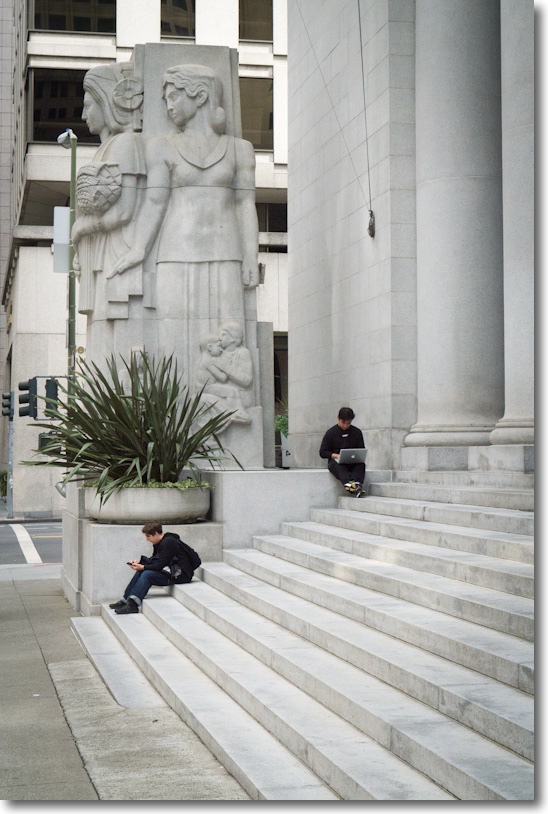
I paid my small tribute to Steve with a snap taken – where else but in San Francisco? – on the day of his death, October 5, 2011.

Pacific Stock Exchange building, Pine and Sansome, San Francisco.
G3, kit lens @ 71mm, 1/1250, f/7.1, ISO 1600

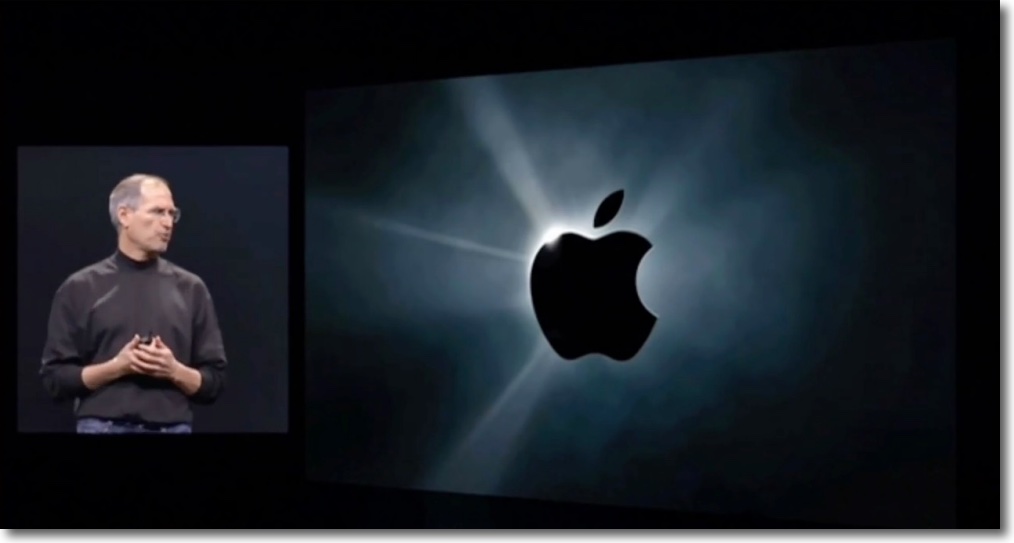
The iPhone roll out some months before the availability of the gadget remains the greatest promotional video ever.


Click to watch.

If one looks at the global penetration of smartphones – the iPhone and its many knock-offs, the device’s acceptance has been faster than that of all the key technologies which make life livable. Vaccines, modern medicine, transportation, electricity, sewers and so on, none has reached most of the world as quickly as the smartphone.

We now know Steve’s presentation to be some of the best showmanship since P.T. Barnum was a boy. He had multiple prototypes hidden on his body each barely capable of doing one thing. The iPhone was still months from a production model and was insanely buggy. But the master showman and carnival barker got away with it and the device remains one of the most reliable and bug free computers ever made. Watch that presentation. It is seamless. And today, for most consumers, a smartphone is the only computer they own.

Will Apple’s pricing and profit hegemony at the top end of the market prevail? The device has already taken Apple from a rounding error to being the world’s largest business and the single product dominance of its profitability, along with a chief executive who has yet to have an original idea, does not augur well for continued leadership when it comes to tech income statements. But no matter. This remains the most transformative device in human existence. And it was Steve who bashed all those engineers’ heads together and brought it to market.

The last great iMac – September, 2016

Times past.

With my son recently registered at a Massachusetts boarding school, the full force of the sheer horribleness of living in the Bay Area invaded my psyche massively as I contemplated that great day.

I moved to California in 1987, Los Angeles. Loved it. Later stints found me in San Diego, loved it, and San Francisco, loved it a lot.

But, after two decades, no more. San Francisco and the Bay Area are a living hell. Maybe if you are here on an H1B visa and MacDonald’s is a new taste sensation for you, it’s heaven on earth. But for long time denizens, it’s anything but. Take the Mission District, which I love, as a microcosm of what has happened. Earnest Googlites are destroying the Hispanic culture, replacing it with seven figure condominiums and chic restaurants. We really need more of those. Housing costs effectively gentrify all poor areas – Millbrae, South San Francisco, SOMA, Oakland, and yes, even as far north as Sacramento, as our great capitalist businesses force out all those who cannot code social media apps. The result is that the people who keep a city running, the waiters and cooks, the house cleaners and secretaries, cannot afford to live where they work. That is not right.

So within a week, emulating my son, I will also take a one way flight out of here, to the more relaxed vistas of Scottsdale, Arizona in the desert that I have learned to love on my many travels there these past two decades.

That move brings with it the inevitable rigors of packing precious possessions, though in my case they are precious by association, not by value. And one which ranks right up there is the greatest desktop computer Apple ever made, the iMac G4. Here it is after the ever amusing task of trying to figure out exactly how it fits in all those complex polystyrene pieces, packaging which is a design masterpiece in its own right:

Design genius.

The original, butt ugly iMac may have saved an Apple headed for Chapter XI, when Steve returned. But it was a prosaic CRT design housed in a funky translucent plastic shell which was mostly silly for all its ‘Think(ing) Different’. The G4 iMac was something else. First there was the use of an LCD display, 15″ or 17″. No one used LCDs. SSDs did not exist – at least not at affordable prices – so Apple housed the HDD in a cheeky gargantuan half-cricket ball (OK, baseball) which formed the housing for the electronics and fans. And they boasted about it on that splendid box. See above.

But the genius of the design, an ergonomic masterpiece, was the elegantly cantilevered ‘screen on a stick’. Move it up, move it down, move it toward you, move it away, move it around. It did what it was told. Burning DVDs? Easy. At a touch of the button Pandora’s Box opened, and the DVD tray magically emerged from the cricket ball. It was fun, it was new and it was magic!

And that magical G4 iMac defines exactly what is wrong with Apple today. It’s the same thing that is wrong with the Bay Area. Life is not a mobile device looking for a new app. Life is not an overpriced condo which displaces good people. Life is a contemplative experience attended by an extended attention span which rewards those who indulge in that rarest of modern pastimes: thinking.

* * * * *

Click here for an index of all the Biographical pieces.

iPhone7

Hurry up and wait.

The iPhone7 manages to be an exercise in three things at once: arrogance, greed and desperation.

Arrogance, as Apple has removed the traditional 3.5mm headphone socket replacing it with wireless earbuds whose poor 5 hour life and need to carry a charger manage to simultaneously break something which did not need fixing and make the result worse. “Our way or the highway”. Did the iPhone get slimmer, the rational (?) reason to pull that socket? Nope. It’s the same as the iPhone6+, but the battery life has increased. Given that the battery was already good for a day’s use (and more with the bigger model) this a solution looking for a problem. The iPhone ergonomics, meanwhile, make a kitchen knife look sophisticated, with poor placement of buttons and easy to accidentally shift modes in the camera. Yup, you have been there.

Greed, as those earbuds will run you a shocking $159 to remove that oh! so onerous earphone cable, while deleting its handy control button. This for a device which likely costs $10 to make.

Desperation, for Apple is clearly out of ideas – those went to the grave with Steve – and is trying to milk its margins with silly earpieces. Look out below.

Apple’s onanistic boasting about how they redesigned everything, with no user benefit, smacks of a loss of awareness of customer needs much as their bizarre new headquarters building smacks of a zenith in the company’s fortunes. Building castles all too frequently means you have peaked. Ask Henry VIII and the Tudors.

Meanwhile Siri voice recognition remains worthless (come on, do you know anyone who uses it?), there is still no ‘delete to the left’ (needing but one line of code) and spelling correction has zero contextual logic. iOS is an abomination, seemingly riddled with security holes. 

The other day I was in a Toyota Prius whose driver placed her Blackberry on a small shelf at the base of the console. Now I’ll admit the Prius is not everyone’s cup of tea. There are so many videos, tones and flashing lights going on that I swear the thing would drive me potty were I to stay in one over 15 minutes. But that little shelf contains an inductive charger, common to Blackberries and many Google devices which removes a cable which really needs removing – the charger cable. Not the one to your ears.

So we wait for iPhone8. Meanwhile I hope I can get the thieves at Verizon to reduce my bill as my iPhone 6 is now paid for.

Mediocrity

Tim Cook’s Apple.

Along with blazing innovation – a larger iPad, the failed Apple Watch – what lands in my inbox the other day?

There was a reason Steve Jobs famously remarked that Apple did not do focus groups or customer surveys. The company was not Procter & Gamble, selling dish detergents. His company was in the business of innovation, meaning it told people what they needed – iPods, iPhones, iMacs, Mac Pros, MacBooks – not asking what they wanted.

Now we have a CEO focused on trying to thwart the US government’s attempts – marketing disguised as customer protection – to keep Americans safe while making ever fancier watch bands, as Apple becomes just another mediocre non-growth business.