LG Electronics OLED65C7P 65-Inch 4K Ultra HD Smart OLED TV

The state of the art.

Update October 14, 2024: The sound became intermittent in the LG OLED TV, necessitating replacement of the motherboard, a process I illustrate here.

Five years ago I updated my 42″ Vizio LCD TV to a 55″ model, and the saga appeared here.

At the conclusion of that piece, after two years’ use, I wrote:

Technology has moved on and since that $700 LCD TV of yore we have seen the introduction of LED panels – thinner and lighter – and the more recent development of OLED displays, one also found in the much hyped iPhone X. And 4K, meaning 2160 pixels to the inch compared with 1080 for regular HD, is now mainstream.

From Wikipedia:

“An organic light-emitting diode (OLED) is a light-emitting diode (LED) in which the emissive electroluminescent layer is a film of organic compound that emits light in response to an electric current. This layer of organic semiconductor is situated between two electrodes; typically, at least one of these electrodes is transparent. OLEDs are used to create digital displays in devices such as television screens, computer monitors, portable systems such as mobile phones, handheld game consoles and PDAs. A major area of research is the development of white OLED devices for use in solid-state lighting applications.”

The bottom line is a picture with pitch black blacks and a very high dynamic range; quite literally like nothing seen before in flat panel technology.

Now this gain does not come cheap. I decided to up the panel size to 65″ diagonal, having more room in my Scottsdale home than in the Bay Area apartment of yore. That’s a 40% increase in display area (the ratio of the squares of the diagonals) yet the increase in TV width is but four inches. Here’s why:
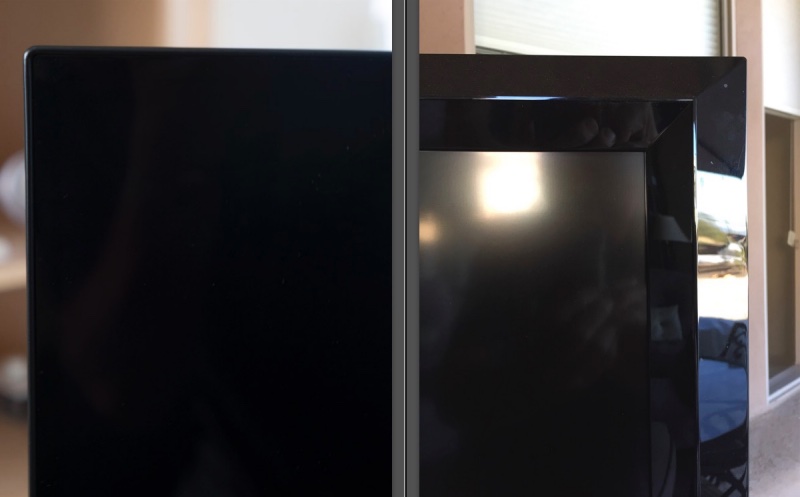

The LG bezel at left, Vizio at right.

LG has worked miracles with this display, for the bezel is almost non-existent, compared with the 1.5″ one on the Vizio. So that’s an immediate width reduction of almost 3″ in the LG, offsetting the larger screen dimensions.

But it gets better. I’m not sure that display thickness means anything, unless you are hanging the set on the wall, I suppose, but it’s fair to say that the thinness of the LG’s display defies belief:
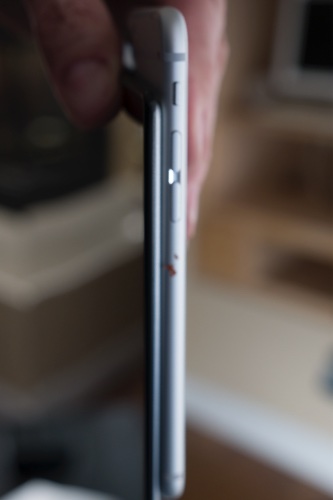

The thickness of the LG panel compared with an iPhone6.

The iPhone 6 is one of the slimmest smartphones on the market with a thickness of just 0.27″. Wait for it …. the LG comes in at 0.16″. Almost half the thickness. Stunning. So thin is the LG panel that extra care in handling has to be used when unpacking the set, to avoid damage. LG’s instructions specifically address the right way to do this. That said, the LG 65″ TV weighs in at a scant 54.5 lbs, something my son and I could easily manhandle into place. The full specs are here; a 55″ version is also available for smaller rooms.

The oft quoted rule that you should buy a TV right before Brain Damage Sunday (aka The Superbowl) may not apply here. It is very difficult to make fault-free large OLED panels – as far as I know the only manufacturers are LG, Samsung and Sony – and 4K displays have four times the pixel density of regular 1080p HD ones. I calculate the 65″ OLED display to have over 4.9 billion pixels. Just one bad pixel and the panel is a goner. I would hate to be in the 4K panel manufacturing business …. Here’s the price trend – after the usual big post-introduction drop the price has actually risen from my purchase date:
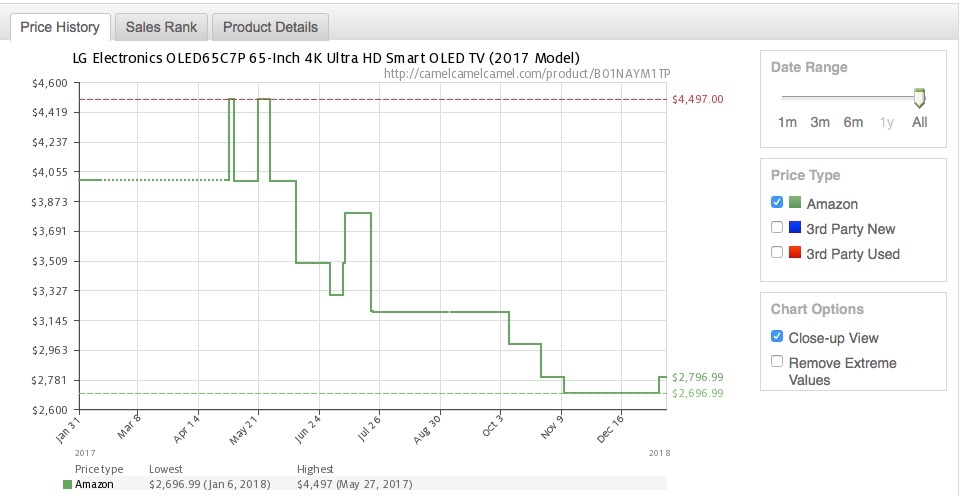

65″ 2017 LG price trend. Click the image.

The rear base of the panel is thicker to accommodate electronics and speakers, though with a display of this quality it really does not do to go with the internal speakers, which are simply too small to do the set justice.

The Market God having been good to me lately I splashed out on a pair of Martin Logan ESLs, an electrostatic design which makes for exceptional transparency while making a dramatic design statement. These suspend a thin transparent film (think Saran wrap) between two highly charged panels; alter the current delivered and the thin film membrane moves, just like a loudspeaker’s cone, but many times lighter, so more responsive. Indeed, the design means that the speakers are literally transparent, the charged plates either side of the membrane being heavily perforated. The trade off is that these present a very low impedance (2 ohms, compared with the 4-8 ohms of regular cone speakers) but very high capacitance load to the amplifier, so not just any amp will work in a stable manner at high current loads. Simply stated, if the amplifier manufacturer does not quote RMS power delivery into sub-4 ohm loads you should look elsewhere.

There is a lot of overpriced trash in the high end speaker sector. Martin Logan has been around for ever and appears financially stable.
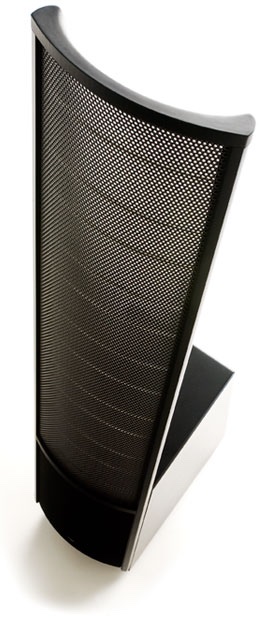

A very special loudspeaker – the Martin Logan ESL.

Other makers I would look at include the British Bowers & Wilkins and the no less British Quad Electroacoustics. You can bet most of the megabuck manufacturers out there will be so much Chapter XI dross a year or two hence after the next financial meltdown. Bread on the table tends to beat high-priced speakers in the corner. These three are survivors; indeed, Peter Walker of Quad fame brought the first full range electrostatic speaker to market in 1955. All three of the manufacturers I mention have been around for decades, and my 40 year old pair of B&W DM3 bookshelf speakers remains as good today as it did in 1977 when first purchased.
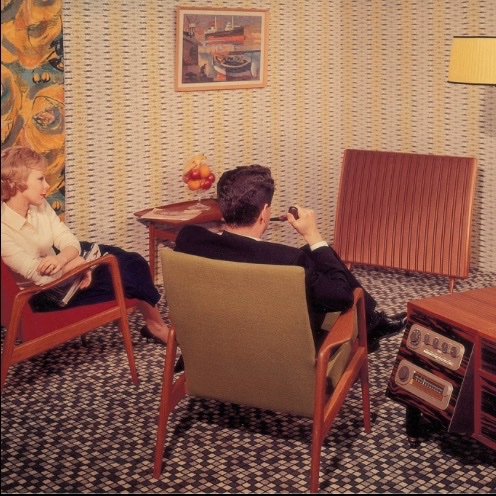

Flashback to 1955. Monaural sound, a pipe,
the Quad ESL, ghastly furniture and an
obedient spouse. Quad tube electronics at right.

Further, look for an amplifier which delivers high current to the speakers; as a rule of thumb, that means an amplifier which weighs a lot – 18 lbs or more. That may sound like a strange metric, but high current amplifiers need large transformers, and large transformers weigh more than small ones! With such fine speakers as the Martin Logan electrostatics it was time to upgrade the (excellent) Onkyo TX-8160 which delivers 80 watts RMS into 8 ohms and happily increases that to 140 watts into 2 ohms. Yes, it’s a high current device.

Another issue with electrostatic speakers – in addition to needing a constant power supply to energize the panels – is that they are not very good at delivering the bone-crunching bass power common in modern movies. Martin Logan partially addresses this by crossing over to a traditional cone woofer at 500Hz but the speaker still runs out of grunt in the 20-100Hz range. Down to about 100 Hz they are fine but that’s about all she wrote at the lower end. So to fill in the bottom octaves I have added a Martin Logan Dynamo 700 powered subwoofer which packs 700 watts of power and goes handily down to 20Hz or so. Again, not for rock freaks, for this is an intensely musical device which renders the deep notes just so, without exaggeration. Try the opening 32Hz organ note on the Solti/Chicago Symphony recording of Mahler’s Eight Symphony. That is how a pipe organ sounds.
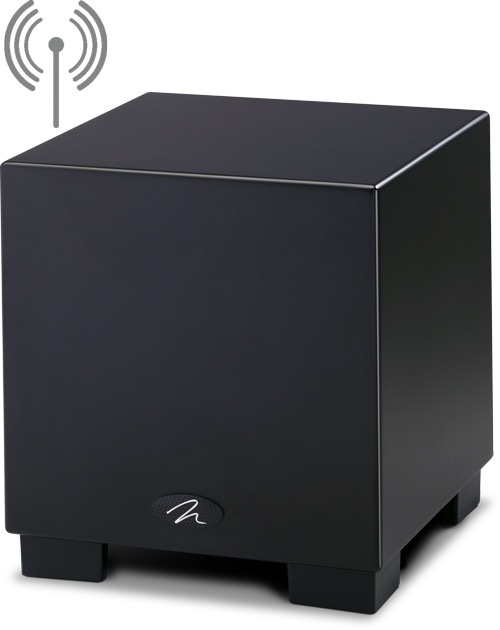

The Martin Logan Dynamo 700 subwoofer. Low notes are rendered correctly.

While ML offers a wireless module for the Dynamo 700 (and you can get 1000 and even 1500 watt versions) I used cables as wireless is just one more interference source in a world crowded with wireless waveforms. You can’t beat copper wires.

How about 4K content? The best repository of streaming 4K content is to be found in iTunes and you will need the AppleTV 4K streaming device to deliver it, as well as a high bandwidth broadband connection. Historically Apple’s movies have been overpriced but they have smartened up. Not only is all 4K content still priced at $6 a rental, any existing movies you may have already purchased will be upgraded to 4K free if that format is available. There are other streaming devices, like the Roku, but none compares for user interface and 4K movie choice to Apple’s offering. The only drawback is that Disney movies (meaning Disney, Pixar and the pap that is Star Wars) and YouTube content are not available in 4K on the AppleTV which I would regard as a feature not a drawback. Indeed Star Wars may well lay claim to having fomented more brain damage in America’s youth than American football.

One of the nicest features of the AppleTV 4K is the remote control which can be easily programmed to control your receiver’s volume as well as powering the AppleTV and your OLED TV on and off with the press of any button. The touchpad takes a bit of getting used to, but practice makes perfect. Best of all, the Siri voice activated feature works perfectly, unlike in any iOS device I have used.
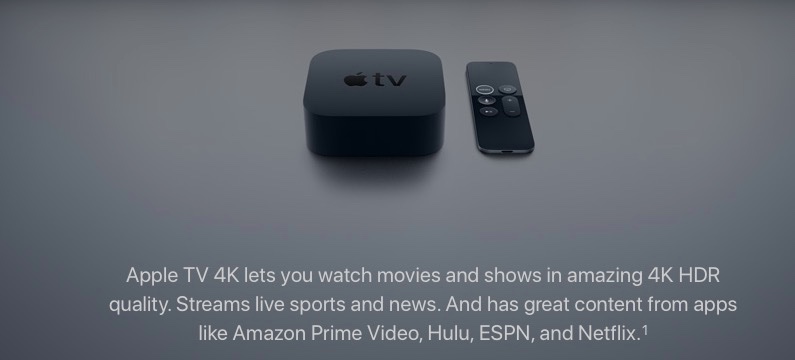

Click the image.

The icing on the cake is that Apple has just added Amazon Prime (free and paid) movies to the AppleTV interface (it even pops up in older 3rd generation 1080p AppleTVs), and while Amazon’s UI is indistinguishable from a bilge pump (both suck), free is good. One day the egos at Disney and Apple will effect a compromise and you will be able to watch all the Star Wars garbage on your spanking new OLED TV in revolting 4K detail. Yecch!

Setting up:

TV setup is potentially a daunting prospect, for the sheer number of user adjustable variables in the LG OLED TV is overwhelming. However, there are people out there who do this sort of thing for a living and one of the best guides I have found is here. The only setting I disagree with is ‘OLED light’ which they have at 16; 50 works better in my environment. Also, it bears repeating what these folks say – be sure to turn off ‘Energy Saver’ or you will think your new OLED TV is broken. The Saver delivers impossibly muddy results.

Setup of the speakers is far easier. Shine a flashlight at the panels from your listening position so that the reflection is one third of the way in from the inside vertical edge. Then fit the spikes to tilt the speakers back and you are done. Martin Logan has a truly exceptional set of instructions, written in clear, idiomatic English; these go into far more detail and include a fascinating history of the design of electrostatic speakers, with due credit given to the great Peter Walker and his original Quad ESL. The folks at ML are a class act. (‘QUAD’ stands for ‘Quality Unit Amplifier, Domestic’ and refers to the company’s pioneering tube amplifier and its first commercial product, a later variant of which I used for decades).

Setting up the subwoofer is trivial. Dial in a crossover point around 100Hz using the back panel controls and adjust the volume to suit.

Worth it? If you aspire to a Rolls Royce, then you do not ask the price of entry.
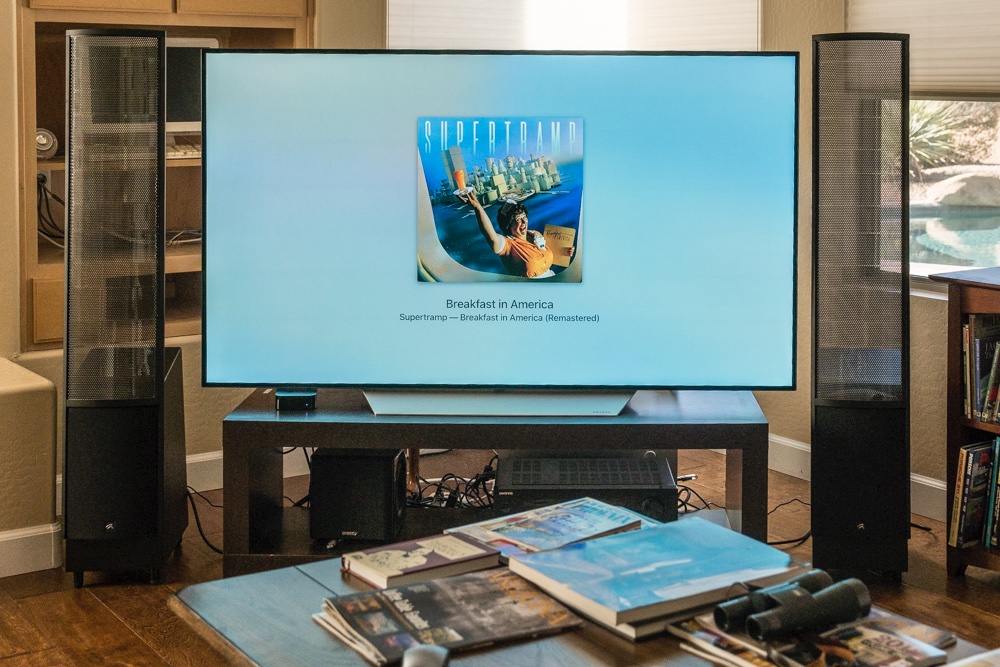

“Could we have kippers for breakfast?”

What of that old 55″ Vizio? Why, it’s doing sterling duty on the patio:
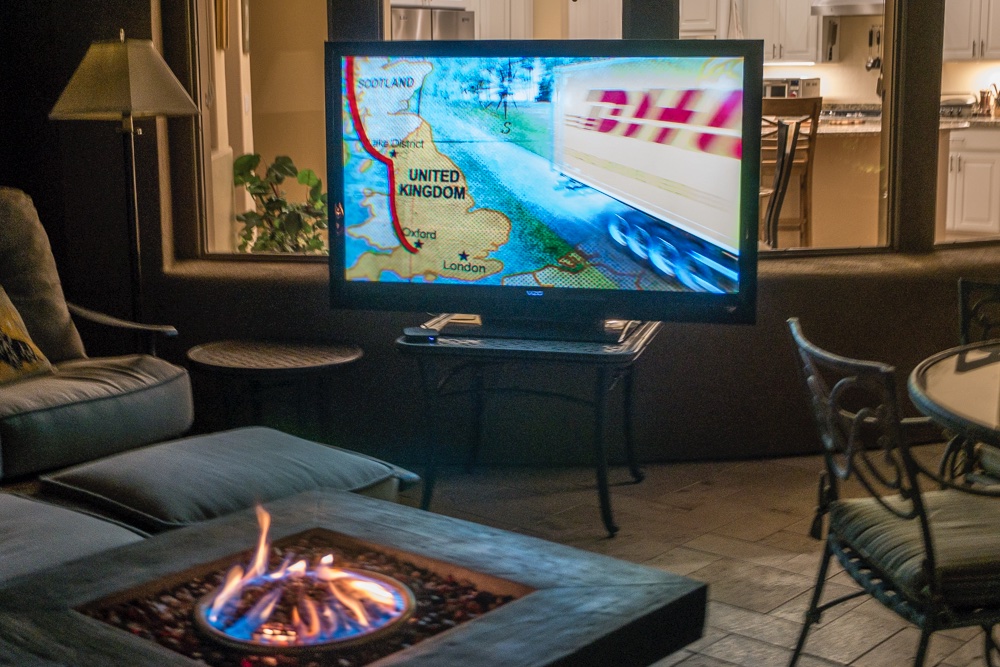

1080p Vizio TV with matching 1080p Gen3 AppleTV.
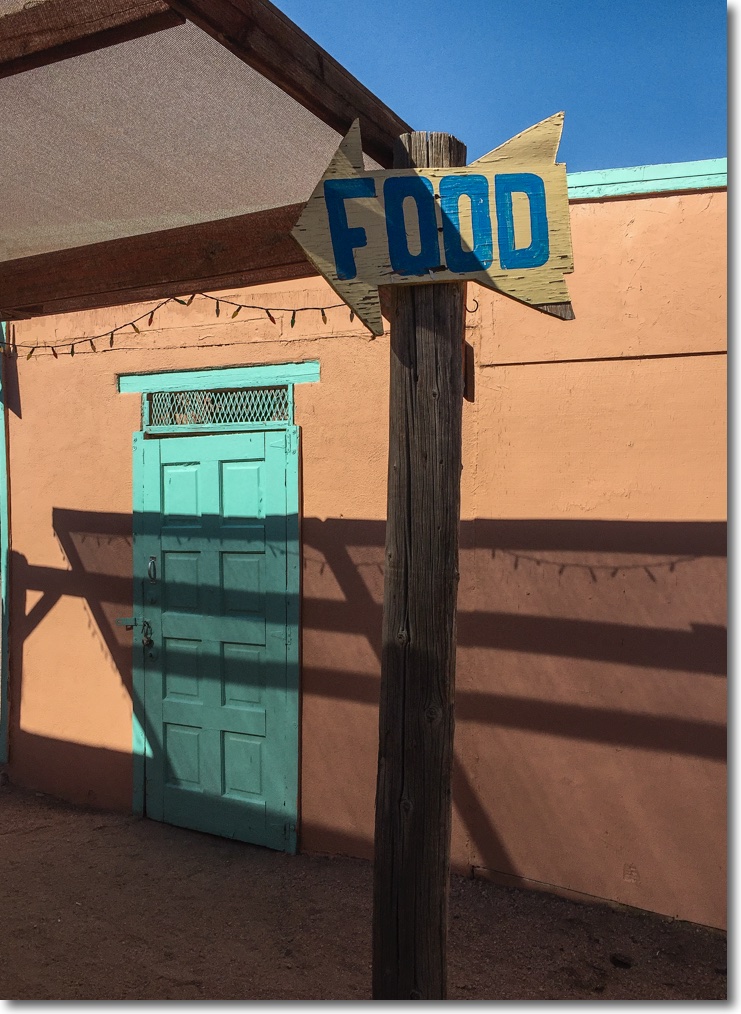
Carefree, AZ

A charming town.
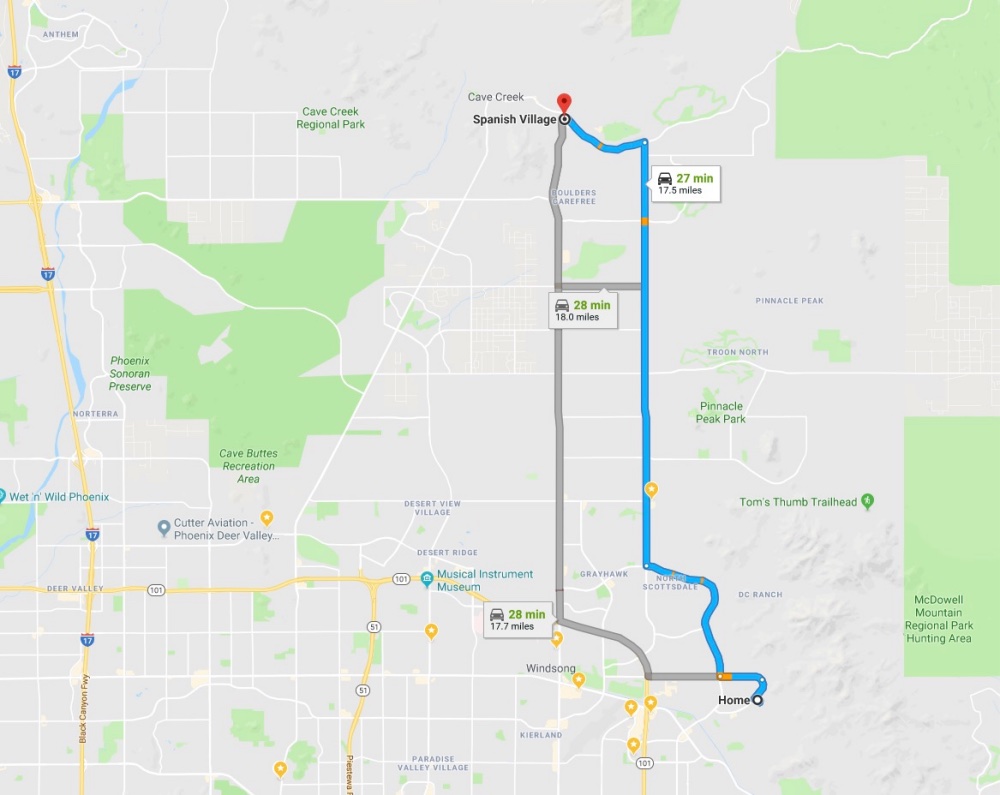
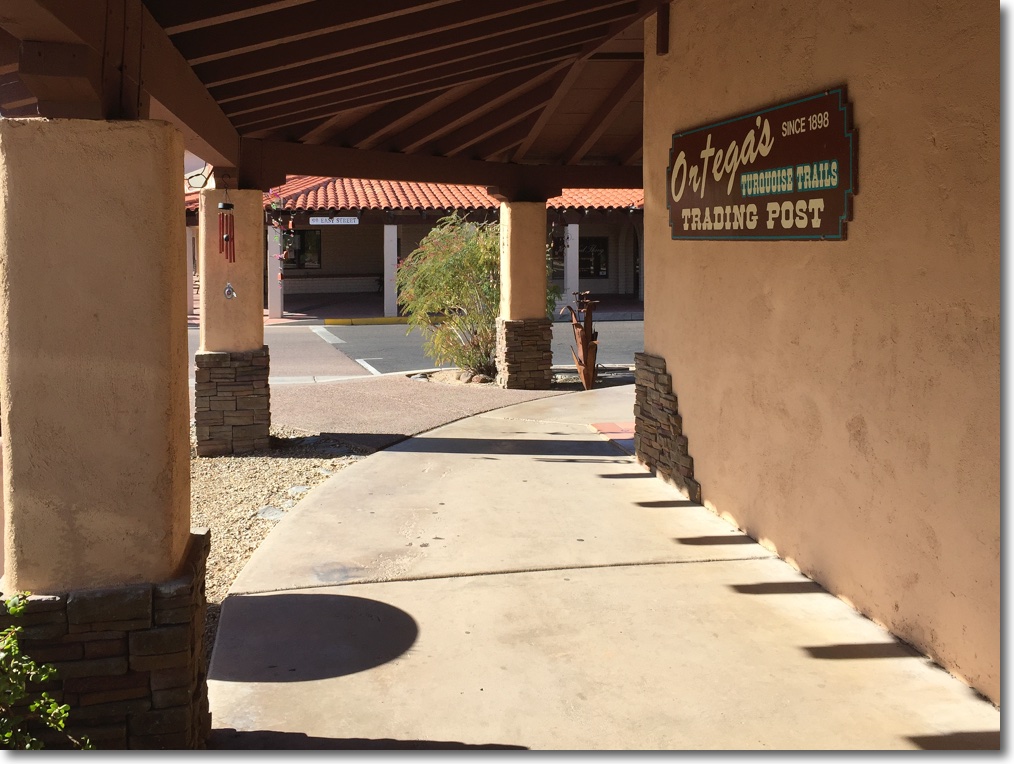
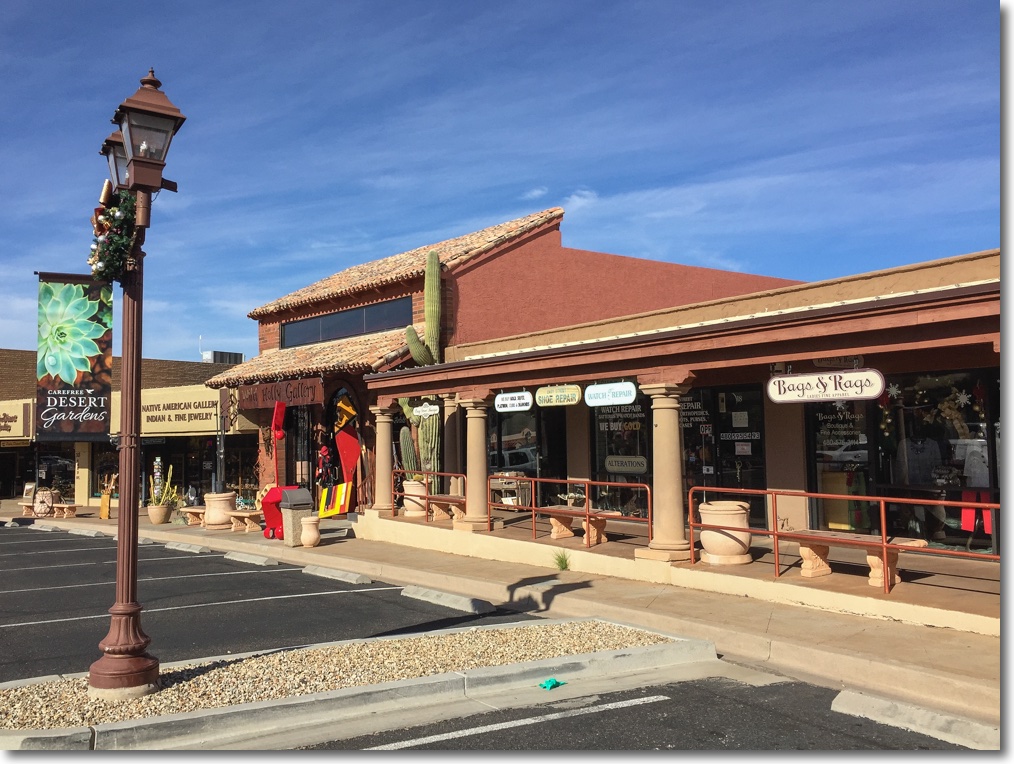
Carefree and its Spanish Village is some 18 miles north of home and is a charming desert town of 33,000 inhabitants. The only crime here is white collar:


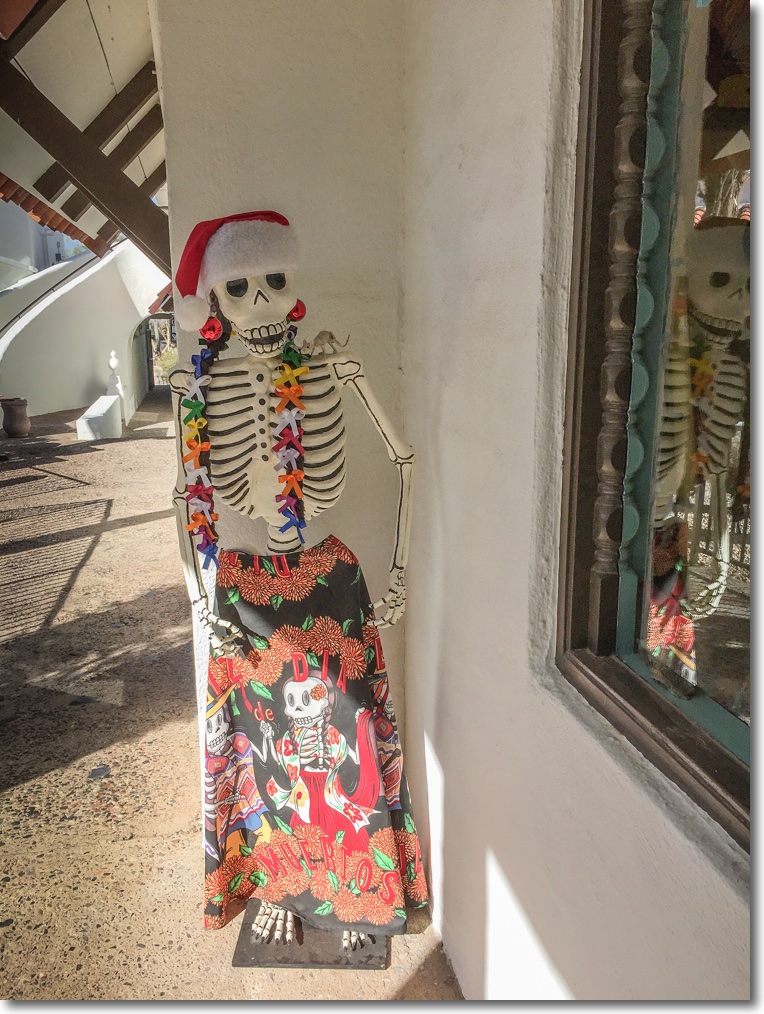
Winston at the Spanish Village.


Ola!


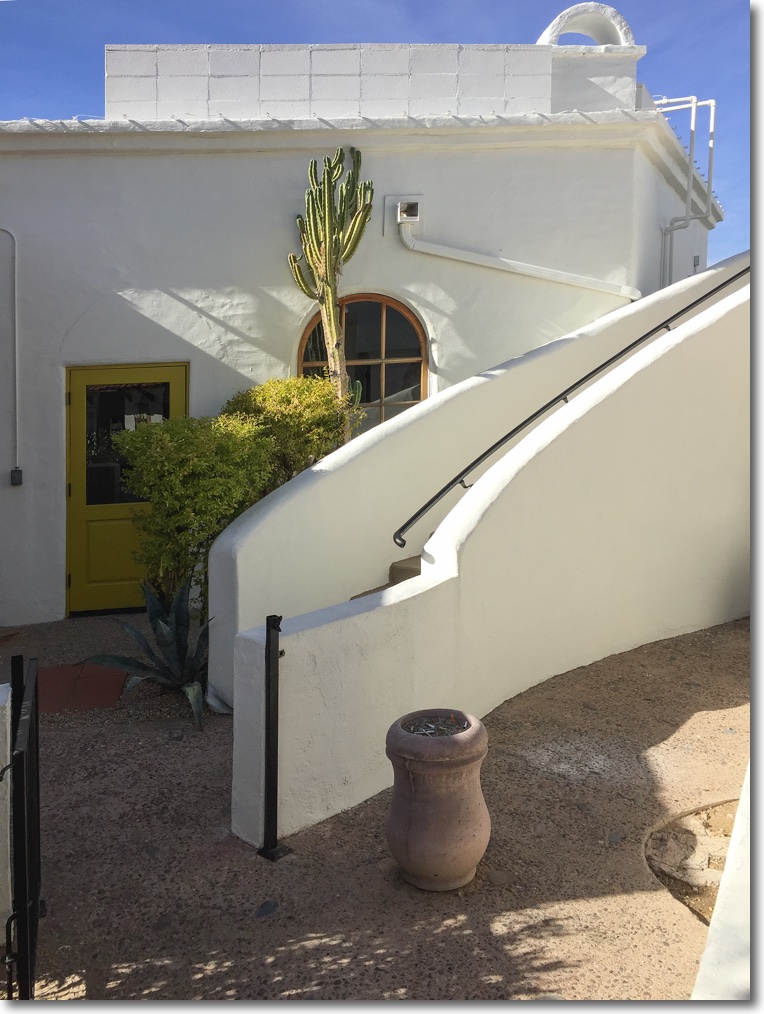
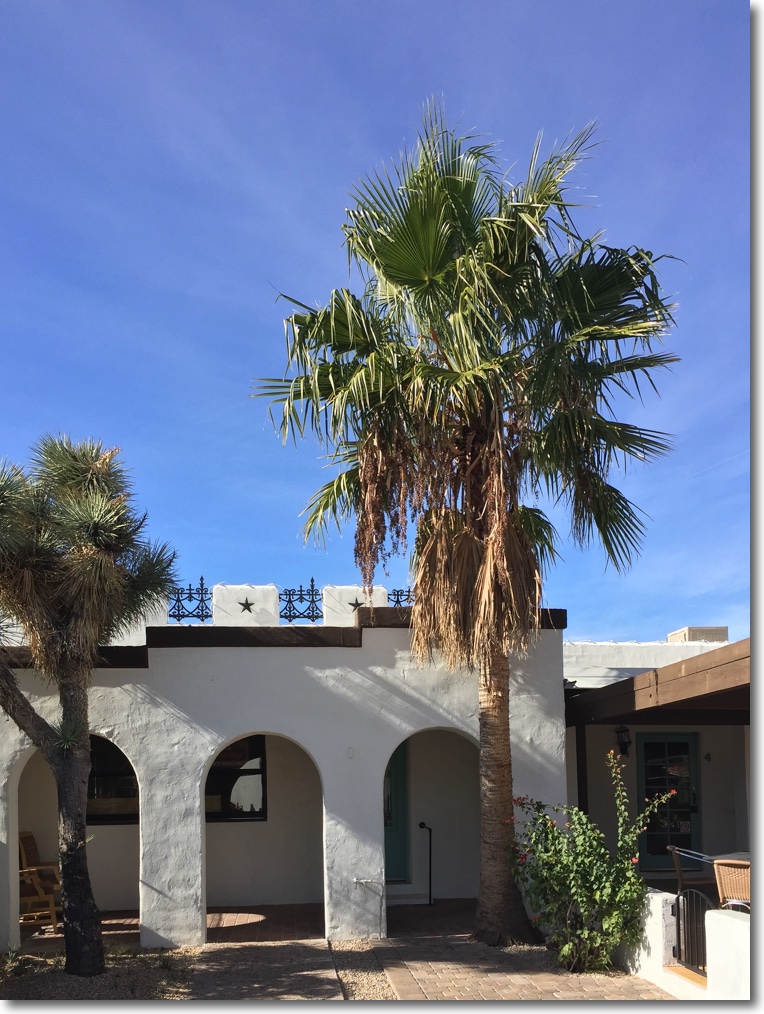
Lovely architecture.


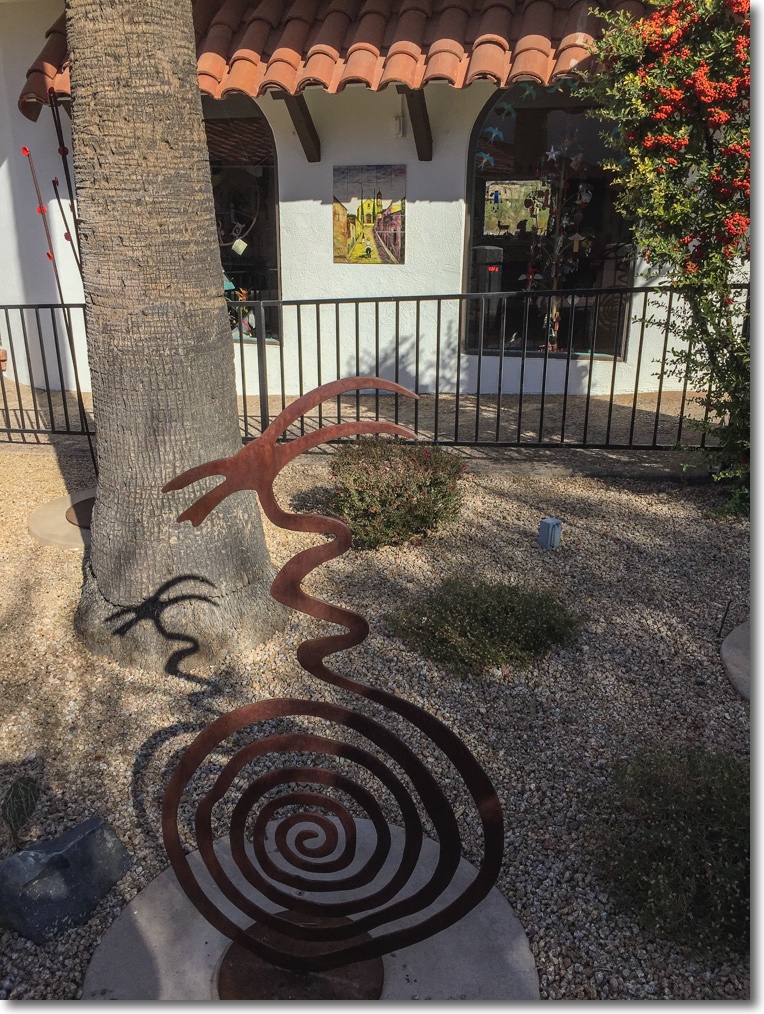
Hopi Indian spiral.


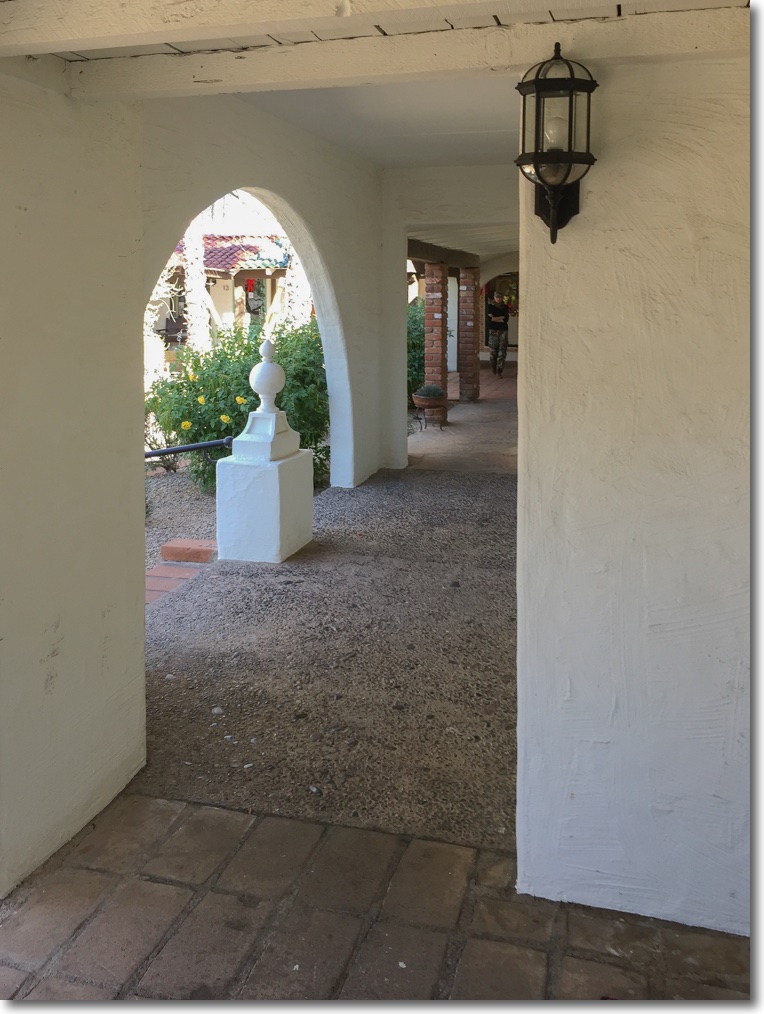
Cloister.


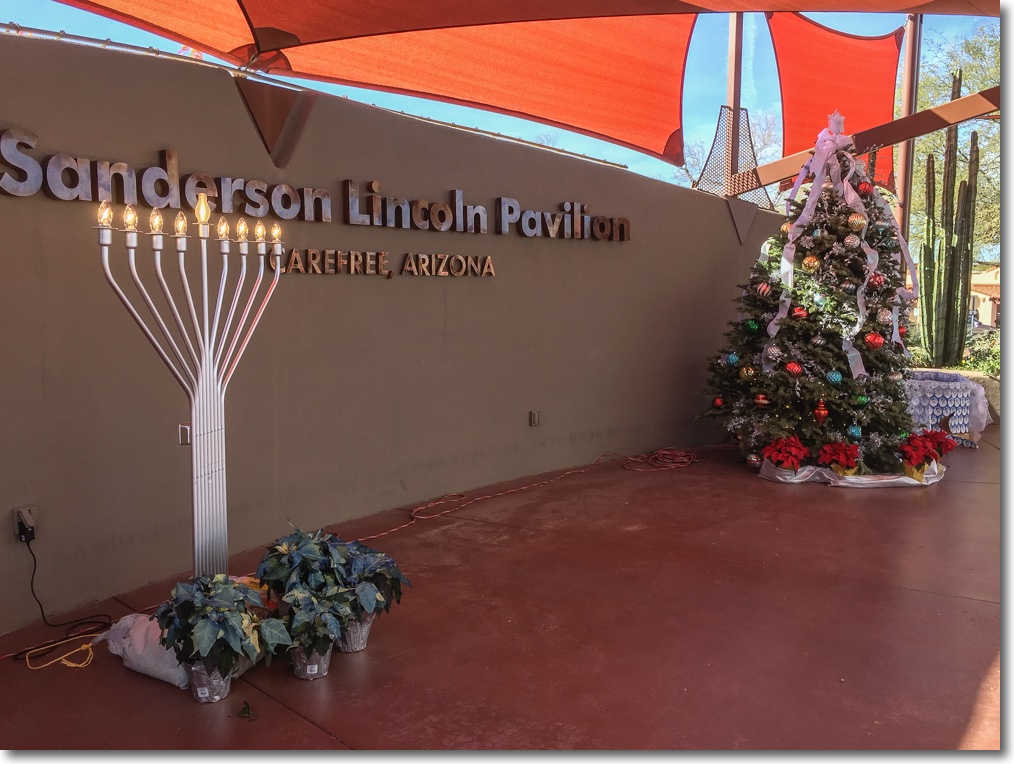
Christmas Eve in Arizona.


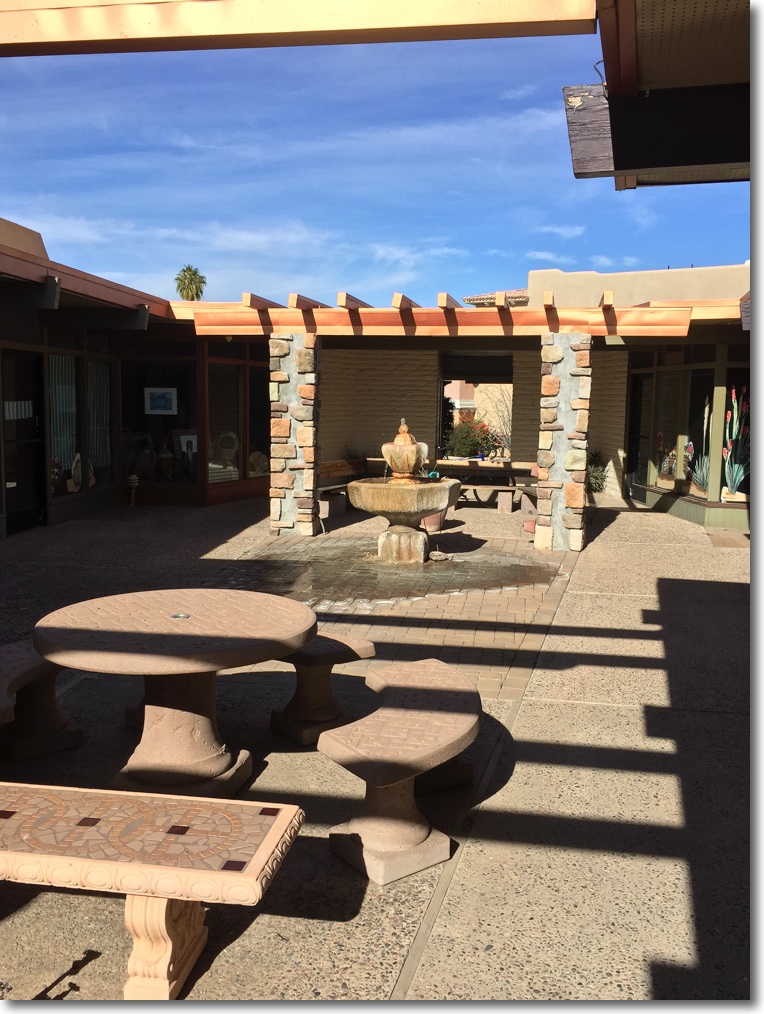
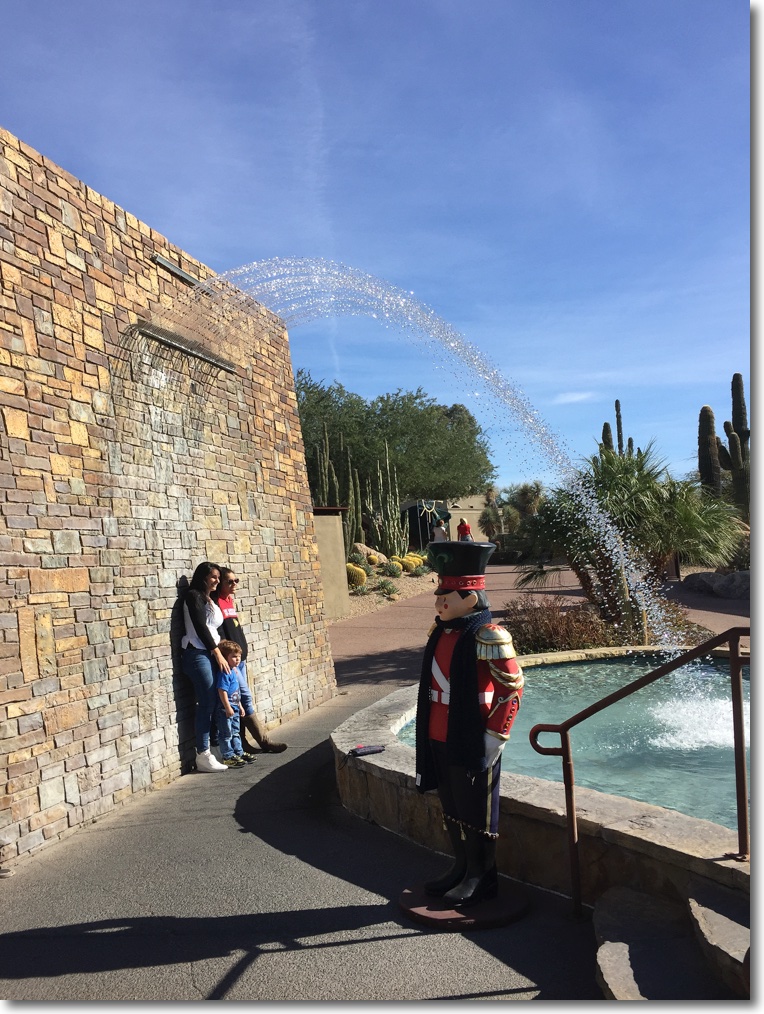
The Lincoln Pavilion and the desert garden take up the center of town.


Desert garden waterfall.


All snapped on the iPhone6.

Christo’s garden

Cold nights.

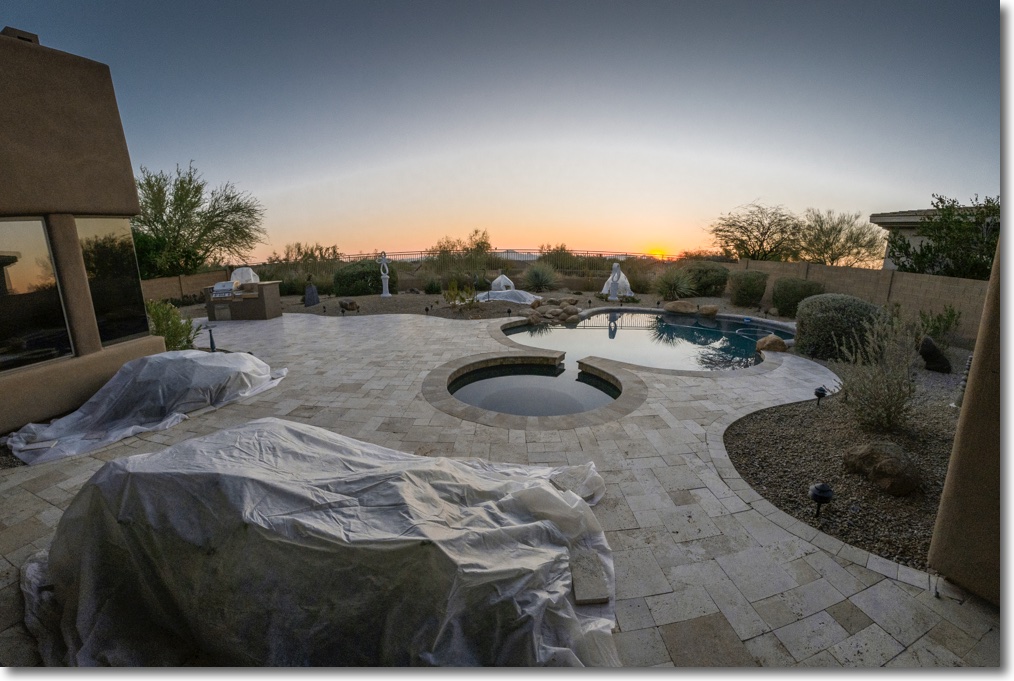
The Yellow Bells and Lantana have to be protected with thermal blankets as overnight temperatures in the high desert of Scottsdale drop below freezing, the result reminiscent of Christo’s wrapped monuments.

His colossal wraps of large structures have a strangely eerie quality and you can read more here.

Panny GX7, Rokinon MFT fisheye lens.

My Years in College – 1970-1973

A fun time.

These pieces generally run annually in time for Hanukkah and Christmas.

“Education is what remains after one has forgotten everything he learned in school.” – Albert Einstein

At age 15 I was working a couple of paper rounds and was in addition lucky to get a summer job in a machine shop in London. Machinists were very much blue collar folks and I genuinely enjoyed both the job and the men who taught me the required skills. And, with my three jobs, I had never felt wealthier! I became fairly proficient as both a lathe and mill operator, having started on the pantograph where I engraved instruction plates which would be attached to the small factory’s output of precision tools. Later I learned a gamut of machining skills which I enjoyed no end.


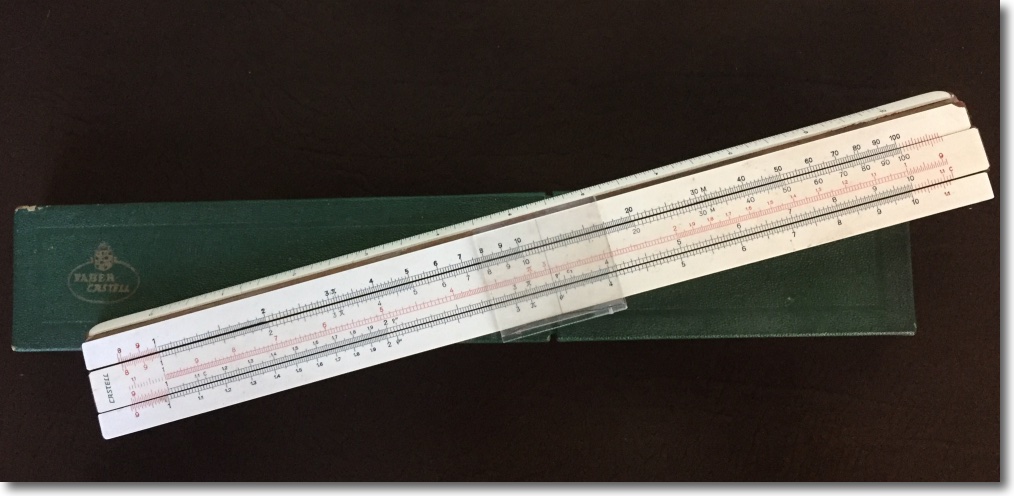
A last remnant of my engineering days. There were no electronic calculators back then.

There was no shortage of good humored joking from my fellow workmates (“four eyes”, “bookworm”, “Lord Fauntleroy”) who knew I would never be one of them – for a start I spoke all ‘la-di-da’ – yet they selflessly taught me the required skills on the job. These were hard working, family men and their innate sense of fairness and decency was everywhere to be seen. Many had served in WWII but it was not something they boasted about. The status of ‘hero’ had not yet been invented. And, in one memorable exchange, they opened my eyes to the world. “So what are you going to do when you finish school, Thomas?” Bill asked me one morning. “Why, go to university like everyone else” I innocently replied.

This response elicited much hilarity and good natured ribbing when it was pointed out to me by Bill and his mates that my presumption that everyone goes to college was sadly mistaken. Yet, in all candor, until I committed that little faux pas, I honestly believed that everyone indeed went to university! That was the way my mum, The Countess, had brought me up and I never saw any reason to argue. I fear I have adopted the same attitude toward my son some half century later.

So, sure enough, it was off to college for me in 1970 on a free scholarship, three years after that little boo-boo.


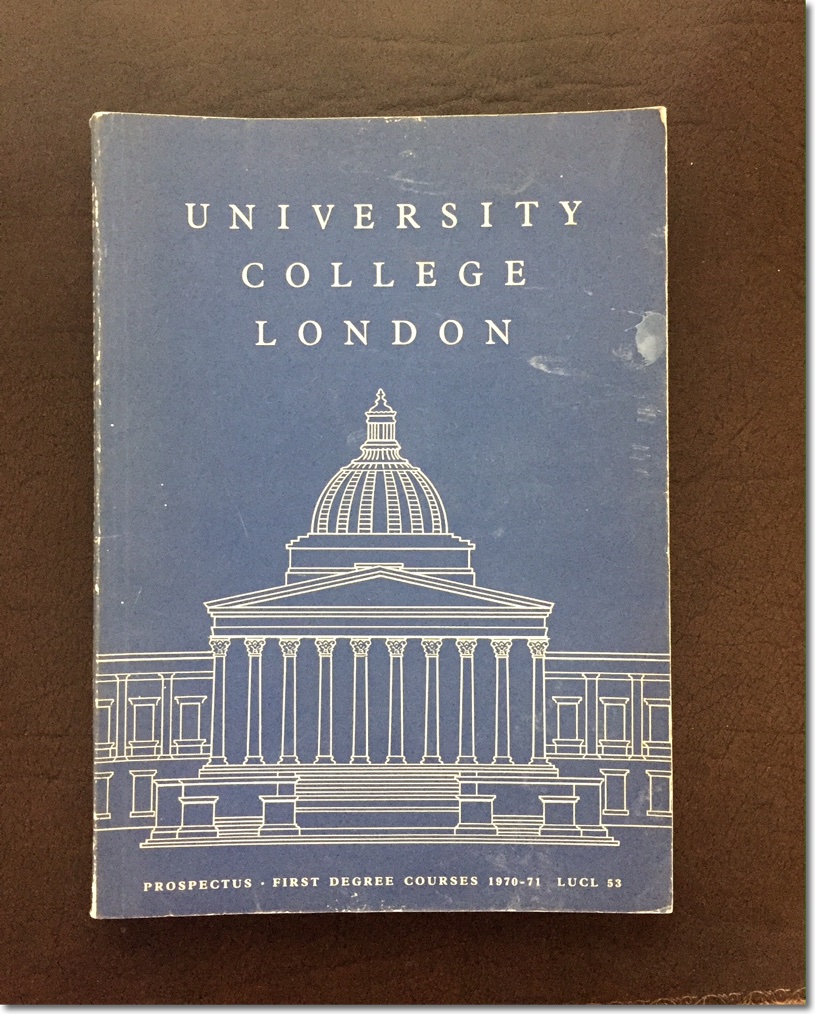
The UCL prospectus for 1970.

Established in 1826 for the education of those who could not afford Oxbridge, UCL remains the premier public research university in the UK and has, since its formation, been entirely secular. That remains, for me, a key dictate in education today and continues to guide my advice to my son on his choice of prep school and college in the United States. Religion has no part in a broad education.

The distinguished Dean of the Faculty of Engineering at UCL was Professor P. N. Rowe, B.Sc., PhD., D.Sc., C.Eng., M.I.Cheme. and D.I.C. Phew! He was as famous as an engineer as he was for all those qualifications. Any aspiring engineer wanted to be in this great man’s lecture classes.


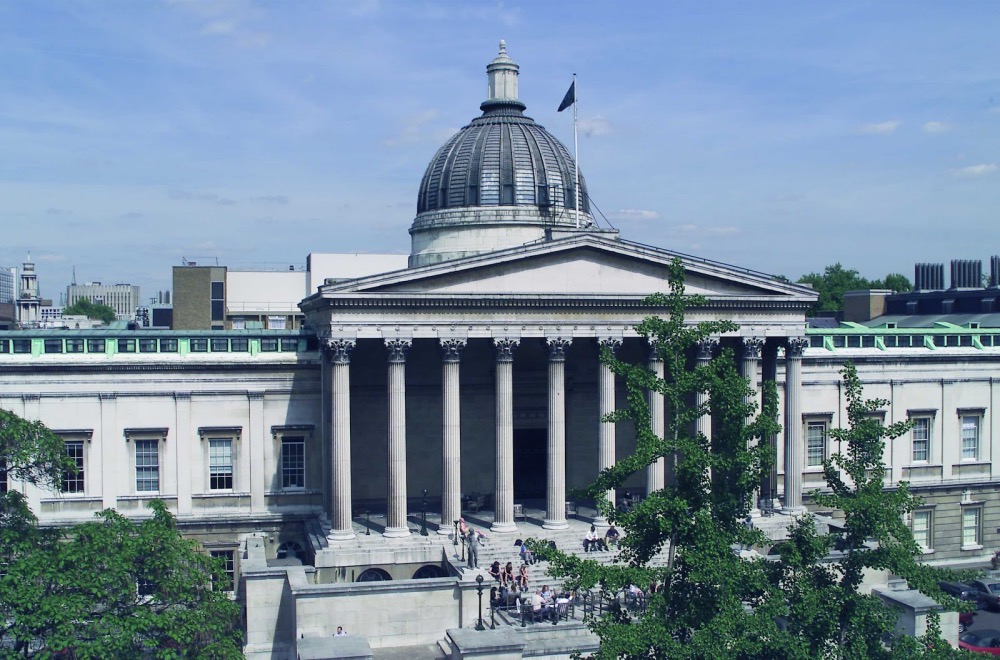
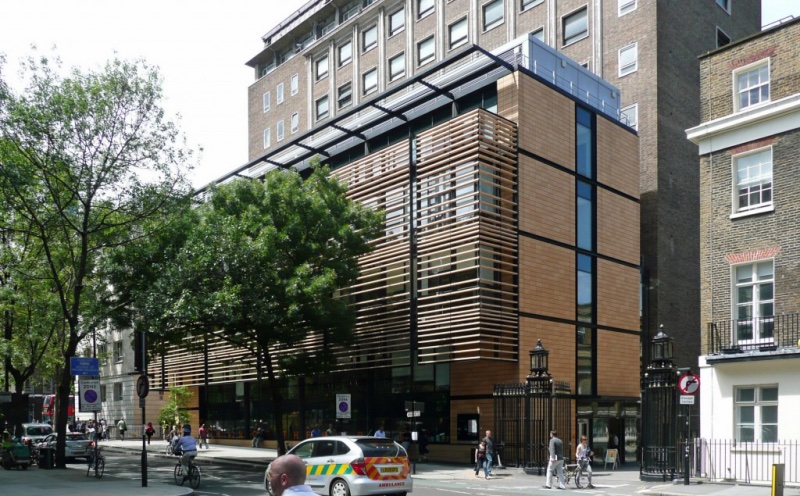
University College London.

The campus is in beautiful Bloomsbury, near both the Courtauld Art Museum and the British Museum, an area famous for its output of notable literary and arts figures. (The Courtauld has the single greatest snapshot painting made – Manet’s ‘A Bar at the Folies-Bergère’. Along with HC-B it has been my greatest photographic inspiration.)

One in eight applicants gets accepted and the college is ranked third in Europe after, you guessed it, Cambridge and Oxford. Distinguished alumni are too many to recite here, but prominent names include Mahatma Gandhi, Francis Crick of DNA fame, Alexander Graham Bell, the nut Edward Teller (Dr. Strangelove), the composer Gustav Holst, Peter Higgs of boson fame, Christopher Nolan and …. Ricky Gervais. You could not have a broader selection of distinguished graduates across all fields of study.

UCL has bred more Nobel laureates than you can shake a stick at, including Higgs (Physics), William Ramsay (Chemistry), Crick (Medicine), Rabindranath Tagore (Literature) and James Heckman (Economics), to name a few. The ‘Nobel for Math’, the Fields Medal, is also well represented with three winners – this is a really tough one to get, one which not even John Nash of Princeton managed to win.


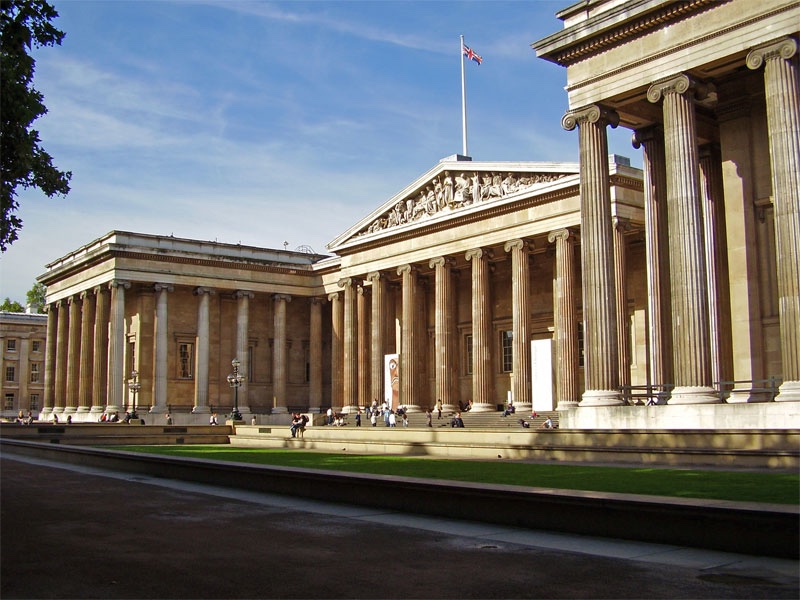
The British Museum, not 1,000 yards from the UCL campus. The Museum was home to the landmark Tutankhamun exhibition during my college years.

In those days a student pass entitled you to free public transport and free entry to the gamut of museums in the city. As one fascinated with late 19th century European (meaning French!) painting I spent countless hours in the city’s museums. The National Gallery in Trafalgar Square nearby saw my tastes expand as I developed an interest in the High Renaissance, for the National has outstanding collections of Titian, Giorgione and Ruebens. This innocent whiling away of the hours never did much for my college attendance, of which more below.

When applying to colleges I knew two things. I wanted to study Mechanical Engineering and I wanted to do so at UCL. I lucked out in both goals. Testifying to small class sizes and the rigorous education at UCL, twenty-two students started in 1970 and just nine of us graduated in 1973. Grade inflation had not yet been invented. Reflecting my early interests, machines and top tier education continue to fascinate me to this day.

Despite the serious demands of academic life, there were, believe it or not, many humorous occasions at UCL. A couple of illustrations will do the trick. As a research university the Faculty of Engineering did much work for the UK’s Department of Defense, though to this day I wonder what exactly the U.K. had to defend. Well, the Falklands, I suppose. Several professors had lucrative consulting arrangements with the DoD, not least of them the Dean of the Faculty, the aforementioned Professor Rowe. I found myself in his office many times and never ceased to wonder at the clutter of papers on his desk, many stamped ‘Top Secret’, with detailed illustrations of nuclear reactors and so on. The Cambridge spy set of the Cold War would have had a field day at UCL.

One of the requirements of the curriculum was a year of rigorous practice in technical drawing. This was before the days of computers and CAD/CAM, meaning easels, paper, rulers, protractors, compasses and erasers, the latter known somewhat unfortunately as ‘rubbers’ in the English vernacular. (Years later in America I recall asking for a rubber in a drafting meeting, wondering at the hilarity my request occasioned). Anyway, our final project was to draw the design for a folding Murphy bed, something only an Irishman could have invented. We all set to it with the confusion of tools required, the results disclosing cam systems, springs, counterweights and so on. This all took hours of calculation and drafting. But one wise guy submitted a crude sketch of an amorphous blob which took him all of thirty seconds. On being examined about his design he explained that this was an inflatable bed, and was rewarded with a failing grade for his efforts. English education did not reward original thinking.

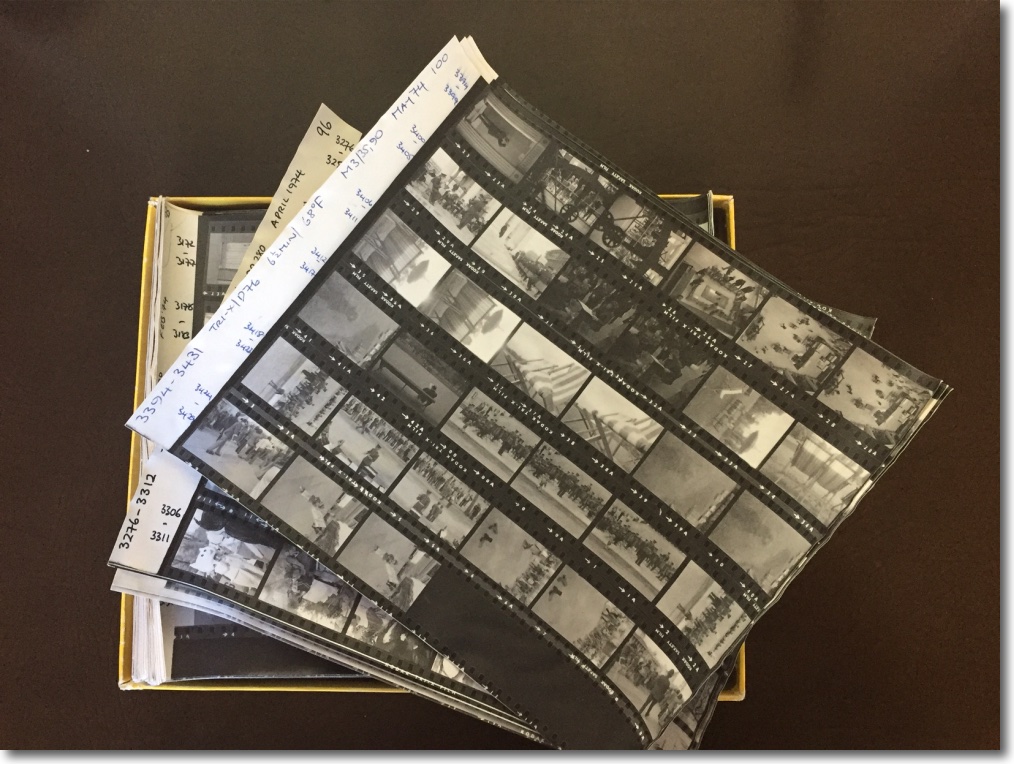
Most importantly, I wanted to be in London and I wanted to take street pictures. I had bought my first ‘serious’ camera in August 1971, a used Leica M3 and nothing has so inspired me in the hobby of photography since. My contact sheets record that through graduation in 1973 (UK degrees take three years as opposed to four in the US) I had exposed 80 rolls of TriX totaling 2,755 snaps, 99% of these on London streets and in her parks. EXIF data was rather more basic in those days:


A contact sheet from my college days.

An 8×10″ sheet of printing paper accommodated 6 strips of 6 exposures from a 36 exposure roll of film and to this day I find the idea of taking 36 images of anything on any photo outing as far more than I can handle. Film encouraged seeing rather than looking and poverty saw to it that few frames were wasted.

Now it’s true that I managed to insinuate photography into my Mech. Eng. studies. The lab owned a Minolta SRT101 SLR with a 50mm f/2 Rokkor lens. My first thought of the Minolta was that I could get to rack it out, no charge, given UCL’s famously liberal culture, taking pictures of the many street protests of the time. “Honest, Dr. Jones, they grabbed me and smashed the camera. It wasn’t my fault!” But then I thought about it and the light went off, so to speak.

I was studying the erosive properties of materials subjected to a blast of various grits. I have a light of known duration, a magnificent Perkin Elmer stroboscope, I have a camera which can photograph the intervening flying abrasive particles using the strobe pointed directly into the lens and the rest is just exposure and some simple measurement of blur lengths and schoolboy mathematics. Heck, I even processed the film myself!

The dropped jaws occasioned by my insouciant presentation to the assembled dons, with the requisite anti-American incantations about ‘Nam and the efficiency of killing, said a First in Materials Science, and a First it was. And while my Prof very much wanted me to come back for a postgraduate degree I had cottoned on to the system by then and turned down his gracious offer. You see, at every fiscal year end the labs would magically fill up with boxes of wonderful toys from Veeder Root, Perkin Elmer and Hewlett Packard. (HP was the breed standard for lab gear back then, before later vulgarians destroyed a once great American company). I asked the Prof about this only to be rewarded with my first lesson in budgetary economics. “Thomas, if we don’t spend the money by the end of the year we will get less next year”. And the money grants were a function of the number of students. I was simply a revenue center. Hmmm.


The UCL Faculty of Engineering. You would walk down the path at the right with your punched cards to run programs on the school’s IBM 360/65 computer which took up a watercooled room all of its own!

But it would be unfair to damn the Faculty of Engineering for trying to maximize its access to technology and the large sums of capital which drives it. Technology research is never cheap. And, indeed, my memories of that long ago time are replete with happiness at the quality and caring of my teachers. Two of those stand out – Bernard Stanford Massey (1927-2011) and Alec Rodger (1907-1982).

The first, Dr. Massey, was my Mechanics of Fluids teacher and I have yet to encounter a more articulate or elegantly spoken man. With a sharp and acidic wit yet with no tinge of nastiness, Dr. Massey was the author of the definitive book on his subject named, appropriately, ‘The Mechanics of Fluids’. To add to his accomplishments, Dr. Massey was also was the editor of the Bulletin of the Hymn Society of Great Britain and Ireland from 1975 to 2001 and from 2003 to 2004, drawing on his deep knowledge of the English hymn tradition in authoring many pieces for that publication. We students irreverently referred to Dr. Massey as ‘BS’ but nothing could have been further from the truth. I learned more about communicating succinctly and effectively from Bernard Stanford Massey than in all my subsequent years of effort. I also learned lots about laminar and turbulent flows!

The second, Professor Alec Rodger was someone I simply adulated. Alec was the doyen of occupational psychology in Britain, a field we now call ergonomics. Anyone who uses a Mac computer, a cordless Dyson vacuum or drives a Porsche 911 is enjoying the fruits of Alec’s labors, for he put the science of ergonomics on the map. His concept of ‘fitting the machine to the man and the man to the machine’ is writ large in good industrial design today. It is also, alas, all too frequently notable for its absence. Next time you use the ineptly designed door handles in your home or struggle with the poorly thought out markings on your stove, you can be sure that the designers had never heard of Alec Rodger. Thoroughly dedicated to his passion, Alec would recount in his tutorials how he once had himself locked up in London’s notoriously hard core Brixton Prison for 6 months (!) to better study the inmates and the effects of incarceration. During the war he played an active part in machine design, especially in the Army’s tanks, to make them better working environments under conditions of extreme stress. Later he worked diligently on the Whitehall mandarins, educating them in how occupational psychology was key to workplace efficiency and happiness. I adored Alec and find myself truly grateful to have had the privilege of attending many tutorials in his lovely Georgian home in Bloomsbury, where we devotees gathered cross-legged on the rug, enjoying his mellifluous tones, his tea and scones. A man for the ages. My First in Occupational Psychology was a given.


Professor Alec Rodger.

But much as I loved Occupational Psychology, there was not a living to be made at it in early 1970s England. A related reason for abandoning engineering and heading off to the financial world was attributable to a chicken.

When I started at UCL in the fall of 1970 there was only one place a self-respecting mechanical engineer wanted to work and it sure as heck was not for the British government. It was Rolls Royce Aircraft and I was set to apply to the turbine blade division when the chicken intervened. Rolls Royce had developed a new jet engine, the RB211 and to procure competitive advantage over Pratt & Whitney and General Electric in the United States RR decided on a magical new material named Hyfil for the main fan blades. Hyfil was nothing more than carbon fibre and was immensely strong in tension, tension it would be subjected to in a rapidly spinning fan. All was sweetness and light in the design stage, the engine delivering 8% better fuel efficiency than those of the Americans’ and orders started rolling in from the big US airlines. Not least of these was Lockheed with its L1011 Tristar passenger jet, then the most advanced civil aircraft with military grade avionics courtesy of the defense expertise of the maker.

Then came the chicken.

A standard test for impact resistance, the bird would be flung against the fan blades which, in the case of the heavier titanium alternative resulted in one pretty messed up bird. But Hyfil took the challenge differently, breaking like chocolate on impact. Now last I checked, chickens are not the greatest flyers but lots of other avians are and they get ingested in copious quantities by jet engines. To cut a long story short Rolls went broke and Lockheed almost did. The last remaining national jewel, RR was subsequently nationalized by the UK government …. and I sure as heck was not going to work for the government. The might of Rolls Royce Aircraft and my engineering future were destroyed. By a chicken.

Engineering – be it mechanical, chemical, production, you name it – is hard. There is a great deal of rigorous applied mathematics and there is no place to hide for the incompetent. Over my many subsequent years in money management I always looked favorably on job candidates with an engineering (or MBA, which is financial engineering) background. They would always have that strong analytical skill set demanded in the world of asset management and more math skills than they would ever need. Indeed, money management is the proverbial walk in the park after the rigors of engineering math.

So what has all this to do with photography? Well, recall that my primary interest in my college years was not academic. It was to take pictures. As one who has been reading business and investment magazines since I was knee high to a grasshopper and, accordingly, possessed an acute sense of the value of his time, I had learned that one’s degree grade affected his starting salary. However, the difference between a First and an Upper Second meant $120 more annually – that’s just $685 today. ‘Are you kidding me?’, I thought. A trivial sum of money for maybe 1,000 hours of additional effort? Eh? $1.20 an hour for no enhancement in employment prospects? I could work like stink at UCL for three years and walk away with a First at $1.20/hr, or I could take pictures for most of the three years, study like a spavined mule for 6 months and come away with an Upper Second. No contest. I went for the Upper Second and the mule option. Plus I made far more from publication of my snaps than any starting salary enhancement offered.

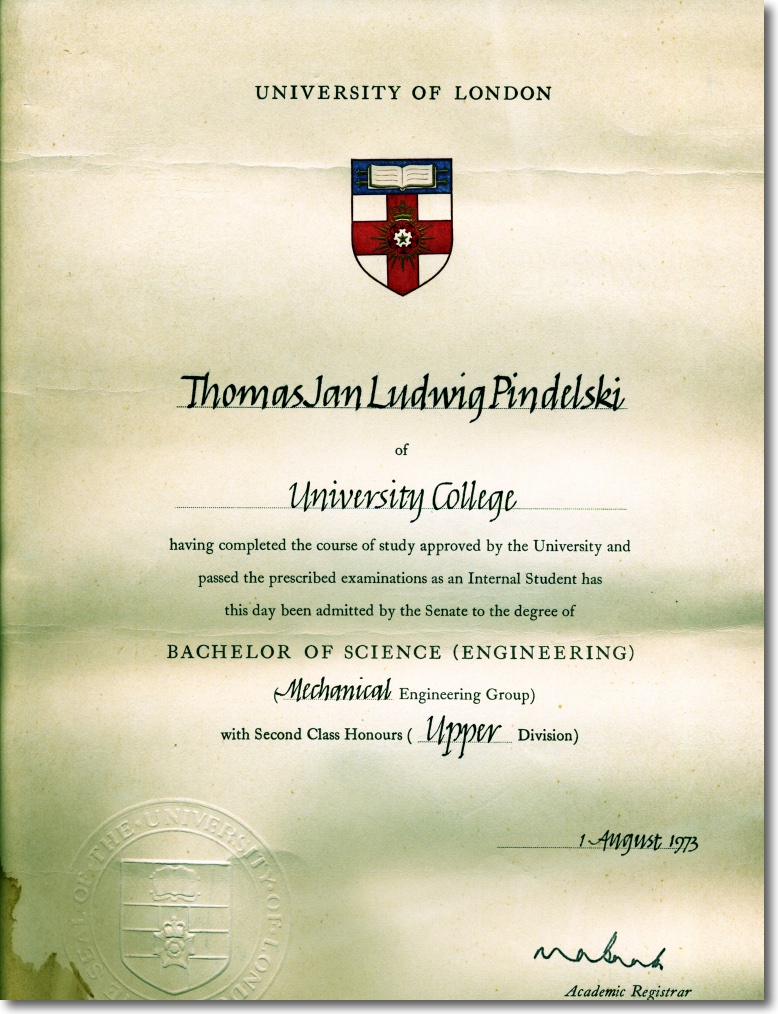
You can thank my grandfather for the ‘Ludwig’ for he was a huge Beethoven fan!

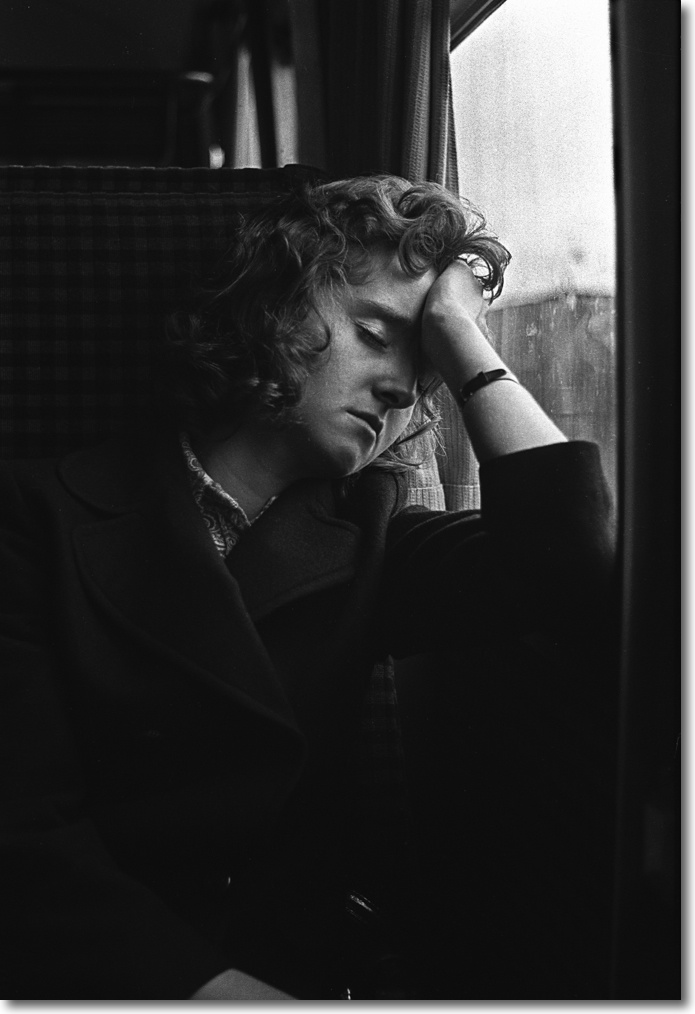
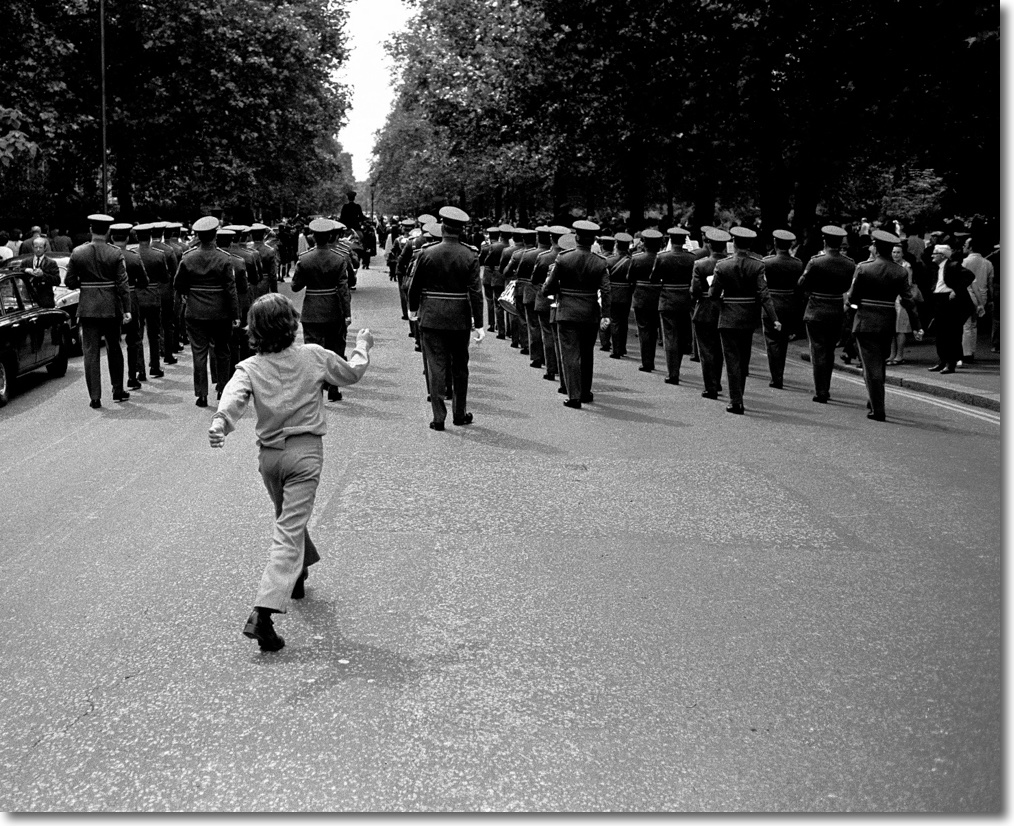
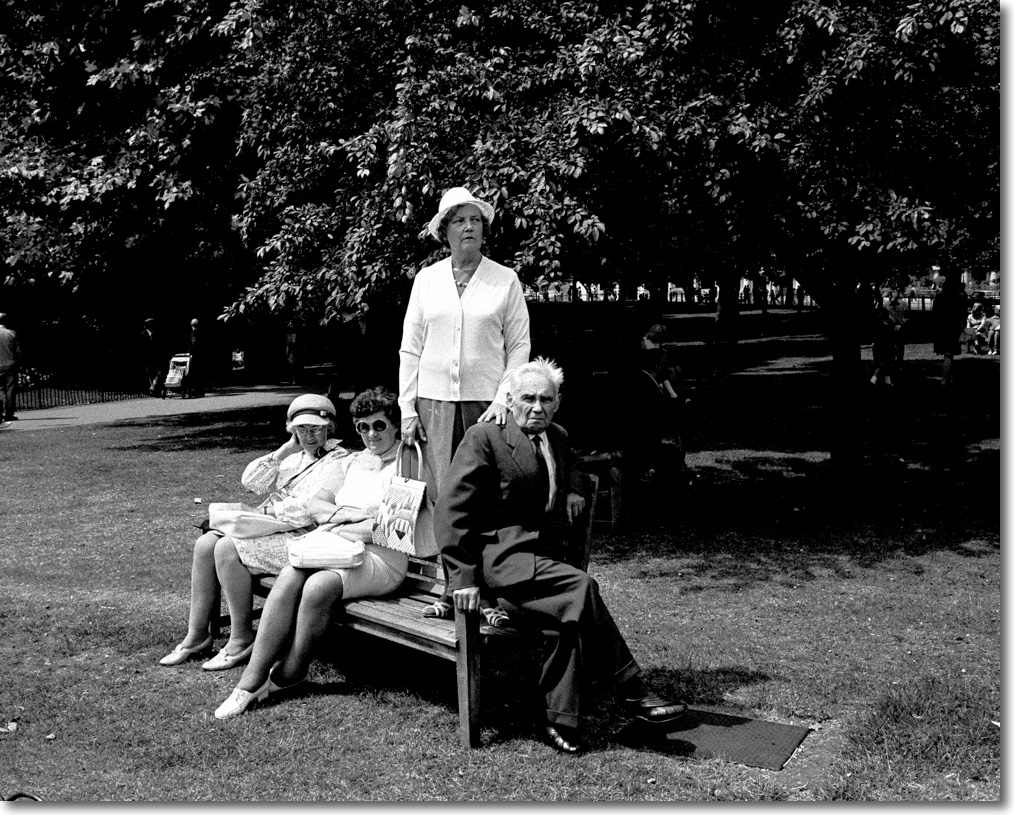
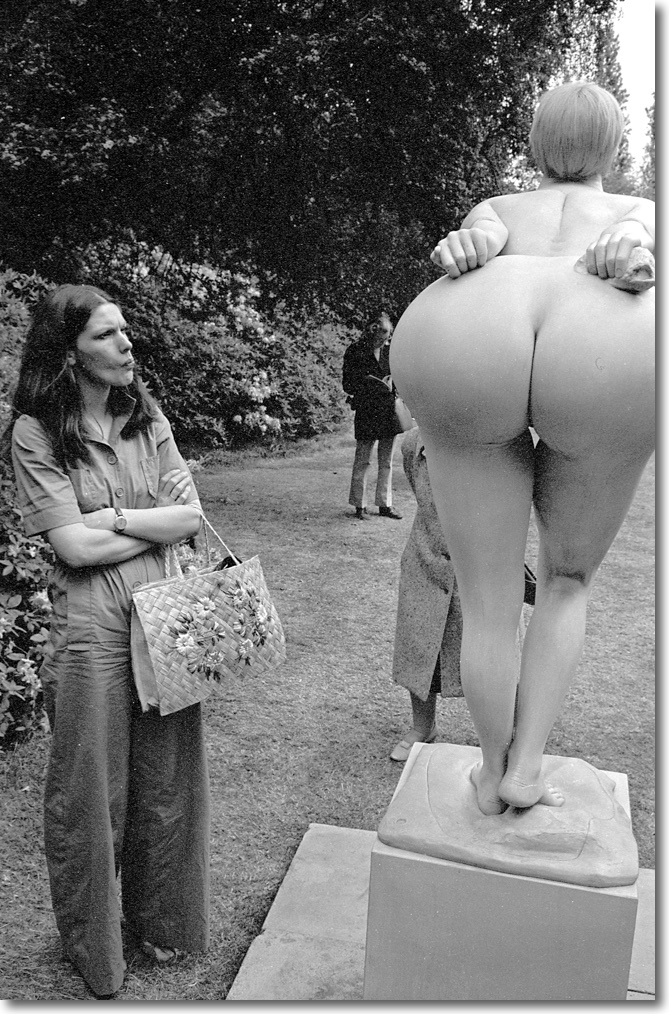
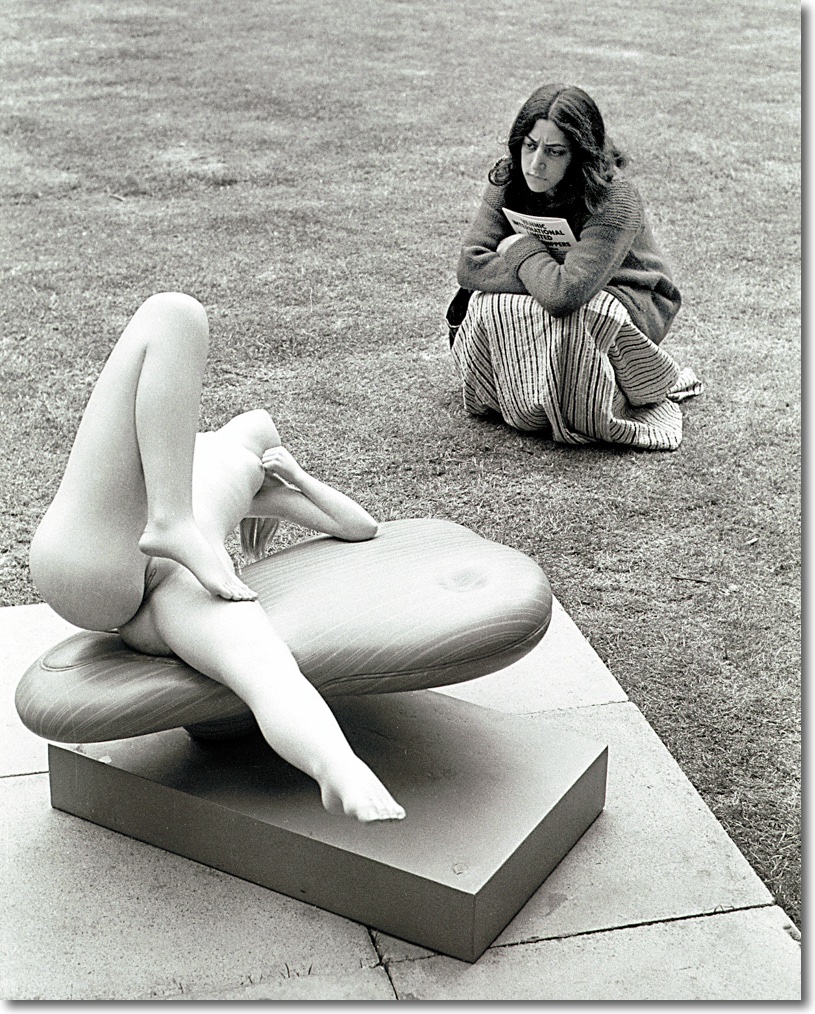
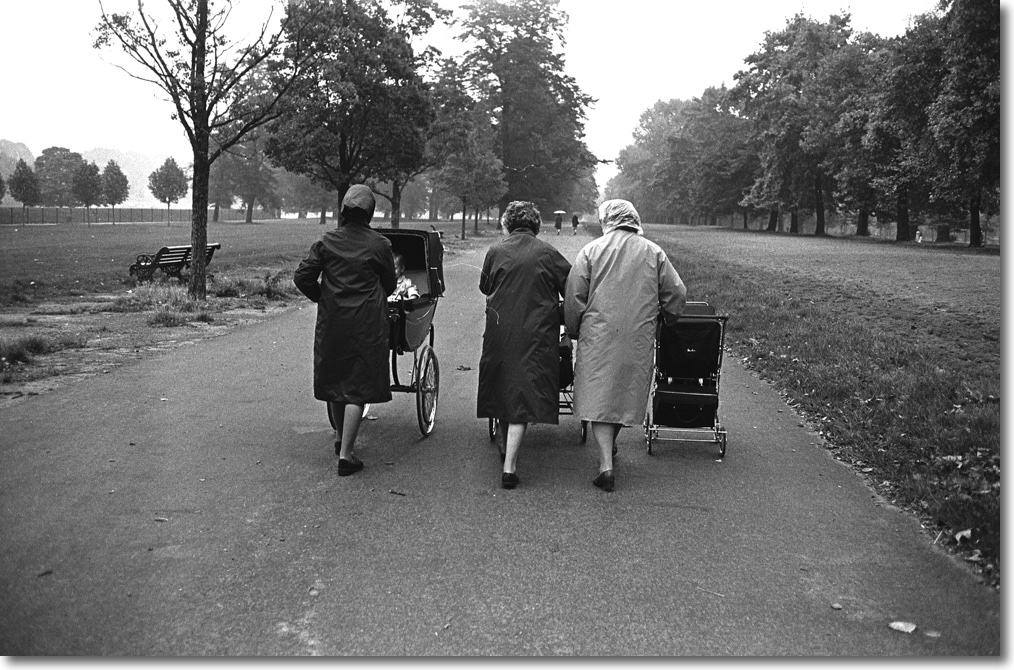
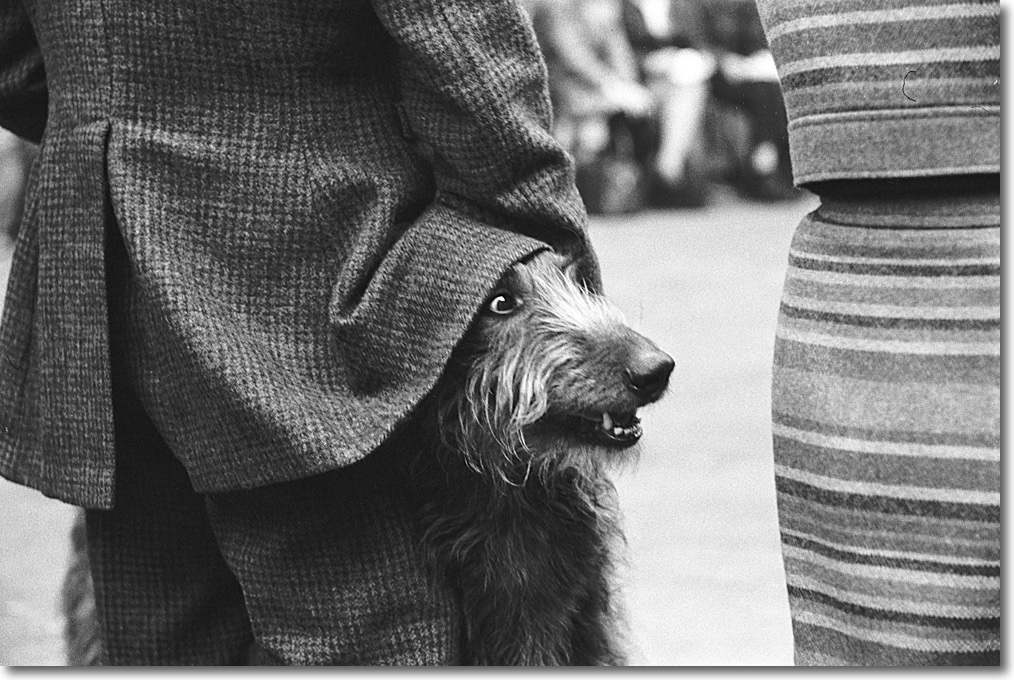
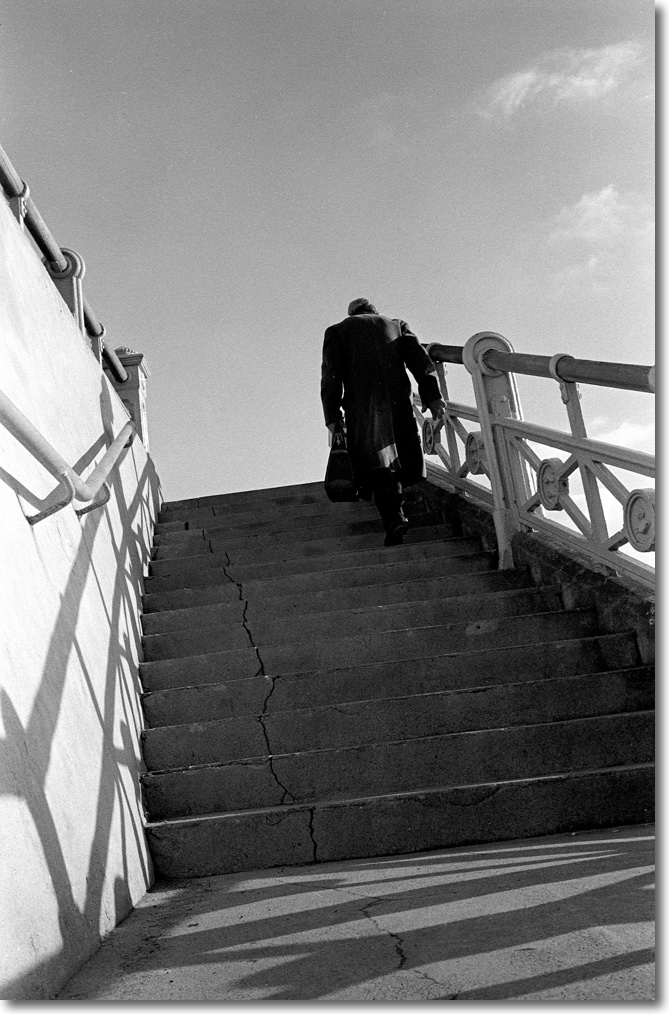
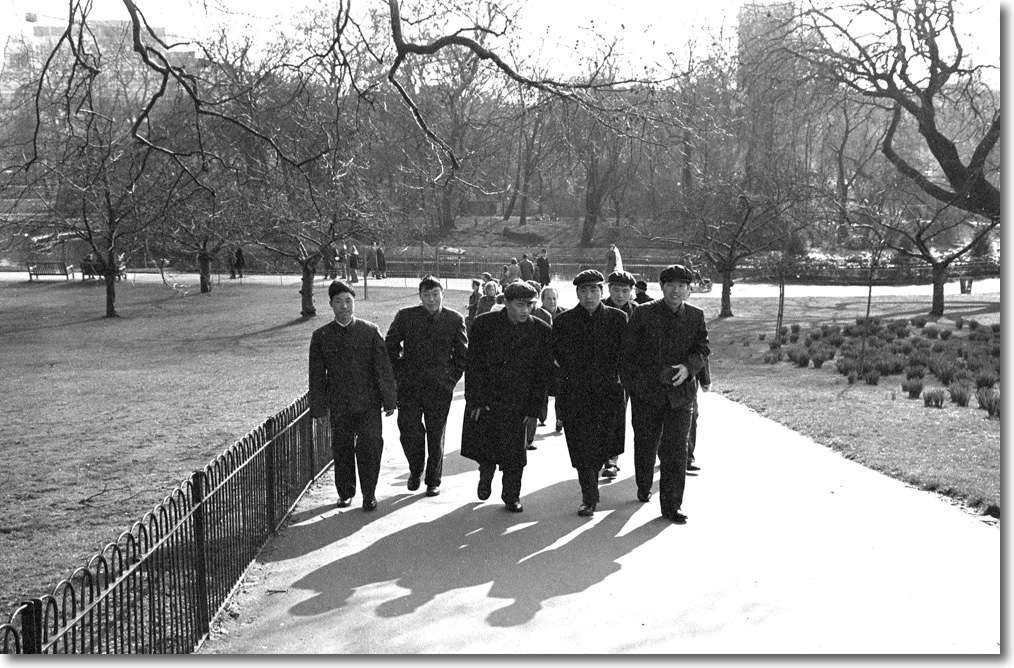
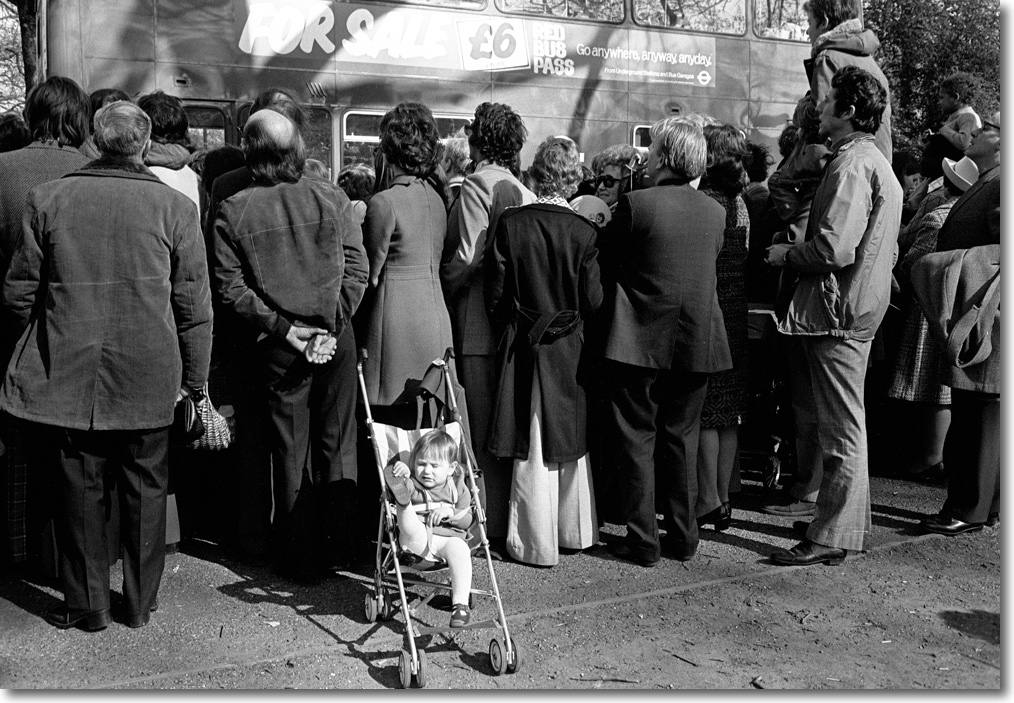
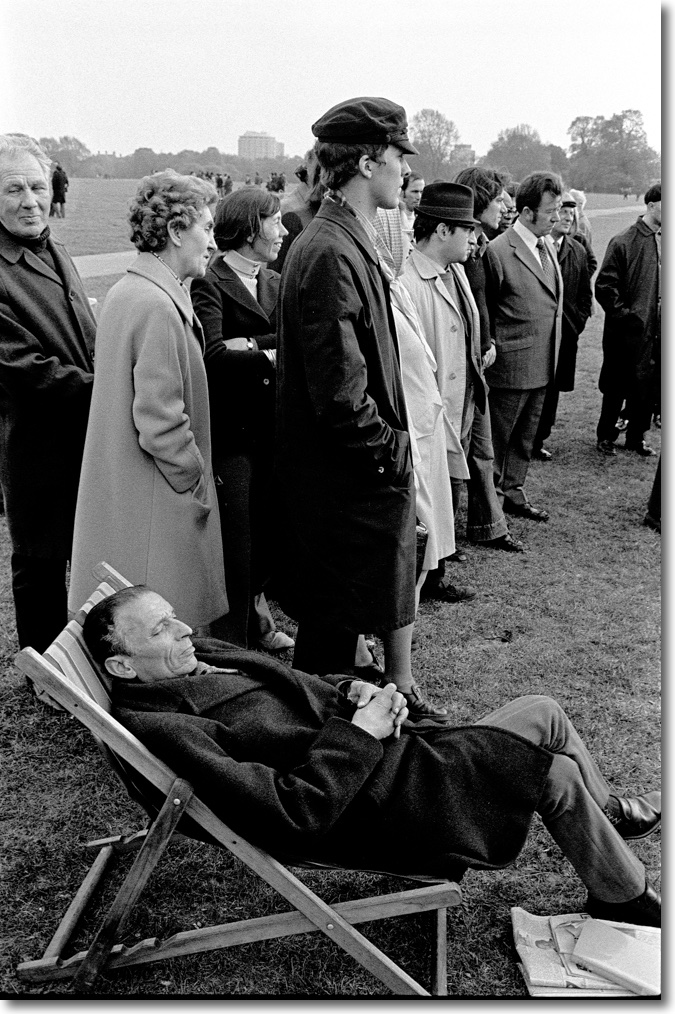
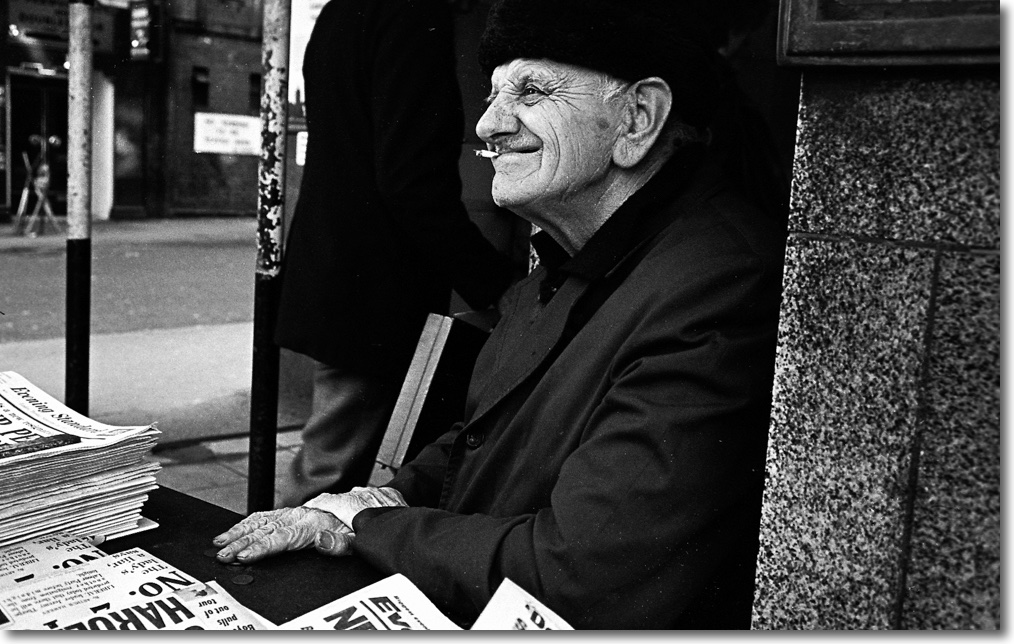
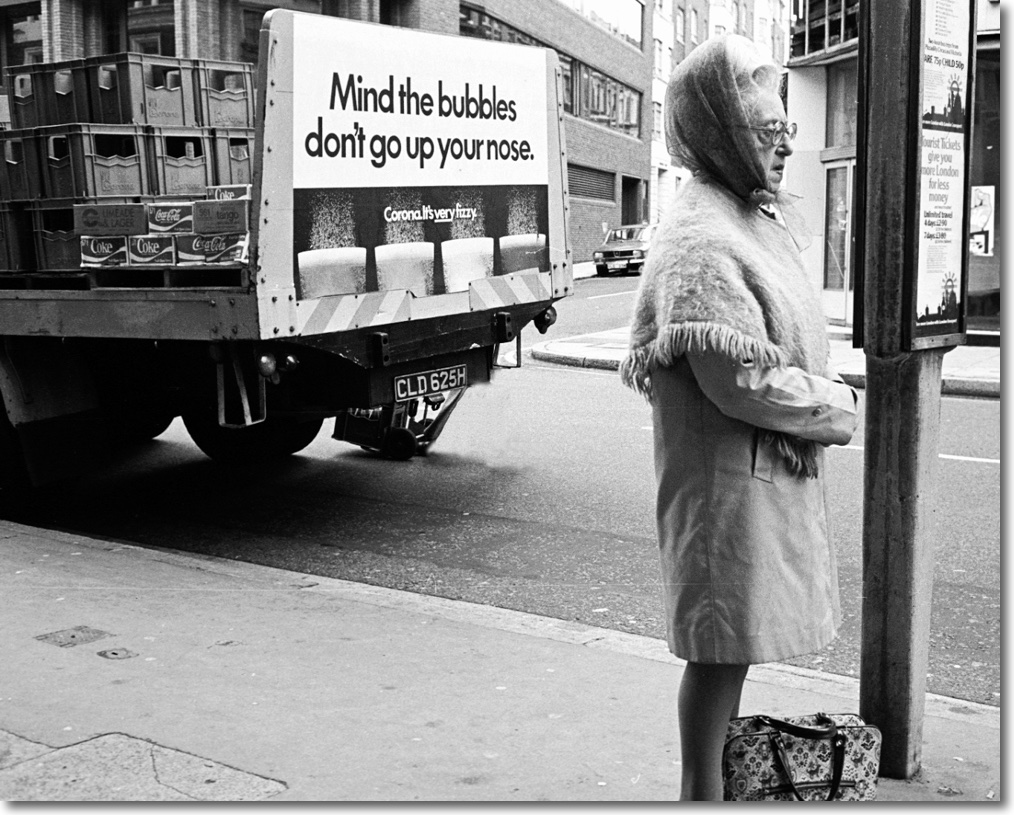
Despite a bunch of firsts in my last year, my awful attendance record – courtesy of a lackadaisical system with no roll calls in sight – limited me to the Upper Second I expected. To all intents and purposes I had worked like stink for 6 months to earn that degree! There was never a finer trade-off made, because these are some of the results photographically. Photographs which, oft reproduced by magazines of the time, kept me in bread and water. What of these images? Well, they are street snaps without exception, which is my thing and, yes, I grew up in the shadow of that supreme master Henri Cartier-Bresson. While all street snappers aspire to his standards, I have always tried to add a touch of humor to my images, a feature sadly lacking from most of the master’s oeuvre. All of the snaps below were published at one time or another, which was nice as I desperately needed the cash. The fifth won the ‘Photographer of the Year’ award from Photography magazine in 1974 along with a cup and a bunch of equipment, the latter immediately sold to finance my hobby. I used a Leica. Nothing else, back then, compared:


Girl on a train. My first ever Leica photograph, August 2, 1971. Roll 1, Picture 1. M3, 50mm Elmar.
I immediately knew I was onto something magical.


Pall Mall.


Green Park.


Holland Park.


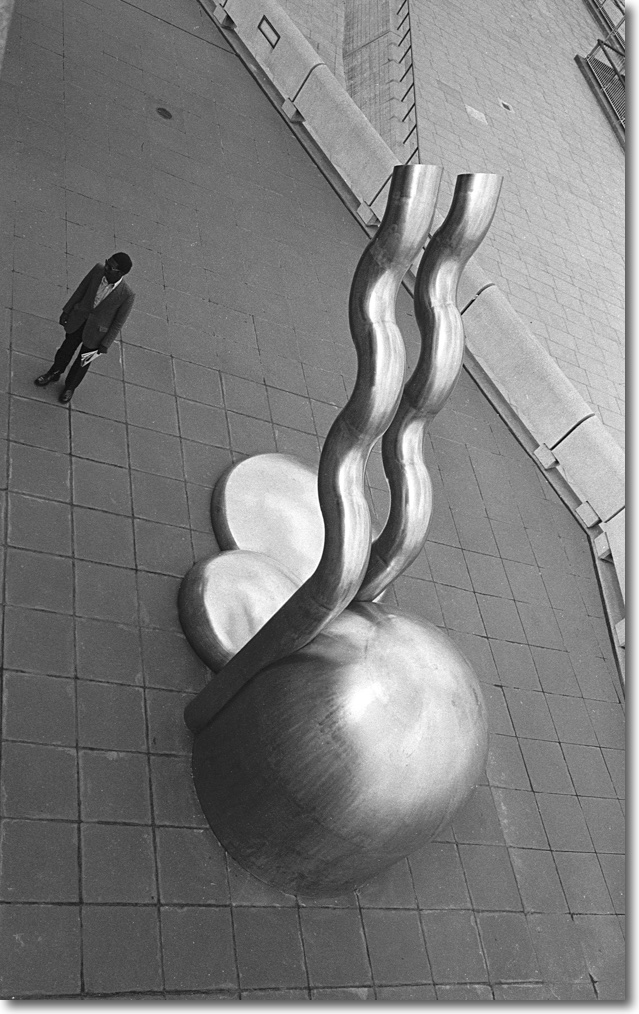
Holland Park – Reg Butler sculpture show. Big winner, this one.


Hyde Park nannies.


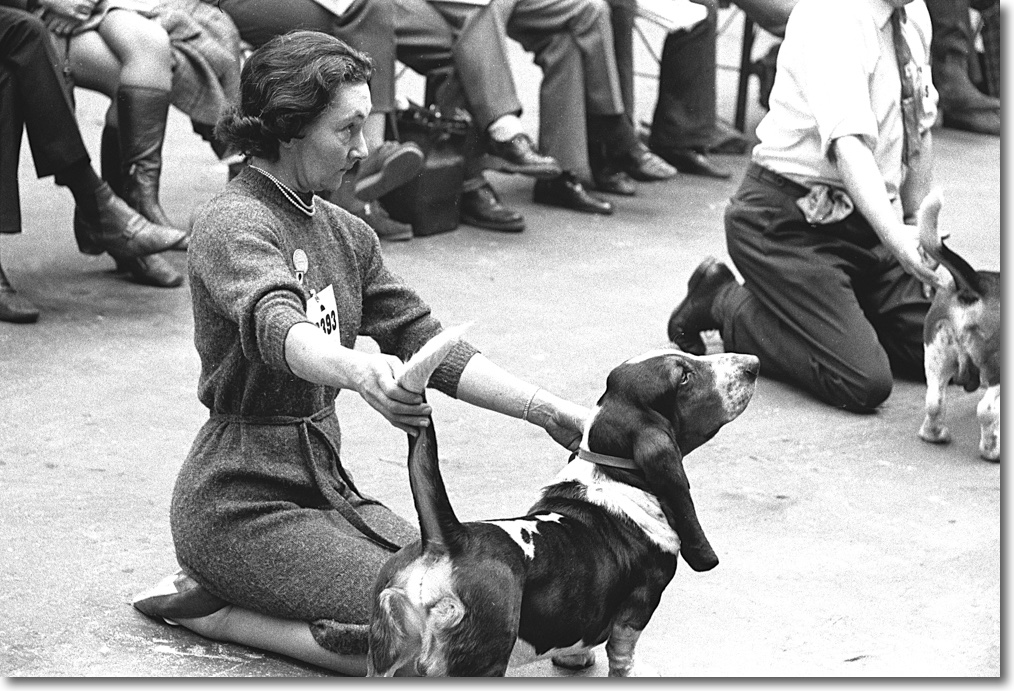
Cruft’s Dog Show, Olympia. The basset hound is used by the French as a truffle finder,
his acute sense of smell second only to that of the bloodhound. The long, floppy ears
are part of the olfactory system, containing and concentrating odors.


Cruft’s Dog Show, Olympia. The magnificent and mischievous Irish wolfhound.


The Embankment.


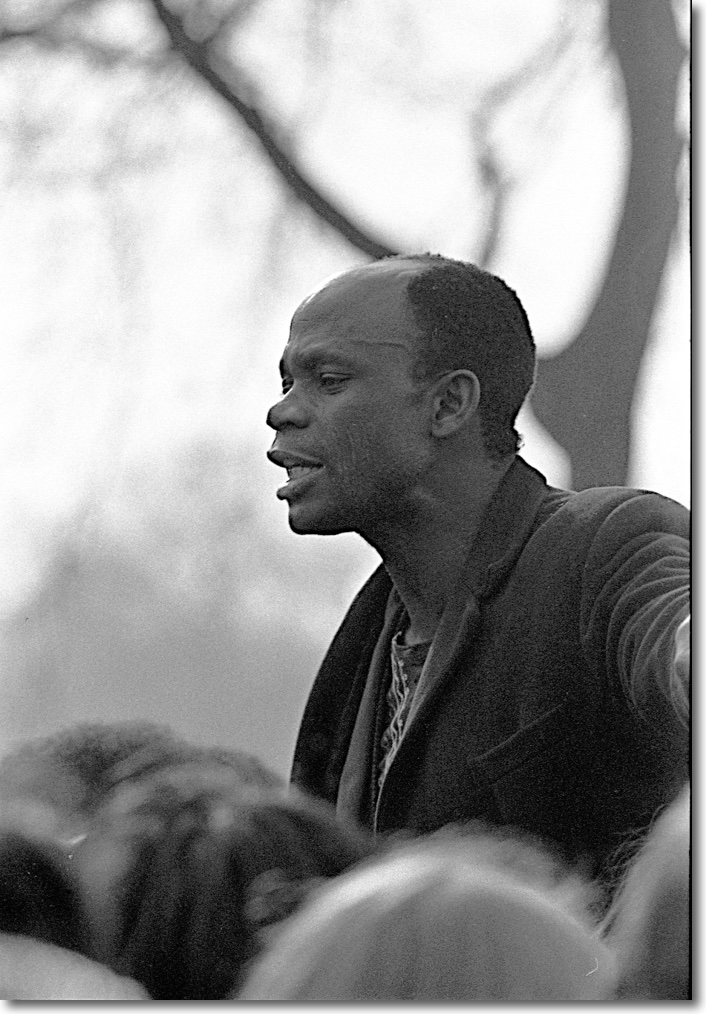
Speakers’ Corner, Hyde Park.


Highgate Cemetery.


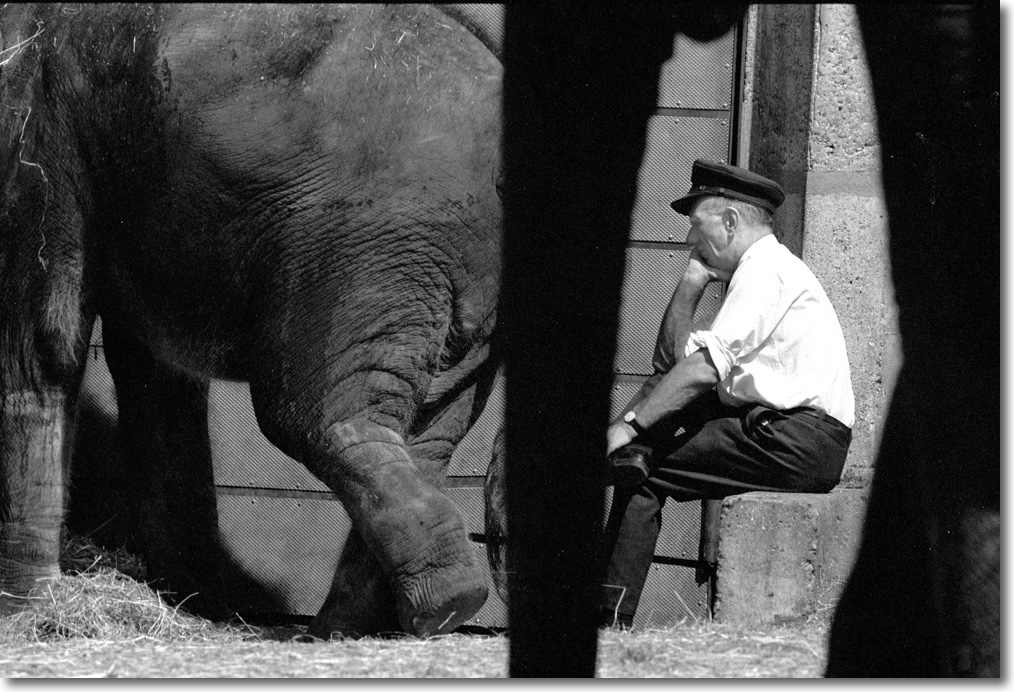
London Zoo.


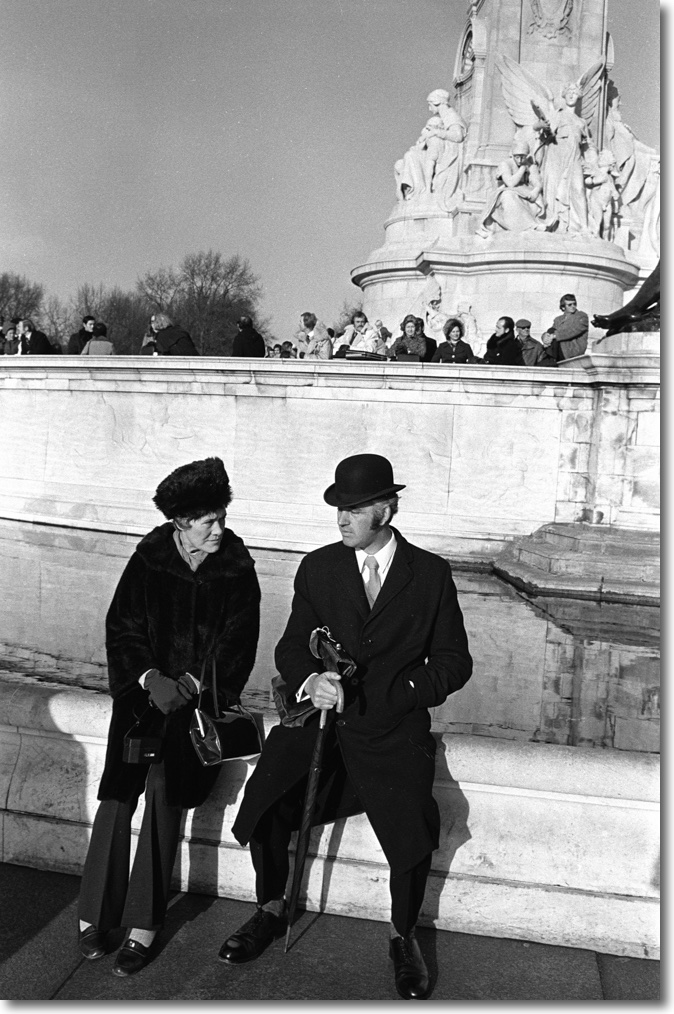
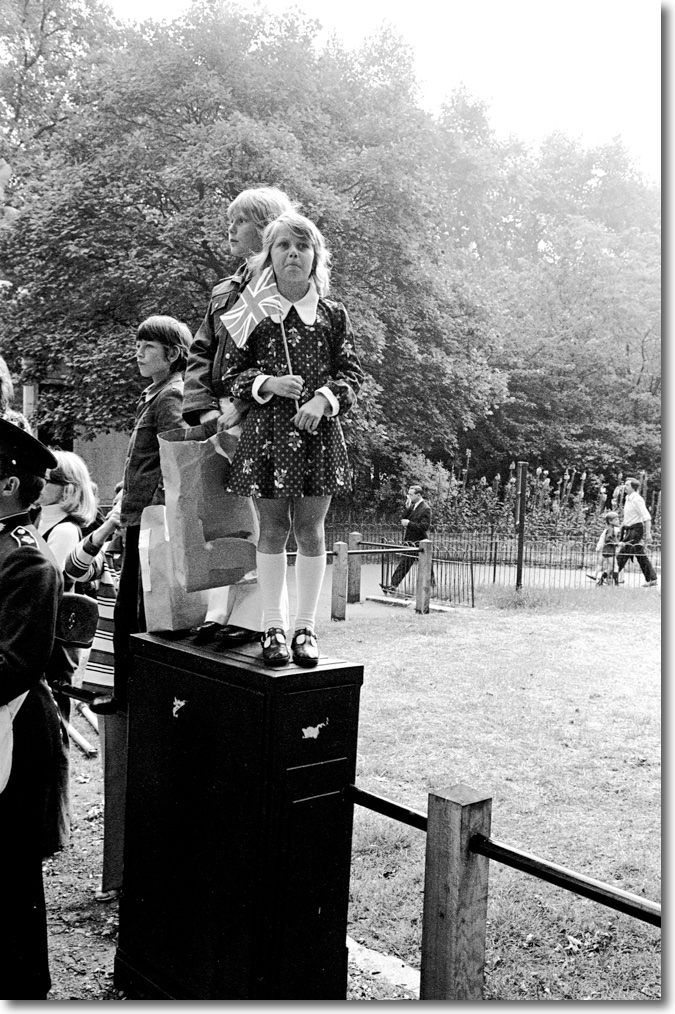
Class distinction. Kensington Gardens.


Brighton, an old person’s town. A rare foray outside London.


Early invasion – St. James’s Park.


Pall Mall.


British phlegm, Speakers’ Corner.


There’ll always be an England. Hyde Park.


Newspaper vendor, Knightsbridge.


Notting Hill Gate.


Land of hope and glory, Brixton.


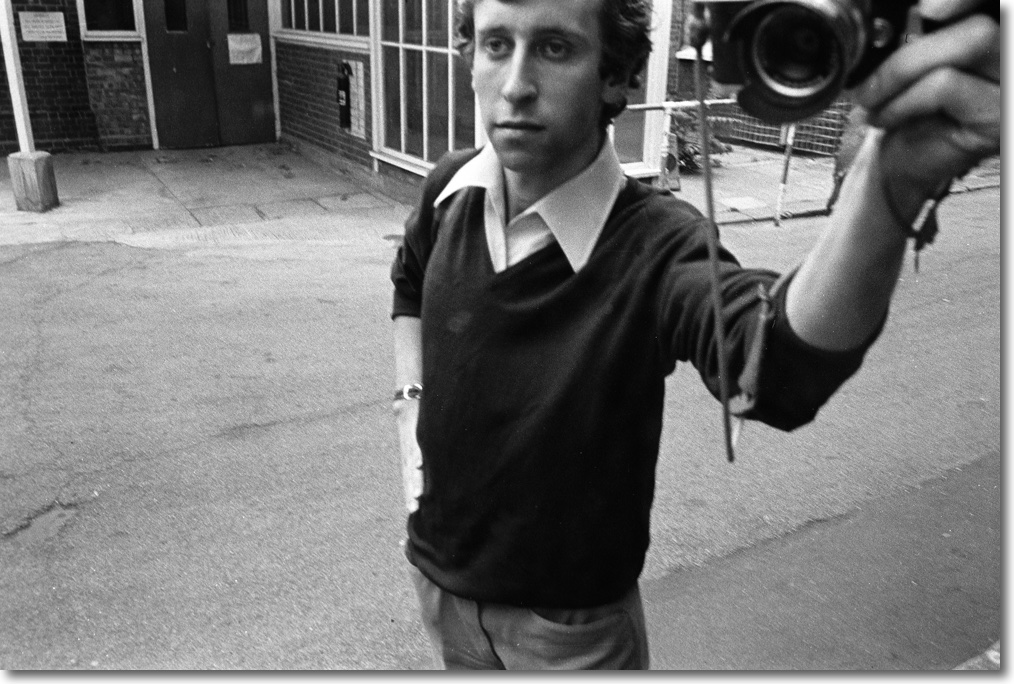
Selfie. Leica M3, 35mm Summaron.

All taken on my Leica M3 with the 35mm Summaron, 50mm and 90mm Elmar lenses. Bottom of the line optics by Leitz’s exalted standard, true, but they worked for me and it’s all I could afford in any case! All on Kodak TriX film developed in D76. Summicrons and Summiluxes would have to wait. Scanned – some 35 years later – using Nikon and Canon negative scanners.

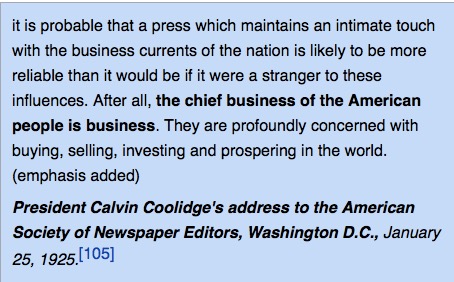
As for taking pictures for fun and for a living, I started my first job in August of 1973 in the financial sector, began studying for my CPA (back then MBAs did not exist in English academia, though Harvard’s date back to 1908 – as Calvin Coolidge reminds us “The chief business of the American people is business”) and no longer had to prostitute my talents by getting work published. Four years later, CPA in hand, I was on a one way flight to the United States, still, by a country mile, the best decision of my life. England was done for and I was done with England. Despite a fabulous technical and business education I left the United Kingdom $4,000 in debt, borrowed from my US employer and a US relative. Such were the merits of a proper English Education.


‘Silent Cal’ nails it.

There is a happy ending to the chicken story. Many years later my London nephew attended the exact same faculty at UCL, graduated with a First and ended up …. designing turbine blades for a newly privatized Rolls Royce Aircraft. History repeats. Tom is the real thing, a practicing engineer; I made my way to Wall Street, picking up a CPA and a bunch of NYSE qualifications along the way. History does not record which of us had more fun at University College, London.

I take street snaps to this day and enjoy the genre as much as ever. And I’m out of debt. And a huge fan of that chicken.

* * * * *

Click here for an index of all the Biographical pieces.