The campaign continues.
Another gorgeous image from this long running campaign, showcasing the finest timepiece made.
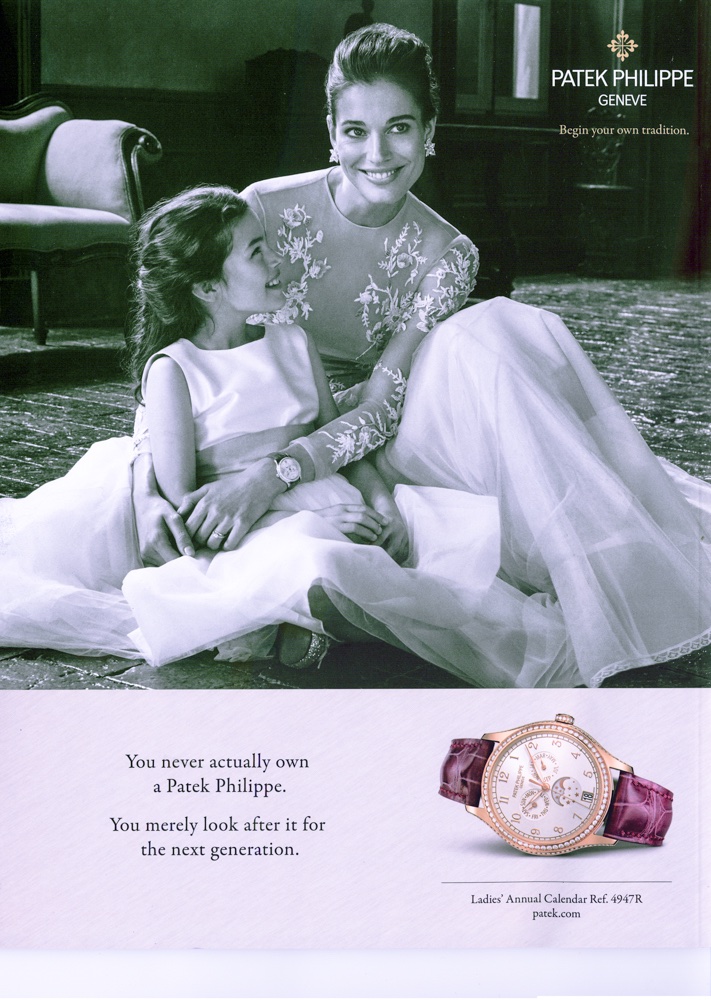
The campaign continues.
Another gorgeous image from this long running campaign, showcasing the finest timepiece made.
Still as good as movie making gets.
In a piece titled ‘Still movies‘ some dozen years ago I extolled the exceptional cinematography in Walter Hill’s ‘Streets of Fire’.
The film was a huge flop when it was introduced, poor publicity and strong competition from another tedious, puerile Star Trek movie damning it quickly.
Since that time in 1984 ‘Streets of Fire’ has rightly acquired cult status and – finally! – has been released in BluRay format.
Few movies can hold a candle to Andrew Laszlo’s photography or William Hill’s direction, and most of those were made by Stanley Kubrick or David Lean.
Here are a few more images from this visual and musical masterpiece:
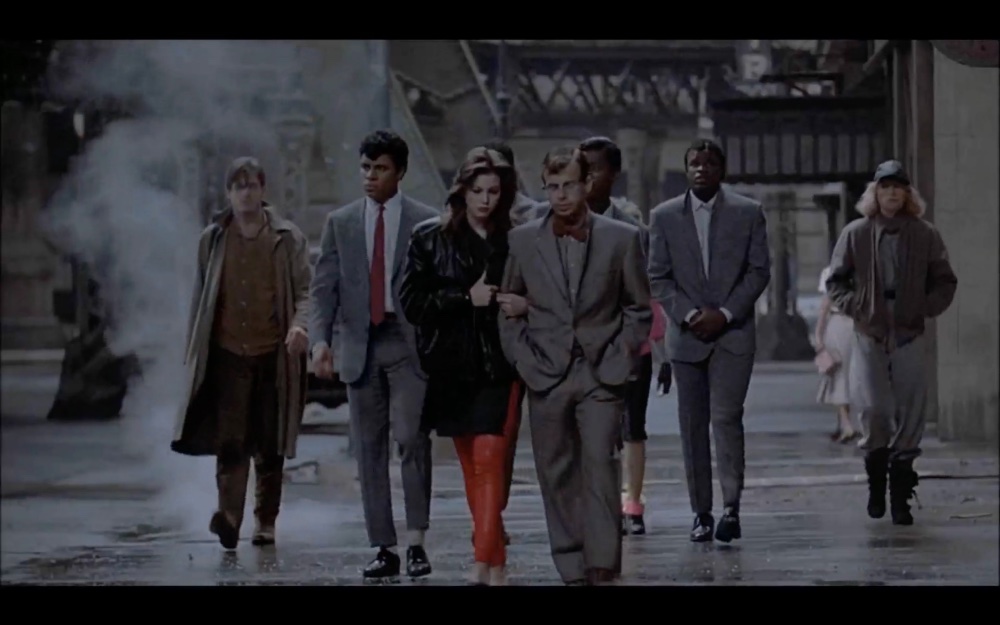
The atmosphere of late-50s industrial America is perfectly captured.
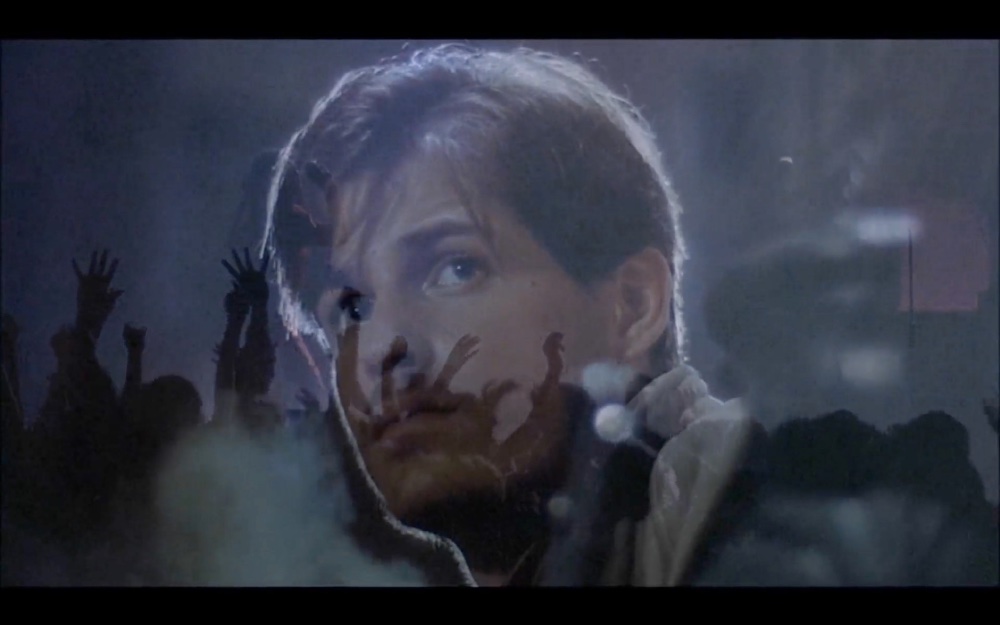
A perfect fade, reminiscent of the Russian cinema.
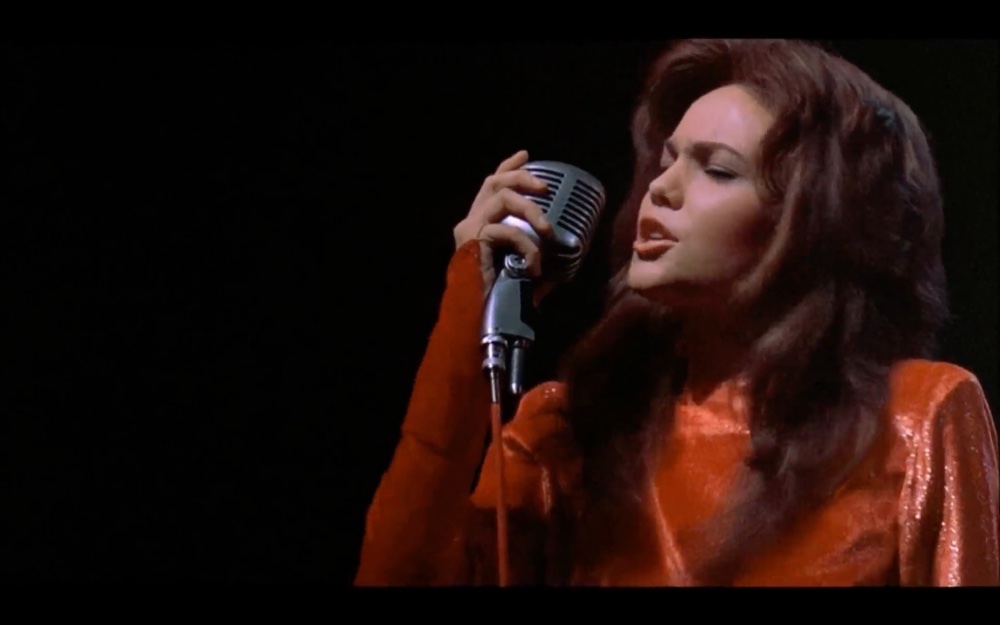
Beautiful Diane Lane was just 18 when the movie was made. Her pouty performance is perfect.
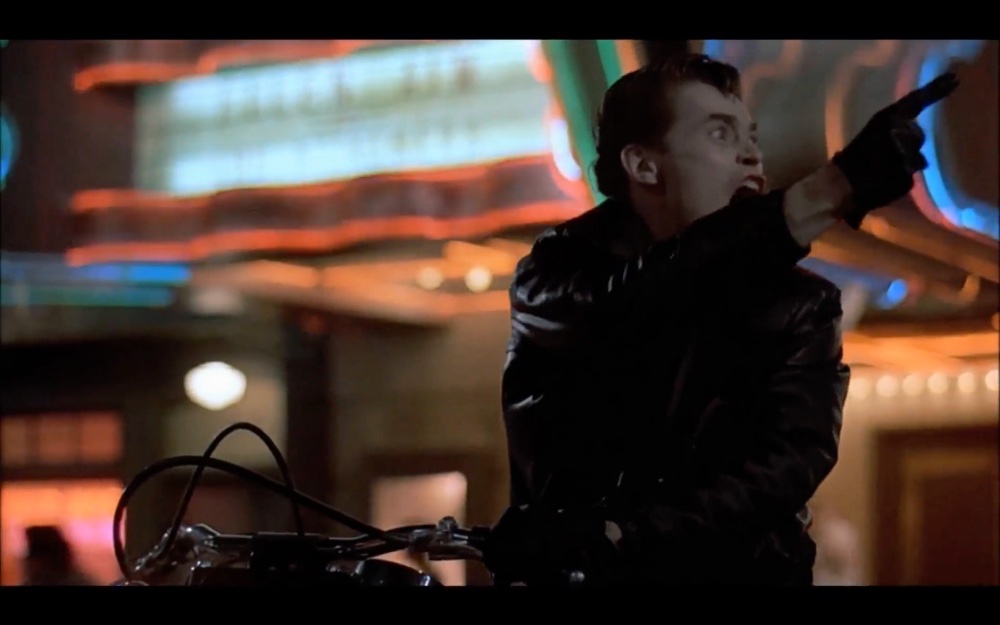
As Raven Shaddock, leader of the biker gang, Willem Dafoe stars in one of his first roles.
Hopefully he will get the Oscar he so deserves this year.
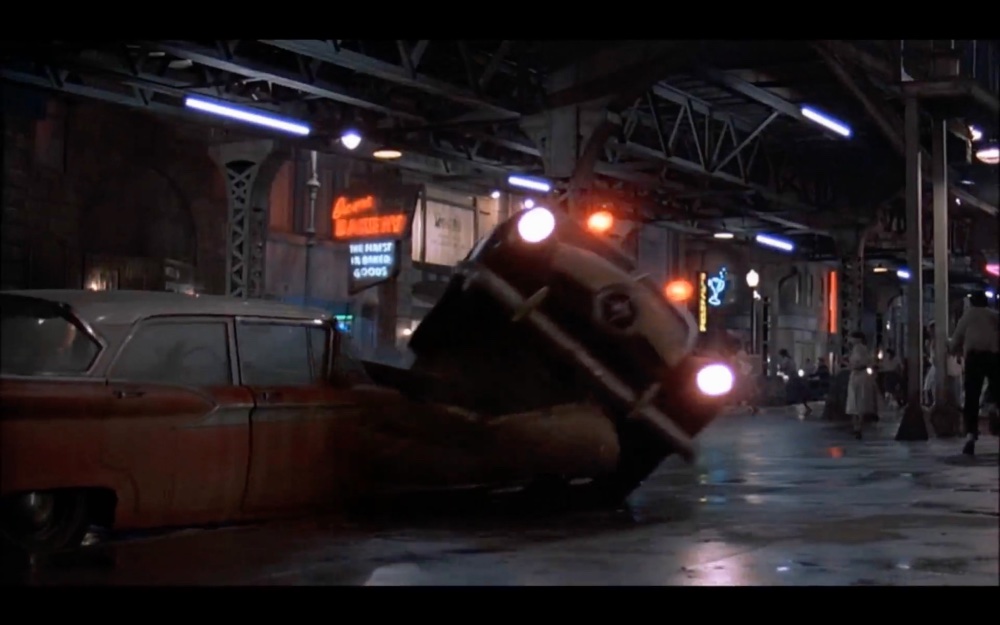
Nearly all the cars are Studebakers. Here the cops’ gets trashed.
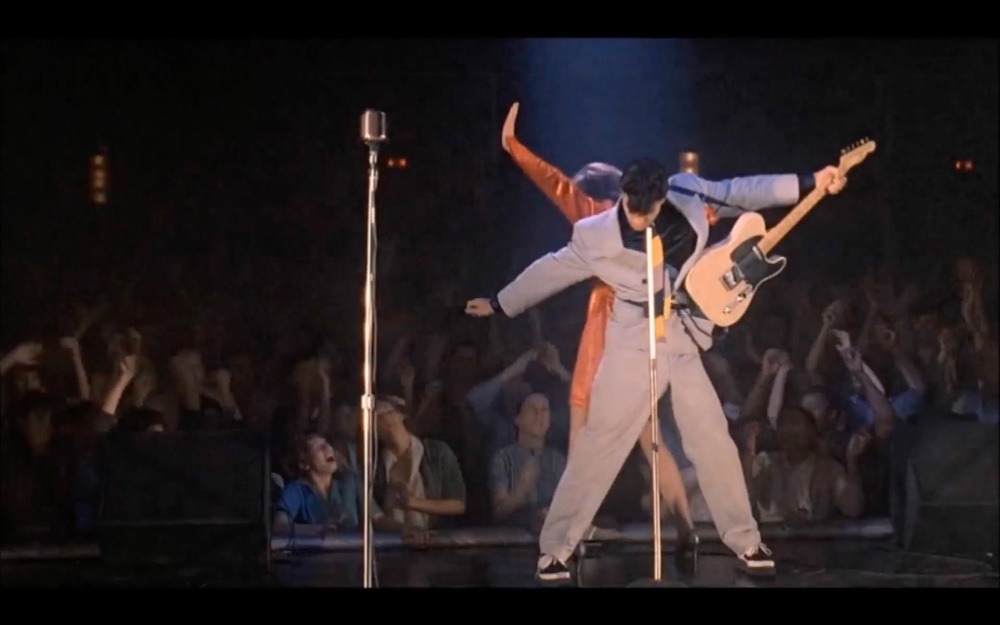
The dynamism of the cinematography and the performances in the final concert number remain stunning.
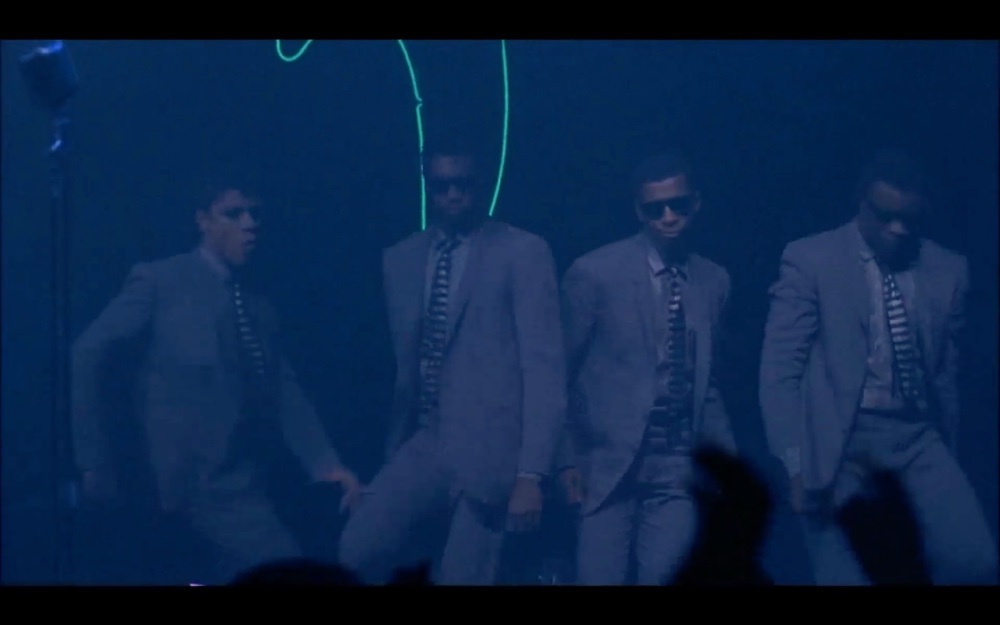
The back-up group, The Sorels, mime their music like everyone else.
The beautiful number ‘I Can Dream About You’ was written and performed by Don Hartman.
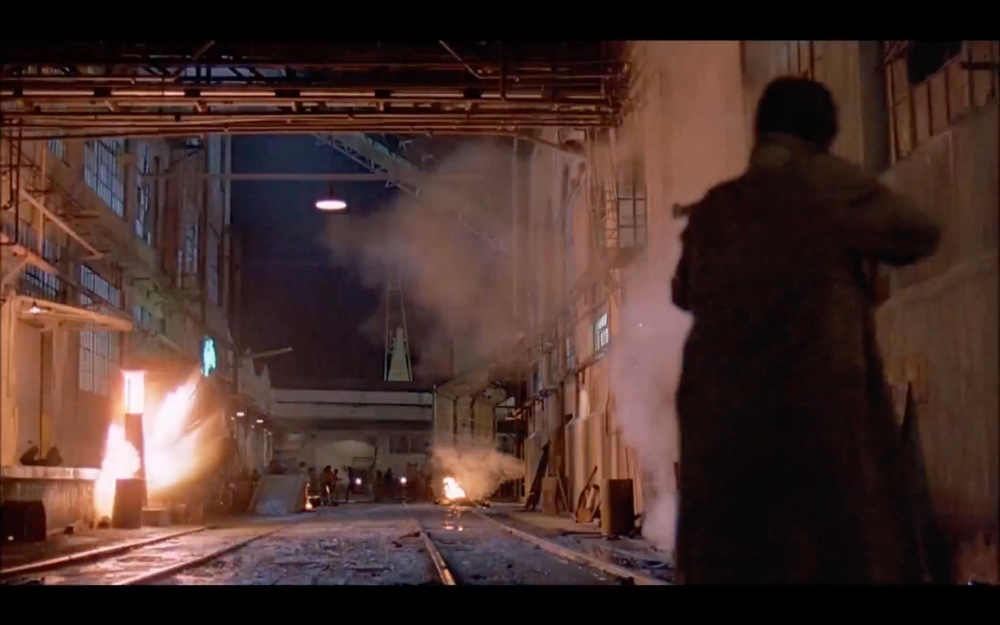
As the tough good guy Michael Paré gives a splendid low key performance.
Here he is shooting up the bad guys’ Harleys in The Battery, a rough after hours joint.

Chicago’s El serves as backdrop in this rain soaked scene.
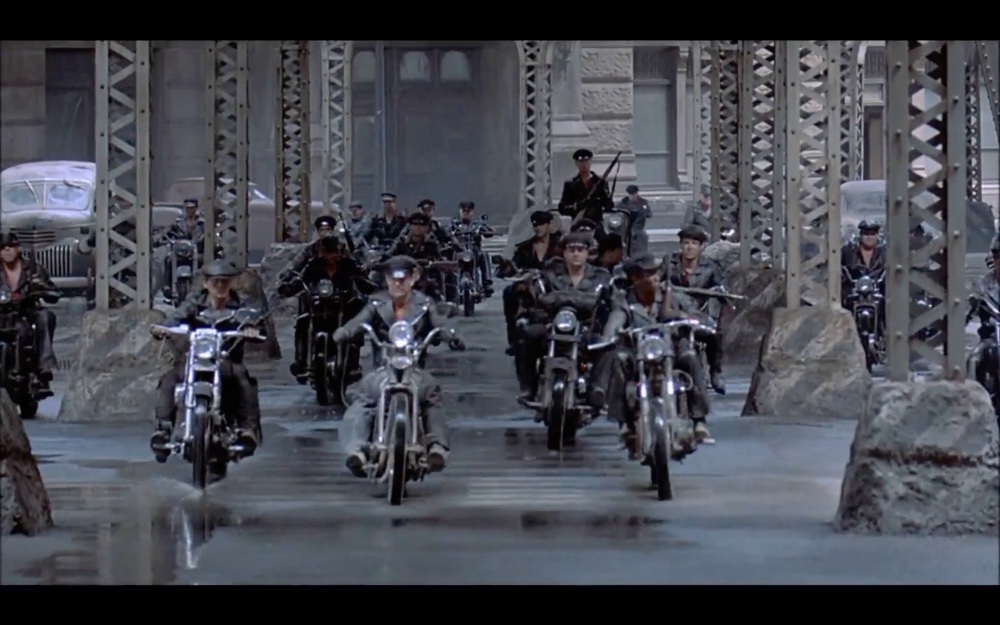
Some of my closest friends.
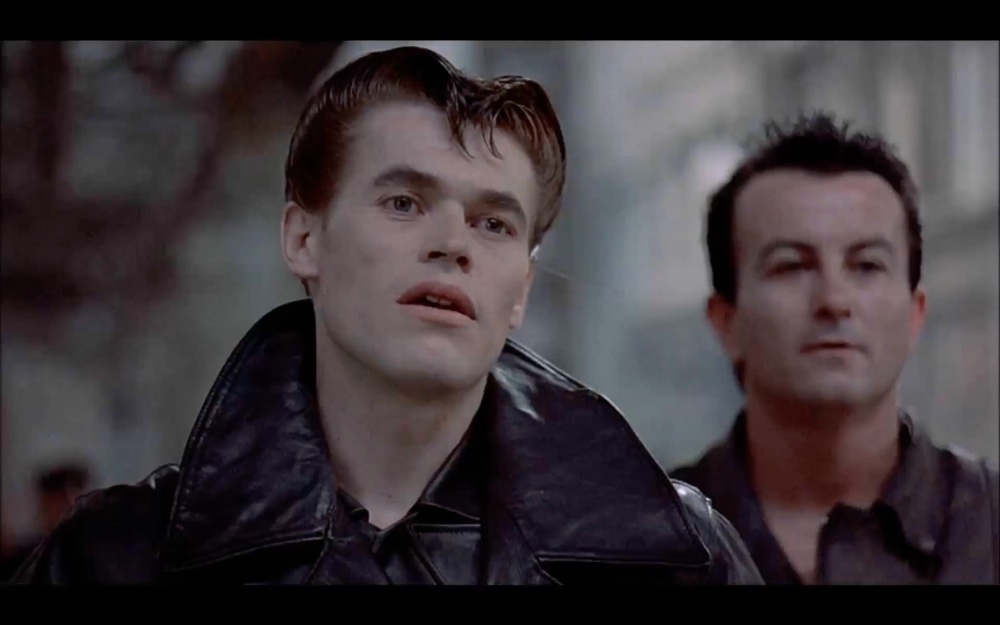
Dafoe does not know how to act badly, raven haircut and all.
His sidekick is Lee Ving, who is best known as the frontman for the L.A. hardcore punk band Fear.
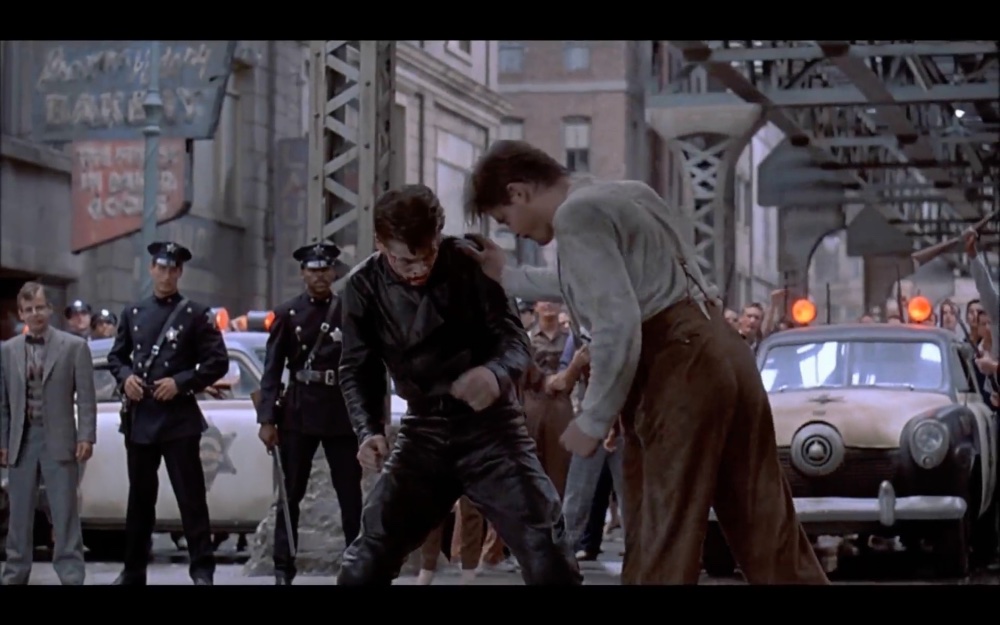
In one of the best fight scenes ever staged, Raven Shaddock meets his match in Tom Cody.
Amazon has the movie in the BluRay version. Snap it up before Universal does something as dumb as its roll out of the movie over 30 years ago and pulls it from distribution.
Exceptional and cheap.
Corrected in Fisheye-Hemi from Imaudio. Graded darkening of the sky added in LR.
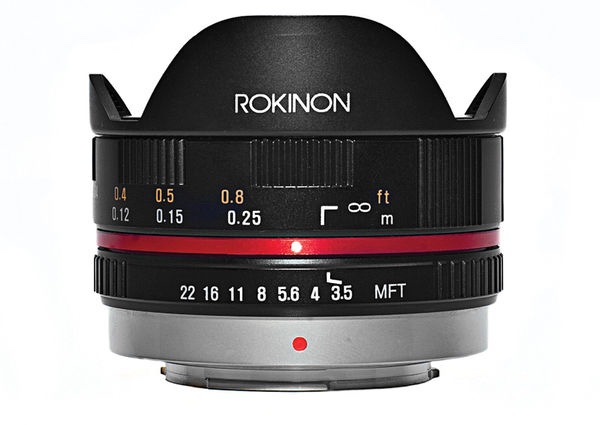
At $218 the Rokinon MFT fisheye lens costs less than a third of its Panasonic counterpart; it sacrifices AF and full EXIF data for truly outstanding all metal construction and resolution to die for. I have not tested the Panny FE but reviews disclose that the Rokinon is a far better optic. The 7.5mm fisheye is the only true MFT lens listed by Rokinon on its USA site; all others are either APS-C or full frame adapted to the Panny/Oly MFT bayonet mount and are, accordingly, huge and out of proportion on an MFT body.
I have no interest in the gimmickry of fisheye perspective but I am very interested in having an ultrawide prime. I first experimented with de-fishing images from my Canon FF fisheye here, concluding that defished images were almost as sharp as those from a very costly Canon 14mm prime and came in at 12mm effective focal length. That’s considerably wider.
While there are many fisheye profiles to be found in Lightroom, none does a great job and there is not one tailored to this lens. Some fishing around (sorry!) on the web disclosed that there was an outstanding plugin for LR from Imaudio for $30 and after testing the trial version, which watermarks the processed image, I sprung for it. There is no loss of edge definition unlike with the stock LR profiles and the image is considerably wider, less being lost. Look carefully at the above images and you will see that content loss really is negligible.
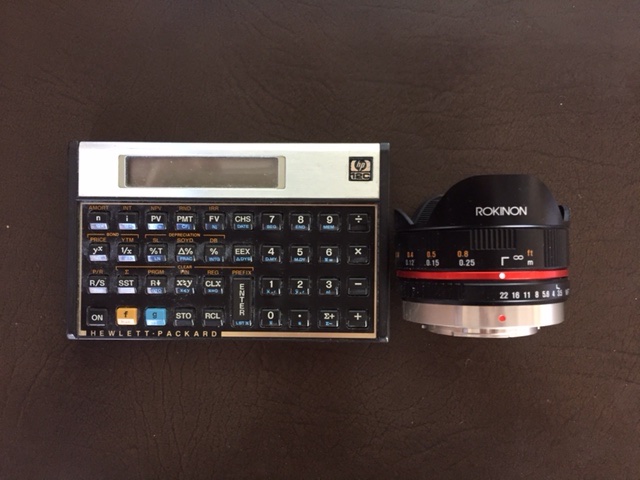
In keeping with the MFT aesthetic, the lens is tiny, unlike your FF or APS-C fisheye with an adapter.
Manual focusing:
The Rokinon is a manual focus optic. However the great depth of field means that careful focusing is really only needed at close distances and large apertures. Otherwise at, say, f/8 (the aperture ring has half click-stops except between f/16 and f/22) the focus is set at the hyperfocal distance (just short of infinity, like in the first image above) and you bang away, happy as a clam. When careful manual focus is required, using the relatively stiff focus collar, Panny MFT cameras come with the best focus aid in the business. Having first set ‘Shoot w/o lens’ on the last page of the third menu to ‘Yes’, allowing the lens to be recognized, you push the left quadrant rear button once, then the Set button. The center of the image is magnified allowing easy critical focus. On the GX7 you can vary the magnification using the knurled wheel around the shutter release button. I have mine set to maximum magnification.
When focused the group of lens elements extends within the confines of the petal, non-detachable lens hood. The total extension is around 1/8″. The rear glass moves forward a like amount suggesting that all the elements are being moved in unison during focusing. There is no way to attach filters and the deep, provided lens cap must be correctly oriented to clip on and lock in place. In practice the lens hood’s petals do a fine job of protecting the front glass. A rear lens cap is also provided and fits well.
The same lens appears to be marketed under a variety of brand names, including Bower and Samyang. Buy the cheapest. I much prefer chrome finish lenses and the Rokinon comes in a chrome variant; however, I have read that the chromed focus ring is plastic whereas the black one is very much metal, so I opted for the latter. The weight is just 6.2 ozs (176 grams). As I stated above, it is tiny, easily accommodated in a trouser or jacket pocket.
As I only ever use my GX7 bodies in aperture priority auto-exposure mode, correct exposure is guaranteed with the Rokinon, despite the absence of any communication mechanism between lens and body. Of course, one of the most appealing bits of magic of the MFT format comes into play here: as the aperture is changed the finder image remains the same brightness, for the finder automatically adjusts to the change in aperture. The only variable which visibly changes is depth of field.
Along with the outstanding 12-35mm f/2.8 Panasonic pro zoom and the small GX7 Panny body the user has a full frame equivalent lens range of 12mm to 70mm. The size:performance equation here seems to be impossible to improve on.
More in Part II.
But do so conditionally.
I wrote about the need to support our National Parks here.
A recent new request for a donation from the NPS elicited this response from me:
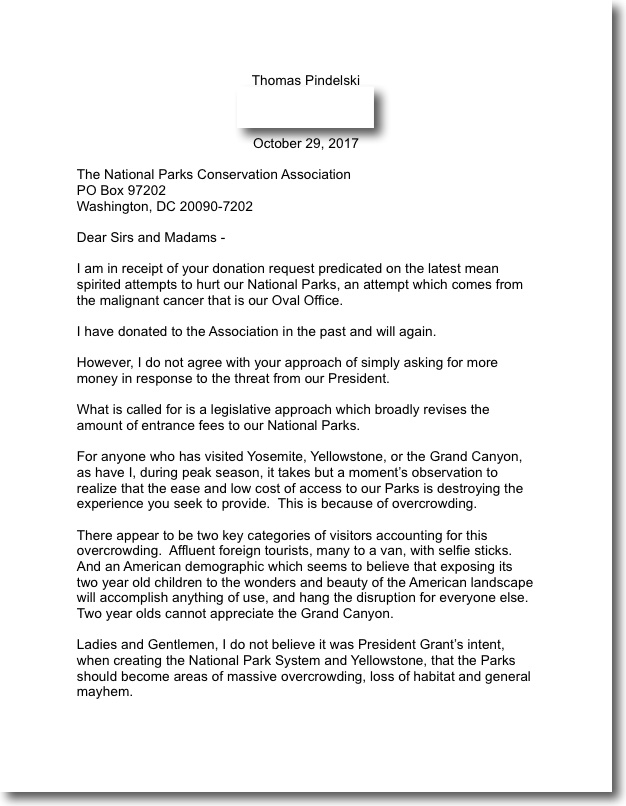

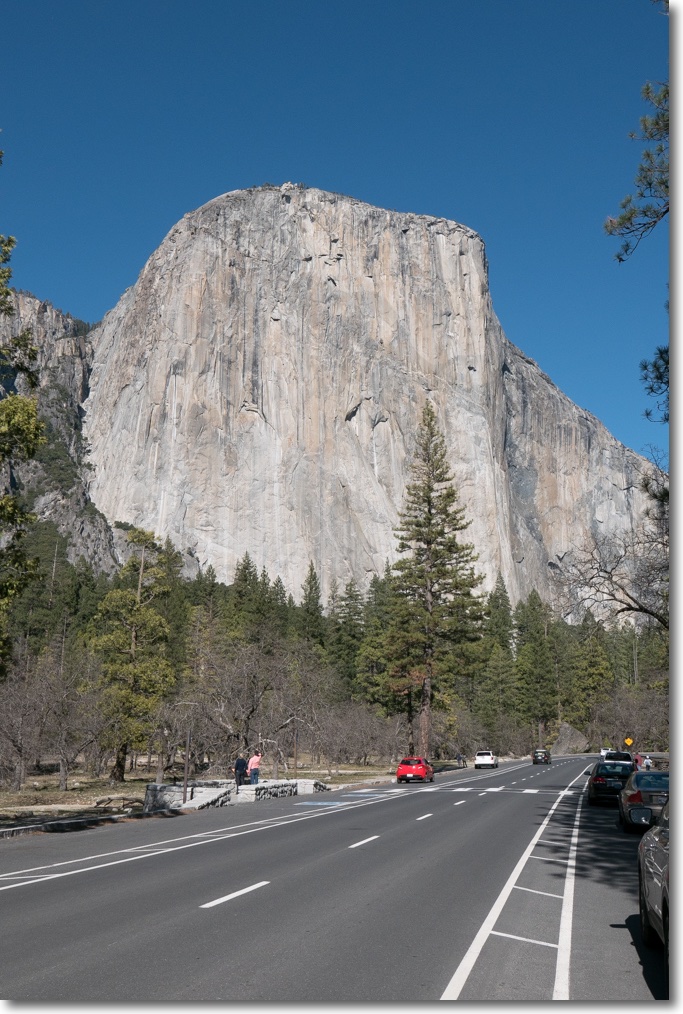
If you believe, as do I, that this is how our National Parks should look, write them along these same lines:
Suggesting that reading and comprehension skills at the Park System are not the greatest, I got this stock reply:
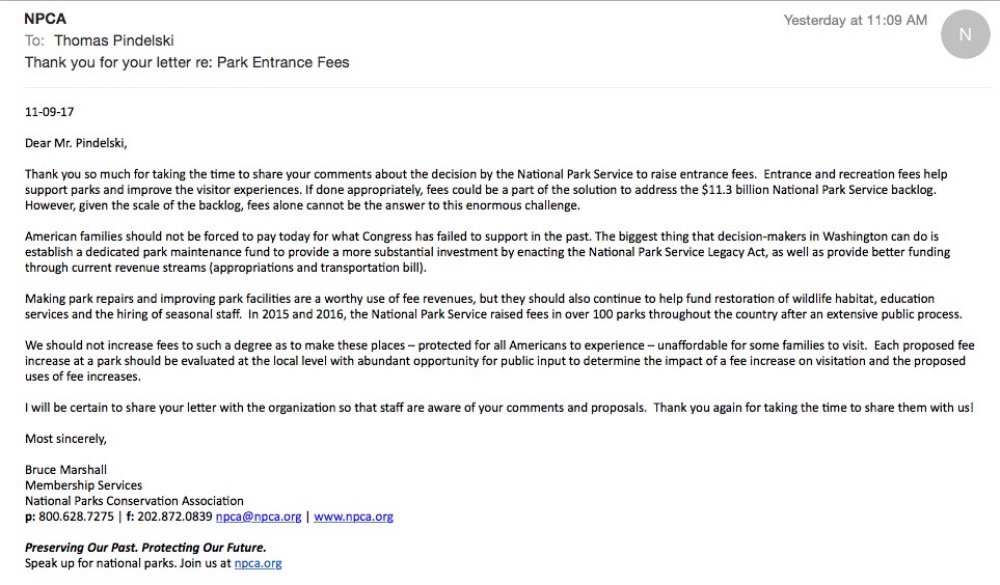
Well, at least they got one thing right – the Parks are for Americans ….
For two wheeled BMW men.
Omar Sayied, the owner of MotoGhost is not only a fine mechanic, he is also an astute businessman, putting his MBA to good use in running a successful business. That business caters to BMW motorcyclists who either own older machines in need of repair, ones which the factory dealers long ago abandoned, or newer motorcycles where the often outrageous dealer pricing is to be avoided. Omar ministers to my two airheads (BMW bikes with air cooled two cylinder motors and shaft drive, last made in 1995) when specialty tools or specialty expertise reside outside my garage.
Today saw the MotoGhost Open House and some one hundred machines were already there when I pulled up at noon, eagerly searching out the free bratwursts! Needless to add, I was one of the youngest riders there. Honest!
I rode my 1994 R100RT, a fully faired machine perfect for the 16 mile freeway trek north, the motor humming along happily at 70mph and 4000rpm in fifth gear. This is very much the sweetspot for the 1000cc shaft driven, air cooled twin, with vibes at a minimum and everything as it should be. The machine has been trouble free and its relaxed seating position and big fairing make for fine long distance touring, pannier bags and top case attached.
There was a broad variety of machines to be enjoyed:
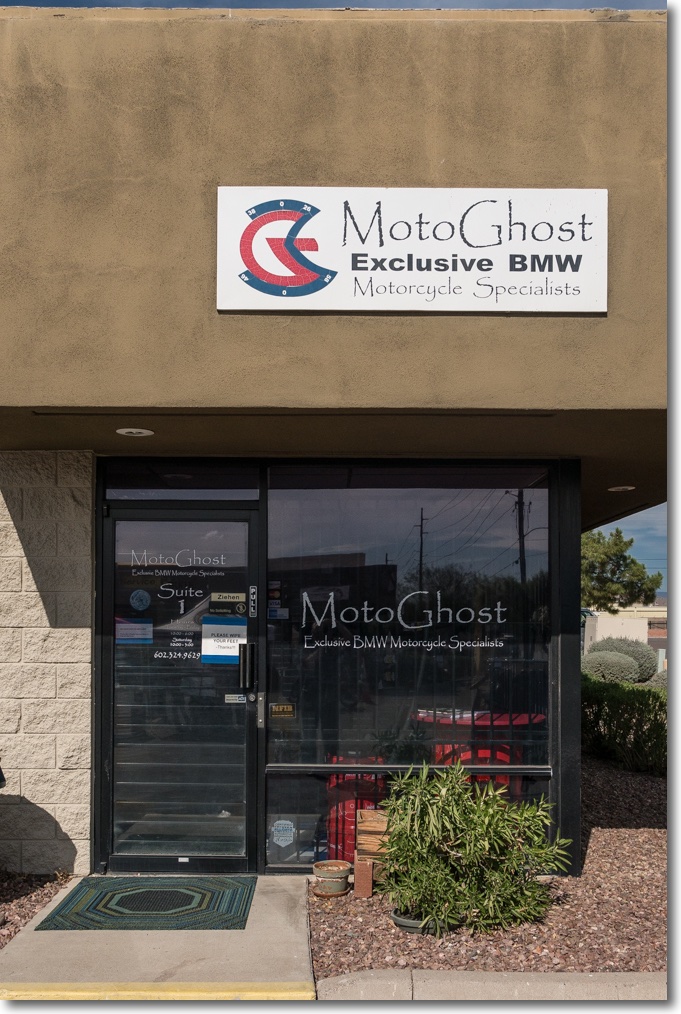
MotoGhost is in north Phoenix, off exit 26 from the 101.
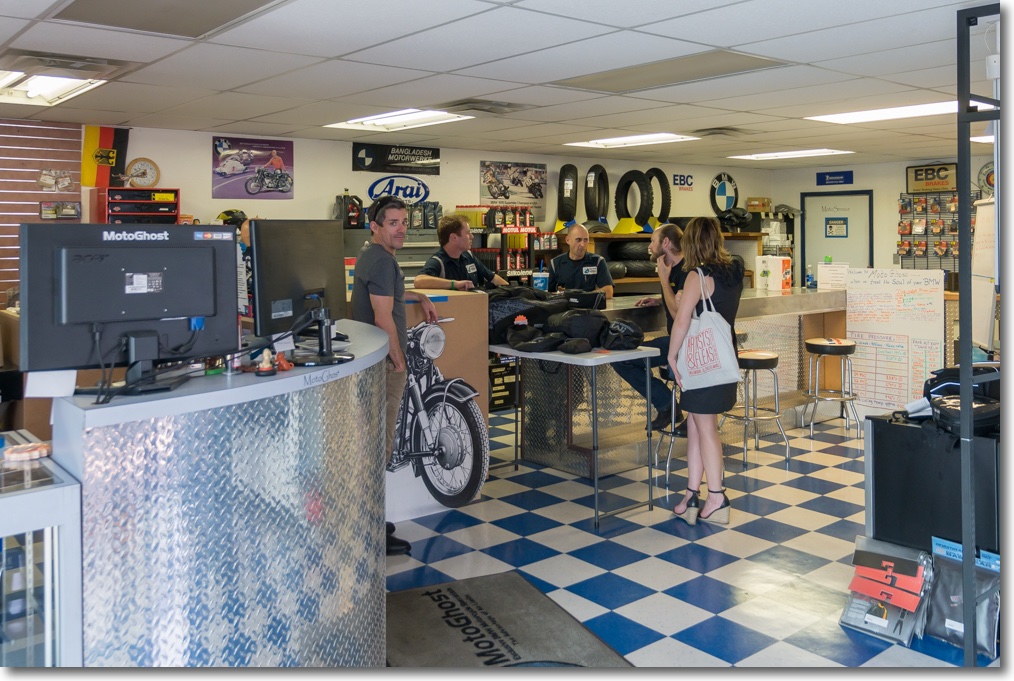
The showroom is small and pristine.
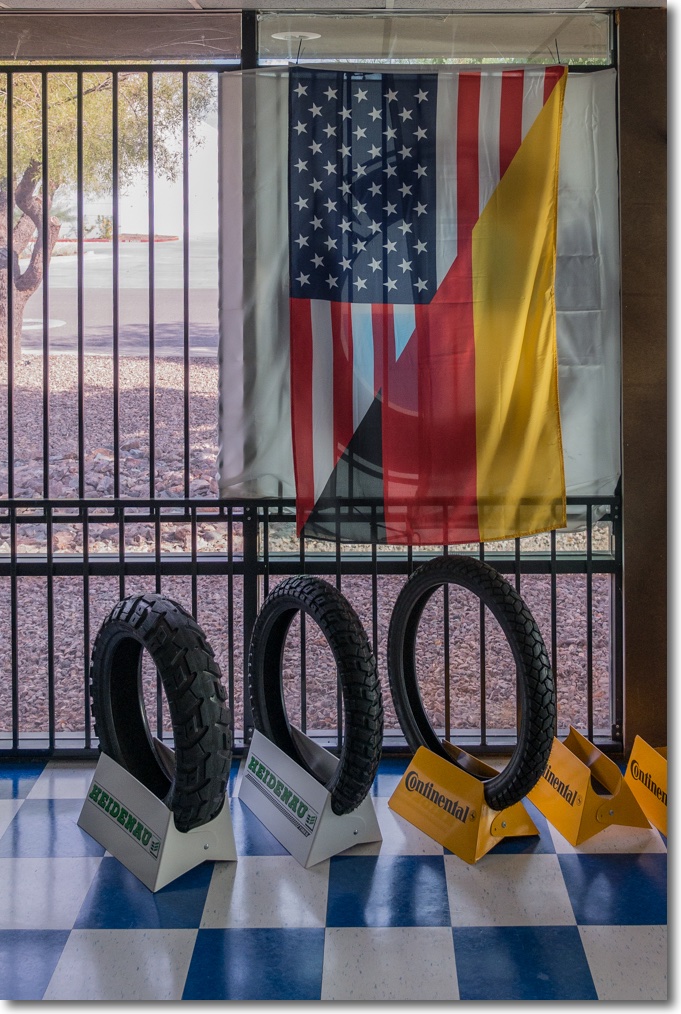
Entente cordiale.
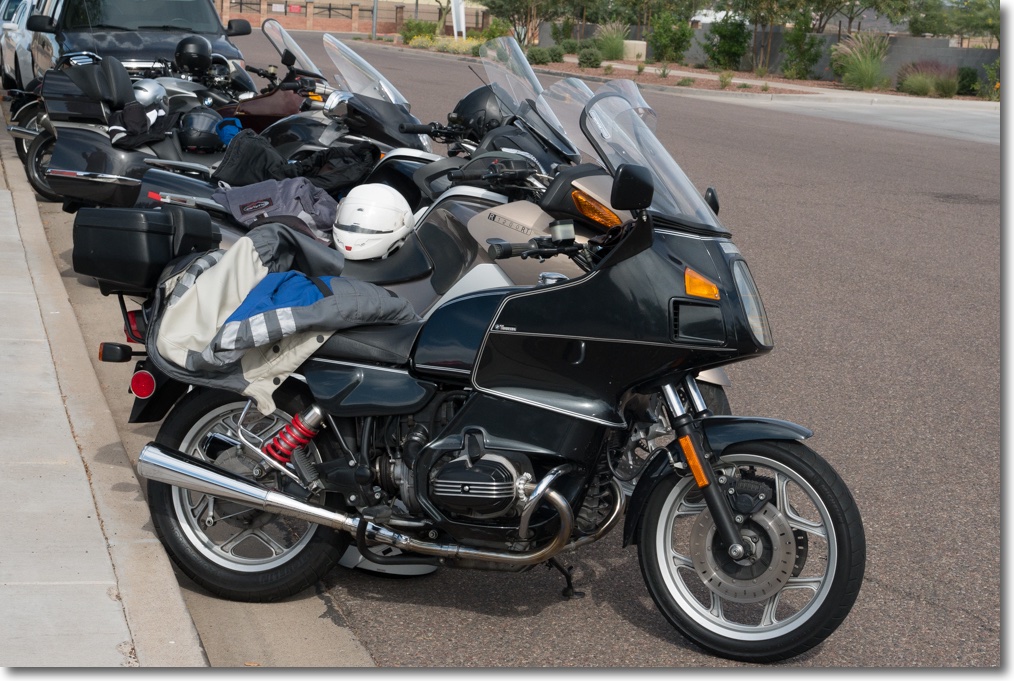
My 1994 R100RT in the foreground. The aftermarket rear monoshock is by Progressive Suspension. 60 horsepower – all you need for day long touring.
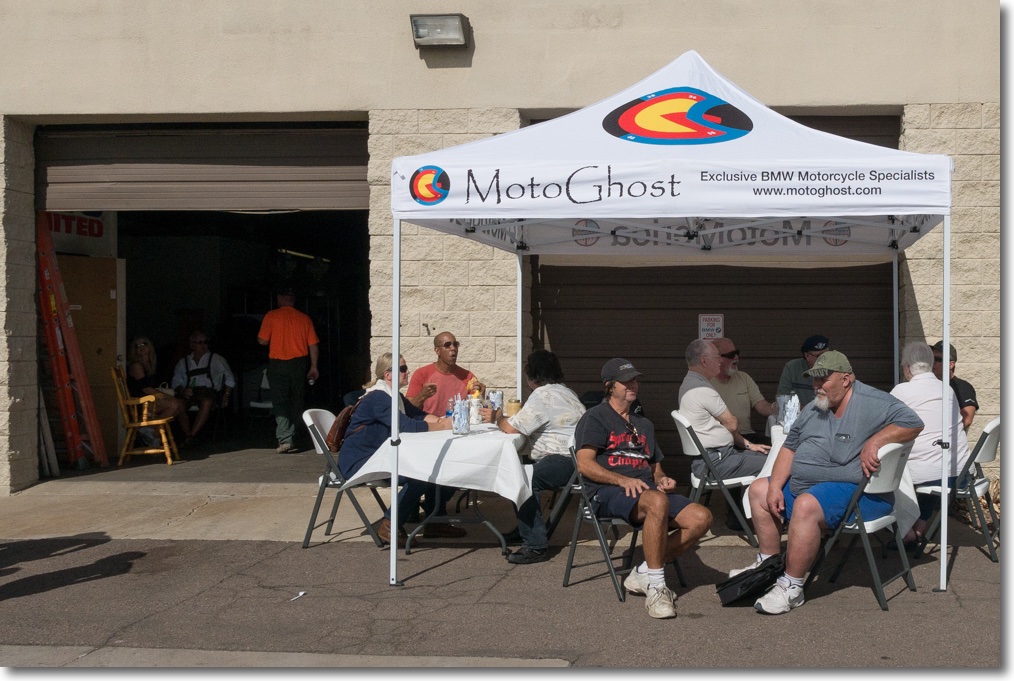
Enjoying the free eats.
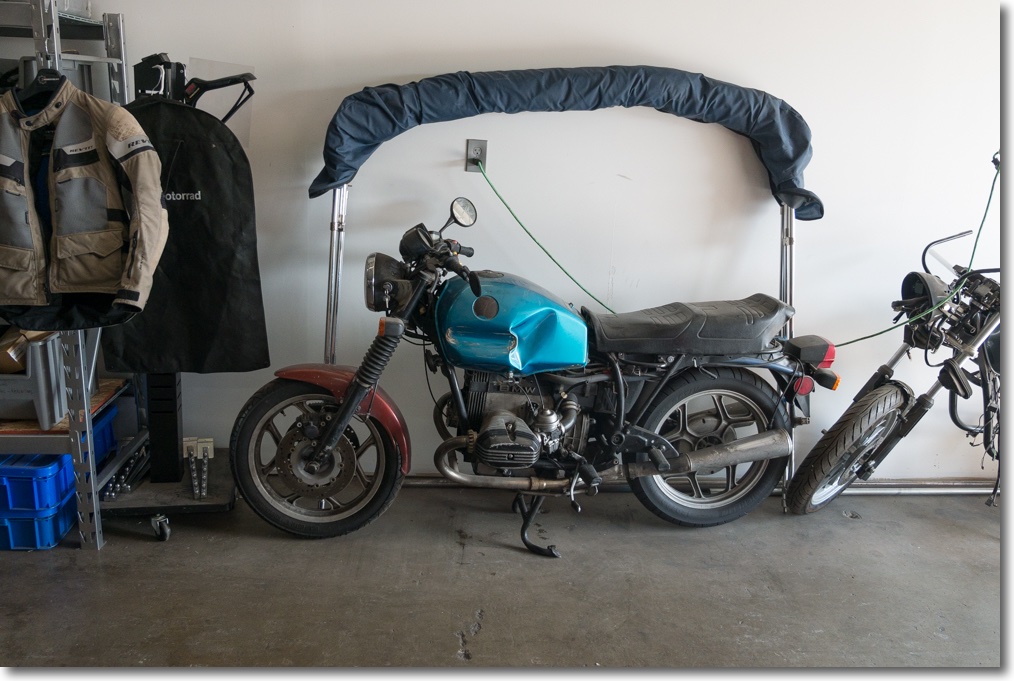
Ouch!
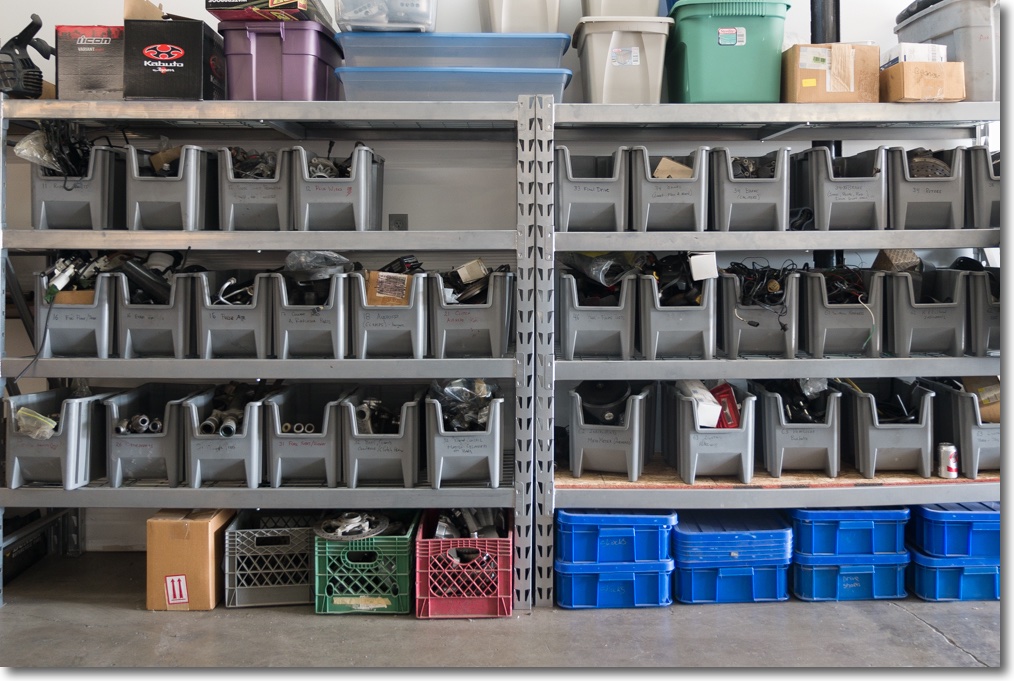
Parts, parts, parts.
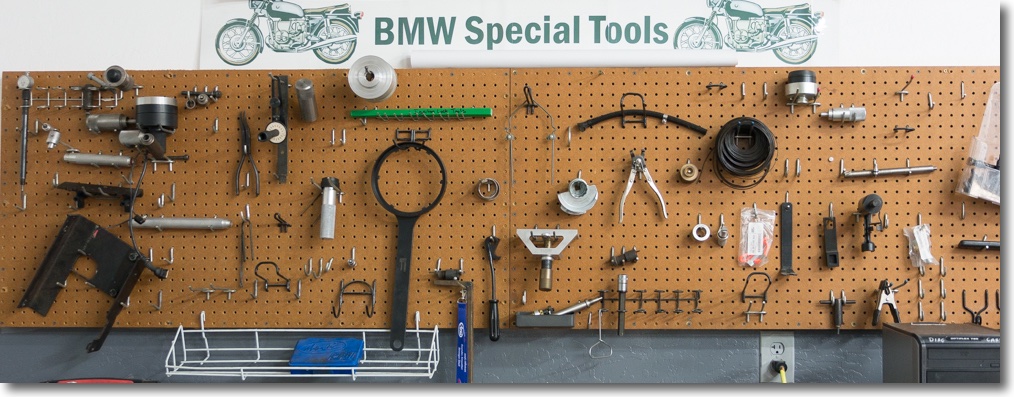
Specialty tools do not come cheap. Not available at Harbor Freight ….

Vacuum gauge for carburettor adjustment.
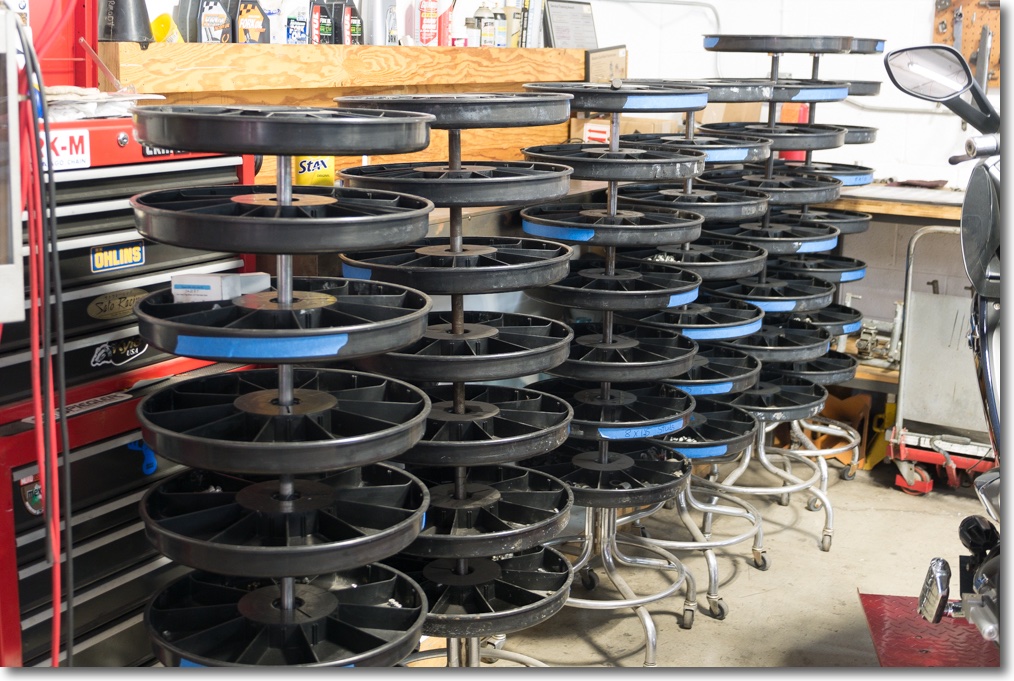
Parts carousels in the workshop.
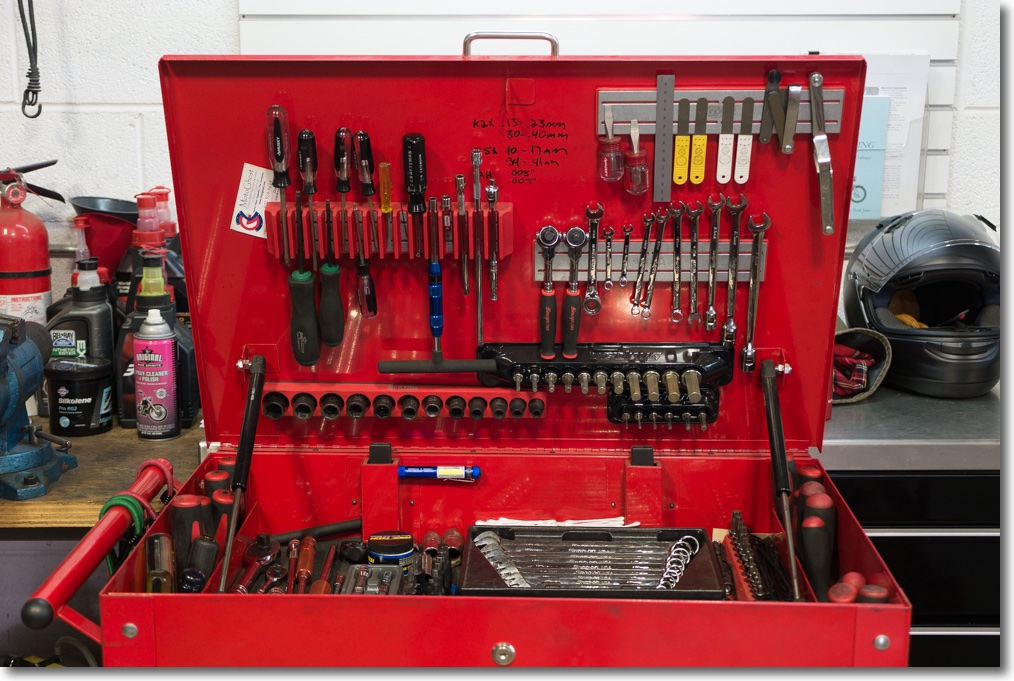
Alles in ordnung! Tools arranged just so.
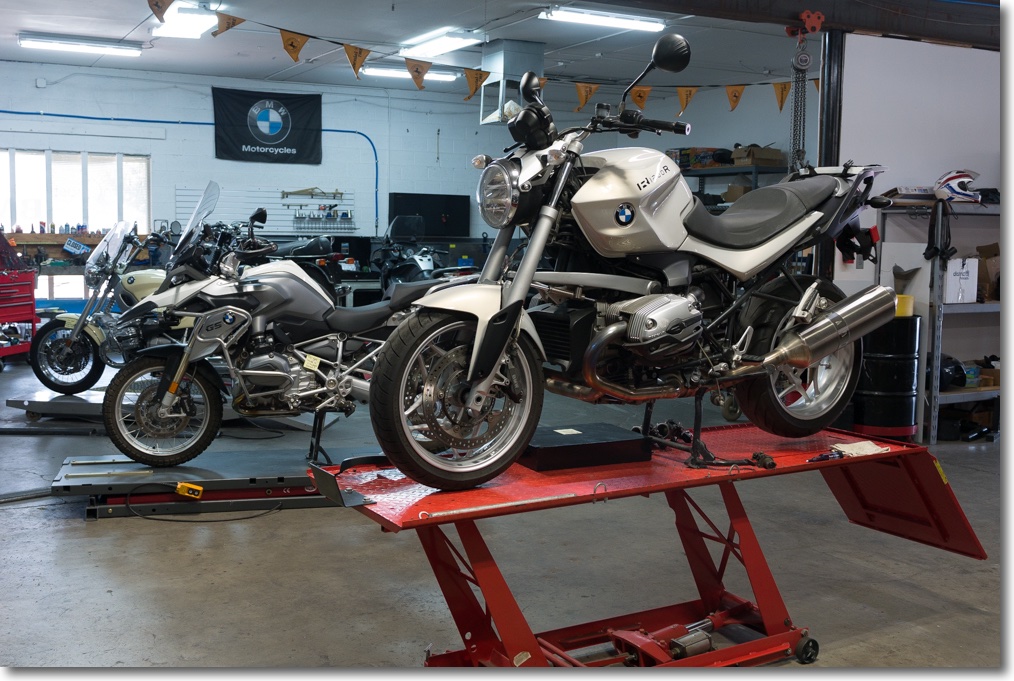
Recent vintage machines in the workshop. The R1200R in the forefront is a nice ride.
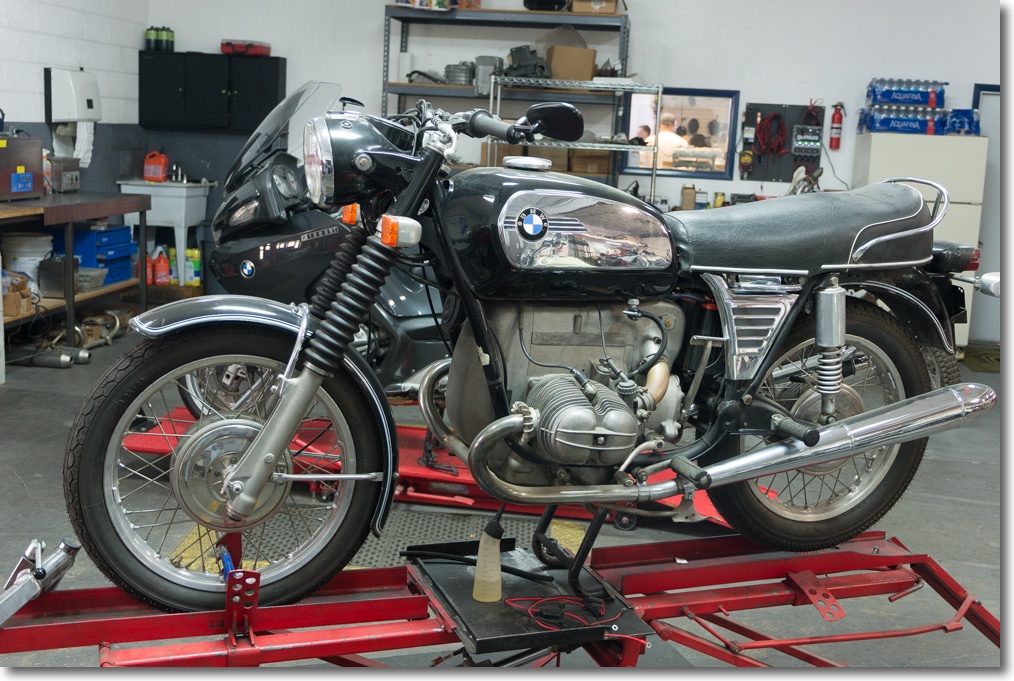
An early 1970s R60/5. Note the drum front brakes. Larger capacity machines of the era sported a single disc brake in front.
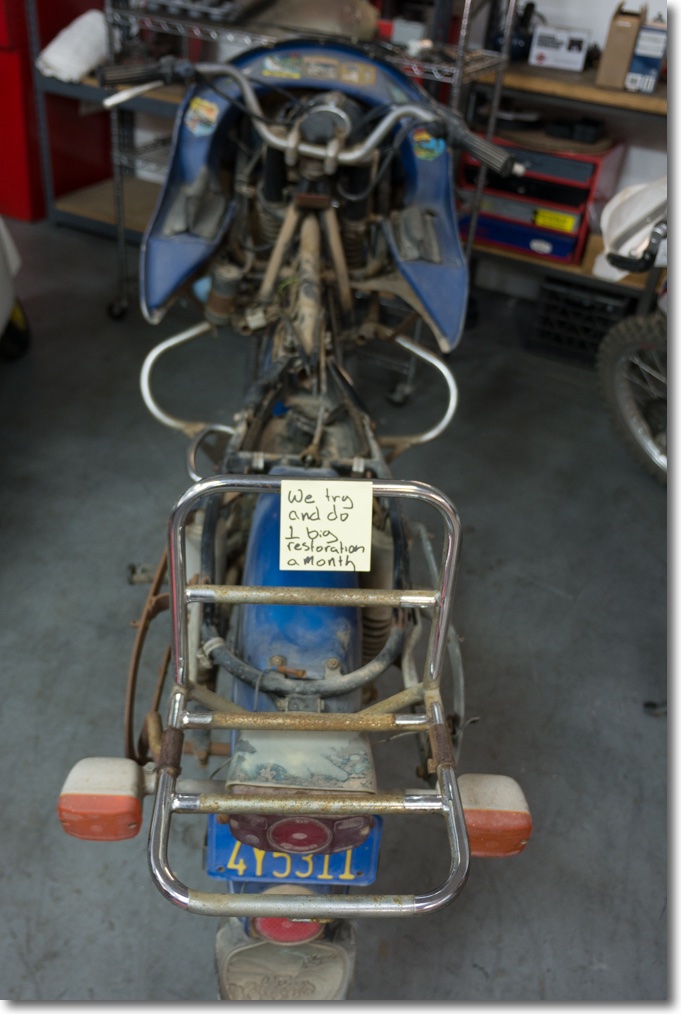
Basket case. Cheaper to buy a good used bike ….
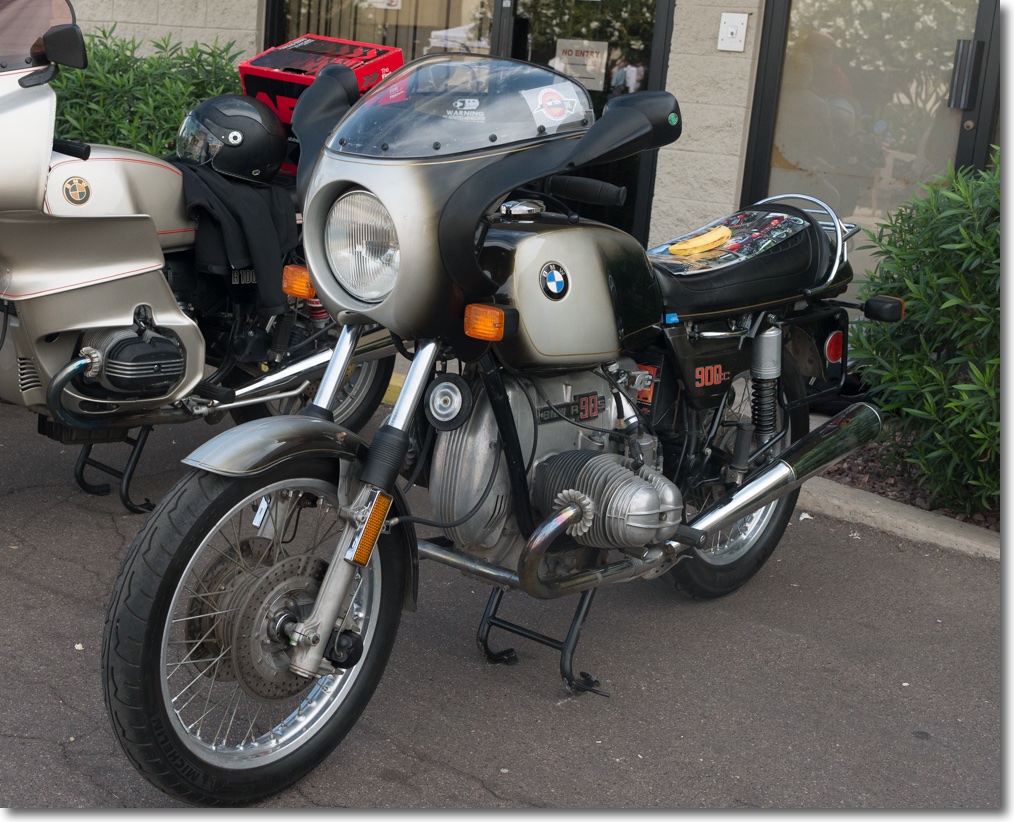
A lovely 1975 R90S, the first modern ‘superbike’.
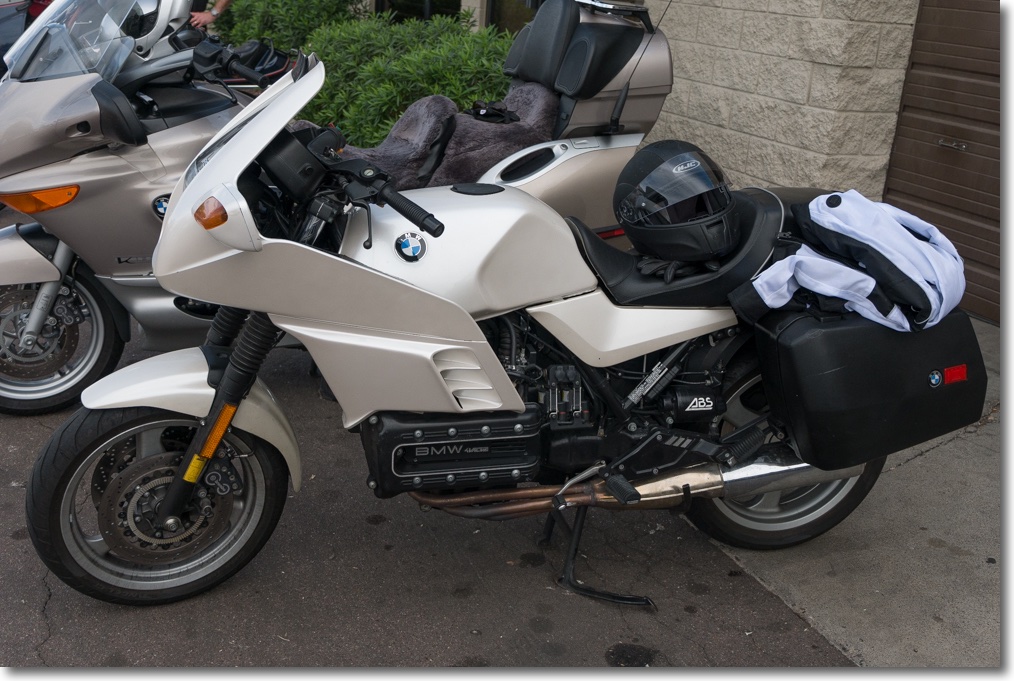
A 1991 K100RS with a four cylinder, 16 valve motor. Lots of power …. and the personality of a washing machine. 95 buzzy horses, this one. ABS brakes are a nice touch
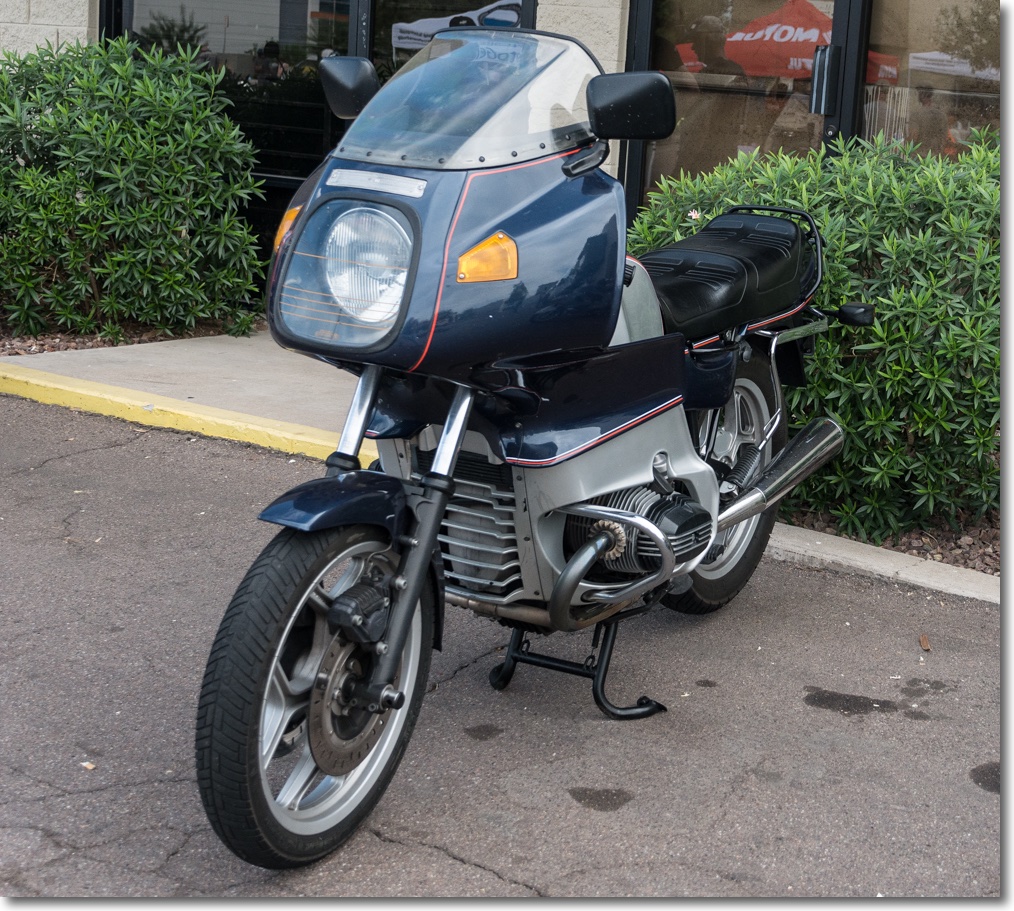
A late 1970s R100RS, the first motorcycle with a wind tunnel fairing, designed by Hans Muth. A machine much loved by autobahn cops.

Modern BMWs have grown along with American waistlines.
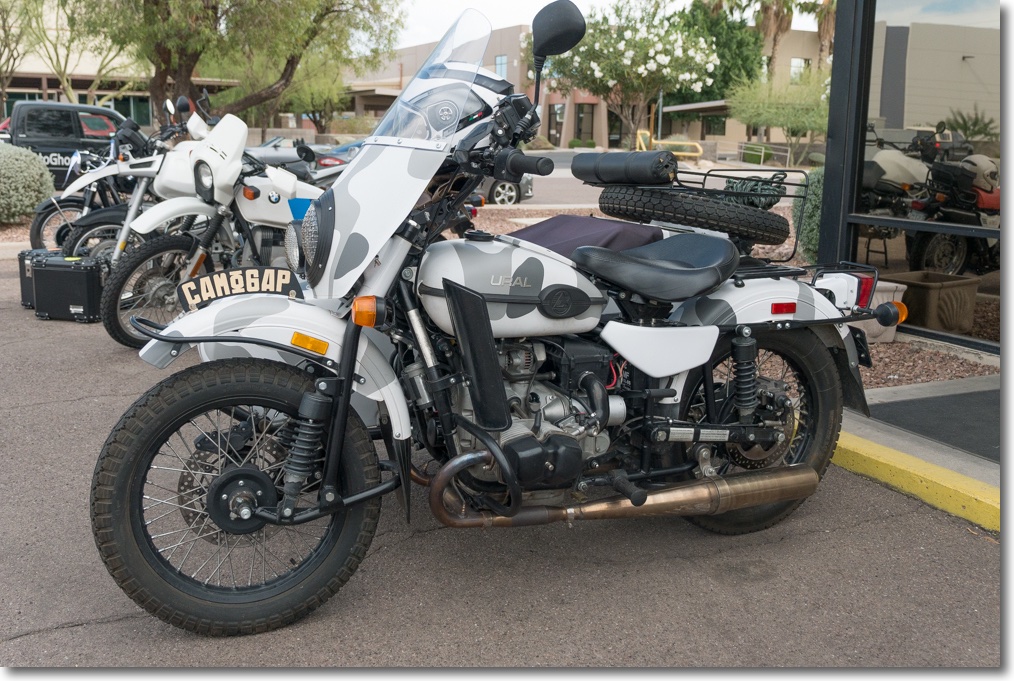
A Russian Ural with sidecar. The Russians stole the airhead engine design from BMW after WW2, and it’s hard to blame them. The quality of these machines is execrable, as you might expect.
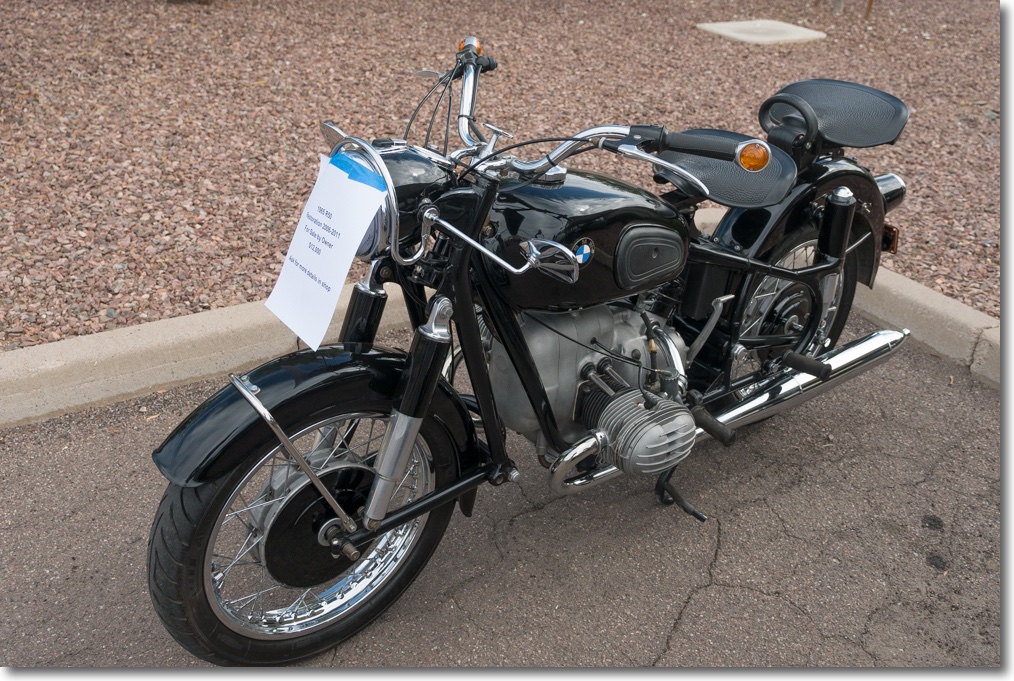
A nicely restored 500cc R50 of the 1960s. Not really enough power for modern freeway speeds, and with marginal brakes, this machine nonetheless exudes period charm. The sprung saddles complement the near non-existent rear suspension. Badly in need of pinstripes!
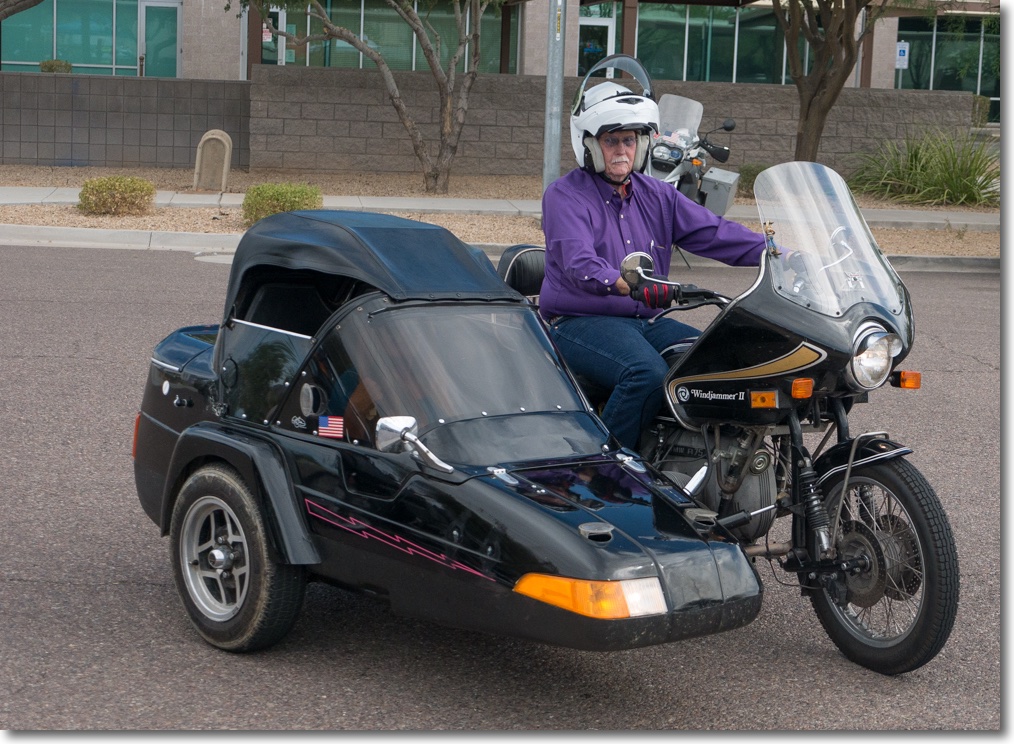
Sidecar rig, this one with a 750cc R75/6 motor.
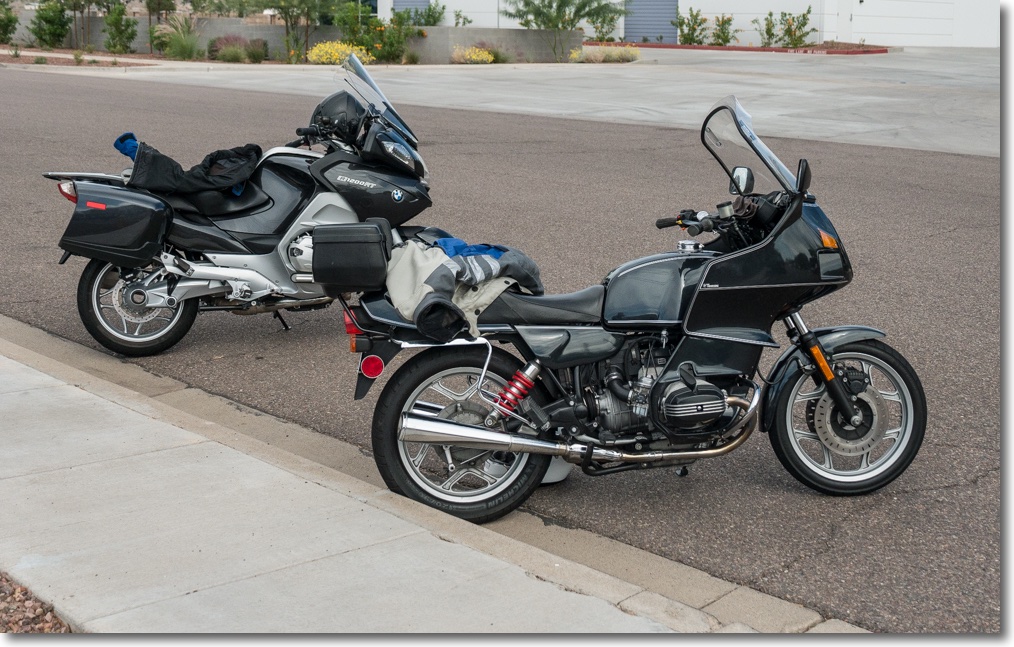
My 1994 R100RT backed by a modern R1200RT, a compact and surprisingly light tourer, with an oil and air cooled 8-valve boxer engine and almost twice the power at 109hp.

So, now you know.
If you are a Phoenix area resident, MotoGhost is unreservedly recommended for your two wheeled BMW needs.
All snaps on the Panny GX7 with the 12-35mm pro zoom; the interior images all at the f/2.8 maximum aperture.