Mission District.
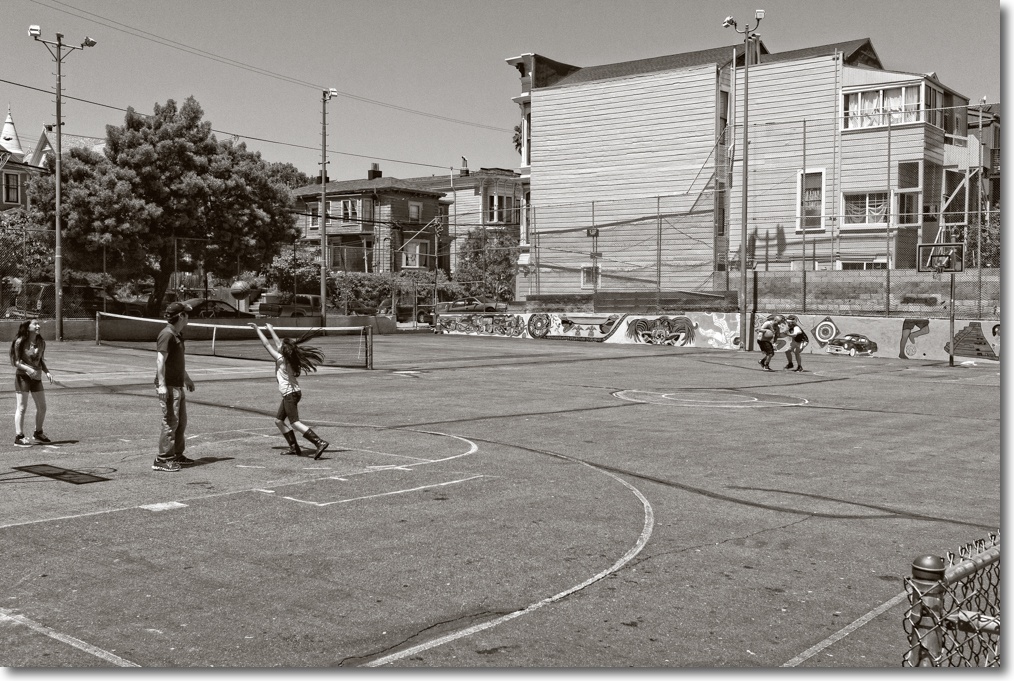
Panny GX7, 17mm Zuiko.
Mission District.
Panny GX7, 17mm Zuiko.
In the Mission District.
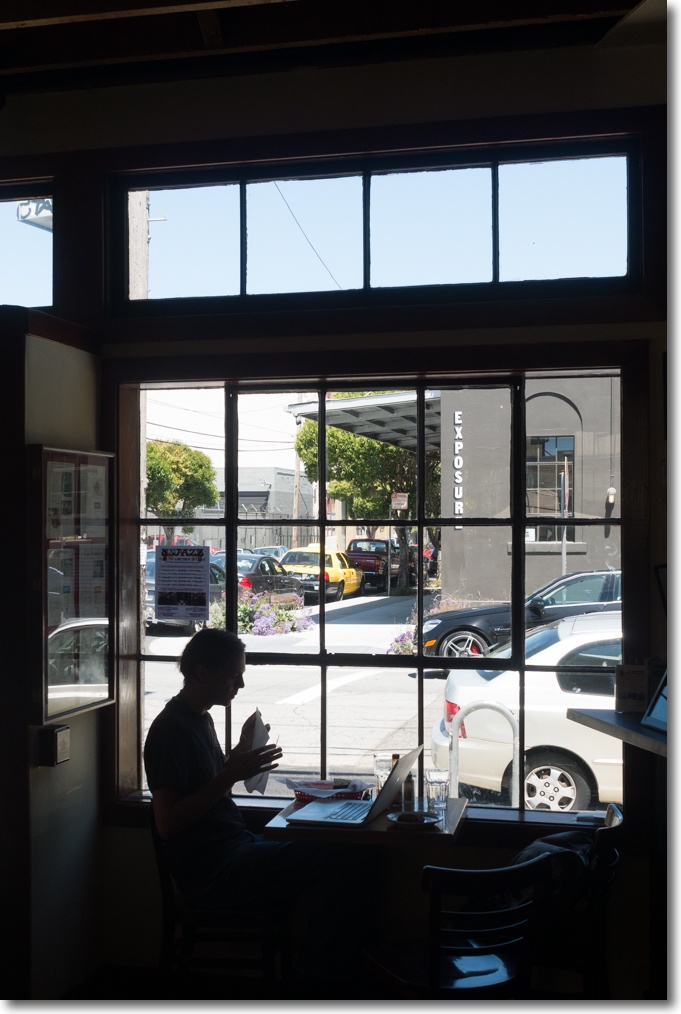
Panny GX7, 17mm Zuiko.
Free software, impressively engineered.
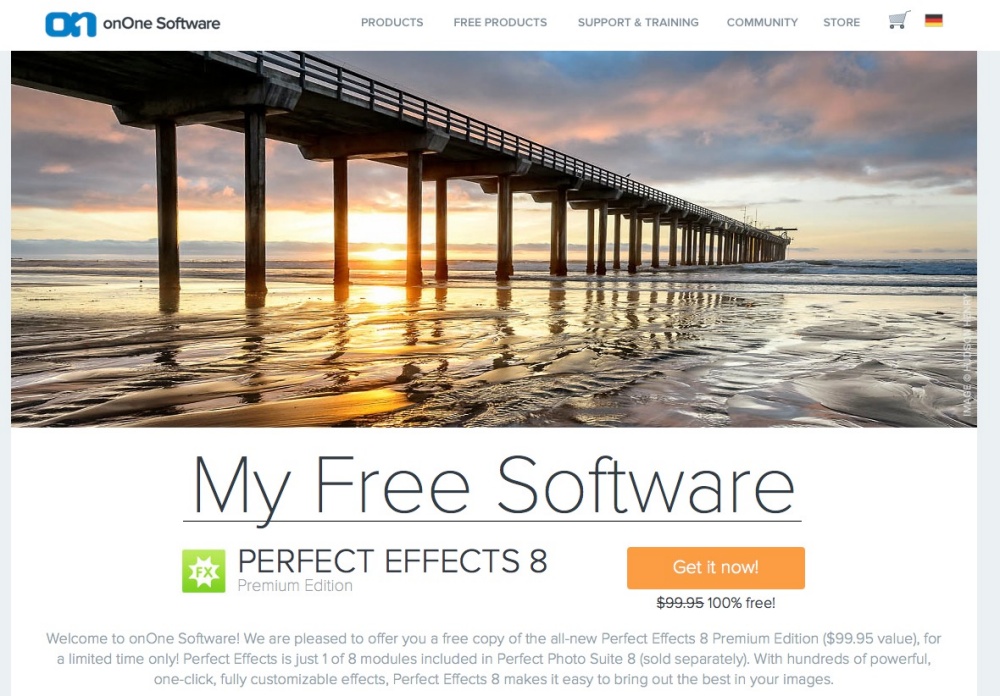
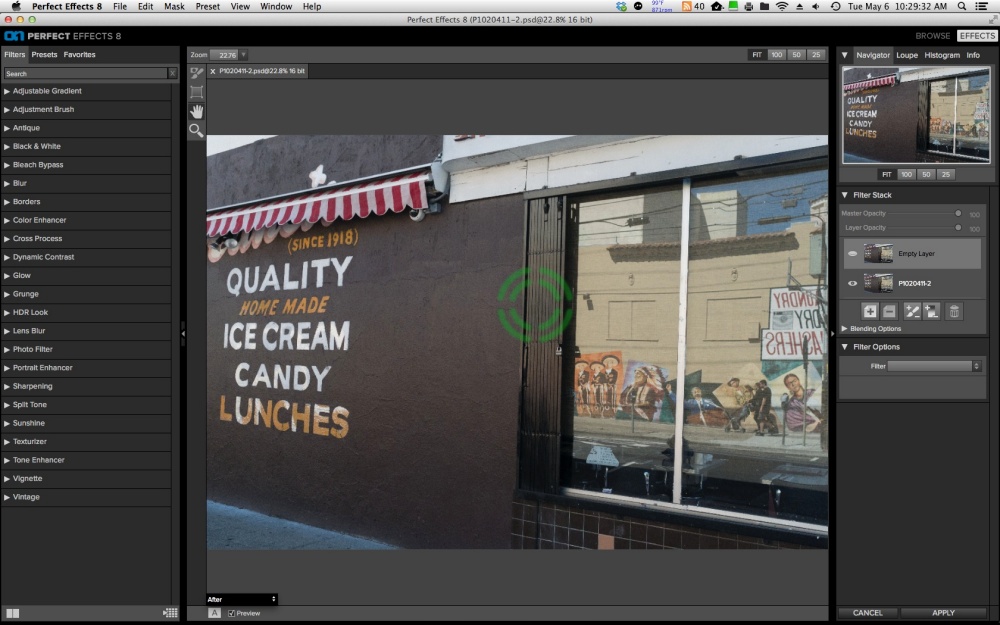
onOne Software is offering its Perfect Effects application, usually $100, free for a limited time. You can download it by clicking the above image.
I did so and it installs as a plug-in in PS CS5, LR 5.4 and Aperture, becoming immediately available in LR which is my default processing application.
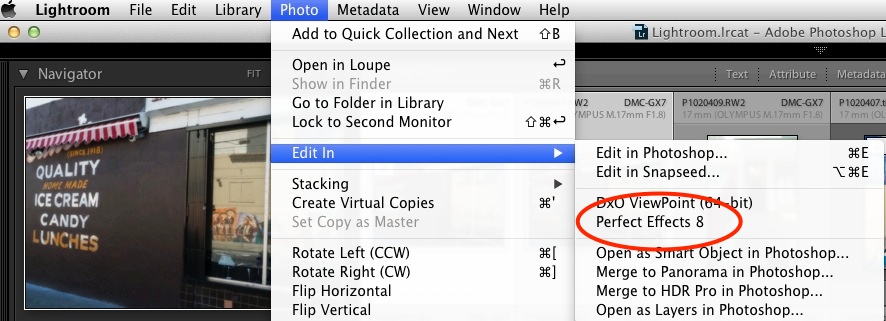
The engineering could not be better. Export a file from within LR’s Develop module and you get a simple display with a large number of effects to choose from. Save the file and it is saved as a ‘.psd’ copy in your LR catalog, adjacent to the original. I especially like the ‘Glow’ effect when subtle hints of age are called for in an image, and you can easily modulate the glow amount with a slider. Selective application of effects is also possible. A nice tool for the working photographer.
Here’s how the application’s display appears:
And here are the ‘before’ and ‘after’ images:
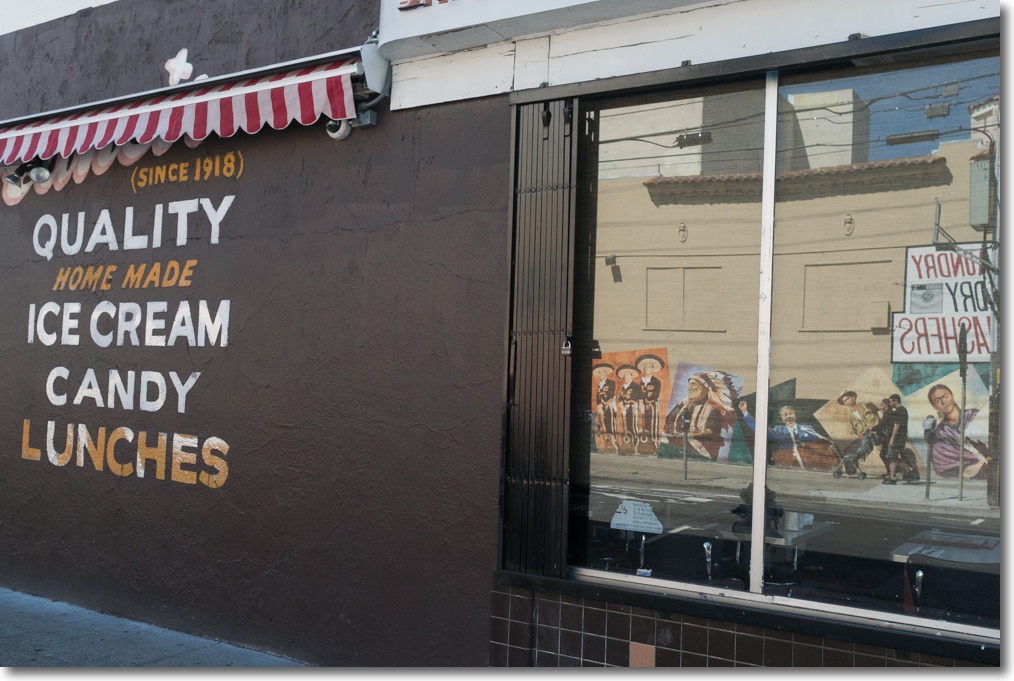
Before Special Effects ‘glow’.
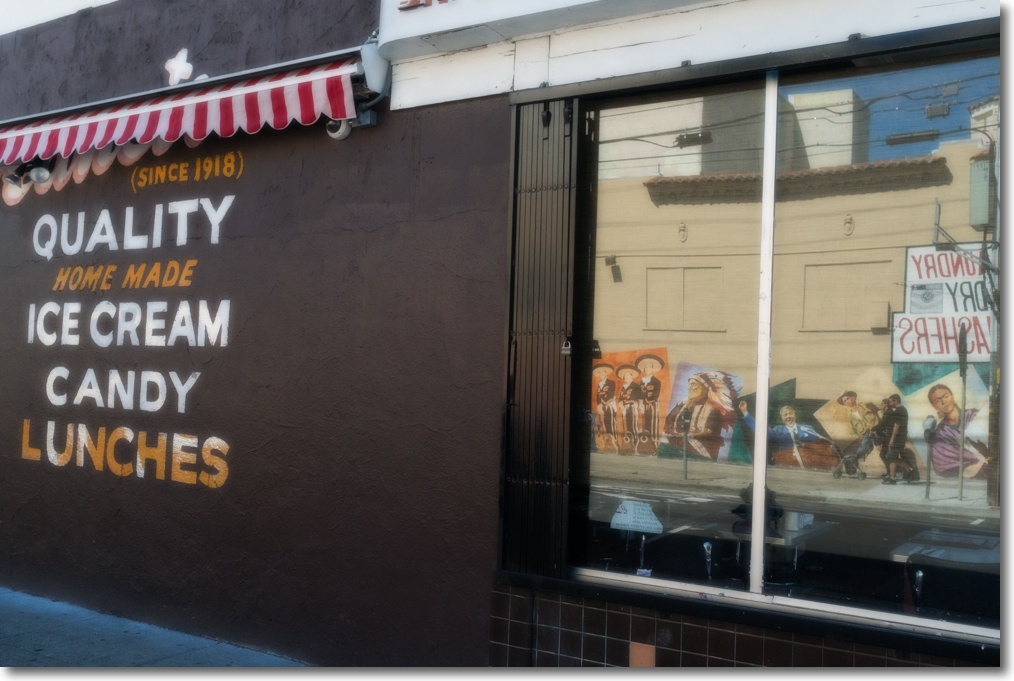
With Special Effects ‘glow’.
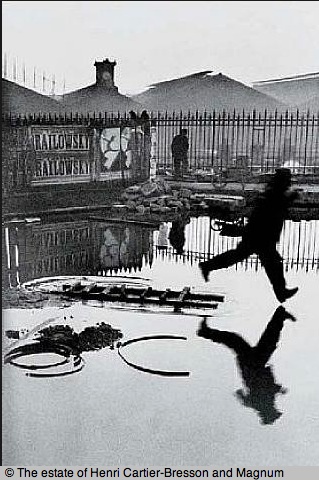
The jumping man.
Oceans of ink have been spent by would be experts explaining how Henri Cartier-Bresson’s divine sense of timing allowed him to make that picture of the man jumping the puddle behind Gare St. Lazare in 1932.
Click the image for the video and jump to 16:23 where you will learn not only that there was no timing involved, HC-B couldn’t even see the subject when he pressed the button! As the great man goes on to say, “all photography is an accident” (especially that of Ansel Adams, come to think of it, though the world would have been better off had those accidents never happened).
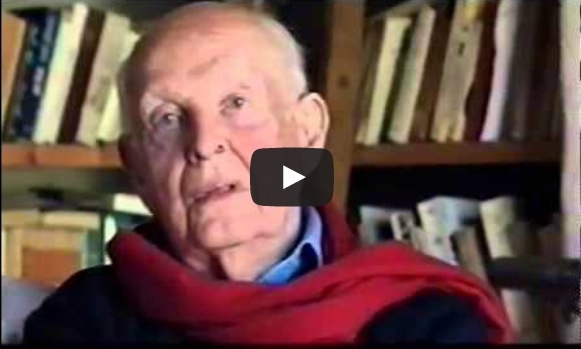
What is so especially charming about this disclosure that it is said without artifice or pretense. Decisive Moment, my hind quarters. But the image remains one of the greatest ever made.
Making ends meet.
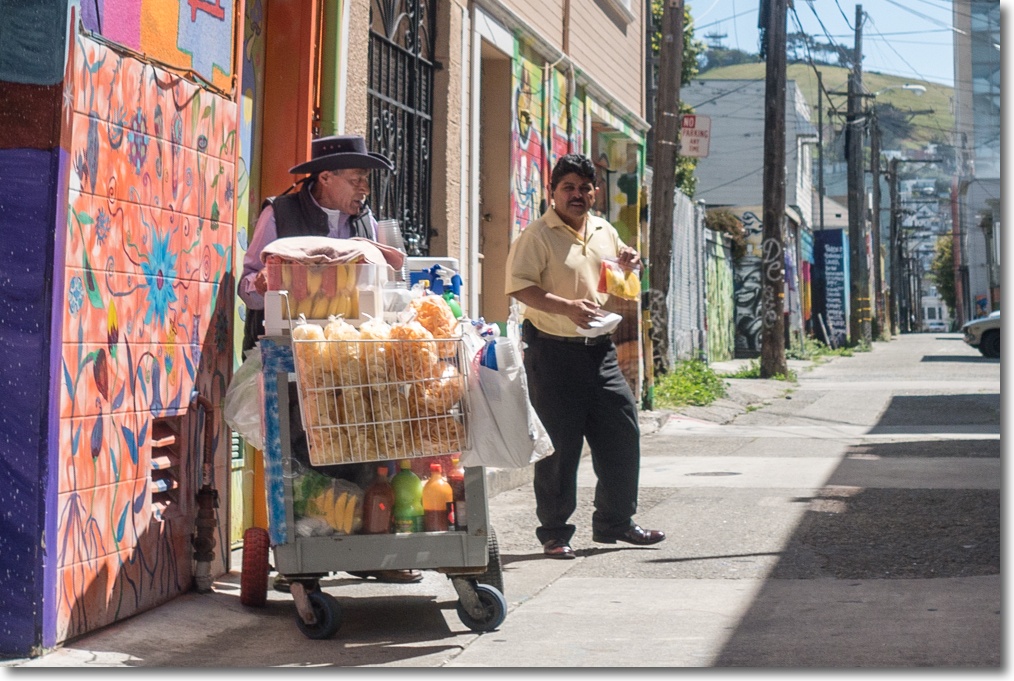
The scene is colorful enough, but this man makes a hard scrabble living reselling fruit, snacks and soft drinks from his hand cart, in the Mission District.
Panny GX7, 17mm Zuiko.