L’Absinthe

Hope dissolved.

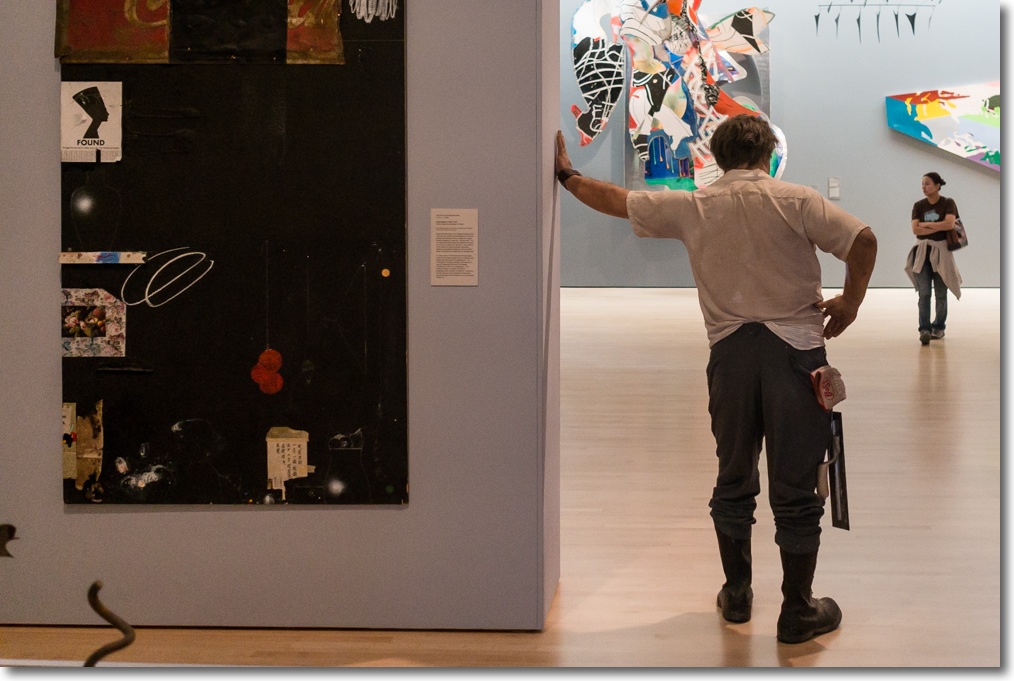
Degas had a good crack at it in 1876. As the most photographic of painters, he showed life without hope, the pair deep in their cups, drinking ill distilled absinthe en route to blindness and death. And then there’s that wide-angle vision of his, with the signed knife in the foreground.

Until this time just about every painter saw though a 50mm lens, with the possible exception of the incomparable Paolo Uccello (1397 – 1475, quite an innings) whose Battle of San Romano was very much seen through a 21mm. Fortunate Europeans can see this work in the National Gallery, the Uffizi or the Louvre, but without a shadow of a doubt the one in London is a standout, one of the true materpieces of Western art. High time someone in America bought it …. a rounding error for a tech IPO windfall. I so miss standing close to the canvas completely subsumed by the action. After all, it would be a challenge to sanity to return to rain and Ivan saturated London.

I had a go at the same theme recently, at the oldest drinking spot in South Beach, SF, The Saloon, a survivor of the 1906 earthquake and fire. The default beer here, Pabst Blue Ribbon, is arguably worse than badly distilled absinthe. I asked the barman for permission to take pictures yet this image was completely unposed. ‘L’Absinthe’ flashed through my mind as I pressed the button. Degas pioneered the technique of cutting people off at the edge of the frame, one devolved from his photography. I just copied that. This is from the full frame, no cropping.

Nikon D3x, 35mm f/1.4 Nikkor G at f/2 (a loaner, before I finally got a 35/1.4 Sigma which actually focused properly. Decent lens, the Nikkor, focuses well, but no Siggy when it comes to resolution wide open). That said, the 18″ x 24″ print of this little drama on my wall is simply a showstopper, with especially lovely rendering of color. You will not go wrong with the 35mm f/1.4 Nikkor G, though it costs an arm and a leg.

Matt Weber

A fine NYC street photographer.

Let’s face it. Most of what passes for ‘street photography’ today is unadulterated garbage. Invariably rendered in grainy black and white, the camera carelessly hosed around, no compositional skill in evidence, clutter everywhere and totally devoid of wit, interest or artifice.

These are not accusations which can be directed at Matt Weber’s work. The photographer has been making fine street images in New York since the 1980s in both monochrome and color and the work is witty, well timed, involving and just plain good photography.


Click the image for Matt Weber’s site.

You can buy Weber’s images by clicking the picture above and any of these would do your wall proud.

ImageWell

A CAD app.

ImageWell is a $20 lightweight CAD app which I have been using for ages to upload images to this blog. It stores the path for the image which is simply dragged and dropped on the app, resized with a couple of key strokes, one more click adds the drop shadow, and off she goes to the server.

But this small app offers far more than image upload. With a very undemanding learning curve you can create charts and technical drawings of remarkable sophistication. Case in point my 12 year old son had to prepare an earthquake evacuation drawing as part of an earthquake awareness class. Now while this is somewhat reminiscent in utility value to those ‘nuclear safety’ newsreels of the cold war, which showed children hiding under desks for protection from Ivan, the project was a lot of fun and he emerged an ImageWell expert. With a minimum of tuition he was able to produce this:

This took him about an hour, including learning time.

Adding text to images is equally simple. Drag and drop the image, insert a text box and you are done.

ImageWell is highly recommended for Mac OS X users and bloggers, and will also do nicely for all but complex CAD projects. If you are making technical instruction manuals, it’s hard to beat photographs annotated with text using ImageWell.