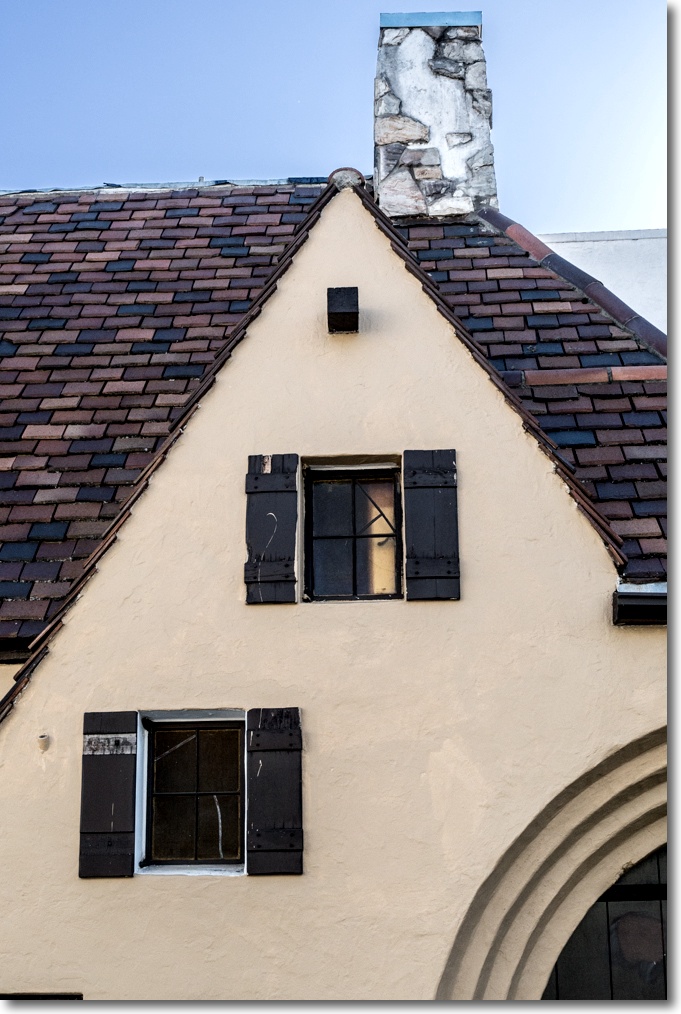
On Santa Cruz beach.

Nikon D3x, 300mm f/4.5 ED IF MF Nikkor.
On Santa Cruz beach.

Nikon D3x, 300mm f/4.5 ED IF MF Nikkor.
On the Nikkor Reflex.

Nikon D3x, 500mm Nikkor Reflex f/8.
To anyone who berates this lens I say ‘Check your technique for that is what you should be blaming’.
I use focus block on this optic, the only MF Nikkor of the many I own where I have programmed the CPU in this way. Focus block prohibits exposure unless the focus indicator is lit.
More improvements for the MFT format.

I continue to be a huge fan of the Micro Four-Thirds concept, and have just ordered a Panny GX7 body. This follows on from my G1 (July 2009) (the first ever MFT camera) and G3 (March 2011) (which had a better sensor but compromised ergonomics). Both the G1 and G3 designs adopted a faux pentaprism shape, the prism hump used for storage of the built-in flash. The GX7 does without that pretense, adopting a more classical Leica rangefinder form while retaining the pop-up flash in an ingenious cantilevered design which still allows the use of a flat top plate.
Before looking at the appealing technological enhancements in the GX7, it bears repeating that if you like large prints – the touchstone of quality image reproduction – then anything up to 18″ x 24″ with an MFT sensor is easily achieved. Only if you need the ability to selectively enlarge sections of the frame does full frame become a necessity. Given that few make prints so large that’s the same as saying that MFT works for most serious snappers. The one constraint is that the shorter focal length lenses used mean much more is in focus at a given aperture, so if background blur is insufficient, the snapper needs to resort to post processing to confer additional blur. Not too difficult with recent versions of Photoshop and the Magic Lasso tool. Click on ‘Instructional Videos’, at the base of this page, to see how to do this. And for light weight and portability, there’s no comparing an FF DSLR with an MFT body.
Here are some of the immediate benefits of the later technology in the GX7:
The ones which really get my attention for street snaps include the silent electronic shutter and the internal IS for use with my Nikkors, with a simple lens mount adapter. As an EVF adjusts finder brightness automatically, a 500mm f/8 Refex Nikkor is every bit as bright as an f/2 prime.
The electronic shutter is a far from trivial enhancement. Using the movie mode’s technology and delivering full RAW quality, I expect that the electronic shutter will permit thousands of still images to be recorded on a battery charge, whereas the regular shutter is limited to some 300 with Panny’s small battery. Further, because the electronic shutter uses no mechanical parts, there is no wear and tear on the mechanism and 10 frames per second machine gun shooting is possible. Whether the latter is needed is an open question, but it suggest that the ‘decisive moment’ has just become a good deal more indecisive. HCB must be rolling in his grave ….
I bought the chrome version as anything which looks more amateur is taken less seriously on the street. And, yes, Lightroom 5 does support GX7 RAW file conversion.
You can download the 380 page (!) extended Instruction Manual here.
More in Part II.
At Fort Point.

Snapped from the south east end of the Golden Gate Bridge walkway.
Nikon D3x, 85mm f/1.8 MF Nikkor – one of Nikon’s best ever. Even in the modestly sized image above, the micro-detail sings.
What were they thinking?

Retro looks in cameras are nothing new. Olympus replicated the looks of its (excellent) film era OM SLRs in the OM-D MFT models and Panasonic and Fuji have had a good go at the Leica M rangefinder in their GX7 and X100, respectively. These latter two models added better digital sensors and took away bulk, cost and weight, so there really was something new being said there.
But Nikon’s attempt, the Df, which seeks either to copy the film era F3 or the FM/FE/FA, depending on which you wax more poetic about, looks like an exercise in futility. And failure.
Here are the reasons why:
As for the ‘pure photography’ crap, I count 32 switches and dials on this comedy hour special. For comparison, I get to 26 on my D3x, hardly a ‘simple’ camera.


Ah, you say, but look at the technological sophistication.
Uh huh. Like:
A fool and his money may be easily parted, but I rather doubt Nikon will see too many of either when it comes to this abomination – fools or money. It used to be doctors and dentists who collected toys like this; now a few will sell to Silicon Valley geeks and their pictures will be every bit as good as those of the medical set which came before.