Steve McCurry and Pirelli

A new look.

Steve McCurry is best known for his third world photography for National Geographic. His work is exceptionally good and he is a seemingly tireless and much travelled photographer.

So to learn that McCurry is photographing the 2013 Pirelli calendar comes as a surprise. The models are all photographed in Rio de Janeiro and the overall look is dark and sombre. Quite a break with Pirelli’s tradition, and how McCurry did not get mugged and robbed in this most dangerous of cities is a mystery, especially as much of the photography was done in the scandalous slums overlooking the city where gangs and guns rule. The recent movie Fast Five does an excellent job of showing the favelas up close, and is also immensely entertaining.

McCurry’s style of working is the antithesis of the motor driven yob who generally typifies fashion snappers in the public’s imagination. No long hair, two-day beard, bad language, torn jeans or reversed baseball cap, he works quietly and methodically, mostly using a tripod, and is most charming, self effacing and gentlemanly. There is obvious rapport with his models who presumably have seen it all by now, and I found it especially touching that he makes the time to show his subjects their images on the LCD screen of his camera. In many ways, McCurry’s fame exceeds that of his models, yet he makes no issue of it.

The video is well worth watching, with McCurry using a digital Hasselblad and a loudly advertised Nikon D3x – gotta repay all that free gear! No photographer in his right mind would use the garish stock straps which come with Canon and Nikon gear, but I suppose if sponsorship money is involved, that’s a different matter. And inept as the straps are, if your free camera falls to the ground who cares? It’s the only jarring note in an otherwise interesting documentary piece.


Click the picture for the video.

While the final images shown in the video seem over processed to my eye – too much action on the Vibrance and Saturation sliders if you ask me – they are striking, especially those of Karlie Kloss toward the end. It’s also pretty special to see that all of these affluent women are doing so much to help the poor and sick. What a fine way to leverage fame to bring attention to third world issues.

McCurry blogs two to three times a month with very generous helpings of his wonderful photographs. You can see his blog and sign up for the RSS feed here. His work is no stranger to poverty and you will see many images of the poor of India, Pakistan, northern Africa, Russia and so on. Sadly there is no shortage of similar subjects for his fine eye.
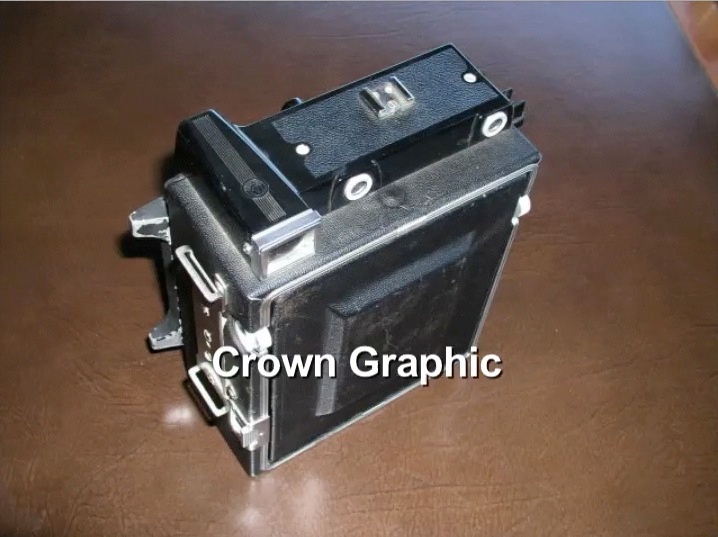
The Crown Graphic

A well thought out design.

Watching Brian dePalma’s splendid Prohibition Era movie The Untouchables the other evening I was struck by just how skilled reportage photographers were in that period. In one early scene, the Treasury Agent Elliot Ness orchestrates a raid on a suspected illegal liquor warehouse and as he prepares to smash open one of the wooden crates he believes contains the hooch, an aspiring press photographer, armed with a Speed Graphic and that enoromous flashgun with the almost as large one-use bulb, bursts in and takes a snap. His men want the reporter removed but Ness, sensing a ‘photo op’ lets him stay. As he picks up the axe to smash the crate, it’s what follows that leaves you lost in admiration. In a choreographed series of actions, the reporter realizes he has used one of the two exposures in his film slide. In the matter of a few seconds, you see him insert the dark slide, pull out the film holder, reinsert it reversed, pull out the second dark slide, change the flashbulb and snap Ness as he pulls out the contents of the crate …. a Japanese decorative umbrella. Ooops. But what the photographer had to go through to get his one chance at the front page is exceptional.

The camera was, amazingly, exceptionally well suited to hand-held use. It came with a decent rangefinder (I dismantled mine to clean the mirrors whereupon it became easy to use), an optical finder with interchangeable masks for different lenses, a wire frame finder easily extended from the body and ideal for reporters’ use and adjustable focus stops. You had a reasonable range of perspective controls thanks to the drop bed, and lens exchange was very simple and fast. Best of all the whole thing collapsed into a surprisingly compact rectangular box and the included carrying handle made for easy transport. It weighed less than the modern DSLR. A large chromed side plate accommodated the flashgun whose handle later did double duty in George Lucas’s ‘Star Wars’ movies as a light sabre!

Until the roll film camera gained acceptance, the reporter’s tool of choice was the Graflex company’s Speed Graphic or later the Crown Graphic. I owned a Crown Graphic for a couple of years, interested in finding out just how it was to use a large format camera. I put together a slide show of my Crown Graphic – long sold – and you can download the 50MB file by clicking or touching the picture below:


Click the picture to download the slideshow.

Toward the end you can see where I made my own focusing cams for the wide and long focus lenses so as to ensure accurate coupling with the optical rangefinder for hand-held use. A fun project!

Tripod use was every bit as easy and the huge negative size meant that large prints of just about any size were easy to make with frightening resolution. Scanned at 4,000dpi the negative yielded no fewer than 320 megapixels! At 2,000 dpi, more than enough, it came in at 80 megapixels.

I eventually gave up on the Crown for a couple of simple reasons. First, it was impossible to find anyone to process my Kodak Vericolor originals without adding scratches, boot marks and hair lines. This meant endless retouching just as in the bad old film days. Second, getting a good scan of the originals at a reasonable price was also impossible. Drum scans, which would disclose every last detail in every last leaf on that giant sequoia were prohibitively expensive and the scanned files would average over 200MB. Guaranteed to disclose my iMac’s dual purpose design when processed – a computer and a toaster, all in one. But the Crown Graphic was an absolute blast to use. Both color and monochrome film stock remains available if you want to give it a shot. You will not lose any money when it comes time to sell your hardware, but you will need a good changing bag to load those film holders. Just about any lens will do, the large negative making the latest and greatest in optics overkill.

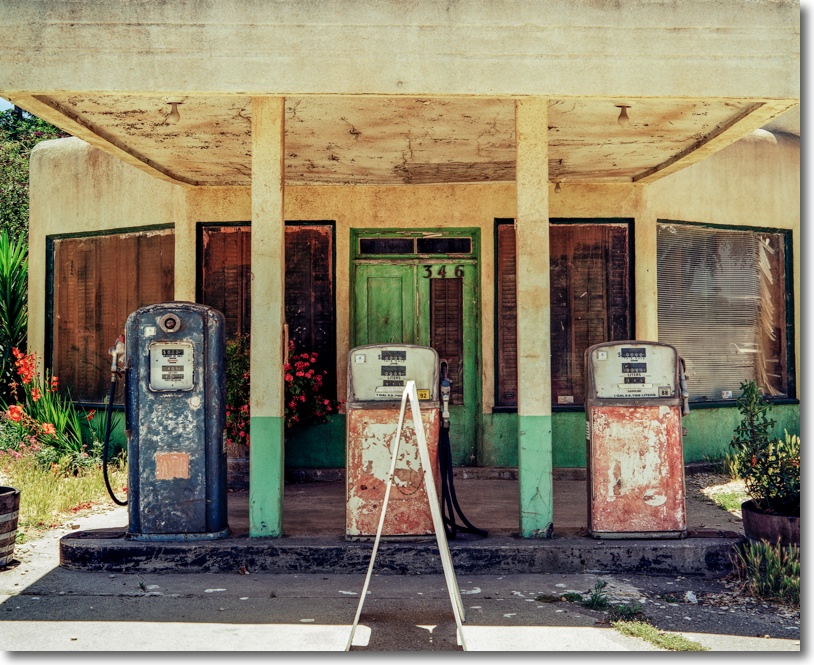
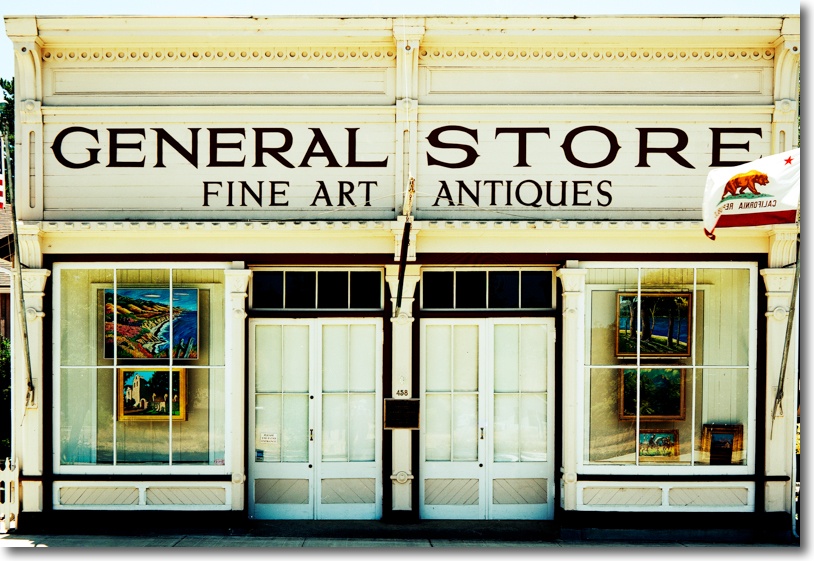
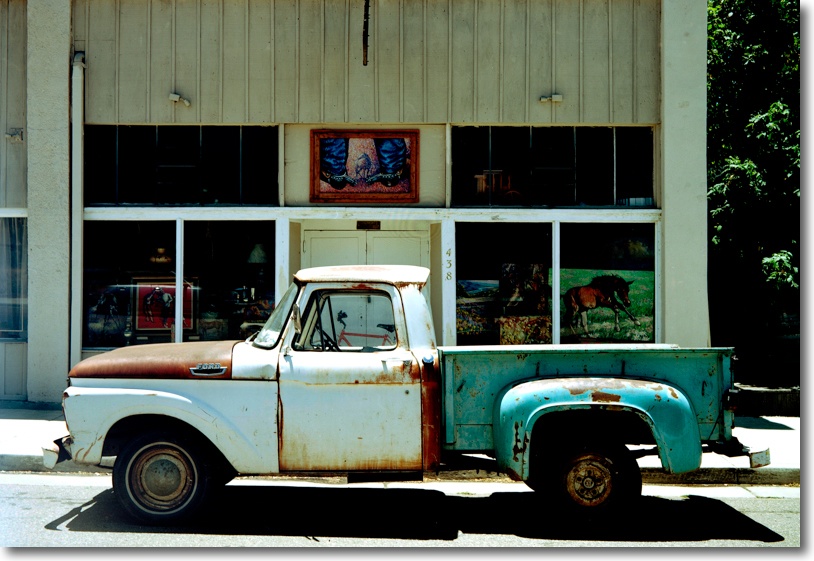
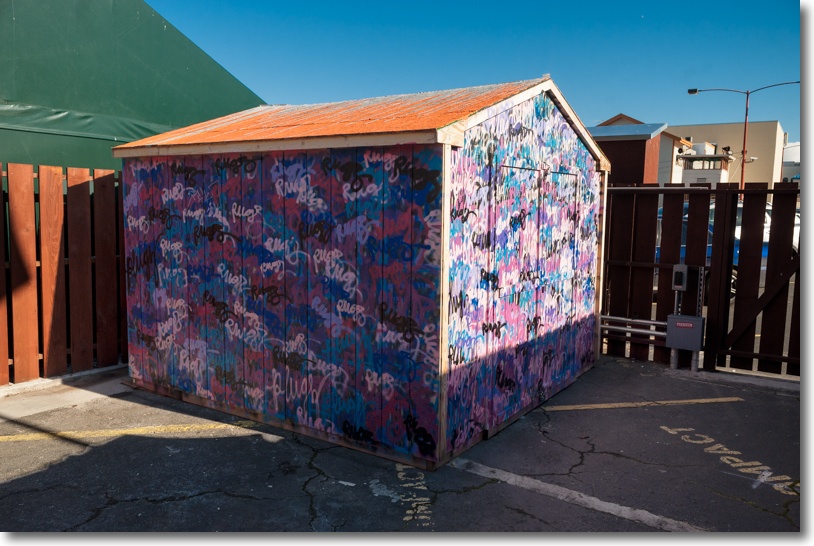
Here are a few snaps:


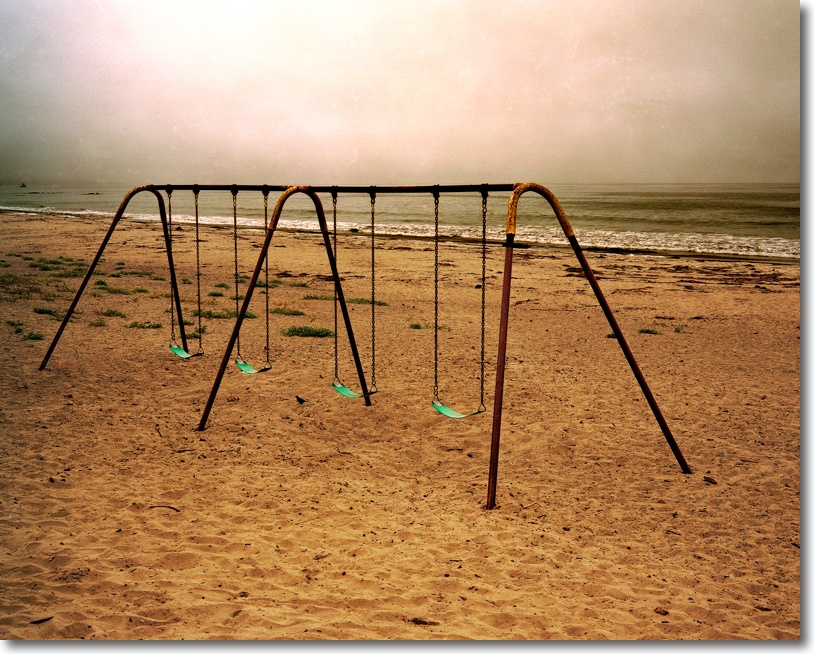
Cayucos beach.


Abandoned gas pumps, Los Alamos, CA.


General Store, Los Alamos, CA.


Rust.

A touch of the surreal

Stranger and stranger.

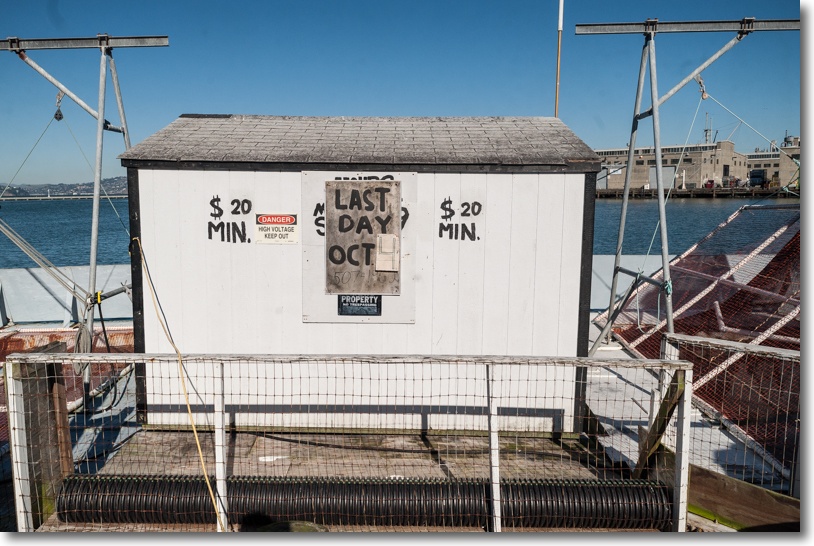
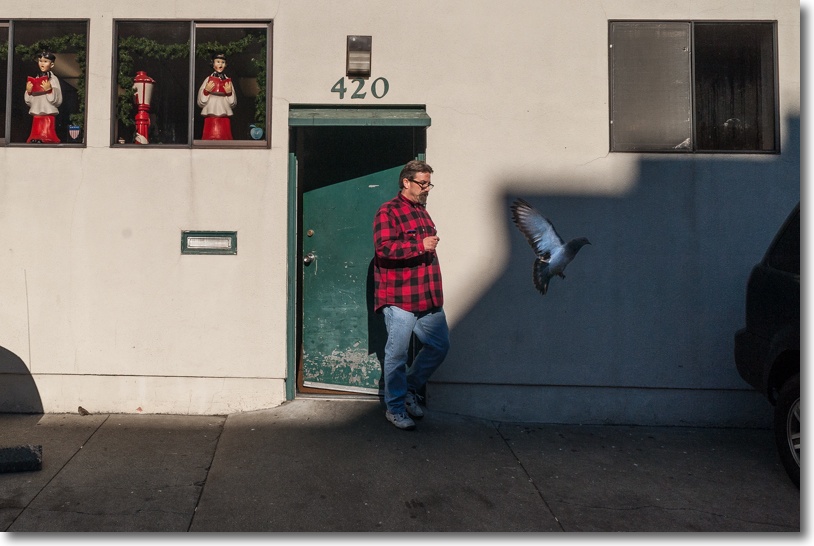
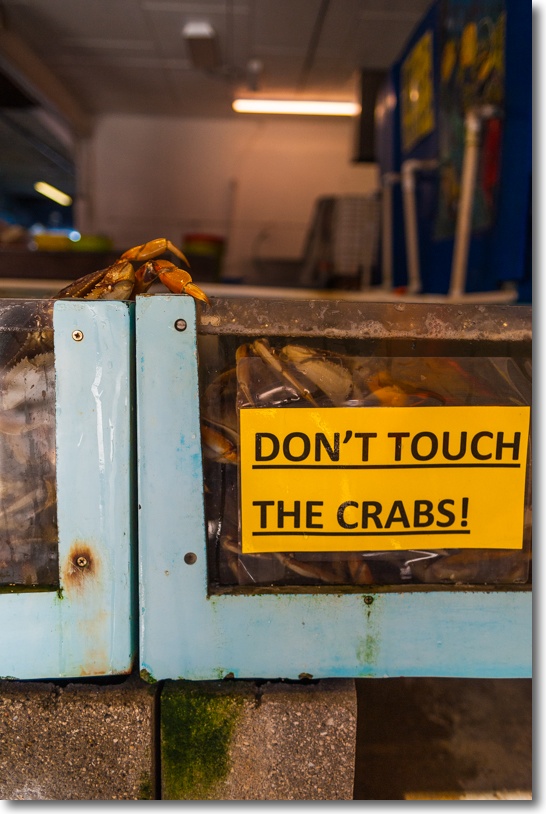
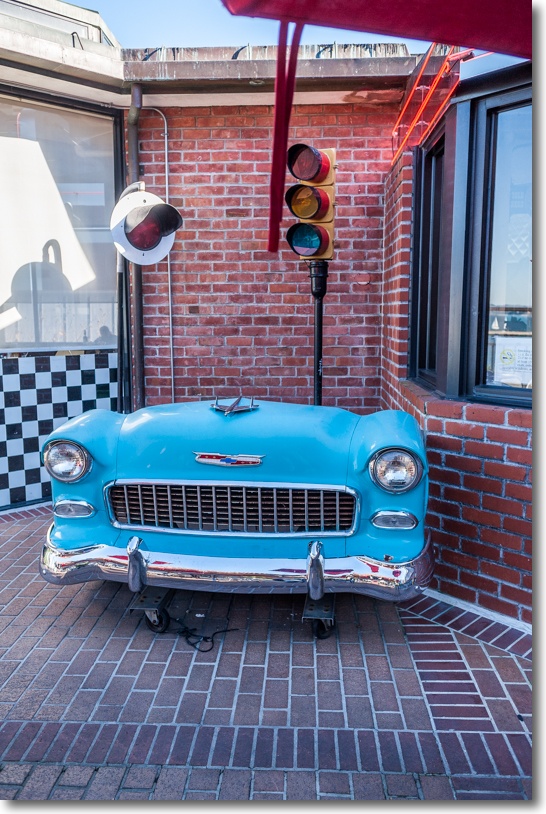
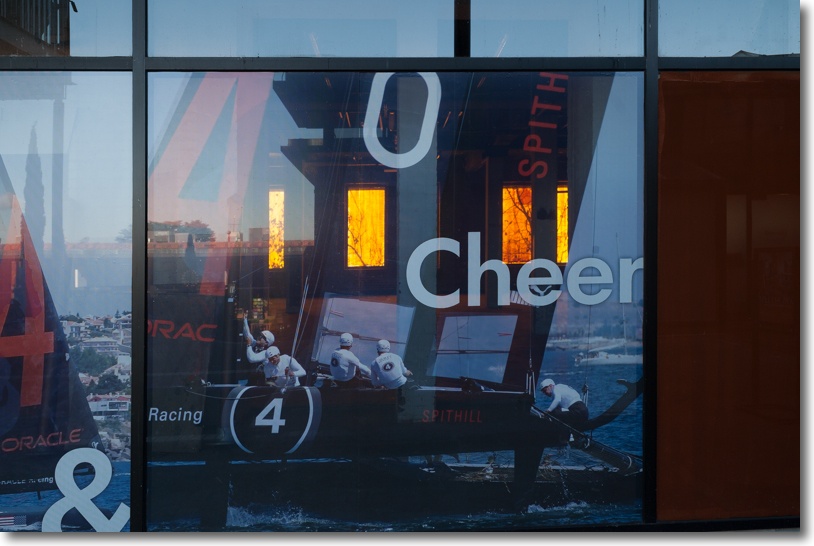
It’s fun to publish a few snaps of just how strange our world is. It seems to get more so to my eyes daily, and that makes taking pictures all the more fun. I cannot recall a time when I more enjoyed this sort of thing.


All snapped in the space of 60 minutes on a crisp, clear day in San Francisco last week. D700, 28/2 Nikkor. In all candor, except for the third, these might as well have been snapped using a throwaway camera, which suggests I have not come very far after all these years!

P.S.

I’m 61 today. Snap by my boy.

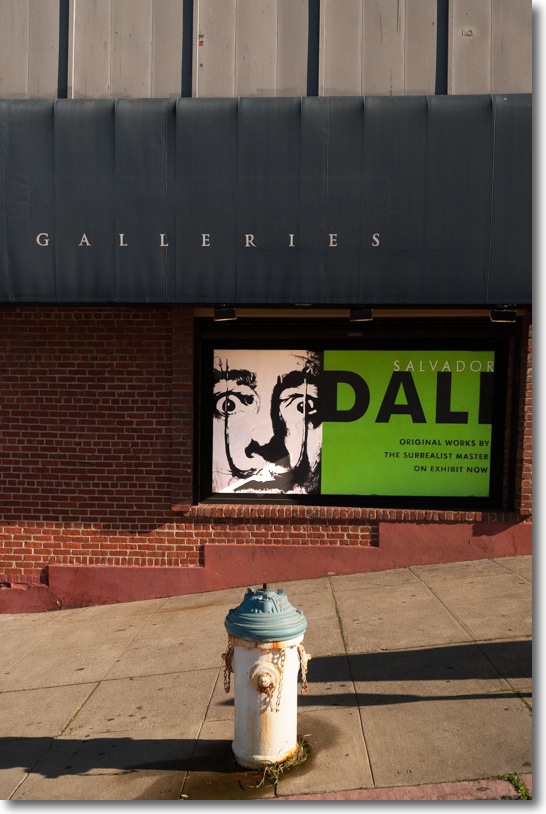
Dali

Trust me, it’s an original.


At Fishermen’s Wharf, SF.

It’s fitting that the great fake DalI should see his mostly faked works in tourist traps preying on the unsuspecting. At last count his global output must exceed some 5 million pieces. One productive chap, our Salvador.

Snapped on the D700 with the 28mm f/2 pre-Ai Nikkor at Fisherman’s Wharf, SF.

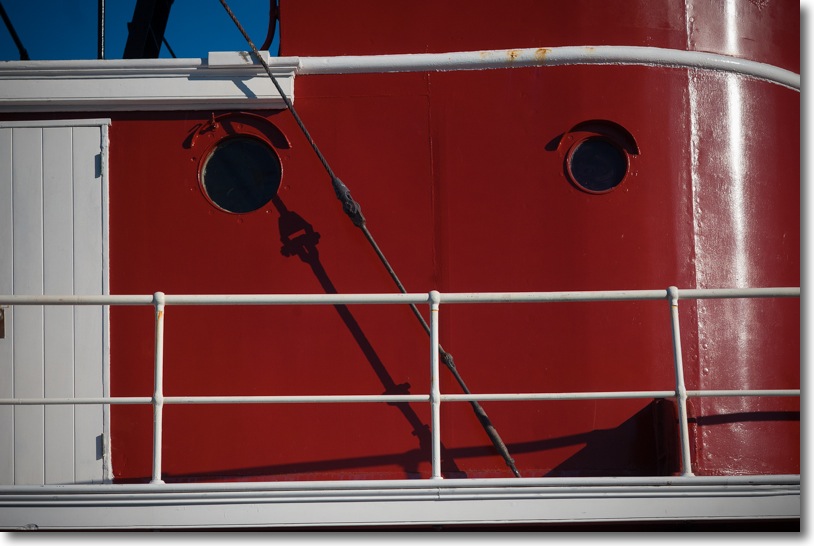
Smiling boat

Smile.


Nikon D700, 105mm f/2.5 Nikkor

A friend named this the ‘smiling boat’ and I confess I did not see the effect until she pointed it out.

At the San Francisco National Historic Maritime National Park, Fisherman’s Wharf, San Francisco. Note the Art Deco touches in the fluted extrusions of the boat.

The lens used, the old Sonnar type 105mm pre-Ai Nikkor with 5 elements in 3 groups, a masterpiece of the lensmaker’s art, truly speaks to me. Very reminsicent in rendering to the 90mm Leitz Elmarit of like vintage, and not one I will easily part with. You really should operate the aperture ring on this to understand what I am talking about, and the optics match the mechanics in quality.