Hitting the wall

Technologically unchallenged.
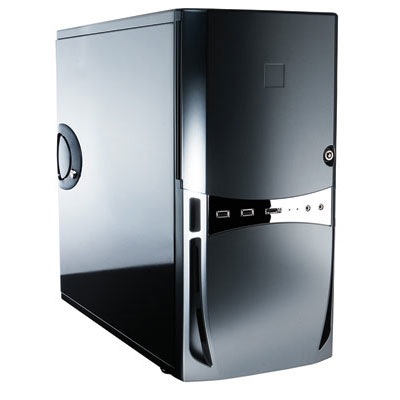

HP100+

One of the best indicators that the desktop PC has peaked is the falling sales of PC hardware and the poor upgrade rates to Windows 8, the latter as much a function of a mediocre product as it is of ‘free’ competition from the scummy people at Google in terms of their Cloud apps.

And while I have been diligent in seeking out the services of ace Hackintosh builder FU Steve in keeping my Hackintosh at 90% of the state of the art (90%, as Ferrari pricing takes over at anything higher and you get performance you cannot use) the state of play right now suggests that future enhancements will be few and far between.

Sure, while I could add a couple of silly priced EIZO monitors, which I would never do, there is nothing I can currently do to my Hackintosh, the HP100+, to improve it for my purposes, which leaves me without a tech challenge. Disappointing.

Desktops have peaked.

I could add a wild and crazy $$$$ GPU, but I do not game. I can scarcely tell the difference with the latest nVidia GTX 660 card installed on what I do, which is mostly LR and a bit of PS.

I use a SandyBridge i7 CPU and IvyBridge, the latest iteration, adds nothing in a desktop. Nor, I suspect, will Haswell in 2013 where the stated goal is lower power consumption. I’m green, but not so green that I’m about to rip out the guts of HP100+ to save a few watts in power consumption, installing a new motherboard and CPU.

I could have FU install a Xeon CPU and motherboard, at Rolls Royce prices, but the only plus of that is in massively multi-threaded math operations, and I have no need of that. LR and PS use four threads poorly, never mind sixteen.

I could ask El Supremo to add BluRay but the reason I passed on my BluRay player to a friend is that on the 42″ 720p Vizio TV (5 yrs old and it continues to delight daily) I could not tell the difference from regular DVDs, so BluRay is not something I could make use of.

The other thing which is currently useless is Thunderbolt, as so few peripherals support it. Those that do are overpriced, and I already have USB3, which is half as fast, running fine (not a pretty story, but I got there. As Churchill said of American democracy, we will try everything else before settling on the right answer, which is how FU got USB3 to work!). The only thing I use USB3 for where the speed is actually exploited, is to import images from SDHC and CF camera cards into Lightroom.

This sort of reminds me of film camera days. I was happy with my Leicas for 35 years because there was nothing else out there that was better for what I mostly do, meaning street snaps. And technology was only improving for film emulsions, not for hardware. Then digital came along and I have been chopping and changing, but seem to have stabilized on the two big Nikon DSLRs, both obsolete, and the two small Panny MFTs, the latter increasingly my son’s province. Then of course I got into converting old classic-era Nikkors with chips and that effort was super successful, the lenses are to die for and there’s nothing more I need optically. Forget believing that today’s optics are better. They are not.

Yours, technologically unchallenged ….
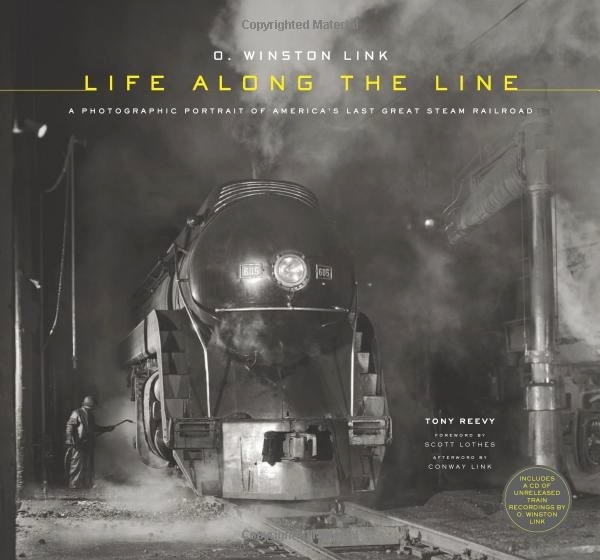
Life Along the Line

Splendid.


Click the picture for Amazon US. I do not get paid if you do that.

This book of O Winston Link’s extraordinary night steam railroad photographs improves on Steam, Steel and Stars of which I wrote over 5 years ago. The earlier tome remains available but is far costlier, for some reason, and is missing two things which makes the newer book better. The new one includes a handful of moving color pictures and a CD with recordings of steam trains made by Link himself.

This is the first I have read of his involvement in sound recording, an endeavor to which Link applied himself with the same intensity exhibited in his picture making. There’s an index to the recordings on Page 236 but zero information on the tracks once the CD is imported into iTunes. Try Track 4 to experience the immense power of a heavy steam locomotive working hard – a Class Y train moving coal trucks. Ideal background sound for any train enthusiast’s den. You can hear Link on Track 06 – he sounds remarkably like Groucho Marx! Recorded in June 1958, in the very last days of steam. The haunting, plaintive whistle of the big Y6-b can be heard on Track 07. Link’s recording technique is outstanding – for example try Track 08 where you can hear water dripping off the tunnel walls until the sound of the locomotive drowns everything out. The recordings make reference to photographs showing the trains in the locations where they were recorded.


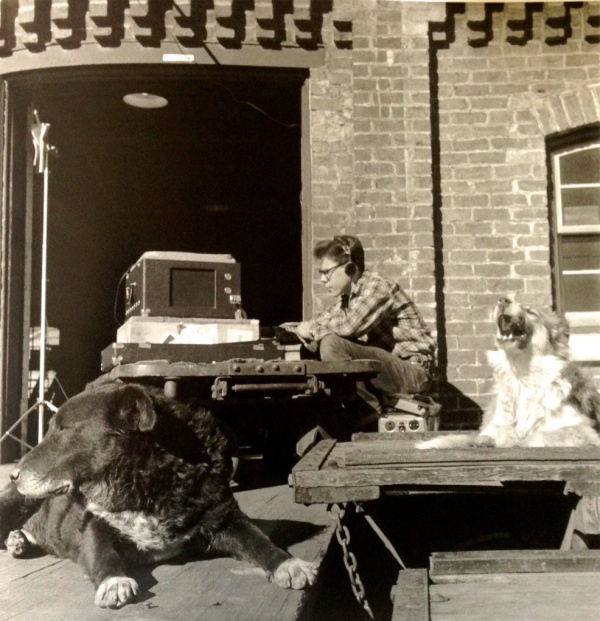
Link’s assistant operates the giant Ampex tape recorder, with two helpers.

Nothing about Link’s efforts was easy. From the large view cameras, huge tripods, hundreds of flash bulbs, miles of cable, large power supplies and gargantuan tape recorders, this was a very focused effort indeed. Next time you make a color movie, sound track and all, with your iPhone think about what Link had to go through.


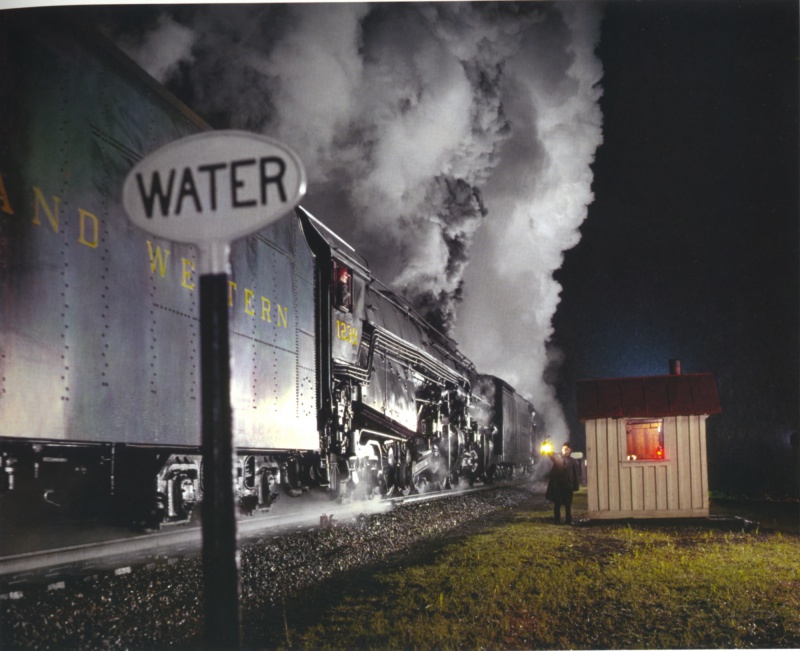
Steam at night. As evocative as it gets.

The above image is not only immensely moving, the work that went into it is well described and worth the price of the book alone.

Highly recommended. It bears repeating that you do not have to be a steam train nut to enjoy this book. All you have to like is great photography.

Germaine Krull

A photographer of great breadth.


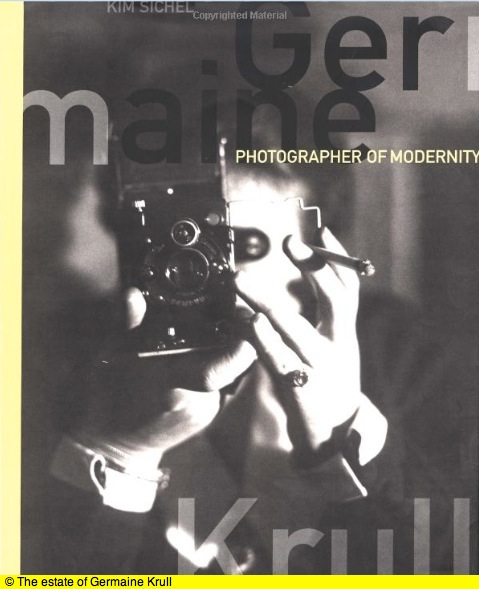
Self portrait, 1925. Click to go to Amazon US. I get no payment if you do that.

I have written before of my distaste for the term ‘Woman photographer’. How gender has anything to do with the quality of the work beats me and, were I a woman, I would feel mightily offended to be included in a show of ‘Women photographers’, for that would suggest I needed gender bias as an excuse for avoiding honest competition with my male peers.

Germaine Krull needs no such gender-specific excuse for her work, much of it in the 1920-1939 period, is as good as it gets. Looking at her images you can see that Cartier-Bresson studied them as a child because he takes over where she left off, many of his early snaps from the 1930s bearing a striking resemblance to Krull’s work. Reportage is a dominant theme, but reportage with a strong eye for composition and drama.

If you click through to the Amazon link, above, be sure to look through the ‘Look Inside’ section where a truly amazing selection of images is reproduced. If you like what you see, buy the book which comes along with a scholarly biography, as you might expect of MIT, the publisher. What MIT is doing publishing a monograph on a great photographer beats me, but we should all be grateful that their massive endowment is being put to good use. It beats export of intellectual property to China, through all those ‘guest’ students from Beijing busy scurrying off with our technologies.


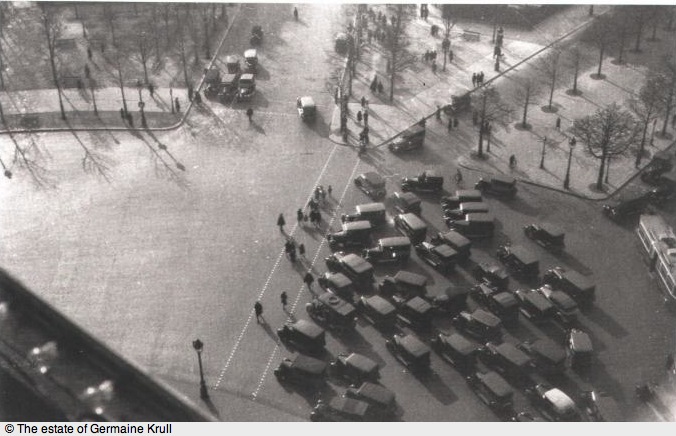
Place de l’Etoile, 1926.


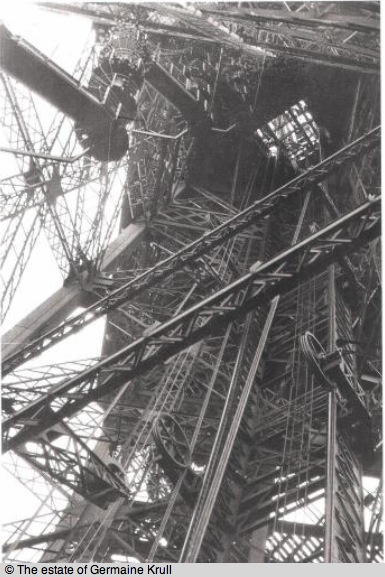
Eiffel Tower, 1926.


Cocteau, 1930.


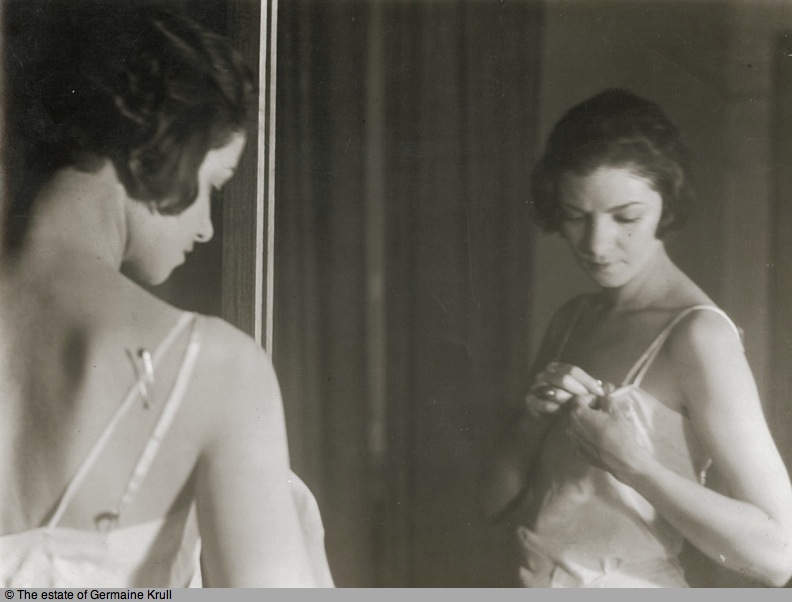
Woman in a slip, ND

Krull’s natural sensibility was that of a liberal and it shows in her work. Quite how anyone claiming to be ‘conservative’ can ever take good pictures of people mystifies me. In fact I challenge you to name one good conservative worker in the genre. What would they do – go to the mansions of plutocrats to picture them with all their possession in the manner of suck-ups like Slim Aarons?

The Krull book is expensive but Amazon lists any number of used ones for much less, which is how I bought mine.

Easy Hackintosh wi-fi

Never easier.

The ease with which full function wi-fi can be installed in a Hackintosh has never been greater or the cost lower.

What follows assumes you use an Airport Extreme (AEX) or Time Capsule (TC) wi-fi router. My AEX is a Gen 1 (2008), single band only, but Gen 4 AEX/TCs and later are dual band, meaning that they can support both 2.4GHz and 5GHz (802-11n) devices simultaneously. With the advent of iPhone 5 most of my ‘go to’ devices now support 5GHz, including Hacks, iPads and iPhones, so dual-band is not a requirement. We do have two devices in the home which are 2.4GHz capable only, the xBox 360 and the old iMac G4, and these are set to receive their broadband signal directly from the A&T Uverse router which is 2.4GHz, 802-11b. As usual, the Telephone Company is a decade behind. Everything else looks to the Airport Extreme and now uses the 5GHz band.

The Hackintosh wi-fi issue has become much simpler over time. First one used an external USB wi-fi dongle with the associated (awful) Realtek software. Then TP-Link came along with internal PCIe cards which delivered Airport capability and, later, when OS X Lion came along, AirDrop functionality after you messed with Pref files some. You would buy the TP-Link PCIe card then an aftermarket wi-fi card which was an SOB to install in the card owing to the fiddly connectors. After application of cable ties and solder for the joints you destroyed, the card worked fine.

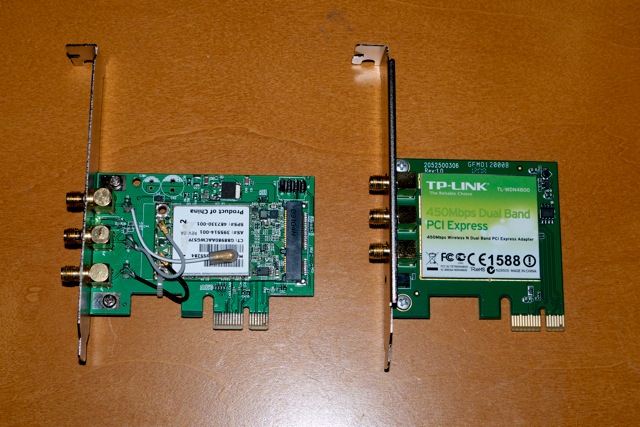
The other day I learned from the excellent Tonymacx86 Hack forum that TP-Link now makes a dual band wi-fi card which integrates the PCIe card and the wi-fi card. The model number is TL-WDN4800 and Amazon has it for $35 – which is less than the previous card + wi-fi card combination cost and is a plug-and-play installation in any Hack. B&H Photo also carries the card for a similar price. (Prices seem to fluctuate daily by a few dollars). The card comes with regular and low-profile brackets, the latter for use in Hacks built in Micro ATX cases.

Here are the old and new cards, antennas removed:

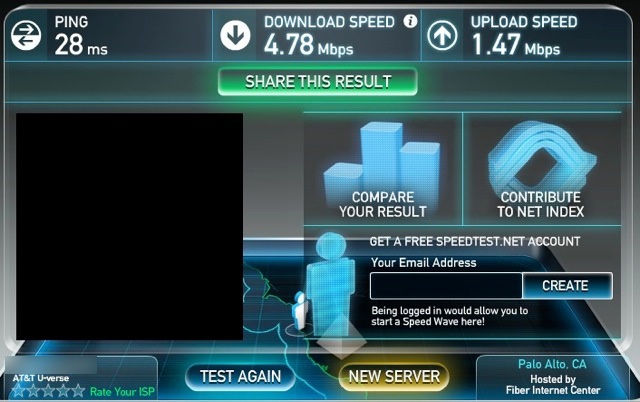
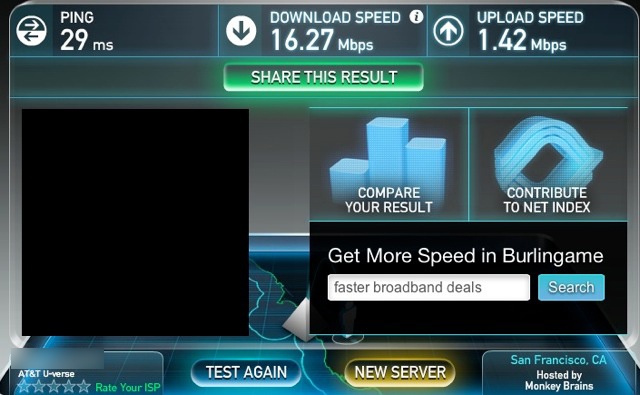
And here are the before and after results on one of my Hacks – the one with the botched old card installed, one antenna missing, replaced with the new card. A two minute job:

Clearly, having three working antennas does no harm. Comparing the speed of the new card with a properly installed old one at a like location, the new card consistently reports download speed 10% higher than the old, possibly attributable to superior antenna design.

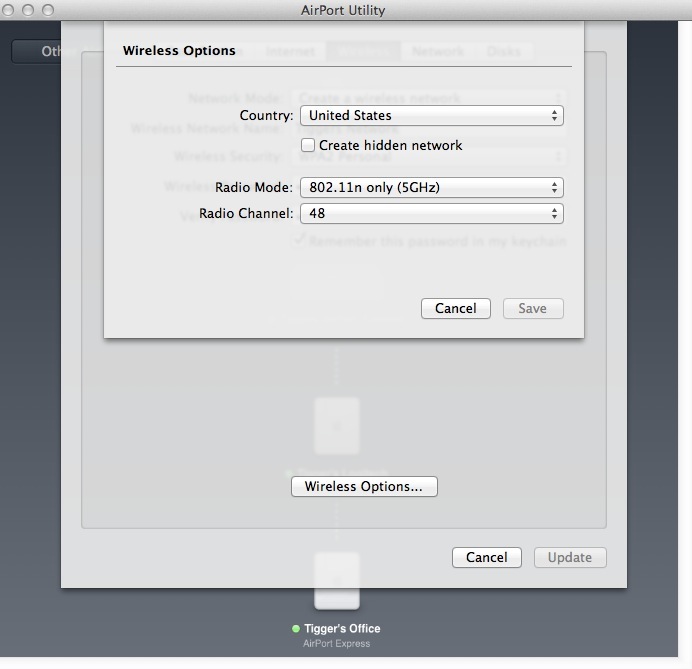
There is but one quirk. The Airport Extreme defaults to channel 149 with 5GHz wi-fi, whereas the new TP-Link card only goes up to 48. So, go into Applications->Utilities->Airport Utility->Airport Extreme->Edit->Wireless->Wireless Options and set Radio Channel to 48, then Save. Your new TP-Link card will now be visible to the Hack in which you installed it.

Setting the Channel to 48 in Airport Utility.

Gordon Parks and fashion

A surprise find.

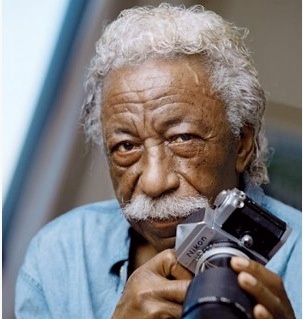
Gordon Parks (1912-2006) lived a full and productive life, doing much to raise awareness of the poor, not least during his years at FSA with the likes of Dorothea Lange, Walker Evans and Marion Post Wolcott.

What I did not know is that somehow this talented man managed to gain access to the exclusionary 1950s world of fashion photography, well described in the NY Times Lens Blog.

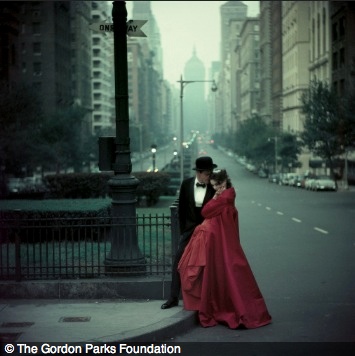
While the monochrome work is rather imitative of the style of Irving Penn, with everything super sleek and ultra defined, the color work is an absolute revelation. Parks graps the essence that sparse color is good color, as seen below. The upcoming book on his work is something to look forward to.