A cornucopia of choices.
On the camera front this year choices, with one exception, have been modestly incremental. The flapping mirror DSLR is at the end of its life, obsoleted by electronic viewfinders, and will struggle on for a few more years in the hands of a few professional users who have yet to fully amortize their capital investment. Meanwhile, EVFs move to strength in the likes of the Sony NEX-7 and, of course, in the Panasonic G3 and GH1. All that’s needed to speed the demise of the clunky, bulky DSLR is a professional grade APS-C or MFT body and maybe a few faster lenses. Responsiveness will only improve, and the G3 has shown that autofocus is now as fast or faster with modern technologies than that offered in traditional bodies.
After an interminable wait, I finally got my G3 body, and while it compromises handling in the interest of an even smaller size, the sensor is two stops better than the one in the G1, and once the improved and more compact PZ kit lens arrives – back ordered for months now – the G1 and its excellent kit lens will move on. The sensor is now so good that I need nothing better. As I can reliably make perfect 18″ x 24″ prints from the G3’s files, I have no need for more pixels. Focusing speed is outstanding and while there are a few ergonomic quibbles, the overall package is a street snapper’s dream. Those needing more sophisticated movie functions will opt for the costlier GH2 body, with a similar sensor and better handling. The G3 + kit lens at $600 make a compelling case for junking all that bulky old gear. You know, that kit you increasingly leave behind because photography is meant to be fun, not a sore shoulder and bad back. 2012 may well see a pro-grade GH3 added to the mix. The MFT lens range is already vast with something for most tastes from several makers.

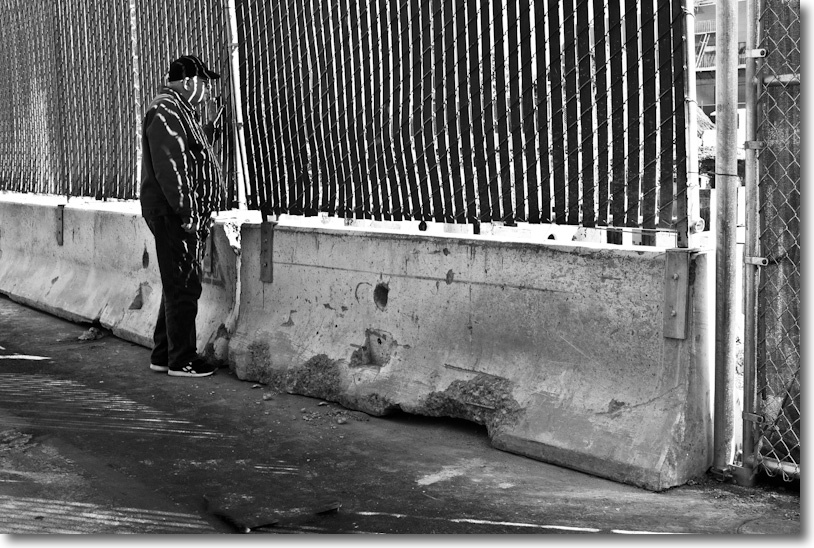
Hair replacement. Market Street, SF. G3, kit lens @16mm, 1/2500, f/5.6, ISO320.
The day when we will see a true modern version of the rangefinder Leica is now very close. Panny offers the operational speed, Sony the best EVF in the business, Fuji in its X100 and X10 has the form factor right, and lenses are getting smaller and lighter daily. With all this gear offering full automation the street snapper has never been better served.
The other incremental improvement in camera gear this year has been the addition of the splendid Sony lens to the latest iPhone, the 4S, along with much improved response times. While any cell phone is a handling disaster, owing to its form factor, the 4S really makes decent print sizes possible, and has a simple and practical UI. If only Apple would make a real camera the world would open its wallet. It’s a $20bn revenue opportunity waiting to capitalize on the sloth of Canon and Nikon, neither with any credible innovation or thinking to entice the more demanding user. I have 13″ x 19″ prints on the wall here made from the 4S and while the snaps were made in ideal lighting conditions, the very fact that a decent sized print can be made is a revelation, given how compact the camera is. And it even makes phone calls!
But by a considerable margin, my award for Hardware of the Year goes to Intel and its superb line of Sandy Bridge CPUs.
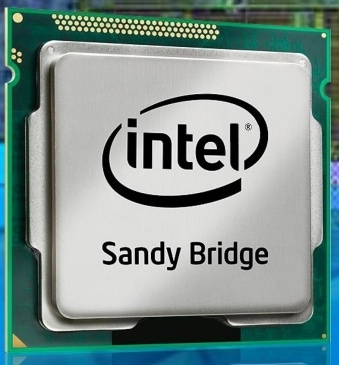
These come in many flavors at various prices, from the bottom of the line i3 2100 at $115, to the top of the line i7 2600K at $320. In 2012 the enhanced Ivy Bridge range will bring higher speeds yet still using the same socket, dictating but a BIOS update to work on your existing motherboard. All come with built in graphics, with select i3 and all i5 and i7 models including the better quality Intel Graphics 3000 GPU, so that the computer builder does not even have to use a separate graphics card. Power consumption is way down from the predecessor Core2Duo/Extreme/Quad lines, the prices continue to drop and the performance is significantly improved in all respects. For the novice computer builder, be it Windows or OS X or Linux, the only thing to fear is fear itself, with an abundance of excellent help sites on the web to speed your construction. Even hacking PC hardware to run OS X is now at the point where it’s almost trivial, and the alternatives simply do not solve. You can buy a pre-assembled piece of garbage from Dell or HP, or a piece of short-lived poorly designed but beautifully executed jewelry from Apple in the guise of an iMac, but given that any photographer today spends more time in front of a computer display than behind a camera, why not enjoy the best and build your own? Intel has never made it simpler, with their ‘K’ CPU models warranted for overclocking, so with a couple of key strokes the builder can increase CPU speed by 20-40%. Incremental cost? $zero.
I upgraded my three display HackPro stalwart from a Core2Quad to a Core i5-2500K, overclocked a modest 21%, and am enjoying response and video framing rates nothing short of astounding. Memory speed with the latest RAM sticks is twice that of the predecessor, with some 16gB running a mere $70. You can view the results by clicking Links->Videos on this site. So enthused was I by the price:performance equation, that I junked my old Intel Atom-powered stock quotes Hack and replaced it with an inexpensive i3 2100 machine, with a speedy Nvidia GT430 GPU, and two inexpensive 1920×1080 displays. Why, and the US taxpayer subsidized me for half the cost, the lot being a deductible business expense.
And finally, I replaced one of the worst pieces of hardware I have ever used, the late-2009 MacMini, with a HackMini, also using the i3 and the same GPU as a movie server and home theater PC. I have never been happier. Movies are ripped/compressed with no stress, there is a total absence of all those start up errors the Mini came with as stock, it does not overheat, and the DVD player is a real machine with an extending tray, not the terminally doomed slot-loading excrescence in the Mini. Yes, Virginia, consumers still watch DVDs, much as Apple would tell you otherwise. My gift-to-self this Christmas is a 35 DVD box of Clint Eastwood’s Warner Brothers movies, for the grand sum of $77 from Amazon. These will be ripped and stored to my server boxes in no time and watching them will come without all those offensive commercials modern DVDs include. Go ahead, make my day. And “I’m paying for this microphone, Mr. Chairman”, as a one time presidential candidate remarked. Don’t ask me to pay to watch your advertising. Finally, the Hack Mini has USB sockets and a card reader where you can actually access them – on the front – nor hidden away among the mess of cables and spider webs in the MacMini.
Reliability of these machines? All are on 7/24 and the only time I restart is when an application upgrade dictates that be done. All run OS X Lion.
Do yourself a big favor. Junk your desktop and replace it with something bespoke which you have built yourself. If you get really stuck, ask your 9 year old to do the assembly.