Machines peak as technologies die.
Canon has just announced it latest full frame pro-DSLR, the Canon EOS-1 DX, and you can read twelve pages of detail from the maker here.
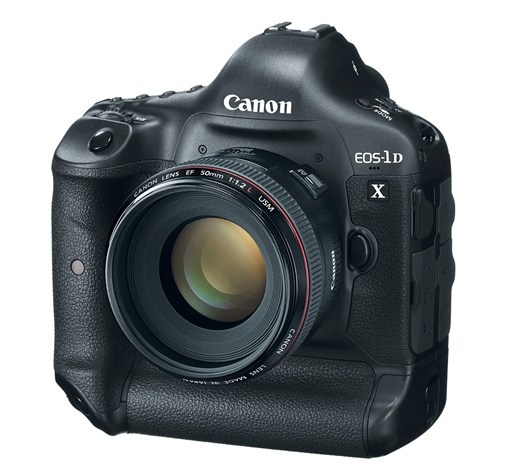
My first reaction was not one, but two flashbacks to the ends of prior eras. One was in sound reproduction, the other in film SLRs.
As the LP record peaked in the late 1970s and its makers saw the looming threat of the CD on the horizon, they tried ever harder to improve a medium which was already far better than any machine cut spiral groove in a warped piece of vinyl ever deserved to be. They added four channel sound. One version used differential wave sensing and special cartridges to get a quart out of a pint pot. It delivered about eight fluid ounces. The other, truly worthy of Rube Goldberg, used dual grooves and dual styli! Of course, the music time was halved but, hey, it was quadraphonic, man! Turntable makers adopted all sorts of wild schemes, replete with sensors, to have your cartridge and arm jump to a track of choice, using more guidance systems than an ICBM, and the extent of these technologies and the effort put into them, compared with the ‘place the needle on the LP’ predecessor had to be seen to be believed. Admirable for sheer engineering chops, yet laughable for the resulting complexity and low payback.
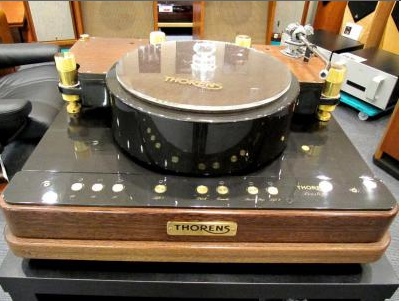
The truly loony. Thorens Electronic turntable.
The LP era has been dead since 1980 and CDs were killed a few years back by iTunes, yet there are still cranks out there preaching the mantra of better sound/clarity/depth/etc. between hits on the bong. Uh huh! Don’t ever ask them to take a double blind test with their $10k turntable and $50k tube amp, competing with their $200 iPod. First they likely will refuse. “That’s so below me”. Second, they will refuse because they are scared. And you would be too if you had just sunk a decade’s worth of the average income of a third world worker into a dumb motor which rotates a platter and some obsolete glass tubes designed when Edison’s mum was still changing his undies.
The situation with traditional flapping mirror DSLRs is similar and the Canon EOS-1 DX is a symptom of the rapid setting of the sun on that era. On the one hand, manufacturers like Nikon and Canon have largely amortized their substantial investments in the technology. Adding another CPU or two and tweaking the sensor at the margins is cheap and the lens range has been full and mature for years. Sure, you come out with a Mark II of this or that now and again, but it’s takes hype to sell that secret sauce. Face it, boys, it’s over.
Who needs these marginal improvements? Sports snappers, I suppose. Fashion mavens also. They largely work with a stationary camera with a mechanical support and they have to impress their clients. Showing up at the Vogue studios with an impatiently waiting supermodel with an iPhone for gear isn’t going to cut it. Plus, someone else is paying for the gear. Then there are the guys – and they are always guys – who buy, literally, ‘on spec’. Nothing so warms the cockles of this set as a big brochure loaded with the latest specs. What thrills!
“I need the shallow depth of field” or “I need the robustness and weather resistance” or “I need the lens range” and so on are the major reasons. All rot, of course. Shallow depth of field is easily conferred by a click or two in Photoshop and the only one who knows it has been done is the operator. They will never take pictures in the rain as they dare not risk their costly gear. And the lens range thing falls down once you try to actually carry two or three of these behemoths more than 100 yards from your car. Nope. It’s simple equipment fetishism, and it has kept many a manufacturer knee deep in profit. More power to them.
So this latest Canon is an example of the imminent demise of the big DSLR. In the film days a like demise was evident with the announcement of the Contarex Super Electronic. This camera, from Zeiss Ikon, had everything. Electronic shutter, electronic do-dads that could be added for all sorts of wild and wooly remote control schemes, film magazines (on a 35mm camera!), huge capacity motor drives and maybe as good a range of lenses as costly German labor could manually manufacture, from both Zeiss and Schneider, all at prices comparable to a big pro DSLR today with its premium lens range. And no less heavy.
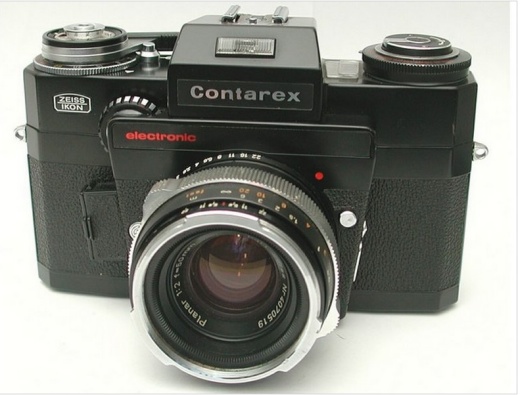
They sold a few in 1968 and promptly went bankrupt, destroyed by superior, lighter, faster, cheaper offerings from …. Nikon and Canon.
Now the latest Canon is hardly going to break the well diversified business of Canon; the new breed of cell phone cameras is a far geater threat. But I doubt it’s going to make them rich either. It’s simply too much, too late.