The world center of Art Deco.
Some capitalists – very few – try late in life to redeem themselves. Most prefer to soak the poor as is abundantly clear from data. The disparity of wealth and income, their concentration in a few hands, has never been greater in the Western Hemisphere since 1929 and its looming Great Depression. The pitchforks are being sharpened as I write. One excellent modern example of a capitalist who wreaked great havoc with awful products and monopoly power is Bill Gates. He is mightily redeeming himself through the great work he is doing in the third world with his brains and capital, bringing medicine and health care to the abandoned continent of Africa.
But the shining example of twentieth century American wealth, well used, must be the Rockefeller family. The vision of building the masterpiece that is Rockefeller Center in mid-town Manhattan is as breathtaking today as it must have been in 1930. At the height of the Depression, the family committed vast sums to making the most perfect collection of modern buildings, even if they were to remain largely unrented for the best part of a decade.
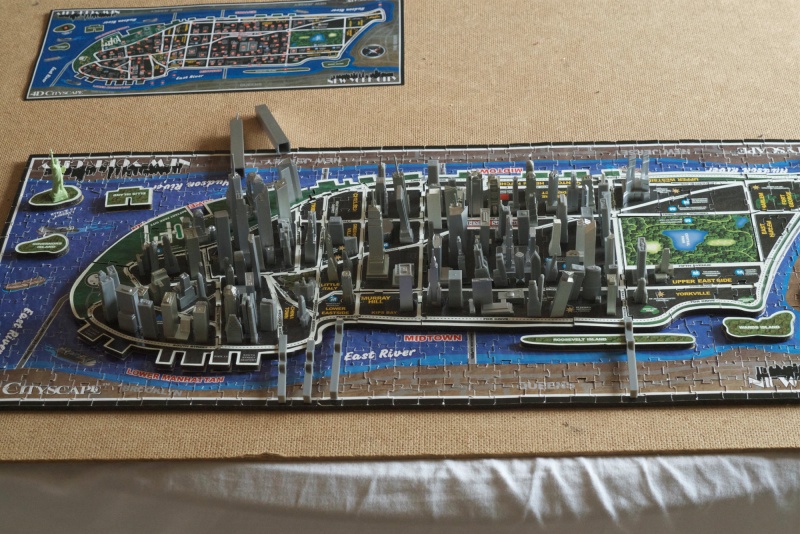
In working with our 9 year old son over the weekend on his puzzle of choice – Manhattan and its buildings – I recall the vicarious thrill and flood of memories as we inserted the RCA building, the centerpiece of Rockefeller Center, in its appointed place. More correctly known as 30 Rockefeller Plaza, I recall so many weekend visits back in the early ’80s when New York City was my home. You could still get on 30 Rock’s Observation Deck back then and were pretty much allowed to roam about at will. The art is everywhere, the quality beyond compare.
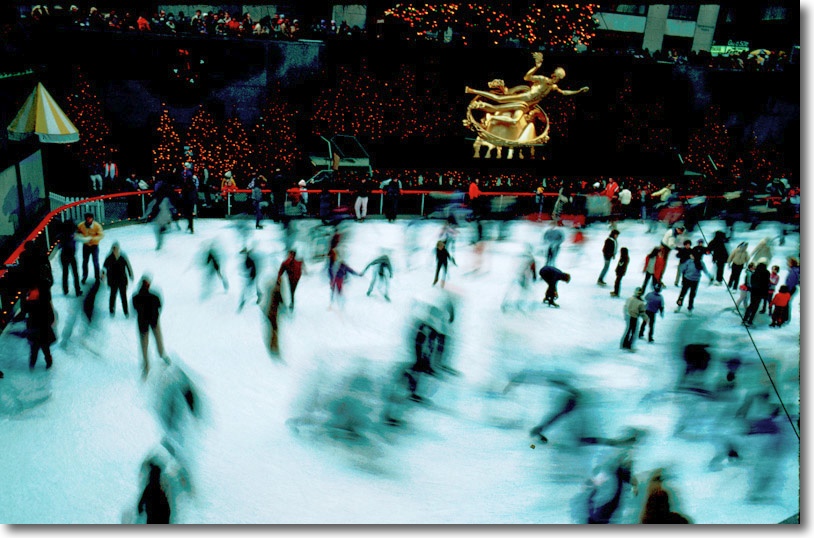
The rink at 30 Rock, Christmas 1982. Leica M3, 35mm Summaron, Kodachrome 64.
There is but a modest selection of Art Deco, or Moderne, on the west coast where I live. If you are serious, you go to Rockefeller Center, the mother lode. If you cannot make a trip, get this book instead:
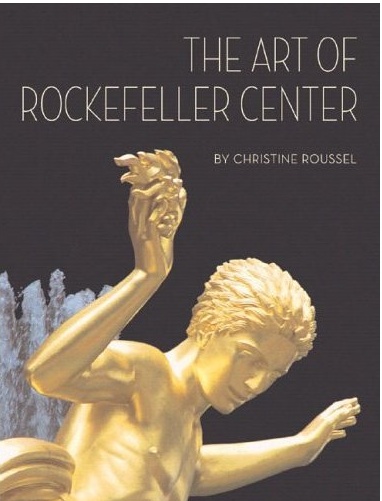
It’s beautifully illustrated and has copious details on the many artists J D Rockefeller Jr. retained to decorate the vast complex of buildings. It also relates, in fascinating detail, the drama over Marxist Diego Rivera’s stucco mural in the lobby of 30 Rock, where he insisted on including Lenin proudly marching with the oppressed masses, seemingly in defiance of their capitalist overlords. A strange concept given the number of steelworkers and artisans to which Rockefeller Center gave employment. Suffice it to say that the family couldn’t live with the idea, paid Rivera his full $21,000 fee for the half finished work, covered then destroyed it nine months later, replacing it with a supremacist creation from the right wing muralist Josep Maria Sert. Strangely, Sert’s work is maybe even more powerful than Rivera’s, the latter well illustrated in contemporary photographs. Perhaps the best aspect of the book is that it illustrates many pieces you might not normally find – for example the lovely furniture and finishes in …. the women’s toilets in Radio City Music Hall. Not something I might otherwise see! My remaindered copy ran all of $15 but there really is no excuse for missing Rockefeller Center on a trip to New York City. When I take our son a couple of years hence, it will be our first stop. The boy needs to understand what it takes to be a man.