Dick Blick

A great place for mounts and supplies.

I first made mention of Dick Blick in these pages when writing about how I mount and frame large prints.

My Fletcher FlexiMaster Framing Tool came from Dick Blick Art Materials making trivial a job which would otherwise be too horrid to contemplate.

The other day I wanted to order some 4B (super soft) graphite leads for my son’s pencil, which he uses for schoolwork. My interest in writing instruments is not new to this journal; I wrote of that great ball pen classic the Bic Cristal earlier and my accidental over order has me set for life! When it comes to pencils, the best pencils come from Germany – just like the best cameras used to. Forget your Genine Murrican Dixon Ticonderoga with its wretched soft wood construction, lack of heft and a graphite lead waiting to snap at the merest provocation. Real pencils say ‘Staedtler’ on the body and while I was an aficionado of their splendid wooden ones when younger, time marches on. So when our son needed a really good pencil for homework it had to be a Staedtler, one of the retractable ones. The ergonomics are superb, the design appealing to the eye and the range of hardness in graphites large – everything from 4H (so hard you wonder who needs this) to 4B, the latter a pleasure to write or draw with and easily erased when errors crop up.

Now, elegant as they are, I cannot abide those super fine 0.2mm/0.5mm/0.7mm offerings from Staedtler or the Japanese. Those are for limp wristed pansies. A Real Man (my son) writes fast and presses hard. Those sub-millimeter graphites do not cut it. Period. And forget built-in erasers which always run out when you need them. Carry a big one.

The Staedtler Technico Lead Holder.

Indeed, the criteria for nomination to the exalted level of ‘Classic’ set forth in that earlier piece on the Bic ball pen apply equally here:

  • It has to have class. I can’t define that but I know it when I see it.
  • It must be superbly functional.
  • Its use must be second nature.
  • It must have magic. Yes, that sense of fitness for purpose you get when you pick it up, use it.
  • It must be made well enough to survive the ravages of time and use.
  • It must be reliable.

So you can add the Staedtler Lumograph to a short list where others of the like of the Porsche 911, the Leica M2, the Rollei 3.5F, a Patek Philippe Golden Ellipse, an iPad and the Border Terrier make their home. Most have a definite attitude, but only the last comes with a wet, cold nose.

The Staedtler Technico Lead Holder runs all of $5 and holds a real lead – 2mm in diameter. You are not going to break that. The retraction mechanism is easy, simple and fun and the removable cap includes a point sharpener. Perfection. Ideal for signing your limited run prints with chi-chi ‘1 out of 100’ nonsense (because you will never sell that many). And while you can find these in many local art stores, good luck finding 4B leads. So I dialed up DickBlick.com on the web and ordered the boy some 4B and 2B inserts. Except, being the doofus that I am, I ordered 4H and 2H, realizing my error only after I hit ‘Pay’.

This is where it gets good, and this is where you will want to give your business to Dick Blick. I called them with the usual dread of interminable phone trees and someone who speaks English on a par with the guy behind the counter at the local 711. Well, blow me down. A lady with a genuine American voice speaking perfect English (errr, American) answered on the first ring. No punch this for English, that for Spanish and kick your cat for Swahili. I pleaded stupidity, she changed the order like that, and my boy is now rejoicing in 4B leads in the best mechanical pencil on earth, and has no excuse for a less than perfect point. The two I bought him will likely last through graduation, and he’s in Fourth Grade!

There’s more to it than that. Blick’s paper catalog may only show a fraction of what is available on their web site, but it includes a cornucopia of supplies for mounting and framing photographs. Frames, mats, mounts in any shape, material, finish and color you desire. And tools galore, from the point setting tool I mentioned above to mat cutters, tools and jigs for making your own frames, and so on.

While I have long been a customer of Documounts for my mounting and framing supplies, Dick Blick is going to get my next order. All because of my silly mistake.

More on keywords

Do it now, save time later.

I wrote about the need for key wording back when Lightroom 2 was the current thing here.

Since then I have been eating my own cooking and after several ‘catch-up’ sessions now make it a practice to keyword all new snaps placed in the LR3 catalog immediately. You are not restricted to one keyword per snap and can mix and match in any way that works for you. Exciting it is not, but apply this discipline routinely and you will find that the ease of picture retrieval with a burgeoning catalog is greatly simplified.

My overall approach tends to be to break down catalog directories by genre – Cityscapes, Landscapes, etc. – with sub-directories dedicated to locations. So Cityscapes->New York, Cityscapes->Los Angeles and so on. The keywords added tend to be snap specific, such as humor, mural, street sign, etc.

I still occasionally struggle when trying to find a favorite picture but it’s getting better all the time as I make a practice of adding keywords in spare moment from time to time. And bear in mind that the target is not stationary here. Especially with digital capture, catalogs tend to grow faster than in the days of film, so constant enhancement of key wording helps you stay ahead of a steepening curve.

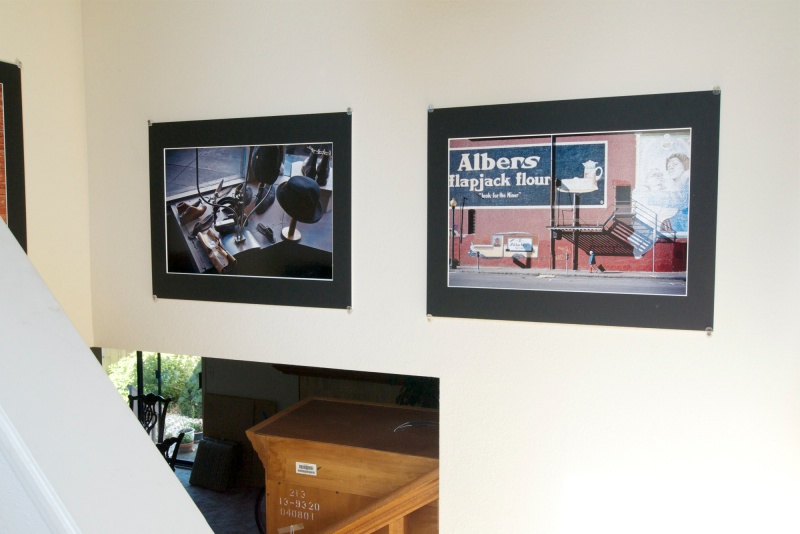
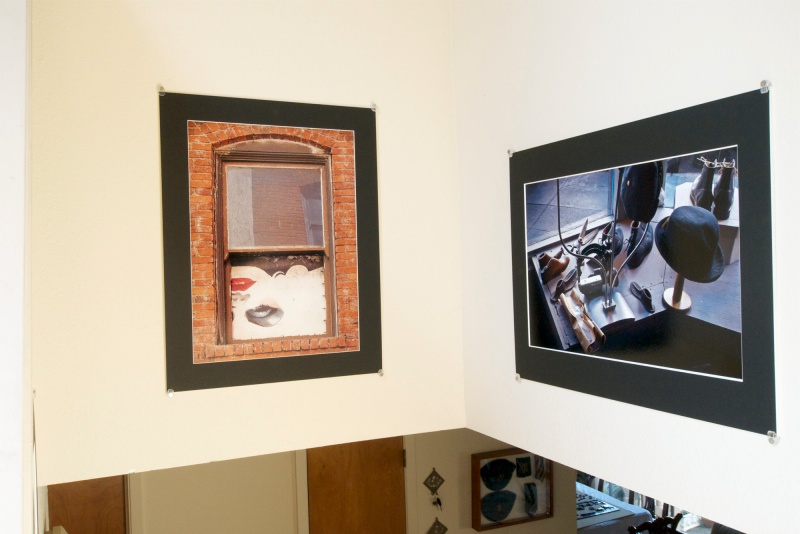
It does work. The other day a friend remarked how many store front pictures I had shared with her over the years from diverse locations. Some of these are filed under ‘Abstract’, some under ‘Cityscapes’, etc., but all share the keyword ‘shop front’. She asked whether I could assemble a collection for my semi-static web site, and all I had to do was pull up all the snaps with the ‘store front’ keyword and select the two dozen best, which you can see by clicking the image below.

Click the picture to see more.

If you want to determine which pictures in the LR3 catalog have no keywords whatsoever, read this.

Murals

Off the wall.

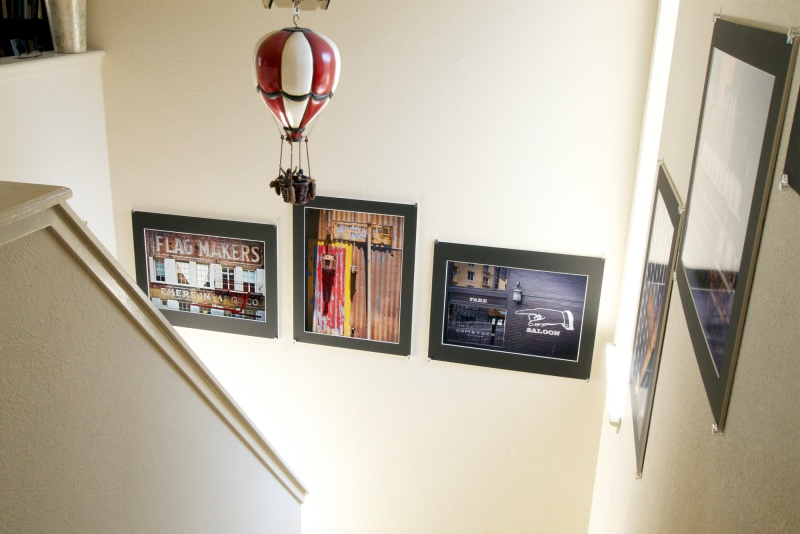
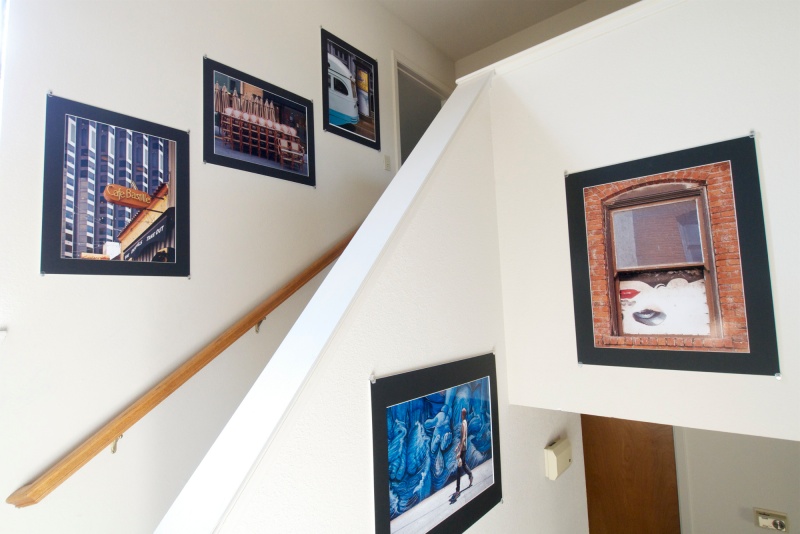
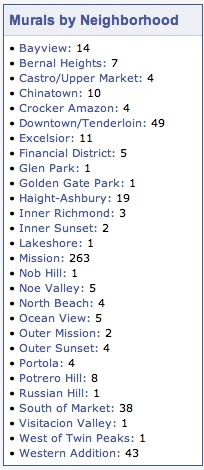
As long as I can remember I have had a fascination with murals. In addition to presenting a visual history of a time and place they fade gracefully and can add a particular sense of poignancy to a location.

Click the picture below and you will be redirected to my photo site with a selection of two dozen favorites from recent years.

Click to view.

These were taken on a wide variety of gear – from the Panasonic G1 at the high-tech end of the scale to a Crown Graphic 4″ x 5″ at the no-tech end.

Once Upon a Time in the West

A Western masterpiece.

It took an Italian to make the greatest Western movie of all time. When Sergio Leone came to make Once Upon a Time in the West (1968) he already had three of the finest Westerns under his belt – The Man with No Name trilogy with Clint Eastwood. But for this, his final effort in the genre, he set out to surpass himself. He did so, in spades.

Forget Shane, forget The Searchers, forget High Noon, forget The Man Who Shot Liberty Valance, forget The Long Riders.

Once Upon a Time in the West is in a class of One.

What makes this masterpiece so special? A great director, of course, who has an innate grasp of what the railroad meant to America’s growth in the nineteenth century and an organic sense of the great expanses of the west. A script which is direct, simple and easy to follow. The finest actors – you cannot make a great movie with pikers. Charles Bronson, Henry Fonda, Claudia Cardinale and Jason Robards. You can’t improve on that. Superb cinematography by Tonino Delli Colli. But the glue that holds the whole project together and escalates it to greatness is Ennio Morricone’s extraordinary score, in turns lush, comical, poignant, tragic and triumphal.

At almost three hours in length this is not a movie for modern attention spans. Nor is it one for poky screens. With a 100″ screen you begin to understand what Leone demands – that you must be totally immersed in the picture, at one with the landscape of Monument Valley and the West. But you really need to see this in a revival house on something 250″ or more in glorious widescreen, which fits the infinite vistas of the west just so. And if you have never been through Monument Valley in Utah and Arizona, you must go. Your appreciation of the vastness of the west will redound to your enjoyment of the movie.

Not only is the whole an immersive, captivating experience, there are individual pieces of magic which, even out of context, are memorable like in no other Western. The opening 14 minute sequence, with barely a word spoken, culminates in an explosive shoot out. Yet during those fourteen minutes you are treated to an orgy of sound – wind, creaking floorboards, rusty signs swaying, the ticker tape machine, the fabulous sequence of Jack Elam with the fly – it’s all there. And it is magic.

Here are some favorite vignettes:

Jack Elam, awaiting Bronson’s train.

Al Mulock in an extraordinary ultra wide close-up, awaits Bronson’s train.

A sadistic Henry Fonda about to kill the McBain child in cold blood.

This was Fonda’s only bad guy rôle, and his greatest by far. The mix of sadism and delight in what he is about to do in the original is palpable and chilling.

When Cardinale’s character arrives in Flagstone, the railroad town in Monument Valley, there follows what is simply the greatest soaring pan shot in cinema history. Not even Hitchcock comes close to anything like this and only Kubrick’s opening Steadicam work in ‘The Shining’ even compares.

She enters the station house:

The camera then rises in the air and soars over the building , showing her exiting the other side:

Morricone’s music soars with the camera and there, in one 10 second sequence, you have a perfect encapsulation of what America’s nineteenth century growth was all about. The effect simply cannot be conveyed in a static web page.

Jason Robards’s lovable bandit rogue provides comic relief, suitably aided by Morricone’s score.

There are many stunning still photographs, like this one of Claudia Cardinale.

Perhaps the most memorable still is of Cardinale lying on her bed after attending her husband’s funeral. The shot, from above, views her through a black veil.

One of the most effective techniques used by Leone is the super close-up of the many craggy faces in the movie, never more effectively than with Bronson’s. On a huge screen this is quite overwhelming.

Bronson at the final shootout with Fonda.

An orgy of pictures, sound, emotions, the triumph of right over wrong, this is any photographer’s ultimate movie.

Update February 28, 2016:

Ennio Morricone just won the Oscar for the best film score for his music to Quentin Tarantino’s ‘Hateful Eight’ at the age of 87. The oldest ever recipient of an Oscar. He should have received it 48 years earlier for ‘Once Upon a Time in the West’. Or for ‘The Good, the Bad and the Ugly’ in 1966. Or for ‘The Mission’ in 1986. Or for ‘Bugsy’ in 1991. Or …. heck, this will do fine. Just delighted for him.

Update July 5, 2020:

Ennio passed away.