Fuji, what IS your problem?

Electric cattle prod wanted.

So Fuji finally posts some sample images from the X100 on its site and, boy, are they real stinkers or what?

Not only is the quality of the photography simply execrable (flowers? FLOWERS?), they look like poorly exposed and processed low quality JPGs. Click the picture below to go to their site:

Click picture for Fuji’s site with originals.

The images include one of a US Mailbox at f/2, with so inappropriate a background that all the burned out highlights make the lens OOF rendition look very poor. They couldn’t even be bothered to get the orientation of the downloaded image correct! Another, the snap of the tree in snow through a barn door, could hardly be exposed or processed more poorly. It looks like something from the days when you used a printing paper two grades too soft with an overexposed original which had burned out whatever goodness ever existed in the highlights.

I mean, gimme a break here. You spend major money developing a camera that every serious photographer cannot wait to get his hands on. You generate major pre-release buzz. You finally provide what looks like a real viewfinder in a digital camera which actually sports analog dials for us analog humans. How much would it take to give away half a dozen of the bloody things to crack photographers at Vogue/Harpers’/National Geographic and have them provide you with a few images, gratis, free and for nothing, that actually do your creation justice? Doesn’t it read ‘The Professional’s Choice’ in the masthead? Instead, Fuji, you have Messrs. Ito and Nakamura or whoever, snappers who have yet to learn the difference between exposure and dropping their underwear in public, make your sample photographs for display to the whole world? Is this the first impression you seek to make?

Let’s hope Fuji’s photographic talent and processing technique are inversely proportional to the quality of the images its new camera is capable of producing.

Now pretty much confirmed at $1,200, with March delivery in the US. I am on the pre-order list at Amazon but, goodness, am I tempted to hit the ‘Delete’ key or what? $1,200 is not chump change, even if it does leave $8,800 change from an M9 with a 35mm Summicron.

BikeCam

The best street snapper tool.

Ask a photographer what’s in his kit bag, the gadget he simply cannot live without, and you will be regaled with tales of exotic lenses, funky folding tripods, strange exposure measurement devices, bunches of filters and so on. Not a one of them materially improves photo opportunities for the street snapper. No, the best tool for the street snapper does not reside in his gadget bag. Among the attributes of this tool are:

  • It’s as fast as you like
  • It increases your range by a factor of four
  • It expands your area of coverage sixteen times
  • You can take it anywhere, and ….
  • …. choose it right and there’s little fear of material loss.

That tool, of course, is the bicycle.

First, let’s have a reality check. I have friends with more money than sense who think nothing of blowing thousands of dollars (thousands!) on a push bike. Carbon fiber this, titanium that, forged by Italian artisans and cooled in Alpine goat cheese, these high tech toys are masterpieces of the engineer’s art. The Leica M9 of the cycling world and about as likely to help you win the Tour de France as the M9’s owner is to take a good picture. For our purposes, snapping street pictures, they are not only useless (the bike and the M9), the chances are that you will be walking home once your Rolls Royce on two wheels is pinched and recycled quicker than you can say “Duh!”. $5k for a bike and $10k for the M9 is not my idea of a relaxed outing.

So the criteria for BikeCam are simple:

  • It must be throwaway cheap. If you are going to worry about theft when you park it it’s the wrong bike.
  • It must be bought well used and preferably with some rust, dents and wear and tear showing. See above bullet.
  • It should have a comfortable, broad saddle that you sit on rather than one which has you questioning your gender every time you mount up. BikeCam is for riding, not posing.
  • When you track down your used steed, immediately change the ridiculous knobbly, off road tires for cheap, smooth road tires. The knobblies are like urban SUVs – poor ride, noisy, redundant and unstable.
  • It helps to swap the brake pads for the softest kind there is, to obviate squealing. BikeCam is stealthy. Toe in the pads so that their leading edges are slightly closer to the rim than the trailing ones to further cut noise. Do it the other way and you will get squealing and juddering.
  • Forget about choosing between alloy and steel frames. At this price level you get what’s available on CraigsList or at the local Goodwill store.
  • Get the cheapest, most colorful lock cable that you can find. Mine cost $9. Don’t fool yourself that your cable will confer any significant security whether it costs $9 or $90. The determined thief will steal your fancy bike (cable cutters take all of five seconds to deploy and operate) and, given two bikes, the Italian $10k masterpiece with the fancy lock and your $50 street fighter with rust and dents, which do you think he will choose? We are talking deterrence, not security, here.
  • If the wheels don’t run true when you test it – evidenced by oscillating pressure feedback when you work the brakes – thank your lucky stars. Do as I did on my last BikeCam purchase, use this to knock the price down another $20 and apply some of the savings to a $5 spoke wrench. Look up the web and spend 10 minutes per wheel getting them to run true. Nothing could be simpler and your brakes will work better than 90% of all other riders’.
  • Avoid bikes with sprung front or rear suspension. Poor physics, these increase pedal effort and are just one more thing to go wrong.
  • Gears are your choice but if you get a geared bike make sure the gears say ‘Shimano’ on them. That’s the Toyota of bike gears, meaning they start in the morning.
  • Do your own tune up. You’re going to pay some drop out with tattoos and a drug habit to oil the chain for $150?
  • Whatever you do, never buy a new bike from WalMart. You will be returning it in a week.

The author has two steeds which respect these buying criteria.

BikeCam1 came from a bike rental shop which was replacing last year’s models – a great place to shop, for not only will the bikes come with all the scratches and bruises you need, they will also have been regularly maintained and are ready to ride. BikeCam1 sports a heavy steel frame, nice Shimano twist grip shifters, came with a comfy saddle and no one is going to steal it. Add to its cosmetically challenged woes that it comes from an era when it was fashionable to paint frames with matt finish instead of gloss enamel, and you can be sure that no self respecting thief will go within a million miles of the thing. All in cost $40, this mountain bike is a steel frame Giant made in Korea and I have put hundreds of happy miles on it with no problems.

When it comes to BikeCam2, I went completely over the top with my spending. It’s a light-as-a-feather alloy frame Raleigh (yes, the British Raleigh from Beijing), came with wheels so out of true that the brakes barely worked and included one of those Blitzkrieg front lights which the Luftwaffe would have killed for back in 1940 when they were trying to hit something in London at night. Appropriately enough the seller was a German exchange student at Stanford. The light alone is worth more than I paid for the bike, a princely sum of $50 after the obligatory $20 discount for the wobbly wheels, the latter gorgeous Weinemann German alloys, like on my old BMW motorbike with its spoked wheels. A few minutes with a spoke wrench had them running so true that I challenge you to measure more than 2 thou runout at the rim – which is less than the misalignment of the glass screen to alloy frame on my iPad. I left the corrosion in place to make sure that no one would look twice at my steed. This one came with a very tall 22″ frame, making it even less pinchable (thieves generally seem to market to the short and fat, or so I tell myself) and when I replaced the silly off road tires with a couple of Korean Kendas from Amazon my all-in investment, including a $9 cable from Walgreens, blew the roof off at $110, meaning about the price of three useless filters in your gadget bag.

BikeCam1 and BikeCam2 can frequently be found on any one of a number of municipal transit systems which look favorably on bike toting passengers and rather than going on any more about it, how about some snaps facilitated by these wonderful photographic tools which so greatly expand scope and opportunity for any street snapper?

The author on BikeCam2.

A little harder and I think we can move these.

Not quite the gear for street snaps.

How not to see a city.

White. Trash.

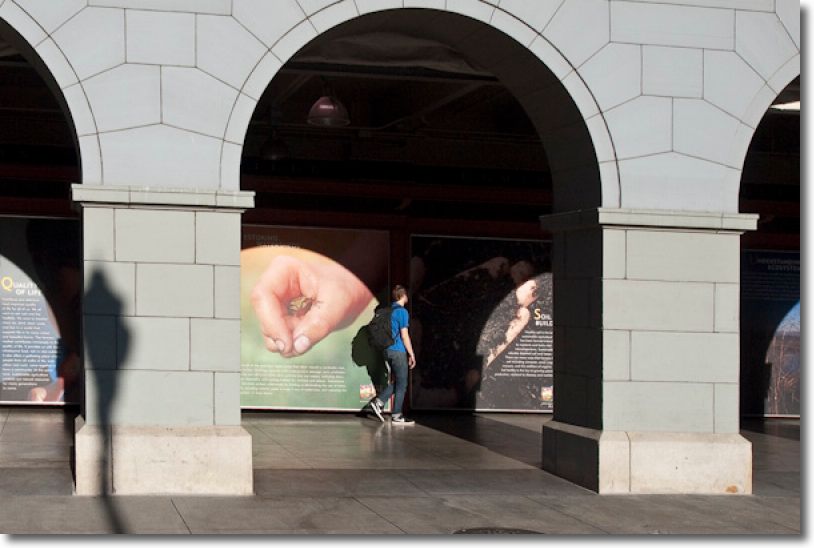
Shadows.

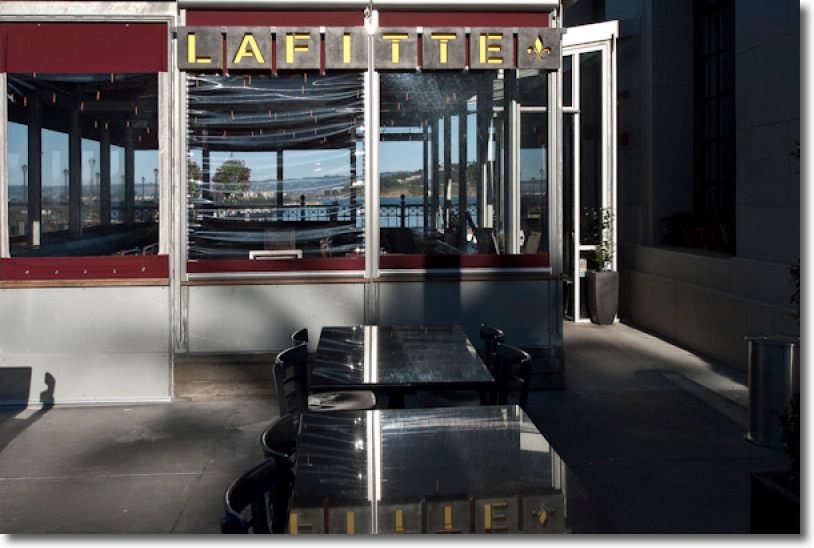
Lafitte.

The pinch.

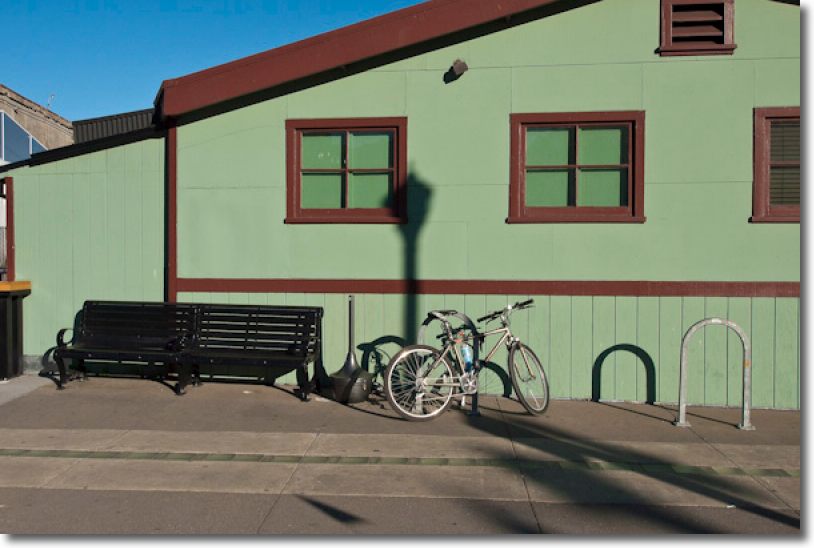
The bike.

All snaps made from the saddle of BikeCam2 on a Panasonic G1 with the kit and 9-18mm Olympus zoom lenses, at ISO320.

No kit bag required. Got bike?

Luna-Tik

A great gadget from Kickstarter.

I mentioned earlier that I had subscribed to one of the first Kickstarter projects, a machined watch band/holder for a sixth generation iPod Nano, turning the iPod into a neat watch. Kickstarter raises small amounts of capital from interested investors using the web and puts the monies to use in building entrepreneurs’ projects once sufficient funds are raised.

I subscribed to the Luna-Tik watch band project for kicks, and because I had a sixth generation iPod nano lying around largely unused; my iTunes mostly reside on an iPhone when portability is required so the iPod, a gift, remained unused.

A later Kickstarter project I also subscribed to is raising money to publicize the works of a newly discovered 1950s street photographer, Vivian Maier, and I think we can expect many more like this. It’s an effective fund raising mechanism as it can reach large potential audiences of prospects at low cost and make books etc. of the works of photographers affordable, where the cost of a speculative print run would be high and the outcome too speculative. Cartier-Bresson can sell advance print runs. You and I cannot.

The Luna-Tik just arrived and a few words on its form and function follow.

The iPod Nano is an awful device for photo display owing to its diminutive screen size but is just right as a modern, large, macho watch. The two piece alloy case is beautifully machined and the soft rubber wrist strap has a large range of adjustability, meaning anything from our 8 year old to generic American-obese fits. Four recessed Allen head screws hold a hidden inside threaded post and as the latter is not captive – meaning it rotates freely – two Allen wrenches are provided to allow the screws to tighten the casing around the Nano, one wrench acting as a counterhold. A captive inner post would have been a better idea, making assembly easier and requiring but one Allen wrench, but this is a minor criticism. The whole thing took our 8 year old five minutes to figure out and assemble.
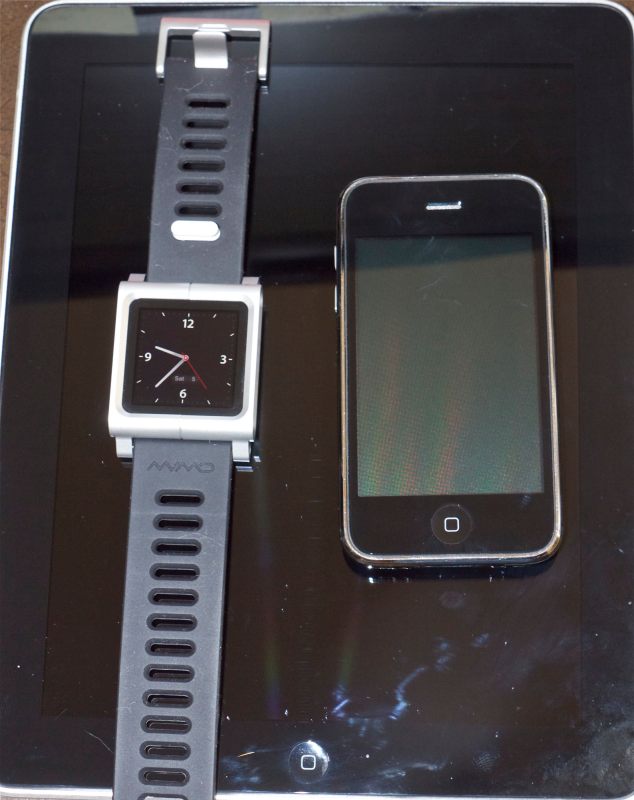
The Luna-Tik and the iPod. The clock face can be changed to a white background in ‘Settings’.
Note the movable strap retainer just above the watch face, set for maximum strap excess for small wrists!

Fit and finish is 1950s Leica quality, meaning beautiful machining and finish, with no sharp edges. The seam is about 5/1000th inch misaligned on mine and you can actually see that in the photo above; there is insufficient play to get perfect alignment before snugging up the Allen screws. A bevelled edge at the seam would have done a better job of hiding the inevitable Chinese mass production imperfection, as well as making the bevel a design feature, much as a bevel is used in the iPad’s frame. My iPad’s alloy frame, for reference, displays a variation in the relative positioning of the glass touch screen of 3/1000th inch around its periphery. For both the Luna-Tik and iPad that’s still a lot better than the fit and finish of all but the best Leicas, the engineering quality standard – meaning M2, M3 and M4 models made 1954-1965, after which quality control went to pot and prices went ballistic. (Earlier screw mount bodies were positively awful by comparison as the many I owned attest).

The generous length rubber wrist strap on the Luna-Tik comes with a movable retainer so that excess strap length can be clipped in position just so. Way superior to the usual loop retainer. Both the iPod’s volume buttons and power switch on one side and the recharging/data port and earbud socket on the other are easily accessible and the whole thing, once assembled, oozes quality and contemporary looks. The ‘watch’ is large, immediately qualifying the wearer as a Formula One groupie.

Future Formula One Champion Winston models the Luna-Tik, while racing on the iPad.
The white watch face is on display here. Strap retainer function is just visible.

Congratulations to the inventors at Minimal, Inc, for a great product. If you want one you had better rush as the iPod Nano sixth generation will be replaced soon by this year’s design. There may be cheaper alternatives to the Luna-Tik but I doubt there are any which are better made. There’s a neat informational video here.

This model of iPod was conceived with watch use in mind as it can be set to come up with the analog watch face when powered up. Handy. The inventor is contemplating adding a Bluetooth earphone option which will make for a neat wireless mobile music system.

Disclosure: I own one Luna-Tik, have no interest in Minimal, Inc. and love entrepreneurs.

Claes Oldenburg

Getting tired.

I recall the first time I saw one of Claes Oldenburg’s public sculptures. Union Square, NYC, 1981. It was a toothbrush some seven stories tall. Or maybe it was a corn-on-the-cob. I forget. After a while these giant daily objects all meld into one. Rarely has the old dictum “When you have seen one you have seen them all” been more true.

The best that can be said for these huge ‘sculptures’ – a denigration of the noun – is that they can provide opportunities for amusing pictures but if my apartment faced one I would likely turn to a life of crime, procure some high explosive and rig the thing in the middle of the night.

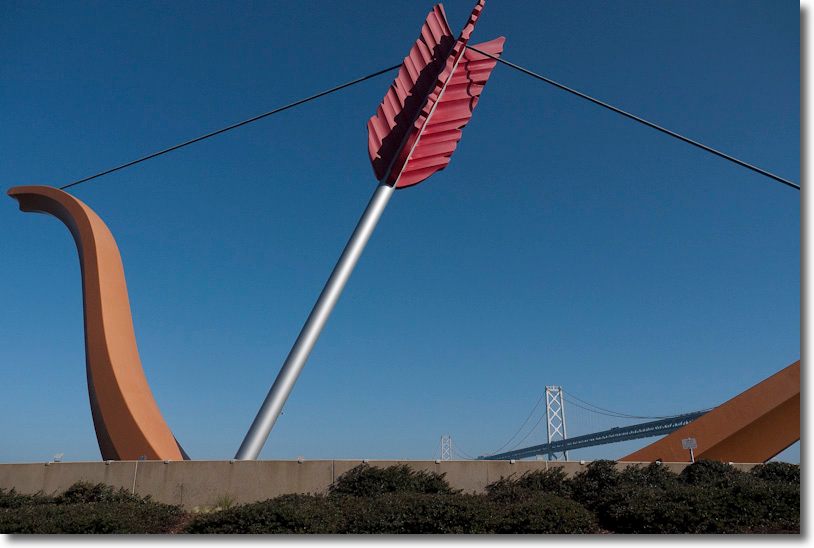
Sometimes they are placed well away from homes, like the Cupid Bow and Arrow on San Francisco’s Embarcadero. It’s mildly amusing in a gauche sort of way, sufficiently isolated to prevent it from becoming an eyesore and, after a while, I imagine one walks past it without noticing. Wit, whimsy and lightness are strangers to the Oldenburg school of public works.

Cupid’s Bow and the Oakland Bay Bridge, Embarcadero, SF. G1, kit lens @ 14mm, 1/4000, f/6.3, ISO320.

Oldenburg’s works are now to be found in every big American city, the municipal planners proving yet again that one of the key dictates of government employment is a total lack of original thinking and a wild disregard for the wise use of taxpayers’ money.

But the other day I did come across a neat piece which had everything Oldenburg’s lugubrious works lack. Humor, lightness and smart placement. And not a taxpayer cent involved. This pair of martini olives shaped into a heart with a swizzle stick denoting Cupid’s arrow, can be found in the forecourt of a restaurant not a thousand yards south of Oldenburg’s charmless bow and arrow. And it really works well.

Martini olive heart. G1, kit zoom @ 23mm, 1/1250, f/4.7, ISO320.

MoMo’s restaurant is located at Second and Townsend Streets in San Francisco and I wouldn’t go there to order girlie drinks, if I were you.

Green

A sort of theme.

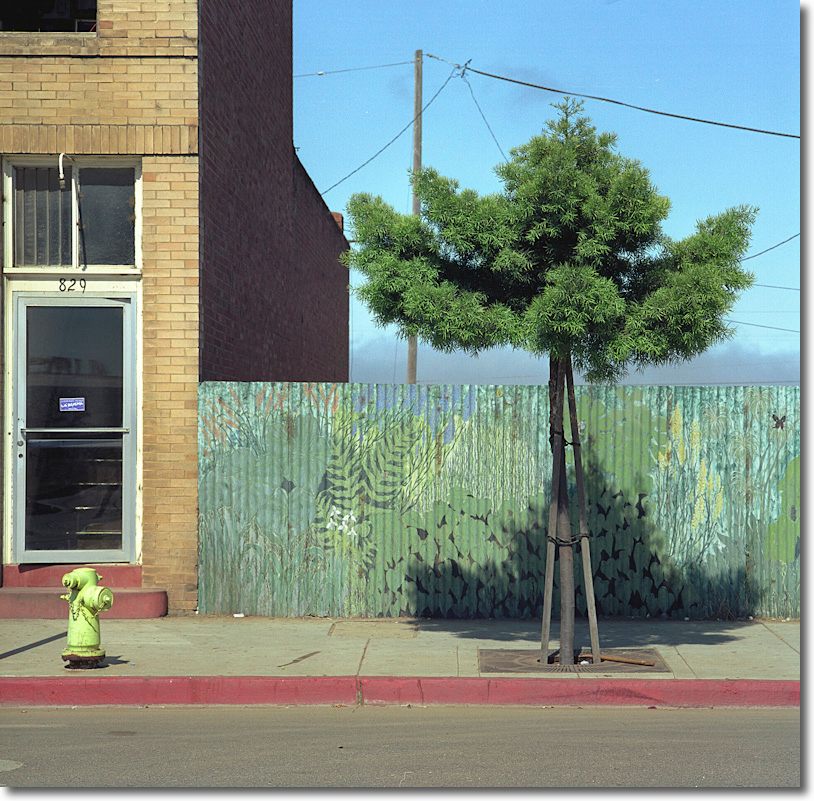
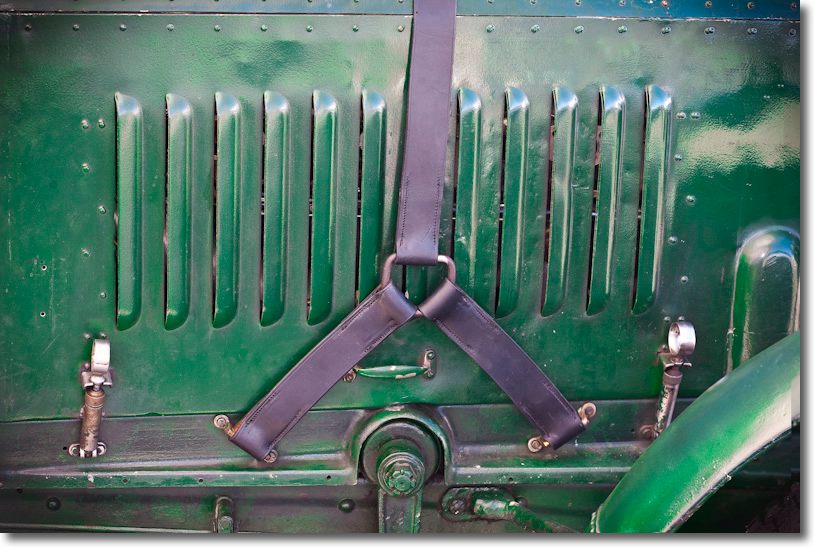
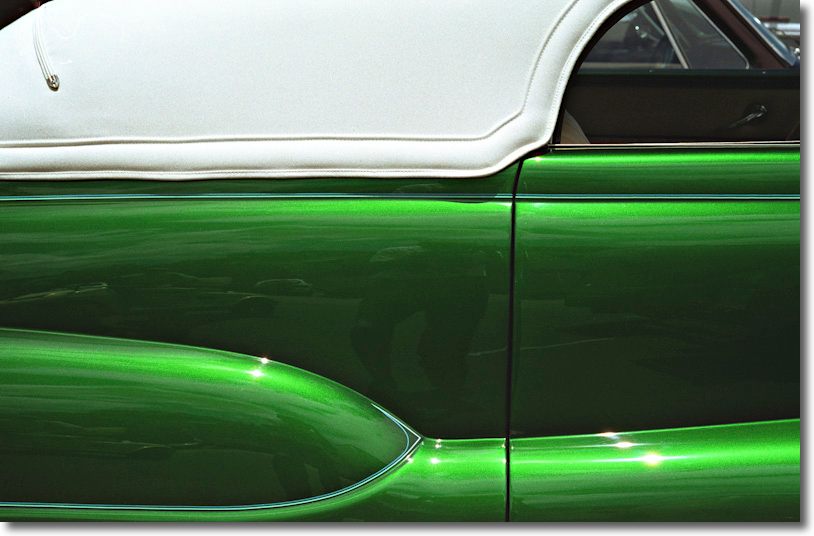
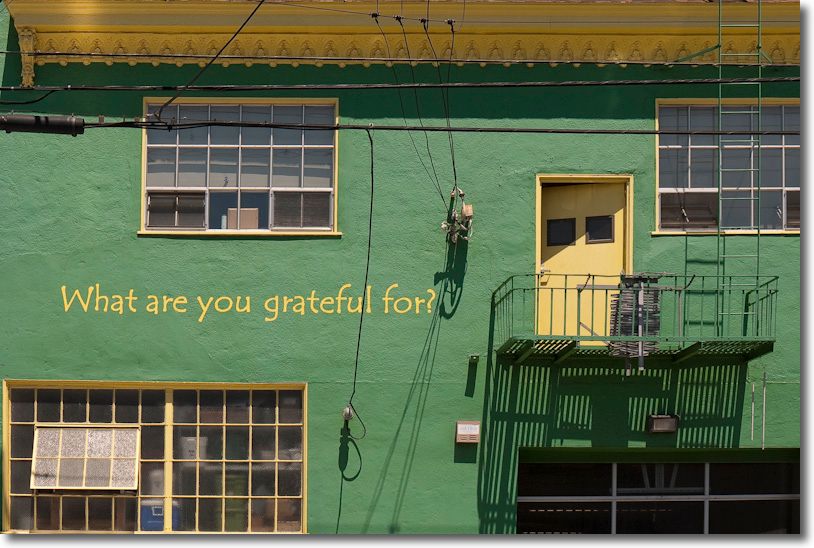
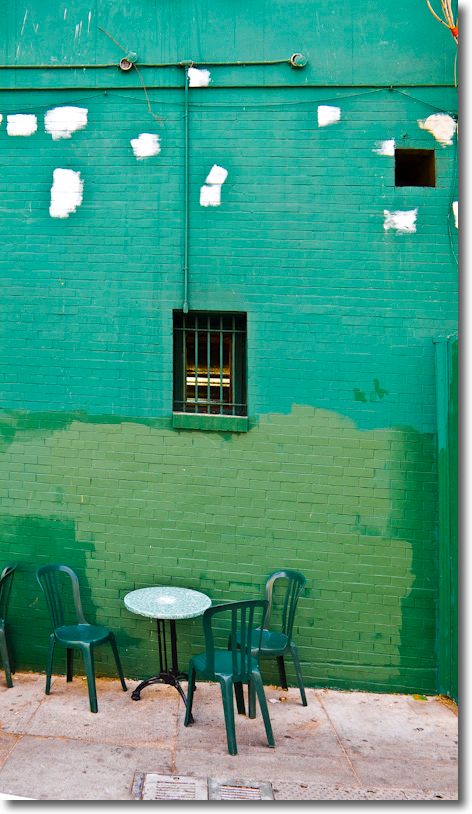
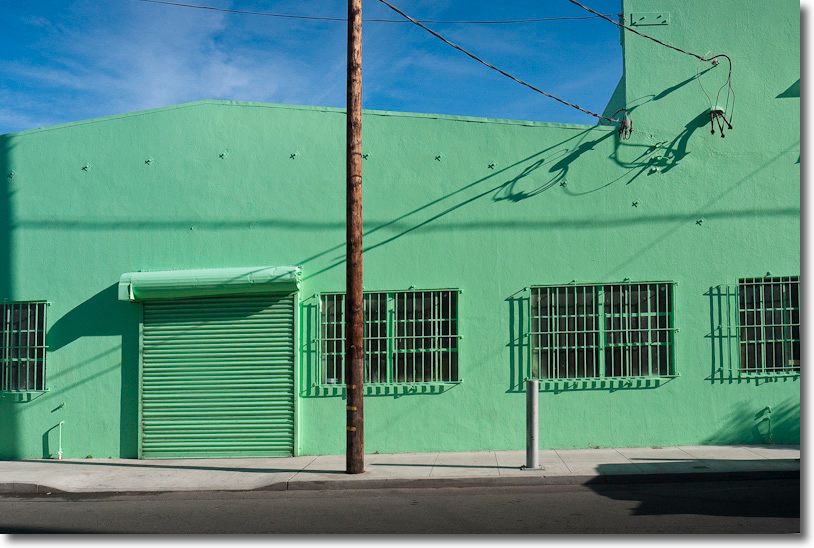
It’s not that I go out with specific themes in mind, but doing the chore of keywording in my LR3 library the other day I was struck by how often monochromatic green subjects feature in my snaps. So it was a matter of moments to make these into a Smart Collection, sorting on the keyword ‘Green’ and a few seconds later I had a handful worthy of publication. Here they are:

Greenwich Village, NYC, 1983. Leica M3.

Ojai, CA, 1991. Leica M3.

Morro Bay, 2005. Mamiya 6.

Laguna Seca, 2005. Canon 5D.

Paso Robles, CA, 2004. Canon 5D.

Filoli, CA, 2006. Canon 300D.

Half Moon Bay, CA, 2009. Panasonic G1.

Mission District, San Francisco, 2010. Panasonic G1.

Columbus Avenue, San Francisco, 2010. Panasonic G1.

Mission District, San Francisco, 2011. Panasonic G1.

I guess you could say green is my favorite color!